


Listening Walk: Sense of Hearing Activity for Preschoolers
A listening walk for preschoolers turns an ordinary stroll into a "detective ears" game: pause, close your eyes, and name every sound you hear. Zero setup — and it builds attention, vocabulary, and early listening skills.
A listening walk for preschoolers is a stop-and-listen game: pause along a walk, close your eyes for about a minute, and name every sound you hear — birds, cars, water, wind. No materials, five minutes of prep, and it builds auditory attention, vocabulary, and early phonemic awareness.

The short version
- A listening walk for preschoolers is a hearing-only detective game: stop, close eyes, name sounds, find their sources.
- About ten simple stops fit a 20–30 minute walk for ages 3–4.
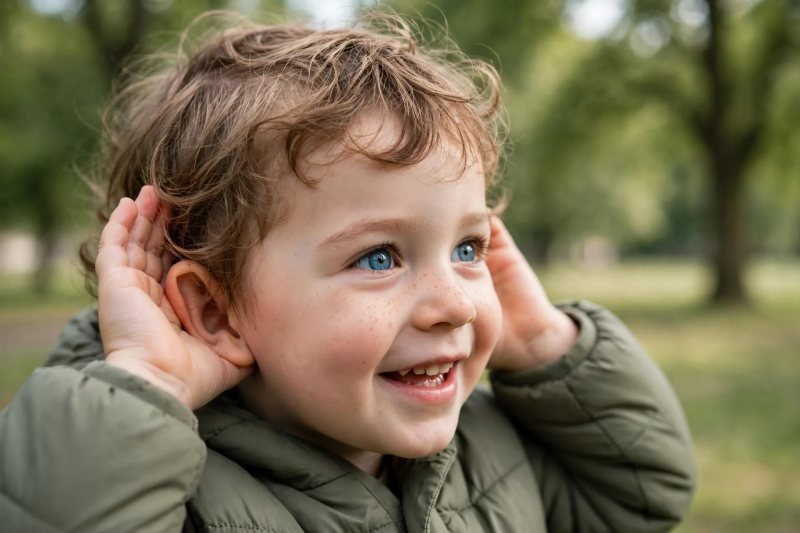
- "Detective ears" (cupped hands) make quiet sounds louder and hook kids instantly.
- Works outdoors on any safe route, or indoors room by room on rainy days.
- Builds auditory attention, sound vocabulary, early phonemic awareness, and patient stillness.
- Zero setup, zero mess, zero materials required.
- Age
- Ages 3–4
- Prep
- 5 min
- Mess
- None
- Difficulty
- Easy
- Where
- Both
Why kids love this
Preschoolers are already little detectives — always asking what that noise was. A listening walk hands them the job title: sound detective. Closing their eyes feels deliciously silly, and every sound they name is a case solved. Sounds that bore grown-ups are thrilling discoveries to a three-year-old.
What you'll need
- None required.
- Nice extras: a notepad and crayon, and a phone timer for the "freeze and listen" rounds.
Before you start
Pick a safe route: a quiet block, a park path, or your own yard. Before you leave, tell your child that today you are both sound detectives, and that detectives listen harder than anyone else. If you like, draw three to five empty boxes on a piece of paper — a sound checklist your child can tick off as sounds are found.
How to do it
-
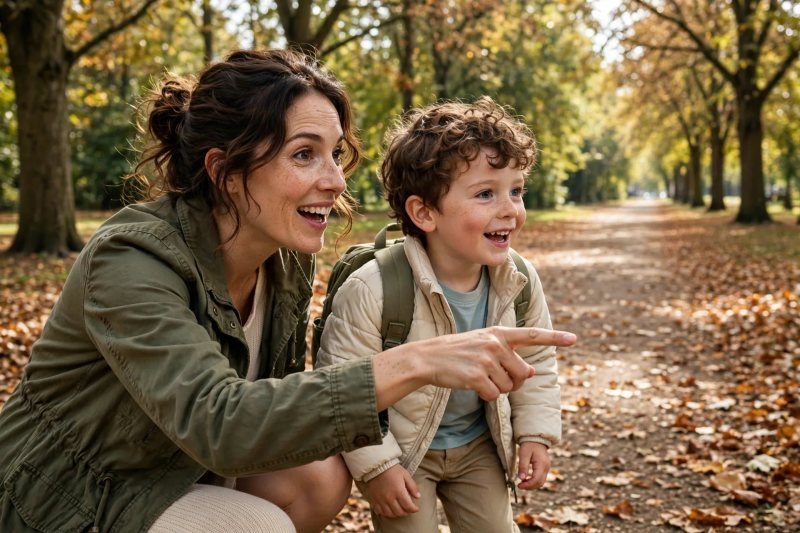
Announce the mission. Today you are both sound detectives, and the first rule of detective ears is listening harder than you talk.
-
Show them detective ears. Stand still and show your child "detective ears" — cupping both hands behind the ears, which really does make sounds louder.
-
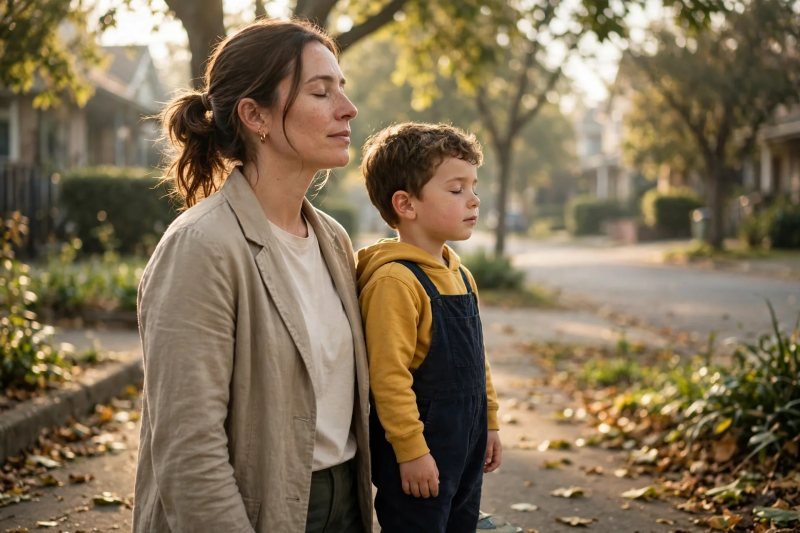
Freeze and listen. Call out "freeze and listen," then time 60 silent seconds with eyes closed. No talking until the timer dings.
-
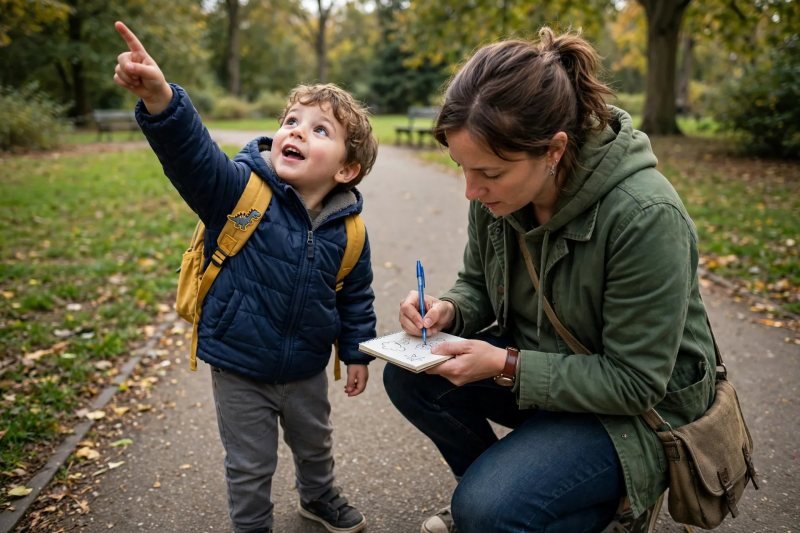
Name the sounds. Open your eyes and let your child name the sounds they heard. Sketch or jot each one down — real detective evidence.
-
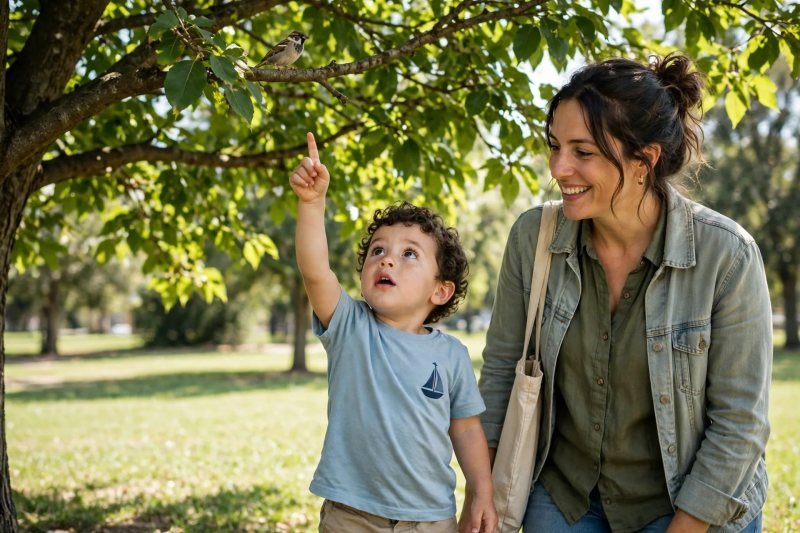
Hunt the source. Pick one sound and hunt for its source. Matching a sound to its cause is the whole point.
-
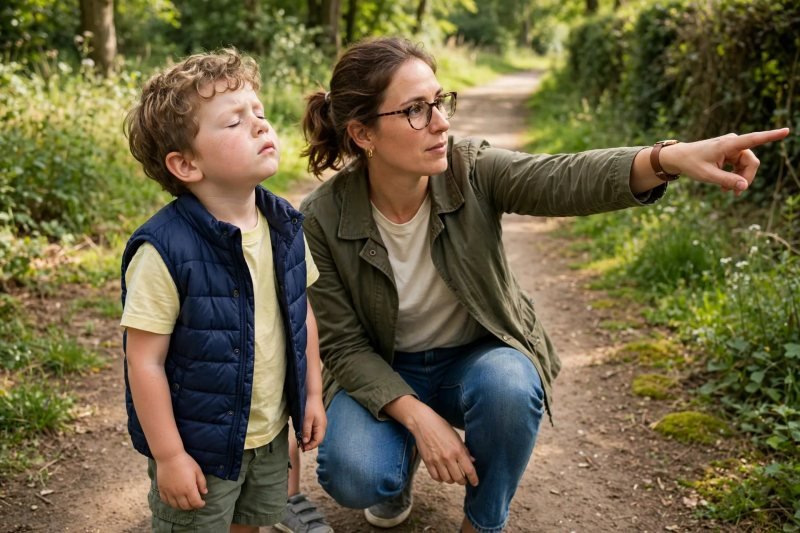
Play the pointer round. At the next stop, play the pointer round: one detective closes their eyes while the other points silently toward a sound for the listener to locate.
-
Test whisper distance. Whisper a silly word and see how far apart you can stand before your child can't hear it. Move apart one step at a time.

-
Predict around the corner. Before turning a corner, stop and predict: eyes closed, guess what sound might wait on the other side. Then turn the corner and check.

-
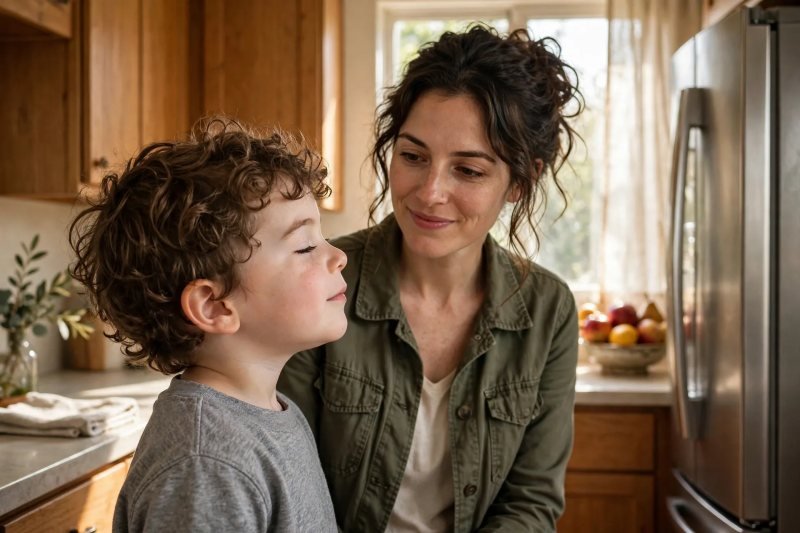
Listen indoors too. Indoors, do the same stops room by room — the refrigerator hum, the ticking clock, the washing machine — and discover how many sounds your home makes.
-
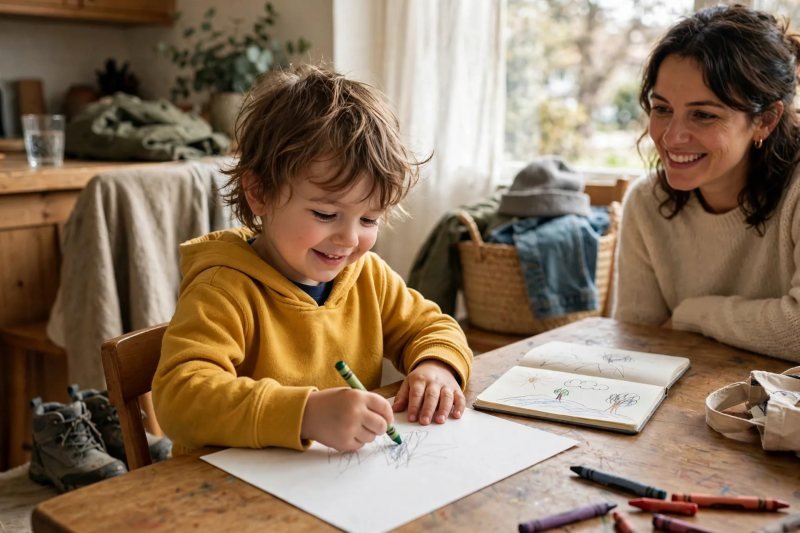
Draw the favorite sound. Back home, have your child draw their favorite sound and name it like a detective: "The Case of the Squeaky Gate."


Make it easier
Skip the timer and the writing. Just stop, close your eyes together, and ask "what do you hear?" Two or three stops are plenty.
Make it harder
Make it a real case file: a drawn checklist (bird, car, dog, airplane, water) to tick off in one walk, plus a tally chart across repeat walks. Older four-year-olds can try the memory round: after three stops, name every sound in order. The tally chart is a first data table — our counting activities for toddlers build on the same idea.
Other ways to play it
- Rainy day version: Sit by a window and list everything you hear outside — rain, thunder, tires on wet pavement.
- Mystery sound jar: Record three sounds on your phone and play them back at dinner for the family to guess.
- Sound map: Draw your street from memory and place your favorite sounds on it.
- Nighttime listening: Stand on the porch after dark for one quiet minute.
- A rainy-day five senses activities for preschoolers keeps the detective game going indoors.
How it changes by age
- Three: Two to four stops, no timer, no writing. The "detective ears" trick and naming one sound per stop is the whole game.
- Four to five: Add the timer rounds, the checklist, and the prediction stop.
- Six and up: Hand them the clipboard and let them run the case file themselves.
- For more no-prep plans, see toddler learning activities at home.
What they're learning
A listening walk trains auditory attention — focusing on one sound while others happen — the same skill children later use to follow a teacher's voice in a noisy classroom. Naming sounds builds vocabulary through real experience. Sorting and remembering sounds is early phonemic awareness: hearing differences between sounds is the precursor to hearing differences between the sounds in words. And sixty seconds of stillness is hard for a three-year-old — doing it as a game is joyful practice in self-regulation. The same listening muscles grow in our phonemic awareness activities for toddlers and blending sounds activities.
Clearing up
Nothing to clean up — that's the beauty of this one. Save the sound list in a drawer; kids love rediscovering old case files months later.
Questions parents ask
What age is a listening walk best for?
What do you need for a listening walk with preschoolers?
How long should a listening walk be for a 3-year-old?
Can you do a listening walk indoors?
How does a listening walk help with reading readiness?
What's the difference between a listening walk and a nature walk?
Morning and evening walks on the same route sound completely different. Doing the same route twice is a ready-made science observation. "Detective ears" becomes a parenting tool — "put your detective ears on" buys thirty seconds of quiet focus anywhere. For another quiet-focus game, try easy science experiments for toddlers — several need nothing but watching and waiting.


