


Bubble Bath Safety for Kids: What Parents Should Know
Is bubble bath safe for kids? Plain water is the safest default for ages 3-4. If you use bubble bath, choose fragrance-free, use a little, keep soaks short, rinse well and moisturize — plus the red flags that mean see a doctor.
Plain water is the safest default for ages 3–4. Bubble bath can be an occasional treat if it is fragrance-free, used in a small amount, and kept to a short soak, followed by a thorough clean-water rinse, a gentle pat-dry, and moisturizer. Stop bubbles and see a doctor if itching persists, a rash spreads, or urinating hurts.

The short version
- Plain water cleans young children well on most nights — treat bubble bath as an occasional treat, not a daily habit.
- If you use it: fragrance-free, a small amount, a short soak, then rinse thoroughly with clean water and moisturize.
- Long or frequent bubble baths can dry or irritate young skin and can irritate the delicate urinary area.
- Never leave a child unattended in the bath — gather towels, clothes, and moisturizer before the water runs.
- Red flags: persistent itching, a spreading rash, pain when urinating, or discharge — pause bubbles and see a doctor.
- Age
- Ages 3–4
- Mess
- Low
Why kids love this
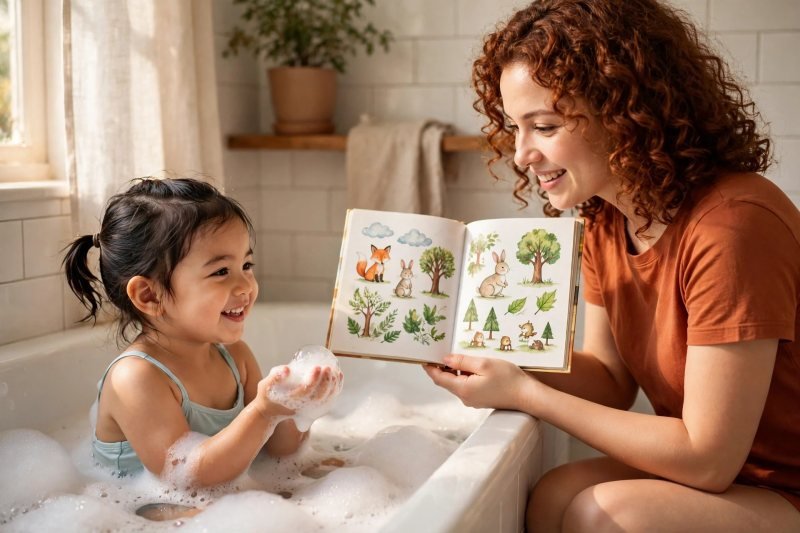
Bubbles feel like pure magic at three and four — a cloud you can scoop, stack, and wear as a hat. Children love them, and that joy is real. What they love just as much, given the chance, is everything around the bubbles: warm water at the end of the day, pouring and splashing with a parent right there, a short story told across the tub, and the cozy ritual of towel, moisturizer, and pajamas that follows. This guide keeps the magic in its place — bubbles as an occasional treat rather than an every-night habit — so bath time stays comfortable for young skin. Plain water does the actual cleaning on most nights, the soak stays short and playful, and your child still gets the warm, unhurried togetherness that makes bath time one of the sweetest parts of the day.
What you'll need
- A clean bathtub with a non-slip mat — rinsed before the bath so no cleaning-product residue is left behind
- Warm water — comfortably warm to your inner wrist or elbow, never hot, and shallow enough for sitting play
- One fragrance-free bubble bath product, if you are having a bubble night — a single plain, blank, unlabeled-looking bottle is plenty; skip strongly scented, glittery, or brightly colored products
- A gentle, fragrance-free cleanser for visibly dirty spots only — most of a young child's body needs only water on most days
- A soft washcloth and a cup or small jug for rinsing with clean water
- Two soft towels — one for the first pat-dry, one spare for the inevitable splash on the floor
- A gentle, fragrance-free moisturizer to apply while skin is still slightly damp
- Clean pajamas and a fresh diaper or underwear, laid out before the water runs
- A few bath toys that drain fully and dry between uses — cups, boats, and stacking beakers rather than squeeze toys that trap water inside
Before you start
1. Decide before anyone undresses whether tonight is a plain-water night or a bubble night — plain water is the safest default, and bubbles work best as an occasional treat, not a nightly habit. 2. Gather everything first — towels, pajamas, moisturizer, the rinse cup, and toys — so you never need to leave the bathroom or turn away once your child is in the water. 3. Check the water as the tub fills, swirling it to mix hot and cold; it should feel warm, not hot, on your inner wrist, and the bathroom itself should be warm enough that a wet child is not chilly. 4. If it is a bubble night, set out only the one fragrance-free product you have chosen, and put every other bottle, cleaner, and adult product well out of reach.
How to do it
-
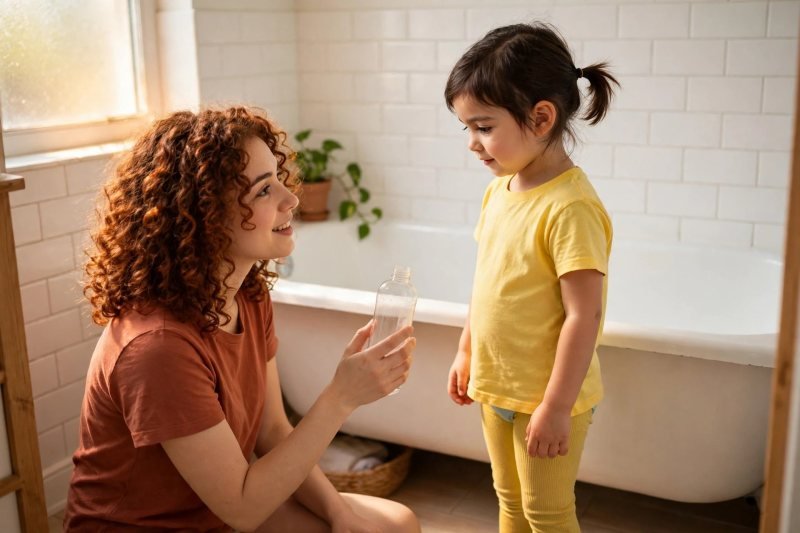
Decide plain water or a bubble night. Start before the taps even run, because the safest bubble bath is usually the one you skip tonight — plain warm water cleans a three- or four-year-old perfectly well on an ordinary day, and pediatric and dermatology guidance commonly advises treating bubble bath as an occasional treat rather than a daily habit, especially for children with dry, sensitive, or eczema-prone skin. Make bubble nights the exception you plan — perhaps once in a while as a weekend treat — and let plain-water nights be the calm default in between, the same simple, repeatable thinking behind a gentle kids skincare routine built on doing less, kindly. Say, "Tonight is a plain-water night — and Friday can be bubble night." A child who knows bubbles are coming on a named day rarely argues about the nights they are not.
-
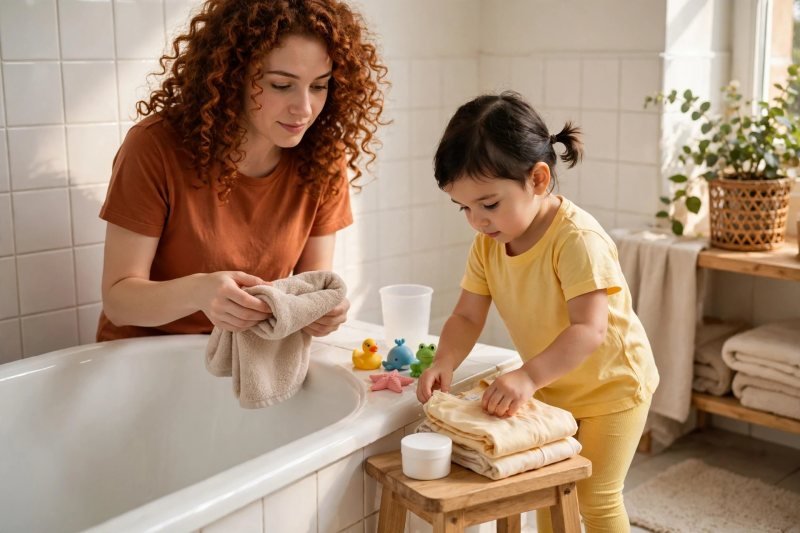
Gather everything before water runs. Lay out two soft towels, clean pajamas, a fresh diaper or underwear, the fragrance-free moisturizer, the rinse cup, and tonight's bath toys — every single thing within arm's reach of the tub — before a drop of water runs or a stitch of clothing comes off, because the rule that outranks every other rule in this guide is simple: a child in water is never left unattended, not for ten seconds, not for a towel in the next room, not for a ringing phone that can ring. If something is forgotten once your child is in, take your child out, wrap them in a towel, and go together — an inconvenience that takes a minute and matters more than any bubble. Say, "Everything is ready, so I get to stay right here with you." Preparation done first is supervision you never have to break.
-
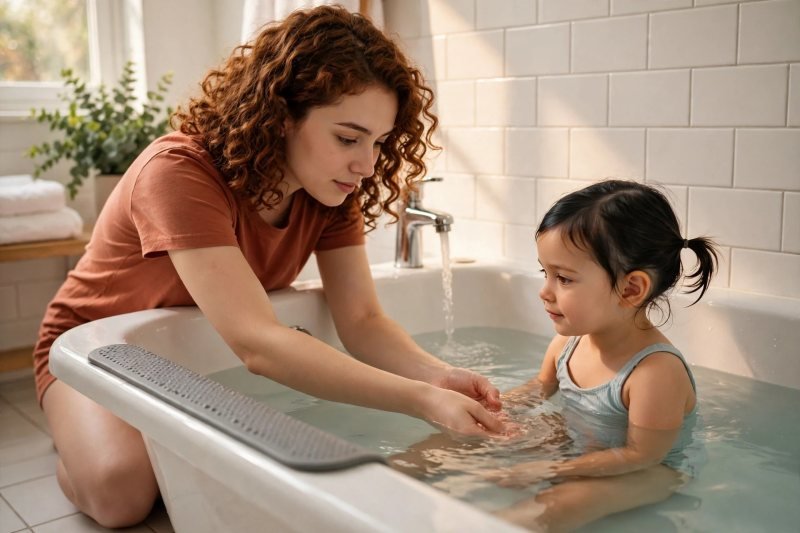
Run a warm, shallow bath. Fill the tub with just enough warm water for sitting play and easy scooping — comfortably warm when you test it on your inner wrist or elbow, swirled well so there are no hot patches, and never hot enough to pinken skin — then lift your child in and stay right beside the tub, close enough to touch them at all times. Three- and four-year-olds are top-heavy, quick, and fearless; slips happen in seconds and silently, so a non-slip mat goes down before the water does, taps and hot handles stay out of reach, and your phone stays face-down across the room — a distracted glance is all a wobbly stand-up needs. Keep the bathroom door's worth of warmth in, too — a warm room makes the short soak below feel generous instead of chilly. Say, "Warm water, sitting bottom, and I am right here beside you." Shallow, warm, and watched is the whole recipe; depth and heat add risk and add nothing a child enjoys.
-
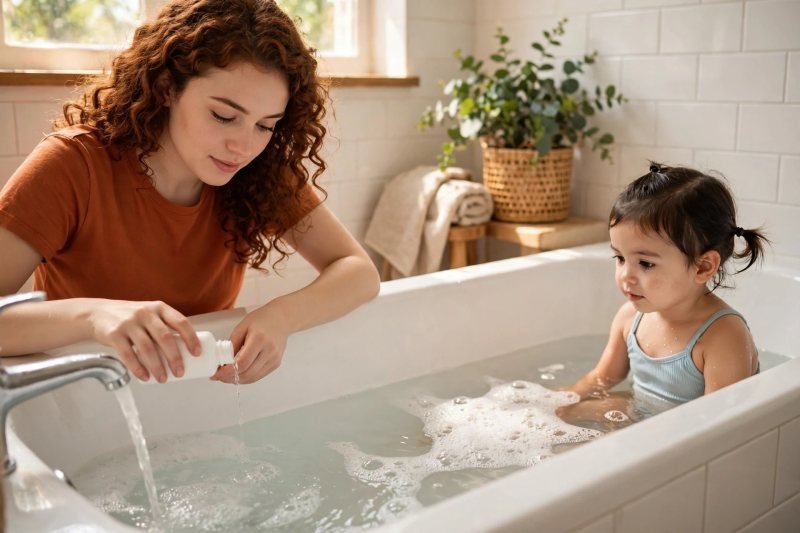
Add only a small amount. On a bubble night, pour in a small amount of one fragrance-free bubble bath — far less than the frothy mountain on the packaging suggests — while the tap is still running, so the water itself does the whisking, and then stop; more product does not mean more clean, only more residue sitting against young skin and more scent and surfactant doing work no preschooler needs. Plain products win every comparison here — fragrance-free, dye-free, and made for sensitive skin, the same qualities our guide to the best body wash for toddlers looks for — because pediatric and dermatology guidance commonly advises that fragrance is one of the most frequent irritants for young children's skin, and a long ingredient list is a longer list of things that can sting, itch, or dry. One bottle, a little of it, occasionally: that is the entire bubble-bath philosophy in a single sentence, and it is enough for a satisfying cloud. Say, "A little bit makes lots of bubbles — watch them grow." Let your child swish the water and build the foam themselves; the making is half the fun and uses up none of the soak's short clock.
-
Settle in for a short soak. Keep the whole soak brief — a short play-and-wash visit rather than a long lounge — because time in the water is the quiet variable behind most bubble-bath trouble: the longer young skin soaks, especially in bubbly or soapy water, the more its natural oils are lifted away, and the longer bath water has to lap against the urinary area, which is delicate in little girls in particular. Pediatric and dermatology guidance commonly advises short baths for young children generally, and shorter still on bubble nights, with plain-water nights kept brief too — warm and short beats hot and long for skin that is still building its barrier. Use the minutes well — songs, pouring games, a story told in installments across the week — and let the clock, not the complaints, end the soak. Say, "Bubbles are for a short visit — then your skin gets to rest." A bath that ends while it is still fun is a bath a child asks for again tomorrow.
-
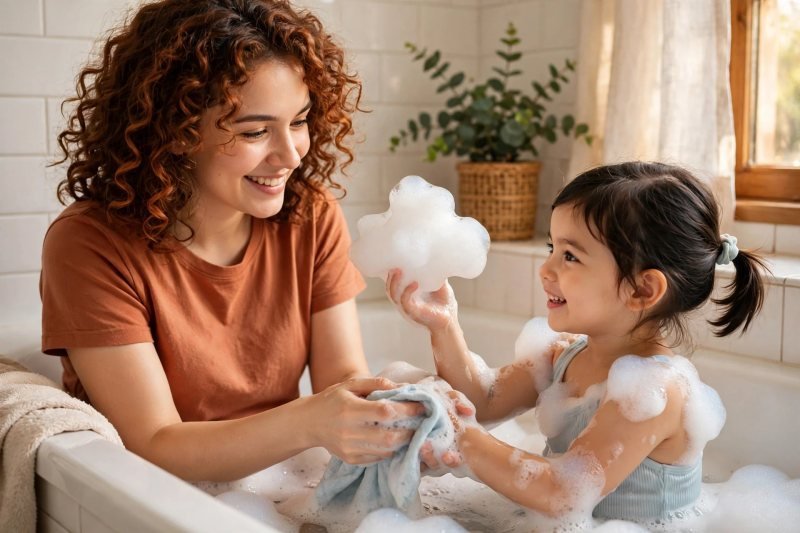
Play, wash gently, and keep it brief. Wash with hands and water first and save any cleanser for the places that are actually dirty — grubby hands, a messy bottom, the day's sunscreen — using a soft washcloth, a dab of gentle fragrance-free cleanser, and no scrubbing, because young skin does not need soap head-to-toe and foam trailed everywhere is residue that must all be rinsed away again. Keep bubble play above the waterline as much as you cheerfully can — hats, beards, and scooped clouds on arms and shoulders — and discourage long, still sitting in the bubbliest water, dunking faces into foam, or bubble water near eyes, where it stings and teaches nothing except that baths hurt. If your child announces any stinging, itching, or "it feels prickly" at any point, believe them instantly — that is the bath ending early, kindly and without debate, with the rinse step below done straight away. Say, "We wash the dirty bits, and the water washes the rest." Gentle washing plus immediate respect for discomfort is how baths stay trusted.
-
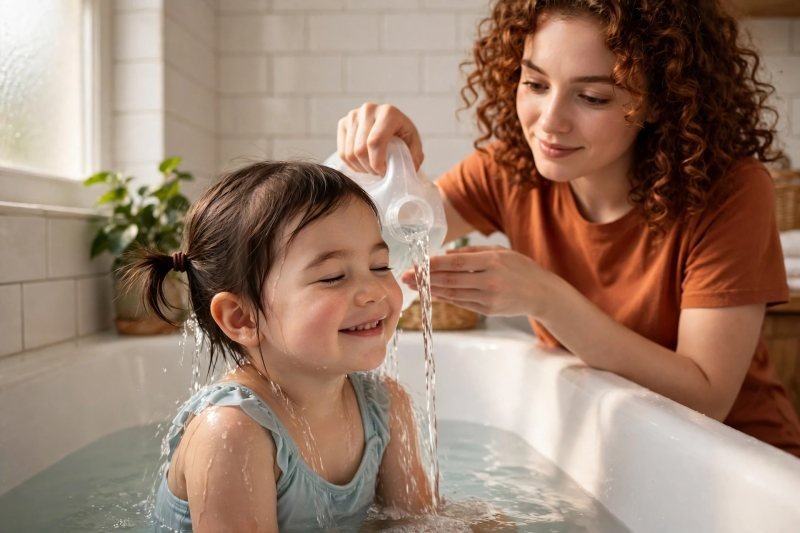
Rinse with clean water. End every soak — plain or bubbly — with a proper rinse in clean water, because the residue left behind on skin is where most of the itching starts: drain the soapy water while your child sits safely held or stands with your hands steadying them, then pour cup after cup of clean, warm water over shoulders, back, tummy, legs, and the diaper and urinary area, using your hand as a gentle guide until the water runs clear and skin no longer feels slippery. Hair gets the same kindness — a brief, clean-water rinse most nights, with shampoo only when hair is genuinely dirty, and the slow-pour tricks in washing toddler hair without tears keep it tear-free — a rhythm that will feel familiar from any gentle toddler first haircut guide approach to keeping hair care short, calm, and tear-free. Say, "Clean water washes the bubbles away — one, two, three cups." A thorough rinse is the single step parents most often rush, and it is the one that protects skin the most.
-
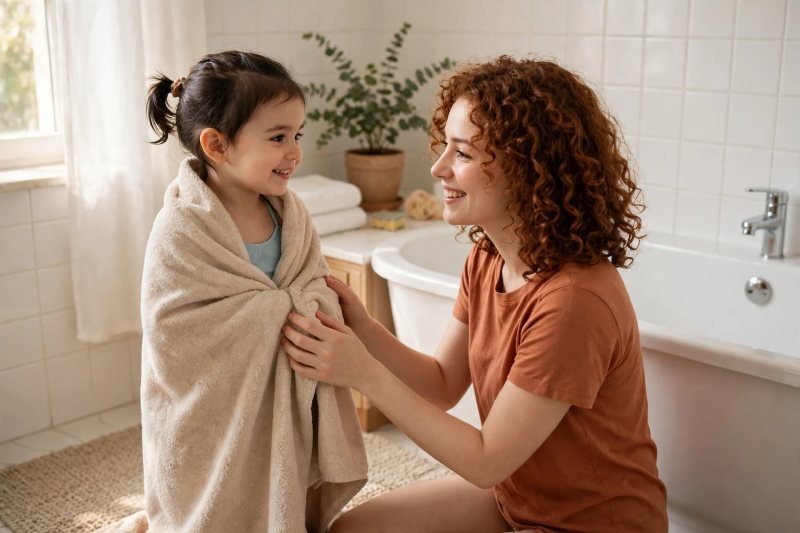
Lift out and pat dry. Lift your child out onto the dry towel — wet preschoolers are slippery, so wrap first, carry second, and never let a dripping child climb out alone over a hard bathroom floor — then pat skin dry with the soft towel rather than rubbing, working gently into the creases at the neck, elbows, knees, and diaper area where leftover dampness loves to linger and irritate. Patting matters more than it sounds: young skin that has just soaked has a softened, more delicate barrier, and vigorous toweling is friction it does not need, while trapped moisture in folds is an open invitation to redness by morning. Check as you dry — a quick, kind look at skin and the urinary area tells you most of what the final step below asks you to watch for, and takes ten seconds while your child is warm and wrapped. Say, "Pat, pat, pat — gentle like patting a cat." Dressing comes next, but moisturizer comes first, while the damp is still on the skin.
-
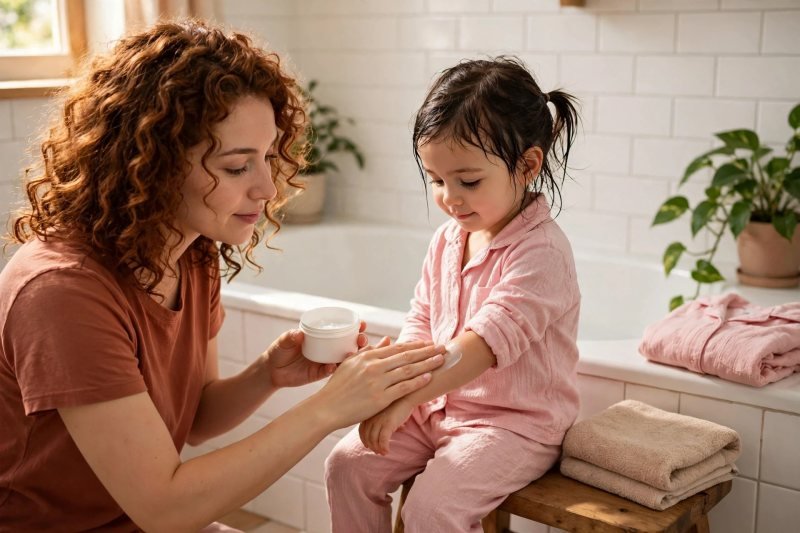
Moisturize and dress for bed. Smooth the fragrance-free moisturizer — our notes on the best moisturizer for kids' dry skin cover what to look for in a plain, fragrance-free cream — over still-slightly-damp skin straight after the pat-dry — this is the moment it locks in the most water and does the most good, a simple press-and-smooth with warm hands, a little extra on the spots that always run dry — shins, cheeks, the backs of arms — and none of it scented, sparkly, or borrowed from an adult's perfumed shelf. Then straight into the clean pajamas and fresh underwear or diaper you laid out in step two, so skin that you have just carefully rinsed is not sitting against a day-worn layer, and the bedtime story can begin with everyone comfortable. This towel-to-pajamas sequence is the cozy backbone of the evening — bath, moisturize, dress, story — and keeping the order identical every night is what turns a safety routine into a ritual a child relaxes into. Say, "Cream on, pajamas on — now you are all tucked and smooth." If skin ever looks red or feels rough after a bubble night specifically, that is useful information for step ten, not a reason to add more products tonight.
-
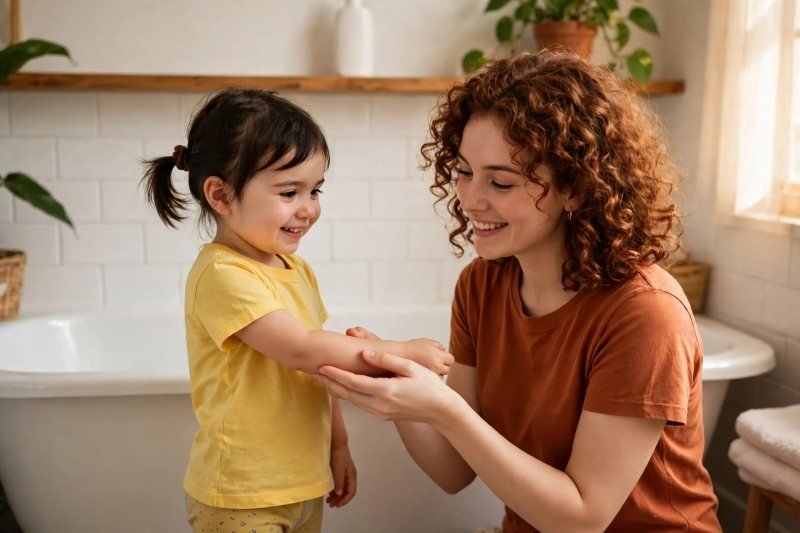
Watch skin and note any irritation. Finish with the habit that turns one bath into good guidance for every bath after it — a brief, unfussy watch over the next day or so for how your child's skin and body actually responded: comfortable and soft means your routine is working; new itching, a spreading rash, redness around the urinary area, complaints of pain or stinging when urinating, or any discharge means bubble baths pause completely and plain water rules until you have spoken to a doctor, because pediatric and dermatology guidance commonly advises that those signs deserve prompt, in-person medical advice rather than home experiments. Never try to diagnose or treat these signs yourself, never borrow creams meant for adults or other children, and trust the pattern — if symptoms follow bubble nights twice, bubbles are done for a good long while, whatever the calendar says. Say, "Your skin tells us what it likes — and we always listen." Listening, pausing, and asking a doctor when flags appear is the safest bubble-bath policy of all, and it costs nothing but attention.


Make it easier
Make plain water the fascinating option: rotating bath toys, colored water poured from jugs (color on the water, not the skin), and a new song each night mean most evenings never need bubbles at all. Keep bubble nights rare and scheduled — one named night a week at most, or only for special occasions — so there is nothing to negotiate at the taps. Keep the same calm order every night — our bath routine for toddlers shows how the sequence sticks without a nightly debate. If even fragrance-free bubble bath seems to bother your child's skin, drop bubbles entirely without guilt; a shorter plain-water bath with a thorough rinse and moisturizer afterward is a complete, healthy routine on its own.
Make it harder
Let your child help run the routine (for a confident 4-year-old): choosing tonight's toys, testing the water on their own wrist beside yours, and counting the rinse cups aloud — early self-care habits with you still supervising every second. Add a simple bath-time chart together: plain-water nights and bubble nights marked with stickers, so your child can see the pattern, predict bubble night, and feel the routine is theirs too. Extend the learning, not the soak: finish drying-off time with naming body parts, talking about private parts using correct names, and the rule that any stinging or soreness is always worth telling a grown-up about straight away.
Other ways to play it
- Plain-water sensory night: skip bubbles entirely and theme the soak instead — boat night, pouring-station night, or glow-stick-on-the-shelf night (lights low, sticks outside the water) — novelty without any product on skin.
- Shower-splash version: on rushed evenings, a short, warm shower with a parent close by and the same rinse-and-moisturize finish works beautifully, and many children who dislike sitting in soapy water prefer it.
- Sensitive-skin version: for children with eczema-prone or easily irritated skin, keep every bath plain, short, and lukewarm, moisturize generously straight after, and ask your child's doctor before using any bubble or bath product at all.
How it changes by age
- Age 3: Three-year-olds need the shortest soaks and the closest watching — they stand up without warning, treat bath water as a drink waiting to happen, and cannot yet reliably report stinging or discomfort. Keep bubble nights rare at three, keep the water shallowest, sit within touching distance throughout, and end the bath at the first wriggle toward climbing. Plain water, a thorough rinse, and moisturizer afterward cover everything a 3-year-old's skin needs.
- Age 4: Four-year-olds can begin joining in — choosing toys, counting rinse cups, naming how their skin feels afterward — and that self-reporting is genuinely useful: a 4-year-old who says "it itches after bubbles" has given you the only review that matters. Supervision stays arm's-reach and constant at four as well; what changes is conversation, not vigilance. Bubble nights can be a planned treat at this age, still fragrance-free, still small amounts, still short.
What they're learning
Body awareness and self-reporting: noticing and naming itching, stinging, warmth, and comfort — and learning that telling a grown-up about discomfort always works — is foundational health literacy. Routine and sequencing: the same calm order every night (decide, soak briefly, rinse, pat dry, moisturize, dress) teaches prediction, cooperation, and early self-care steps in a sequence they can soon recite. Cause and effect: connecting "bubble nights" with "how my skin feels tomorrow," especially when you mark the pattern together on a chart, is real early science thinking. Vocabulary for safety: learning correct, comfortable words for body parts and for sensations helps a child describe any problem clearly to you and to a doctor.
Clearing up
Drain the tub as soon as your child is out and dressed, rinse the tub briefly with plain water so no bubble residue films over for the next night, and leave it clean and dry. Squeeze out washcloths and stand bath toys to drain and dry fully — toys that stay wet inside grow unpleasant quickly, so retire squeeze toys that cannot dry out. Wipe the bathroom floor dry straight away (a damp floor is tomorrow's slip), hang towels to dry, cap the bubble bath bottle and store it out of children's reach with the adult products rather than on the tub edge as an invitation, and pop the washcloths and towels into the laundry as they collect. Two minutes now keeps the bathroom safe, clean, and ready for tomorrow's plain-water night.
Questions parents ask
Is bubble bath safe for kids aged 3 and 4?
How often can my child have a bubble bath?
Why can bubble baths irritate children's skin and urinary area?
How do I give a bubble bath more safely?
When should I see a doctor about bath-related irritation?
What is the safest alternative to bubble bath for a 3- or 4-year-old?
Every caution in this article is phrased as general guidance only — "pediatric and dermatology guidance commonly advises…" — with no invented direct quotes, no named doctor or institution endorsement, and no statistics anywhere in the text. Red-flag wording ("see a doctor if") appears in Safety notes and in the FAQ, and no symptom is diagnosed and no cure or treatment is promised anywhere.


