


Phonemic Awareness Activities for Toddlers: 10 No-Prep Sound Games
Ten no-prep phonemic awareness activities for toddlers — clapping games, listening walks and rhyme play that build the sound skills reading grows from.
These 10 phonemic awareness activities for toddlers build the sound skills reading grows from — rhyming, clapping syllables, listening games and silly voice play — with zero preparation and no materials. Each game takes five to ten minutes and suits ages 2–3. Start with rhythm and listening games, follow your child's lead, and play little and often.

The short version
- Phonemic awareness = hearing sounds inside spoken words — no letters, ears only.
- Start with rhythm and listening games; rhyme echo and first-sound play come next.
- Say sounds slowly and crisply ("mmm," not "muh") so they land cleanly.
- Play 5–10 minutes and stop while it is still fun.
- Use your home language too — sound awareness transfers across languages.
- Never quiz — echo, copy and play along so every game stays joyful.
- Age
- Ages 2–3
- Play time
- 10 min
- Mess
- None
- Difficulty
- Easy
- Where
- Both
Why kids love this
Toddlers love these phonemic awareness activities for toddlers because every game is built from things they already adore: silly voices, big movements, animal noises and your full attention. Nothing feels like a lesson — it feels like being goofy with Mom or Dad, and games end in laughter. Phonemic awareness is hearing the sounds inside spoken words — no letters, no printed words, ears only.
What you'll need
- None. Every game runs on your voice, your hands and the room you are already in.
Before you start
1. Pick a rested, fed moment — sound games need an alert brain. 2. Start with one game for two or three minutes; add more only if they ask. 3. Sit face to face so your child can watch your mouth shape each sound — and if a game flops, jump to the next one without comment.
How to do it
-
Clap games — Clap names together: "Em-ma!" (two claps), yours, the dog's, "di-no-saur" (four) — feeling words break into beats is a first taste of sounds inside words. Then trade places: clap a rhythm — clap-clap, pause, clap — and your toddler copies it back, starting with two claps and working up to four.

-
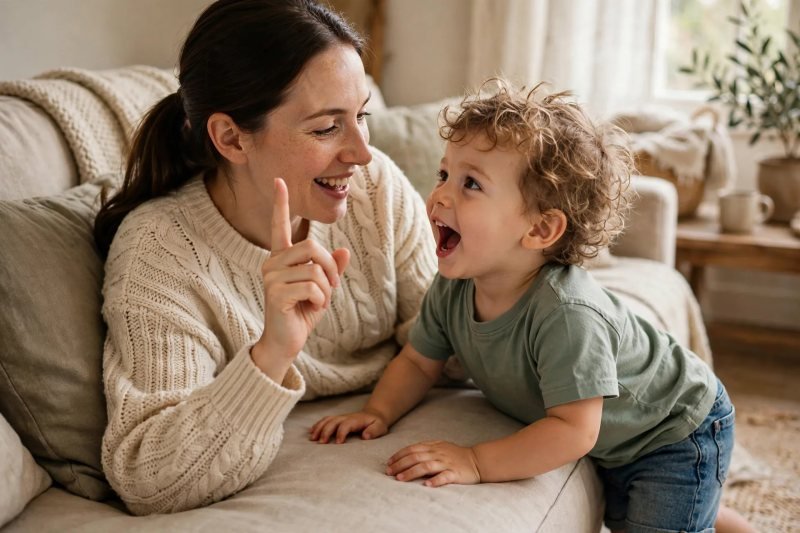
Rhyme finishers — Start a nursery rhyme and stop before the last word: "Twinkle, twinkle, little…" Let them shout "STAR!" Expecting how a word sounds is the first phonemic milestone.
-
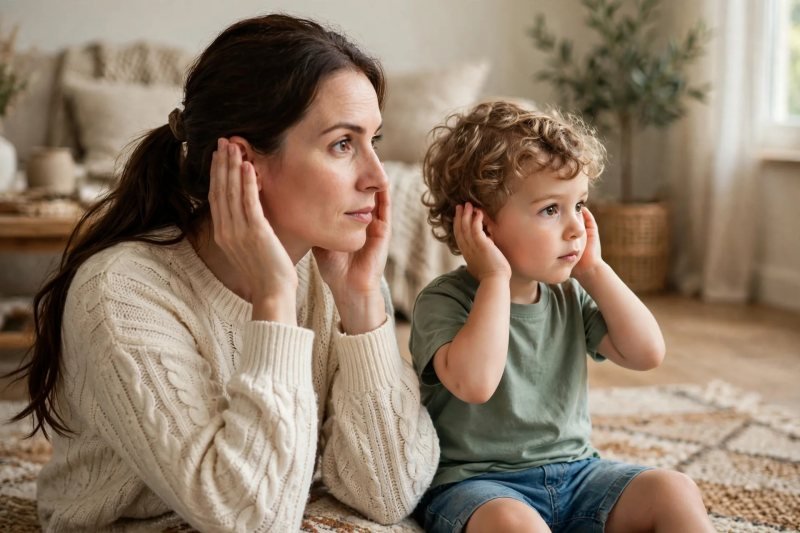
Listening games — Sit still and take turns naming sounds you hear: a bird singing, the fridge humming, a car passing, your breathing. Or play sound scavenger: "Let's catch five sounds without moving" and count them on fingers — one bird, one airplane, one dog barking. And for wiggly days, hide in another room (a doorway counts) and make an animal sound — "Cock-a-doodle-doo!" — so your toddler follows the sound to find you.
-
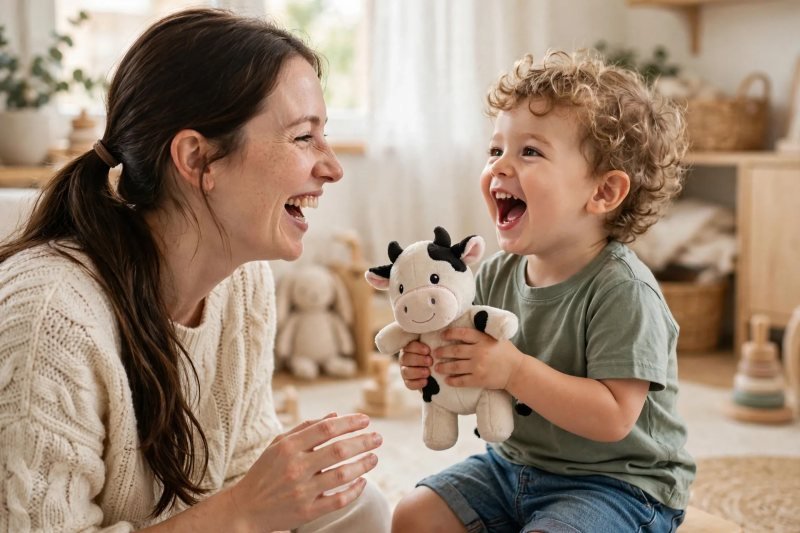
Animal sounds — Make an animal sound; your toddler names the animal: "Moo — who says that?" Then swap roles. Guess wrong sometimes; the giggling is the point.
-
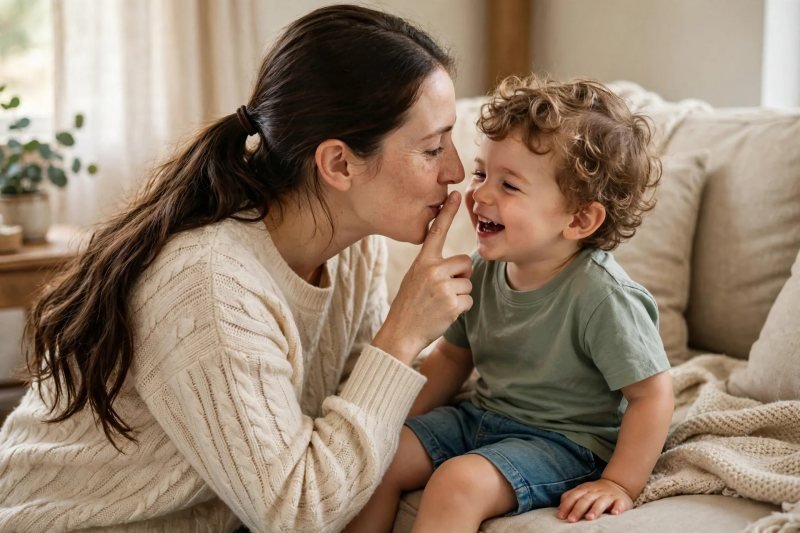
Whisper-roar — Say your toddler's name in a tiny whisper, then a giant roar. Trade: they pick the volume, you say the word.
-
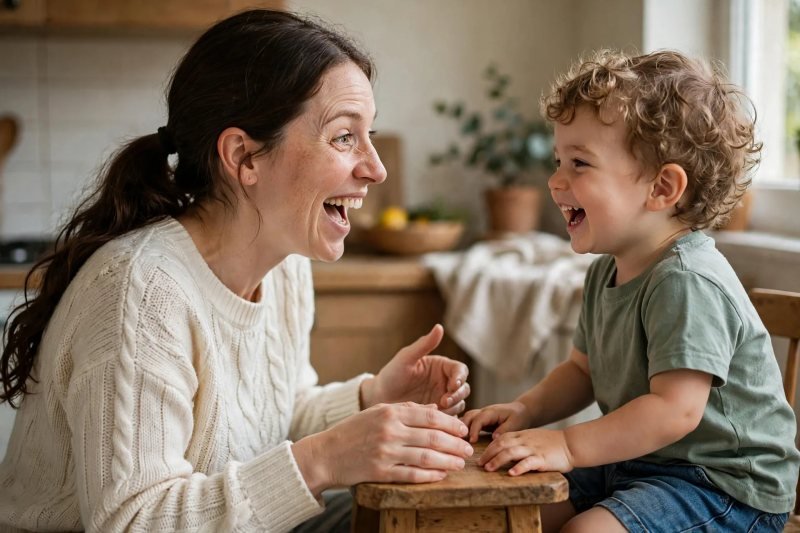
Rhyme echo — Say a rhyming pair — "cat… hat!" — and your toddler echoes it back, big and dramatic. Try "dog… frog!", "bee… tree!"
-
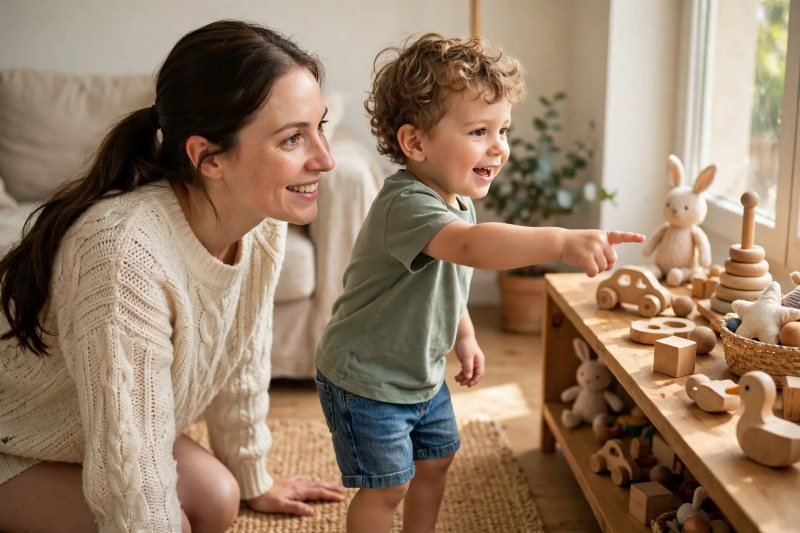
First-sound I-spy — "I spy with my little eye something that starts with 'mmm'." Use the sound, never the letter name — "mmm" for milk, "sss" for sock.
-
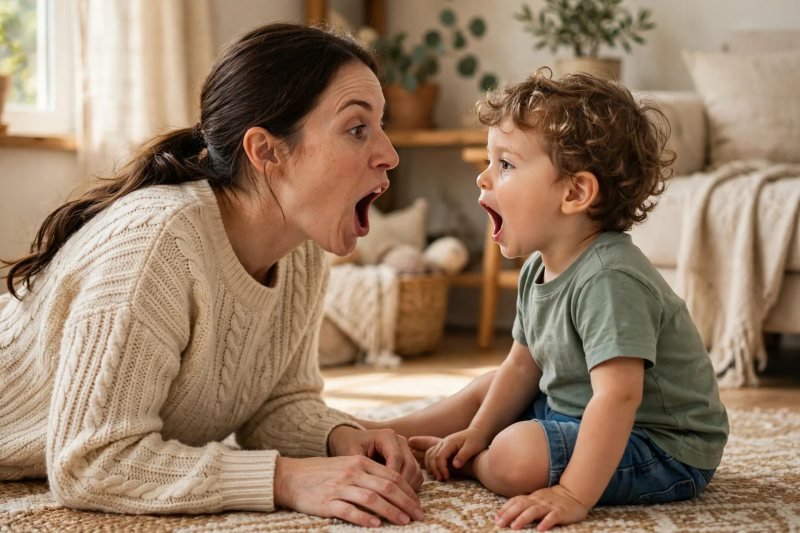
Stretchy first sounds — Say a word in slow motion — "sss-aaa-mmm" — then snap it fast: "Sam!" Try their name, dog, milk. Then take the first sound of your child's name and stack it: "Silly Sammy sits!" Make one for the whole family, then the pets.
-
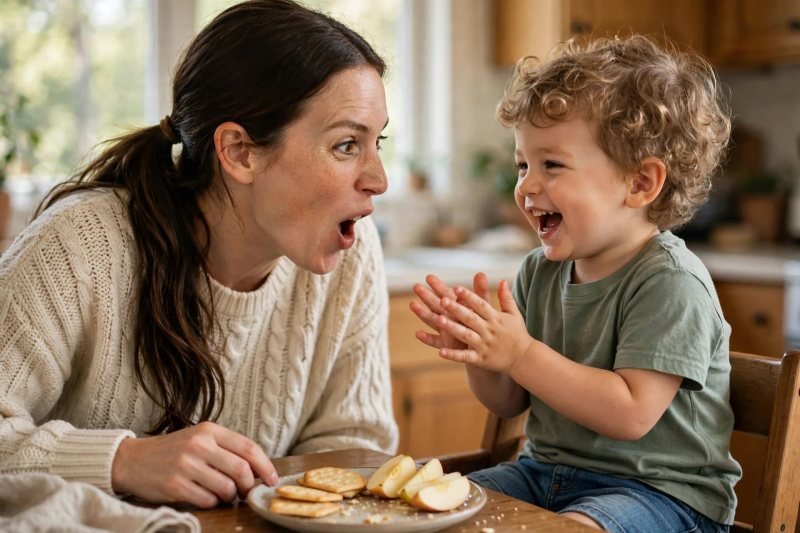
Rhymes through the day — At the table, rhyme what is on the plate: "cracker… snacker!", "apple… snapple!", "cheese… please!" At bedtime, whisper rhyming pairs back and forth: "moon… soon," "bed… red," "sleep… deep" — slow, quiet, eyes heavy.
-
Song swaps — Sing a known song with swapped first sounds: "Finkle, finkle, fittle far." Your toddler will howl, then out-silly you.



Make it easier
Skip the questions — just do the game and let your toddler watch or copy. Stay with games 1–5 until they start echoing you. Clapping syllables is counting in disguise — counting activities for toddlers build on the same beat.
Make it harder
Once your toddler echoes rhymes easily, ask them to invent one: "What rhymes with cat?" Stretch I-spy to two-sound starts ("st-" in star). Clap the syllables of everything you name at dinner. For the full method at ages 3–4, see how to teach rhyming to preschoolers.
Other ways to play it
- Play the listening games outside — parks are full of sounds.
- Play in your home language: phonemic awareness transfers between languages.
- Make the bedtime rhymes a nightly ritual.
- More sung rhymes to finish with live in our nursery rhymes for toddlers collection.
How it changes by age
- Written for ages 2–3, when ears are the whole classroom. Younger twos may just watch the rhyme games — that still counts. A child who has moved past rhyming into naming letters has outgrown this list; phonics activities for preschoolers are the natural next step.
What they're learning
Children build phonemic awareness: hearing rhymes, clapping syllables, noticing first sounds and stretching words into separate sounds — plus listening stamina, vocabulary and the knowledge that words are sounds they can play with. When letter names follow sound play, alphabet activities for toddlers are the gentle next step.
Clearing up
There is nothing to clear up — that is the whole point of no-prep.
Questions parents ask
What is phonemic awareness in simple terms for parents?
At what age should I start phonemic awareness activities with my toddler?
Do phonemic awareness activities for toddlers need special materials?
How long should a sound game last with a 2-year-old?
What is the difference between phonics and phonemic awareness?
Little and often beats long sessions — five minutes a day grows ears faster than half an hour once a week. Celebrate listening and trying, never correctness. If your toddler invents a variation, follow it.

save it for later
Pin this for the next rainy afternoon
Keep it on a board so it is there when you need it, rather than when you happened to find it.
Save to PinterestTry this next
-

Fingerplays for Toddlers: 12 Rhymes With Hand Motions That Teach Sounds
Ages 2–3
-
Reading Readiness in Toddlers: 12 Signs Your 2-Year-Old Is Ready for Words
Ages 2–3
-
How to Read Aloud to a 2-Year-Old: 9 Tricks That Build Future Readers
Ages 2–3
-

Rhyming Words for Toddlers: 50 Easy Pairs to Say Together (Cat–Hat, Dog–Frog)
Ages 2–3


