


Walking Water Experiment for Preschoolers
Colored water climbs paper-towel bridges from cup to cup while preschoolers watch capillary action and color mixing happen. Ten easy steps, ages 3–4.
Line up 5 cups on a tray, fill cups 1, 3, and 5 halfway with water tinted red, yellow, and blue, and leave cups 2 and 4 empty. Drape folded paper towel strips between each pair of cups, both ends dipped in. Colored water climbs the towels into the empty cups, which fill up and mix into orange and green.

The short version
- 10-minute setup: cups, paper towels, water, food coloring.
- The "walking" is capillary action — the towel soaks up water and pulls it along, like a sponge drinking.
- Empty cups fill up and turn orange (red + yellow) and green (yellow + blue).
- Results take a few hours — it teaches patience and rewards check-ins.
- Food coloring stains: smocks, covered table, and tray underneath are essential.
- Age
- Ages 3–4
- Prep
- 10 min
- Play time
- 20 min
- Mess
- Some
- Difficulty
- Easy
- Where
- Indoor
Why kids love this
It looks like magic: water climbs the towel by itself, and no 3-year-old believes it until they see it. The empty cups are a promise — "watch this one fill up" is irresistible at this age. Every check-in brings a change, so their attention keeps coming back. They get to be the scientist: pouring, folding, and predicting the new colors.
What you'll need
- 5 sturdy, clear cups (short and heavy enough not to tip)
- A rimmed baking sheet or large tray
- Plain white paper towels (absorbent ones work best)
- Food coloring in red, yellow, and blue
- A pitcher of water, a spoon or stir stick
- Smocks and a washable table cover
Before you start
Clear a table spot where the tray can sit undisturbed for a few hours — reachable for peeking, safe from elbows. Cover the table. Smocks on before the food coloring opens; keep a damp cloth nearby. Fill the pitcher and set out the cups. Let your child help — the setup is part of the activity.
How to do it
-
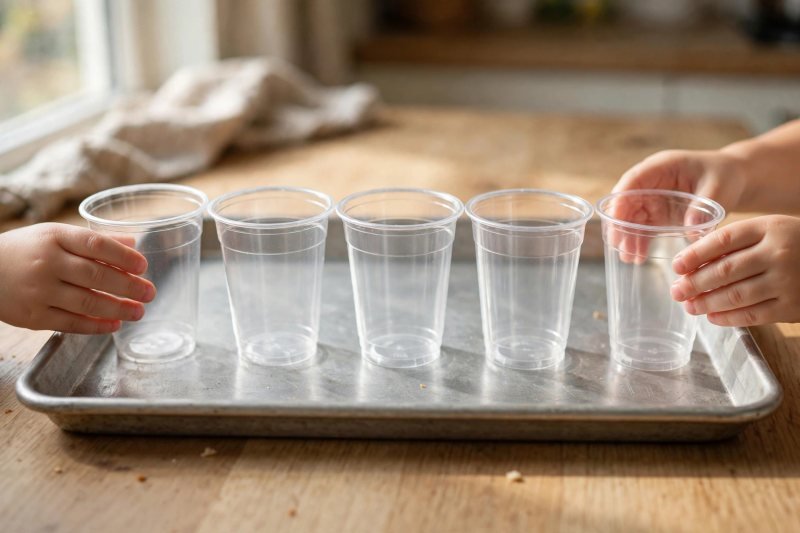
Line up the cups. Place 5 cups in a row on the tray, close but not touching. Let your child count them.
-
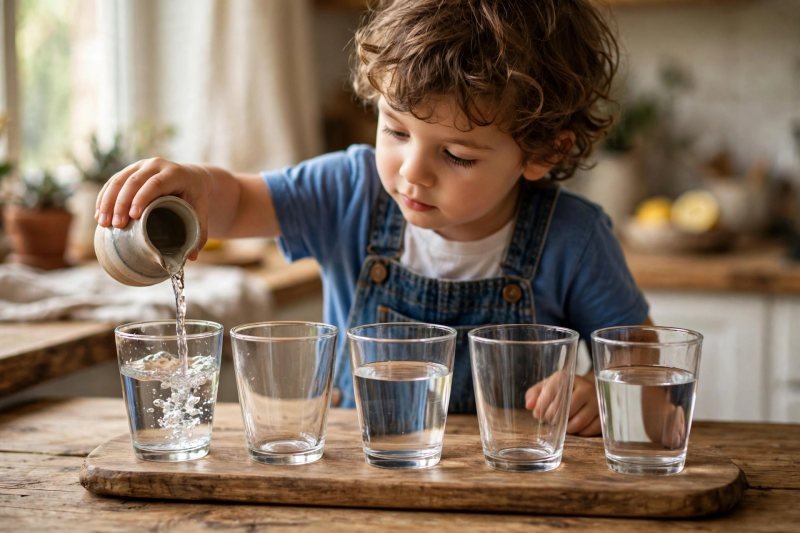
Fill the odd cups. Pour water into cups 1, 3, and 5 until half full. Leave cups 2 and 4 empty.
-
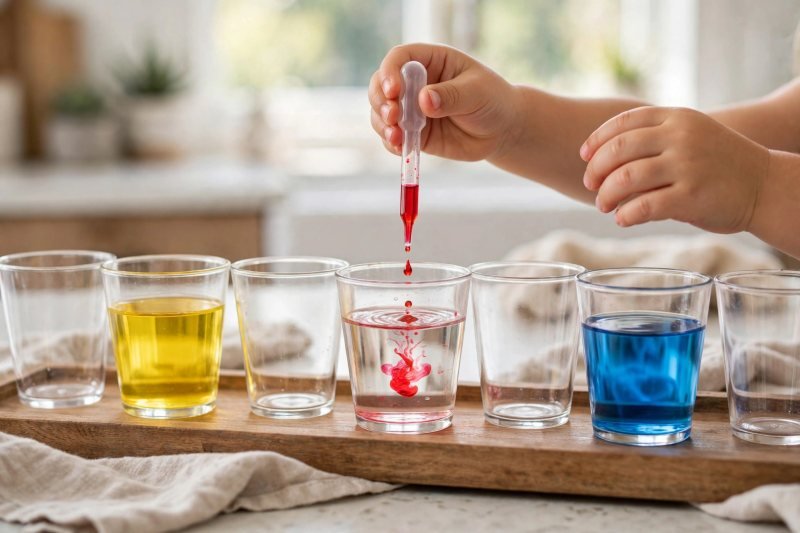
Color the water. Add red to cup 1, yellow to cup 3, blue to cup 5, and stir. Let your child count the drops.
-
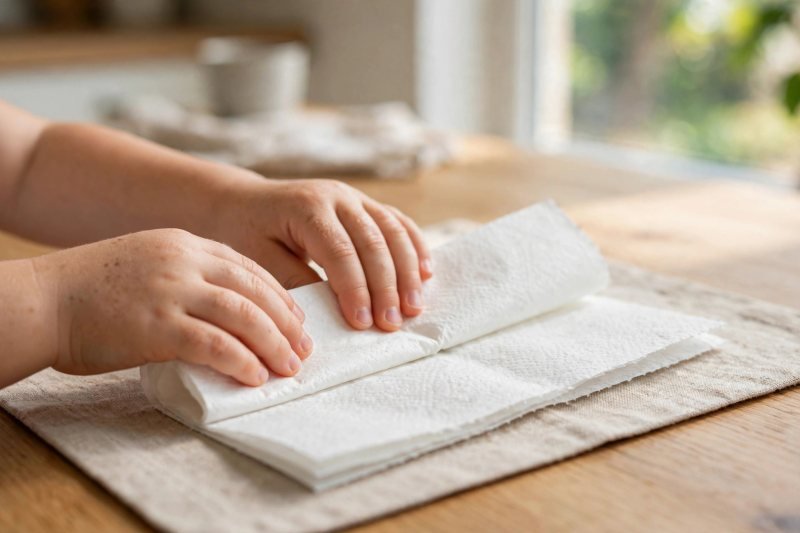
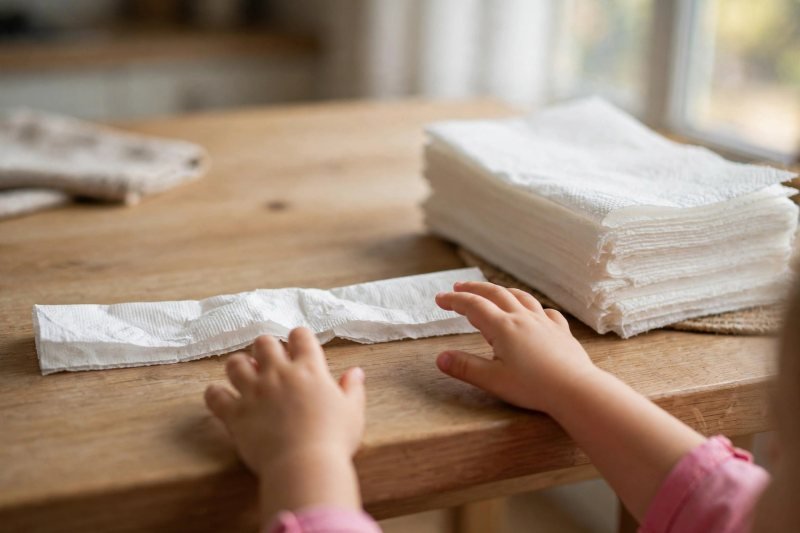
Fold a paper towel. Fold one towel in half lengthwise — your child's job; rough folds are fine.
-
Fold it again. Fold in half lengthwise once more into a thin strip. Make four strips total.
-
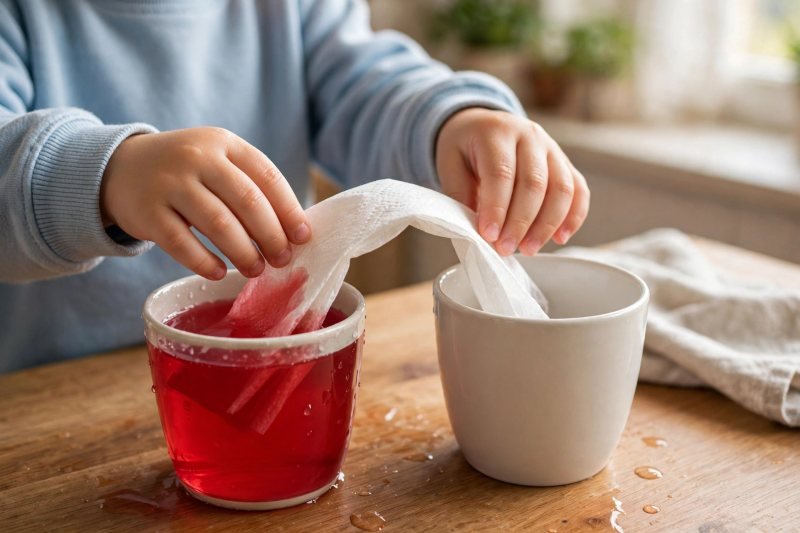
Build the first bridge. Drape one strip with one end in cup 1 (red) and the other in cup 2 (empty), ends reaching the bottom.
-
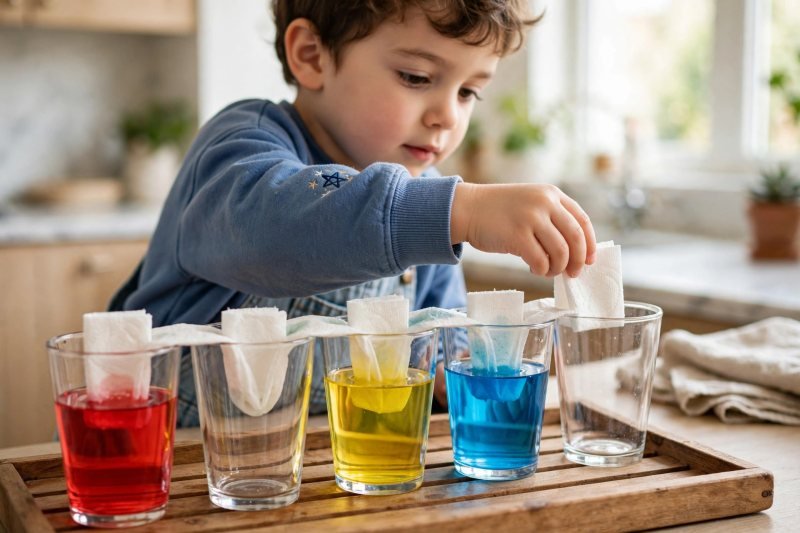
Bridge the rest. One strip between cups 2–3, one between 3–4, one between 4–5, each dipping into both neighbors.
-
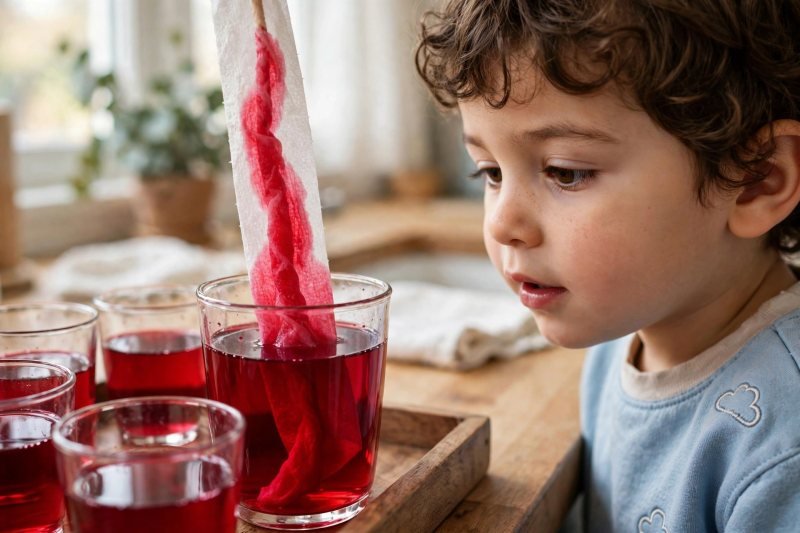
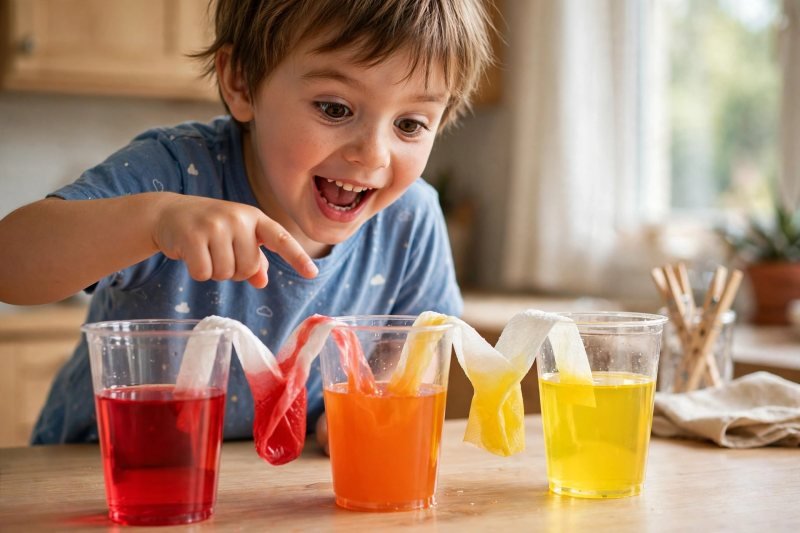
Wait and watch. Within minutes, color creeps up the towels. Ask: "Where is the red water going?"
-
Check every 15–20 minutes. The empty cups slowly fill. The cup between red and yellow turns orange; between yellow and blue, green. Let your child name each new color.
-
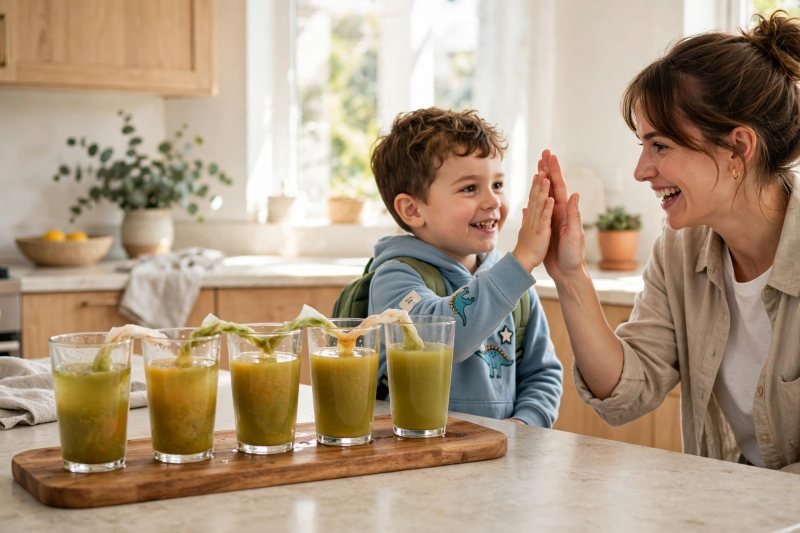
See the finish. After a few hours, every cup holds about the same amount of water, and the middle cups are brand-new colors. They made water walk.


Make it easier
Use 3 cups (colored, empty, colored) — fewer bridges to manage. Fold the strips yourself; your child just places them. Use short, wide cups that barely tip.
Make it harder
Ask for a prediction before you start: what will the middle cups become, and why? Have your child draw the cups at the start and again at the end, then compare. Try different bridges — coffee filter, felt, napkin — which moves water fastest? For another hands-on experiment, try our baking soda and vinegar volcano for preschoolers. Turn the waiting into a guessing game with our sink-or-float game for toddlers — predict, drop, and check while the water walks.
Other ways to play it
- Speed race: thick folded towels vs. single-layer strips — which moves water faster?
- Rainbow prediction: guess the middle colors before the bridges go in, then reveal them.
- More color play: our color mixing activities for preschoolers has 14 more mess-free ideas.
How it changes by age
- Ages 3–4 (the sweet spot): They can pour, fold roughly, and place bridges with your help — and they are fascinated by slow change. They'll check the cups ten times. The simple explanation ("the paper towel drinks the water and carries it along") makes perfect sense to them.
- Ages 2: You handle nearly everything; expect splashing. Use short, wide cups and a big tray, and reveal the result after nap time if the wait frustrates them. More first-science options: easy science experiments for toddlers.
- Ages 5–6: Add the prediction and drawing steps. They can set the whole thing up alone and will enjoy the speed race.
What they're learning
Observation: watching closely, noticing small changes, describing them ("the yellow is climbing!"). Prediction: guessing the middle colors is a real hypothesis — "red and yellow make orange" is scientific thinking. Patience and cause and effect: some results take time; careful setup leads to later results. Color theory: orange and green, discovered firsthand — stickier than any chart. Capillary action: the honest preschool version — the towel soaks up water and pulls it along, like a sponge drinking. It is the same pull that draws colored water up a celery stalk in our celery rainbow experiment: how plants drink. Fine motor skills: pouring without overflowing, folding towels, dipping strips without knocking cups.
Clearing up
Pour the water down the sink; toss the towel bridges in the trash. Wash cups normally; stained plastic soaks clean in warm water with baking soda. Wipe the table with a damp cloth; spots lift with a gentle baking-soda paste. Smocks go straight in the wash — don't let the dye sit.
Questions parents ask
How long does the walking water experiment take to work?
Why does the water walk up the paper towel?
What colors do you get from the walking water experiment?
Can I use toilet paper or tissues instead of paper towels?
Is the walking water experiment safe for toddlers?
What should I do if the water isn't moving?
Cups level out within a few hours, but the row stays fun all day. Don't jiggle the tray. Thicker towels move water faster; thin towels work but need a longer wait. No movement after an hour? Check both towel ends touch the water, not just the cup walls. Once the cups level out, keep the color play going with our color-mixing water play for toddlers.


