


Butterfly Life Cycle for Preschoolers
The life cycle of a butterfly for kids, in words a 3- or 4-year-old can picture: egg, caterpillar, chrysalis, butterfly — with a matching craft or game for every stage, from pom-pom eggs on a leaf to a paper-plate wheel and a backyard butterfly walk. Follow a butterfly from a tiny egg to its first flight — one stage, one craft, and one game at a time.
The life cycle of a butterfly for kids has four stages: a tiny egg laid on a leaf, a hungry caterpillar (larva) that eats and grows, a resting chrysalis (pupa) where the big change happens, and the adult butterfly that emerges with wings. This activity pairs each stage with a craft or game — pom-pom eggs, an egg-carton caterpillar, a cocoon wrap, a coffee-filter butterfly — ending with a paper-plate wheel and a nature walk to spot real butterflies.

The short version
- - Four stages in order: egg -> caterpillar (larva) -> chrysalis (pupa) -> butterfly.
- - Each stage gets its own craft or game so 3- and 4-year-olds learn by doing.
- - The life-cycle wheel puts the whole story on one plate for retelling.
- - Sequencing cards turn the science into a replayable game.
- - A short nature walk connects the crafts to real garden butterflies.
- Age
- Ages 3–4
- Prep
- 15 min
- Mess
- Some
- Difficulty
- Easy
- Where
- Both
Why kids love this
Every preschooler is a little scientist, and the life cycle of a butterfly for kids is the most magical science story there is: a tiny egg becomes a wiggly caterpillar, wraps itself up like a sleeping bag, then unfolds into a butterfly with brand-new wings. Each stage has a genuine wow moment. The secret weapon: every stage comes with something to *do*. Children this age learn with their hands and bodies, so they glue the eggs, wiggle like the caterpillar, sit still like the chrysalis, and flutter like the butterfly. By the last step, most 3- and 4-year-olds can chant all four stages in order.
What you'll need
- - 1 paper plate (per child)
- - 1 paper egg carton
- - Small white pom-poms (for eggs)
- - Green paper or a large real leaf
- - Coffee filters
- - Pipe cleaners
- - Washable paints and a brush or cotton balls
- - Crayons or markers
- - Glue stick or child-safe craft glue
- - Scissors (adult use)
- - 1 toilet paper tube (per child)
- - Optional: a caterpillar-raising kit from a reputable supplier
Before you start
1. Cut the egg carton into strips of 4-5 cups, one per child (the caterpillar body). 2. Lay materials out in stage order so you can move smoothly from eggs to butterfly. 3. Refresh the science for yourself: egg -> caterpillar (larva) -> chrysalis (pupa) -> butterfly. 4. Keep a damp cloth handy — paint and pom-poms travel.
How to do it
-
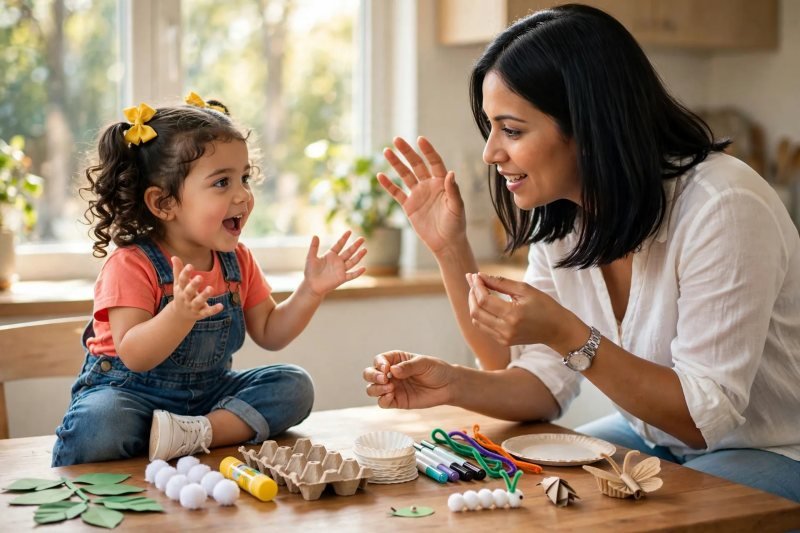
1. Tell the butterfly story: "Once there was a tiny egg on a leaf. Out hatched a hungry caterpillar. It ate and ate, then wrapped itself up like a sleeping bag. When it woke up, it had WINGS!" Show the stages getting bigger with your fingers and chant the four names — egg, caterpillar, chrysalis, butterfly.
-
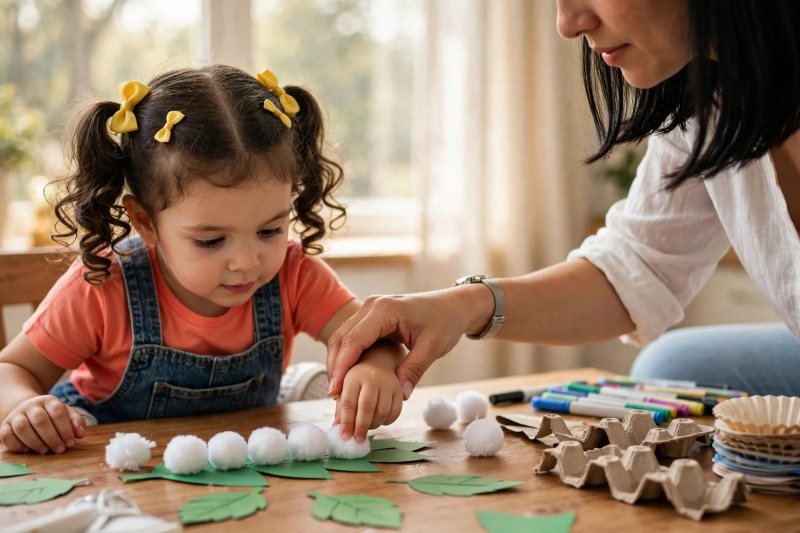
2. Make the egg stage: give your child a green paper leaf and a glue stick, and let them glue on 5-8 small white pom-poms as butterfly eggs. Count together.
-
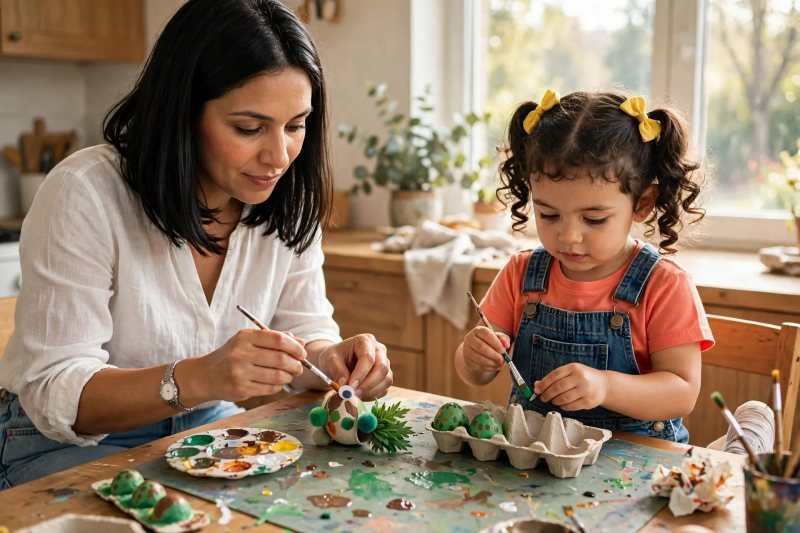
3. Make the caterpillar stage: hand your child an egg-carton strip, bumps up, and let them paint every hump — green, brown, spotty — then add eyes to the front cup.
-
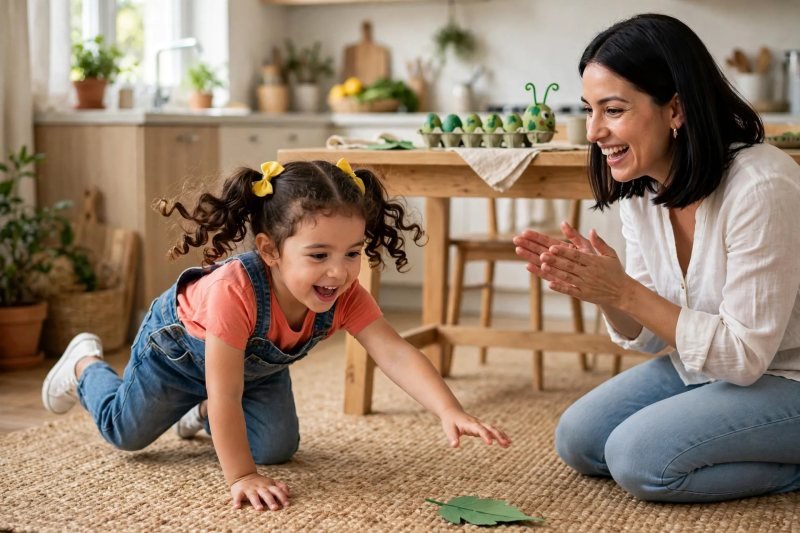
4. Play the caterpillar crawl game: scrunch-and-stretch walk across the room in slow motion, "eating" a paper leaf at each end.
-
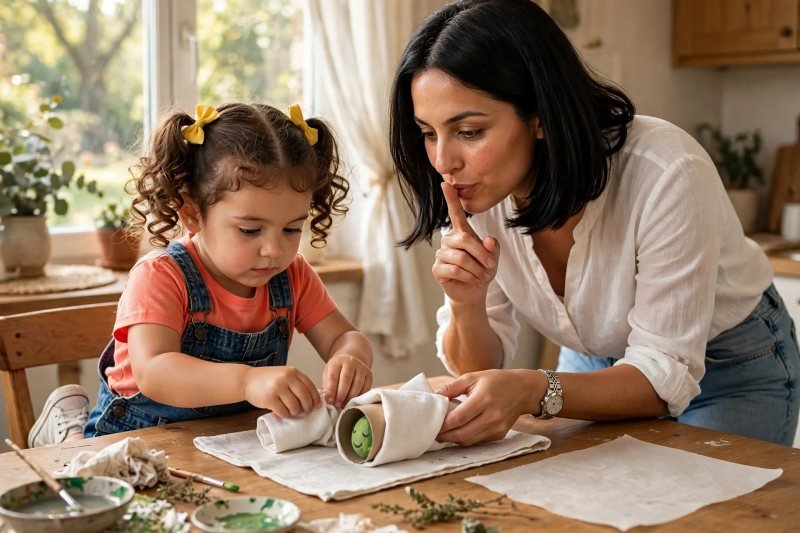
5. Make the chrysalis stage: give your child a toilet paper tube and a small napkin to tuck their caterpillar inside, folded like a sleeping bag. Whisper now.
-
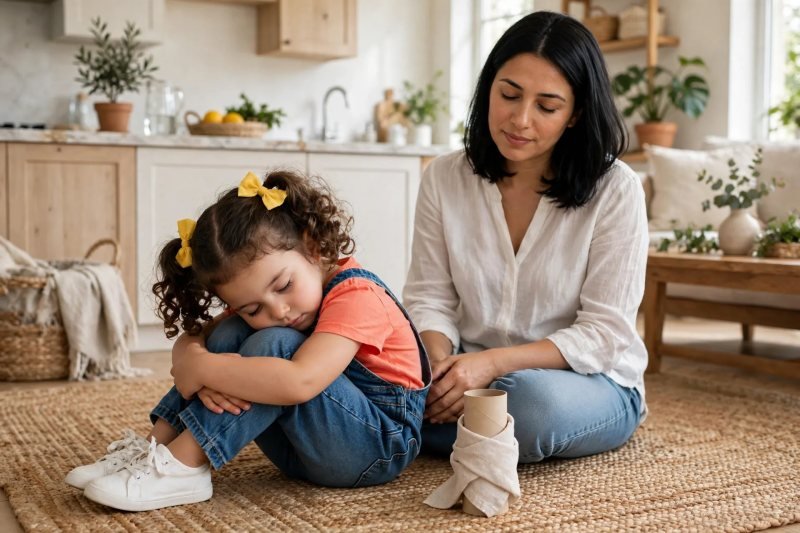
6. Play the waiting game: your child curls up like a chrysalis and counts quietly to ten, then twenty. You play too.
-
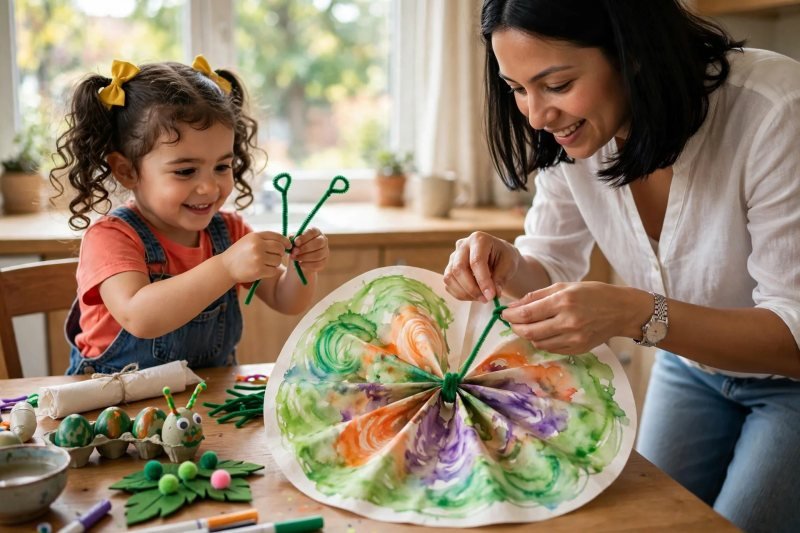
7. Make the butterfly: hand your child a coffee filter and markers for wild swirls and dots. Dab a little water to make the colors bloom, then pinch the middle and wrap a pipe cleaner around it, twisting the ends into antennae.
-
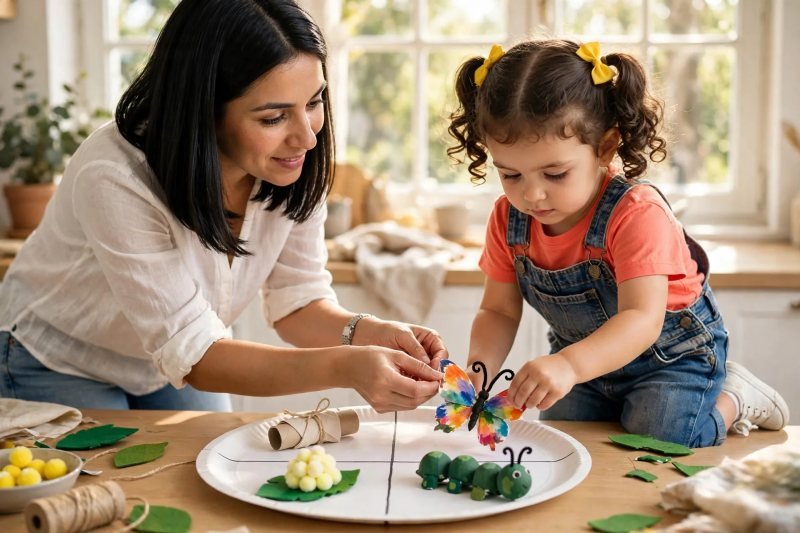
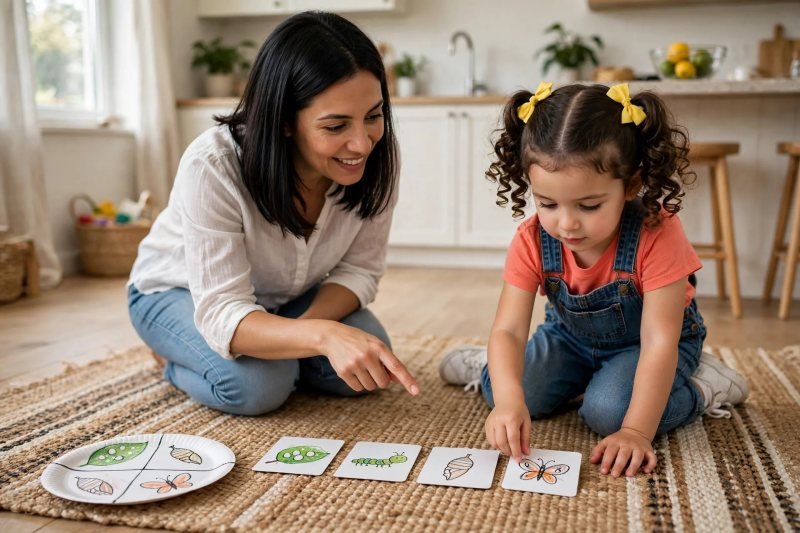
8. Build a life-cycle wheel: your child places one stage in each quarter of the paper plate, in order: pom-pom eggs, painted caterpillar, wrapped chrysalis, coffee-filter butterfly. Draw arrows showing the cycle going around.
-
9. Play the sequencing game: draw four simple cards — egg on leaf, caterpillar, chrysalis, butterfly — and mix them up. Ask your child to order them while saying each name.
-
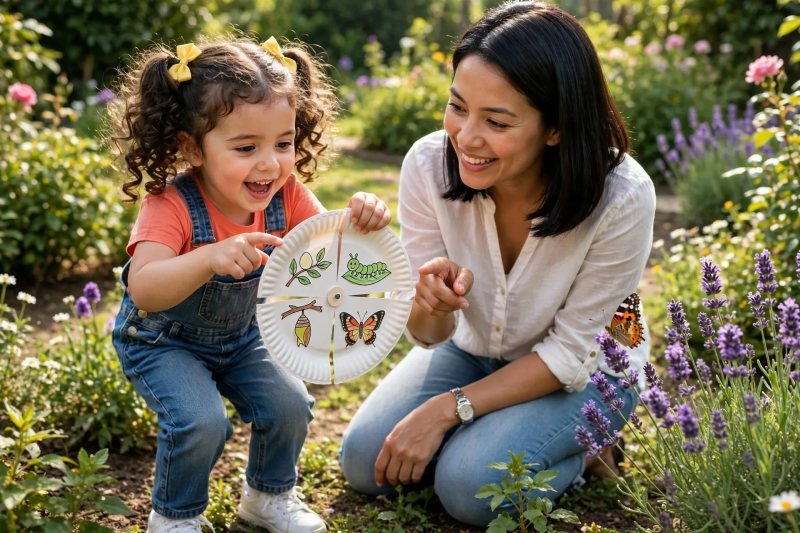
10. Retell the cycle and go spot butterflies: take the wheel outside and watch butterflies on flowers. Ask your child to retell the cycle.
-
## How do you introduce the life cycle of a butterfly to a preschooler?
-
With a tiny story: "Once there was a tiny egg on a leaf. Out hatched a hungry caterpillar. It ate and ate, then wrapped itself up like a sleeping bag. When it woke up, it had WINGS!" Show the stages getting bigger with your fingers and chant the four names — egg, caterpillar, chrysalis, butterfly. This story is the thread every later step hangs on, so say it slowly and let them join in.
-
## What did the butterfly lay on the leaf?
-
Teeny eggs! Give your child a green paper leaf (or a real one) and a glue stick, and let them glue on 5-8 small white pom-poms as butterfly eggs. Count together: "Egg one, egg two…" The glue dots double as fine-motor practice. Mention that real eggs are this tiny — yours are just big enough to see.
-
## How does the egg become a caterpillar?
-
Out hatches a hungry caterpillar, also called a larva. Hand your child an egg-carton strip, bumps up, and let them paint every hump — green, brown, spotty — then add eyes to the front cup. While it dries, explain that a real caterpillar's whole job is to eat leaves and grow bigger and bigger. Nearly always the favorite stage.
-
## Can you move like a caterpillar?
-
Clear a little runway. Show the scrunch-and-stretch walk: scrunch your whole body up, stretch long, scrunch again. Let your child wiggle across the room in slow motion, "eating" a paper leaf at each end. Call out "eat, eat, eat… now GROW!" The sillier each trip, the better — the word *caterpillar* sticks far better after this than after any flashcard.
-
## What happens inside the chrysalis?
-
The full-grown caterpillar wraps itself in a special case — a chrysalis is the butterfly's version (moth caterpillars make cocoons) — and rests while its body changes. Give your child a toilet paper tube and a small napkin to tuck their caterpillar inside, folded like a sleeping bag. Whisper now. Everything is quiet, and nobody may peek. The suspense is delicious.
-
## Why does the chrysalis have to wait?
-
Growing wings takes time — about two weeks in real life! Have your child curl up like a chrysalis and count quietly to ten, then twenty. You play too — it only works if the grown-up sits still. When the wait feels complete, whisper: "Something is happening… the chrysalis is wiggling!" Patience practice disguised as drama.
-
## What comes out of the chrysalis?
-
A butterfly — the big reveal! Hand your child a coffee filter and markers for wild swirls and dots. Dab a little water to make the colors bloom, then pinch the middle and wrap a pipe cleaner around it, twisting the ends into antennae. Flutter it around the room. This adult butterfly won't grow anymore; it flies, drinks flower nectar, and eventually lays eggs to start the cycle again.
-
## Can you fit the whole story on one plate?
-
Draw a cross on the paper plate to make four quarters (you do this). Your child places one stage in each quarter, in order: pom-pom eggs on a leaf, the painted caterpillar, the wrapped chrysalis, and the coffee-filter butterfly taped flat. Draw arrows showing the cycle going around. The whole life cycle of a butterfly for kids in one glance — straight to the fridge.
-
## Can you line the stages up in the right order?
-
Draw four simple cards — egg on leaf, caterpillar, chrysalis, butterfly — and mix them up. Ask your child to order them while *saying* each name: "Egg… caterpillar… chrysalis… butterfly!" Scramble and replay; round two is always faster. For a challenge, flip the cards face down first. Sequencing is a core preschool skill, and the life cycle gives it a real story.
-
## Where can we see this in real life?
-
Take the wheel outside — a garden, a park, even a flower bed by the sidewalk. Watch butterflies resting on flowers, drinking nectar, flapping their wings. Ask your child to retell the cycle: "First the egg… then the caterpillar…" Warm, calm, sunny mornings in spring and summer are best. If you used a raising kit, release the butterflies where the kit directs — look at wild insects, don't handle them.


Make it easier
- Split it: steps 1-5 one day, the butterfly and wheel the next. Little ones tire faster than the full cycle suggests. - Use stickers instead of paint on the caterpillar — no drying time, no mess. - Draw the wheel quarters yourself; let your child place the pieces.
Make it harder
- Teach the science words: *larva* (caterpillar stage) and *pupa* (chrysalis stage). Four-year-olds love big words. - Ask "what if": "What if the egg hatched on a rock instead of a leaf?" Gentle cause-and-effect thinking. - Keep a butterfly diary: draw one butterfly seen each day for a week.
Other ways to play it
- - **Playdough:** Build all four stages — tiny white egg balls, a rolled caterpillar, a wrapped chrysalis, a flattened butterfly with wings.
- - **Snack:** A celery "leaf" with cream cheese holds white-chocolate-chip eggs; a banana half with grape legs is the caterpillar; a rolled tortilla is the chrysalis; a butterfly-shaped sandwich is the finale.
- - **Sensory bin:** Hide the four stages (toy or crafted) in shredded green paper "grass"; dig them out and order them.
How it changes by age
- - **3-year-olds:** You lead the story and help with gluing. They'll remember the four stage names and love the movement games most. Keep it under an hour.
- - **4-year-olds:** Let them run the wheel and the sequencing game, and introduce *larva* and *pupa*. Many can retell the whole cycle to a grandparent afterward.
What they're learning
- **Science:** The four stages — egg, caterpillar (larva), chrysalis (pupa), butterfly — and the idea that living things change as they grow. - **Sequencing:** Putting stages in order builds early logic and storytelling skills. - **Vocabulary:** *Chrysalis*, *nectar*, *emerge*, plus *larva* and *pupa*. - **Patience and observation:** The waiting game and the nature walk practice stillness and looking closely. For another slow-change project, our [bean in a bag experiment](/activities/bean-in-a-bag-seeds-sprout/) stretches the watching over a full week. - **Fine motor skills:** Gluing pom-poms, painting humps, twisting pipe cleaners — more hand-strengthening ideas in our [fine motor activities for preschoolers](/activities/fine-motor-activities-for-preschoolers/).
Clearing up
1. Wipe paint off hands and the table before the coffee-filter butterfly. 2. Let the caterpillar dry fully before the cocoon wrap, or paint will smear. 3. Save one clean coffee filter per child for step 7. 4. Store the life-cycle wheel flat so the wings don't get crushed.
Questions parents ask
What are the 4 stages of the butterfly life cycle for kids?
How do you explain the butterfly life cycle to a 3-year-old?
What is the difference between a chrysalis and a cocoon?
Can preschoolers raise real caterpillars at home?
When is the best time to see butterflies outside with kids?
Steps 1-9 make a lovely rainy-day project; save step 10 for the first sunny morning. The crafts stand completely on their own — a raising kit is optional, not required.


