


Tornado in a Jar: Easy Weather Experiment for Kids
Kids fill a clear plastic jar with water, add a squirt of dish soap and a splash of vinegar, then swirl it fast to create a spinning funnel — a hands-on way to see the shape of a tornado's swirl up close.
To make a tornado in a jar, fill a plastic jar three-quarters full with water, add a squirt of dish soap and a splash of vinegar, and screw the lid on tight. Swirl the jar in fast circles, then stop and watch: a funnel dips down through the middle of the water. It shows the shape of a tornado's spin — real tornadoes are made of spinning air, not water.

The short version
- A tornado in a jar needs only a plastic jar, water, dish soap, vinegar, and a tight-fitting lid.
- Swirl the jar hard in circles, then stop and watch a funnel form in the middle of the water.
- Faster swirling makes a bigger funnel; the funnel fades as the water slows down.
- It shows the SHAPE of a tornado's spin — real tornadoes form from spinning air in storms.
- Always use plastic, never glass, and have an adult check the lid before every round.
- Age
- Ages 4–5
- Prep
- 5 min
- Mess
- Low
- Difficulty
- Easy
- Where
- Both
Why kids love this
There is something magical about being told to shake something as hard as you can — and a tornado in a jar demands exactly that. When your child swirls fast enough, a funnel suddenly dips through the middle of the water, and the reaction is almost always the same: a gasp, then "Do it again!" Because kids control the storm themselves, it feels like a trick they get to perform. It moves at a kid's pace — fast, dramatic, repeatable in under a minute — and unlike most weather topics, this storm fits in two small hands. What will my child actually see in the jar? Right after a hard swirl, the water in the middle dips into a skinny funnel while the edges keep spinning around it. The funnel wobbles, narrows, and fades as the water calms. Kids call it a drain, a whirlpool, or a tiny tornado — all good descriptions. Why is swirling the water so satisfying for preschoolers? At ages 4–5, kids are discovering that their own bodies can make things happen — and a jar they can shake, spin, and stop gives instant proof. The swirling is big physical fun, and the funnel feels like a reward earned with their own muscles.
What you'll need
- One clear plastic jar or plastic bottle with a tight-fitting screw-on lid (no glass — the jar gets shaken hard)
- Water
- Dish soap — one squirt
- White vinegar — a splash
- A tray or shallow baking pan to catch spills (optional but smart)
- A towel for drips
Before you start
Gather everything first — once kids start swirling, nobody wants to hunt for the vinegar. Set the jar, soap, and vinegar on a tray, or take it all outside; this is a great patio activity. Have your child wear play clothes and lay a towel under the tray. Most importantly, check that the lid screws on tightly before the first swirl, and re-check it every few rounds.
How to do it
-
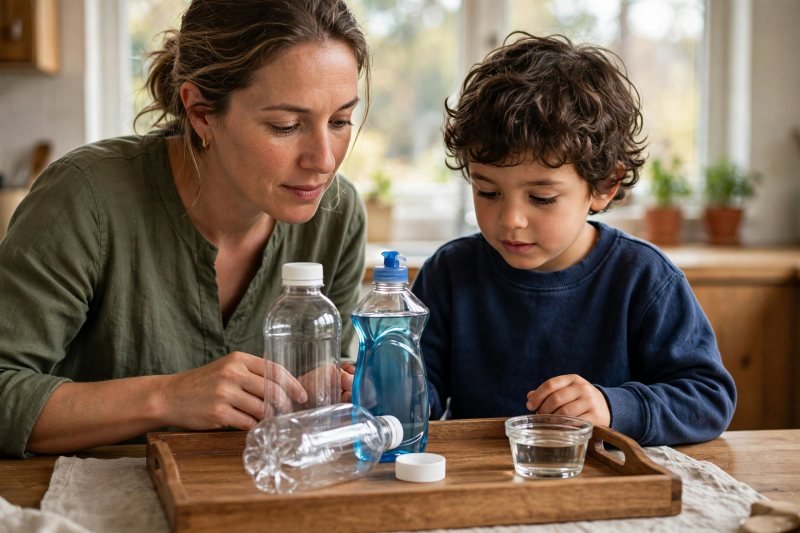
Set out your materials. Place the plastic jar, dish soap, vinegar, and towel on a tray, or take everything outside to the patio.
-
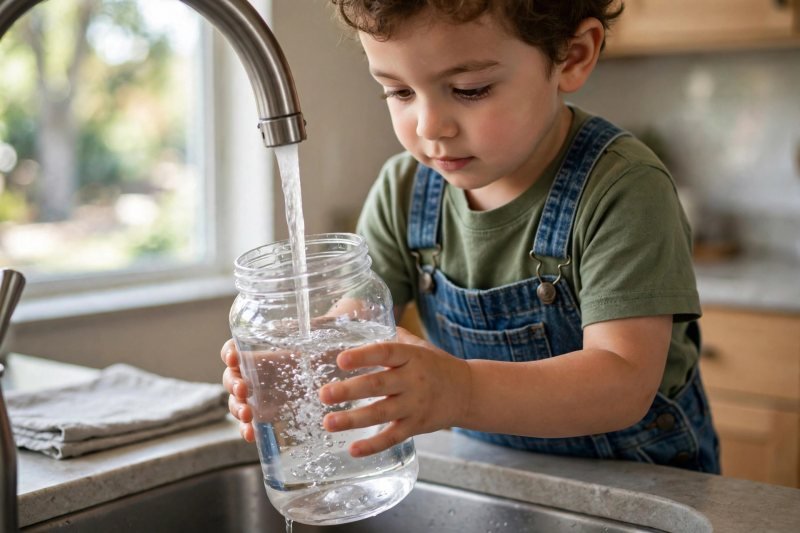
Fill the jar about three-quarters full with water. Room-temperature or cold water both work fine — just skip hot water.
-
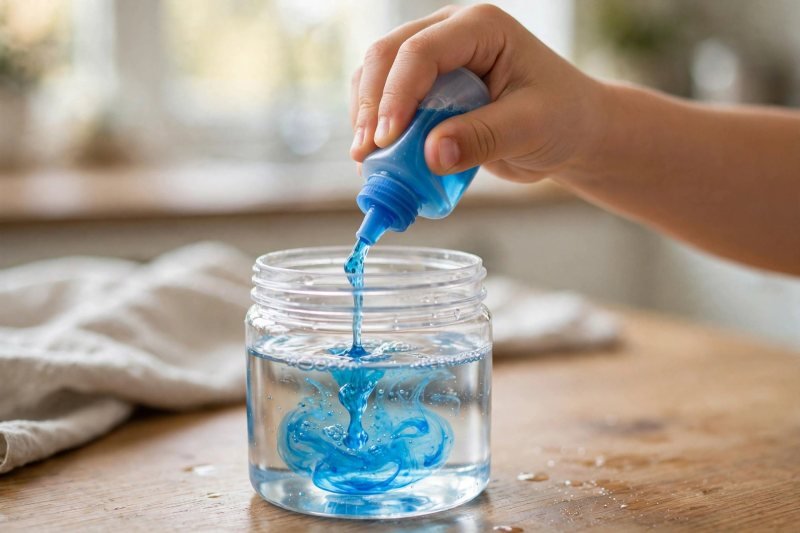
Squeeze one squirt of dish soap into the water. A small squirt is plenty — more soap just means more bubbles.
-
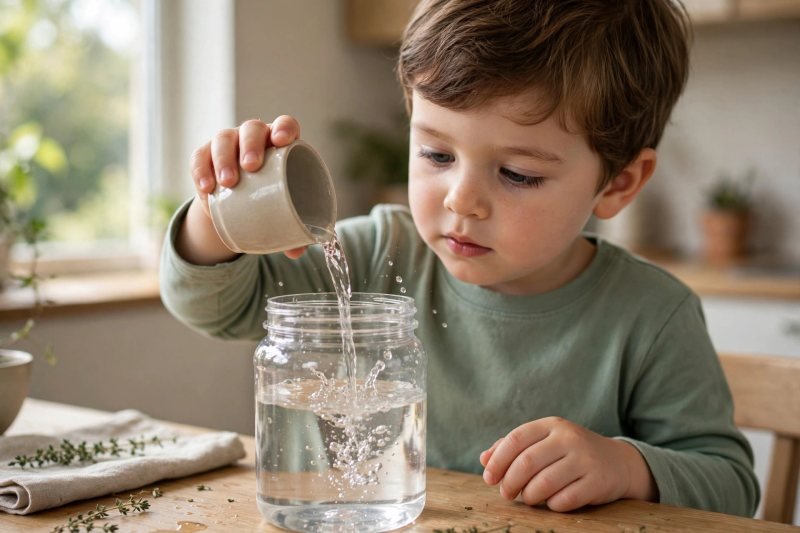
Add a splash of vinegar. Pour slowly so nothing sloshes over the rim.
-
Screw the lid on as tight as it will go. Have an adult double-check it — a loose lid is how experiments turn into floods.
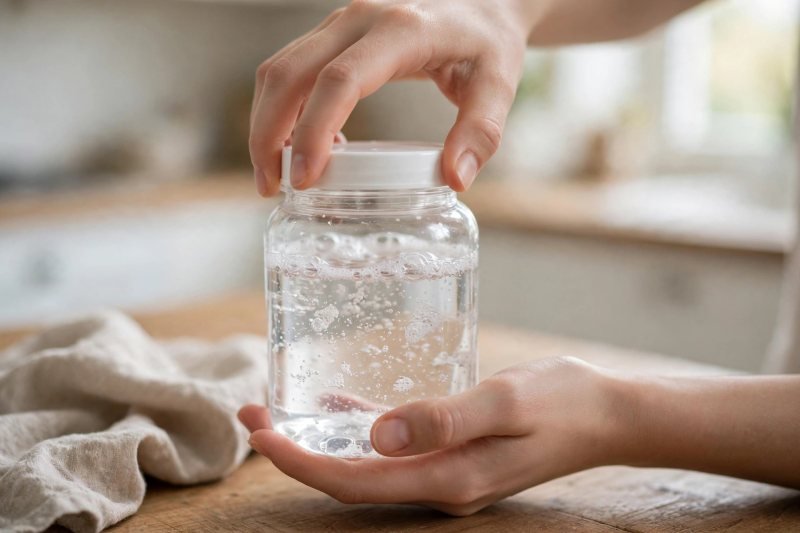
-
Grip the jar with both hands and swirl it in a strong, steady circle, faster and faster. The harder the swirl, the bigger the funnel.
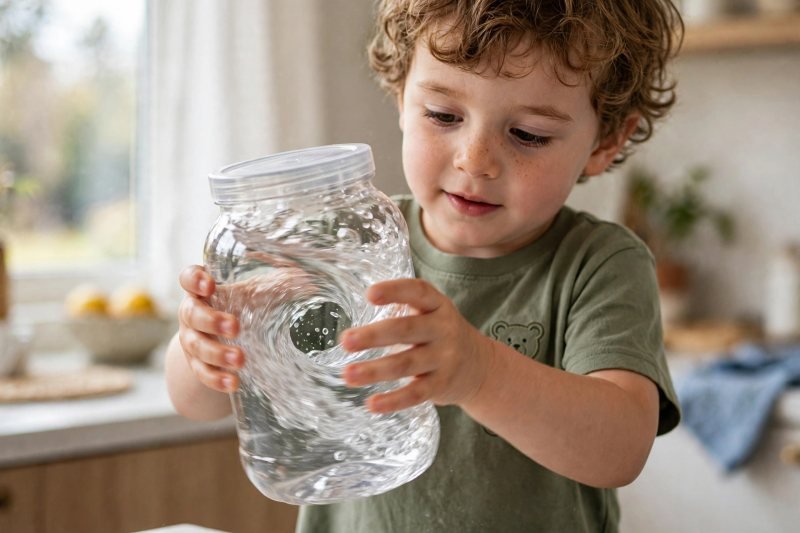
-
Stop suddenly and look at the middle of the water. Watch the funnel dip down from the surface while the edges keep spinning.
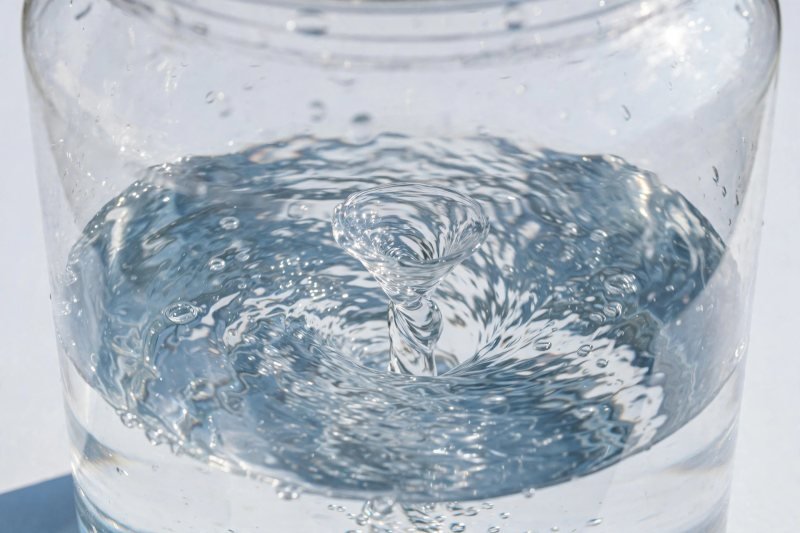
-
Swirl again and watch the funnel a second time. Notice how it wobbles, stretches, and fades as the water slows.
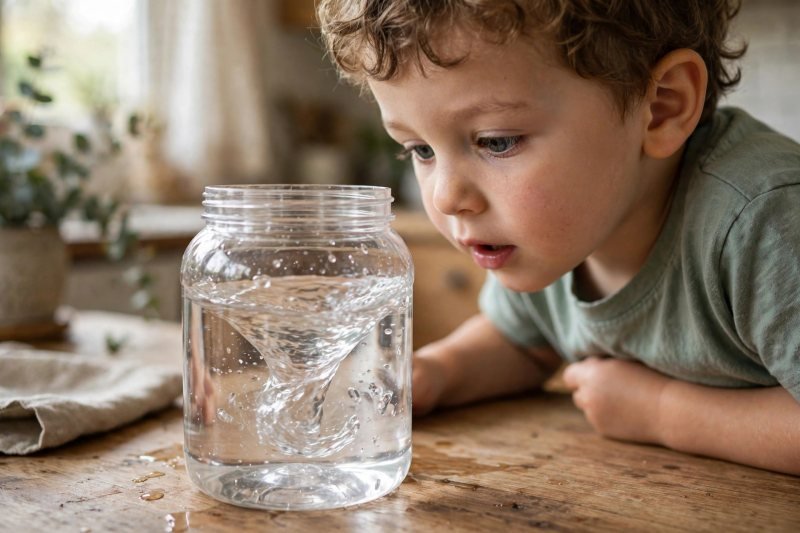
-
Experiment: swirl gently once, then really hard once. Compare the funnels — which is wider, and which lasts longer?
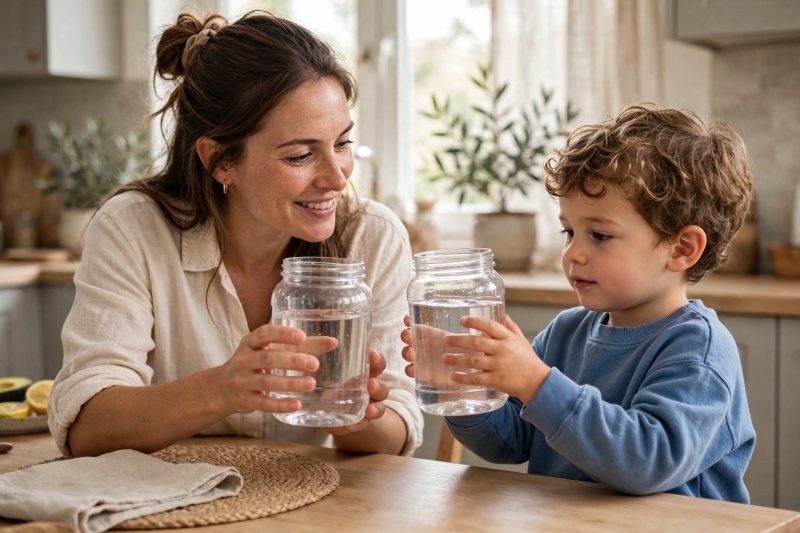
-
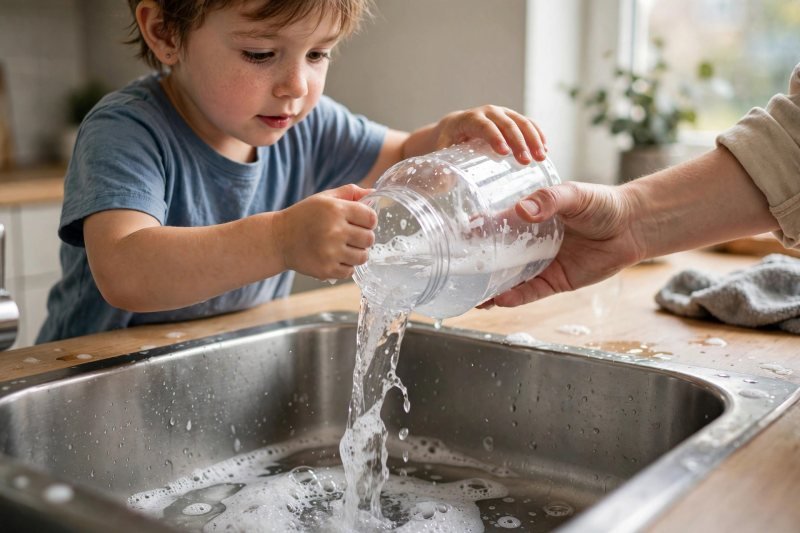
Clean up and talk it over. Pour the water down the sink, rinse the jar, wipe up spills, and ask your child what the funnel looked like and what made it bigger.


Make it easier
Let an adult fill the jar and add the soap and vinegar, so the child only does the swirling — the best part. Choose a small jar little hands can grip with both hands; a huge bottle is hard to swirl fast. If pouring is tricky, put the soap in a small cup and let your child tip it in.
Make it harder
Turn it into a real experiment. Have your child count how long the funnel lasts, then swirl again to beat the record. Try swirling the opposite direction, or change the water level — half, three-quarters, nearly full — and predict which makes the biggest funnel. Older kids can draw the funnel from the side and from the top and compare. Kids who want to watch real weather can also build a simple weather station and track wind and rain for a week. For more kitchen science, our easy science experiments roundup has plenty of next steps.
Other ways to play it
- Add one drop of blue food coloring before the lid goes on — the funnel shows up even more clearly against blue water.
- Sprinkle in a pinch of glitter after the soap. The glitter acts like flying debris and traces the spiral as it spins.
- Try a tall, narrow plastic bottle for a longer, skinnier funnel, or a wide jar for a shorter, wider one.
- Make two jars and race: who can keep their funnel spinning longest?
- If your child loved weather in a jar, try our rain cloud in a jar for toddlers next — another jar, another kind of sky.
- For another kitchen classic with big kid appeal, try our baking soda and vinegar volcano next.
How it changes by age
- Best for ages 4–5, when kids have the grip strength to swirl hard and the focus to watch what happens. Ages 2–3 can watch an adult swirl and shout when the funnel appears — keep the jar in adult hands. Ages 6–8 can run it alone and take on harder challenges: timing the funnel, testing water levels, explaining it to a younger sibling.
What they're learning
Cause and effect: a faster swirl makes a bigger funnel; still water makes none at all. Observation skills: watching the funnel form, wobble, and fade, then describing what they saw. Early science vocabulary: funnel, vortex, swirl, spin, surface — words they will reuse every time they stir a drink or watch a drain. Properties of water: how moving water behaves differently from still water. Fine motor practice: gripping with both hands, pouring, squeezing, twisting a lid. Following multi-step directions: ten steps in order, each depending on the last.
Clearing up
Pour the water down the sink, give the jar a quick rinse, and wipe the tray with the towel. If you used glitter, rinse the jar in a bucket outside rather than the sink so a clump of glitter doesn't go down the drain — or just embrace it and declare it a sparkle jar.
Questions parents ask
What does a tornado in a jar teach kids?
How long does the funnel last in the jar?
Why do you add dish soap to the tornado in a jar?
Can I use a glass jar for the tornado experiment?
Do real tornadoes form the same way as the one in the jar?
What age is a tornado in a jar for?
A note on the science, kept honest: this experiment shows the SHAPE of a tornado's spin, not how tornadoes form. Swirling the water fast makes it spin into a funnel, like the spinning air inside a real tornado — but real tornadoes form in the sky when warm and cold air collide in thunderstorms, not from swirling water in a jar. A good answer when kids ask: "The jar shows what the spinning part of a tornado looks like. Real tornadoes are made of spinning air, and scientists are still studying how they get started." That keeps the wonder without teaching the wrong idea. If no funnel appears, swirl faster and keep going a few seconds longer — a slow swirl just stirs the water — and check the water level, since a jar filled right to the brim leaves no room for the dip to show. Kids who love watching things bubble will also enjoy our dancing raisins experiment — another five-minute science win. If water play is the hit, our sink or float game for toddlers keeps the kitchen science going with just a bowl of water.


