


Skittles Rainbow Experiment for Kids
Arrange colorful candies in a circle, add warm water, and watch a rainbow bloom across the plate. This simple Skittles rainbow experiment turns kitchen science into a 10-minute color reveal kids love.
The Skittles rainbow experiment is a simple kids' science activity: arrange colorful coated candies in a circle on a white plate, then an adult pours warm water into the center. The color coating on each candy dissolves in the warm water and spreads inward, forming a vivid rainbow ring within a few minutes. It takes about 10–15 minutes and suits ages 4–5.

The short version
- Arrange coated candy in a circle near the rim of a white plate.
- An adult pours comfortably warm (never hot) water into the center of the plate.
- The candy's color coating dissolves and drifts inward, forming a rainbow.
- Great for ages 4–5: sorting, predicting, and watching cause and effect.
- Do not eat or drink the mixture afterward — pour it down the sink.
- Age
- Ages 4–5
- Prep
- 5 min
- Mess
- None
- Difficulty
- Easy
- Where
- Indoor
Why kids love this
There is something almost magical about a plain white plate turning into a rainbow without any paint, pens, or crayons involved. In this classic Skittles experiment, the payoff is fast: within a minute or two of the water going in, bright streaks of red, orange, yellow, green, and purple start racing toward each other across the plate. Four and five-year-olds are at the perfect age for this one. They can do most of the setup themselves — sorting candies by color and lining them up in a circle is a satisfying hands-on job — and the result is immediate and dramatic, which is exactly how young children learn best. Guessing "which color will win the race to the middle?" turns watching into an active game. It takes only a few minutes, fits neatly before snack time, and uses just a plate, a few candies, and warm water, so you can repeat it whenever your child asks. If your child is hooked on watching colors travel, the celery rainbow experiment shows the same idea at work inside a plant — colored water climbing up a stalk.
What you'll need
- A white plate or shallow bowl (white shows the colors best)
- A handful of round fruit-flavored chewy candies (any colorful coated variety works)
- About half a cup of warm water — comfortably warm to the touch, never hot
- A clear measuring cup or small pitcher for the water
- A tray or cookie sheet to catch drips (optional)
Before you start
Clear a flat spot on the kitchen table and set the tray underneath if you are using one. Open the candy and tip out a small handful — about twenty to thirty pieces is plenty. Warm the water so it feels comfortably warm on the inside of your wrist, like bathwater, and pour it into the measuring cup. Keep the cup where your child cannot knock it over, since a grown-up will handle the pouring step.
How to do it
-
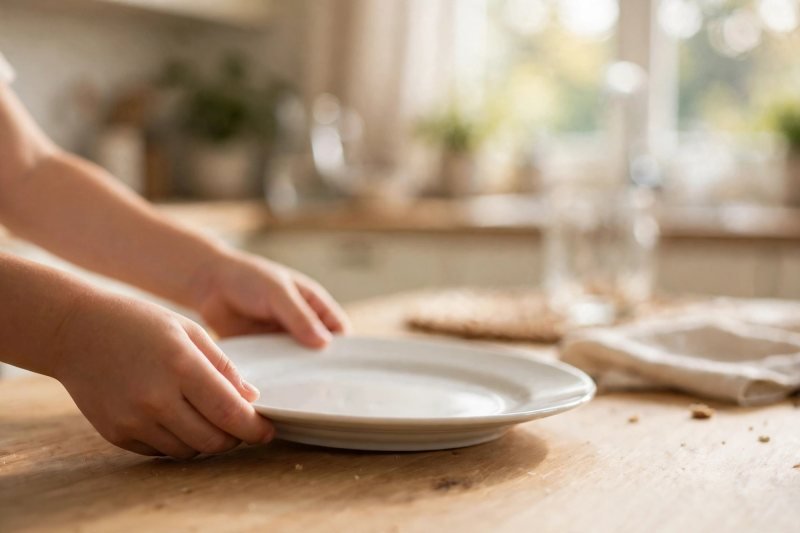
Set the plate down. Place the white plate flat on the table in front of your child.
-
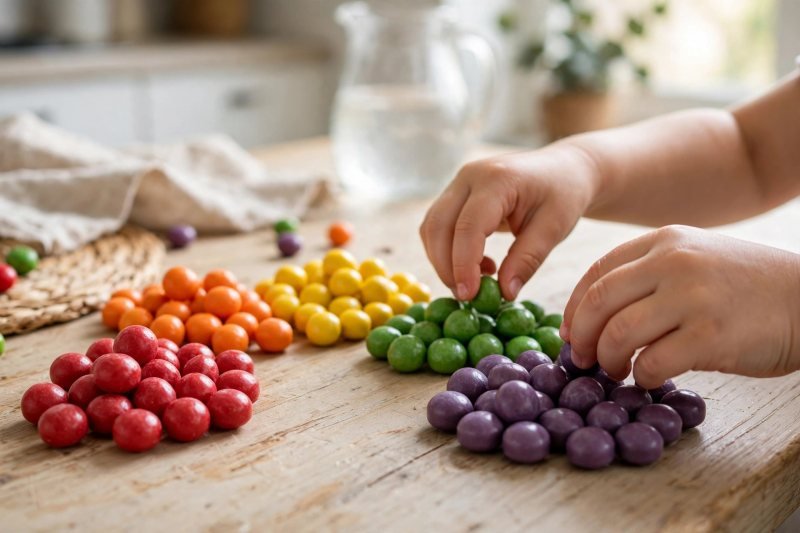
Sort the candies by color. Let your child group the candies into little piles by color on the table.
-
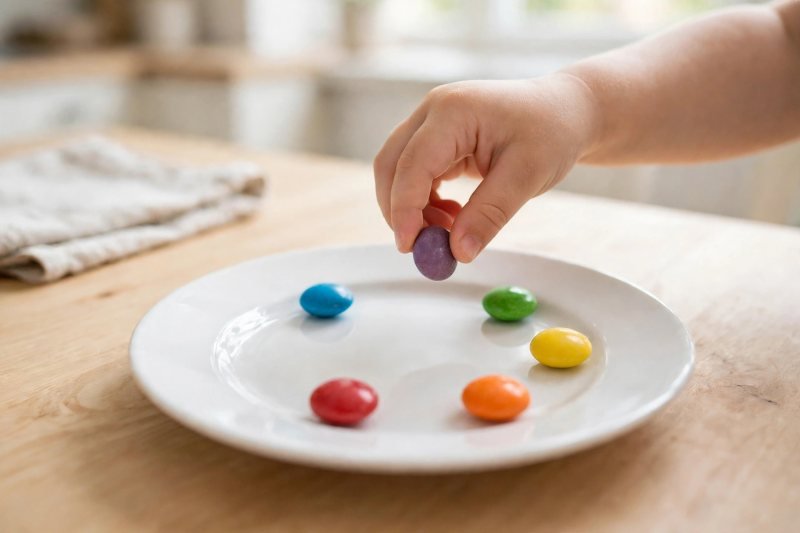
Build the candy circle. Have your child place the candies one by one in a circle around the inside rim of the plate, touching each other.
-
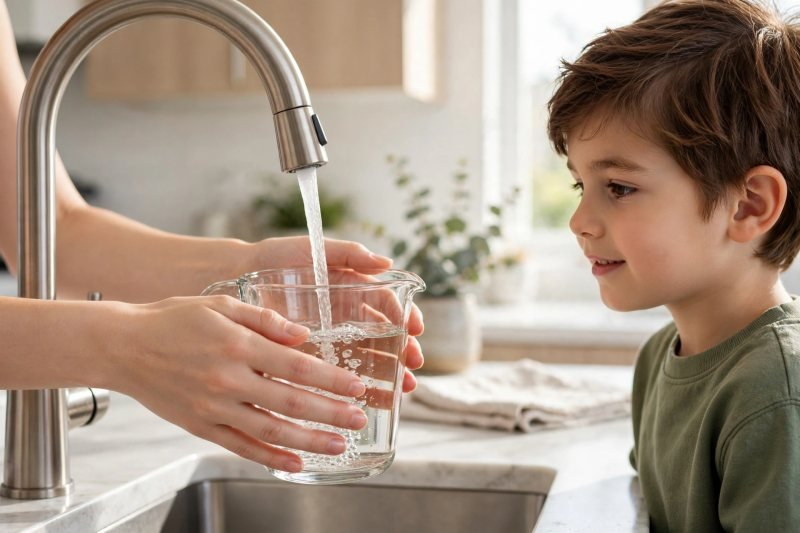
Warm the water. An adult heats the water until it feels warm like bathwater — never hot — and pours it into the measuring cup.
-
Pour into the center. The adult slowly pours the warm water into the empty center of the plate, just enough to cover the bottom without moving the candies.
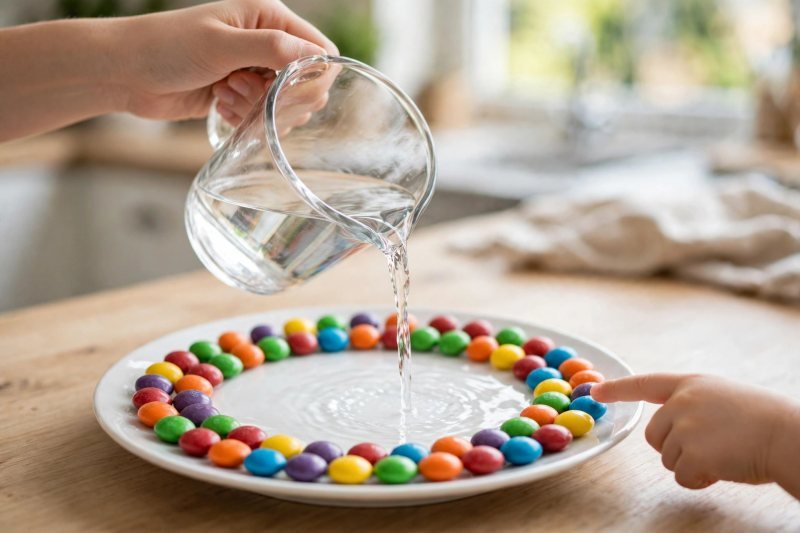
-
Watch the colors bleed. Watch together as each candy starts bleeding its color into the water in bright streaks.
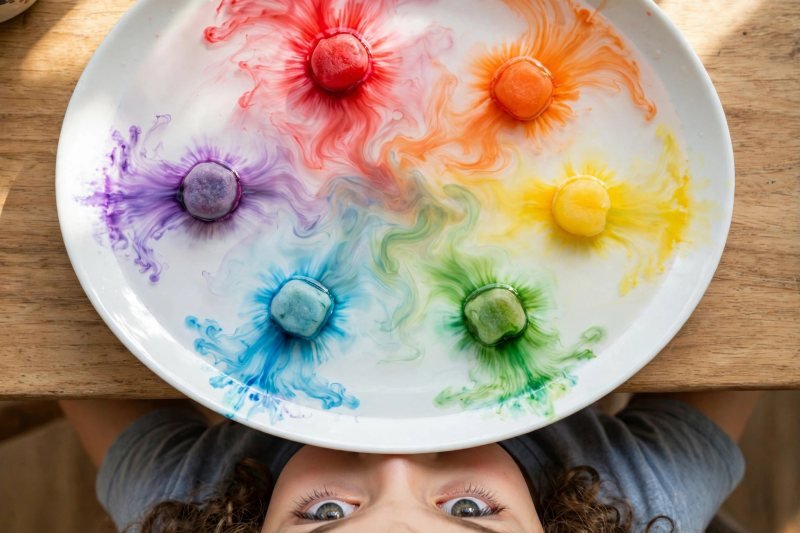
-
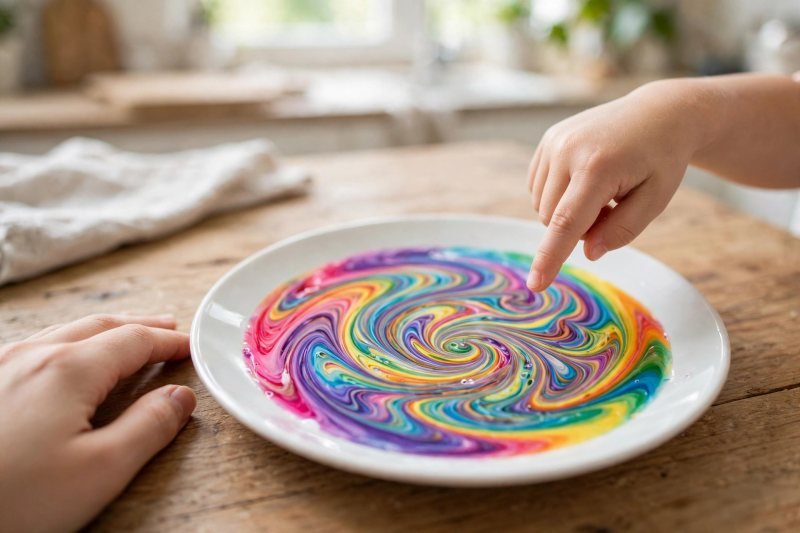
Watch the rainbow form. Keep watching as the colors travel inward and meet, forming a swirling rainbow ring.
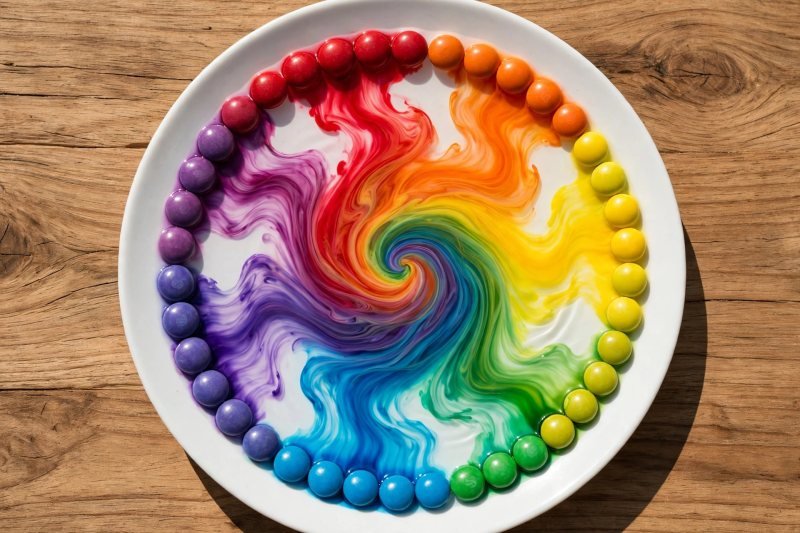
-
Wait and watch it deepen. Wait quietly for two to three minutes and watch the rainbow fill in deeper.
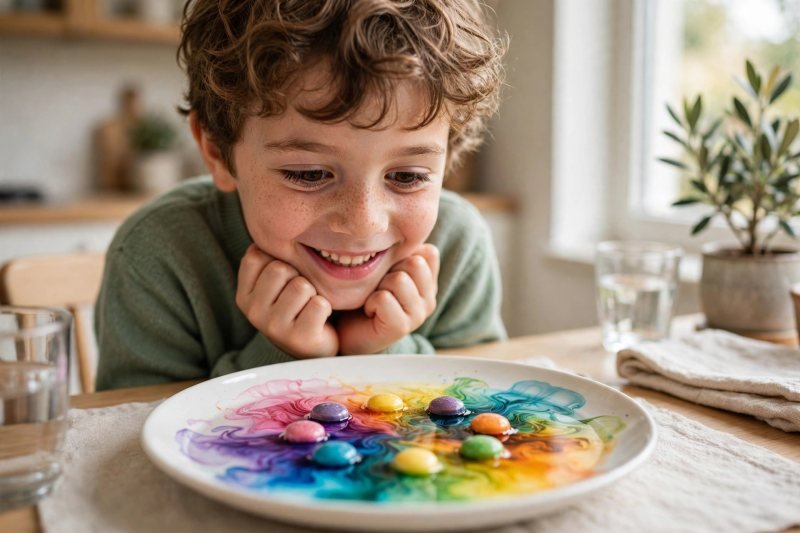
-
Guess the winner. Take turns guessing which color travels farthest and pointing out where colors blend at the edges.
-
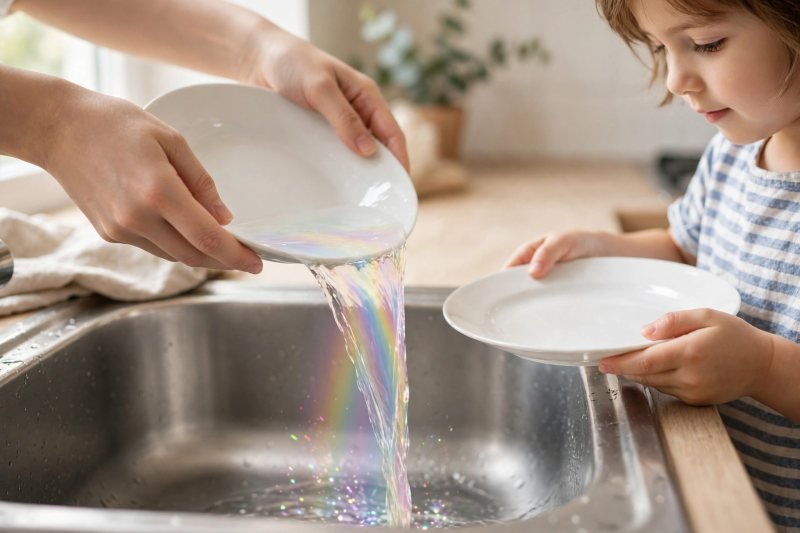
Pour it away together. When finished, pour the water down the sink and rinse the plate together.


Make it easier
Skip the sorting step and hand your child a pre-counted handful of candies in a small bowl so they can focus just on arranging the circle. If lining up a full ring feels fiddly, use fewer candies spaced a little apart — the effect still works. An adult can also arrange the circle the first time, then let your child build it on a repeat round.
Make it harder
After the first rainbow, challenge your child to arrange the candies in color patterns and predict the result: alternating red and white, rainbow order all the way around, or a spiral instead of a circle. Try a second plate side by side with room-temperature water and compare how fast the colors move — a gentle first lesson in how heat speeds things up. For a bigger, fizzier kitchen experiment, try the baking soda and vinegar volcano for preschoolers next.
Other ways to play it
- M&M or other coated candies: any candy with a hard colored shell dissolves the same way — compare two brands on two plates.
- Shapes instead of circles: line the candies into a star, a heart, or your child's initial and watch the colors flood the shape.
- Two-color duel: use only red and blue candies and watch the purple blend where they meet.
- Cold versus warm: run one plate with cold water and one with warm water side by side and see the difference.
How it changes by age
- Three-year-olds can enjoy the watching with an adult handling every other step. Children at 4 and 5 can sort and place the candies independently, practice patience while the colors develop, and talk about what they see. Expect a 4-year-old to want to poke the water — gently redirect them to pointing, since touching stirs the colors. At 5, most children can make a genuine prediction before the pour and check it afterward, which is the heart of early scientific thinking.
What they're learning
Cause and effect: warm water goes in, color moves out — a clear, visible chain of events. Dissolving: the color coating on the candy dissolves in the warm water and spreads out. Color recognition and sorting: grouping candies by color builds real math foundations. Keep the color play going with these color mixing activities for preschoolers. Prediction: guessing what will happen before the pour is the first step of the scientific method. Patience and observation: the rainbow takes a couple of minutes, so children practice watching carefully and describing change over time. Fine motor control: picking up and placing small candies strengthens the finger muscles needed for writing.
Clearing up
Pour the colored water carefully down the kitchen sink and toss the used candies in the trash. Rinse the plate with soap and water — the food coloring washes off easily while it is still wet, so do not leave it to dry. Wipe the table with a damp cloth, dry the tray if you used one, and put the measuring cup back. The whole cleanup takes about two minutes, which is one more reason this experiment is so parent-friendly.
Questions parents ask
Why do the colors make a rainbow instead of mixing together?
Does the water have to be warm for the Skittles experiment to work?
Can toddlers do the Skittles rainbow experiment?
Why can't we eat the candy after the experiment?
What can I use instead of Skittles for this experiment?
Why did my Skittles rainbow turn brown?
This is the classic Skittles rainbow experiment classrooms have used for years because it simply works: the sugar-based coating dissolves quickly in warm water, and the light colors drift inward without mixing into brown. If your rainbow looks muddy, the plate was probably moved mid-experiment or the water was poured too fast. If the colors look pale or slow to appear, the water was probably too cool, or the candies are stale — try warmer water and a fresh bag. We use "Skittles" only as the activity's common name; any round, coated, brightly colored candy gives the same result, and no brand claims are made here. For a messier color experiment, try the magic milk experiment next time. And when the rainbow fades, keep the science going with the dancing raisins experiment — or watch a balloon blow itself up with baking soda and vinegar.


