


Sink or Float Boat Challenge for Pre-K
This sink or float experiment for pre-K turns foil, paper, and a tub of water into an engineering contest: your child builds boats, predicts how many coins each one holds, then watches the results. Ages 4–5.
A sink or float experiment for pre-K works best as a boat-design challenge: kids build boats from foil and paper, predict how many pennies each will hold, then test them one coin at a time in a tub of water. Wide, flat foil boats almost always win — they spread the weight across the water. Expect 30–40 minutes, medium mess, and one very proud little engineer.

The short version
- Built for ages 4–5: an engineering challenge (design, test, redesign), not an observation game.
- Predict before every test — the guessing is where the science learning happens.
- Wide, flat foil boats hold far more pennies than tall, narrow ones; paper boats soak and sink.
- Water safety throughout: adult within arm's reach, choking-hazard warning for coins with under-3s, dry floors.
- Includes a printable observation sheet for drawing predictions and recording coin counts (CMS Downloads repeater at publish time).
- Age
- Ages 4–5
- Prep
- 10 min
- Mess
- Some
- Difficulty
- Medium
- Where
- Both
Why kids love this
Loading a boat with treasure until it tips is irresistible — and your 4- or 5-year-old is the engineer, not a spectator. They squish the foil, drop the coins in one by one, and gasp when the boat finally goes down. Then the redesign, where THEIR idea makes boat number two hold even more.
What you'll need
- Aluminum foil — 2 sheets, each about 12 inches square
- Plain paper — 2 sheets (for the "challenge round")
- Masking tape — a few short strips, for patching
- Pennies or similar coins — about 35, counted into a small cup (swap for poker chips if younger siblings are around)
- A large, wide tub or storage bin — at least 12 inches across, filled 3–4 inches deep with lukewarm water
- 2 bath towels — one under the tub, one for drying hands
- The printable observation sheet (downloads at publish time), plus crayons or a marker
Before you start
Pre-tear the foil squares and set out the paper — this skips the crinkly tug-of-war. Count the pennies into the cup. Fill the tub with lukewarm water, 3–4 inches deep, and set it on a towel on the kitchen floor or a low table your child can reach. Wipe the floor around the tub dry — wet tile is slippery.
How to do it
-
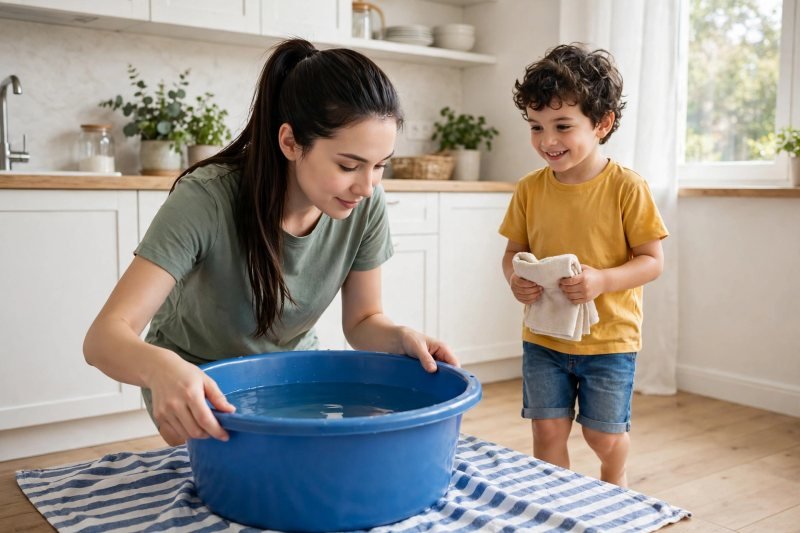
Set up the water station together. Your child carries a towel to the spot while you carry the tub, then set it on its towel and let them swish one hand in the water — say, "Today you're a boat engineer. Your job: build boats and see how many pennies each one holds before it sinks."
-
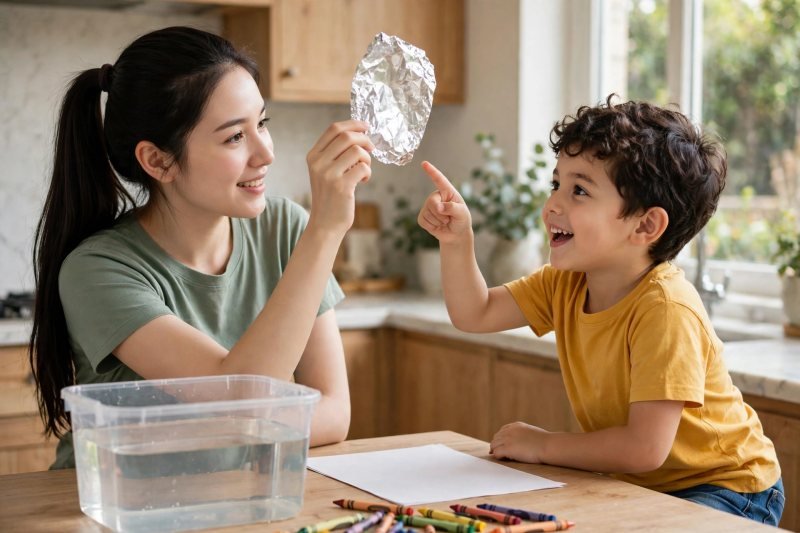
Predict before touching anything. Hold up one sheet of foil and ask, "Will a foil boat sink or float — and how many pennies can it hold?" — then record their answers on the observation sheet, since predicting first and testing second is the whole game and wrong guesses get celebrated like real engineers do.
-
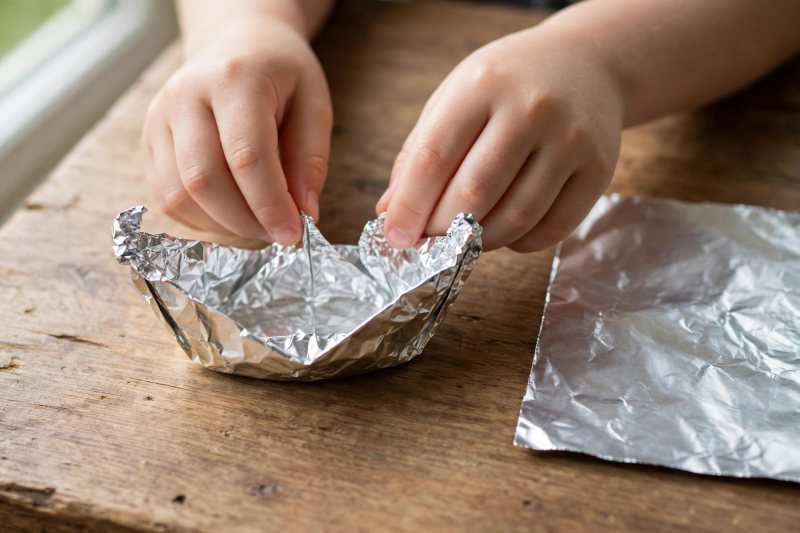
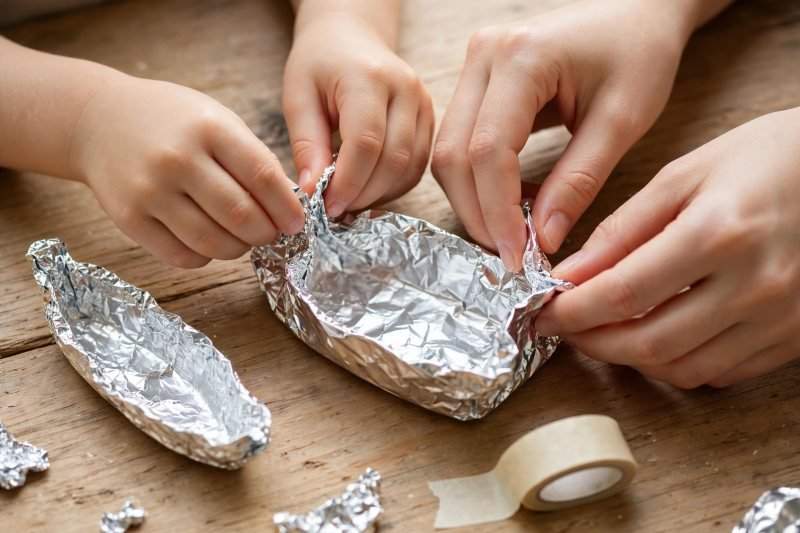
Build boat 1 from foil. Curl the edges of one foil sheet up about an inch all around and pinch the corners into a crinkly little raft, aiming for walls high enough to keep water out rather than pretty — let your child do the pinching, and press any torn corner back together or patch it with tape.
-
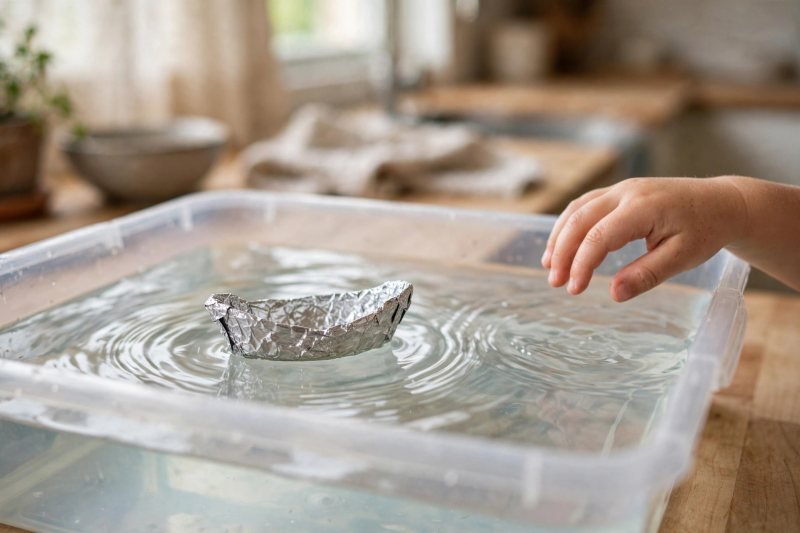
Float test the empty boat. Set boat 1 gently on the water and cheer, "It floats!" — then ask, "Why does the boat float when a penny sinks?" and, after letting them wonder, share the simple truth: "The boat spreads its weight out across the water, while the penny is all heavy in one little spot, so it sinks."
-
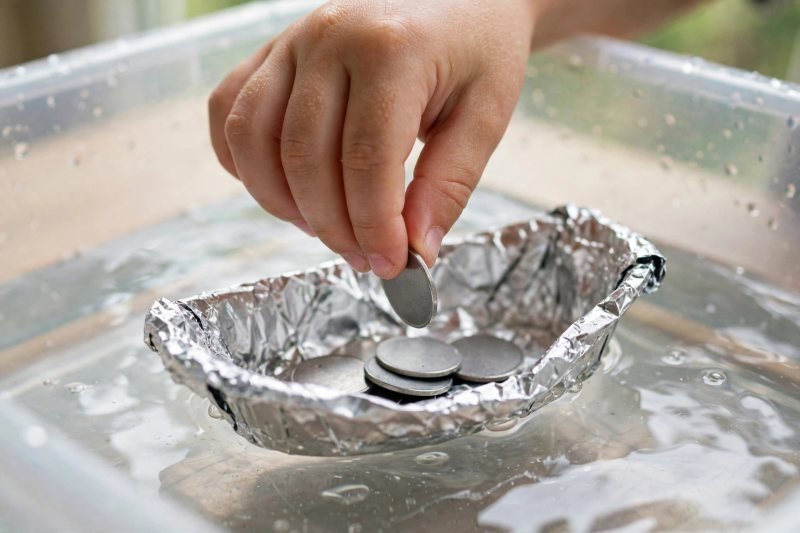
Load the boat, one penny at a time. Your child places one penny in the center at a time — slow and careful is the skill — while you count together out loud, pausing every five or so to ask, "Still floating? How many more do you think?"
-
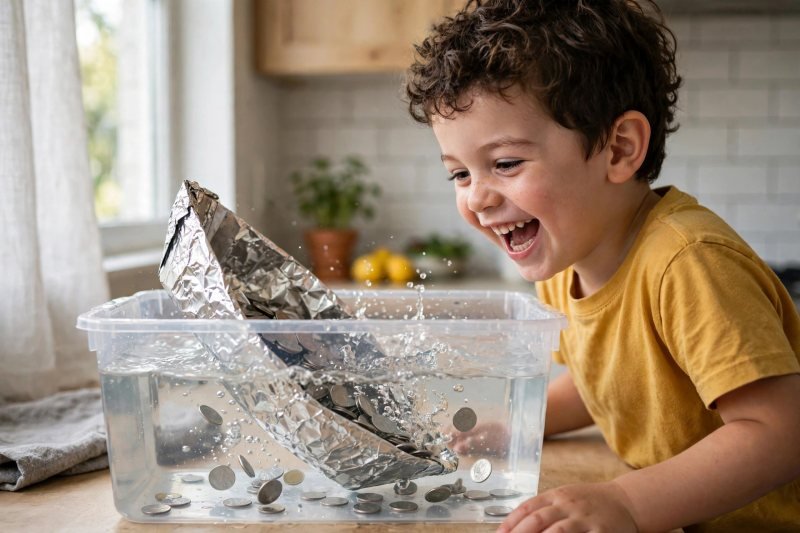
Watch it sink — and celebrate the number. Eventually water creeps over an edge and down she goes, so call out, "How many? Let's count!" — then fish the pennies out, count them back into the cup, record the final number next to the prediction on the sheet, and give close guesses a high five and way-off guesses an even bigger one.
-
Redesign: build boat 2 wider and flatter. Ask, "How could we make a boat that holds more pennies?" and guide rather than tell — "What if it was wider? Taller sides?" — then build boat 2 together as a wide, flat barge with taller sides and talk about what changed and why it should hold more.
-
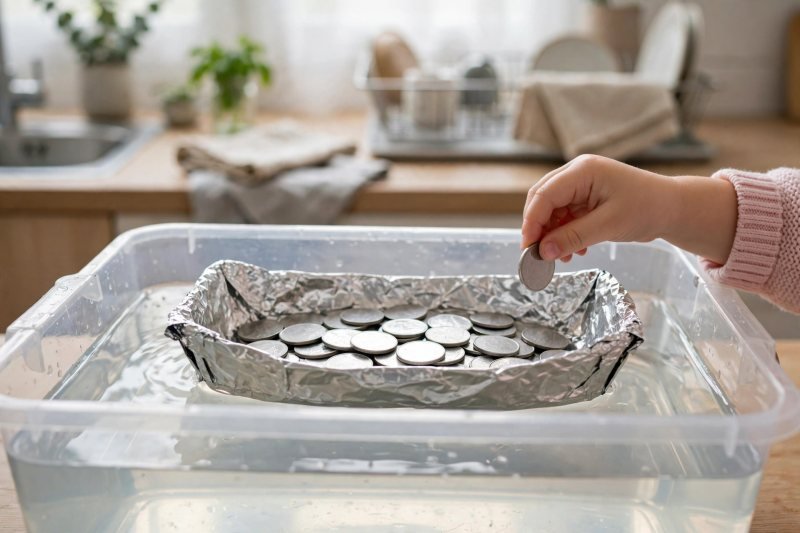
Test boat 2 — predict again, count again. Make a new prediction — "How many pennies this time?" — then load and count the same slow way, and when the wide flat boat wins, ask, "Why did this one hold more?" and let your child explain: "It's wider! The weight spreads out more!"
-
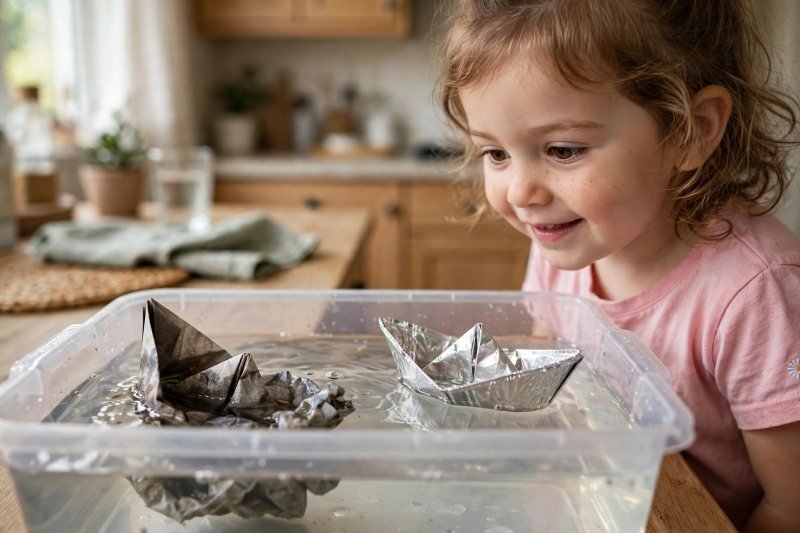
Run the paper boat challenge round. Ask, "Can we make a boat from paper?" and build one the same way, then set it on the water — it floats at first, then sags, soaks through, and sinks even empty — and ask, "Why did the paper boat sink but the foil one didn't?" before sharing the answer: "Paper drinks the water in and gets heavy, while foil doesn't drink water, so it stays strong."
-
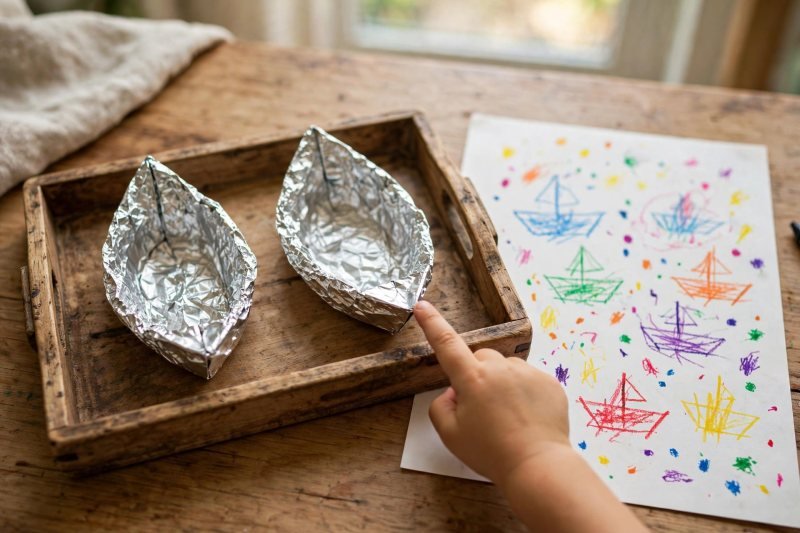
Compare results and tidy up together. Line up both boats on the dry tray and read the sheet together — for example, "Boat 1 held eleven pennies, boat 2 held nineteen — your redesign worked!" (your own numbers will differ) — then let your child announce the winner, count every penny back into the cup, tip the water out together, hang the towels, and set the boats on the windowsill as trophies.


Print it out
Make it easier
For a younger or wiggly 4-year-old, you fold the boats while they handle predicting and penny-loading. Run just one foil boat plus the paper-boat round, and stop counting at ten instead of loading until it sinks.
Make it harder
For a confident 5-year-old, add a third material — a plastic lid, wax paper, or a small container. Have them rank all three by prediction first, then test.
Other ways to play it
- Outdoor regatta: Run it on the patio with a kiddie pool — bigger splashes, no mopping, and race two boats by blowing them across the water. Stretch the water play further with our water play measuring activity. Bathtub edition: Same challenge at bath time, pennies in a plastic cup on the ledge. Nature boats: Try bark, big leaves, or a walnut shell as boat 3. "Natural vs. foil" predictions spark great arguments. Family tournament: Everyone builds their own foil boat. Winner picks the bedtime story.
How it changes by age
- Four-year-olds need you to do most of the folding — their job is predicting, loading, and counting, and that's plenty. Five-year-olds can often fold the whole boat themselves and redesign unprompted — hand them the foil and step back. With a younger sibling nearby, swap pennies for poker chips and keep coins at your end of the table — and if a toddler wants their own turn, try the simpler sink or float game for toddlers instead.
What they're learning
Why does a wider boat hold more pennies? A wide, flat boat touches more water, so the pennies' weight spreads out over a bigger area and the water pushes back up underneath. A tall, narrow boat squeezes all that weight onto a small patch, so it tips and swallows water sooner. Same reason snowshoes keep you on top of snow — and why real cargo ships are wide, not skinny. Early engineering thinking (design, test, redesign); predicting, then checking; counting coins one by one up to 20+ with one-to-one correspondence; comparing more and fewer with our measurement activities for preschoolers; cause and effect; fine-motor control from folding foil and placing coins; persistence through a "failed" test; and the big idea that shape and weight spread decide whether things sink or float.
Clearing up
Fish out every penny and count them back into the cup. Tip the water into the sink or garden. Wring the towels into the tub and wipe the floor — three minutes. Foil boats rinse and dry on the tray; paper boats go in the recycling.
Questions parents ask
What is the best sink or float experiment for a 4-year-old?
How many pennies can a foil boat hold?
Why does a wide boat float better than a narrow one?
Is the sink or float boat challenge safe for preschoolers?
What should kids do if their boat sinks right away?
Run this one twice. The first time, kids are just thrilled by the sinking; a day or two later they start designing with intention — "I'm making the sides TALLER this time" — and their predictions get strikingly better. Staple both sheets into an engineer's logbook. When they're hooked on experimenting, try the dancing raisins experiment or the magic milk experiment next.


