


Toddler Hair Accessories Every Parent Needs (No-Snag Guide)
The only toddler hair accessories most families need: soft seamless elastics, fabric-lined clips, and soft bows or bands — chosen no-snag for fine hair, checked for small parts, and fitted with a tug test. A complete parent's guide for ages 2–3.
Most families need just three toddler hair accessories: soft seamless elastics with no metal join, flat snap clips that are fabric-lined or smooth-coated, and soft bows sewn firmly to those clips or bands. Choose everything no-snag for fine hair, tug-test decorations for small parts, size clips and elastics to the amount of hair, and store the kit out of reach with everything removed before sleep.

The short version
- The essentials are three: seamless elastics (no metal crimp), lined flat snap clips, and soft sewn-on bows or nylon bands.
- No-snag is the rule: if it pulls, pinches, pokes, or needs force, it's out.
- Small parts are the top hazard under 3 — no detachable beads, gems, or glued charms; tug-test every decoration.
- Fit with three tests: tug (holds, releases kindly), slide (stays put in play), wear (no red marks after).
- Two styles cover the week: top puff with an elastic, side sweep with a clip.
- Storage is safety: lidded box, high shelf, everything out of the hair before naps and bed.
- Age
- Ages 2–3
- Prep
- 15 min
- Play time
- 2 min
- Mess
- Low
- Difficulty
- Easy
- Where
- Indoor
Why kids love this
Toddlers love accessories they can see and choose: a bow in their color, a clip they picked from two options, a puff that bounces when they run. When nothing pulls or pinches, hair time stops being a wrestling match and becomes a two-minute ritual with a mirror finish they get to approve.
What you'll need
- Soft elastics made for fine hair: seamless, fabric-covered, no metal crimp join
- Flat snap clips, ideally fabric-lined or smooth-coated
- A few soft bows attached to clips or bands (no glued-on loose decorations)
- One or two soft, stretchy nylon headbands
- A small organizer box or pouch with a lid (stored out of toddler reach)
- A soft brush and a spray bottle of water for styling
- This guide's skip list, for auditing what you already own
Before you start
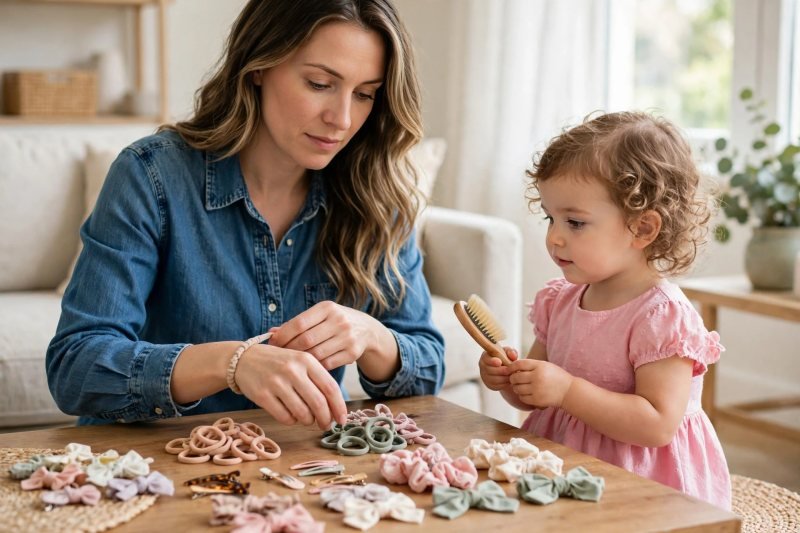
1. Audit first, buy second: empty every accessory you own onto the table and sort with the criteria in the steps below — most families already own half the kit and a quarter of the skip list. 2. Run the small-parts check on everything: any piece that could detach (loose gems, glued charms, wobbly beads) fails for under-3s, full stop. 3. Check edges with your fingertip: clips open and close against your skin; if it scratches or pinches you, it does worse on a toddler. 4. Set up storage before styling: one lidded box, stored on a high shelf, that comes down for hair time and goes straight back.
How to do it
-
Start with the no-snag rule: nothing pulls, pokes, or pinches. Toddler hair is fine, fragile, and attached to a person with strong opinions and a short review process. So every accessory in this guide passes one rule — say it while you sort: "If it snags, pinches, or needs force, it's out." Accessories fail toddlers in three ways: they grip too hard (breaking fine strands and hurting), they hide sharp or hard edges (metal joins, stiff plastic teeth), or they carry small parts that can detach (a choking hazard at exactly the age when everything gets mouthed). Toddler hair accessories that pass are boring in the best way: soft, smooth, one-piece, and forgiving. Accessories are only half the hair routine — knowing how often to wash toddler hair matters just as much, since clean, conditioned hair snags less. Rule set, build the kit from its foundation piece.
-
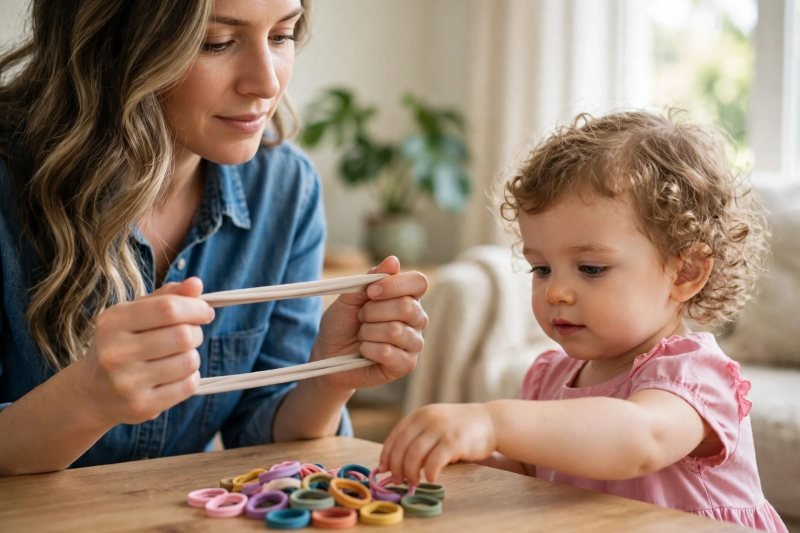
Stock the foundation: soft, seamless elastics. Elastics do 80 percent of toddler hair work — puffs, ponytails, tiny pigtails — so they earn the closest look. Choose elastics made for fine or baby hair: seamless one-piece loops or fabric-covered bands with no metal crimp, because that little metal join is the number-one snag point in most accessory drawers. Size matters: small-diameter elastics suit fine hair and need fewer wraps — two gentle loops usually hold; if you're winding four times, the elastic is too big and the tension too uneven. Test on your own wrist first: the band should stretch smoothly without biting or leaving a fast mark. Keep elastics plain for everyday; the decorative versions belong to the bow category, where the decoration is checked separately. Say: "Soft loop, two wraps, no metal." Foundation stocked, add the second workhorse.
-
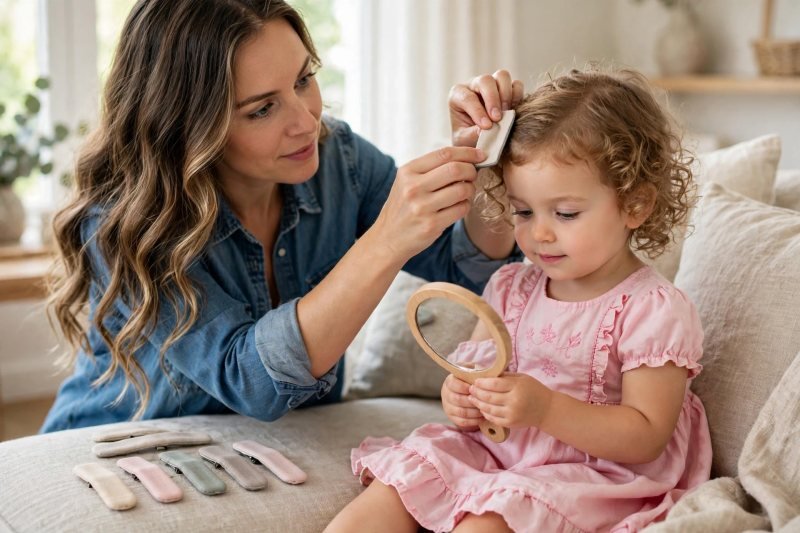
Add flat clips that grip without teeth. Clips hold the sweep, tame the fringe — while bangs are growing out, this growing out toddler bangs guide has the in-between styles that keep them out of eyes — and carry most bows. For ages 2–3, flat snap clips are the reliable pick: they close flush against the head, hold a modest amount of fine hair, and — in fabric-lined or smooth-coated versions — slide out without dragging strands with them. Line the inside of the clip wherever possible; bare metal on fine hair is the other classic snag. Size the clip to the job: too small and it pops off (and becomes floor litter to mouth), too large and it slides or weighs the hair down. Press the clip's hinge and edges with your finger — smooth everywhere, no burrs — and practice the open-close one-handed, because your other hand will always be holding the hair. Say: "Flat, lined, smooth — click and done." Clips sorted, the fun layer goes on top of them.
-
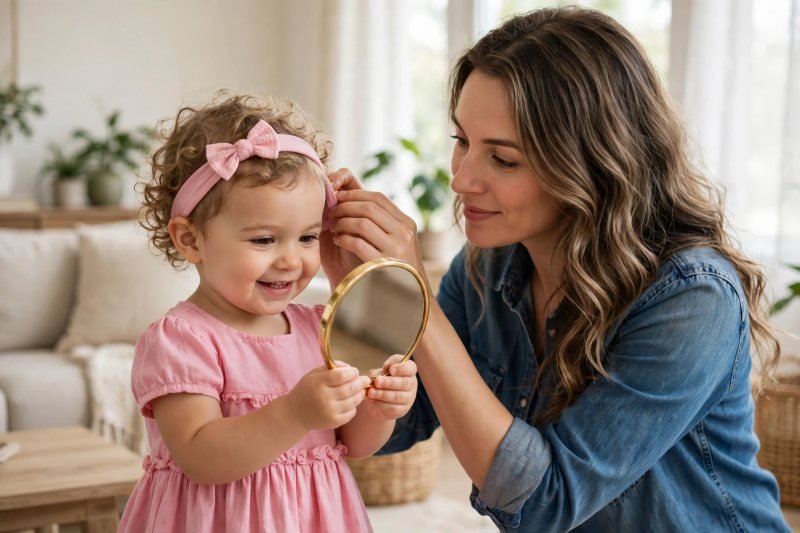
Choose bows and bands that stay soft all the way through. Bows earn their place by attaching to the clips and elastics you've already vetted: a bow firmly sewn (not glued) to a lined clip or a soft elastic inherits the safety of its base, so inspect the attachment like you mean it — tug it hard in the shop; anything that shifts, sheds glitter, or shows a glue blob goes back. For headbands at this age, soft stretchy nylon bands are the standard: they expand gently, leave no marks, and carry a bow without any hard structure. Hard or rigid headbands are a skip under 3 — they press, slip into eyes, and become projectiles of frustration. Keep bow size proportional: a bow wider than your toddler's head is a photo prop, not a daily accessory, and daily is what this kit is for. Say: "Soft bow, strong stitch, small size." Kit's core built — now clear out what never should have been in it.
-
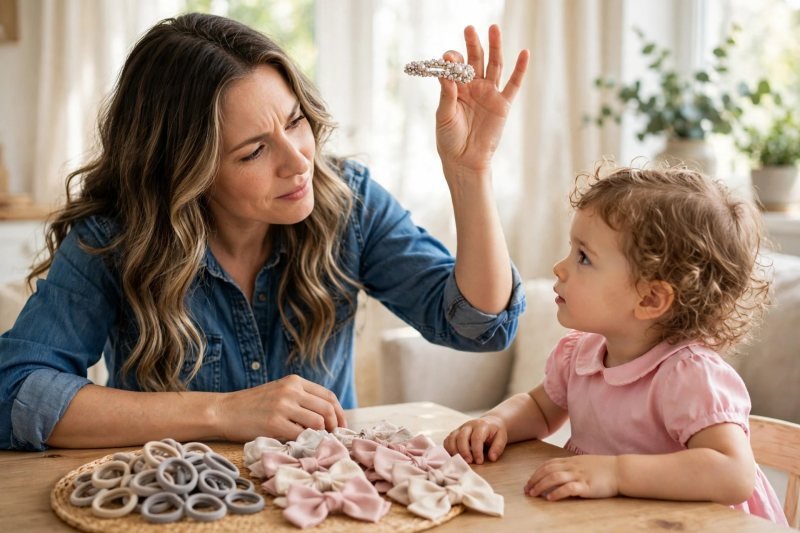
Skip the risky extras, and know exactly why. Some accessories are fine for older kids and wrong for 2- and 3-year-olds. Skip anything with beads, gems, sequins, or charms that could detach — small parts are the top accessory hazard at this age because toddlers mouth what they pull out. Skip barrettes with sharp metal teeth or pointed ends, heavy clips that slide and drag, sticky or glue-in decorations, and anything with magnets or button batteries in reach — those are never hair items for toddlers, period. Skip tight styling that pulls the hairline (sore scalps and broken edges are the cost), and skip adult elastics with metal joins, which fail step 2's test anyway. When in doubt, apply the shop rule: "Would I let her nap near it, chew near it, wear it all morning?" — if any answer wobbles, it stays on the shelf. Drawer cleaned, every keeper now gets fitted properly.
-
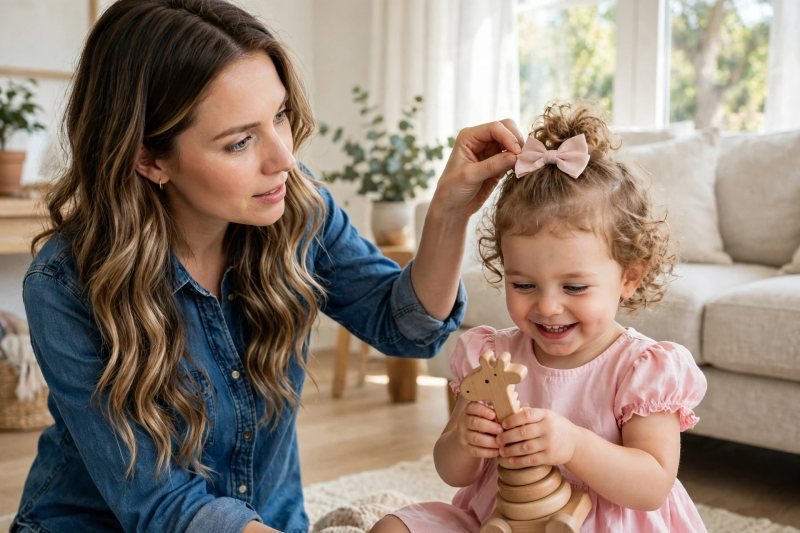
Fit-check everything with the tug, slide, and wear tests. Three quick tests predict whether an accessory survives real toddler life kindly. The tug test: style the accessory in, then tug it gently the way a toddler will — it should resist removal but release before it would hurt, and it should never take a tuft of hair with it when it comes out. The slide test: ten minutes of normal play; a clip that migrates down the hair or an elastic that works loose is the wrong size, however cute. The wear test: after removal, check the scalp — red marks, dents, or frizzled breakage at the grip point mean too much tension; loosen the style, downsize the load of hair, or retire the piece. Run all three on new purchases while returns are still possible. If a style keeps failing the tests, the cut may be the problem, not the accessory — this toddler first haircut guide helps you time the trim so clips and bangs stop fighting each other. Say: "Holds on, slides off, leaves no mark." Fitted and kind — time to use the kit for the two styles that cover nearly every toddler day.
-
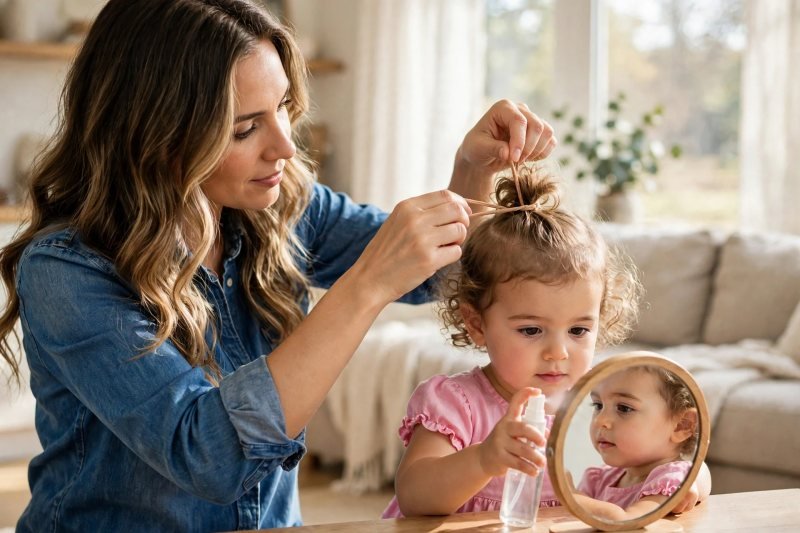
Style the two basics: the top puff and the side sweep. Everything in the kit exists for these. For the top puff: mist the hair lightly with water — or a detangling spray for kids if knots are the daily battle; gather the top section with the soft brush (the right bristles matter — see the best hair brush for toddlers guide for fine hair); loop a small seamless elastic twice; fluff the puff with your fingers; add a clip-on bow at the base if it's a bow day. For the side sweep: brush the front hair to your toddler's natural side; slide a lined snap clip in at the temple, angled slightly up; check it sits flat and clear of the eye line. Both styles take two minutes, hold through a morning, and come out without a single snagged strand if your pieces passed the earlier steps. Teach your toddler the mirror finish — a quick look and a "ta-da" — because a child who approves the result defends it less. Styles done, the final step keeps the kit safe and findable between uses.
-
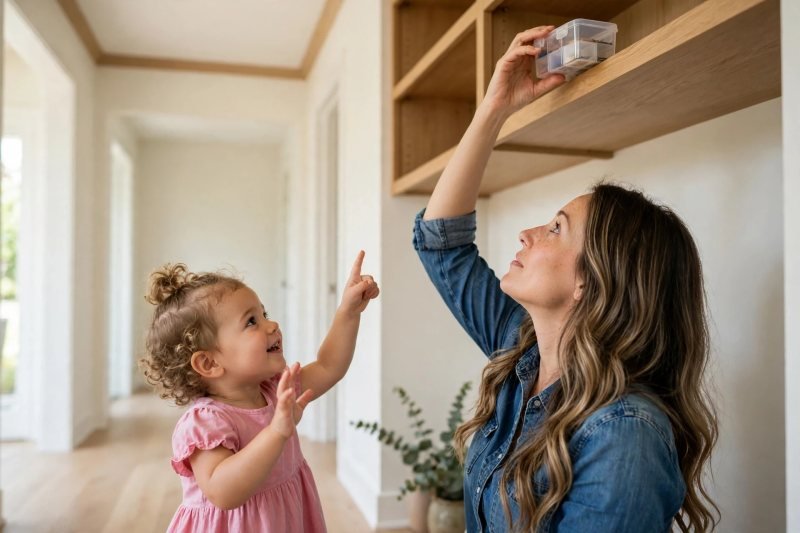
Store the kit out of reach, offer choices within it. Accessories live in their lidded box on a high shelf — visible storage tempts small hands, and loose clips and elastics on floors are mouthing hazards, not clutter. The daily ritual channels the autonomy safely: the box comes down, you offer two accessories ("the red bow or the blue clip?"), your toddler chooses, you apply, box goes back up. Handing you the chosen clip is a real job too — it builds the pincer grip behind fine-motor activities for preschoolers. Choices inside a pre-checked kit give toddlers the control they crave with none of the risk. Build the exit ritual too: every accessory comes OUT before naps and bedtime — sleeping in clips and elastics breaks hair, hurts scalps, and puts small items in the bed. Finally, re-audit monthly: stretched-out elastics, clips with loosening decorations, and anything damaged gets retired on sight. That's the whole system — soft pieces, hard checks, two styles, safe storage.


Make it easier
Start with just two pieces — one pack of seamless elastics and two lined snap clips. That mini-kit does a week of toddler hair while you learn what your child's hair actually needs. Style at a predictable moment (after breakfast, at the table) with a small mirror — routine and a view do half the cooperation work. Keep a spare elastic on your own wrist for mid-day repairs instead of raiding the stored box.
Make it harder
Let your toddler practice opening and closing a spare clip on a ribbon — the pincer work that turns into real clip-placing later. Graduate to two-clip styles and mini pigtails once the basics hold kindly, keeping every new piece on the same tug-slide-wear test. Let your preschooler start choosing tomorrow's accessory at bedtime and laying it by the brush — planning ahead is the habit that makes mornings calm.
Other ways to play it
- Very fine or sparse hair: skip elastics entirely at first; a soft nylon band with a small bow, or a single lined clip on the sweep, is a complete look that asks nothing of fragile hair.
- Thick or curly hair: choose the larger fine-hair elastics, style on damp hair, and prefer two smaller puffs over one overloaded ponytail — tension spreads kindly.
- First haircut season: accessories bridge the growing-out months beautifully; time the trim so clips and bangs stop fighting each other.
How it changes by age
- Under 2: accessories are occasional and minimal — soft nylon bands only, worn briefly and always supervised; skip clips and elastics until there's enough hair to hold them without tension.
- Ages 2–3: the guide as written — seamless elastics, lined flat clips, sewn soft bows, full small-parts discipline, everything out before sleep.
- Ages 4–5: kids can start opening and placing their own clips (with your fit check after), and slightly firmer elastics enter as hair thickens; the small-parts and sleep rules relax only as mouthing behavior truly ends.
- All ages: if an accessory causes tears, marks, breakage, or bald-looking patches at the hairline, stop using it and simplify — and raise persistent hair or scalp concerns with your pediatrician rather than product-swapping.
What they're learning
Autonomy within safe bounds: choosing between two vetted accessories is real decision-making with a guaranteed-good outcome. Fine motor beginnings: holding, handing over, and eventually placing clips builds the pincer control behind writing readiness. Tolerance and routine: two calm minutes of grooming at a predictable time teaches body-care patience the way all toddler routines do. Cause and effect: pull the clip and hair falls; the mirror "ta-da" shows results — small physics, daily repeated.
Clearing up
Hair time ends with a ten-second sweep: accessories into the box, box onto the high shelf, brush back in its spot, floor checked for escapees (a dropped clip found now is a hazard removed). Weekly, wipe the organizer out and cull stretched elastics — the audit habit is what keeps a safe kit safe.
Questions parents ask
What hair accessories does a toddler actually need?
Are hair clips safe for 2-year-olds?
How do I stop elastics from breaking my toddler's hair?
What hair accessories should toddlers avoid?
How do I get my toddler to keep hair accessories in?

save it for later
Pin this for the next rainy afternoon
Keep it on a board so it is there when you need it, rather than when you happened to find it.
Save to Pinterest


