


How Often Should You Wash a Toddler's Hair? (By Hair Type)
Wondering how often you should wash your toddler's hair? Most toddlers need shampoo only 1–3 times a week. This guide breaks frequency down by hair type and walks you through a calm, simple wash-day routine step by step.
Most toddlers need shampooing only 1–3 times a week. Fine, straight hair usually does best at 2–3 washes, wavy hair at about 2, and curly or coily hair at about 1, because it is naturally drier. On other days, rinse with plain water only. Adjust by watching the scalp: greasy means wash a little sooner, dry means stretch it out.

The short version
- Most toddlers need shampoo only 1–3 times a week — daily washing is almost never needed at ages 2–3.
- Fine, straight hair: 2–3 washes a week. Wavy: about 2. Curly or coily: about 1, with conditioner on the lengths.
- Dry or flaky scalp: start at once a week, rinse shampoo out thoroughly, and see your pediatrician if flakes are thick, itchy, or spreading.
- Use a pea-sized amount of toddler shampoo on the scalp; the lengths rarely need direct shampoo.
- Non-wash-day baths can be water-only rinses for sweat, sand, or dust.
- Rinse back-to-front and pat dry — never rub — to protect every hair type.
- Age
- Ages 2–3
- Prep
- 5 min
- Play time
- 10 min
- Mess
- Low
- Difficulty
- Easy
- Where
- Indoor
Why kids love this
Toddlers love wash day when it feels like play, not a chore. Warm water to splash, foam to pat, a cup to pour with, and a job that is theirs — holding the towel, choosing the song — turn hair washing into a favorite bathtime ritual instead of a battle.
What you'll need
- A gentle, tear-free toddler shampoo
- A plastic rinse cup or small pitcher
- A soft washcloth for shielding eyes
- A hooded toddler towel
- A wide-tooth comb or soft toddler brush
- A few bath toys for distraction
- A small stool or bath seat, if your toddler still uses one
Before you start
1. Pick your wash days for the week based on hair type — see Age guidance and Variations below — and keep the other baths water-only. 2. Warm the bathroom and run the bath to lukewarm before your toddler gets in. 3. Set shampoo, rinse cup, washcloth, and towel within arm's reach so you never leave the tub. 4. Let your toddler choose one bath toy and the wash-day song; choices up front prevent protests later.
How to do it
-
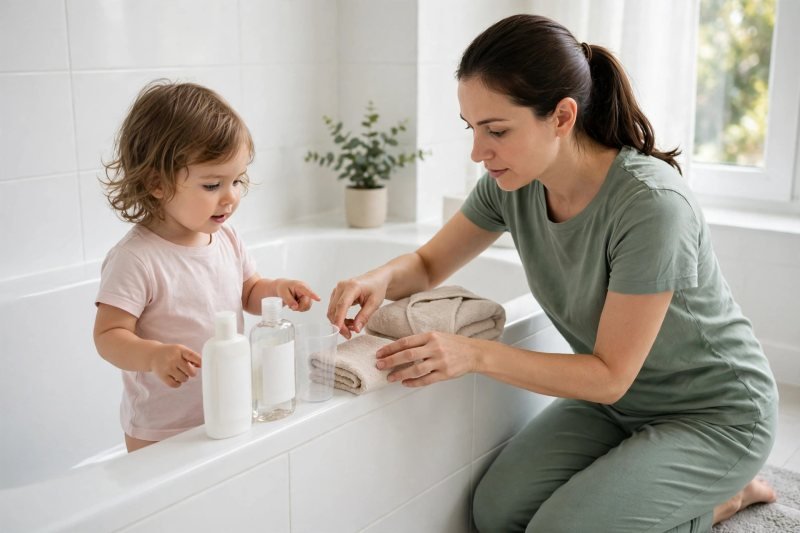
Gather everything before the water runs. Set the shampoo, rinse cup, washcloth, and hooded towel beside the tub and say: "Today is a hair-wash day — let's get our tools ready together." Let your toddler drop in a bath toy and climb in once the water is lukewarm; having everything ready means you never leave them alone in the tub, and a ready tub hands straight into play-first settling time.
-
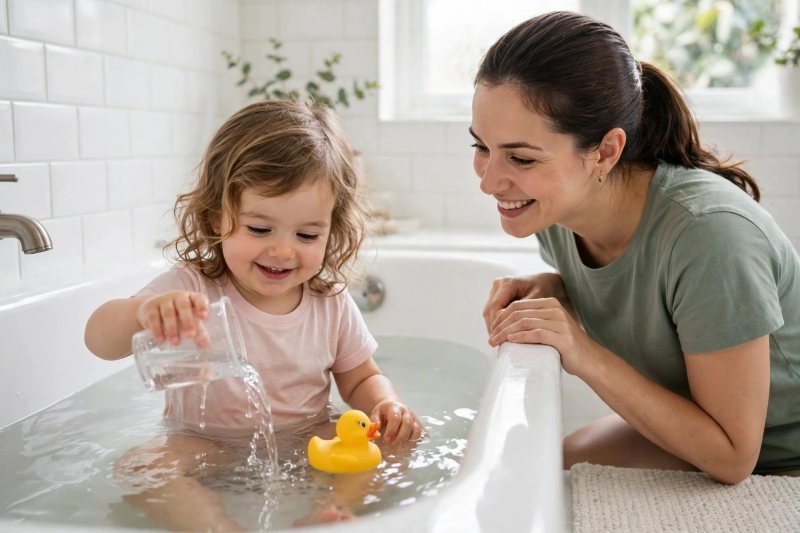
Start with play, not shampoo. Give your toddler a few minutes of plain water play first — pouring, splashing, floating toys — and say: "First we play, then we wash, then we play again." A child who has had their play moment resists the wash far less, and this is also where your frequency plan plugs in: on non-wash days, the whole bath stays at this step, with water-only hair rinses if hair gets sweaty or sandy.
-
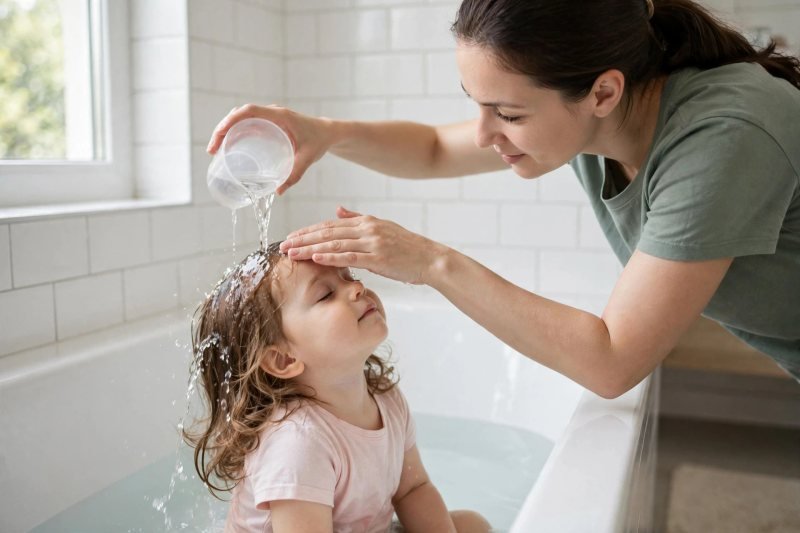
Wet the hair slowly and gently. Tip your toddler's head back just a little, shield their forehead with your hand, and pour warm water from the rinse cup from the back of the head forward, saying: "Rain is coming — nice warm rain." Let them hold the washcloth over their eyes if they like; wetting slowly, back to front, keeps water off the face and sets up a calm lather.
-
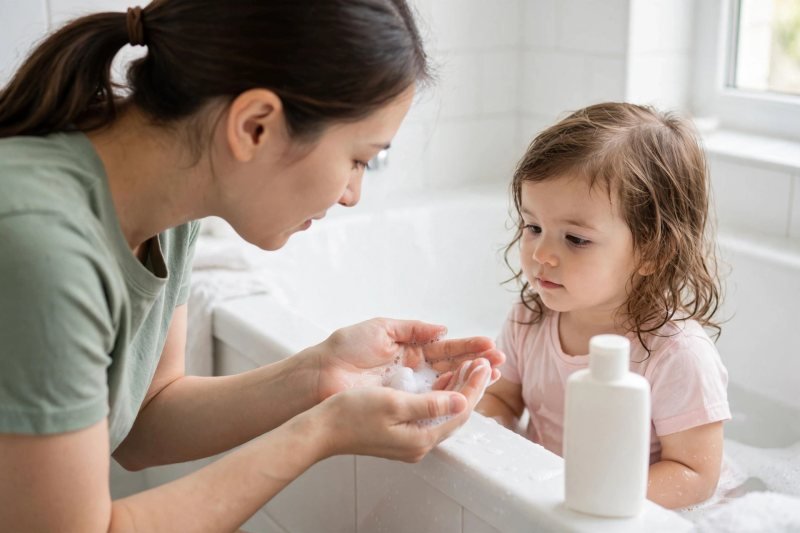
Use a pea-sized amount of shampoo. Squeeze a pea-sized dab into your own palm, rub your hands together, and say: "A little dot does the whole job." Work the lather in with your fingertips — never nails — in small circles over the scalp; toddlers need far less shampoo than adults, and using too much can leave residue that dries young hair out.
-
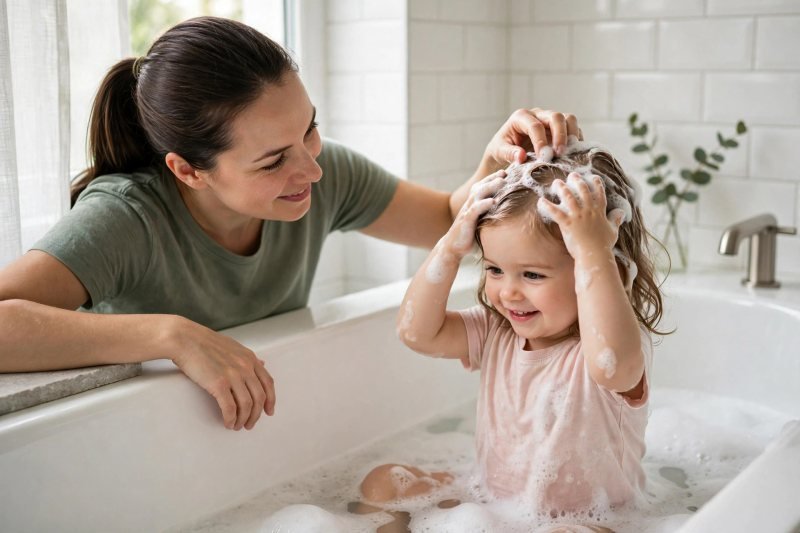
Massage the scalp, skip the scrubbing. Keep your circles slow and light across the whole scalp, front to back, and say: "We're giving your head a tiny massage." Let your toddler pat foam onto their own hair — that helping moment is the heart of wash day — while you make sure the scalp itself, where sweat and crumbs collect, gets the attention; the lengths of toddler hair rarely need direct shampoo at all.
-
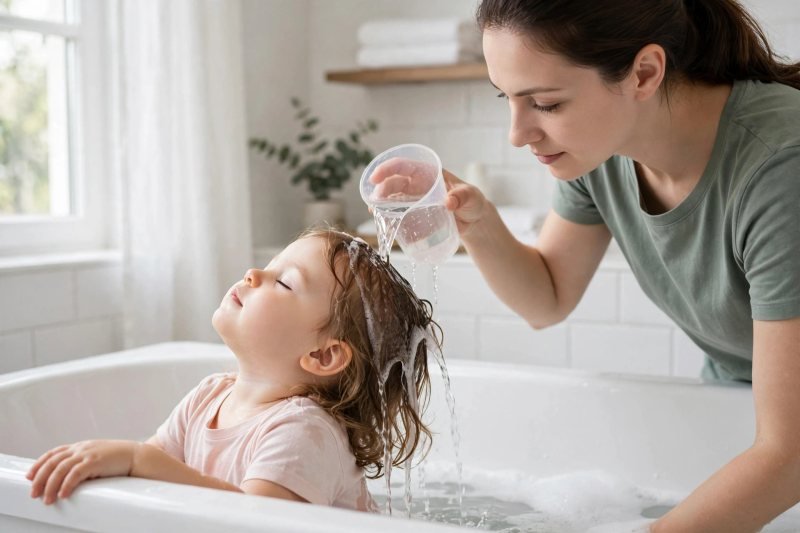
Rinse from the back, shielding the face. Refill the rinse cup with clean bath water or tap water, tip the head back again, and pour from the back of the head so soapy water runs away from the eyes, saying: "Here comes the rain again — it washes all the bubbles away." Repeat until the water runs clear and the hair feels clean, not slippery; a thorough rinse here prevents the itchy residue that parents often mistake for a dirty scalp.
-
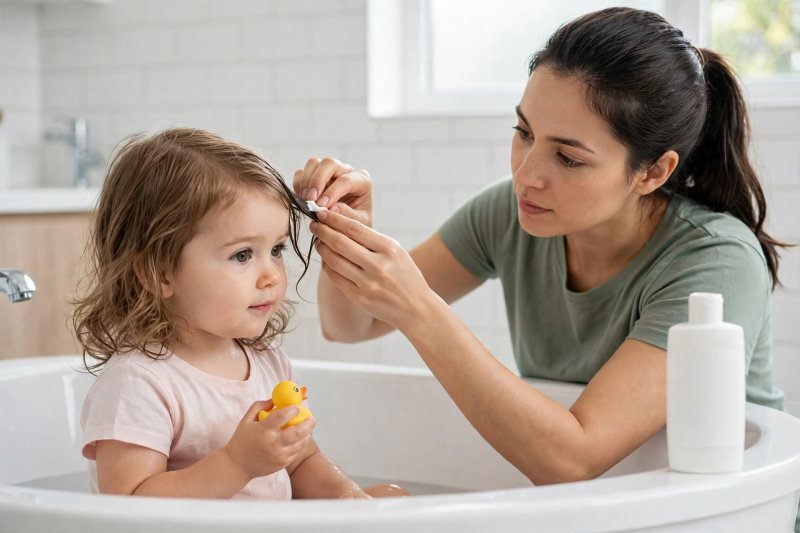
Decide on conditioner only if hair type calls for it. Pause and look at the hair: fine, straight toddler hair usually needs nothing more, while longer, wavy, or curly hair may get a tiny dab of toddler conditioner on the ends only — never the scalp — and you can say: "Your curls get a little extra drink today." If you use it, leave it while your toddler plays for a minute, then rinse the ends; this quick check is where your by-hair-type frequency and product decisions actually happen, wash by wash.
-
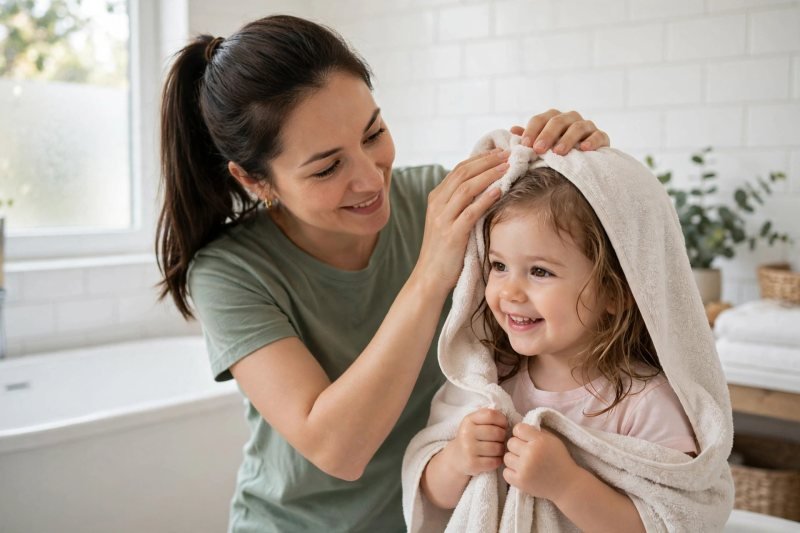
Wrap, squeeze, and pat — never rub. Lift your toddler out, wrap the hooded towel around their head, and gently squeeze and pat the hair dry, saying: "We squeeze the water out like a sponge — no rubbing." Rubbing with a towel tangles fine toddler hair and frizzes curls, so the squeeze-and-pat habit protects every hair type; once wrapped, your toddler can hold the towel edges themselves while you move to combing.
-
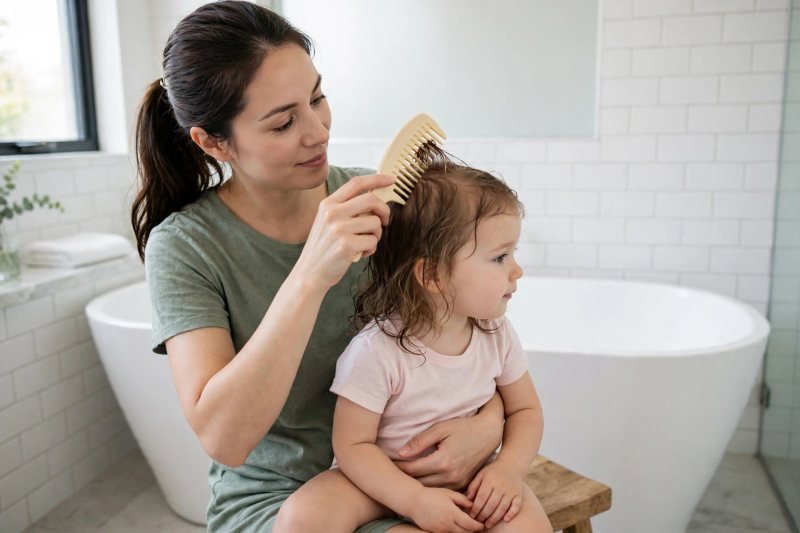
Comb gently from the ends upward. Sit your toddler on your lap or the stool, start the wide-tooth comb at the very ends of the hair, and work upward in small sections, saying: "We start at the bottom and climb up, gentle, gentle." Hold each section above where you comb so nothing pulls; curly and coily hair combs easiest right now, while damp, and this unhurried comb-out is the moment to check the scalp for dryness or flakes that might adjust next week's wash frequency.
-
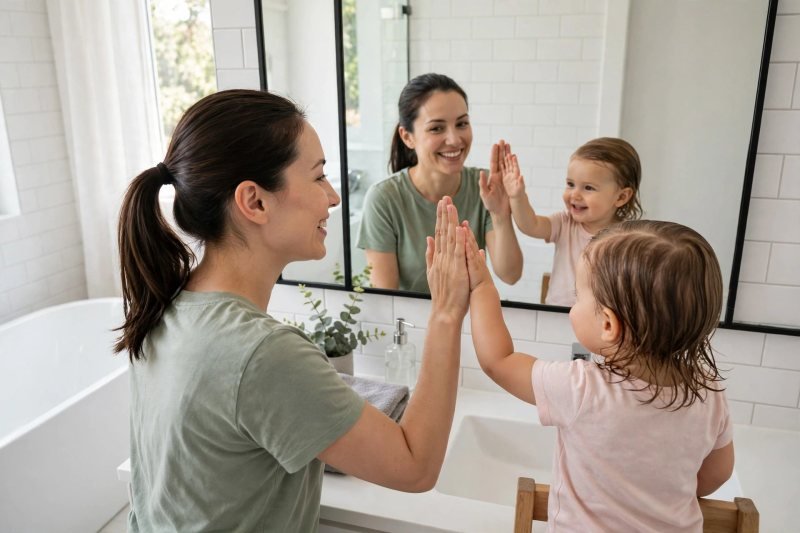
Finish with praise and the calendar check. End wash day the same way every time — a high-five, a look in the mirror, and one sentence: "All clean — great washing today." Then glance at your own simple rhythm: if hair looked greasy by day two, shift one wash earlier; if the scalp looked dry, stretch one wash later; that small weekly adjustment, plus regular trims like those in this toddler first haircut guide, keeps the routine tuned to your child's actual hair instead of a rigid rule.


Make it easier
Wash hair at the start of the bath on tired days, so the hard part is done before energy fades. On non-wash days, rinse with plain water only — no shampoo needed for sweat or playground dust. Keep one wash-day song; when the song ends, washing ends, which makes the routine predictable.
Make it harder
Let your toddler pour the rinse water over a doll's hair first, then help squeeze the shampoo bottle with you. Teach the words scalp, lather, and rinse during the wash — hair vocabulary builds body awareness. Pair wash day with the gentle habits in this simple kids skincare routine so bath night becomes one calm head-to-toe rhythm.
Other ways to play it
- Fine, straight hair: this hair type shows oil fastest, so 2–3 washes a week is the usual sweet spot; a water-only rinse handles in-between days, and conditioner is rarely needed except a tiny dab on tangled ends. Between washes, toddler hairstyles for fine hair keep straight styles tidy without extra product.
- Wavy hair: 2 washes a week usually works well; wavy hair tangles easily, so the ends-up combing step matters most, and a small amount of conditioner on the ends helps on wash days.
- Curly or coily hair: 1 wash a week is often enough, because this hair is naturally drier; focus shampoo on the scalp only, use conditioner on the lengths every wash, and refresh curls between washes with a light water spritz rather than another shampoo. Between washes, curly hairstyles for girls refresh the look with a water spritz instead of another shampoo.
- Sweaty, sandy, or pool days: an extra wash is fine as a one-off — frequency rules bend for real life; just return to your normal rhythm the following week.
How it changes by age
- Ages 2–3: parents run every step; toddlers help by holding the washcloth, patting foam, and choosing toys and songs. Keep the whole wash under 15 minutes and playful. Most 2- to 3-year-olds need shampoo only 1–3 times a week — toddler scalps produce less oil than adult scalps, so daily shampooing is almost never needed at this age.
- Dry or flaky scalp: if the scalp looks dry or flaky, wash less often first — once a week — and make sure rinsing is thorough, since leftover shampoo is a common cause of flakes. If flakes are thick, crusted, itchy, or spreading, or the scalp looks red and irritated, check in with your pediatrician rather than washing more or switching to medicated products on your own.
- Building independence: by age 3, many toddlers can hold the rinse cup, squeeze a washcloth, and help pat hair dry; narrate each step so the sequence becomes familiar long before they wash independently. More ideas for toddlers in the age hub help the sequence feel like one familiar rhythm as independence grows.
What they're learning
Sequencing: wash day runs in the same order every time — play, wet, lather, rinse, dry, comb — a first routine they can recite. Body vocabulary: scalp, lather, rinse, and towel words land naturally during real use. Sensory confidence: warm water, foam, and gentle touch on their own schedule build comfort with bathtime sensations. Early self-care: helping with real steps lays the groundwork for independent washing later.
Clearing up
Gather the rinse cup, washcloth, and toys out of the tub while the water drains — toddlers can drop toys into a mesh bag as their final job. Hang the hooded towel to dry, stand the shampoo bottle back in its caddy, and give the tub a quick rinse so no slippery shampoo film remains for the next bath. Put the comb away where your toddler can help fetch it next wash day; a two-minute tidy keeps wash day feeling light.
Questions parents ask
How often should you wash a toddler's hair?
Can you wash a toddler's hair every day?
How often should you wash curly toddler hair?
What happens if you wash toddler hair too often?
Does a toddler need conditioner?

save it for later
Pin this for the next rainy afternoon
Keep it on a board so it is there when you need it, rather than when you happened to find it.
Save to Pinterest

