


Toddler Sun Hats: Best Styles for Sun Safety
The best toddler sun hats share five traits: a wide brim all the way around, tight-weave breathable fabric, a snug-but-kind fit, a chin strap with a safety release, and a style your toddler will actually keep on. A complete choosing-and-fitting guide for ages 2–3.
The best toddler sun hats have five things: a wide brim that shades the face, ears, and neck all the way around; a tight-weave, breathable fabric (check it with the hold-it-to-the-light test); a snug fit that passes the two-finger check; an adjustable chin strap with a breakaway safety release; and a style your toddler helps choose. Measure heads first, run the shake-grab-splash test, and park it by the door.

The short version
- Coverage map first: face + ears + neck. Front-only caps fail the job; buckets and legionnaire styles pass it.
- Fabric by the light test: less light through the weave means better shade; breathable and quick-dry for hot or swim use.
- Fit by the two-finger check: snug like a hug, not a squeeze; size up with an adjustable band mid-growth.
- Straps must release: breakaway or quick-release toggles only, tested with a firm tug before first wear.
- The shake, grab, and splash tests predict real life better than any mirror check.
- Wearing is a ritual: hat lives by the door, mirror moment included, toddler gets a color choice.
- Age
- Ages 2–3
- Prep
- 10 min
- Play time
- 1 min
- Mess
- None
- Difficulty
- Easy
- Where
- Both
Why kids love this
Toddlers love what feels like theirs: a hat with a color they picked, a strap they can pull, and a mirror moment before going outside. The right hat is light, doesn't flop into their eyes, and comes with a ritual — hat on means the fun door opens. Comfort plus ritual is the whole secret.
What you'll need
- A soft measuring tape (or a ribbon and a ruler) for head circumference
- Your toddler's current favorite hat, if one exists, for size comparison
- 2–3 candidate hat styles to try: a wide-brim bucket, a legionnaire style with a neck flap, and a structured sun cap with a back flap
- Sunscreen made for children (the hat's partner, never its replacement)
- A mirror at toddler height for the fitting fashion show
- A hook or basket by the exit door for hat storage
Before you start
1. Measure first: wrap the soft tape around the widest part of your toddler's head, just above the eyebrows and ears, and note the measurement — toddler hat sizes are sold by head circumference, and guessing wastes returns. 2. Shop with the criteria list, not the cuteness list: brim, weave, fit, strap, then style — in that order. 3. If shopping in person, bring your toddler and treat the fitting as a game, not an errand; if buying online, order two sizes when returns are easy and keep the better fit. 4. Plan the habit before the hat arrives: decide where it will live (by the door) and what the put-it-on ritual will be.
How to do it
-
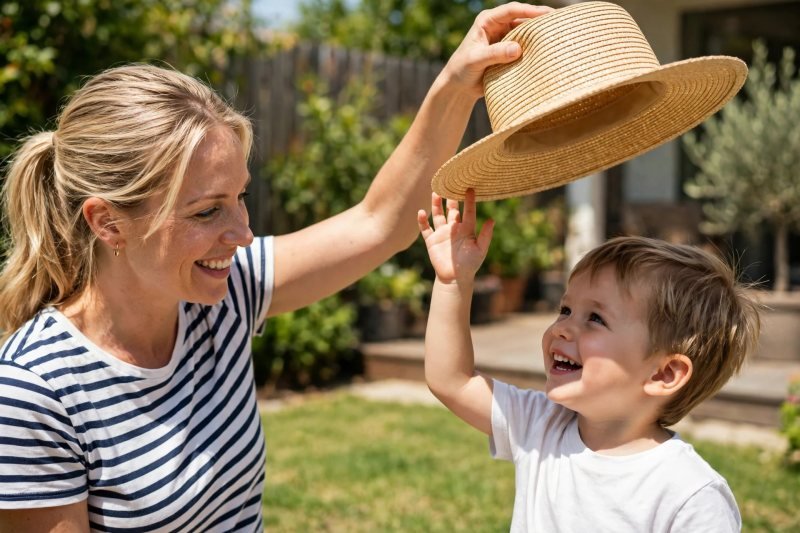
Start with the job the hat has to do. Toddler sun hats are shade that moves: the hat's job is to shadow the face, ears, and neck — the spots sunscreen application misses, smears off, or never quite reaches on a wriggling 2-year-old — for as long as your child is outside. Say it plainly while shopping: "We're finding your shade." That job description decides every choice that follows: a cute cap that shades only the forehead fails the job; a wide brim passes it. A hat is also only ever one layer of sun safety, working alongside sunscreen on exposed skin, shade breaks, and sensible timing on very hot days — never a solo force field. Job defined, choose the feature that does most of the work: the brim.
-
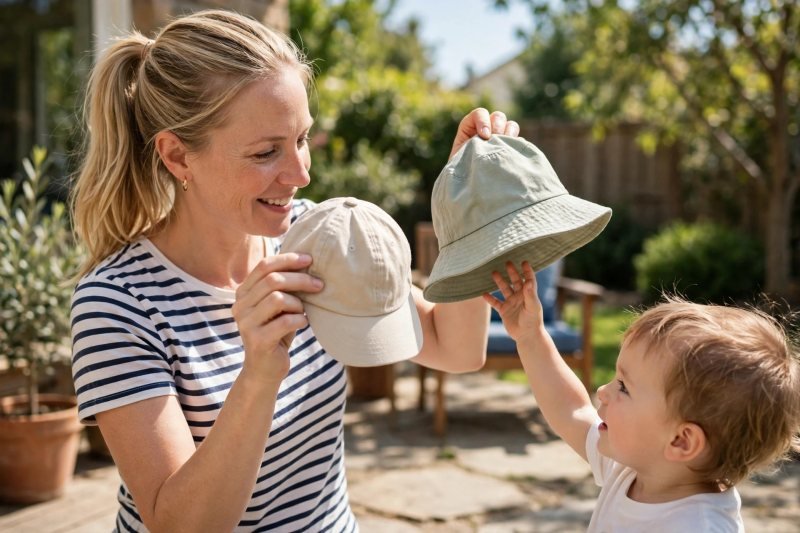
Choose a wide brim that goes all the way around. The brim is the hat. Look for a brim wide enough to shade the whole face — hold the hat above your toddler's head in bright light and check the shadow covers forehead, nose, and chin — and, critically, one that continues around the back to cover ears and neck, where all-around styles (buckets and wide-brim rounds) beat front-only caps. A neck flap (legionnaire style) is the maximum-coverage option and brilliant for very fair toddlers or long beach days. Brims should be soft enough to fold in a bag but structured enough not to flop into the eyes; a brim that blinds gets ripped off in seconds, and a ripped-off hat shades nothing. Say: "If the shadow covers your whole face, the brim passes." Brim chosen, check what it's made of.
-
Pick a tight-weave, breathable fabric in a light color. Fabric decides how much sun gets through and how hot the head inside feels. Use the light test in the shop: hold the fabric up to a window or bulb — the less light and fewer visible pinpricks through the weave, the better the shade. Many toddler sun hats carry a sun-protection rating on the label; a rating is a helpful comparison signal between two hats, alongside the light test, not a substitute for it. This guide judges by criteria, not brands — see how we choose products. Favor breathable weaves and mesh ventilation panels for hot climates, quick-drying fabric if the hat will double as a swim hat, and lighter colors that stay cooler in direct sun. Skip anything stiff, scratchy, or heavily lined — a toddler votes on comfort within ten seconds, and their vote is final. Fabric passed: now the fit, which is where most hat purchases actually succeed or fail.

-
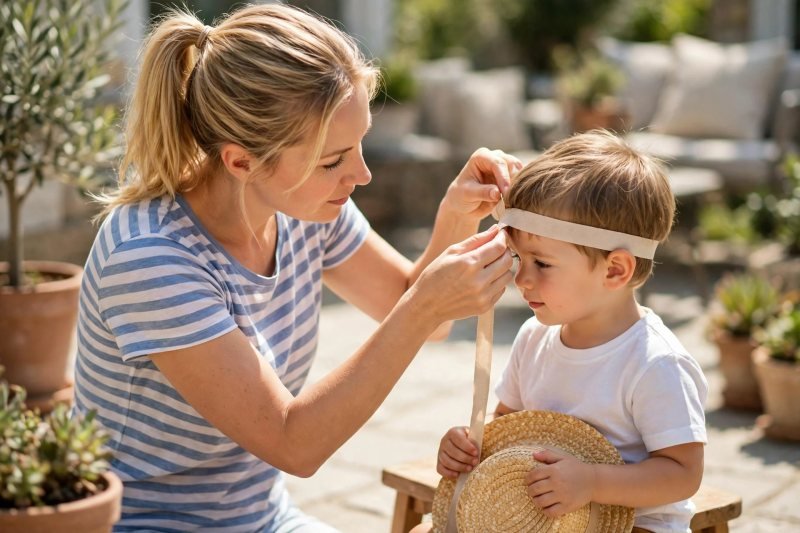
Get the fit: snug enough to stay, kind enough to forget. Measure, then try: the hat should sit level, just above the eyebrows, covering the top of the ears' curve without pressing on them. Use the two-finger check — you should be able to slide two fingers between the hat's band and your toddler's head all the way around. Too loose and the first gust or grab removes it; too tight and you'll get the red forehead mark and the firm no. If your child is between sizes, choose the larger one with an adjustable band or drawcord you can cinch now and release as they grow — toddlers grow out of hats mid-season with impressive reliability. Say: "Snug like a hug, not a squeeze." Fit sorted, add the feature that keeps the fitted hat on an actual moving toddler.
-
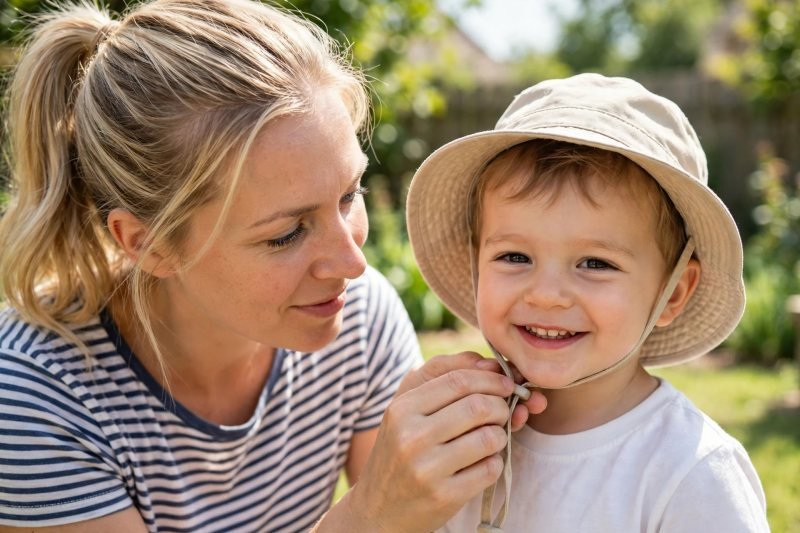
Insist on a chin strap — with a safety release. A 2-year-old's hat survives wind, slides, and toddler opinions only with a strap. Look for an adjustable chin strap with either a breakaway safety release or a quick-release toggle that slides open under a firm tug — that release matters, because a strap that can't open is a hazard if the hat snags on playground equipment. Test it in the shop: fasten, tug firmly, confirm it gives way. For everyday park wear some families prefer strap-free hats under close supervision, but for beaches, boats, bikes, and breezy days the strap earns its place. Teach the ritual words from day one: "Strap under the chin, then we play." Strap secured, run the wear test that predicts real life better than any mirror check.
-
Run the toddler test: shake, grab, splash. Before the tags come off, put the hat through its working life. The shake test: your toddler shakes their head side to side and jumps twice — the hat stays put, the brim stays out of the eyes. The grab test: they will pull it off once (they always do) — check how fast you can replace it one-handed, because you will do it many times a day. The splash test, for swim-bound hats: wet it, and confirm it doesn't sag into a vision-blocking curtain when soaked, and that it dries in reasonable time on a line. A hat that fails any test goes back now, not into the drawer of good intentions. Passed all three: the last choosing step is making the hat the easiest thing in your morning.

-
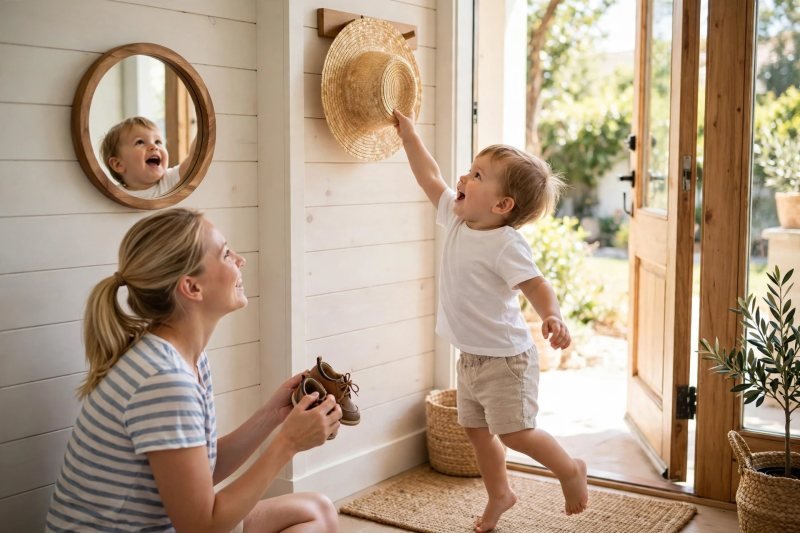
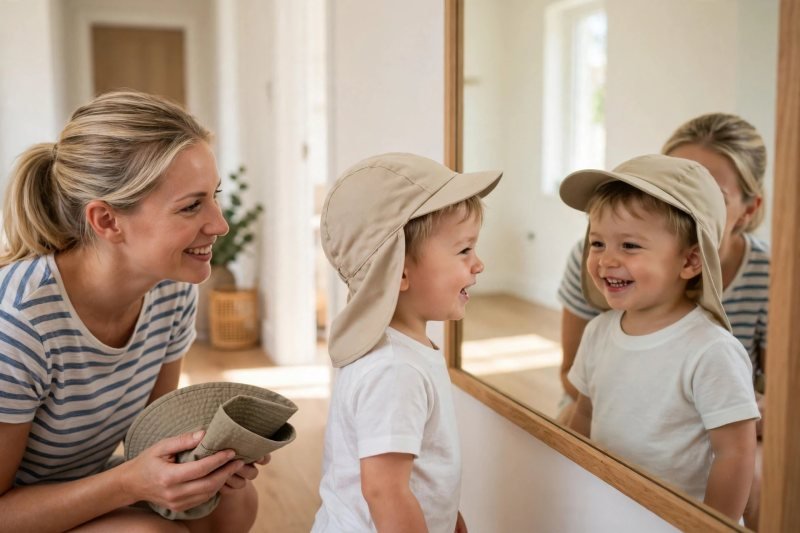
Build the hat-on-door ritual. Hats are worn by habit, not by argument, so engineer the habit: the hat lives on a hook or in a basket at toddler height beside the exit door, next to your keys. The ritual runs identically every time — shoes, hat, strap, door opens — until "hat" simply means "outside," the way a seatbelt means "car." Add the mirror moment: thirty seconds of admiring the hat in the mirror before leaving turns the wearer into a fan. A song or a silly countdown helps the strap moment land. And give your toddler the only choice that matters — this hat in this color was partly their pick back at the shop, which is why choice was built into the choosing. Ritual running, finish with the troubleshooting and care that keep one good hat going all season.
-
Troubleshoot the hat-haters, then care for the keeper. If the hat still gets rejected, diagnose before replacing: straps that rub (add a softer strap style or a thin cotton liner), a brim that blinds (try a slightly stiffer or shorter-front brim), heat (switch to the vented style or wet the hat lightly on very hot days), or pure toddler autonomy (move the choice earlier — two approved hats by the door, they pick today's). Practice indoors in five-minute bursts with favorite activities for a few days; most hat strikes end once the hat predicts fun. For care: rinse swim hats in clean water after salt or chlorine, wash per the label, reshape the brim while damp, and store it on its hook rather than crushed in a drawer. Re-check fit every couple of months and after growth spurts — when the two-finger check fails, it's sizing-up time, and this whole guide reruns in ten minutes.


Make it easier
Buy two of the winning hat if you find one your toddler accepts — one lives in the car, one by the door; a lost hat never cancels a park day. Let your toddler choose between two parent-approved colors; a chosen hat is worn, an assigned hat is negotiated. Pair the hat with the rest of the sun routine in one go — this kids skincare routine lays out the simple sunscreen order for young skin.
Make it harder
Let your preschooler run the light test and two-finger check on candidate hats themselves — shopping becomes a science errand. Add a hat-care job to their routine: they hang the hat on its hook after every outing, the same self-care ownership loop used across the day. Seasonal switch drill: run this same criteria list for cold weather and build the winter counterpart set from these toddler winter outfits.
Other ways to play it
- The swim hat: quick-dry fabric, a slightly firmer brim that won't sag when wet, and the strap non-negotiable — water makes hats float away fast. Pair the swim hat with swim hairstyles for girls that keep hair out of the way in the water.
- The fair-skin maximum: legionnaire style with a full neck flap, the lightest color, and the tightest weave you can find; pair with shade breaks at midday.
- The hat-refuser's gateway: start with the softest bucket in their favorite color worn only for the very best outings, five minutes at a time — association first, duration later.
How it changes by age
- Under 2: shade hats matter even more and independent wear matters less — prioritize the widest coverage, the softest strap, and shade structures (pram covers, umbrellas) as the primary defense, with hats as backup.
- Ages 2–3: the guide as written — strap with safety release, the three-part toddler test, the door ritual, and two approved choices as the autonomy valve.
- Ages 4–5: kids can run the shake test and two-finger check themselves and often graduate to strong opinions about style; widen the approved set, keep the coverage criteria non-negotiable.
- All ages: fit changes fast — a hat that fit in May can fail the two-finger check by July. Schedule the re-check with the season, not with the complaints.
What they're learning
Cause and effect: hat on, door opens — the ritual teaches that small preparations unlock big fun. Body care habits: shade-seeking and sun protection are early health behaviors, learned the same way as handwashing: by routine, not lecture — one of the everyday life-skills routines toddlers build at this age. Sensory tolerance: gradually accepting a strap and brim during favorite activities builds flexible tolerance for new sensations. Early decision skills: choosing between two approved options (and judging light through fabric in the test) is real evaluation practice for a 2-year-old.
Clearing up
Hat care is one hook and one rinse: hook by the door after every outing (the toddler's job), rinsed in the sink after beach days, reshaped on the counter, back on the hook by morning. Keeping the hat visible and in one place is also the cleanup system — a hat that lives somewhere specific is a hat you can find at departure speed.
Questions parents ask
What style of sun hat is best for toddlers?
How do I know what size sun hat to buy for my toddler?
Do toddler sun hats need a chin strap?
Can a sun hat replace sunscreen for toddlers?
What if my toddler keeps pulling their sun hat off?

save it for later
Pin this for the next rainy afternoon
Keep it on a board so it is there when you need it, rather than when you happened to find it.
Save to Pinterest


