


Toddler Swimwear: Rash Guards, Suits, and Swim Diapers
Toddler swimwear works as a small system: a suit or rash guard for coverage, a proper swim diaper underneath, sunscreen on exposed skin, and shade breaks. This guide helps you choose, fit, and care for each piece for ages 2–3.
Toddler swimwear is a small system: a suit or rash-guard set that fits now, a proper swim diaper underneath — snug, checked hourly, and changed at once if soiled, since swim diapers hold solids but are not leak-proof — sunscreen on all exposed skin, a hat, shade breaks, and constant arm's-reach supervision in the water.

The short version
- Two-piece suits and rash-guard sets make poolside diaper changes dramatically easier than one-piece suits.
- Swim diapers let water pass so they do not swell; they hold solids only and are never leak-proof.
- Never put a regular diaper in the pool — it waterlogs, sags, and can burst.
- Sunscreen goes on every patch the suit misses and is reapplied after swimming or toweling off.
- Shade breaks, drinks, and warmth checks are scheduled by the adult; toddlers never call their own breaks.
- Change out of wet swim gear the moment swimming ends, and rinse and dry the kit at home.
- Age
- Ages 2–3
- Prep
- 15 min
- Play time
- 5 min
- Mess
- Some
- Where
- Outdoor
Why kids love this
Toddlers love swimwear that never interrupts the fun: a suit that stays put when they squat to dig, a rash guard that pulls on without a fight, and no saggy, waterlogged diaper dragging them down. Get the little system right and your 2-year-old can think about exactly one thing — the water.
What you'll need
- A toddler swimsuit or rash-guard set sized to your child now, not to grow into for two summers
- Swim diapers — reusable or disposable swim styles made for the water (regular diapers do not belong in pools)
- A spare swim diaper and a spare suit for mid-day changes
- Broad-spectrum sunscreen for exposed skin, plus a wide-brim swim hat
- A towel, dry clothes for afterward, and a wet bag for soaked gear
- Shade — umbrella or canopy — and drinking water for breaks
- A small snack for the post-swim refuel
Before you start
1. Choose and fit everything at home first, dry, with tags on — swim-day debuts cause swim-day tears. 2. Pack the swim bag the night before: suit, two swim diapers, sunscreen, hat, towel, wet bag, dry clothes, water, snack. 3. Learn your pool's rules ahead of time; many pools require swim diapers for non-toilet-trained toddlers. 4. Set your own non-negotiables now: arm's-reach supervision, shade breaks, and a prompt change the moment swimming ends.
How to do it
-
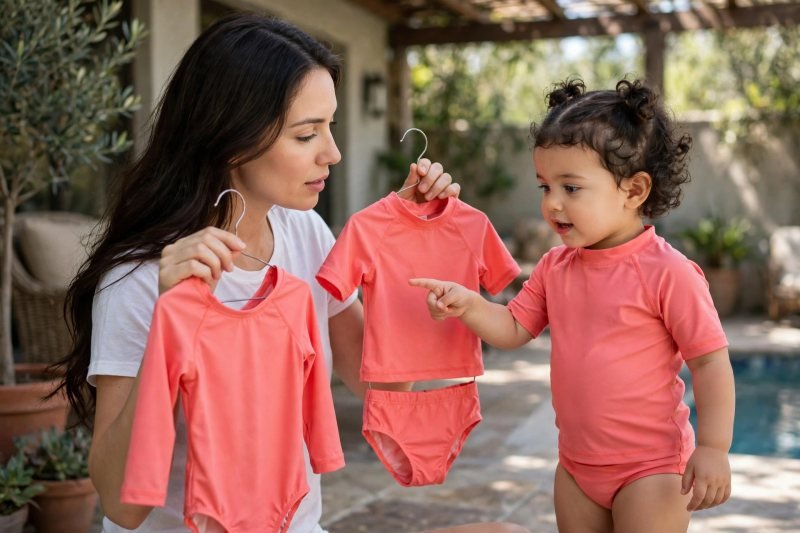
Choose the suit style for your toddler. Start with the honest choice: a one-piece suit is simple and stays put; a two-piece set makes diaper checks and changes far easier; a rash-guard top adds shoulder and arm coverage either way. Say to yourself: "Changes happen poolside — pick the style that makes them easy." For most 2- and 3-year-olds still in diapers, a two-piece or a rash guard with separate bottoms wins on practicality alone, because the bottom half comes off without undressing the whole, wet, wriggly child. Pick colors you can spot instantly in a busy pool. Style chosen, the layer underneath matters even more: the swim diaper.
-
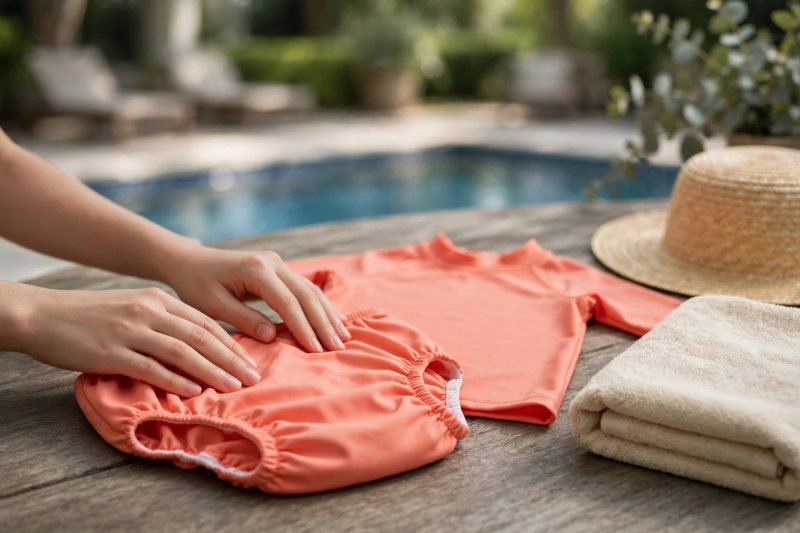
Fit the swim diaper properly. A swim diaper — reusable or disposable swim style — is designed to hold solids while letting water pass through, so it does not swell and burst the way a regular diaper does in the pool. Say the truth out loud once, so you never rely on it wrongly: "It is a safety net, not a seal — it is not leak-proof, especially for loose stool." Fit it snug at the waist and around the legs with no gaps, worn under or built into the suit bottoms. Check your toddler before entering the water and every hour or so during play, and change a soiled swim diaper immediately, away from the poolside, with hands washed afterward. Diaper fitted honestly, dress the whole outfit for a home rehearsal.
-
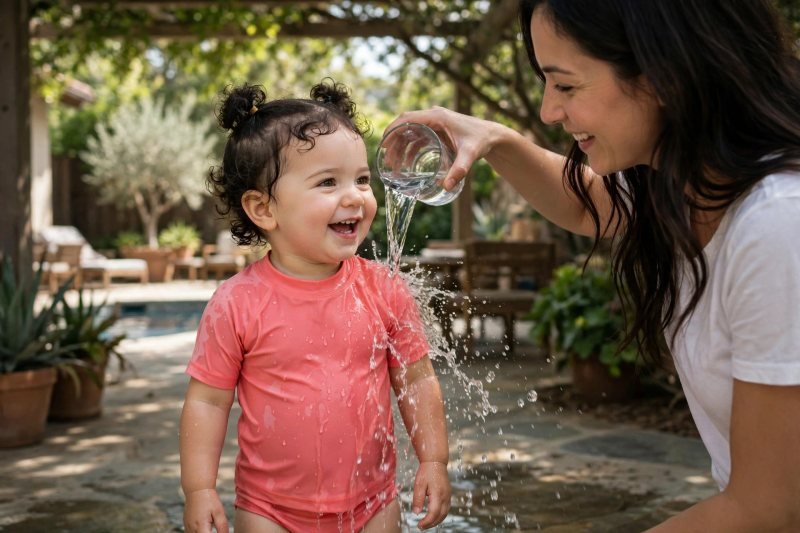
Run a dress rehearsal at home. Put the full outfit on your toddler — swim diaper, suit or rash-guard set, hat — and let them squat, crawl, climb, and dance in it for ten minutes. Say: "We are testing for runaways: straps that slip, bottoms that sag, tops that ride." The suit should stay in place through movement, with no digging at the shoulders or legs and no sagging when you splash a cup of water over the fabric, because wet suits grow heavier and looser. Your toddler should be able to sit comfortably and you should be able to slip the bottoms down fast for a change. If a suit passes dry but fails wet, swap the style rather than sizing up — wet fabric behaves differently, and a bigger size usually sags more. A rehearsal pass at home means swim day starts with splashing, not adjusting — and the next step happens before you leave the house too.
-
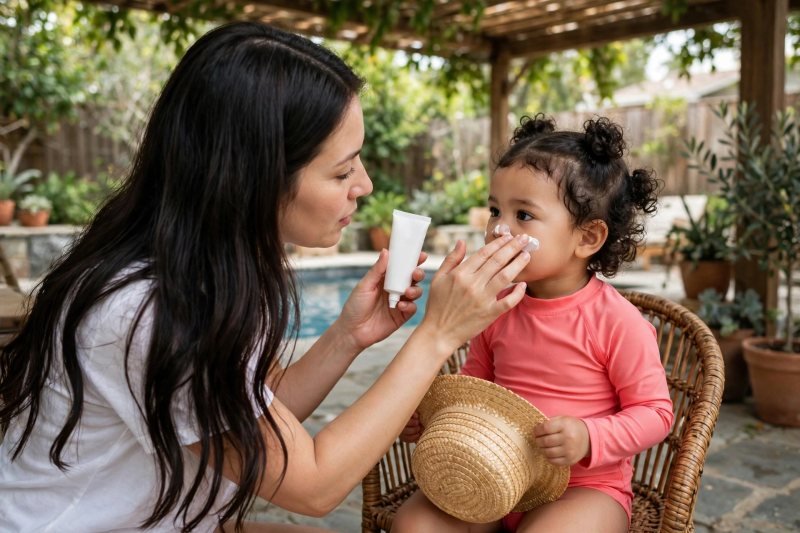
Sunscreen every patch the suit misses. Apply broad-spectrum sunscreen to all exposed skin before dressing or as the product directs: face; ears; neck; shoulders and arms beyond the sleeves; legs; the tops of feet. Say: "The suit covers its part — the cream covers the rest of you." Let it settle while you pack final items, and plan to reapply after swimming, heavy sweating, or towel drying, following the sunscreen's label, since water and towels strip it away. For very young or sensitive skin, shade and coverage do the heavy lifting and sunscreen supports them. Creamed and covered, your toddler is ready to head out — straight to base camp, not straight to the water.
-
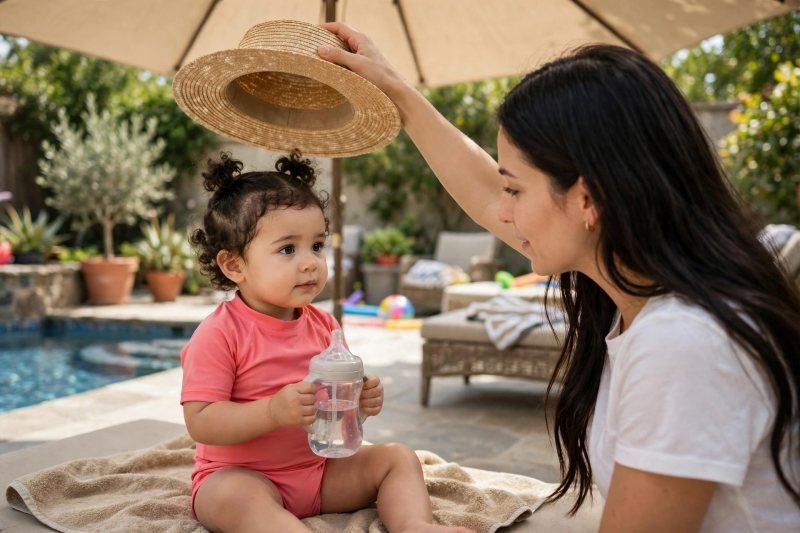
Set up shade base camp first. Before the first splash, claim your spot: umbrella or canopy up, towels down, water bottle open, hat on your toddler. Say: "This is our home base — we swim, we come back, we rest, we swim again." Start the rhythm from minute one, alternating water play with shade breaks for drinks and rest, and be most careful in the middle of the day when the sun is strongest. A toddler will never call their own shade break, so the schedule is yours to keep — short water sessions with frequent rests beat one long session every time. Base camp set and rhythm running, it is finally splash time, with the most important rule of the entire guide.
-
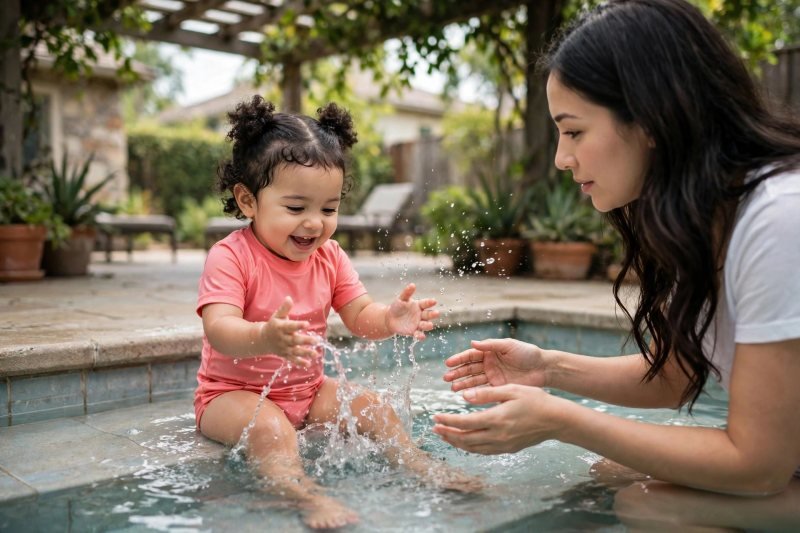
Stay within arm's reach in the water. In the water, your only job is your toddler: stay within arm's reach at all times, eyes on them, phone away, conversations second. Say it to every adult in your group: "Watching the water means watching, out loud — we say who is on duty." Toddlers are top-heavy, silent, and fast near water; swimwear, swim diapers, and even approved flotation gear never substitute for that reach. Keep sessions in shallow water where your toddler can stand or sit and splash, and end any session the moment supervision gets stretched by crowds, older kids' games, or your own fatigue. Out of the water for a break, your next checks are warmth and energy.
-
Watch for chills, tiredness, and hunger. Wet toddlers chill fast once they stop moving, so watch for shivering, unusual quietness, or clinginess — all are break signals. Say: "Towel, snack, shade — then we decide if there is more swimming today." Wrap them in the towel, offer water and a snack — the snacks and water calculator gives age-based amounts — and let them warm fully before any return. Break complete or day done, one prompt job protects skin and pools alike.

-
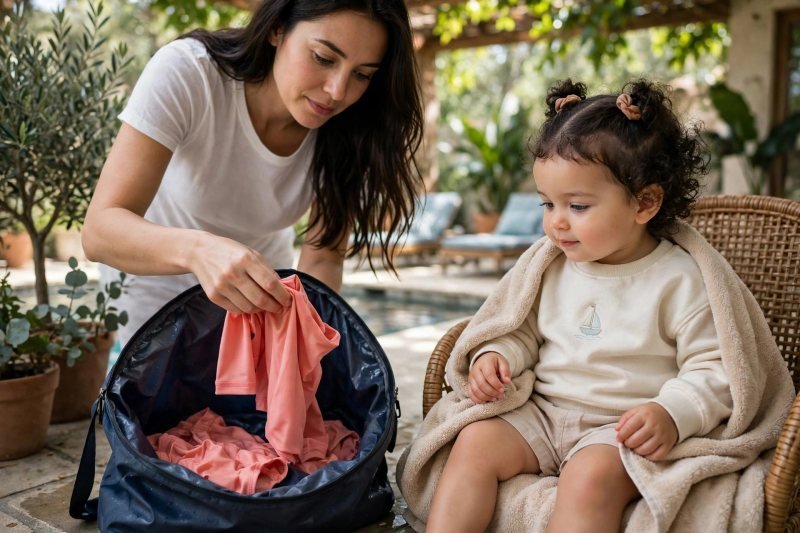
Change promptly when swimming ends. The moment water play is over, change your toddler out of the wet swim diaper and suit and into dry clothes — do not let them play, eat, or ride home in a wet swim diaper. Say: "Swim things off, dry things on — that is the deal every time." Bag the wet gear in the wet bag, rinse a reusable swim diaper as its care directions require, and wash hands after every change. Prompt changes keep skin comfortable, cut down on rashes from lingering damp, and keep pool water cleaner for everyone when changes also happen the moment a diaper is soiled mid-swim. Changed and dry, the last job happens back home and takes two minutes.
-
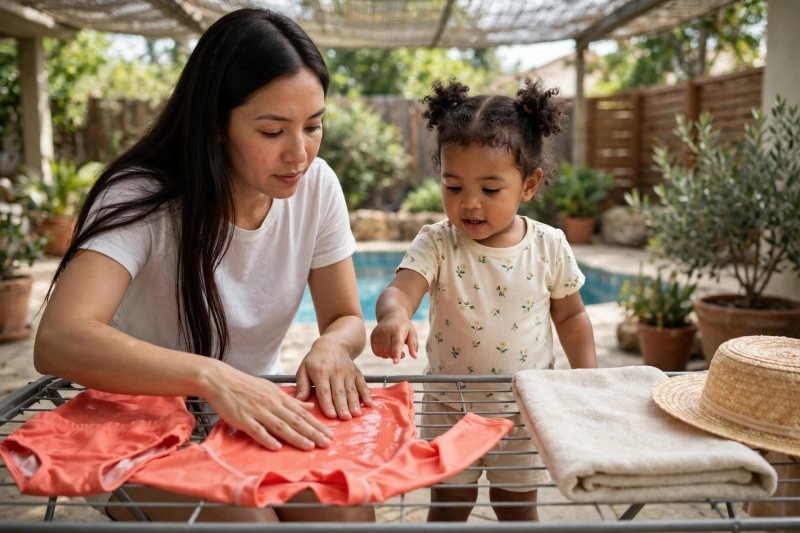
Rinse, dry, and repack the kit. At home, rinse suits and rash guards in clean, cool water, squeeze gently, and dry flat or draped in shade. Say: "We look after the kit and the kit is ready for the next sunny day." Wash reusable swim diapers per their care label. Once everything is dry, repack the swim bag in one go — suit, swim diapers, hat, sunscreen — so the next invitation to swim is a yes in five minutes. Replace any piece your toddler has outgrown before the next outing; last month's snug is this month's squeeze.


Make it easier
Default to the two-piece or rash-guard set: poolside diaper changes stop being a full undress. Buy the suit in a bright, easy-spot color and the same color every year — scanning a pool gets simpler. Work out how much water and food to pack with the snacks and water calculator. Build the post-swim change into the routine your toddler already knows from bath time, the same calm sequence as their daily kids' skincare routine.
Make it harder
Let your toddler carry their own mini swim bag and check off the kit with you — hat, towel, water — building the independence these toddler learning activities at home develop indoors. Practice the shade-break rhythm at the splash pad until your toddler toddles back to base camp on cue. Teach the standing rule as a chant — "swim, shade, sip, repeat" — until they say it at the gate.
Other ways to play it
- Pool-day kit: swim diaper discipline matters most where rules are strict — pack two spares and change away from the deck.
- Beach-day kit: add the widest shade you can carry, a hat that stays on, and extra fresh water for rinsing sandy suits before the ride home. Pack it all with this first beach trip packing list so nothing gets left behind.
- Splash-pad kit: no standing water means footwear with grip matters, and sessions can run shorter with more frequent drink breaks.
How it changes by age
- Ages 2–3: the focus of this guide. Expect full adult dressing help, hourly diaper checks, short water sessions, and constant arm's-reach supervision. Shade and clothing do most of the sun work; sunscreen covers the rest; breaks are scheduled by you, never requested by them.
- Under 2: shade-first is the rule — keep babies in shade with protective clothing and hats, keep water sessions very short, and follow your pediatrician's guidance on sunscreen for young infants. Swim diapers still apply for pool time, fitted snug and changed promptly.
- Ages 4–5: many are leaving swim diapers behind as toilet training lands, but keep spares during the transition and keep every other rule — fit, sunscreen, shade rhythm, arm's-reach supervision — exactly as written until swimming skills and judgment genuinely grow.
What they're learning
Water confidence: short, happy, well-managed sessions build a toddler who loves water without fearing it. Body awareness: reporting a soggy diaper, a slipping strap, or feeling cold teaches them their signals get answered. Routines and rules: swim, shade, sip, repeat — a safety rhythm learned the same way as handwashing, by joyful repetition. Independence: carrying the mini bag, choosing between two suits, and helping rinse builds real-world competence. Choosing gear by criteria: this guide names no brands and no prices — see how we choose products for the criteria-first approach used here.
Clearing up
"A swim diaper works like a regular diaper." No — it lets water pass so it does not swell; it holds solids only and is not leak-proof. "A regular diaper is fine if we are quick." It waterlogs, sags, and can burst. "A rash guard means no sunscreen." It covers only the skin under it. "Arm floats mean I can relax." Nothing replaces arm's-reach supervision, ever.
Questions parents ask
What should a toddler wear for swimming?
Do swim diapers really work?
Can my toddler wear a regular diaper in the pool?
How often should I reapply sunscreen on my toddler at the pool?
How long can a toddler stay in the water?

save it for later
Pin this for the next rainy afternoon
Keep it on a board so it is there when you need it, rather than when you happened to find it.
Save to Pinterest


