


Growing Out Toddler Bangs: 8 Styles for the Awkward Stage
If growing out bangs toddler hair feels endless, you are not alone. These 8 gentle styles keep hair out of her eyes through the awkward stage.
Growing out toddler bangs takes patience and simple styles. Detangle gently with a water spritz, then rotate eight looks — side sweep with a clip, mini side braid, tiny top knot, bow-clip twist, soft headband, two mini pigtails, deep side part, and a two-clip curtain sweep — to keep bangs out of her eyes.

The short version
- Detangle first, every time: a water spritz and soft brush make every style easier.
- All 8 styles are loose and quick — side sweep, braid, top knot, bow-clip twist, headband, mini pigtails, deep side part, curtain sweep.
- Never pull a style tight; if it hurts or tugs, redo it looser right away.
- Small clips are a choking hazard — grown-ups handle them and store them out of reach.
- Scissors are adults-only; trims belong to a confident grown-up or the salon.
- Weekly progress photos and a star sticker chart make growth visible.
- Age
- Ages 3–4
- Prep
- 5 min
- Mess
- Low
- Where
- Indoor
Why kids love this
Growing out toddler bangs turns a plain morning into a choosing game, and three- and four-year-olds love a choosing game. Today the bow clip, tomorrow the headband, the next day the tiny top knot. She holds the tray, picks the clip, watches herself, and finishes with hair that no longer tickles her eyes.
What you'll need
- A soft hairbrush with gentle bristles
- A small spray bottle of plain water
- Plain snap clips, lightweight and smooth-edged
- One plain bow clip
- A soft, stretchy headband with no hard teeth
- Small soft hair ties
- A small tray to hold everything
- A plain sticker chart and star stickers
Before you start
1. Set the tray out with the brush, spray bottle, clips, bow clip, headband, and ties where your child can see them. 2. Check every clip first: open and close each one, and set aside anything stiff or sharp. 3. Pick a calm moment — after breakfast works well — and keep first sessions short, stopping while it stays fun. 4. Agree on the plan: the bangs grow slowly, and each morning you pick one style.
How to do it
-
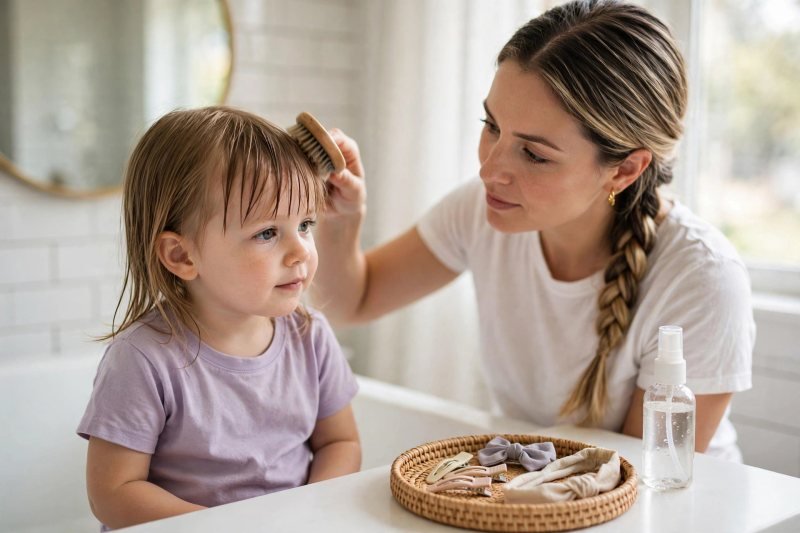
Start with a gentle detangle. Set the tray on the white counter, seat your daughter safely where she can see the round mirror, and spritz the bangs with plain water until damp, not dripping. Say: "Your bangs are growing longer every week, and today we are just going to brush them smooth and pick a pretty way to wear them." Brush slowly with the soft hairbrush, from the ends upward, holding the hair softly above any tangle so nothing pulls. Let your child count the spritzes and do the last two strokes herself. Once the front lies flat, try the simplest style first.
-
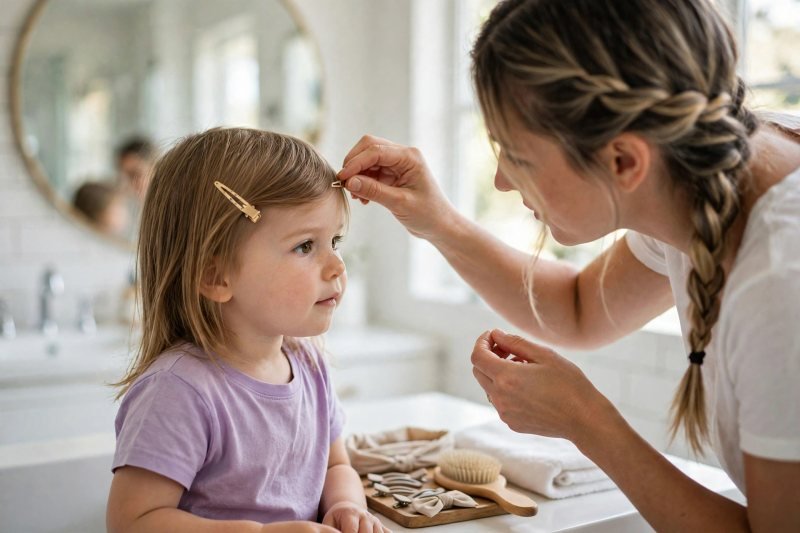
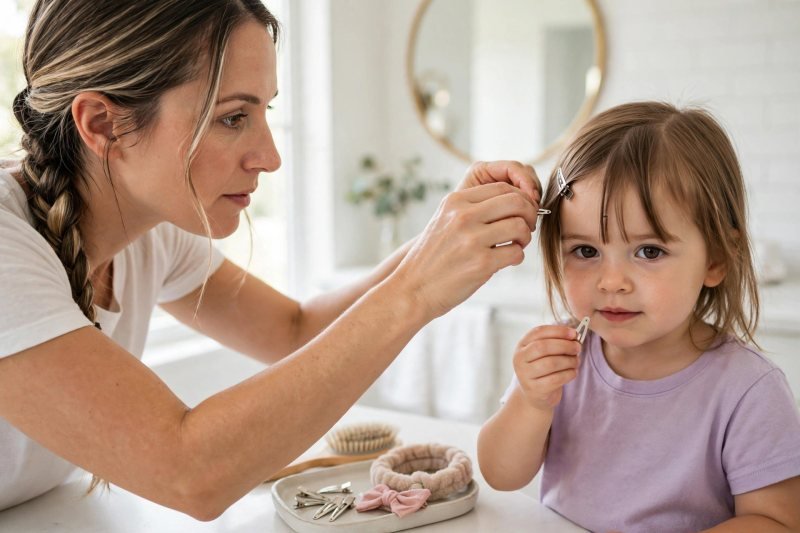
Sweep them to the side. With the bangs still damp, brush the front section toward the side your child prefers, following the direction the hair likes to fall. Say: "We are sweeping your bangs to the side, like a curtain sliding open, so you can see everything." Hold the sweep in place with one hand and slide a plain snap clip in close to the hairline, where the hair is thickest, so it grips without being tight. Let your child choose the clip, watch it click shut in the mirror, and test it with a gentle head shake. Spritz any strays smooth again. Tomorrow, trade the clip for a braid.
-
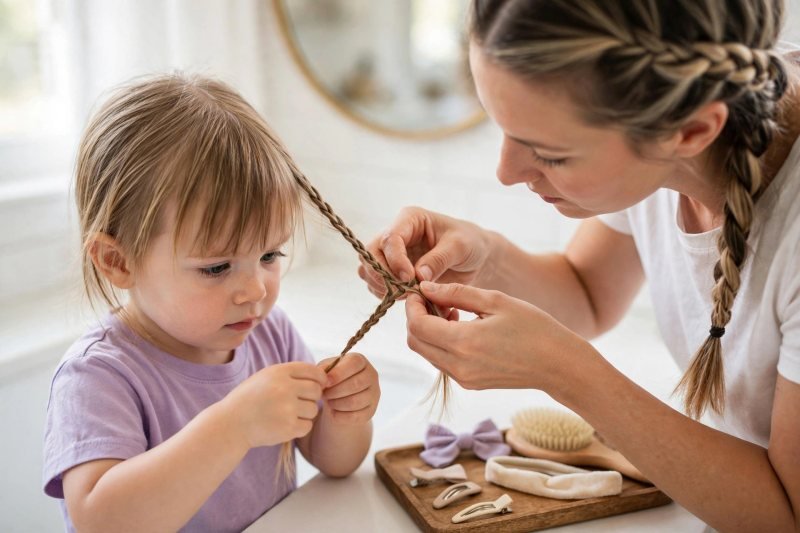
Braid a mini side braid. Start with damp, detangled bangs brushed to the side, then gather that section plus a little hair behind it into three strands. Say: "Now we are weaving your bangs into a braid that hugs your head, so it stays all day." Cross the outside strand over the middle, then the other outside strand over the new middle, keeping each cross loose and low near the hairline. Let your child hold the braid's end while you work, then secure it flat with a snap clip after four or five crosses. Check nothing feels tight, and loosen the first cross if it does. Next, trade hold for height.
-
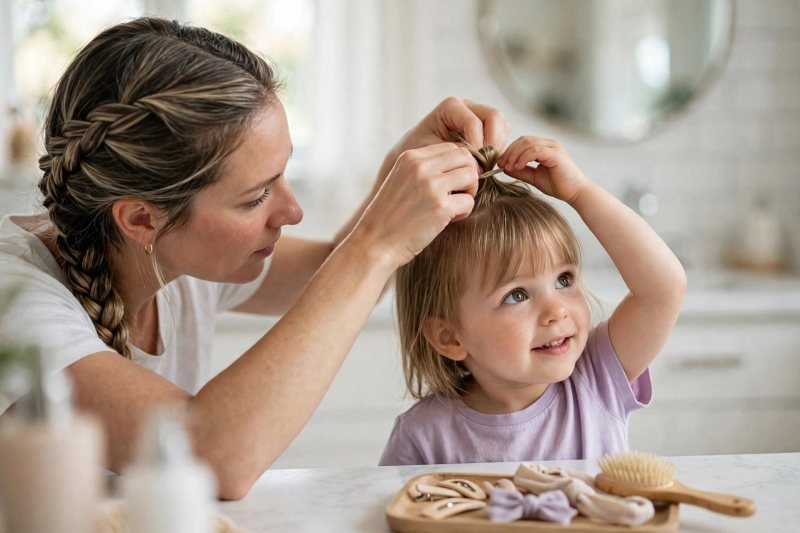
Pop up a tiny top knot. Brush all the bangs upward and back, gathering them with the section of hair just behind into a handful on top of the head. Say: "We are scooping your bangs up into a tiny knot, like a little fountain on top." Loop a small soft tie around the hair twice, keeping it loose, then fold the ends over and catch them with the tie so it sits like a small bun; if the ends are too short, a soft sprout is just as sweet. Let your child pat the knot and choose where it sits. Next, bring the hair down with a twist.
-
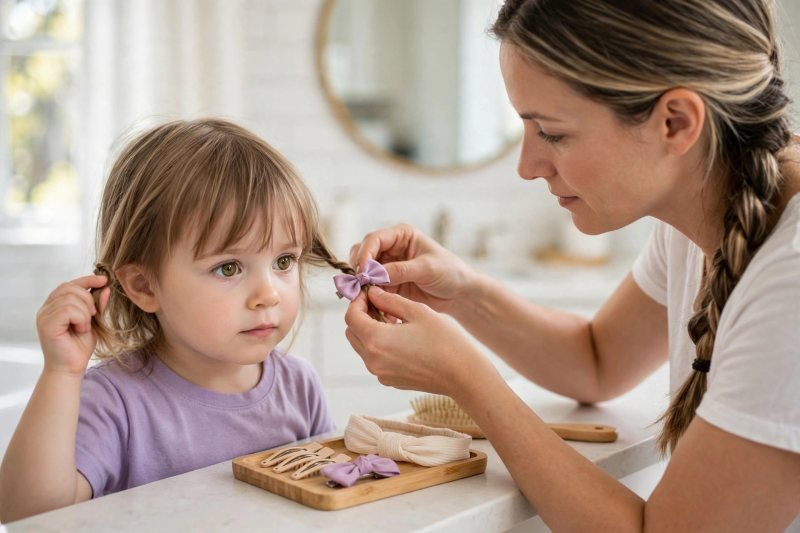
Twist and bow-clip. Dampen and detangle the bangs, brush them to the side, then roll the front section softly away from the face, twisting gently toward the ear so it lies flat. Say: "We are rolling your bangs into a soft twist, and your bow clip will hold the end like a present." Keep the twist relaxed, never a tight cord, and let your child hold it with one finger while you open the bow clip. Slide the clip over the twist's end near the ear, check it feels comfortable, and let her admire the bow in the mirror. Tomorrow's style needs no clips at all.
-
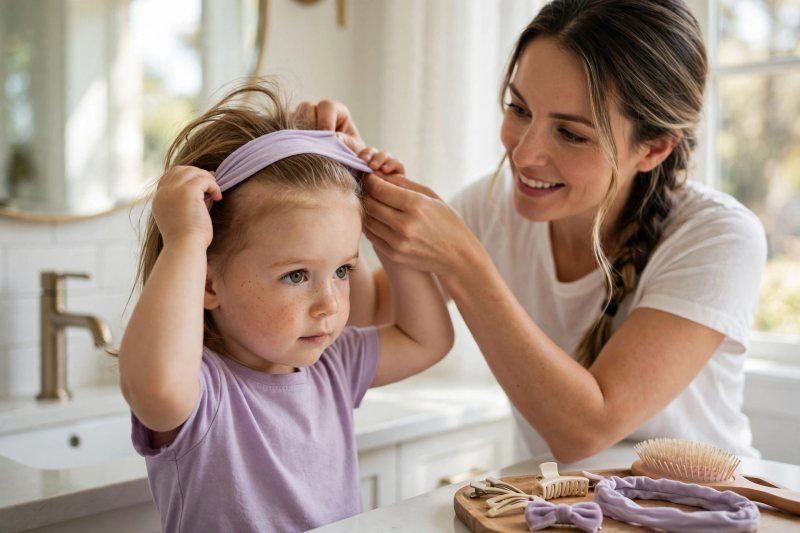
Push back with a soft headband. Detangle the bangs and brush them straight back so the front lies smooth, spritzing lightly so the hair stays put. Say: "This soft band will hold your bangs back like a gentle hug, and you get to slide it on." Hold the headband open and let your child guide it on with you, sliding it back until it sits behind the hairline, catching all the bangs underneath. Adjust it together so it feels snug but never tight, and let her test it with a happy head shake. This is the fastest of the eight styles; the next splits the front in two.
-
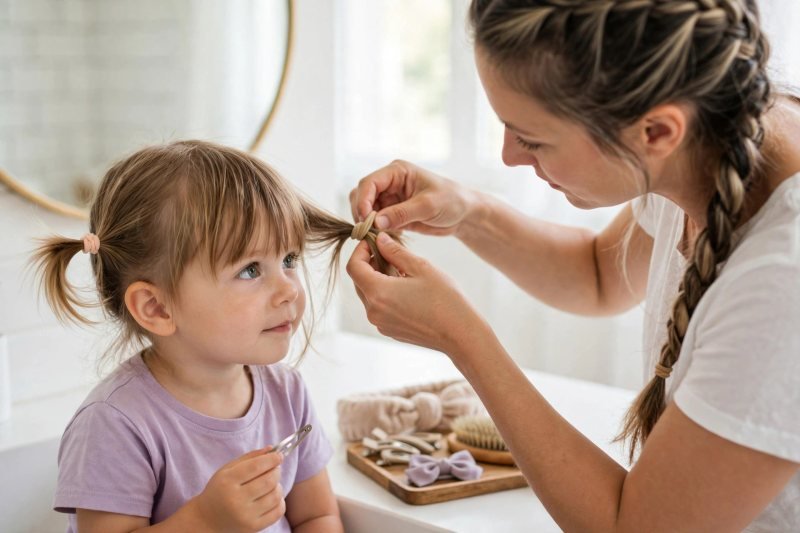
Split into two mini pigtails. Detangle the hair, then use your fingers to make a soft center part, dividing the bangs and the hair just behind them into two sections. Say: "We are making two tiny pigtails, one on each side, and clipping your bangs to the side so they can grow along with them." Gather the left section up softly, secure it loosely with a soft hair tie, then sweep that side's bangs toward the pigtail and catch them with a snap clip. Repeat on the right while your child holds the tie and clip ready, then even both sides up in the mirror.
-
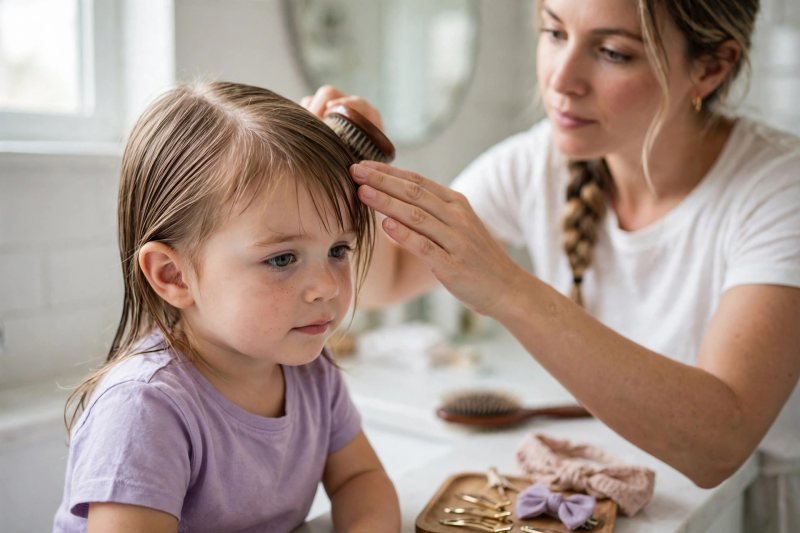
Smooth a deep side part. Detangle the bangs, spritz them evenly damp, then place the end of the brush handle at the hairline well to one side and draw a deep part back from that point. Say: "Today we are giving you a deep side part, smoothed flat, like a big girl style." Brush the larger section across the forehead and down to the side in long strokes, pressing it gently flat with your palm; let the smaller side lie behind the ear. Let your child watch the part appear and say which side she likes better. This sleek style may need one re-smooth after nap time.
-
Sweep a curtain with two clips. Detangle the bangs, spritz them damp, and find the center point of the front section, dividing the bangs into two halves that fall to each side like curtains. Say: "We are parting your bangs in the middle so they sweep to both sides, like curtains opening on a window." Brush the left half down and out, smoothing it flat, and clip it near the hairline with one snap clip; brush and clip the right half the same way while your child holds the second clip ready. Check that both sides look balanced and feel comfortable — this suits the later weeks of growing out.
-
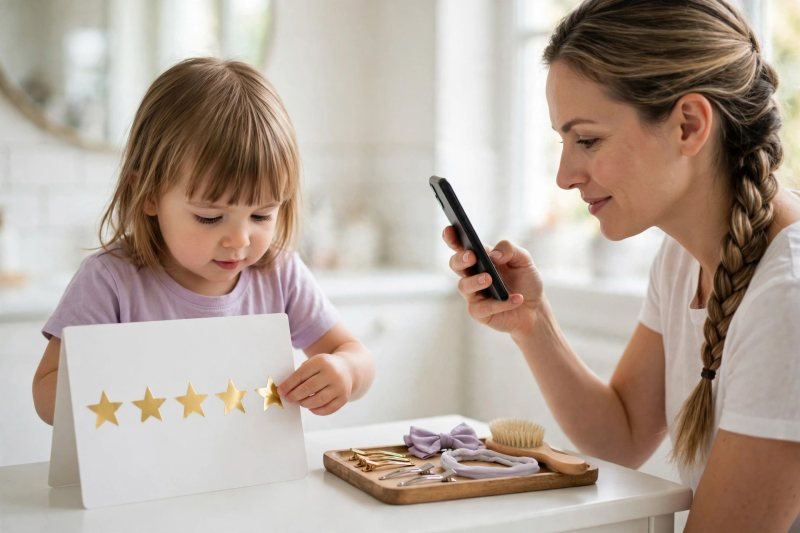
Keep it growing week to week. Once a week, return to the same bright bathroom spot, detangle gently, and take one progress photo to see how far the bangs have come. Say: "Look how much longer your bangs are — growing takes time!" Let your child add a star sticker to the plain chart each week — no writing or numbers, just a growing row of stars. Between photos, rotate the eight styles so no clip spot is worn daily, and re-spritz rather than pulling when hair resists. Remember that scissors are only ever for grown-ups; a trim belongs to a confident grown-up or the salon.


Make it easier
Start with just two styles — the side sweep and the soft headband — and add one new style each week. Keep the tray stocked and in the same place, so mornings never start with a clip hunt. If she is wiggly, let her stand at the mirror. If the sound or feel of styling itself is the battle, our haircut anxiety tips for kids guide has desensitization steps that work for mirror time too.
Make it harder
Let your child choose the style from two options, and talk through why she picked it. Invite her to do steps she can manage — spritzing, last brush strokes, holding clips ready. Practice the mini side braid on a doll first.
Other ways to play it
- Photo-day version: the deep side part or curtain sweep photographs beautifully and keeps every strand off the face.
- Active-play version: the mini side braid and tiny top knot hold best through climbing, dancing, and playground time.
- Gentle-care version: pair styling with a simple wash-day rhythm — the less-is-more approach that works for a kids' skincare routine works for hair too. Wash-day rhythm questions are answered in our guide to how often to wash a toddler's hair.
How it changes by age
- Ages 3–4: threes and fours can sit for three to five minutes with a style to choose, but not through fussing — keep every style loose, quick, and finished before patience runs out. If you are weighing a toddler's first haircut against growing the bangs out, both are good plans; these styles bridge the months.
- Younger toddlers: under three, stick to the headband and side sweep, and treat styling as a quick game.
- Older preschoolers: fives can often hold sections, pass clips, and attempt the side sweep themselves while you finish the clip.
What they're learning
Patience: growing hair takes weeks, and the sticker chart and progress photos make slow progress visible. Fine motor control: spritzing, holding clips, guiding a headband, and placing stickers strengthen the hand muscles used for drawing and writing. Sequencing and choice: detangle, style, check the mirror — a three-beat sequence she can predict, plus a daily choice of her own. Body awareness: words like sweep, twist, part, and smooth attach to her mirror image.
Clearing up
"Growing out bangs means months of hair in her eyes." It does not have to — that is exactly what these eight styles are for, and two or three favorites carry you through. "A tight style lasts longer." Tight styles hurt and get pulled out faster; a loose style she forgets lasts longest. "Trim a little every week to help it grow." Trimming does not change how hair grows; it only removes length you are gaining. "She needs special products." Plain water, a soft brush, and gentle handling are enough. If rinsing or washing turns into a battle, our washing toddler hair without tears guide covers the calm-water tricks.
Questions parents ask
How long does it take to grow out toddler bangs?
Should I trim toddler bangs or grow them out?
How do I keep bangs out of her eyes while they grow?
When will the awkward stage of growing out bangs end?
Can I cut a side-swept fringe instead of growing bangs out?

save it for later
Pin this for the next rainy afternoon
Keep it on a board so it is there when you need it, rather than when you happened to find it.
Save to Pinterest


