


Static Electricity Balloon Experiment for Kids
One of the simplest static electricity experiments for kids: rub a balloon on hair and watch it pick up paper bits, bend water, stick to a wall, and roll a soda can.
Rub a balloon on your child's hair for ten seconds to give it a static charge. A charged balloon picks up tiny tissue bits, bends a thin stream of faucet water, sticks to a wall, and rolls an empty soda can. This safe, simple experiment takes about twenty minutes and suits ages 5–6 with adult supervision.

The short version
- You need a balloon, tissue paper, a comb, an empty soda can, and a faucet.
- Rub the balloon on hair or wool for ten seconds to build the charge.
- One charged balloon powers four tricks: paper pickup, bending water, wall sticking, can race.
- Adults handle balloon inflation and popping; pieces are a choking hazard for under-3s.
- Static works best on dry days and may fail when it is humid.
- Children learn predicting, observing, testing ideas, and cause and effect.
- Age
- Ages 5–6
- Prep
- 3 min
- Mess
- Low
- Difficulty
- Easy
- Where
- Indoor
Why kids love this
Static electricity experiments for kids feel like real magic. One minute the balloon is just a balloon — the next, it is lifting paper bits, bending water sideways, and clinging to the wall as if by glue. Ages 5–6 are the perfect age: old enough to rub the balloon themselves, young enough to gasp when it works. Every trick uses the same skill — charging the balloon — so children get repeated wins, and the can race turns it into a game. If your child loves things that move on their own, try the dancing raisins experiment next — another kitchen-table favorite.
What you'll need
- 2–3 balloons (keep a spare)
- A few sheets of tissue paper or thin napkins
- A plastic comb (for the bonus trick)
- An empty aluminum soda can
- A faucet and a towel for the sink area
- A wool sweater or scarf (optional — charges better than hair)
Before you start
Clear the kitchen table, blow up one balloon and tie it yourself, and tear the tissue paper into confetti-sized bits for a small bowl. Lay the towel by the sink and pick a dry day if you can — static works best in dry air (see the FAQ).
How to do it
-
Set out the balloon and bits. Place the tied balloon on the table with the bowl of tissue bits beside it.

-
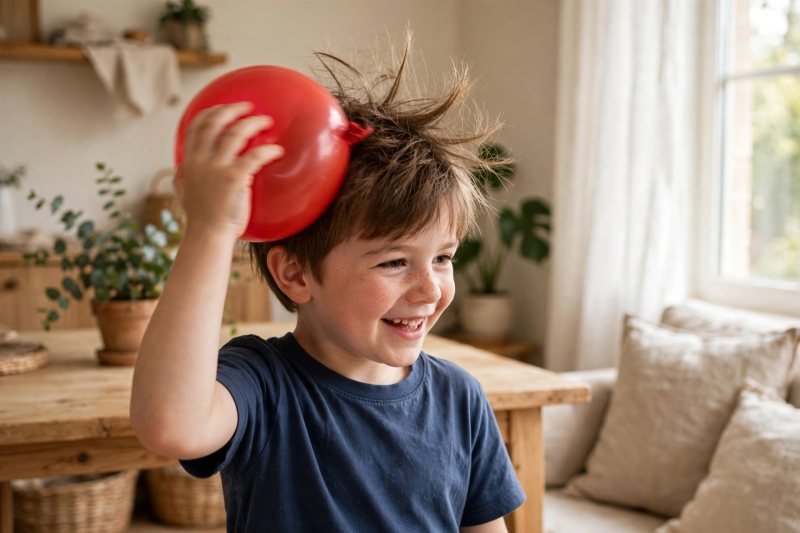
Charge the balloon. Rub the balloon firmly on your child's hair for ten seconds — faster rubbing builds a stronger charge.
-
Lift it slowly. Raise the balloon above your child's head and watch their hair float up and follow it.

-
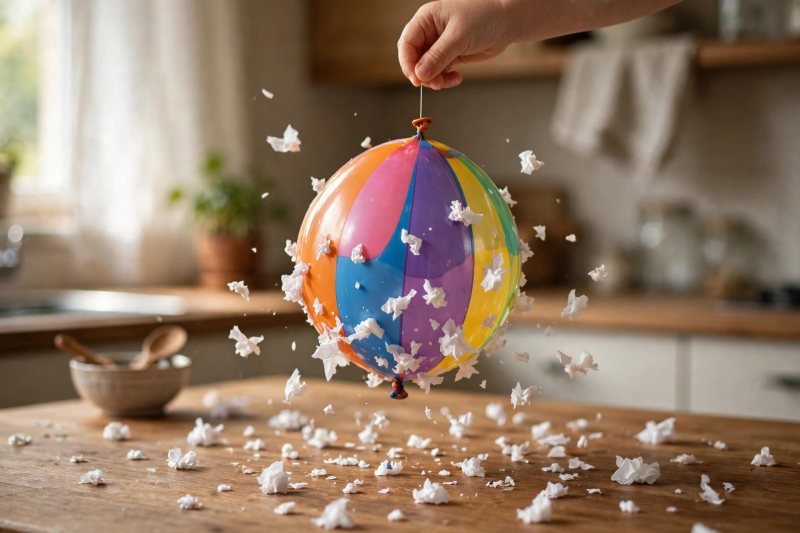
Pick up the paper bits. Spread the bits in a flat pile and hold the charged balloon just above them, without touching, as they jump up and stick.
-
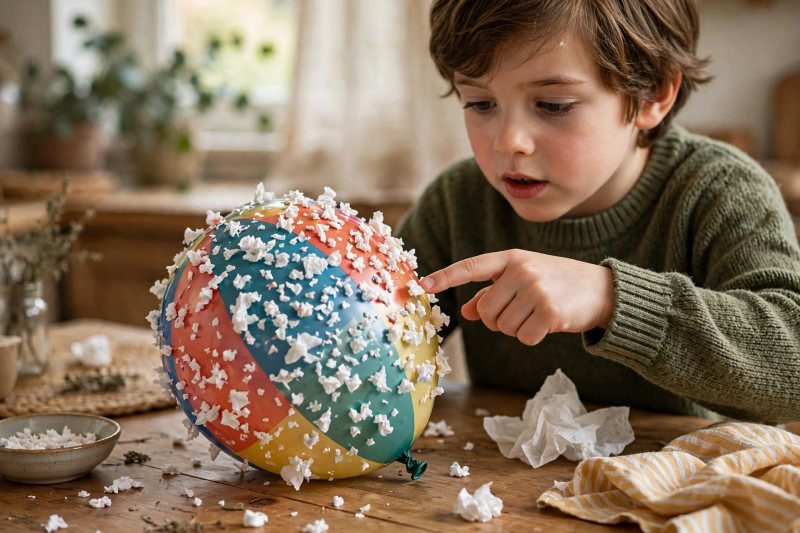
Count the catch. Count the stuck bits together, wipe them off, and pick up another round.
-
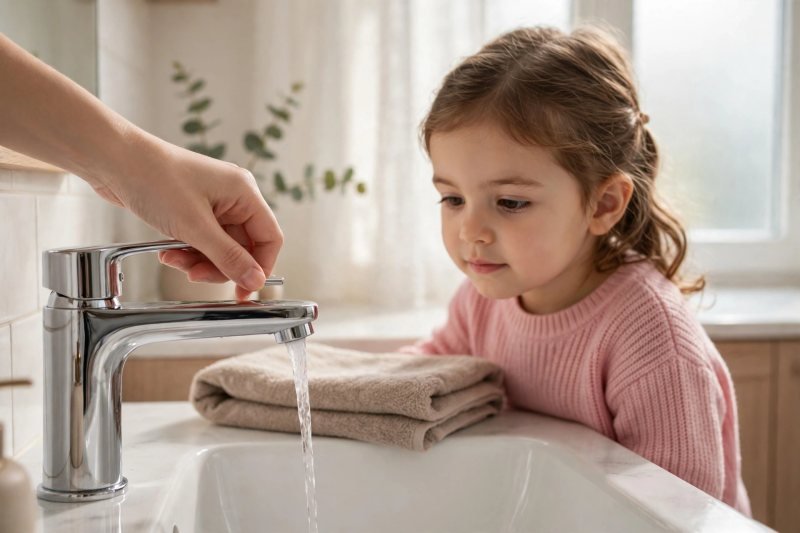
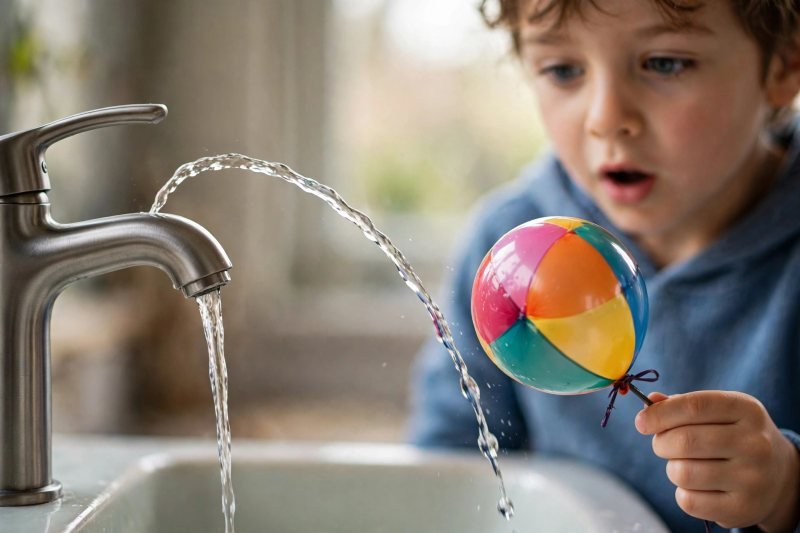
Start a thin stream. Move to the sink and turn the faucet to a slow, thin stream about the width of a pencil.
-
Bend the water. Hold the charged balloon beside the stream without touching it and watch the water bend toward the balloon.
-
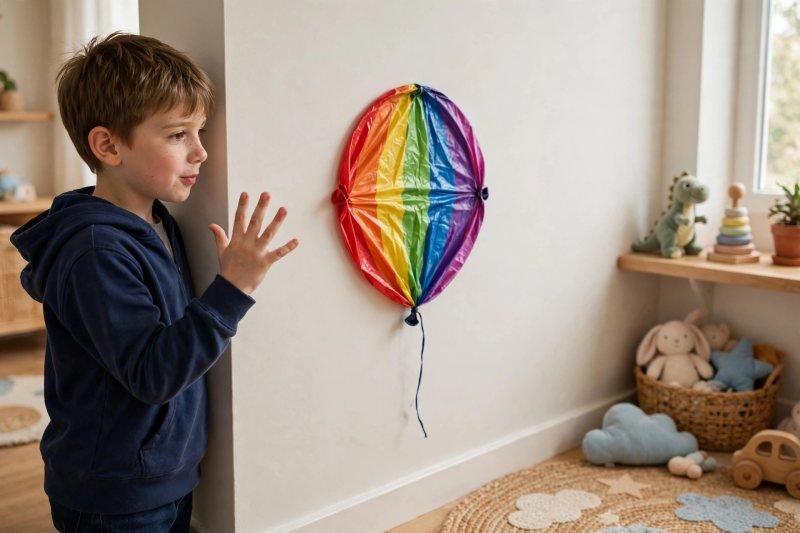
Stick it to the wall. Turn the water off and wipe the sink, then rub the balloon again, press it flat against a smooth wall, and let go — it stays stuck.
-
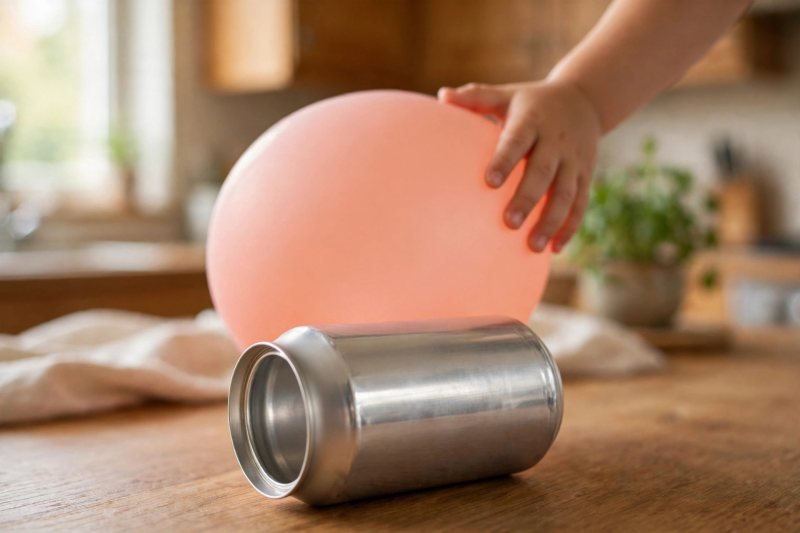
Roll the can. Lay the soda can on its side, recharge the balloon, and hold it just behind the can so it starts rolling forward.
-
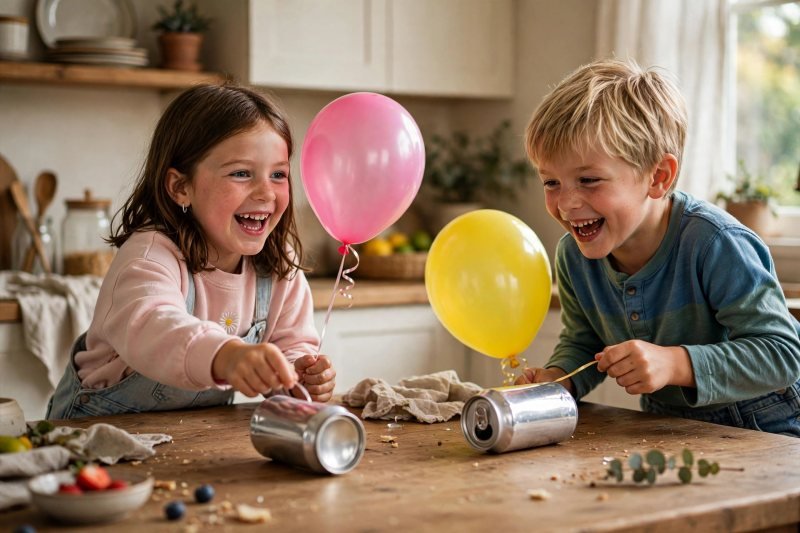
Race the cans. Race two cans across the table, one balloon each — and when the fun ends, pop the balloons yourself and trash every piece, since balloon bits are a choking hazard for younger children.


Make it easier
Start with the hair trick — the simplest proof the charging worked — and steady your child's hand at the stream.
Make it harder
Turn each trick into a guess-then-test: big scraps or only tiny bits? Thicker stream bends more or less? Charge with hair, wool, and cotton — and rank the strongest.
Other ways to play it
- Charge the plastic comb the same way and pick up the bits with its teeth.
- Charge against wool versus cotton and compare.
- Cut bigger confetti and see how size changes the lift.
- Charge the balloon in a dark room and listen for a faint crackle.
- After the balloon tricks, try the magic milk experiment — food coloring swirls when soap breaks the milk's surface.
- For a bigger fizz, build the baking soda and vinegar volcano outside or in a tray.
How it changes by age
- Designed for ages 5–6 with an adult nearby: children do the rubbing and balloon tricks, while adults handle inflation, popping, and the faucet. Younger siblings should watch only — broken pieces are a serious choking hazard for under-3s.
What they're learning
Children build real science habits here: predicting ("Will the water bend?"), observing ("The bits jumped before the balloon touched them!"), and testing ideas. Each trick teaches cause and effect: rubbing causes the charge, and the charge causes the attraction. They meet a first physics idea — invisible forces can move things — and learn the words charge, attract, static, electricity. Hair and wool give up tiny charges easily while the balloon holds on to them — that is why wool beats cotton. The same balloon comes in handy for the balloon baking soda and vinegar experiment, where gas — not static — does the inflating.
Clearing up
Pop the balloons yourself, trash all pieces, and wipe the table and sink dry — about three minutes.
Questions parents ask
Why does the balloon stick to the wall after I rub it on my hair?
Why isn't my static electricity experiment working?
What else can a charged balloon pick up?
Is static electricity from a balloon dangerous for kids?
What age is the balloon static electricity experiment best for?
Static is strongest on dry days — winter and air-conditioned rooms are ideal — and fades fast when it is humid, so tricks may fail. Wool gives a stronger charge than cotton. Rub in one direction rather than back and forth — it builds a stronger charge. For more kitchen science, try our easy science experiments for toddlers roundup, and the celery rainbow experiment shows how plants drink water — a gentle follow-up.


