


Shape Sorting Activities: Match, Sort and Name Every Shape
Shape sorting activities turn matching into learning: your toddler posts shapes into a sorter box, trays, and a muffin tin — matching, sorting, and naming every circle, square, and triangle.
Shape sorting activities for toddlers are matching games: your child posts chunky shapes into a sorter box, drops them into muffin-tin cups or trays, and learns to name each one. They build early math (same vs. different), fine motor control, and shape vocabulary. Start with circles, squares, and triangles — and narrate every shape.

The short version
- Sorting games teach toddlers to match pieces by shape and name circles, squares, and triangles.
- Narrate every piece — "Square in the square hole!" — because hearing the word while touching the shape is what sticks.
- Trial and error IS the learning: let your child try, miss, and retry without correcting.
- Ten to fifteen minutes is plenty; end while it is still fun.
- Age
- Ages 2–3
- Prep
- 5 min
- Play time
- 20 min
- Mess
- None
- Difficulty
- Easy
- Where
- Indoor
Why kids love this
That small clunk when a wooden circle drops through its hole — toddlers live for it. Grab a piece, find its home, drop it in: the work IS the fun. You name each shape as it lands.
What you'll need
- A shape sorter box with circle, square, and triangle holes; pieces at least 2 inches across
- A muffin tin
- 2–3 shallow trays, bowls, or baking dishes
- 9 chunky pieces (3 circles, 3 squares, 3 triangles), each too big to swallow
Before you start
1. Set the sorter box, muffin tin, and trays on a low table or the floor. 2. Put the 9 pieces in one mixed pile — circles, squares, and triangles together. 3. Set aside extra pieces (stars, hearts) for another day.
How to do it
-
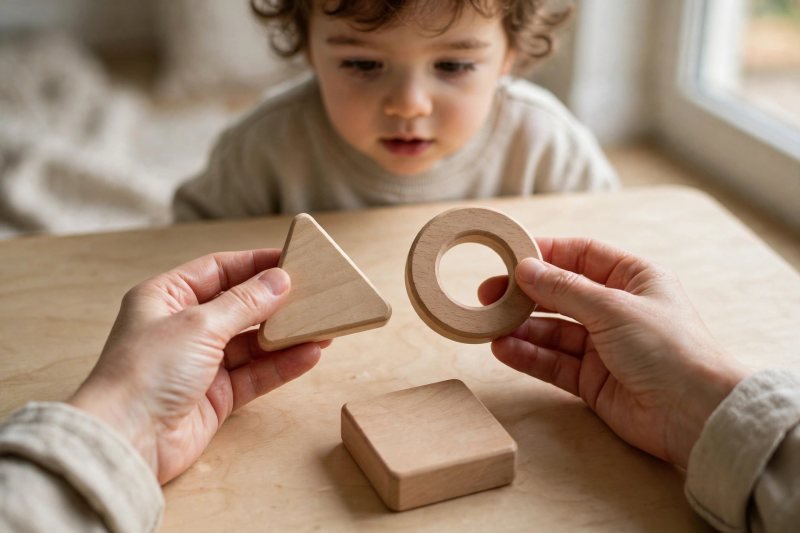
Name the three shapes. Set out one circle, square, and triangle. Point to each: "Circle. Square. Triangle."
-
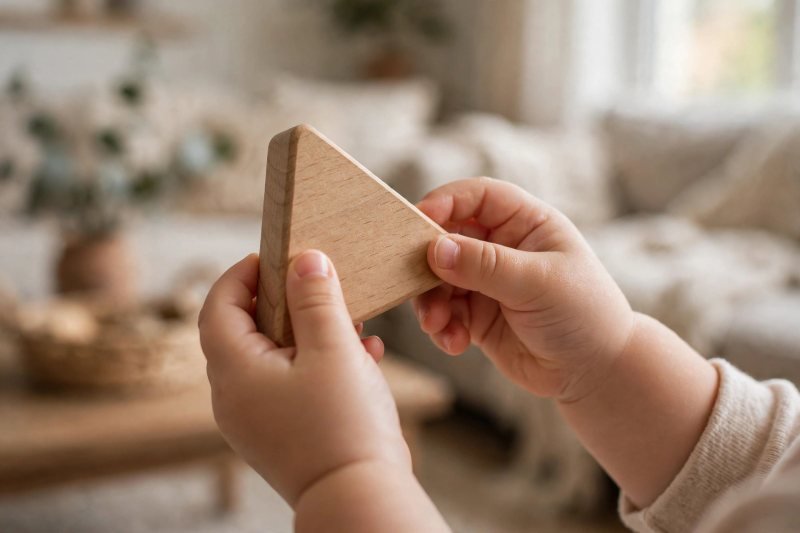
Touch the pieces. Hand your toddler each piece to hold. Trace its edge: round and round for the circle, bumpy corners for the others.
-
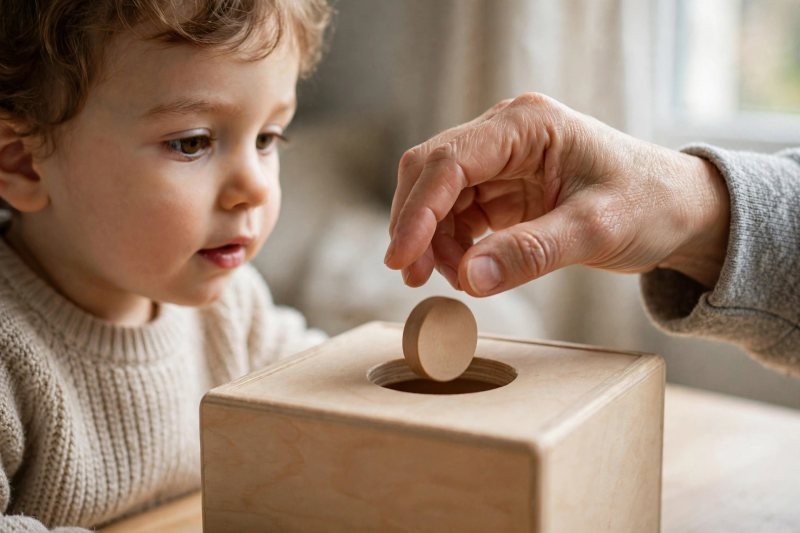
Post the circle yourself. Hold the circle over the box. "The circle goes in the ROUND hole." Drop it in slowly so they see and hear it land.
-
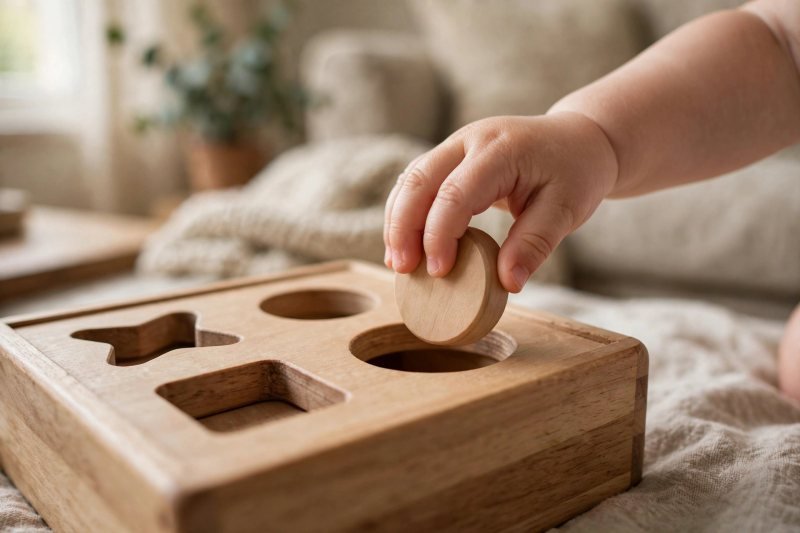
Let them try the circle. Give your toddler a circle piece. Let them bang and twist it toward the holes — trial and error is the lesson. When it drops: "You did it!"
-
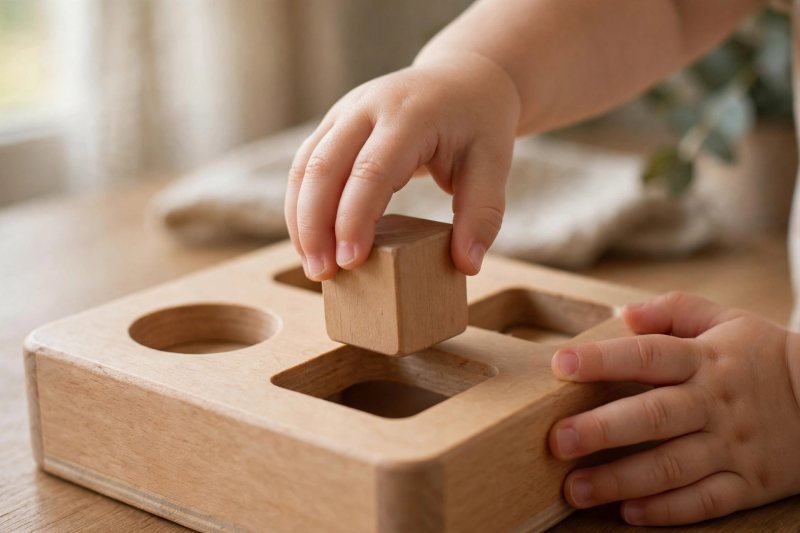
Introduce the square. Hold up the square: "Four straight sides, four corners." Show it will NOT fit the round hole, then guide it to the square hole.
-
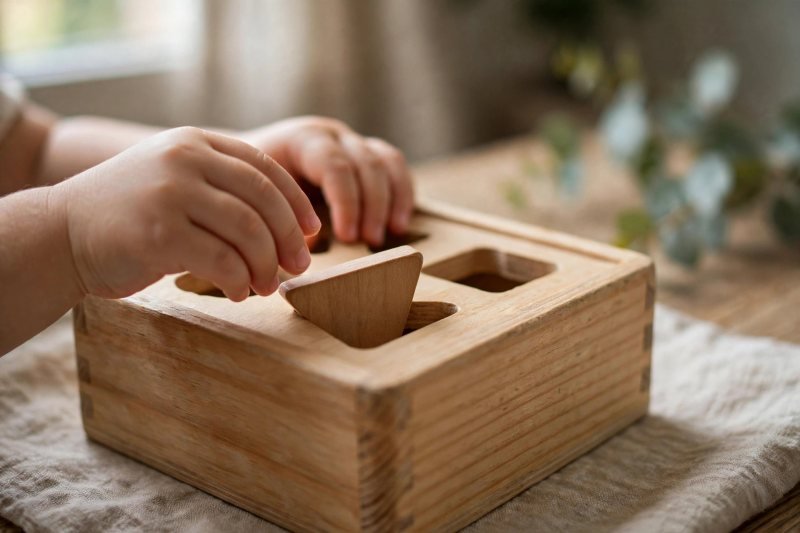
Add the triangle. Name it, count its three sides as you trace them, and post it. Every shape has one hole that fits it.
-
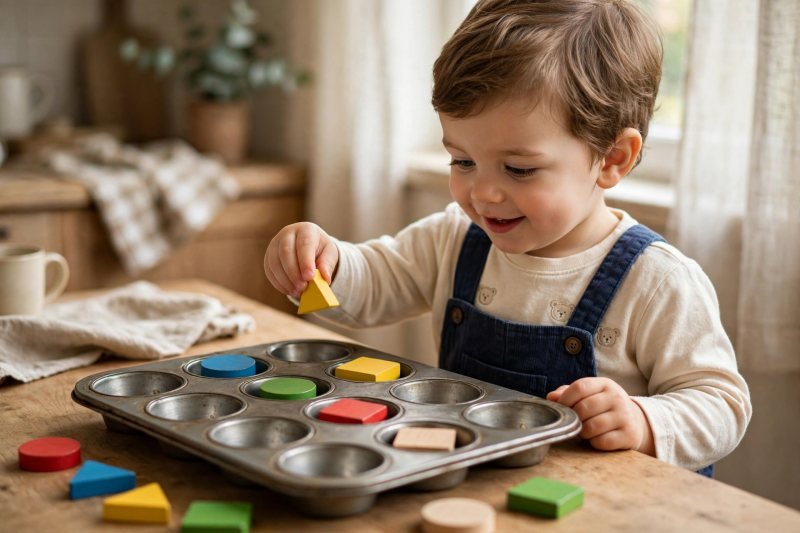
Switch to the muffin tin. Drop a circle into one cup: "All the circles live here." A square into another, a triangle into a third. Hand your toddler a piece: "Where does this one live?"
-
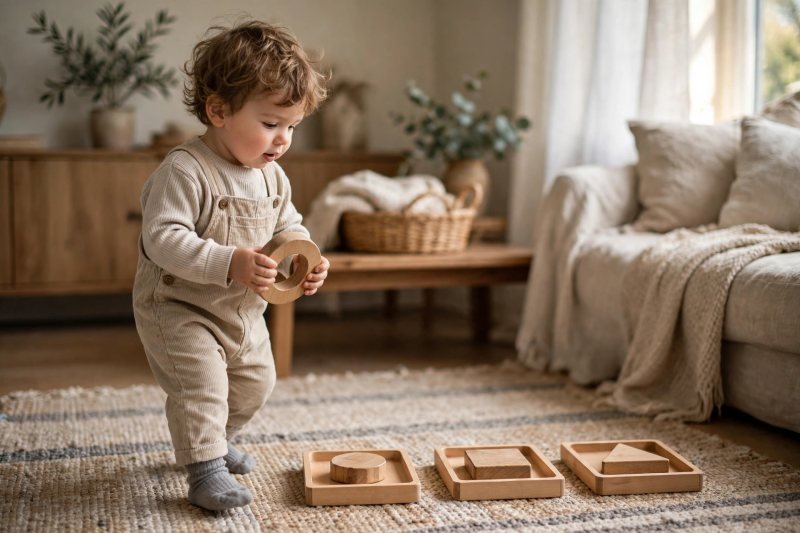
Try the sorting trays. Put one sample shape on each tray. Hand over pieces one at a time; your toddler carries each to its matching tray.
-
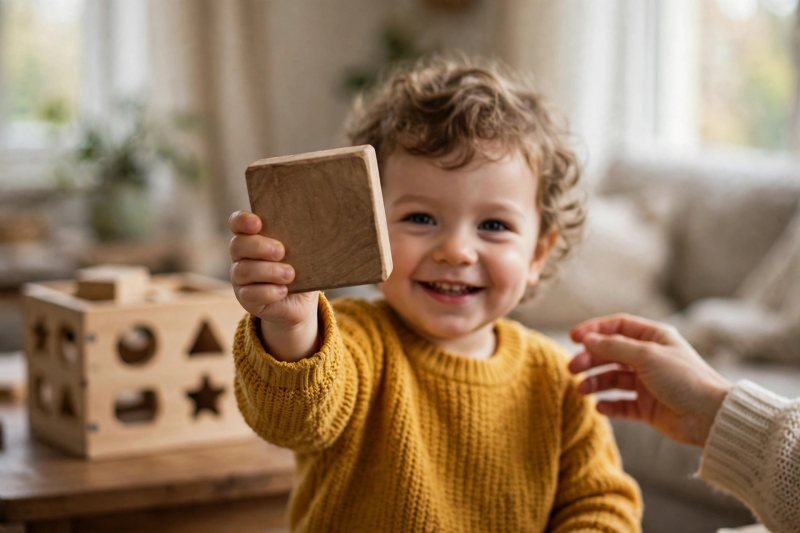
Play the naming round. Hold up pieces one at a time: "What shape is this?" Take any answer with delight — or answer yourself ("Triangle!").
-
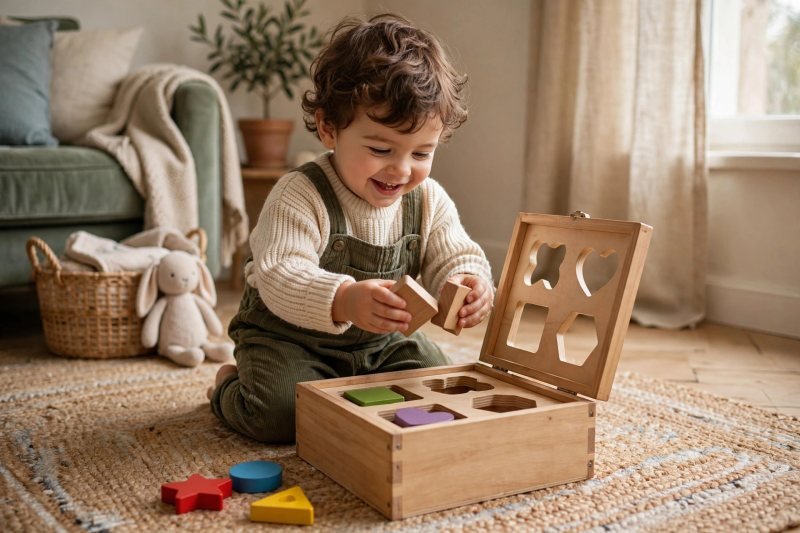
End with the tidy-up sort. "All shapes home!" Drop every piece back in, naming each one. End while it is still fun.


Make it easier
Start with circle and square; add the triangle another day. Hand your toddler one piece at a time so the pile never overwhelms them. Watch you sort the first round; imitation counts as practice.
Make it harder
Add a rectangle and an oval once the first three are solid. Sort by two things at once: "Red circles go here, blue squares go there." Race a count of ten: "Can you sort all the triangles in time?"
Other ways to play it
- 1. Sticker match. Tape giant paper shapes to the wall; your toddler matches shape stickers onto them.
- 2. Shape hunt. Hide chunky pieces around the room for your toddler to hunt and drop into matching bowls.
- 3. Color sort. Same trays and tin, but sort by color instead.
- 4. Knob puzzle matching. Chunky wooden knob puzzles: match each piece to its outline by shape.
How it changes by age
- At 2: Posting beats naming — hands learn before words. 10–15 minutes max. For more ideas in the same age band, see toddler learning activities at home.
- At 3: Naming catches up. Add the rectangle and let your child lead the naming round. When the first three feel solid, shapes activities for preschoolers build on them with more hands-on geometry play.
What they're learning
Shape recognition: telling circles, squares, and triangles apart by their features Shape vocabulary: hearing and saying the names in context Classification: grouping things that are "the same" Fine motor control: grasping, rotating, posting (more fine motor ideas) Early problem-solving: turning a piece until it fits
Clearing up
Trial-and-error play can look like nothing is being learned. Plenty is: it teaches the physical lesson — this fits, that doesn't — while your narration teaches the words. Sorting and naming run on different timelines.
Questions parents ask
How do I teach my 2-year-old to sort shapes?
Should I correct my toddler when they put a shape in the wrong hole?
How many shapes should a 2-year-old sort at once?
My toddler just bangs the sorter box and throws the pieces. Is that okay?
When is my child ready for harder sorting games?
We prefer wooden sorter boxes: the weight feels better, and the clunk rewards every match. Repeat weekly for a month. Same shapes, same trays — repetition is how the learning sticks at this age. If your child only bangs the lid and throws the pieces, that IS play — narrate while they bang and try sorting another day. Once the first three shapes click, 2D shapes activities extend the same matching play to new shapes. Shape words pair naturally with letter play — alphabet activities for toddlers use the same touch-and-name rhythm.
Keep reading: learning shapes: circle, square, triangle and shape activities for toddlers.

save it for later
Pin this for the next rainy afternoon
Keep it on a board so it is there when you need it, rather than when you happened to find it.
Save to Pinterest


