


Number Recognition Activities for Preschoolers: 20 Hands-On Ideas
20 hands-on number recognition activities for preschoolers that make numerals click: sensory bins, number hunts, stamping, water play, and movement ideas for ages 3–4 — no worksheets, no drills, just playful learning.
The best number recognition activities for preschoolers are hands-on: tracing numerals in a salt tray, fishing foam numbers from a tub, stamping them with ink, hunting them with a flashlight, or hopping to them on the sidewalk. Start with numerals 1–5, say each number's name out loud every time you touch it, and keep sessions to ten or fifteen playful minutes.

The short version
- Number recognition means seeing a numeral like 4 and knowing its name and what it stands for — a different skill from chanting "one, two, three" from memory.
- Preschoolers learn numerals fastest through touch and movement: trace them, stamp them, dig for them, hop to them.
- Start with 1–5 only. Add 6–10 once the first five feel easy and a little bit boring.
- Say the numeral's name out loud every single time — your voice is what links the shape to its name.
- Ten to fifteen playful minutes beats any drill. Stop while it's still fun.
- Age
- Ages 3–4
- Prep
- 5 min
- Play time
- 15 min
- Mess
- Some
- Difficulty
- Easy
- Where
- Both
Why kids love this
Because numerals stop being school stuff and become treasure — things to dig up, fish out, stamp, and hop onto. Every idea ends with something in their hands or under their feet, and there is always a little "I found it!" moment. That is the exact feeling that makes a shape memorable.
What you'll need
- A shallow tray filled with salt, sand, or sugar
- Shaving cream (one cheap can lasts for weeks)
- Foam or wooden numerals, or numerals cut from cardboard
- A cloth bag or pillowcase
- Rubber numeral stamps with a washable ink pad, plus dot markers
- A plastic tub of water, or the bathtub
- Playdough and numeral cookie cutters (or a butter knife for shaping)
- Sidewalk chalk, beanbags or rolled-up socks, and two buckets
- A bin of dry rice or beans, pipe cleaners, and beads
- Toy cars, a cardboard box, and laundry baskets
- Numeral cards — handwritten on index cards is perfect
- Crackers or pretzel sticks for snack numerals
- A flashlight
Before you start
1. Pick one idea — just one — and gather its pieces in a tray or basket so everything is within reach. 2. For water play, lay a towel down first; for shaving cream, use a wipeable table. 3. Write your numeral cards big and bold, at least 8 cm tall, starting with 1–5 only. 4. Everything else can wait in the cupboard for next time.
How to do it
-
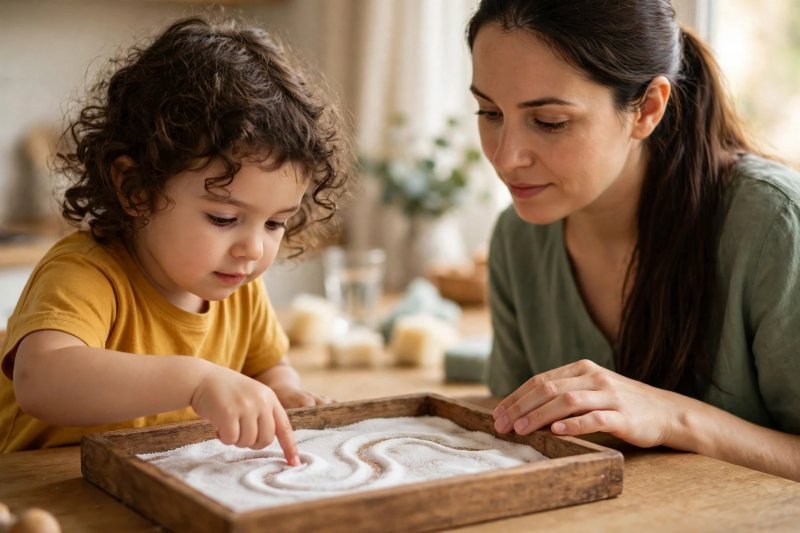
Salt tray tracing, with a shaving-cream swap for sensory days. Pour a thin layer of salt into the tray and smooth it flat; draw a big 3 with your finger and say "three — trace it with me," then let your child trace over your path, feeling every curve, and shake the tray to erase and try the next numeral. The fingertip does the remembering here. On a day when you want more sensory drama, squirt shaving cream on the table instead, spread it smooth, and write numerals with a fingertip — the cool foam makes every shape a sensory event, and a damp cloth wipes the table clean afterward.
-
Mystery number bag, with a flashlight hunt for dark-room days. Drop foam numerals into a cloth bag; your child reaches in without looking, feels one, and guesses before pulling it out — "I think it's a 5!" — then you check together and say its name. Feeling the shape without seeing it builds a deep memory of each numeral's curves. When the lights can go low, tape numeral cards on the walls, dim the room, and call out "find 4!" while your child sweeps a flashlight beam until the right numeral glows in the circle of light. The same hide-and-find game works with word cards later on — our first grade sight words list makes a good next hunt once numerals feel easy.

-
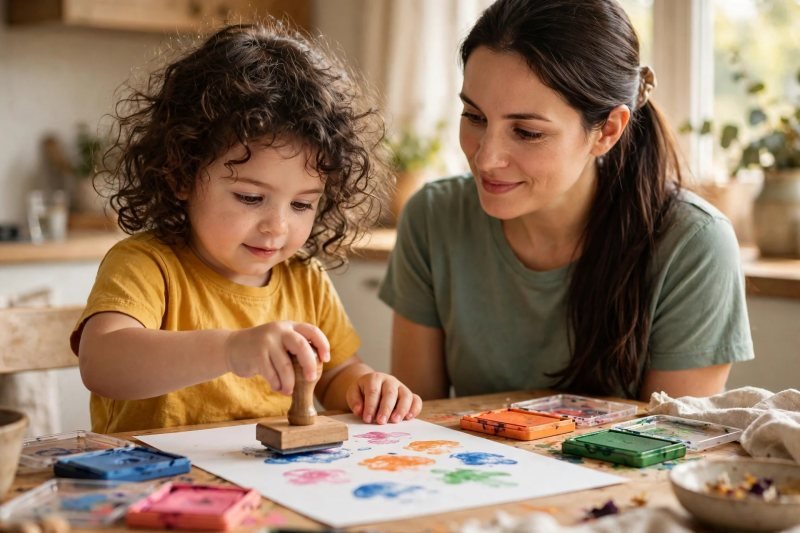
Number stamping station, with dot-marker dab cards as the quiet swap. Set out the ink pad, numeral stamps, and paper; call out a number — "stamp me a 2!" — and watch your child hunt through the stamps for the right one. Pressing, lifting, and revealing is irresistible, and every print gets named out loud. For a quieter table version, draw big numerals on paper and let your child dab dot markers all along the shape of each one, naming it as they decorate it — same recognition practice, calmer energy, and the finished pages make a proud little gallery on the fridge.
-
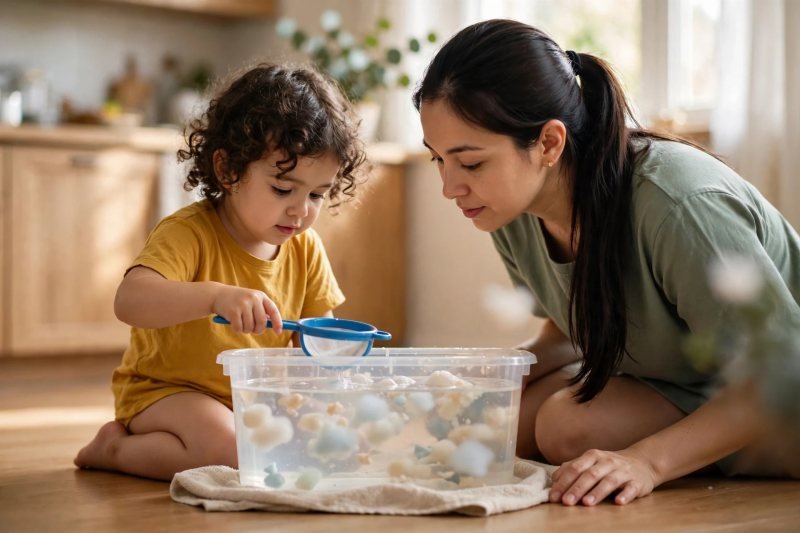
Tub number fishing, with paper number boats for dry days. Float foam numerals in a tub of water and hand your child a small sieve or net: "catch the 6!" Every catch gets held up and named before it goes back in for another round. Water slows everything down, which is exactly what young eyes need. On a dry day, fold simple paper boats, write a numeral on each sail, and float them in the same tub — call out a number and your child rescues that boat, naming every passenger as it comes aboard.
-
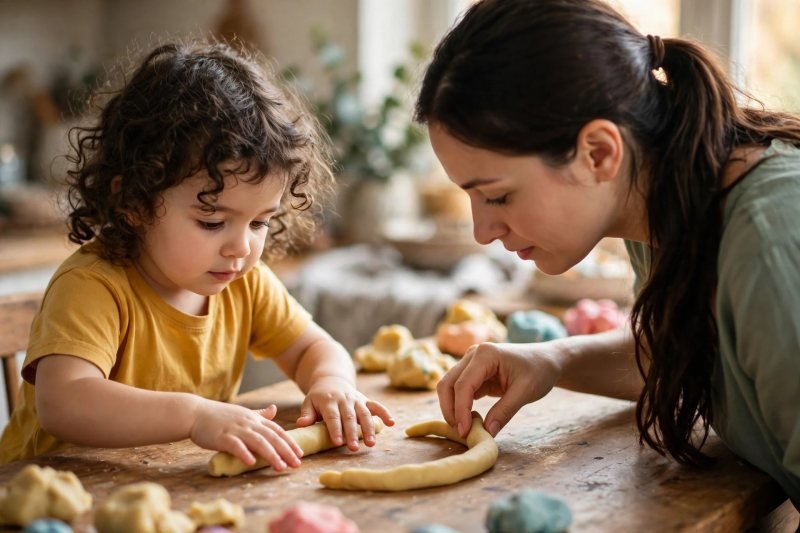
Playdough snake numbers, with cookie-cutter numerals for instant wins. Roll playdough into long snakes, then bend them into numerals on the table: "the 2 needs a curvy neck." Building the shape with their own hands teaches its structure from the inside out. When little hands tire of bending, press numeral cookie cutters into flattened playdough, lift them out, and name each one as it pops free. Rolling, bending, pressing, and threading all build the hand strength writing needs later — our fine motor activities for preschoolers has more ideas in the same spirit.
-
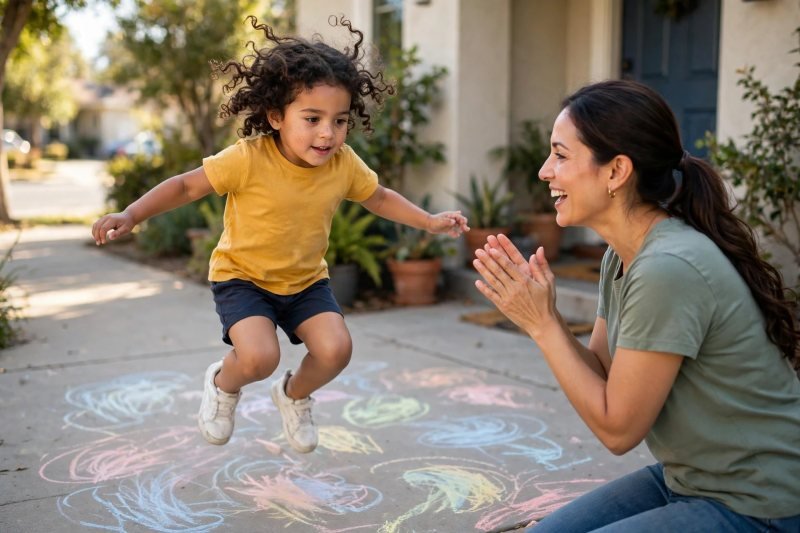
Chalk hopscotch numerals, with a beanbag toss for small spaces. Draw big numerals in chalk on the sidewalk in a wiggly line; call out "hop to 5!" and your child jumps from numeral to numeral, landing on the right one. Whole-body learning locks shapes into memory like nothing else. If the sidewalk is busy or the weather turns, set two buckets a few steps apart with a numeral card taped to each, call a number, and let your child toss a beanbag or rolled-up sock into the matching bucket and shout its name. Movement games like these sit naturally beside other toddler learning activities at home when you want a full active afternoon.
-
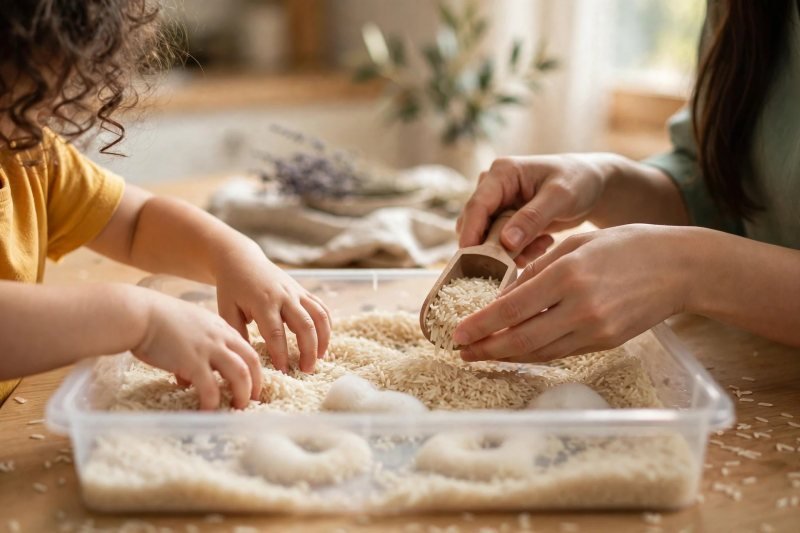
Sensory bin number dig, with bead threading for quiet focus. Bury foam numerals in a bin of dry rice and let your child dig with hands or a scoop; every unearthed numeral gets named before it goes into the "found" bowl, and the surprise of each discovery keeps little hands digging. For a calmer version of the same focus, bend pipe cleaners into numeral shapes and let your child thread beads along each one — "thread the 8!" — feeling every loop and line as they work; keep the beads big and the session supervised, and put small pieces away where babies cannot reach them.
-
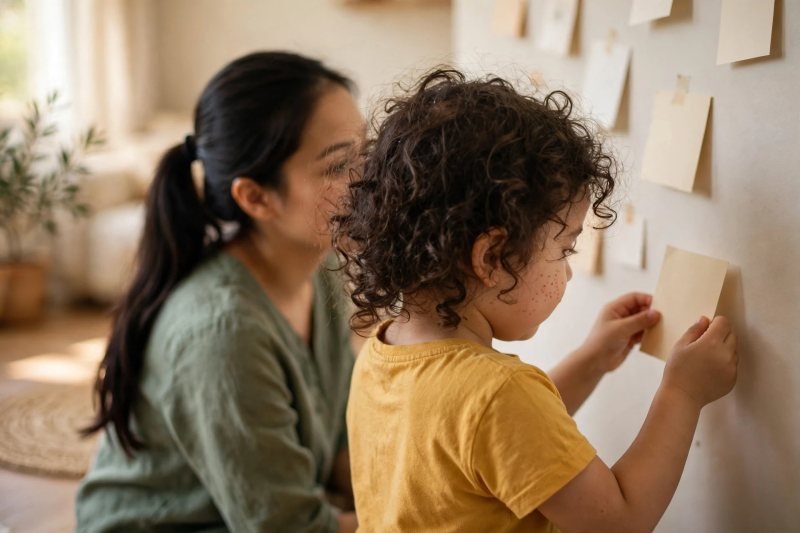
Number card scavenger hunt, with a mailbox delivery game for indoors. Hide numeral cards around one room — taped low on walls, tucked behind cushions — and hand your child one card as the "wanted" poster: "find the other 3!" Every find gets a triumphant naming. When you want the same game with a story, line up small boxes or paper bags with a numeral on each and let your child "deliver" numeral cards to the matching mailbox, reading each address out loud like a tiny postal worker. The same hunt-and-match pattern works for early words too — our rhyming words for preschoolers guide uses the same hide-and-find energy for listening games.
-
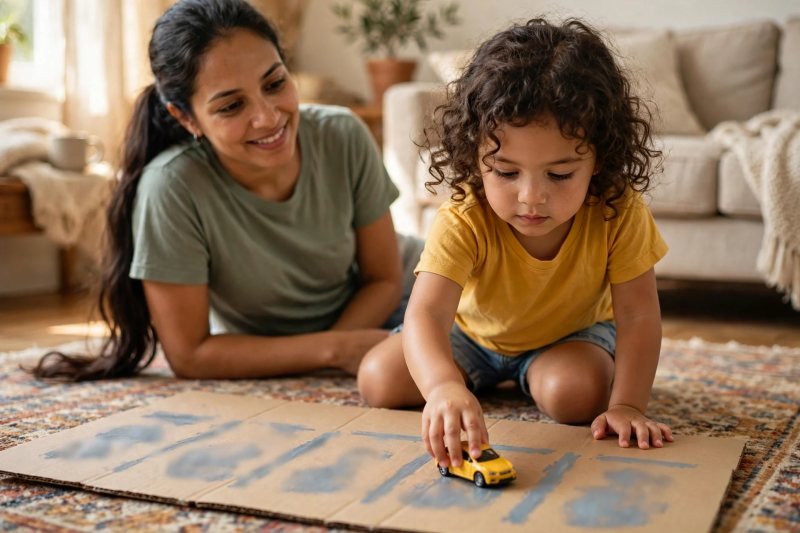
Number parking lot, with a laundry sort for everyday helpers. Draw parking spaces on cardboard, one numeral per space, and let your child drive toy cars into the spots you call: "park in number 7!" Matching the spoken name to the written numeral, over and over, is recognition practice disguised as traffic. On laundry day, tape numerals to baskets instead and sort socks, washcloths, or soft toys into the basket you name — "all the washcloths go to 2!" — so the same skill shows up in a real household job and the numerals start feeling useful, not just playful.
-
Musical number mats, with snack-plate numerals for the tastiest review. Lay big numeral cards on the floor as mats, play music, and dance; when it stops, call out a number and everyone scrambles to stand on it — the silliness of the scramble makes the numerals unforgettable. For a calm finish, build numerals from crackers or pretzel sticks on a plate, name each one, then eat your work. And when matching itself becomes the game, make two sets of numeral cards and play a simple memory match — our memory games for preschoolers has the full rules for turning pairs into play.



Make it easier
Work with numerals 1–3 only until those are instant and a little bit boring. Keep the numeral card visible next to the activity as a reference — matching is easier than recalling from memory. Do the motion together: trace in the salt side by side, hop the hopscotch holding hands. Say the name for them every time. They will start saying it themselves when they are ready.
Make it harder
Stretch from 1–5 to 1–10 once the first five feel easy. Put the tricky look-alikes side by side on purpose: 6 and 9, 2 and 5. Ask "find the number that comes after 4" — the first step toward ordering numerals. Match each numeral to that many objects: the 3 card gets three beads. Once numerals click, counting games that match numerals to groups of objects build the next layer.
Other ways to play it
- Outdoor version: chalk numerals on the sidewalk, hopscotch, and a flashlight hunt at dusk. Bath version: foam numerals stick to the tub wall when wet — fish them with a sieve and name every catch. Sibling version: older kids write and hide the numeral cards; little ones find and name them. Quiet version: salt tray tracing and bead threading make perfect calm-down or waiting-room play. Matching-pairs version: make two sets of numeral cards and play a simple memory match.
How it changes by age
- Ages 3–4. Younger threes do best with numerals 1–3, big easy-to-grab pieces, and lots of repetition — tracing, fishing, and stamping the same few shapes. Older fours can handle 1–10, trickier pairs like 6 and 9, and matching numerals to small groups of objects. Follow ease, not the calendar: instant and bored means add more; hesitant means drop back with zero fuss.
What they're learning
Numeral recognition: seeing 1–10 and naming each one — the core skill behind all twenty ideas. Visual discrimination: telling look-alikes apart (6/9, 2/5, 1/7). Symbol meaning: connecting the written numeral to "how many" when matched with objects. Fine-motor control: tracing, stamping, threading, and rolling build the hand strength writing needs later. Number vocabulary: the number words themselves, heard and said dozens of times per session.
Clearing up
Shake the salt tray smooth and pour the salt back in its jar; wipe the shaving-cream table with a damp cloth; fish the foam numerals out of the tub and let them dry on a towel. Let your child "deliver" the numeral cards back to their basket — naming each one on the way is one final sneaky round of practice.
Questions parents ask
My preschooler keeps mixing up 6 and 9. Is that normal?
Should I use flashcards to teach my child numbers?
How many numbers should a 4-year-old recognize?
What is the difference between recognizing numbers and counting?
My child is not interested in numbers yet. What should I do?
What numerals should we start with — 1 to 5 or 1 to 10?

save it for later
Pin this for the next rainy afternoon
Keep it on a board so it is there when you need it, rather than when you happened to find it.
Save to Pinterest

