


How to Get Your Toddler to Wear Sunscreen
Wondering how to get a toddler to wear sunscreen without a wrestling match? The trick is routine, not force: apply before you leave, offer a stick for the face, sing the sunscreen song, let your toddler rub in a dollop, pair it with a hat and shade, and reapply on a simple rhythm.
To get a toddler to wear sunscreen, make it a routine instead of a battle: apply at a door station before you leave, use a stick for the face and lotion for the body, sing the same short song every time, give your toddler helping jobs like the dollop rub-in, pair cream with a hat and shade, and reapply about every two hours and after swimming.

The short version
- Routine beats force: same place (the door), same order, same song, same phrase — "First sunscreen, then park."
- Apply before you leave, never at the water's edge where the fun is visible and patience is zero.
- Two formats defuse resistance: a stick for face and ears, lotion for the body — and let your toddler choose which goes first.
- Helping jobs end the wrestling: the dollop, the rub-in, and holding the stick make your toddler an assistant, not a patient.
- Cream is one layer of a system: hat, shade, and a rash guard carry the rest; reapply about every two hours and after swimming or sweating.
- Age
- Ages 2–3
- Prep
- 5 min
- Play time
- 5 min
- Mess
- Some
- Difficulty
- Easy
- Where
- Both
Why kids love this
Toddlers don't love sunscreen; they love rituals, songs, and jobs. When sunscreen comes with a song that is always the same, a stick they get to hold, dots to rub in "all by myself," and a hat that means the park is next, the cream stops being the enemy — it's just the ticket to the fun part.
What you'll need
- A broad spectrum, water-resistant sunscreen your child tolerates (a lotion or cream for the body)
- A sunscreen stick for the face and ears (toddlers accept sticks far more readily)
- A wide-brim or legionnaire-style hat your child has helped choose
- A rash guard or UPF-style swim top for water days (less skin to cover)
- Sunglasses on a strap, if your child will wear them
- A small towel for hands and any "too much" moments
- A timer or a favorite short song (about 90 seconds) for the application game
- A door-side basket or caddy that holds it all in one grab
Before you start
1. Set up the door station: sunscreen, stick, hat, and towel live in one basket by the exit, so application is attached to leaving — the strongest habit anchor there is. 2. Do a first try-on at a calm, unhurried moment — not when you're late. Let your toddler hold the stick, smell the lotion, and watch you apply sunscreen to yourself first. 3. Patch-test any new product on a small area of skin a day ahead, following its label directions, and stop using anything that seems to irritate your child's skin. 4. Agree the family script with other caregivers: same order, same song, same phrase — "First sunscreen, then park" — so every adult runs the identical play.
How to do it
-
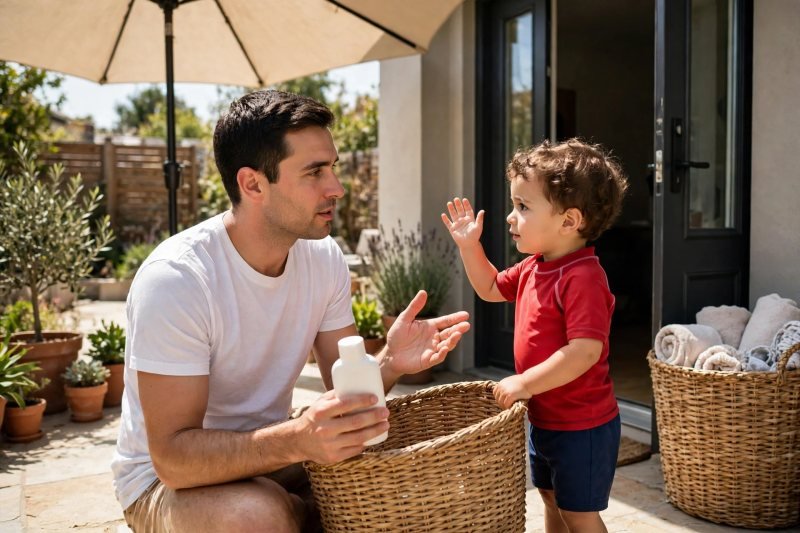
Reframe the fight: your toddler is resisting the surprise, not the cream. Most parents asking how to get a toddler to wear sunscreen have a child who adores the pool and hates the lotion — and the difference is predictability. Toddlers resist transitions, cold surprises on warm skin, and being held still for a procedure they didn't choose. So this guide never starts with the bottle; it starts with a routine so fixed that your toddler can recite it: sunscreen happens at the door, in the same order, with the same song, right before the best part of the day. Say the anchor phrase every single time: "First sunscreen, then park." Within about a week of identical reps, most toddlers stop negotiating the cream and start negotiating the park — which is the argument you want. The product side of the routine stays simple too — this sunscreen-for-kids guide to choosing by label shows how to pick a bottle by its label criteria, not its packaging. Mindset set: timing does the next piece of work for you.
-
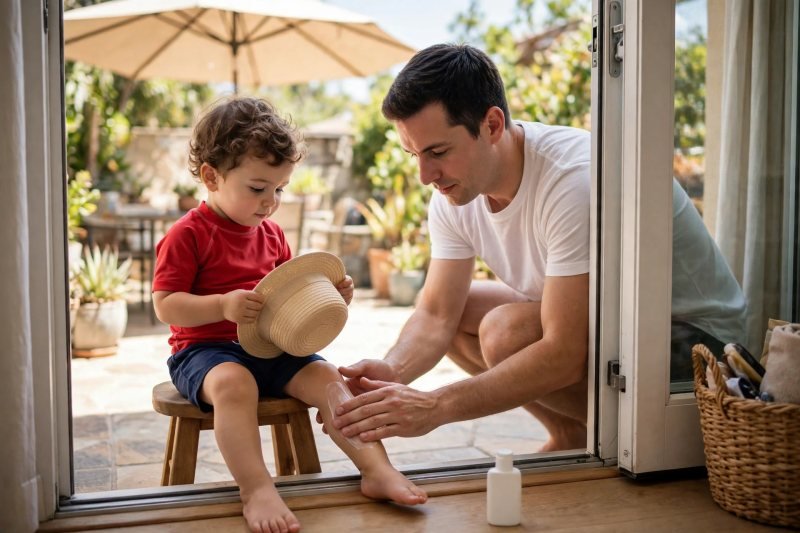
Apply before you leave, while shoes are still off and nobody is watching water. The single biggest tactical fix is location and timing: sunscreen goes on at home, at the door station, before the destination exists in your toddler's eyeline — never on the pool deck while other children splash. Follow the product label's guidance on applying ahead of sun exposure, and use the wait productively: shoes, hat, bag check, car seat. At home there is no audience, no splash sounds, and no ticking sense that fun is being spent on lotion. Say it as a household law, kindly and without debate: "Sunscreen lives at the door. The door is where it happens." If your morning already runs a simple get-ready sequence like the one in this kids skincare routine of simple steps, sunscreen slots in as one more station in a chain your toddler already trusts. Cream on early: now give your toddler the one choice that defuses the rest.
-
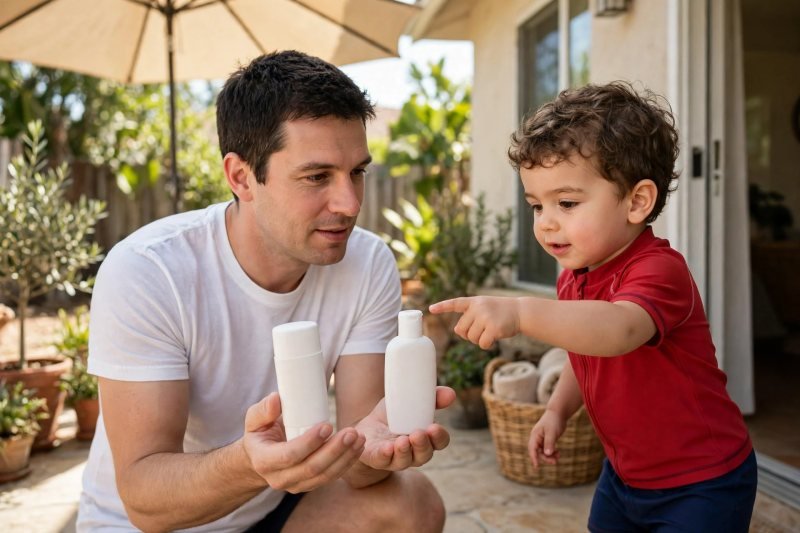
Offer the two-format choice: stick for the face, lotion for the body. Toddlers who reject lotion on the face often accept a stick, because a stick feels like drawing, doesn't drip toward eyes, and can be held like a crayon. So run a two-format system: the stick is for face, ears, and the back of the neck; the lotion or cream is for arms, legs, and torso. Present it as a genuine, bounded choice: "Stick first or lotion first?" — either answer starts the routine, which is the point. Keep both products broad spectrum and water-resistant, keep every container plain in your toddler's mind (it's "the sun cream," never a character or a treat), and let your toddler carry the stick to the door station like a tool they own. If you are still narrowing down a product, the best sunscreen for toddlers guide applies the same label checks to build a shortlist. Choice offered: the song buys you the working time.
-
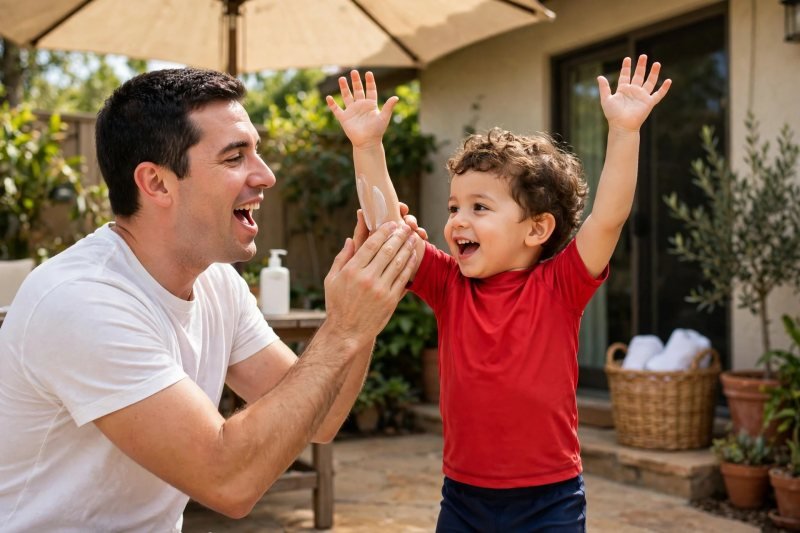
Sing the sunscreen song — the same ninety seconds, every time. Pick one short, silly song your family can stand hearing daily, and start it the moment the first dollop lands. The song does three jobs: it tells your toddler exactly how long this lasts ("when the song ends, we're done"), it fills their attention so the rubbing fades into background, and it turns application into a performance they join — arms up on the high note, twirl at the chorus. Chant the body parts as you go: "Arms, arms, rub them in; legs, legs, toes to shin." If your toddler has a beloved action rhyme, borrow its tune; familiarity is the whole trick, the same reason the fingerplay in toddler learning activities at home holds a 2-year-old's attention far past a lecture. Song running: now put those busy hands to work helping.
-
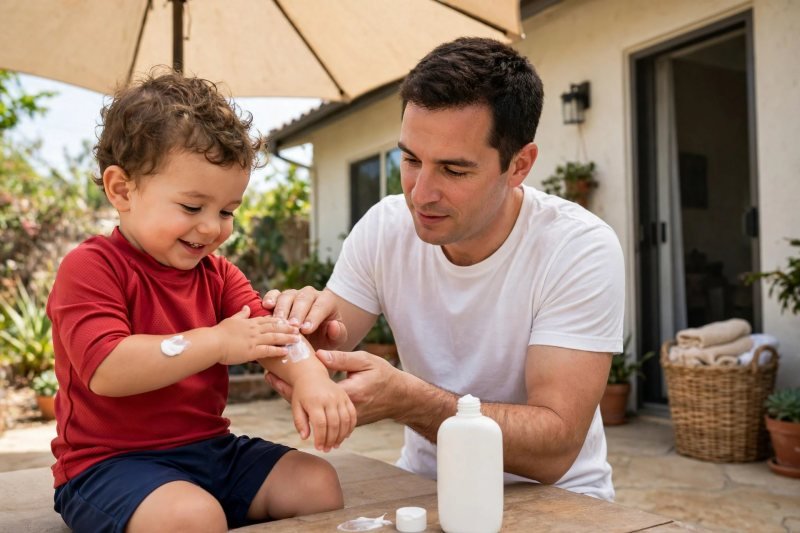
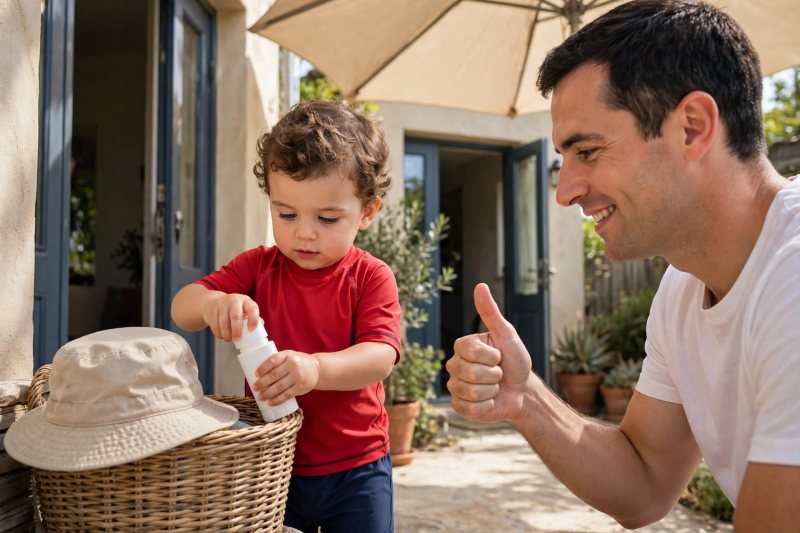
Give your toddler a job: the dollop, the rub-in, and the stick hold. A toddler with a job stops being a patient and becomes an assistant. Assign three safe jobs: first, they squeeze or receive one dollop of lotion onto their own forearm (you control the amount; they control the landing spot); second, they rub that dollop in with both hands while you do the next body part properly alongside — their rub counts as participation, yours counts as coverage; third, they hold the stick while you guide it across their cheeks, or they press the stick once against each cheek "dot" that you then spread. Say the job titles out loud: "You're the dollop boss. Dollop boss, rub!" Jobs finished, every surface still gets your adult pass for even coverage — helping is the behavior trick, not the quality control. Assistant satisfied: the face, usually the last battlefield, gets its own gentle strategy.
-
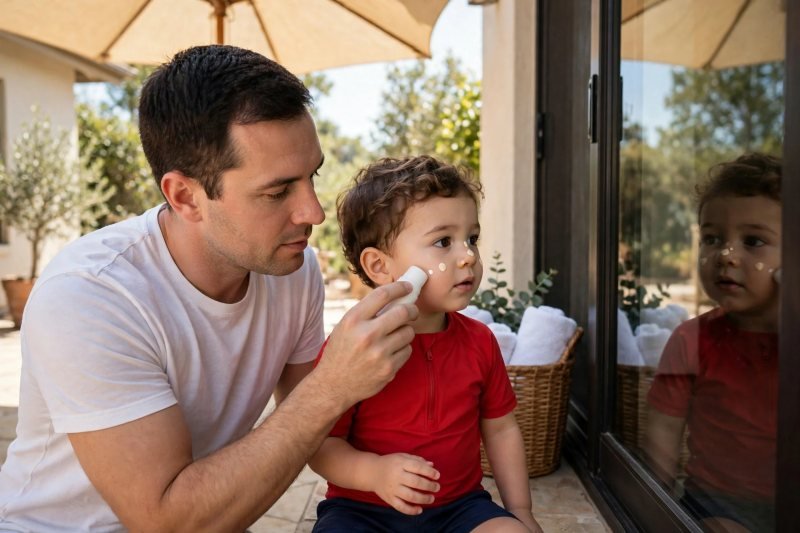
Do the face with dots and a mirror, never a smear ambush. The face fails when a palm of cream arrives without warning. Instead, use the stick or your fingertip to place small dots — one on each cheek, one on the nose, one on the forehead — then let your toddler watch in a hand mirror or the car window as you blend each dot away: "Dot, dot, dot — where did they go?" Count the dots together; counting is a toddler catnip and it slows the moment down. Keep well clear of the eyes, use the stick's control to stay precise, and if tears happen, pause for a cuddle and finish with the stick rather than restarting negotiations. For ears and the back of the neck — the spots everyone forgets — make it a whisper game: "Secret spots! Ears… neck… got them." Face done kindly: the body gets its final checklist pass.
-
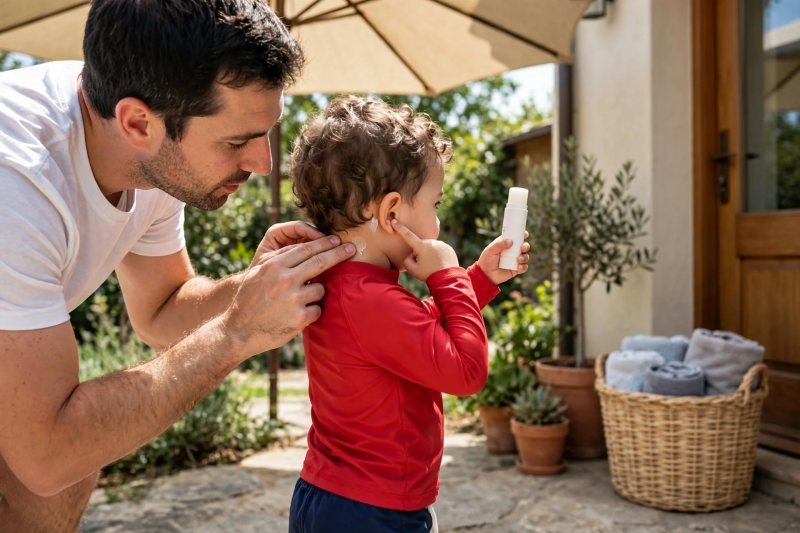
Run the forgotten-spots checklist as a game, not an inspection. Before the hat goes on, run a ten-second call-and-response sweep of the classic missed areas: tops of ears; back of the neck; backs of the knees; tops of the feet and ankles (sandal lines); the part line in the hair if your child won't wear a hat in water; and hands' backs after the rub-in job washes some off. Turn it into a chant your toddler can shout back: "Ears? Got them! Neck? Got them! Feet? Got them!" You apply, they inspect — a toddler with an inspector's clipboard energy will remind YOU about the ears by week two, which is the routine working exactly as designed. Checklist complete: cream is only half the system, so pair it with shade and a hat.
-
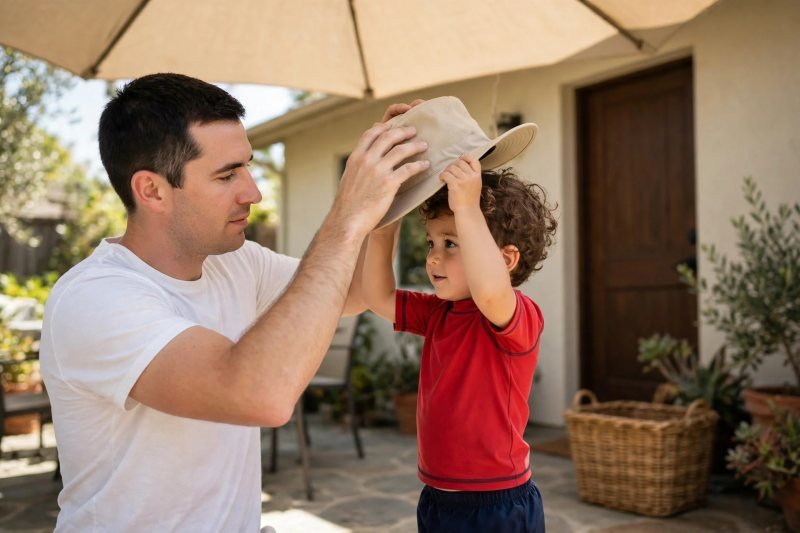
Pair the cream with a hat and a shade plan, every single outing. Sunscreen works best as one layer of a system, not the whole defense: a wide-brim hat your toddler helped choose (chosen hats get worn; imposed hats get thrown), shade for the midday stretch — umbrella, tree, or canopy — and a rash guard on water days so there is simply less skin needing cream. Present the hat as part of the uniform, applied at the same door station in the same order: "Cream, then hat, then out." If the hat keeps coming off, shorten the battle: hat on for the walk and the sunny stretches, off in full shade, with the cream carrying those moments — consistency about the system beats perfection about any one piece. A hat that actually stays on matters as much as the cream — these toddler sun hats cover the styles that stay put on small heads. System assembled: the last skill is the rhythm that keeps protection going all day.
-
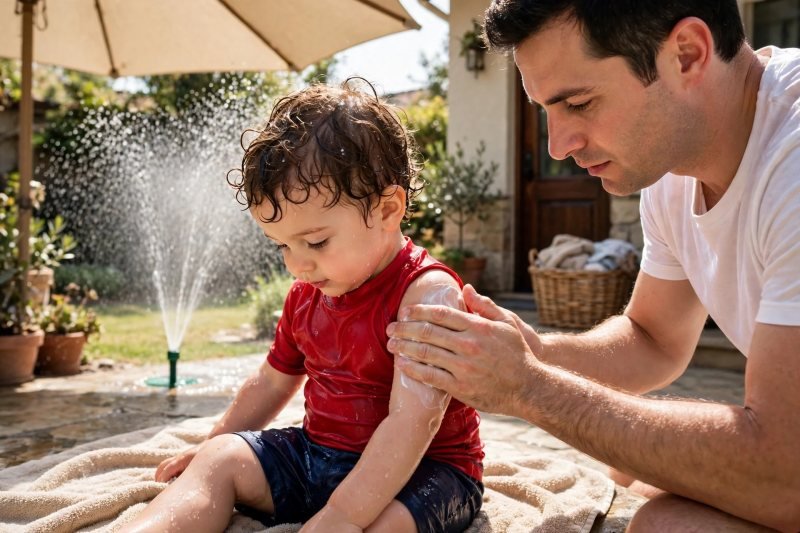
Reapply on a simple rhythm: about every two hours, and right after water. Protection fades, so build the reapply into the day's landmarks rather than watching a clock: a general rhythm of about every two hours outdoors, and sooner — right after swimming, heavy sweating, or a thorough towel-dry — is the standard pattern; follow your product's label for its specific directions. Announce reapplies with the same song snippet and the same phrase ("Top-up time — same song, shorter verse"), keep them at the shade spot rather than the water's edge, and let the dollop-boss job return for each round. End the top-up with a drink and a snack in the shade — the pairing teaches your toddler that reapplying is a rest stop, not an interruption. On swim days the same system thinking applies — this toddler swimwear guide pairs rash guards and shade planning with the reapply rhythm. Rhythm set: the final step makes the whole thing self-running.
-
Close the loop: praise the routine, pack the basket, repeat tomorrow identically. Finish every application the same way: name the win specifically ("You held the stick and rubbed your arms — that's the whole job, done"), then reset the door station together — containers back in the basket, hat on its hook, stick capped by your toddler's own hands. That two-minute reset is what makes tomorrow's application start at zero friction. When a day goes badly — tears, a half-done arm, a thrown hat — don't rewrite the system; run it identically the next day and let repetition heal it. The honest promise of this guide is not a toddler who loves sunscreen; it's a toddler who, by the end of the second week, walks to the door basket when you say "First sunscreen, then park" — and holds out an arm for the dollop.


Make it easier
Rash guard days: on swim days, a long-sleeve swim top cuts the lotion territory in half — fewer minutes, fewer battles. Apply to a sleepy or screen-calm toddler: the first week, timing the door application during a calm cartoon song or a snack can smooth the reps while the habit forms. Doll-first rehearsal: practice the whole song and dot routine on a doll or on your own arm at bath time, where nothing is at stake.
Make it harder
Self-application school: your toddler does arms and legs entirely solo (you audit and patch), stick included, with the checklist chant as their script. Reapply ownership: give your toddler the job of announcing top-up time when the family timer or song cue sounds. Hat independence: your toddler chooses between two hats each morning and hangs the chosen one at the door station themselves.
Other ways to play it
- Beach version: apply at the car before the sand is visible; keep the stick in the shade bag for face top-ups, since lotion plus sand is the texture toddlers hate most.
- Daycare version: apply before drop-off at home, send the labeled-for-teachers spare in the bag per your center's rules, and keep the morning song identical so the handoff feels continuous.
- Sensitive-skin version: lean harder on the system — rash guard, hat, and shade carry more of the load, applications stay gentle and unhurried, and any product that irritates gets retired without debate.
How it changes by age
- Ages 2–3: the guide as written — adult applies everything, toddler holds jobs (dollop, rub-in, stick hold), song and door station do the heavy lifting. For babies under 6 months, shade and clothing are the primary protection and sunscreen use should follow your pediatrician's guidance.
- Ages 4–5: keep the routine, hand over more territory — preschoolers can lotion their own arms and legs with an adult audit, and run the forgotten-spots chant as the leader.
- Ages 6–8: the song retires, the system stays — self-application with a mirror check, reapply rhythm owned by the child, hat and shade still non-negotiable family kit.
- All ages: never let a sunscreen battle end with skipping protection — shorten the outing, move to shade, or reschedule the sunny part instead; the system flexes, the standard doesn't.
What they're learning
Routine and prediction: the same song, order, and phrase every day teaches toddlers that the world is predictable — the foundation of cooperation. Body awareness: naming and touching each body part in the chant ("ears, neck, feet") builds vocabulary and a body map. Helping and autonomy: the dollop and rub-in jobs give a 2-year-old real participation — the age's deepest motivator. Cause and effect: "cream, then hat, then park" links preparation to reward in a chain a toddler can hold.
Clearing up
The routine clears itself: containers return to the door basket after every use (your toddler caps the stick), the towel goes to laundry when it feels gritty, and the hat lives on its hook. Once a month, check expiry dates and toss anything that smells off or has separated beyond shaking back together.
Questions parents ask
How do I put sunscreen on a toddler who runs away?
Is a sunscreen stick or lotion better for toddlers?
How often should I reapply sunscreen on a toddler?
What if my toddler hates the hat too?
How much sunscreen does a toddler actually need?

save it for later
Pin this for the next rainy afternoon
Keep it on a board so it is there when you need it, rather than when you happened to find it.
Save to Pinterest

