


Toddler Girl Summer Dresses: 20 Playful Picks
Toddler girl summer dresses, all 20 of them: breathable play dresses, champion twirlers, garden and party picks, beach cover-ups, photo dresses, cool-evening layers, and celebration dresses — plus the care and layout that keep them spinning.
The best toddler girl summer dresses are breathable cotton, loose enough to climb in, and always worn with shorts underneath. Twenty picks cover the season: two everyday play dresses, two champion twirlers, two garden dresses, three party dresses, three water-day cover-ups, two photo dresses, three cool-evening styles, and three celebration dresses — hung by group so she can choose in seconds.

The short version
- Fabric law first: cotton or cotton blends, loose fit, above-the-knee skirts, wide straps — and a passed twirl test.
- All 20 picks, by group: play (2), twirl (2), garden (2), party (3), beach and water (3), photo (2), cool-evening (3), celebration (3).
- Shorts under every dress, strapped shoes with every outfit, and a hat for the sleeveless days.
- Hang dresses grouped on a low rack and lay out the week together; mornings become a two-option choice.
- Care keeps them spinning: sunscreen before dressing, same-evening rinses, party dresses washed inside-out and hung dry.
- Age
- Ages 2–3
- Play time
- 5 min
- Mess
- Low
- Difficulty
- Easy
- Where
- Indoor
Why kids love this
A dress is the only outfit a toddler can put on in one move and feel instantly transformed, and 2- and 3-year-old girls know it: the twirl test in the mirror, the skirt that flies when she spins, the dress that means today is a party, a picnic, or the beach. Children also love categories they can feel — this is my splash dress, this is my birthday dress — because the dress carries the day's story before the day even starts. And underneath every pick in this guide sits the freedom rule she cares about most even if she never says it: shorts under every skirt, so no dress ever tells her she cannot climb, slide, or sit cross-legged in the grass. Twenty dresses, zero restrictions.
What you'll need
- The 20 dresses across the eight groups in steps 2–9 (most families already own half of them — this guide is as much sorting as shopping)
- Plain cotton bike shorts or bloomers to wear under every dress
- Strapped sandals and one pair of clean party shoes
- A small clothing rack or a row of low hooks at her height, if you can — dresses she can see are dresses she can choose
- Her sun hat, and sunscreen applied by you (step 6)
- A laundry basket for the post-picnic reality
Before you start
1. Do a drawer-and-rack audit first: pull every summer dress, check fit standing (skirts should clear the knee for climbing) and check seams and straps — a strap that slips will be rejected by its wearer all day. 2. Sort what you own into the eight groups in this guide before acquiring anything; the gaps are usually one twirl dress and one cover-up, not twenty dresses. 3. Put the cotton shorts with the dresses, physically in the same drawer or on the same rack-end — the shorts-under rule survives only when it is automatic. 4. Let her be present for the sorting. A toddler who helped hang her dresses has opinions about them, and opinions are what make morning choices fast. 5. Put her name in the cardigan, the cover-up dress, and the party shoes — the pieces most likely to be left at a pool, a party, or preschool — and favor dresses she can manage alone at the potty, with no fastening behind her back she cannot reach.
How to do it
-
Step 1: Start with the rules every one of the 20 dresses must pass. Before the picks, the fabric law for all toddler girl summer dresses: cotton or cotton blends first (breathable, soft, washable), loose through the body, straps wide enough to stay on small shoulders, and a skirt that ends at or above the knee so climbing frames and trike pedals stay safe. Say: "If she can't climb in it, it's a costume, not a dress." Every dress gets the three-part test in your hands — the scrunch test (does the fabric feel cool and airy, not stiff or plasticky?), the stretch test (does the waist give when she bends?), and the twirl test, which she will administer herself with total seriousness. Keep colors and prints in a loose family — florals, checks, solids in the same palette — so shoes, shorts, and the cardigan in step 8 mix across all twenty without a single outfit ever being "wrong"; toddler summer outfits shows more combinations built the same way.

-
Step 2: Everyday play dresses — picks 1 and 2. Pick 1, the cotton jersey swing dress: the softest t-shirt fabric cut loose from the shoulders, no waist seam to dig in, in whatever print she loves most — this is the dress that gets worn three times a week and washed three times a week and must survive both. Pick 2, the t-shirt dress with pockets: slightly longer, straight and roomy, famous among toddlers for its two treasures — real pockets for found stones and petals. Say: "Play dresses are workhorses: soft, loose, washable, and already forgiven for the grass stains coming." Both live at the front of the rack, both go over the cotton shorts without a thought, and both pair with the strapped sandals she can nearly fasten herself. These two do more summer than the other eighteen combined.

-
Step 3: Twirl dresses — picks 3 and 4. Pick 3, the tiered twirl dress: two or three gathered tiers that flare wider with every spin, the undisputed champion of living-room rotation testing. Pick 4, the circle-skirt dress: a fitted top with a full round skirt that lifts like a parachute when she turns — slightly dressier in feel, same playground soul underneath. Say: "Twirl is not a decoration, it's the engineering spec — test it in the store aisle before it comes home." A twirl dress that fails the spin test will be worn once and mourned; one that passes becomes The Dress, requested by name, photographed constantly. Keep both in the easiest-wash fabrics you can find, because The Dress does not get days off and neither does the laundry.

-
Step 4: Garden and picnic dresses — picks 5 and 6. Pick 5, the floral sundress: wide straps, a soft smocked or elastic back that forgives growth spurts, and a print busy enough to hide the evidence of strawberries. Pick 6, the picnic-check dress: the classic red-or-blue checked cotton dress with a swingy skirt, made for blankets, baskets, and grass. Say: "Garden dresses are camouflage with a bow — prints that hide juice are a feature, not an accident." Both styles shine in photos without being photo-only (that is step 7's job), and both handle a full afternoon of outdoor eating, which is more than can be said for anything pale. If your summers run to farmers markets and backyard dinners, these two earn a permanent hook by the door.

-
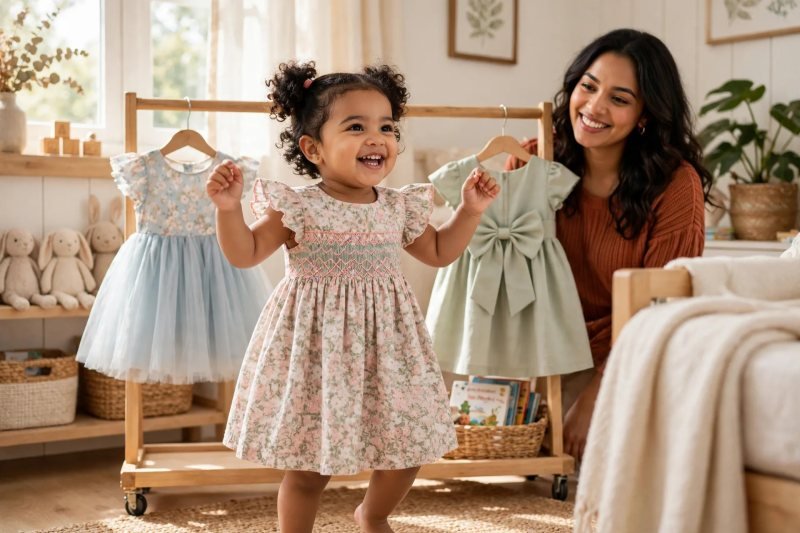
Step 5: Party dresses — picks 7, 8, and 9. Pick 7, the smocked-bodice dress: hand-smocked-look elastic bodice, flutter sleeves, a skirt made for dancing at other people's birthdays. Pick 8, the tulle-skirt party dress: a soft cotton top with one or two layers of gentle tulle — the princess feeling with a playground-friendly core, and the tulle stays short enough to sit in. Pick 9, the bow-back dress: simple from the front, one glorious bow from behind, in a color that photographs like a celebration. Say: "Party dresses must survive the party, not just arrive at it — cake, grass, and a dance floor are all in the job description." All three go on over shorts (bounce houses respect no dress code), and all three come off the moment home is reached, because party dresses washed promptly live to party again.
-
Step 6: Beach and water-day dresses — picks 10, 11, and 12. Pick 10, the terry cover-up dress: a soft towel-fabric dress that goes over a swimsuit in one pull and dries her while she wears it. Pick 11, the seersucker sundress: light puckered cotton that barely touches the skin, dries fast after splash-pad incidents, and never needs ironing — the fabric is wrinkled on purpose, which is the most honest summer arrangement imaginable. Pick 12, the hooded towel dress: terry with a hood for post-swim warmth on breezy beaches and the ride home. Say: "Water-day dresses are towels with ambition — they dry her, cover her, and ask nothing in return." Shoulders stay covered by fabric through the longest sun hours with these three, working alongside the hat-and-sunscreen routine from this site's simple kids skincare routine — clothing first, sunscreen on the rest.

-
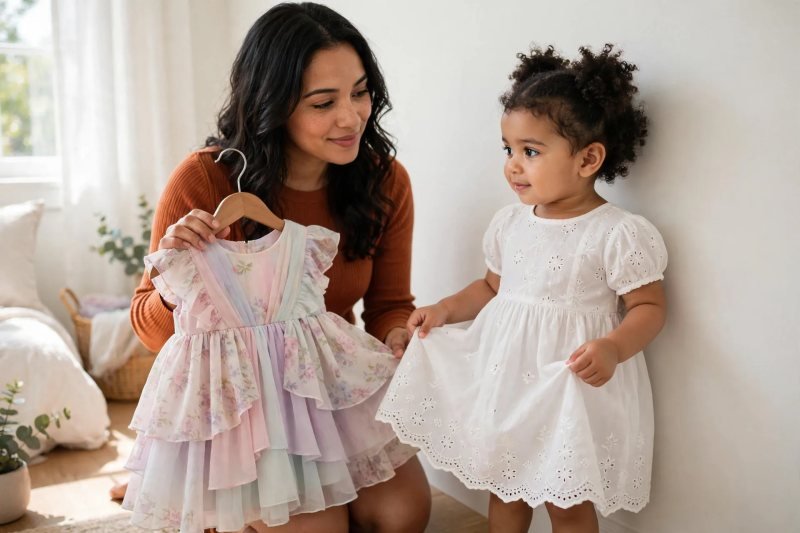
Step 7: Photo and special-day dresses — picks 13 and 14. Pick 13, the white eyelet dress: embroidered cotton with tiny cutwork holes, the timeless summer photograph in dress form — worn for the pictures, protected from the spaghetti. Pick 14, the layered pastel dress: two or three soft layers in gradient pastels that move like water when she walks, for portraits, weddings-as-guest, and grandparents' mantelpieces. Say: "Photo dresses get dressed last, photographed first, and changed out of before lunch — that is their whole contract." Bring the backup play dress to any event where a photo dress appears; the swap takes one minute and saves the dress for its next portrait. Both of these also moonlight as the "visiting" dresses, when she wants to arrive somewhere feeling unmistakably fancy. For more photo-ready combinations, see preschool summer outfits.
-
Step 8: Cool-evening and air-conditioning dresses — picks 15, 16, and 17. Pick 15, the long-sleeve cotton dress: the same soft jersey as pick 1 with sleeves to the wrist, for restaurants that refrigerate their guests and evenings that turn. Pick 16, the dress-and-cardigan set: any summer dress from this list plus its own light cardigan — bought or assigned as a pair so the layer is never forgotten in a drawer. Pick 17, the denim pinafore dress: worn over a tee, tougher than everything else on the rack, the dress for cool days, craft days, and any plan involving paint-adjacent risk. Say: "Summer evenings lie about the temperature — these three tell the truth." The same layering logic runs the cold months on this site's toddler winter outfits; summer just needs the lighter edition, and mosquitoes at dusk are its second, unglamorous reason to exist.

-
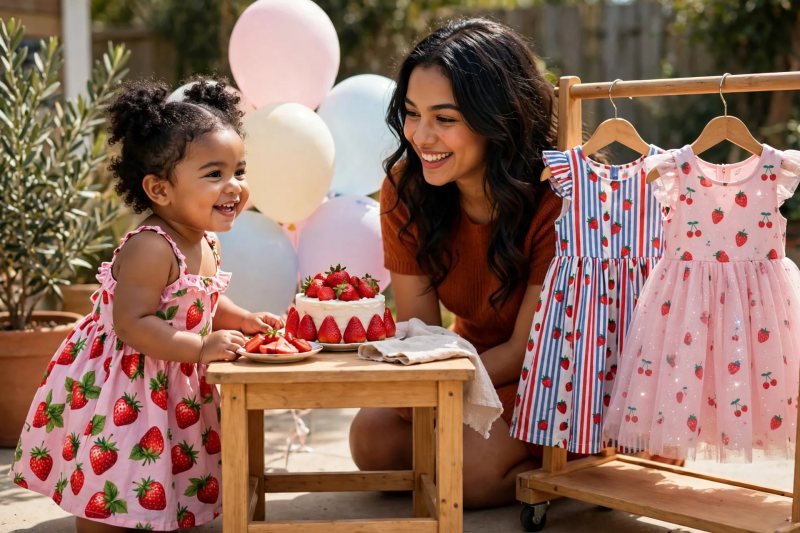
Step 9: Celebration dresses — picks 18, 19, and 20. Pick 18, the red-white-and-blue holiday dress: the summer-holiday classic for parades, fireworks (watched from a lap, in the not-too-loud seats), and flags in every photo. Pick 19, the fruit-print sundress: strawberries, lemons, or cherries on the breeziest cut you can find — the dress that gets stopped in public by grandmothers. Pick 20, the birthday dress: her own celebration's crown piece — soft sparkle or a beloved character-free print, chosen with her, reserved for her birthday and any day she talks you into. Say: "Celebration dresses mark time — twenty years from now, the photos will find her by these." Let pick 20 be the one dress where her vote outranks every rule in step 1 except safety; a birthday dress is a memory being manufactured on schedule.
-
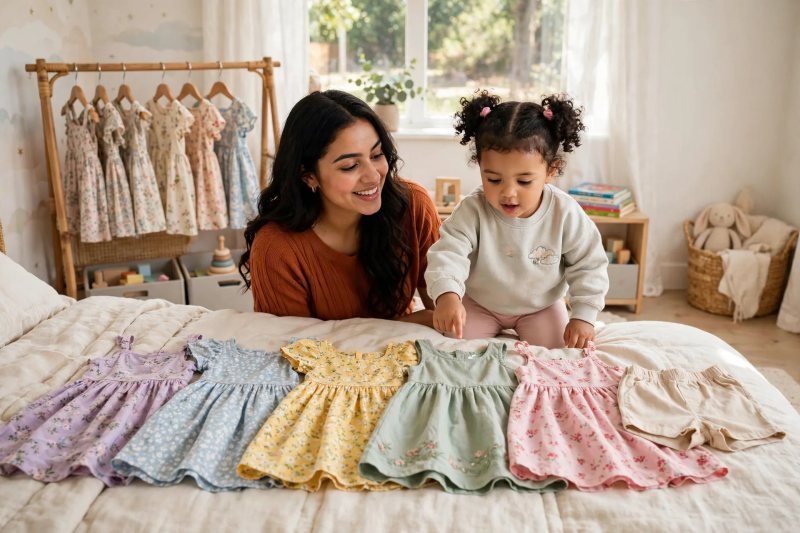
Step 10: Hang the rack by group, and lay out the week together. Put the twenty where she can see them: a low rack or row of hooks grouped in this guide's order — play, twirl, garden, party, beach, photo, evening, celebration — with the cotton shorts at the start of the row like a title page. Say: "The rack is the menu; she orders, you approve the weather." Each Sunday, lay out the week's likely dresses on the bed (two play, one twirl, and whatever the calendar holds) and let her rearrange the order; each morning she picks between two, both already right. Dresses rotate back to the rack after wearing unless the day truly used them up, and the layout refreshes with the laundry. The system ends the morning dress debate not by limiting her choices but by making every available choice a win — which, on inspection, was the point of all twenty picks.


Make it easier
Start with twelve, not twenty: picks 1–6, 10, 13, 15–17, and 20 cover a whole ordinary summer; add the rest as occasions actually appear on your calendar. Photograph each full outfit (dress, shorts, shoes) on your phone — on groggy mornings, matching the picture beats making decisions. The same picture-first logic works for school mornings too. Keep one play dress and the shorts in the car with a small towel; picnics and splash pads declare themselves without warning.
Make it harder
Let her plan the week's rack herself from the forecast pictures you show her (sun, rain, party) — early planning and weather literacy in one bedtime game. Add a dress-up trunk graduation: party dresses that retire from rotation become dress-up royalty, so the special feeling survives the size chart. Teach the care rhythm as her job at age 3: dresses to the basket, hangers back on the rack, one simple fold for the play dresses — ownership of the system, not just the clothes.
Other ways to play it
- The two-dress minimalist summer: picks 1 and 3 in triplicate (three swing, three twirl, rotating colors) and nothing else — laundry does the wardrobe, and she never notices the difference.
- The sisters version: shared rack, dresses hung by size with the twirl champions in the middle where both girls' favorites live; hand-me-downs move one hook left each season.
- The very-hot-climate version: sleeveless and seersucker dominate, the long-sleeve pick becomes the air-conditioning-only dress, and hats join the rack permanently — dresses are chosen at 7 a.m. by the afternoon forecast, not the morning's mercy. See our summer activities for children for the season's wider plans.
How it changes by age
- Age 2: At two, dresses must pull on without buttons behind the back (she cannot help, and you have one free hand at most) — elastic backs and wide necklines rule. Skirts stay above the knee, shorts always underneath, and favorites will be worn to rags: buy The Dress twice if you possibly can.
- Age 3: Threes dress themselves in most of these picks and have fierce, articulate opinions. Give the opinions a structure: she owns pick 20 completely and co-owns the weekly layout; you keep fabric and weather vetoes. A 3-year-old who planned Tuesday's dress on Sunday defends the plan like a lawyer. Recheck skirt length mid-summer the way you recheck shoe fit: a dress that cleared the knee in June can ride up by August, and a hem that catches trike pedals has outgrown its climbing job even if it still fastens.
What they're learning
Choice and identity: twenty dresses in eight families is a toddler-sized wardrobe of self-expression — she is learning that how she presents herself is hers to decide. Categorization: play, party, beach, photo — sorting clothes by occasion is early classification thinking, the same skill as sorting by color or size, wearing prettier clothes. Body confidence and movement: the twirl test and the climbing rule teach that clothes serve the body and its adventures, never the reverse. Care and stewardship: rinsing the juice, hanging the party dress, passing the rack down — possessions last when someone tends them, and she is someone.
Clearing up
Dresses clear up in one pass because they are one piece: the day's dress goes to the basket (or back on its hook if it survived clean), shorts to the laundry, shoes to the door basket. Sunscreen goes on before the dress each morning — it stains less that way — and grass and juice incidents get a cold rinse the same evening. The weekly layout is the tidy ritual — five minutes at the rack together, swapping the washed back in and next week's picks out. Party and photo dresses get their inside-out gentle wash and hanger-dry the day after the event, not the week after; straps and hems get a monthly two-minute check, because a small mend beats a lost favorite; and the celebration dresses return to the back of the rack like the treasures they are. Wash them all like they are borrowed from next summer — a growth spurt, a sister, or a cousin is counting on them, and twenty well-kept dresses are a hand-me-down treasure. A rack that always shows the true state of the wardrobe is a morning argument that never happens.
Questions parents ask
How many summer dresses does a toddler girl really need?
What fabric is best for toddler summer dresses?
Should toddler girls wear shorts under dresses?
How should I wash toddler summer dresses?
What shoes go best with toddler summer dresses?

save it for later
Pin this for the next rainy afternoon
Keep it on a board so it is there when you need it, rather than when you happened to find it.
Save to Pinterest


