


Toddler Summer Outfits: 20 Breezy Looks for Hot Days
These toddler summer outfits keep 2- and 3-year-olds cool and comfortable: 20 breezy looks in breathable cotton with easy pull-on waists, sun coverage, and no fiddly fastenings, all tried on in one fun morning dress-up session.
For toddler summer outfits on hot days, choose breathable cotton, loose fits, and easy pull-on waists with no fiddly fastenings. Cover shoulders for water play with a rash guard, add shorts under dresses, and finish every outfit with a sun hat, sunscreen, and secure non-slip shoes.

The short version
- Build outfits around breathable cotton and loose fits that let heat escape.
- Choose pull-on waists, wide necks, and one-piece looks.
- Put shorts under dresses for slides, climbing, and sitting.
- Use rash guards and swim shirts for water-play coverage without layers.
- Finish every outfit with a sun hat, sunscreen, and secure non-slip shoes.
- Avoid drawstrings and cords, and check buttons and embellishments are firmly attached.
- Age
- Ages 2–3
- Prep
- 10 min
- Mess
- Low
- Difficulty
- Easy
- Where
- Indoor
Why kids love this
Toddlers love saying "I pick this one," and a dress-up morning of toddler summer outfits delivers it again and again. Two looks side by side is a choice a 2-year-old can make — point, nod, done. Soft cotton and stretchy waists mean your child forgets the outfit and plays.
What you'll need
- A low clothing rack or cleared bed where two looks can lie side by side
- Cotton tees, a striped tank, pull-on shorts, and bloomer shorts
- A romper and short overalls with a soft t-shirt
- A sundress, a rash-guard set, and shorts for under dresses
- A linen-blend shirt, a jersey dress, and a twirl dress
- A sleeveless sunsuit and a seersucker two-piece set
- A swimsuit, a cover-up dress, board shorts, and a swim shirt
- A matching cotton set, a pinafore dress, a polo, and a smocked dress
- A sun hat, a bucket hat, secure sandals, and water shoes
- Sunscreen and a mirror at toddler height, if you have one
Before you start
1. Gather the clothes in pairs, folded on the bed in try-on order. 2. Check every item: stretchy waists, no drawstrings or cords, buttons tugged secure. 3. Clear the rug for standing and twirling, and place the mirror where she can see a finished outfit. 4. Keep sunscreen and hats by the door, so the last step flows into heading outside.
How to do it
-
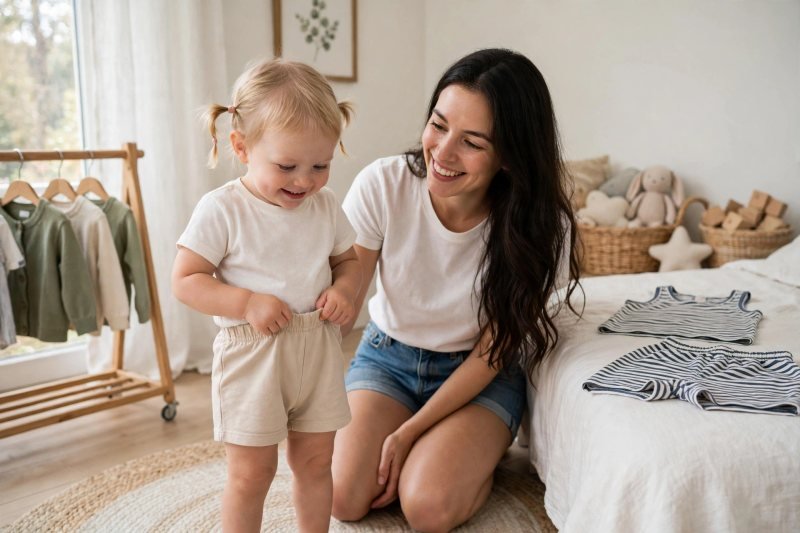
Start with the everyday basics. Lay the first two looks on the bed: look one is a plain cotton t-shirt with pull-on shorts; look two is a striped tank top with bloomer shorts. Say: "Two cool outfits — which one do you want first?" and let your child point — choosing is the game at this age. Help with the pull-on waist — no buttons, no zippers, just stretch and go — and let her feel how light breathable cotton is. She stands, tugs the waist into place, and wiggles on the rug. Basics understood, the one-piece wonders come next.
-
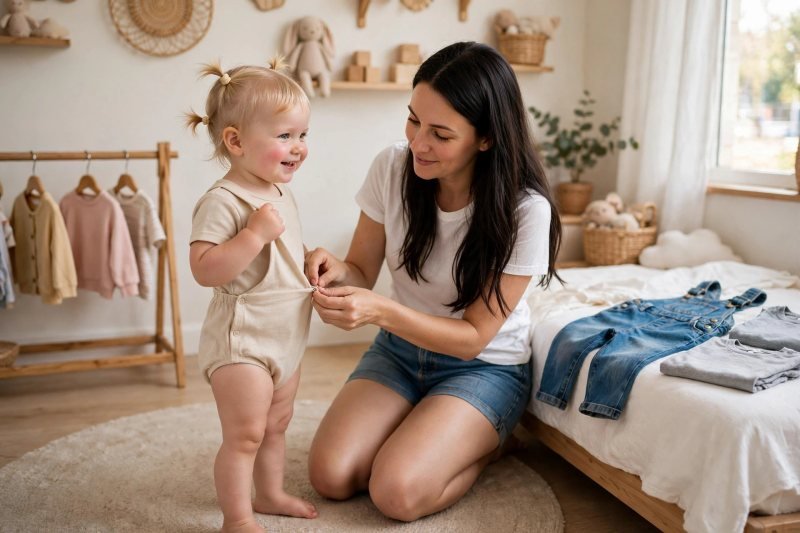
Try the one-piece wonders. Lay down the next pair and name them: look three is a one-piece romper; look four is short overalls over a soft t-shirt. Say: "This one is all one piece — step in, pull up, done!" and show how a romper skips the shirt-riding-up problem. Guide her into her pick, doing the sturdy snaps yourself while she stands. She practices stepping in and pulling up — real dressing practice disguised as play. After a mirror check, the sunshine looks are waiting.
-
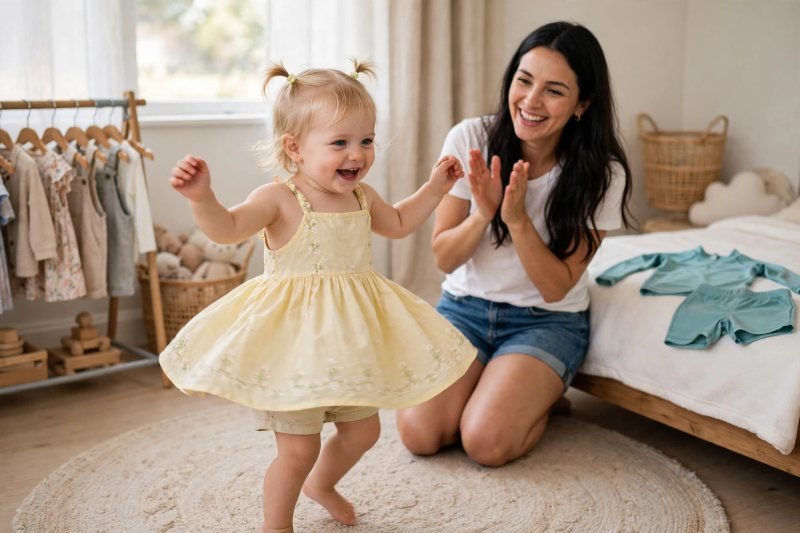
Dress for sunshine and water play. Spread the next two looks on the blanket: look five is a sundress with shorts underneath; look six is a rash-guard set ready for the splash pad. Say: "The dress is for twirling, and the swim shirt covers your shoulders in the water," so she links outfits to activities. Show how the shorts keep slides and climbing comfortable, and how the rash guard's sleeves give sun coverage without extra layers. She twirls in her pick to test the shorts. Dresses plus hidden shorts solve the movement problem, and twirly dresses come next.
-
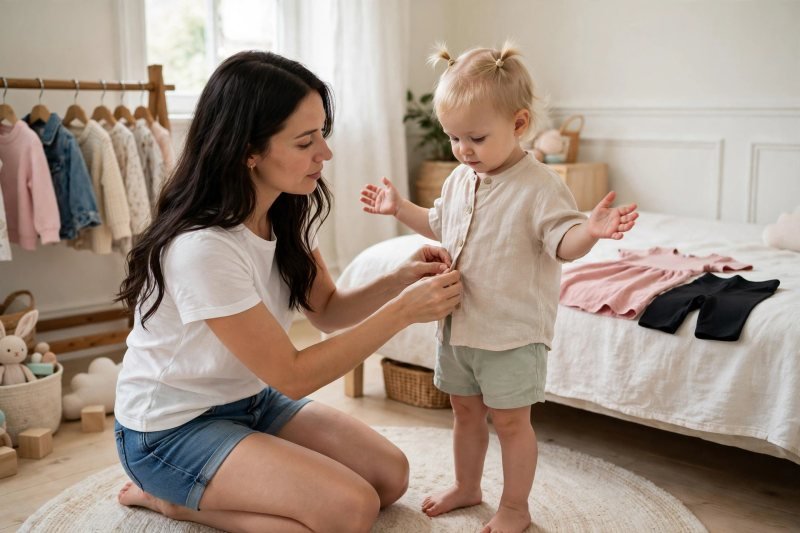
Pick soft shirts and twirly dresses. Lay out the fourth pair: look seven is a linen-blend button shirt with soft shorts; look eight is a jersey dress with bike shorts underneath. Say: "Feel this shirt — light and airy — and this dress is stretchy for spinning," and let her rub both fabrics. Explain that buttons are a parent job at this age, while the jersey dress pulls straight over the head. She pulls the dress on or waits for three quick buttons, then marches and spins; if she can bend and sit comfortably, the look passes. For more warm-day combinations in the same spirit, see summer outfits for girls.
-
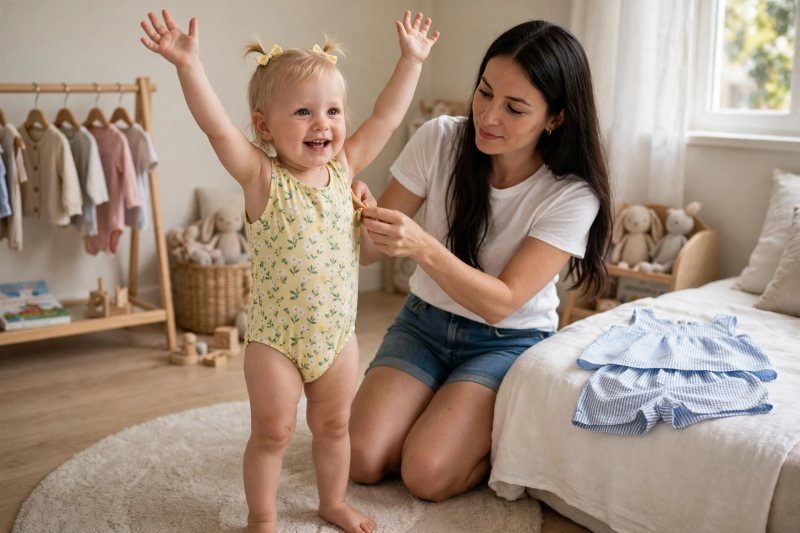
Go sleeveless for the hottest days. Present the two lightest looks: look nine is a sleeveless sunsuit; look ten is a seersucker two-piece set. Say: "When it is really hot, our arms get to be bare and the air does the cooling," and fan the fabrics so she feels how little they weigh. Point out the seersucker's puckered texture, which holds fabric off the skin, then help her into her choice. Note that bare shoulders make the hat and sunscreen steps matter more. She parades around the bed, arms swinging, and the play clothes come next.
-
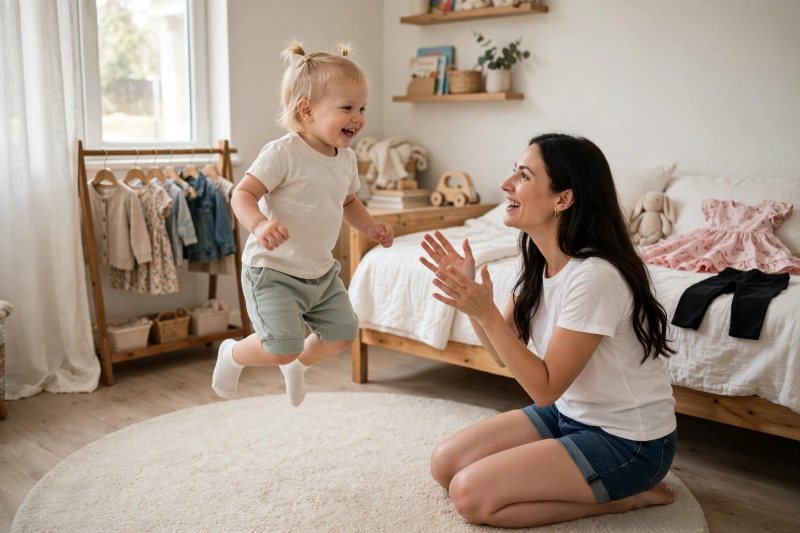
Mix play clothes that move. Bring out the action pair: look eleven is a plain tee with jogger shorts; look twelve is a twirl dress with leggings shorts. Say: "These are our moving clothes — let's test them with jumps and spins!" because a restricting outfit gets rejected by lunchtime. The jogger shorts' stretchy waist stays up without digging in, and the leggings shorts keep every spin comfortable. She does three jumps, a squat, and her best twirl while you watch for riding up. Outfits passing the jump-squat-twirl test stay in rotation, and swimming looks come next.
-
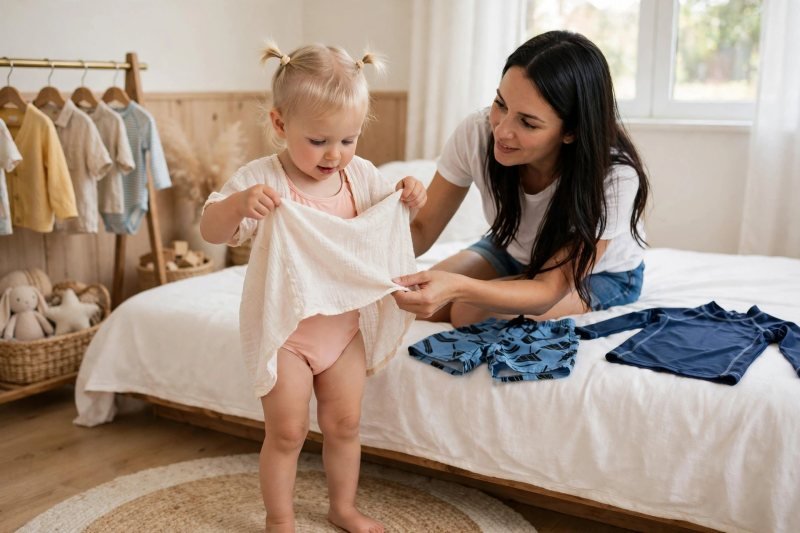
Suit up for swimming days. Lay the water pair on the rug: look thirteen is a one-piece swimsuit with a cover-up dress; look fourteen is board shorts with a sun-protective swim shirt. Say: "These are for splashing days — the cover-up goes on for the walk and comes off at the water," and let her practice that layer once. Show how the swim shirt covers shoulders and back during water play. She steps into her swim look, slips the cover-up on, then slides it off. Keep both looks together afterward; the pace slows for the cozy sets.
-
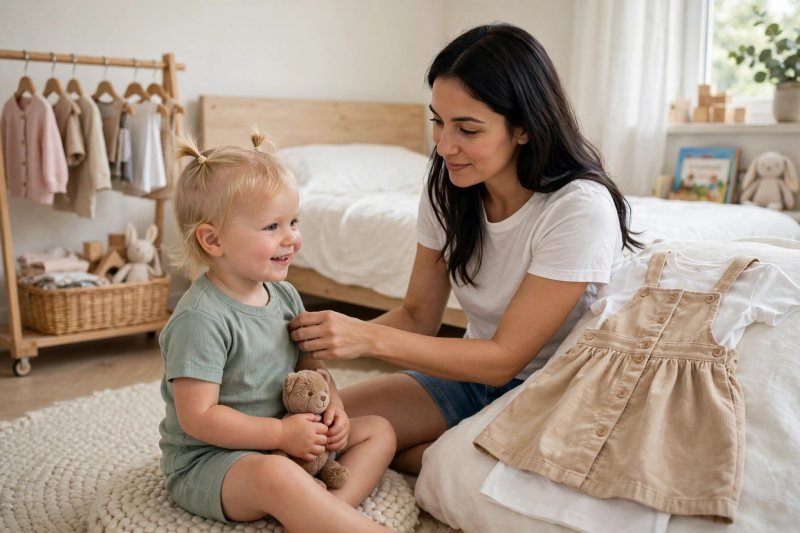
Slow down in cozy sets. Soften the energy with the stay-home pair: look fifteen is a matching cotton pajama-style set for a slow morning; look sixteen is a pinafore dress over a tee. Say: "These are our slow-morning clothes — soft for breakfast and books," and let her press her hands into the set's fabric. The matching set needs no decisions — top and bottom belong together. She settles on the rug for a pretend story. Clothes that never pinch suit slow mornings, and the photo looks come next.
-
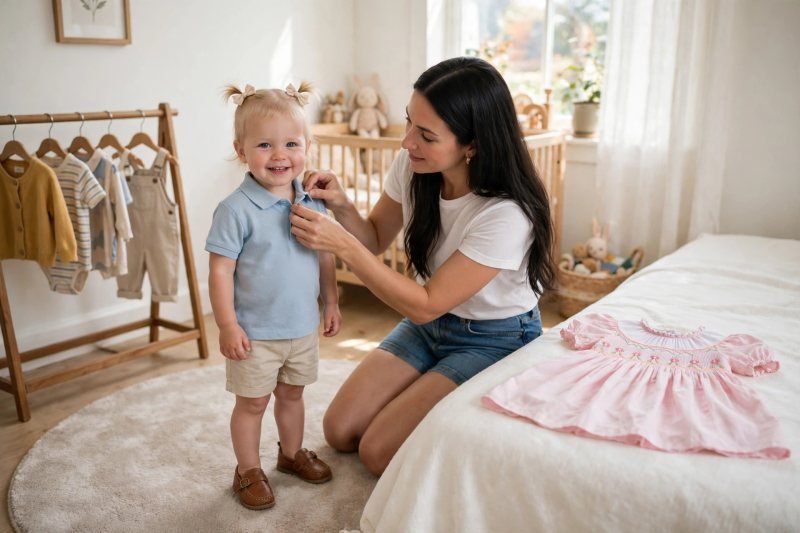
Tidy up for photos and visits. Present the polished pair: look seventeen is a soft polo with chino shorts; look eighteen is a smocked dress. Say: "These are our visiting clothes — comfy like play clothes, but a little fancy," and angle the mirror so she sees it. Keep the comfort rules: the polo is soft jersey, the chino shorts pull on easily, and the smocked dress stretches instead of fastening with buttons. She stands tall for a pretend photo and checks she can sit and reach — a hated outfit shows in every picture. Only the finishing touches remain.
-
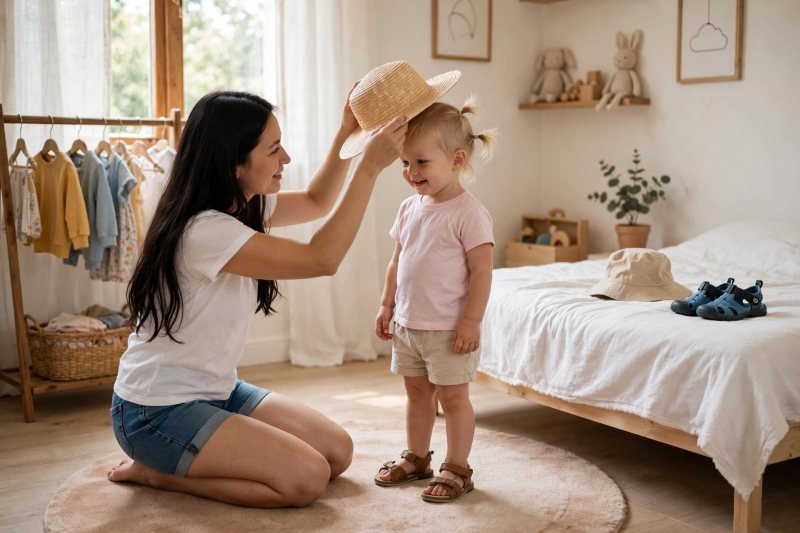
Finish with hats and shoes. End where every outing begins: look nineteen is a sun hat with sandals finishing a favorite outfit; look twenty is a bucket hat with water shoes finishing another. Say: "Hats and shoes are part of the outfit, not extras — pick yours, then sunscreen before we go out," and let her choose her hat. Practice together: hat shading her face, sunscreen on ears and neck — applied the way our simple kids skincare routine sets it out — and shoes checked — sandals strapped securely or water shoes with non-slip soles. She walks the rug proudly, hat straight and shoes steady. Twenty looks tried — she is sun-ready!


Make it easier
Lay out just two outfits the night before; a simple this-one-or-that-one choice is plenty on busy mornings. For younger 2-year-olds, you do the dressing while they make the one big decision: which look. Keep a basket by the door with a hat, sunscreen, and water shoes.
Make it harder
Let your toddler sequence the whole job: pick the look, pull on the waist, step into the shorts under a dress, then fetch her own hat — dressing practice is powerful learning, much like these toddler learning activities at home that build independence in short bursts. Add a mirror check: ask "Is anything scratchy? Can you twirl?" and let her verdict decide if the outfit stays. Invite her to lay out tomorrow's two choices herself, with you checking the forecast.
Other ways to play it
- Beach-day version: start from the swim looks, add bucket hat and water shoes, and pack the cover-up dress as the layer over a dry sunsuit. For the season's wider plans, see our summer hub.
- Garden-party version: choose the smocked dress or pinafore with sandals and the wide-brim hat — pretty and sun-safe at once. Pair the outing itself with ideas from our summer activities for kids.
- Rainy warm-day version: swap sandals for closed water shoes and keep the light cotton layers. When seasons turn, the same routine works with toddler winter outfits built for cold days.
How it changes by age
- Ages 2-3: this is the pull-on years. Choose stretchy waists, wide neck openings, and one-piece looks you can change quickly for diapers and potty practice. Expect to do most fastenings yourself; your toddler's job is choosing, stepping in, and pulling up. Keep sessions short — two looks at a time, never a fashion marathon. Before a pool or splash-pad day, check that venue's swimwear and swim-diaper rules so the swim look you pack is the one she can actually wear in the water.
- Just under 2 or nearly 4: younger toddlers need even simpler shapes — rompers and matching sets — while older 3-year-olds can practice big buttons, simple snaps, and their own hat and shoes. If a look causes daily battles, simplify it.
What they're learning
Choosing and deciding: picking between two laid-out looks is real decision-making at the right size for a 2-year-old. Dressing independence: stepping in, pulling up waists, and pushing arms through sleeves build self-dressing motor skills. Weather awareness: linking light fabrics to hot days and hats to sunshine builds cause-and-effect thinking. Words for clothes: soft, stretchy, light, twirly — dressing adds vocabulary without a lesson in sight.
Clearing up
"Toddlers need lots of layers to be safe in the sun." No — coverage is not layers; one light layer with good coverage, like a rash guard, plus a hat and sunscreen beats stacked hot clothing. "Dressy means uncomfortable." It does not have to; a stretchy smocked dress looks tidy yet feels like play clothes. "Bare and sleeveless is always coolest." Not quite — on bright days, a thin loose shirt shading the shoulders beats bare skin that burns quickly. "If an outfit is cute, the fit is fine." Fit is a safety issue; digging waists and sliding shoes cause falls, so the jump-squat-twirl test matters more than the photo.
Questions parents ask
What should a toddler wear in summer?
How many outfits does a toddler need for summer?
What fabrics keep toddlers coolest?
Should toddlers wear hats in summer?
How do I dress a toddler for a hot day out?
Toddler fall outfits. Sun hats toddlers will keep on. A summer capsule wardrobe checklist.

save it for later
Pin this for the next rainy afternoon
Keep it on a board so it is there when you need it, rather than when you happened to find it.
Save to Pinterest

