


Sunscreen for Kids: How to Choose the Right One
Sunscreen for kids chosen by label criteria, not marketing: how to check SPF and broad spectrum, what water resistance really means, which form suits which body area, how much to apply, and when to reapply — plus the shade and hat habits that complete protection.
Choose sunscreen for kids by label criteria: an SPF rating plus the words broad spectrum, water resistant if swimming or sweating is planned, a form matched to the area — lotion for bodies, stick for faces and ears — and a valid expiration date. Apply generously before going out and reapply about every two hours.

The short version
- Shop by the label, not the packaging: SPF rating and "broad spectrum" are both required.
- Broad spectrum means protection across both kinds of ultraviolet rays, not just sunburn rays.
- Water resistant is timed and partial — never waterproof; water days mean more reapplying.
- Match form to job: lotion you can see for bodies, stick for ears, noses, and hairlines.
- Under-application is the commonest failure: the skin should look evenly coated before rubbing in.
- Sunscreen never works alone: shade, hats, and clothing complete the system.
- Age
- Ages 4–5
- Prep
- 5 min
- Play time
- 10 min
- Mess
- Low
- Difficulty
- Easy
- Where
- Both
Why kids love this
Kids love sunscreen routines that feel like a game and never like a lecture. When application comes with a song, a "dot-to-dot" pattern to rub in, their own hat to choose, and a sand-timer that announces reapply time, protection becomes part of the outdoor adventure instead of the delay before it. Four- and five-year-olds take genuine pride in reminding adults that the timer went off — hand a child the reapply job and the routine starts running itself.
What you'll need
- One sunscreen you are evaluating or using — lotion, cream, stick, or spray form (any container kept blank and label-checked by you)
- A wide-brimmed hat or cap your child will actually wear
- Light, covering clothing for shoulders and the backs of legs, and swim shirts for water days if you use them
- A shady base spot outdoors — umbrella, tree, or pop-up shade
- A simple timer — a phone timer, kitchen timer, or sand timer your child can watch
- A small towel for sandy or sweaty skin before reapplications
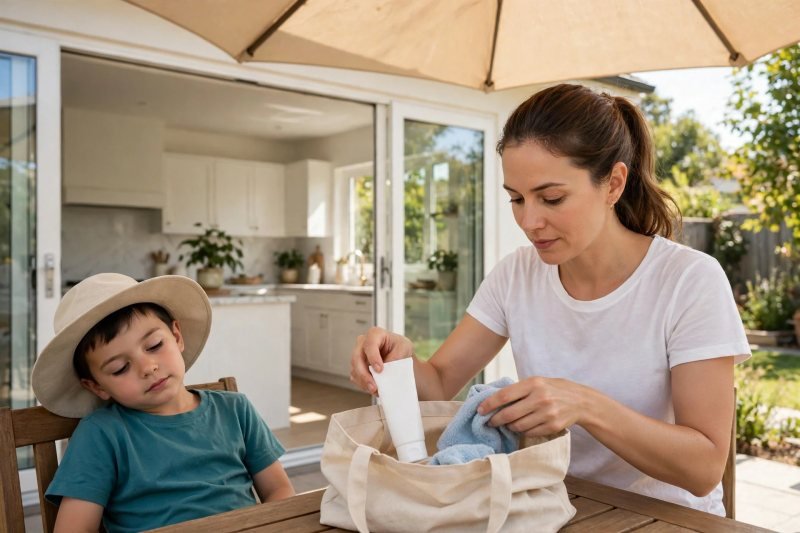
- A bag by the door where sunscreen, hat, and timer live together
Before you start
1. Read the full label of the sunscreen you own before the day you need it — SPF, broad spectrum, water resistance, directions, and expiration (steps 1–3 and 5). 2. Do a small first-use check: apply a little to a small area of your child's skin the day before a big outing and watch for any irritation, per the product's own directions. 3. Pack the by-the-door bag: sunscreen, hat, timer, towel — protection that is packed is protection that happens. 4. Choose the shady base spot at your destination in advance when you can, so reapplications have a home.
How to do it
-
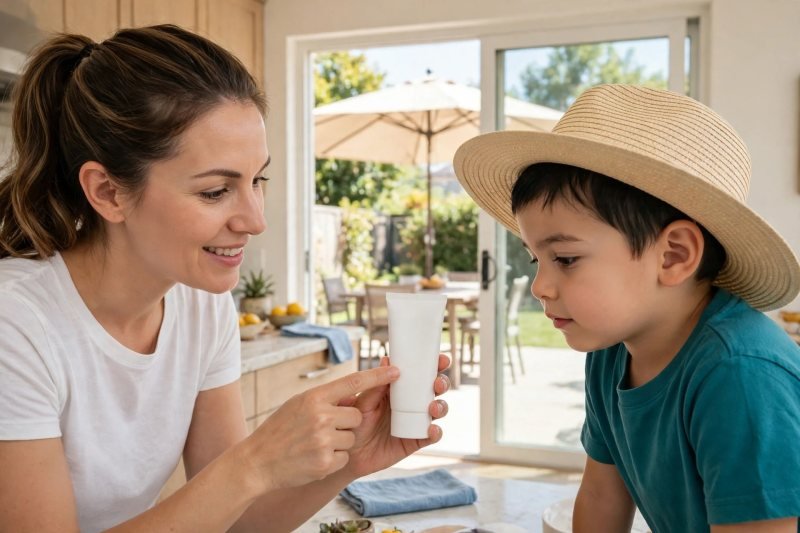
Start with the front of the label: SPF and the words that matter. Choosing sunscreen for kids begins with reading, not squeezing: pick up the container and find two things on the label — the SPF rating, which tells you the product has been tested for sun protection and is printed as a number, and the words "broad spectrum," which step 2 explains. Ignore front-label sunshine words that are not those two; packaging is decorated to be picked up, and your job is to shop by the regulated information instead. Say to your child: "Detectives read labels first." If either the SPF rating or the broad spectrum wording is missing, that container does not make your shortlist, however friendly it looks. Label basics found, look closer at what broad spectrum actually promises.
-
Confirm broad spectrum — protection against both kinds of rays. Sunlight reaching your child's skin includes two kinds of ultraviolet rays that matter here: the kind mainly linked with sunburn, and the kind that reaches deeper into skin. An SPF rating on its own is chiefly about the sunburn kind, which is why the words "broad spectrum" carry real weight: they tell you the product has been shown to protect across both. When you compare containers, treat broad spectrum as a requirement, not an upgrade — it belongs on the sunscreen you choose for everyday play, sports days, and water days alike. Say: "Two kinds of rays, so we pick the shield that covers both." Broad spectrum confirmed, check the label's water language next — the most misunderstood words on the bottle.

-
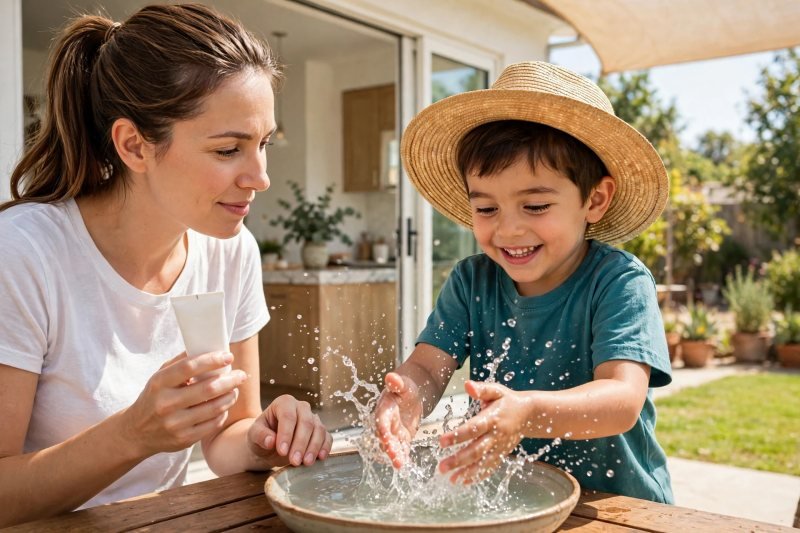
Read water resistance honestly — resistant is not waterproof. If your child's day involves swimming, sprinklers, or serious sweating, look for "water resistant" on the label and then read it the way it is meant: it describes sunscreen that keeps working for a period of time in the water, and the label states that period in its directions — it does not mean waterproof, and no sunscreen stays fully effective through a long swim. The practical rule for parents is simpler than the label law: water days mean more frequent reapplication, full stop — after swimming, after heavy sweating, and after towel-drying, which step 9 turns into a timer habit. The same water-day planning behind a toddler swimwear guide — kit packed, shade planned, reapply timed — is what makes swim days run smoothly. Say: "Water washes our shield thinner, so we build it back up." Water language understood, choose the form of sunscreen that fits each job.
-
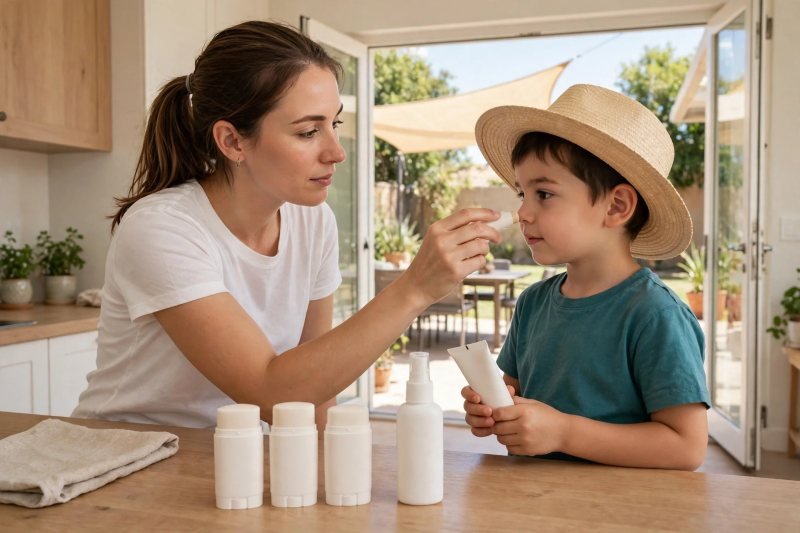
Match the form to the body area and the moment. Different forms earn their place by area, not by hype: lotions and creams spread visibly, which makes them the reliable choice for the first full-body application of the day, because you can see exactly where they have gone; sticks glide neatly over small, fiddly areas — noses, cheeks, ears, the backs of hands — and are wonderfully drip-free around eyes; sprays cover large areas quickly for reapplications on a moving child, but they must be spread and rubbed in by hand afterward to give even coverage, and they are best applied away from faces, with faces done by hand or stick instead. Judge any form by one question: "Can I see and feel that this covered the skin evenly?" Form matched, check the container's dates and storage before it joins the kit.
-
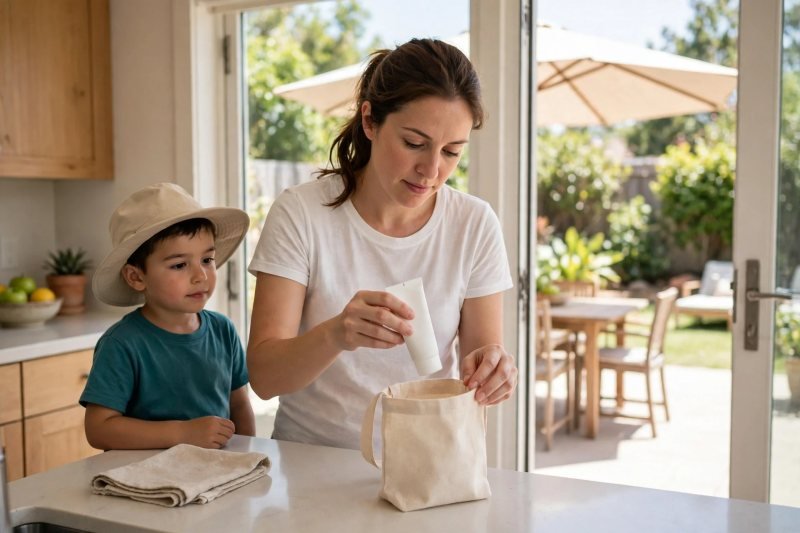
Check the expiration, the storage, and your child's skin response. Sunscreen is a product with a working life: find the expiration date printed on the container and respect it — an out-of-date sunscreen is not a bargain, it is an unknown, and it should be replaced rather than trusted for a big outdoor day. Store the container the way the label directs, out of prolonged heat — a bag that lives in a hot car all summer is aging its contents between uses, so bring the kit indoors. If you are starting from scratch, the best sunscreen for toddlers guide applies these same label checks to narrow a shortlist. Fold sunscreen into the same gentle awareness as the rest of your child's routine — the habits in this kids skincare routine with simple steps pair naturally with daily sun protection. And keep watching your child's skin: if a product seems to irritate, stop using it, wash it off, and choose a different one next time. Container vetted, learn how much "enough" actually looks like.
-
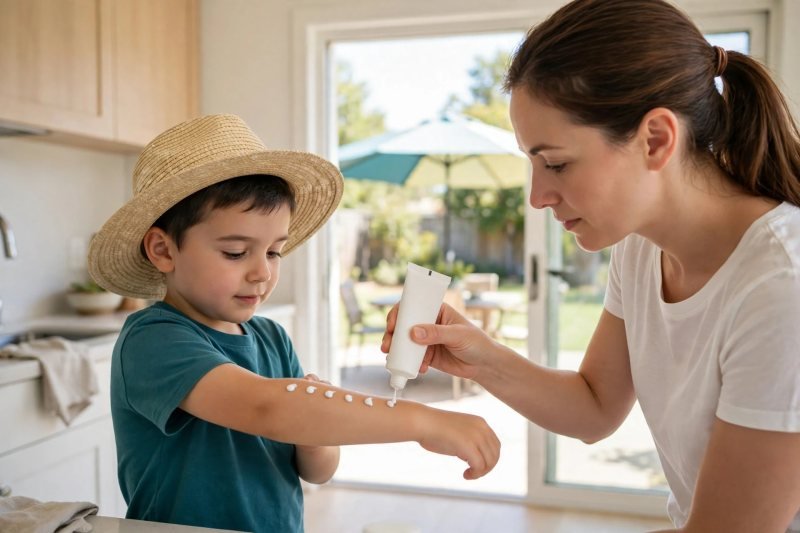
Use enough — a visible, generous layer is the real-world rule. Most sunscreen underperforms for one unglamorous reason: too little of it. Whatever rating sits on the label assumes the product is applied at the tested amount, so a whisper-thin smear does not deliver what the container promises. Work with a simple visual standard: the skin should look evenly coated before you rub in — a generous squeeze for each zone (each arm; each leg; front; back; face and neck) rather than one small squeeze stretched everywhere. Teach your child the dot game: you place dots of sunscreen along an arm or leg, and they rub each dot until it disappears into its neighbors. Say: "Dots first, then rub them into one smooth shield." Enough applied — in the right order, which the next step sets.
-
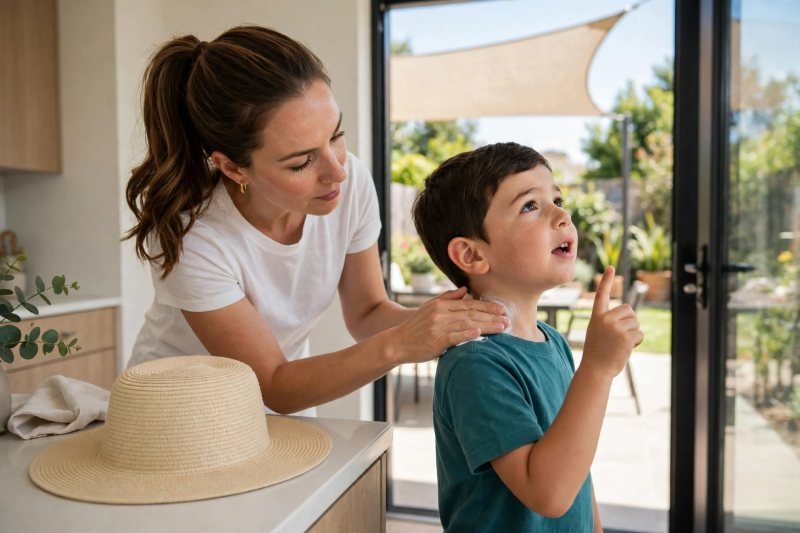
Apply before the outing, in a calm order, and let it settle. Put the day's first application on at home, before the excitement of arrival, when your child is standing still and not yet sandy, wet, or mid-game: work in a fixed order — face and ears; neck and shoulders; arms and backs of hands; front and back; legs and the tops of feet — so no zone depends on memory. Let your child be the checklist caller ("Ears done? Feet done?") while you apply; a caller is a participant, not a fugitive. Give the application a few minutes to settle before hats, shirts, and shoes go on over it, and keep the container out with the bag — you will need it again on the timer's schedule, not on a whim. Order complete, hunt down the spots everyone forgets.
-
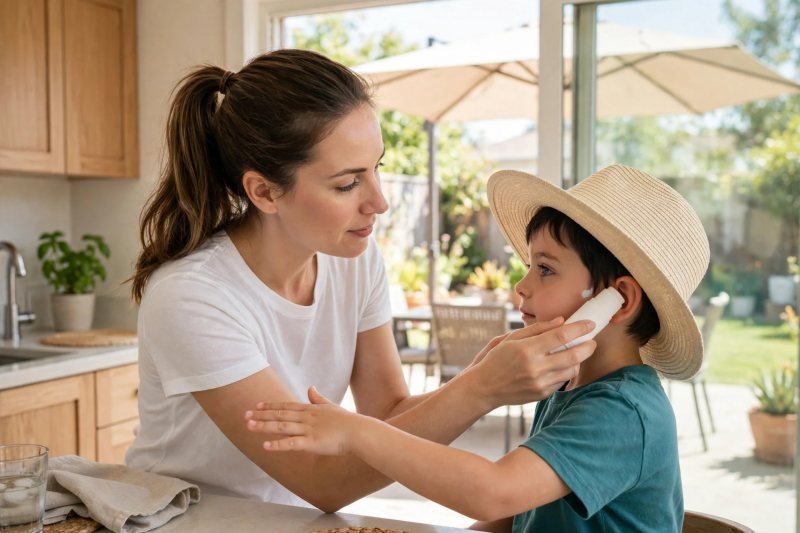
Cover the forgotten spots: ears, neck, hairline, hands, and feet. Sunburns collect where routines skip: the tops and backs of the ears; the back of the neck under the hat line; the hairline and any part line in the hair; the backs of the hands, which wash and wipe their protection away fastest of all; knees and the tops of the feet, which sandal straps decorate with stripes if you let them; and lips, if you use a lip product with sun protection, applied the same careful way. The stick form from step 4 shines here — it draws precisely along ears and hairlines without dripping toward eyes. Say the spot list out loud as a chant with your child — "Ears, neck, hands, feet!" — because a chant is a checklist a five-year-old can carry in their head. All spots covered, set the system that keeps protection true all day.
-
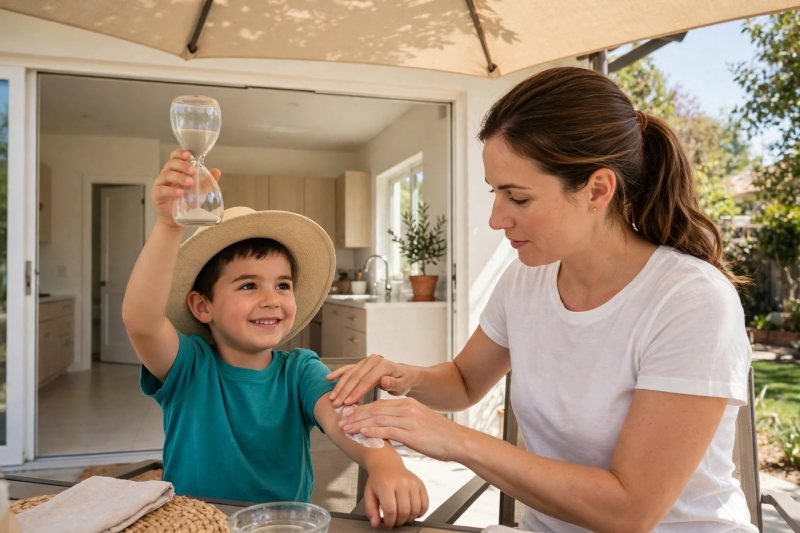
Reapply on the timer: about every two hours, and after water. Sunscreen is a subscription, not a purchase — it wears, sweats, swims, and towels away, so reapply about every two hours during outdoor play, and sooner after swimming, heavy sweating, or towel-drying, whatever the clock says. Make the timer your child's job: a sand timer or phone timer they control turns "time to reapply" from an adult interruption into their announcement to make — "Timer! Shield time!" Reapply in your shady base spot, on skin patted dry with the towel first, using the same dot game and the same forgotten-spots chant. If outdoor learning and play fill your days — the kind of afternoons in these toddler learning activities at home taken outside — the reapply rhythm is what makes long sessions safe ones. Timer reset, finish by surrounding the sunscreen with its partners.
-
Finish with shade and clothing — sunscreen never works alone. The last choosing skill is knowing what sunscreen is not: it is one layer in a system, and the other layers are free — shade as your base camp, especially in the middle of the day; a hat your child chose and will keep on — these toddler sun hats cover the styles that stay put on small heads; light clothing over shoulders and backs of legs; and breaks that rotate between full sun and shade the way games naturally do. Judge every outing plan with the full checklist — label checked; broad spectrum confirmed; water language understood; form matched; date valid; enough applied; order followed; forgotten spots chanted; timer set; shade planned — and sunscreen shopping stops being a guess in a pharmacy aisle. Say: "Shield, hat, shade — that's the team." Pack the kit back by the door together, and the next sunny day starts protected in ten minutes.


Make it easier
One-form family: a lotion for bodies plus a stick for faces and ears covers nearly every situation in this guide — you do not need a shelf of forms. Application-resistant child: move the first application earlier (before dressing fully), keep the dot game and checklist-caller job, and let them choose the hat as the trade. Forgetful days: anchor reapply to events as well as the timer — after every swim, after lunch, after the sandcastle — so habits back up the clock.
Make it harder
Give your child the label-detective job at the store: find the SPF, find "broad spectrum," find "water resistant," find the expiration date — four finds before a container earns the cart. Let an older preschooler run the reapply station for the family at the park: timer keeper, dot-game referee, forgotten-spots chanter. Plan a full sun-day itinerary together — outing, shade base, swim, lunch, reapply points marked in the day — as early planning and sequencing practice.
Other ways to play it
- Beach and pool version: weight water resistance and reapply discipline highest; swim shirts add a clothing layer that never needs reapplying.
- Sports and playground version: sticks for faces at halftime, sprays rubbed in for fast full reapplications, hats traded for caps with neck coverage when the game allows.
- Sensitive-skin days: choose based on your child's own history with products, do the small first-use check before big days, and lean harder on shade and clothing layers.
How it changes by age
- Ages 2–3: application is fully adult-led and game-based; shade and clothing carry more of the load, outings are shorter, and reapply checks happen at every sit-down.
- Ages 4–5: the guide as written — children call the checklist, run the timer, rub in their own dots, and chant the forgotten spots with you.
- Ages 6–8: children can learn to apply their own first layer with an adult audit of the forgotten spots, and to read labels as a real shopping skill.
- All ages: for babies and for any specific skin condition, follow your pediatrician's guidance over any general guide — this article teaches label criteria and habits, not medical advice.
What they're learning
Label literacy: finding SPF, broad spectrum, water resistance, and expiration on real packaging is early functional reading with a purpose. Time awareness: running the reapply timer teaches duration, anticipation, and responsibility for a schedule that matters. Body mapping: the fixed application order and forgotten-spots chant build a complete, named map of their own body. Systems thinking: shield, hat, shade — children learn that safety comes from layers working together, not one magic product.
Clearing up
Sunny-day cleanup is a two-minute reset: sunscreen, hat, timer, and towel go straight back into the by-the-door bag (future you says thanks), sandy containers get a quick wipe before they go in, hats hang to dry if they got wet, and the timer returns to its spot in the bag. A kit that resets itself is a kit that gets used — the whole point of the system.
Questions parents ask
What should I look for on a kids sunscreen label?
What does broad spectrum mean on sunscreen?
How often should kids reapply sunscreen?
Is spray sunscreen okay for kids?
What if my child's skin reacts to a sunscreen?

save it for later
Pin this for the next rainy afternoon
Keep it on a board so it is there when you need it, rather than when you happened to find it.
Save to Pinterest

