


Kids Beach Outfits: What to Pack for a Day at the Shore
Kids beach outfits work best in layers: a swim outfit for the water, sun-protective cover for breaks, and a full dry change for the ride home. This packing guide shows you exactly what to pack, in what order, so nothing soggy or sandy ruins the day.
Pack kids beach outfits in three layers: a swim outfit with a rash guard for the water, a cover-up plus wide-brim hat for shade breaks, and a full dry change sealed in its own bag for the ride home. Add sunscreen in the top pocket, water shoes, towels, shade gear, water, and snacks, then check the bag together before you leave.

The short version
- Think in three layers — swim, shade, dry — and pack one complete outfit for each job.
- Seal the dry change in its own bag; loose dry clothes are damp and sandy by midday.
- Keep sunscreen at the top of the tote and reapply after swimming or heavy sweating.
- Rehearse the shade routine at home: out of the water, cover-up on, hat on, drink of water.
- Water shoes ride outside the bag; dry clothes hide inside, away from sand and drips.
- Outfits never replace supervision — watch young swimmers constantly and stay within arm's reach.
- Age
- Ages 4–5
- Prep
- 20 min
- Play time
- 480 min
- Mess
- Some
- Difficulty
- Easy
- Where
- Outdoor
Why kids love this
Kids beach outfits are part of the adventure when kids help choose them. A child who picked the swim shorts, tested the hat, and zipped their own bag feels ready for the water — and kids who helped pack are far more willing to wear the hat and rash guard when you get there.
What you'll need
- One swim outfit per child — a one-piece swimsuit or swim shorts with a rash guard top
- One sun cover-up — a light hooded towel, cover-up dress, or oversized t-shirt for shade breaks
- One full dry change — underwear, shorts or skirt, t-shirt, and a light layer for air-conditioned stops
- A wide-brim sun hat with a chin strap and child sunglasses with a strap
- Broad-spectrum sunscreen, SPF 30 or higher, plus a lip balm with SPF
- Beach towels — one for drying, one for sitting
- Water shoes or sandals that strap on, plus dry shoes for the ride home
- A large beach tote or backpack, one wet bag or zip-top bag for soggy clothes, and one small dry pouch for phones and keys
- A pop-up shade tent or beach umbrella, a water bottle per person, and simple snacks
Before you start
1. Check the day's plan first: swimming only, or swimming plus a boardwalk lunch? A lunch stop means the dry change matters even more. 2. Lay everything out on the bed or rug the night before if you can; morning packing with an excited preschooler always takes longer than you think. 3. Try the swim outfit and water shoes on at home — straps, tags, and waistbands that bother a child at home will bother them ten times more when wet and sandy. 4. Put sunscreen on 15 to 20 minutes before you leave if possible, so the first coat is already settled before the first swim; you will reapply at the beach.
How to do it
-
Set up your packing station. Spread the tote open on the rug and lay everything around it in three piles — swim, sun, dry — so your child sees the whole system at once. Say: "Every beach outfit has three jobs: swim, shade, and dry for the ride home." Let your child count the piles and name each job back to you. Station set — now you choose the star of the bag, the swim outfit itself.

-
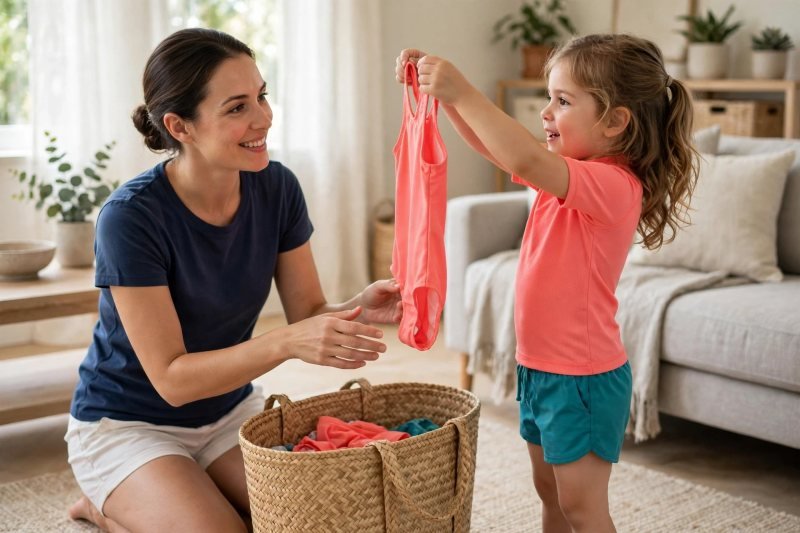
Choose the swim outfits first. Hold up the swim options and let your child pick between two good choices you already approve of. Say: "The rash guard is your sun shirt for the water — it covers your shoulders while you swim." Try the outfit on, check straps stay up with arms raised, and roll the winner into a tight bundle at the bottom of the tote. Swim layer locked in — next, the change that saves the ride home.
-
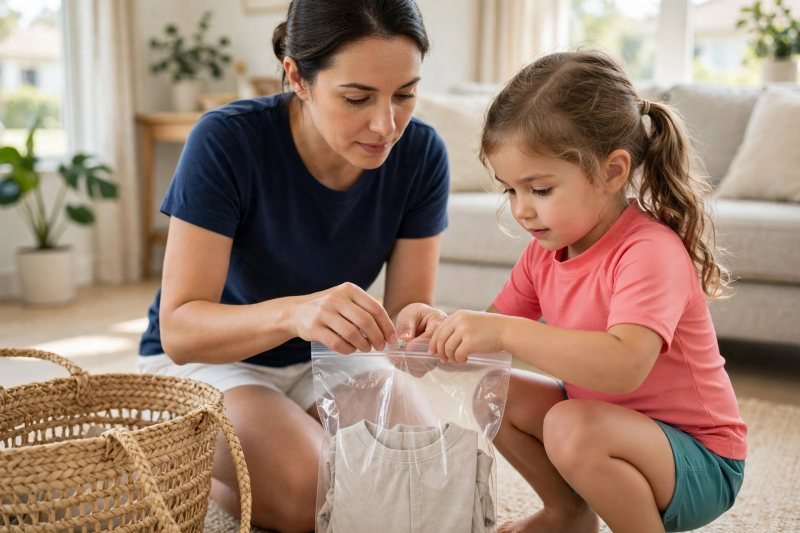
Pack a full dry change. Fold a complete dry outfit — underwear, bottoms, top, and a light long-sleeve layer — into its own zip-top bag or packing cube, and squeeze the air out so it stays flat and truly dry. Say: "This is your cozy clothes bag. It stays sealed until swimming is all done, so your ride-home clothes never get sandy or wet." Let your child zip the bag themselves and place it in the middle of the tote, protected on all sides by towels. Explain the rule in advance: dry clothes stay sealed until a parent says swim time is over. With the dry change protected, you can add the layers that guard skin during breaks.
-
Add sun protection layers. Pack the cover-up and hat as a set: roll the hooded towel around the hat so the hat keeps its shape, and tuck the sunglasses into the tote's small pocket. Say: "Out of the water for a snack, cover-up and hat go straight on — that is your shade outfit." Practice it once at home so the routine is already familiar at the beach. For warm-weather outfit ideas to pair with the shade layer, browse preschool summer outfits and kids summer outfits. Sun layers rehearsed — now for sunscreen and real shade.

-
Pack sunscreen and shade gear. Place the sunscreen where you can reach it without unpacking — an outside pocket or the top of the tote. Say: "Sunscreen lives at the top, because we use it first, and again after every swim." The plan: first coat before swimming, a fresh coat after swimming or heavy sweating, shade breaks in between. Pack the umbrella separately so it goes up first on arrival. If your family follows a simple kids skincare routine with simple steps, this is the same habit, packed for the beach. Sunscreen within reach — time for shoes and towels.

-
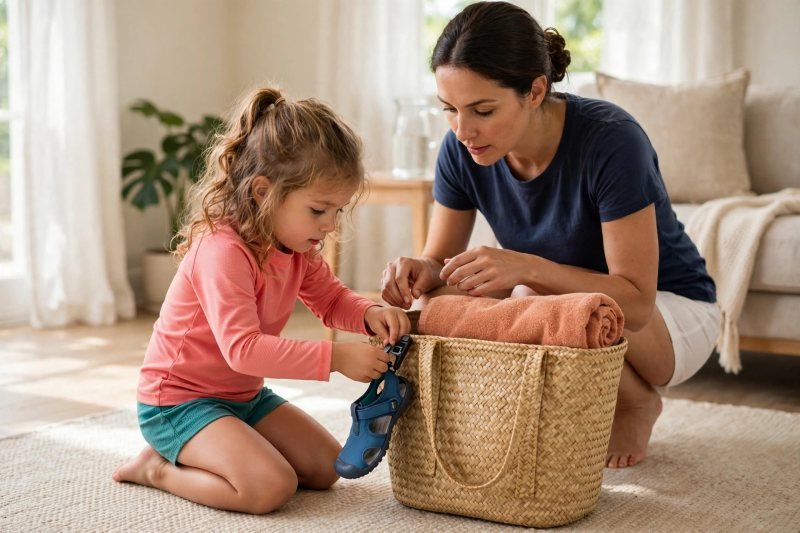
Sort shoes and towels the smart way. Put water shoes or strapped sandals in a side pocket or clipped to the outside of the tote, because they will come home wet and sandy and should never sit against dry clothes. Roll the drying towel tightly and lay it across the top of the bag, with the sitting towel or beach blanket underneath the tote or carried separately. Say: "Wet shoes ride outside, dry clothes hide inside — that keeps the sand where it belongs." Let your child test the water shoes with a quick walk around the room; loose sandals that slip on dry floors will float off in the surf. Shoes sorted and towels rolled — the outfit system is done, so you finish with comfort extras.
-
Pack snacks, water, and one comfort extra. Fill a water bottle for each person and pack simple, sand-friendly snacks that do not melt. Add one comfort extra your child chooses — a bucket, a treasure pouch, or a small toy for shade breaks. Say: "We sip water every time we sit in the shade." Just as you rotate layers for cold in a guide to toddler winter outfits for ages 2-3, you are layering here too — for sun and water instead of cold. One final check remains.

-
Do the final bag check together. Run the out-loud checklist with your child pointing at each layer as you name it: swim outfit; dry change sealed; cover-up and hat; sunscreen on top; shoes outside; towels rolled; water and snacks; shade packed separately. Say: "Point and check — if you can point to it, we packed it." Let your child close the bag and carry one light item to the door. At the beach, reverse the order: shade up first, sunscreen on, and the sealed dry bag untouched until the end. If a layer is missing at the check, add it before you leave rather than planning to buy it at the beach, where the size and style your child will wear may not be in stock. You are ready for the shore.



Make it easier
Pack the night before and leave the tote by the door. For a short splash visit, scale down to swim outfit, towel, sunscreen, hat, water bottle, and the sealed dry change — skip extras, never the dry change. Dress your child in the swim outfit under regular clothes for the drive, so arrival is one quick layer off.
Make it harder
Give your 5-year-old the checklist job: they read or point to each category while you pack, and they own the final zip. Let your child plan outfits for two different beach days — a windy morning versus a hot afternoon — and explain what changes and why. Add a simple budget or weight challenge for older preschoolers: the whole tote must be carryable by a parent in one trip with the shade gear, so every extra must earn its place.
Other ways to play it
- Pool-day version: swap the shade tent for a reserved shady spot, keep the same three-layer outfit system, and add a swim diaper cover or spare swim bottom if your pool requires one.
- Lake or river version: water shoes become non-negotiable for rocky bottoms, and add a light long-sleeve layer for buggy shade breaks near trees.
- Boardwalk version: the dry change becomes the evening outfit — pack slightly nicer dry clothes and real shoes, so you can go straight from rinsing off to dinner without returning to the car. For the rest of a summer day out, the children's summer activities guide gathers warm-weather ideas.
How it changes by age
- Ages 2–3: you pack, they carry one soft item. Expect to do every change yourself, build in extra shade breaks, and choose swim outfits with wide neck openings so wet changes are fast.
- Ages 4–5: the sweet spot. Fours and fives can choose between two outfits, zip the dry bag, and run the final point-and-check. They still need you for sunscreen — backs, ears, and necks are almost always missed when kids apply it alone.
- Ages 6–8: most can pack their own tote from your piles and manage changes with a quick parent check. Hand over the reapply reminder, too: after every swim, they come to you for the next coat.
- When to adjust: if your child has sensitive skin, eczema, or a sun allergy, follow your pediatrician's guidance on fabrics, shade time, and sunscreen choice over any general packing list, including this one.
What they're learning
Planning and sequencing: swim, shade, dry is a three-step plan a preschooler can hold in mind and check off. Categorization: sorting clothes into piles by job (gets wet, blocks sun, stays dry) is real early math and logic practice. Independence: zipping bags, choosing between two good options, and carrying their own item build the self-help skills school expects. Body awareness: matching clothing to hot, wet, sandy, and dry builds practical thinking about materials and weather.
Clearing up
One swimsuit is not a whole beach outfit — it is only layer one; full beach days need a shade layer and a sealed dry layer too. A regular wet t-shirt offers little protection compared with a rash guard made for the water, and neither replaces sunscreen. And dry clothes riding loose in the tote are damp, sandy clothes by noon — the sealed bag is the entire trick, and it takes thirty seconds.
Questions parents ask
What should kids wear to the beach?
How many outfits does a child need for a beach day?
What is a rash guard and does my child need one?
How do I keep my child's dry clothes dry at the beach?
What should I pack for a 4-year-old's first full beach day?

save it for later
Pin this for the next rainy afternoon
Keep it on a board so it is there when you need it, rather than when you happened to find it.
Save to Pinterest


