


Preschool Sight Words List: The First 40 Words (Dolch Pre-Primer)
The complete Dolch pre-primer sight word list for preschoolers — 40 starter words in 4 easy chunks of 10, each with a one-line usage tip, plus a 5-minute daily routine.
The Dolch pre-primer list is 40 beginner sight words for ages 3–5: I, a, me, my, we, you, the, to, is, in, go, see, look, play, run, jump, and, can, up, it, big, little, red, blue, yellow, one, two, three, down, away, come, find, for, funny, help, here, make, not, said, where. This page groups them into 4 chunks of 10 by difficulty, with a one-line tip per chunk and a 5-minute daily routine.

The short version
- The Dolch pre-primer list is the standard 40-word starter set for ages 3–5.
- Grouped into 4 chunks of 10, from easiest (I, a, me…) to trickiest (said, where…).
- Introduce 2–3 new words per week; keep every session mostly review.
- Five cheerful minutes daily beats long weekly sessions.
- Playful games (treasure hunts, silly sentences, card toss) keep practice fun.
- Move on when all 10 words in a chunk are read instantly on three separate days.
- Age
- Ages 3–4
- Prep
- 5 min
- Mess
- None
- Difficulty
- Easy
- Where
- Indoor
Why kids love this
Three- and four-year-olds love feeling like "big kids" who can read. Sight words are the fastest route there: instead of sounding out letters, children recognize whole words the way they recognize faces. When a preschooler reads "I" off a card or spots "the" in a bedtime book, their face lights up — and that small win is enormously motivating.
What you'll need
- 40 index cards or small slips of paper
- A marker, plus sticky tape or magnets for the fridge display
- An envelope, box, or jar for finished words (a "word treasure chest")
Before you start
Write each of the 40 words below on its own card in clear lowercase (except "I"). Keep the cards in four piles of 10 matching the chunks below. Start with Chunk 1 only — the other piles stay in the envelope until the first ten feel easy.
How to do it
-
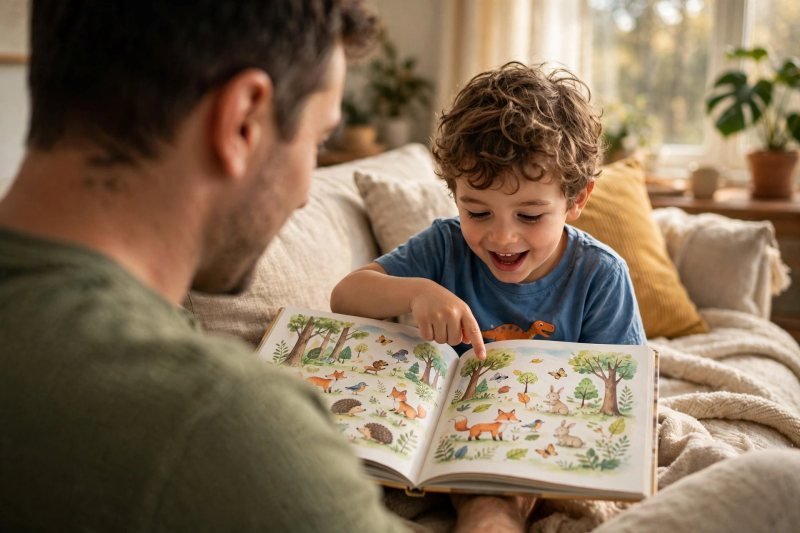
Meet the sight words. Sight words are the small, super-common words in almost every sentence — the, and, is, you. Many can't be sounded out ("said" doesn't sound like it looks), so children learn them by sight: repeated seeing makes them automatic, like recognizing a friend's face. The 40 words below are the Dolch pre-primer list, the well-known set found most often in books for ages 3–5.
-
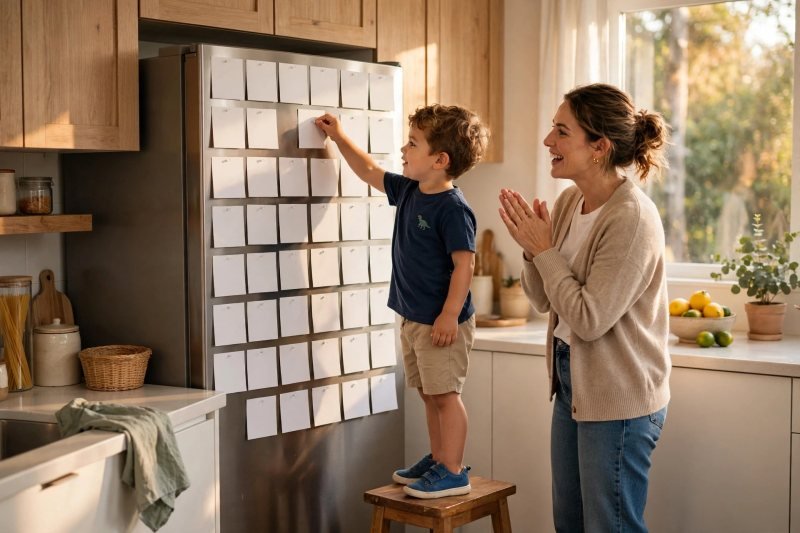
Start with Chunk 1, the super-easy starters. The simplest words are I, a, me, my, we, you, the, to, is, in — one to three letters, heard a dozen times a day. Usage tip: use 2–3 per session, pointing as you say each word while your child echoes. Tape known words to the fridge. Move on when these 10 feel effortless — about 2–3 weeks.

-
Move on to Chunk 2, action and everyday words. The next ten are go, see, look, play, run, jump, and, can, up, it — words children can act out, which makes them stick. Usage tip: pair each word with a movement — read "jump" and jump, read "run" and run in place. Add 2–3 a week alongside Chunk 1 review cards.

-
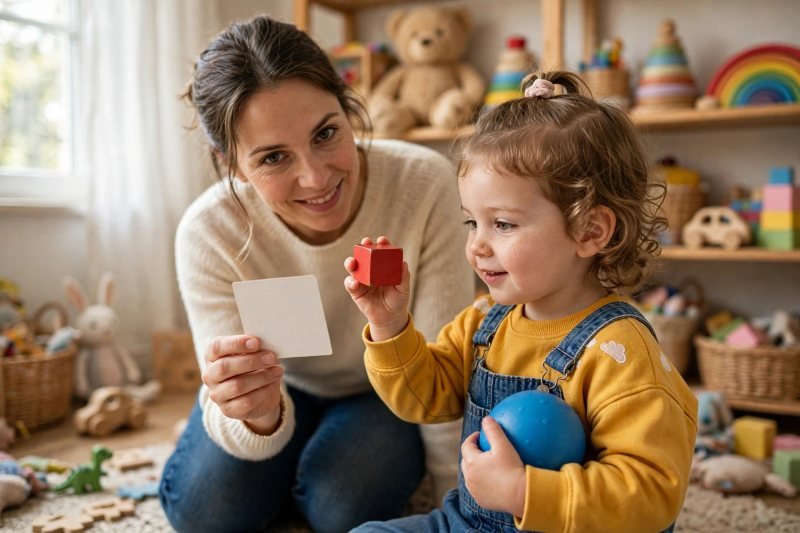
Try Chunk 3, colors, sizes, and numbers. The third ten are big, little, red, blue, yellow, one, two, three, down, away — describing words your child already says, now linked from the spoken word to the written one. Usage tip: hunt in real life: read "red," race to find something red; read "big" and "little" comparing two teddy bears. This chunk usually goes fastest, often under a week.
-
Save Chunk 4, the trickier ones, for last. The final ten are come, find, for, funny, help, here, make, not, said, where. These need more repetition — they're less predictable, "said" and "where" especially. Usage tip: slow down, stay playful, one new word at a time, leaning on the treasure-hunt and silly-sentence games in the playful-games step below. No deadline: finishing at 4 or 5 is on track.

-
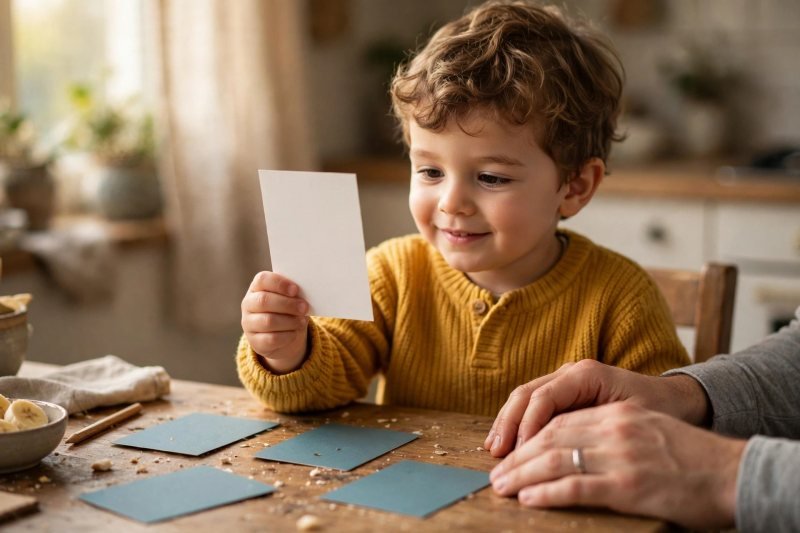
Add two or three new words a week. Add a word only when the ones in play are read instantly and happily — never while old ones are shaky. Keep every session mostly review (about 4 of every 5 cards). If your child groans at the cards, you've gone too fast: switch to review-only for a few days.
-
Follow the five-minute daily routine. Keep it tiny — five cheerful minutes a day beats an hour a week: flip 5 review cards while your child shouts the words; introduce 1–2 words, tracing them in the air; play one 2-minute game from the playful-games step; tape any newly "won" word to the fridge. End while it's still fun.

-
Make it playful with three games. Word treasure hunt — hide 5 cards; your child reads each to "unlock" the next spot; silly sentences — arrange cards into funny lines ("I see the funny blue jump") and read them dramatically; card toss — scatter cards, toss a beanbag, and read the nearest word. The reading must live inside the playing.

-
Move on when the words are automatic. Move on when your child reads all 10 words quickly and correctly on three separate days — the signal they're automatic. When all 40 are known, pick simple readers and let your child be "boss" of the sight words, reading those aloud while you handle the rest. That's real sentence reading.
-
Avoid the traps that turn play into pressure. Don't drill, quiz under pressure, or correct sharply — a gentle "let's look again" protects confidence. Never compare progress to another child. Don't introduce all 40 at once, and don't worry when a word fades — forgetting is part of learning. The moment word time feels like homework, the magic is gone.


Make it easier
Closer to 3 than 4? Start with just the first five words of Chunk 1 (I, a, me, my, we) and stay there for a month. Let your child decorate the cards with stickers, and skip games with rules — quick "say it and shout it" card flips are plenty.
Make it harder
Once all 40 words are solid, write two- and three-word phrases ("I see," "look at the," "can you run") on larger cards and let your child arrange them into their own sentences — or time a full-pile "word race."
Other ways to play it
- Fridge gallery: known words live on the fridge; count each week how many have been "won."
- Word jar: each mastered word goes into a jar; a full jar earns a special outing.
- Morning greeting: slip one review card into breakfast.
- Bath-time words: bath crayons on the tub wall for zero-prep review.
How it changes by age
- Ages 3–4: 2–3 new words weekly, 3–5 minute sessions, lots of play. Most 3-year-olds take months to work through all 40 — normal.
- Ages 4–5: 10-minute sessions; many finish in 2–3 months. Follow the child, not the calendar.
What they're learning
Instant recognition of 40 high-frequency written words (the Dolch pre-primer set) That written words carry meaning — the foundation of reading Print awareness: reading left to right, telling words apart from letters Listening–speaking links as they hear and say each word while seeing it Confidence as "real readers," which fuels all later reading growth
Clearing up
Store cards somewhere dry — a zip bag works. Remake bent or chewed cards rather than taping a sad one. When a word is forgotten, reintroduce it beside two known words — re-learning is fast. If interest fades for a week or two, put the cards away and bring them back with a game.
Questions parents ask
What are the Dolch pre-primer sight words?
How many sight words should a 3-year-old know?
What are the first 10 sight words to teach a preschooler?
How do you teach sight words to a 3-year-old without drilling?
When should a child move from pre-primer to primer sight words?
Why can't some sight words be sounded out?
The four chunks follow the published list, regrouped by difficulty — no words added, removed, or altered from the standard Dolch pre-primer set. Keep reading picture books together daily; shared reading matters as much as the cards. If you suspect your child has trouble seeing the cards or hearing the sounds, mention it at their next pediatrician visit. When these forty words feel easy, keep going: our sight words for kindergarten page takes the same playful routine into the kindergarten years; the kindergarten sight words list sets out all 52 Dolch primer words with a practice plan; and sight word games turn review into play your child will ask for. For the bigger picture, how to teach your child to read at home shows how sight words fit into early reading, the CVC words list gives first sound-out words to pair with them, and the reading learning hub gathers these starting points in one place.

save it for later
Pin this for the next rainy afternoon
Keep it on a board so it is there when you need it, rather than when you happened to find it.
Save to Pinterest


