


Toddler Halloween Costume Sizing: What Size to Buy
Learn a toddler Halloween costume size the calm way: measure height, chest and waist in inches, size up once for growth, try on over clothes, and check hems, masks and capes before you buy.
Measure your toddler's height, chest, and waist in inches, find the chart row where most numbers fall inside the ranges, and size up one if she is between sizes. Try the costume on over clothes and shoes, then check walking, sitting, and potty access — and that hems clear the ground, masks stay aligned, and capes break away.

The short version
- Measure three numbers in inches — height against a wall, chest at the fullest part, waist where she bends — and trust inches over the age on the label.
- Read a generic chart by ranges: pick the row where most of her numbers sit comfortably inside, not at the edge.
- Size up one when between sizes for growth and layers — never two, or hems, sleeves, and masks become hazards.
- Try on over real clothes, diaper or pull-up, and planned shoes; run walking, sitting, bending, and potty checks.
- Safety fit is non-negotiable: hems clear the ground, masks never block vision or breathing, capes break away and never tie at the neck.
- Age
- Ages 2–3
- Mess
- None
Why kids love this
A toddler does not care what the label says — she cares that she can walk, sit, reach for a treat, and see where she is going. When a costume fits with a little growing room, the whole evening feels like play instead of wrestling: sleeves stay off her hands, the hem stays off the ground, and nothing presses, pinches, or covers her eyes. Measuring first turns shopping from a gamble into a short, game-like ritual she can join — standing tall against the wall, holding the end of the tape, and trying the costume on over her own clothes like dress-up with a purpose. For a two- or three-year-old, that feeling of comfort is the costume. A soft, roomy outfit she can move in freely will be loved, photographed, and worn again for dress-up long after Halloween, while even the prettiest outfit in the wrong size ends the night carried, tugged, or taken off early.
What you'll need
- A soft, flexible tape measure that shows inches — plain tick marks are enough for you to read at home
- A flat wall and a hard floor with no rug underfoot — for an honest height measurement
- A light book or flat piece of cardboard — to mark the top of the head against the wall
- A pencil for a tiny wall mark, or a piece of removable tape if you prefer no marks
- The clothes your toddler will actually wear underneath — a t-shirt and leggings or pants, plus the shoes planned for the night
- One or two generic costumes to try — plain styles with no licensed characters, logos, or brand markings
- A generic size chart to read alongside your numbers — described in words in this guide, with no copied brand chart and no retailer data
- A chair at toddler height, a few steps to practice on, and a clear patch of floor for a walking, sitting, and bending test
- A notebook or phone note with no costume packaging in any photo — to write down height, chest, and waist in inches before you shop
- The store or seller returns information kept handy — so you know the returns window before the tags come off
Before you start
Pick a calm, fed, rested moment — measuring a tired or hungry toddler gives you wriggled numbers and a short try-on; after a snack and before bathtime usually works well. Lay out the tape measure, book, pencil or tape, and the under-clothes and shoes, and write three headings in your note: height, chest, waist — all in inches. Decide your returns safety net before you shop: note how long the returns window is, keep tags on during try-ons, and keep the costume clean and indoors until you are sure of the size.
How to do it
-
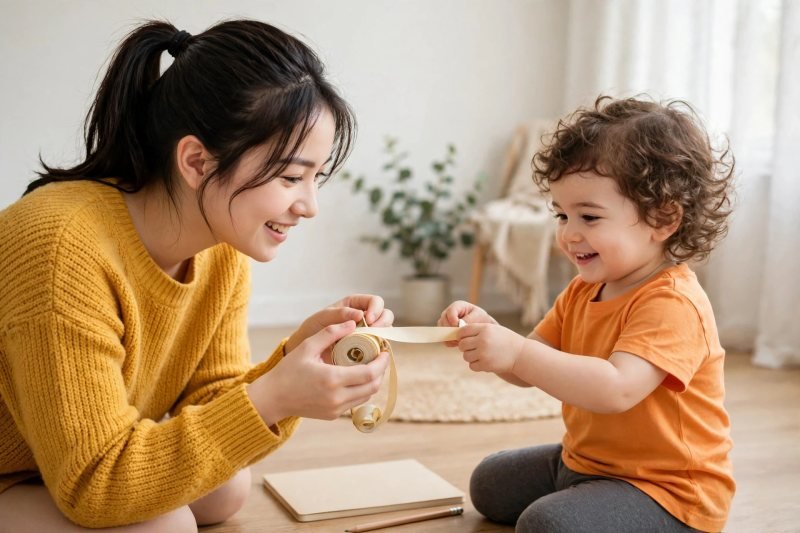
Set up a calm measuring game. Turn measuring into a short game rather than an inspection — clear a patch of floor by the wall; let her hold one end of the soft tape; measure in her under-clothes layer with shoes off for height and on for the later hem check; and keep the whole thing to a few minutes before interest fades. Explain that today you are finding the size that lets her run, sit, and dance, and write every number down straight away because memory blurs by shopping time. The same calm, layer-first thinking that helps with toddler winter outfits for ages 2–3 works here — fit the child first, then the outfit. Say, "We are measuring you so your costume feels comfy, not tight and not trippy." A relaxed start gives you honest numbers and a toddler who cooperates again at try-on time.
-
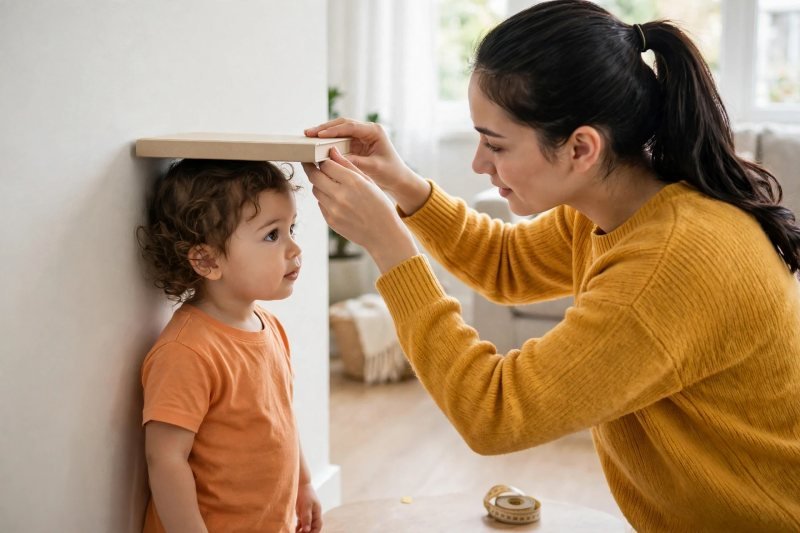
Measure height against the wall. Stand her barefoot on a hard floor with her back to a flat wall — heels, bottom, and shoulders lightly touching; feet together; chin level and eyes looking straight ahead — then lay the flat book on top of her head, level, touching the wall, and mark that point lightly with pencil or tape. Step her away and run the tape from the floor straight up to the mark, reading the number in inches and writing it down before you do anything else. If she slumps or tiptoes, make it a redo game rather than a correction, and take the measure twice, using the taller honest reading. Height is the number that matters most for one-piece costumes, because it decides where the hem and the body length land. Say, "Stand tall like a tree — freeze — now let me see how tall my tree grew." One careful height in inches anchors every chart decision that follows.
-
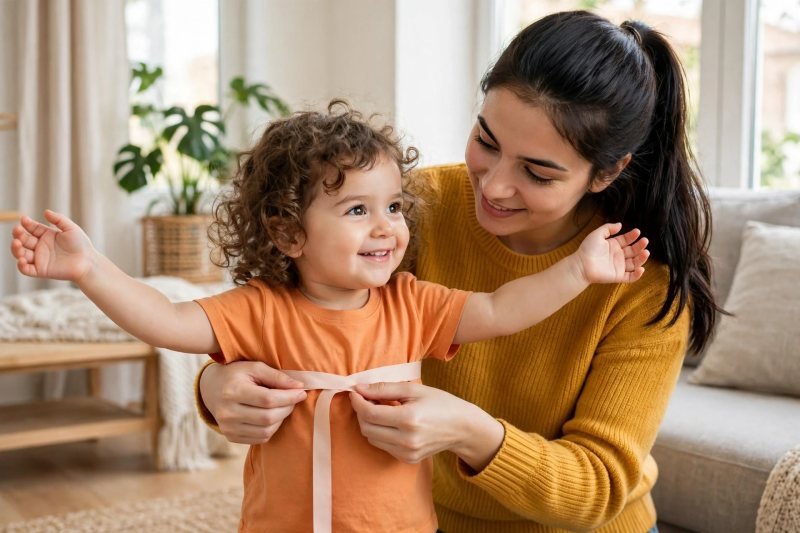
Measure chest all the way round. Wrap the soft tape around her chest at the fullest part — under the arms; across the shoulder blades at the back; over the chest at the front — keeping it level all the way round, snug but never tight, with room for one of your fingers to slip underneath easily. Let her take a normal breath and read the tape in inches on an easy out-breath, not with her chest puffed up for fun, then write the number down exactly as read. If the tape twists or rides up, reset it slowly and try again rather than guessing, because a chest that is even a little too small is the fit problem toddlers feel first — in reaching, hugging, and deep excited breaths. Say, "Big soft breath — I am giving your costume room to breathe with you." A true chest number tells you whether she can move and breathe freely inside the size you pick.
-
Measure waist where she bends. Find her natural waist — the soft middle above her hips where her body bends side to side — and wrap the tape level around it over a thin t-shirt, snug enough to stay in place and loose enough for that same one-finger test. Read the number in inches, write it down with the others, and note two extra facts beside it: whether she still wears a diaper or pull-up, which adds bulk that a waistband and a one-piece body must clear; and what shoes she will wear, which changes where a hem should end. If she giggles and folds in half, pause, let the wiggles out with a quick dance, and measure once more. Say, "This tells me your tummy has room for snacks and sitting down." Three honest numbers — height, chest, and waist in inches — are now your whole shopping list.

-
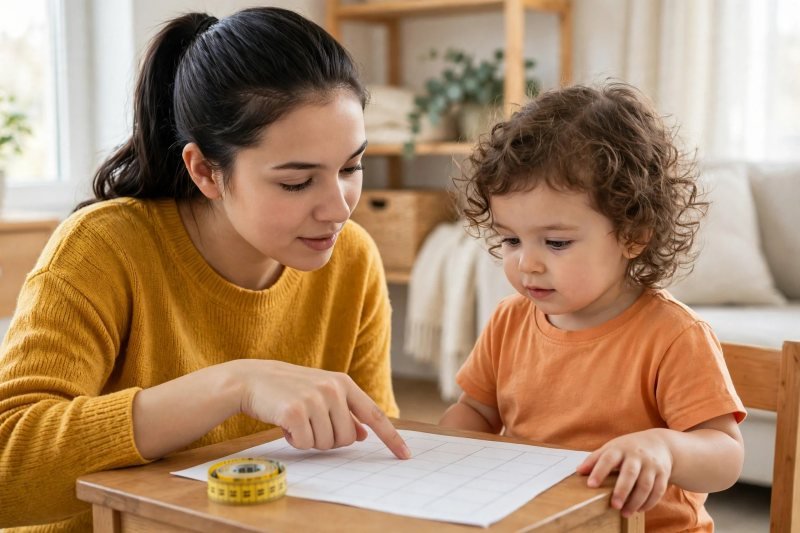
Read a generic size chart slowly. Lay your three numbers beside a generic size chart and read across the row for her age band — charts for toddlers usually group sizes by age ranges like 2–3 years alongside height, chest, and waist ranges in inches — then find the row where most of her numbers fall inside the ranges rather than at the very edge of them. Treat the age on the label as a rough guide only, because toddlers of the same age vary widely, and trust her measured inches over her birthday every time. If her height sits in one row and her chest in another, note both rows and carry both sizes into the next step instead of forcing a single answer now. No chart is copied here and none should be memorized — every maker cuts a little differently, which is exactly why your own numbers matter more than any label. Say, "Your numbers help us find your row — like finding your name on a list." Reading the chart with her numbers, not her age, is what turns guessing into sizing.
-
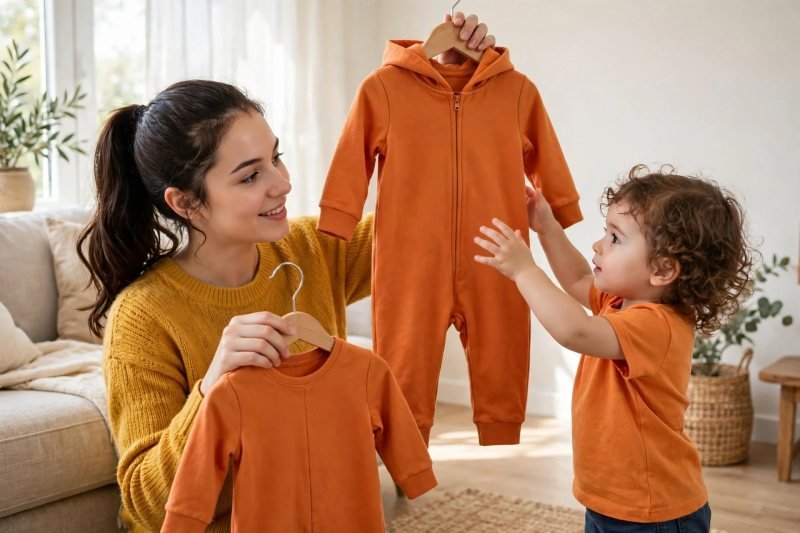
Apply the size-up-one rule. When her numbers fall between two sizes, or at the top edge of a row, choose the next size up — one size of growing room is the rule for toddlers, because she may grow between buying and Halloween, because costumes are worn over clothes that add bulk, and because a slightly roomy costume can be adjusted while a too-small one cannot be let out at all. Hold the line at one size, though: two sizes up is not extra safety, it is extra fabric — hems that pool on the ground, sleeves that cover hands, and masks or hoods that slip over eyes. The same one-layer-of-room logic parents use for preschool winter outfits keeps a costume wearable without becoming a tripping bundle. If she is solidly in the middle of a row with weeks still to grow, sizing up still usually wins for comfort and for hand-me-down and dress-up life afterwards. Say, "A little room to grow is just right — too much room gets in the way." Size up one, never two, and let the try-on confirm the choice.
-
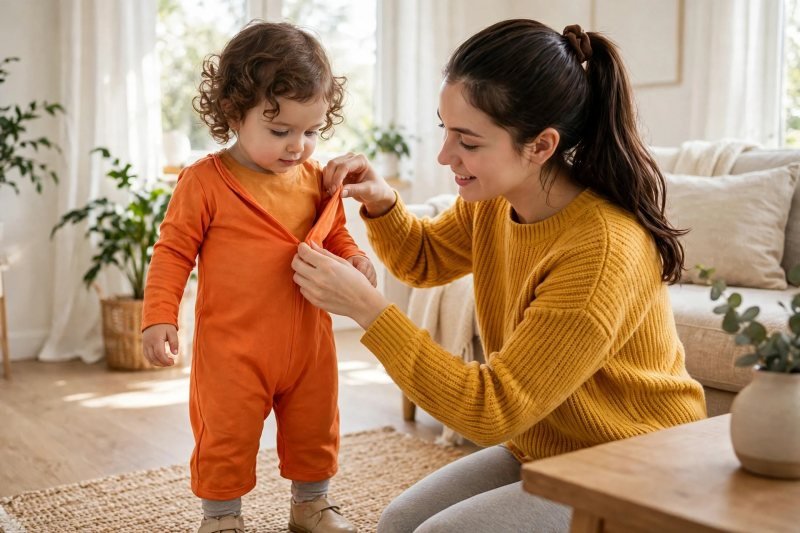
Try the costume on over clothes. Dress her in exactly what she will wear underneath on the night — t-shirt, leggings or pants, diaper or pull-up, and socks — then put the costume on over the top, fasten every fastening the way it will actually be worn, and add her planned shoes before you judge anything. Look first at the big three: the hem, which should clear the ground with shoes on rather than brushing or pooling at her feet; the sleeves, which should end at her wrists and leave her hands fully free for holding, waving, and treats; and the body, which should let her lift both arms high without the whole outfit riding up or pulling at her neck. Keep tags on and stay indoors on clean floors while you decide, so the returns option stays open. Say, "On over your clothes, just like the real night — now show me how it feels." A costume judged over bare skin in the afternoon will always surprise you over layers in the evening.
-
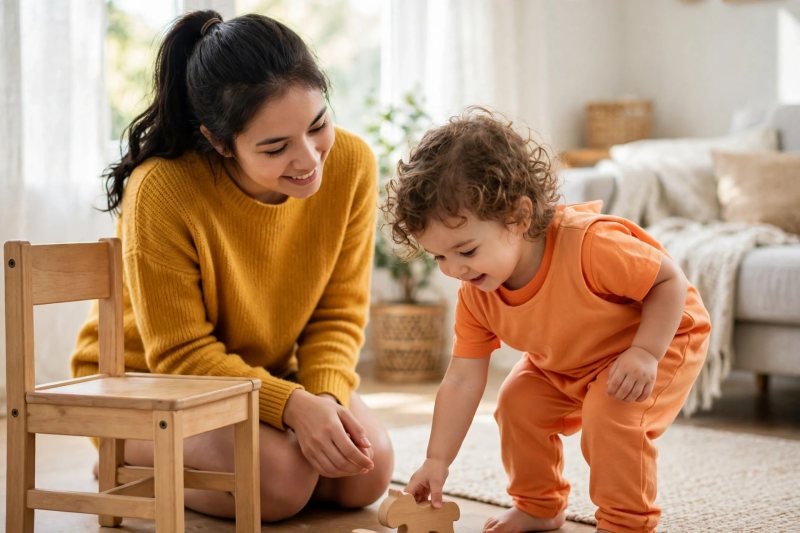
Run the movement and potty checks. Ask her to do the evening in miniature — walk across the room and back; sit down on her small chair and stand up again; bend to pick up a toy from the floor; climb one or two practice steps with your hand close; reach both arms up high; and twirl once if she wants to — watching for hems catching under shoes, seams pulling, waistbands digging when she sits, or fabric bunching behind her knees. Then do the potty check families forget: time how fast you can get the costume open or off for a toilet trip or diaper change, because a costume that takes a long, fiddly unfastening will fail a two-year-old at the worst moment. If she keeps tugging at the same spot, believe her hands — that spot will only bother her more by evening. Say, "Walk, sit, bend, pick it up — your costume has to keep up with you." Movement tells the truth that standing still in front of a mirror never does. A practice evening at home helps: the movement games in activities for toddlers at home turn walking, sitting, and bending checks into play, so the real try-on holds her attention.
-
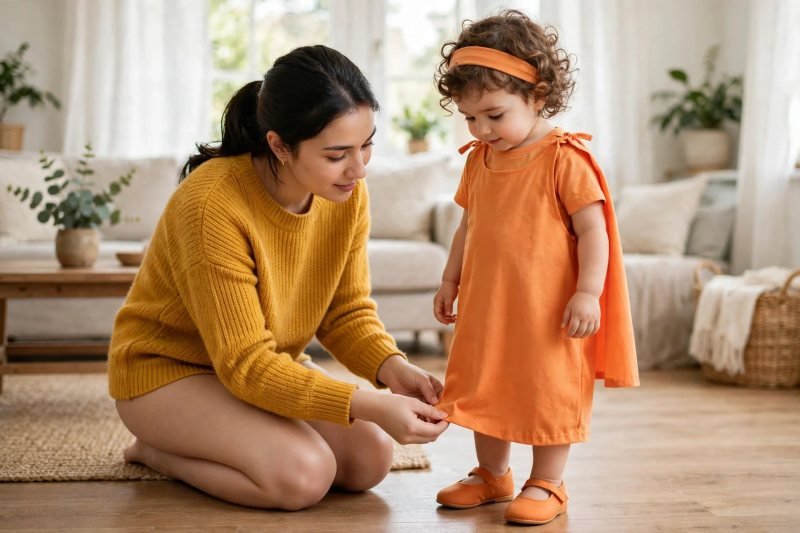
Check hems, masks, and capes for safety. Now inspect the risky edges one by one — hems first: nothing should drag, pool, or catch under her shoes when she walks or climbs, and a too-long hem is a reason to choose the smaller fit, adjust it securely, or pick another style, never a reason to hope she will be careful; masks next: eye holes must line up with her eyes and stay put when she moves, with clear vision ahead and to the sides, and for most two- and three-year-olds a soft headband, hat, or face-safe accessory worn briefly is kinder than a full mask at all; capes last: a cape should sit on the shoulders, break away easily, end well above the ground, and never tie tightly or loop around her neck. Check, too, that nothing dangles at neck height, nothing covers her mouth and nose, and shoes stay closed-toe and grippy under it all. Say, "We check the bottom, the eyes, and the cape — so you can walk and see and play safely." If any one of these checks fails and cannot be fixed simply, that costume is the wrong size or the wrong style, full stop. Where a bought costume includes a mask, try the look first with face paint or an open hood instead — for ages 2–3 the mask-free version is the default in this guide, and a mask is kept only if it passes every vision and breathing check above without adjustment. Once the checks pass, let her rehearse the evening in pretend play — knocking, greeting, and walking the route in character — before Halloween night.
-
Make the decision and protect the backup. Decide while the evidence is fresh — keep the size that passed the movement, potty, and safety checks with one size of growing room; exchange the one that failed, using the returns window you noted before shopping and the tags you kept on; and if you are choosing between two close sizes at home, keep both only until this try-on is done, then return the loser promptly inside its window rather than letting it expire in a drawer. Write her final numbers and the size that worked on your note for next year and for hand-me-downs, take one happy photo in the winning costume with no packaging or labels showing, and put the costume away somewhere she can look forward to it without wearing it out early. If you want a calm activity while the costume waits for its big night, a gentle session of Halloween crafts for toddlers keeps the excitement useful. Say, "This is your size — comfy to move in, safe to walk in, and ready for Halloween." A decided costume, a known returns date, and a toddler who already trusts the fit — that is sizing done properly. When the size is decided, a look through toddler Halloween costumes can spark the next dress-up idea that keeps a well-fitting costume in the bin afterward.



Make it easier
Measure just height if she will only tolerate one number — height alone settles most one-piece costumes, and you can check chest and waist fit at the try-on instead. Shop one size on purpose: buy the size-up-one choice first with a clear returns window, rather than ordering several sizes and facing a pile of decisions and returns. Pick forgiving styles: soft, stretchy, two-piece costumes with elastic waists forgive an inch either way far better than stiff one-piece outfits with set zips and fixed lengths.
Make it harder
Keep a simple growth note: record height, chest, and waist in inches each season, so by next Halloween you can see her growth pattern and predict her size band before you measure. Test two sizes side by side at home: run the full movement, potty, and safety checks in both, score them honestly, and keep the winner — a real comparison teaches you how different makers cut their sizes. Plan for reuse: choose the size and style that will still fit for dress-up and be handed down, checking that seams, fastenings, and hems are sturdy enough for a second and third outing.
Other ways to play it
- Second-hand or handed-down costume: measure exactly the same way, then try on over clothes and run every check — a free costume in the wrong size is still the wrong size, and hems, masks, and capes need the same safety pass.
- Warm-night version: if Halloween will be warm, try the costume over a single thin layer instead of heavier clothes, and favor breathable, short or sleeveless styles sized with the same one-size-up room.
- Cold-night version: if the evening will be cold, try on over the actual warm layer she will wear — the size-up-one room is what makes space for it — and recheck that sleeves still free her hands and the hem still clears her shoes.
- Tall-and-slim or short-and-sturdy builds: when height and chest point to different chart rows, follow the chest row for one-piece costumes and the height row for separates, then let the try-on decide — a costume that fits the chest but drags at the hem is shortened or swapped, never worn long.
How it changes by age
- Age 2: Two-year-olds grow fast and tolerate short fittings, so keep measuring playful and brief, lean hardest on height, and expect the size-up-one rule to do most of the work. Many twos still wear a diaper or pull-up, so allow that bulk at the waist and choose costumes that open fast for changes. Skip full masks at this age in favor of a soft hat or headband, keep capes short and breakaway or skip them entirely, and be ready for the costume to be worn in short, happy bursts rather than all evening.
- Age 3: Three-year-olds have stronger opinions and slightly more patience: let her help read the tape, choose between two safe styles in her size, and lead the movement checks like a game. She may be toilet training, so the potty check matters even more — she should be able to manage, or nearly manage, the fastenings with you close by. Growth is still quick, so the size-up-one rule still applies, but a three is better able to tell you exactly where something pinches, pulls, or annoys — ask, and believe her.
What they're learning
Early measurement and number sense: height, chest, and waist as numbers in inches that describe her own body — comparing taller and shorter, bigger and smaller, with a tape she can hold and watch. Body awareness: noticing where clothes feel snug, loose, itchy, or free, and learning that her own comfort report is information worth saying out loud and being believed about. Cause and effect in decisions: seeing how a number on a note becomes a row on a chart, a size on a hanger, and a costume that either passes or fails her walking and sitting test. Patience and turn-taking with a purpose: standing still for a few breaths, waiting while fastenings are checked, and finishing a short routine — small, supported practice in doing things in order.
Clearing up
Put the tape measure, book, and pencil away together in one spot so next season's measuring starts without a hunt, and file your note with her three numbers in inches and the size that worked — it is next year's shortcut and a sweet record of how much she grew. Costumes that failed the checks go straight back into their packaging with tags on, ready to return inside the window you noted, not into a drawer to be forgotten. The winning costume hangs or folds somewhere clean and dry, out of everyday dress-up reach if you want it fresh for the night, and any spare accessories — hats, headbands, soft props — go in one small bag with it so nothing is missing when Halloween arrives.
Questions parents ask
What size Halloween costume should I buy for a 2-year-old?
How do I measure my toddler for a Halloween costume?
Should I size up for a toddler Halloween costume?
How should a toddler Halloween costume fit for safety?
When should I buy a toddler Halloween costume, and what about returns?

save it for later
Pin this for the next rainy afternoon
Keep it on a board so it is there when you need it, rather than when you happened to find it.
Save to Pinterest


