


Straight Toddler Hair Care: Keeping It Smooth and Tangle-Free
Straight toddler hair care made calm and simple: a gentle wash rhythm, tear-free detangling, the right brush, simple loose styles, and a 30-second morning refresh for ages 2-3 — plus the scalp red flags that mean it is time to see a pediatrician.
Straight toddler hair care for ages 2–3 is a short, predictable routine: wash two to three times a week with a little gentle shampoo on the scalp only, condition just the lengths and ends, detangle wet hair ends-first with a wide-tooth comb, pat dry, and brush dry hair in small sections with a soft paddle brush.

The short version
- Straight hair shows oil sooner because oil travels down a flat strand fast — wash the scalp two to three times a week, and rinse thoroughly so no residue weighs hair down.
- Conditioner goes on lengths and ends only, never the scalp, in a tiny amount — that is what makes detangling tear-free.
- Detangle wet, conditioned hair ends-first with a wide-tooth comb; brush only dry hair, in small sections, with a soft paddle brush.
- Dry by squeezing and patting with a soft towel or t-shirt and air drying — no rough rubbing and no heat tools, ever.
- Keep styles loose with soft bands (two-finger slack test), remove everything before sleep, and see a pediatrician for scalp redness, flaking, sores, patchy hair loss, or persistent itching.
- Age
- Ages 2–3
- Play time
- 5 min
- Mess
- Low
- Where
- Indoor
Why kids love this
Straight toddler hair care works best when it feels like a story your child already knows, not a surprise that happens to his head. Toddlers love a routine they can predict: the same stool, the same soft towel, the same order — wash, comb, brush, done — and a small job that is truly theirs, like holding the spray bottle or choosing which soft towel to use. When each step is short, gentle, and finished before patience runs out, there is nothing to dread and nothing to fight. Straight hair helps, too: it detangles quickly when it is wet and conditioned, brushes smooth in a minute once it is dry, and rewards that tiny bit of daily care by looking neat with almost no fuss. The best part for a two- or three-year-old is the closeness itself — sitting on a stool at your level, feeling careful hands, hearing the same calm words every time. Predictable, quick, and kind beats fancy every single day, and a routine a toddler can join in with is a routine that actually happens.
What you'll need
- A soft paddle brush with smooth, flexible bristles — for dry brushing in small sections
- A wide-tooth comb — for detangling wet, conditioned hair without pulling
- A spray bottle filled with plain water — for dampening flyaways and the morning refresh; bottle completely blank and unlabelled
- A small amount of gentle toddler shampoo — plain, unlabelled bottle, used only on the scalp
- A small amount of gentle conditioner — plain, unlabelled bottle, used only on lengths and ends
- A soft towel or a clean old t-shirt — for squeezing and patting hair dry without rough rubbing
- A smooth pillowcase — satin-feel or smooth cotton, to reduce friction and morning tangles overnight
- Small, soft hair bands with no metal parts and a few simple clips — adult-stored, used loose only, and removed before sleep
- A small stool so your toddler can sit safely at sink or mirror height with you right beside him
Before you start
1. Set up one calm spot — the bathroom sink or bath edge, or a mirror in the bedroom — with the stool, brush, comb, spray bottle, and towel in the same places every time, so the routine looks identical day after day. 2. Fill the spray bottle with plain water, run the tap to lukewarm before your child comes in, and lay out only what this session needs: shampoo and conditioner on wash days, just brush and spray on in-between days. 3. Keep it short and timed to a good moment — after breakfast or before the bedtime story, never when your toddler is hungry, overtired, or mid-meltdown — and tell him what will happen first, next, and last before you touch his hair.
How to do it
-
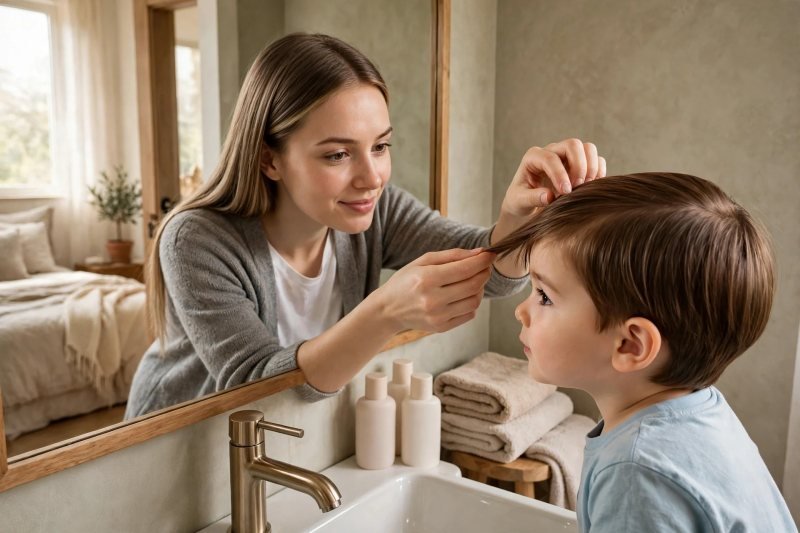
Get to know straight toddler hair. Straight hair has its own personality, and knowing it makes every other step easier: because each strand lies flat and smooth, the natural oil from the scalp travels down it quickly, so straight toddler hair can look greasy at the roots sooner than curly hair does, even when the ends are perfectly clean. The flip side is just as normal — fine straight strands lift easily, so flyaways, static fuzz in dry weather, and a flat look by afternoon are everyday features, not problems to fix. Look at your child's hair in daylight once a week: roots, lengths, and ends each need different things, and this routine gives roots a gentle wash, lengths a little conditioner, and ends patience and regular trims. Say, "Your hair is straight and shiny, and we take care of each part its own way." Naming what is normal stops you chasing shine with extra products a toddler simply does not need.
-
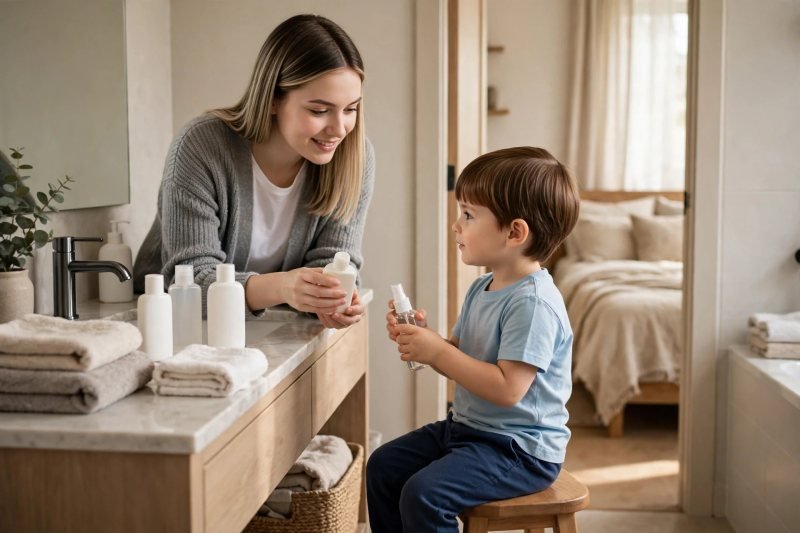
Set a wash rhythm that fits straight hair. Most toddlers with straight hair do well with a wash two to three times a week — the rhythm explained in how often to wash toddler hair — often enough to lift the oil that travels so quickly down straight strands, but not so often that washing itself becomes a daily battle or dries the ends out. In between, plain water and brushing carry the routine: a quick spritz, a gentle brush, and hair looks fresh again. Use only a small, pea-to-almond-sized amount of gentle shampoo, worked into the scalp where the oil actually lives, rather than piled onto the lengths. This gentle, less-is-more approach is the same thinking behind a simple kids skincare routine — mild products, small amounts, and nothing harsh on young skin or scalps. Say, "Today is a wash day — shampoo on top where it gets oily, then all rinsed away." A rhythm your child can predict — wash days and brush-only days — removes the daily negotiation entirely.
-
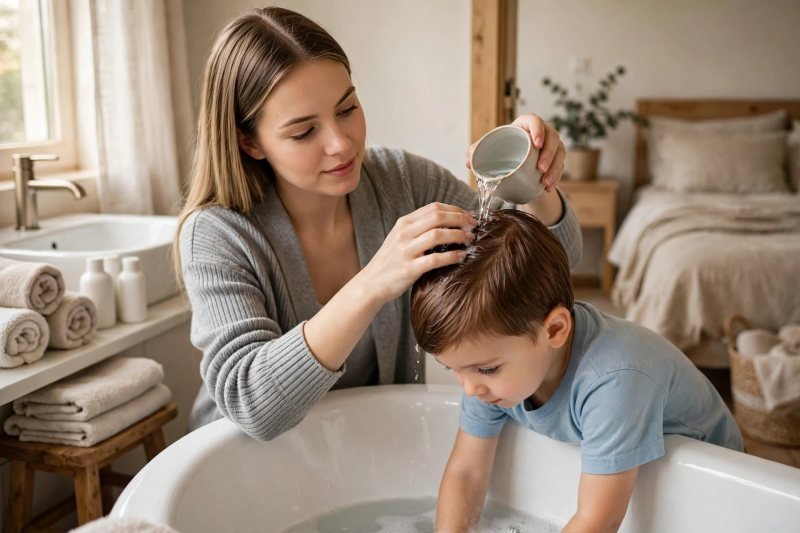
Wash the gentle way. Seat your toddler securely on the stool at the sink, or have him lean comfortably over the bath edge in his t-shirt, with you beside him the whole time and one hand always within reach. Wet the hair with lukewarm water — never hot — pouring gently from a cup so nothing startles him, then massage the small amount of shampoo into the scalp with your fingertips only, never nails, in slow little circles he can count along with you. Keep suds and water away from eyes by tilting his head slightly back and shielding his forehead with your hand. Then rinse, and rinse again: thorough rinsing matters most for straight hair, because any shampoo left behind coats the flat strands and makes them look dull, limp, and dirty again within hours. Say, "Fingertips only, nice and gentle — now we rinse until the water runs completely clear." Clean, fully rinsed hair is the real secret to smoothness; no extra product creates it.
-
Condition only where it is needed. Conditioner belongs on the lengths and ends of straight hair — never on the scalp, where it adds weight exactly where oil already gathers and makes roots look greasy by lunchtime. Take a tiny amount, about the size of a small grape for most toddlers, rub it between your palms, and smooth it through from mid-length to the tips, where hair is oldest, driest, and most likely to tangle. Leave it for about a minute while your child holds the comb ready for the next step, then rinse with water that is a touch cooler than the wash water, until the hair feels slippery-smooth but not coated. If the ends still feel squeaky or grabby after rinsing, they needed a fraction more; if the hair feels heavy, they needed less — adjust by a pea-sized amount next time rather than adding new products. Say, "Conditioner is food for the ends only — the top stays light and clean." Ends that are conditioned detangle much more easily, with far fewer tears.
-
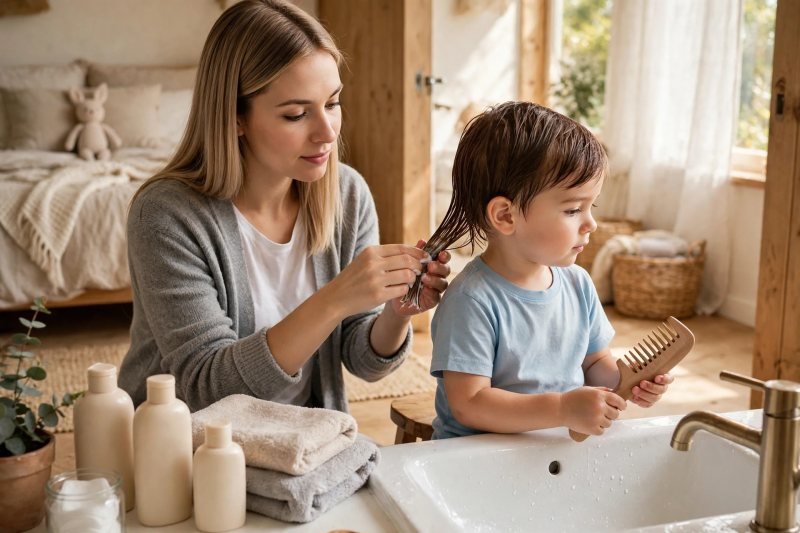
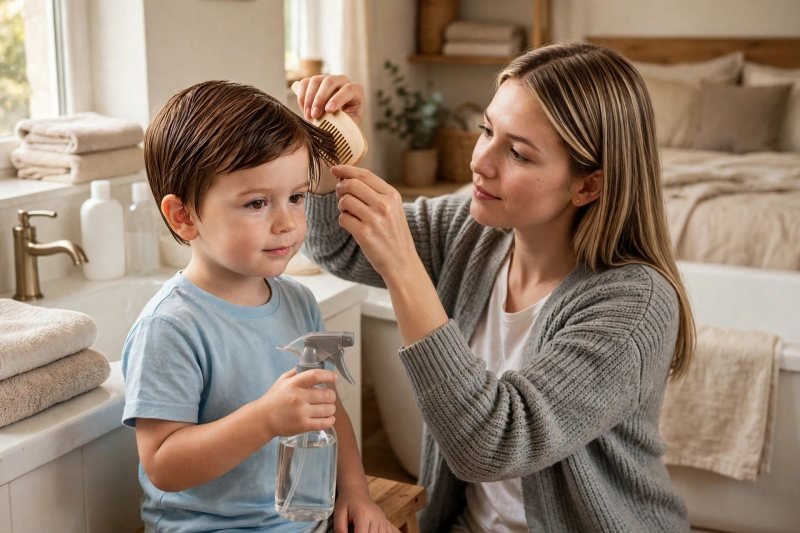
Detangle without tears. Always detangle straight hair while it is wet and conditioned — dry detangling pulls, snaps fine strands, and teaches a toddler to run from the comb. Keep the conditioner in, or spritz dry hair damp on a non-wash morning, then start with the wide-tooth comb at the very ends: hold the section gently above where you are working so the pull never reaches the scalp, comb the last inch smooth, then move up an inch at a time until the comb glides from roots to ends. Work in three or four small sections rather than dragging the comb through the whole head at once, and let your child hold the spray bottle or the next section — a helper complains far less than a passenger. If you meet a stubborn knot, add a spritz of water, work it apart with your fingers first, and only then comb. Say, "We start at the ends and climb up slowly — tell me if anything pulls and we will fix it together." Ends first, always, is the whole trick.
-
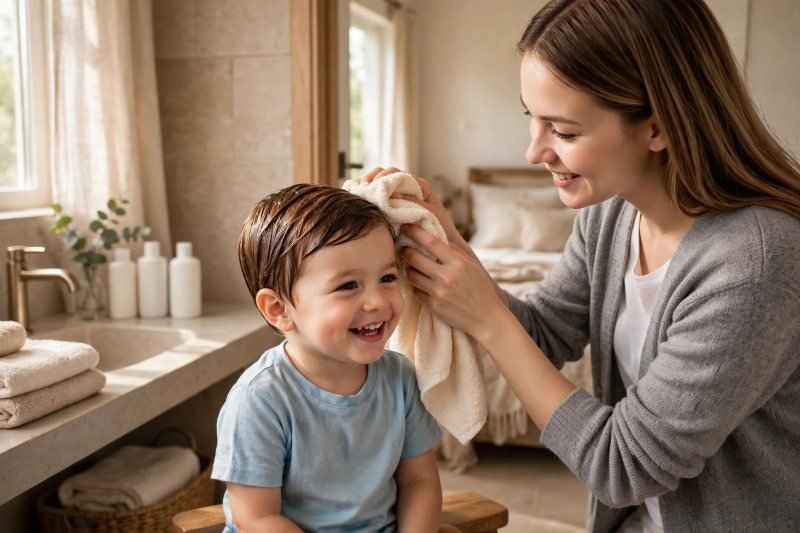
Dry for smoothness. How you dry straight hair decides how smooth it stays, and the gentle method is also the easiest: lift the hair in the soft towel or old t-shirt and squeeze and pat, section by section, pressing water out without ever rubbing back and forth. Rough towel-rubbing ruffles the surface of straight strands, creates the very tangles you just removed, and is the fastest route to frizz and flyaways — so the towel presses, it never scrubs. Then let the hair air dry the rest of the way while your child plays or has a story; straight toddler hair is fine and dries quickly on its own, and it never needs heat — no hair dryers on hot settings, no straighteners, no heat tools of any kind on a toddler. If you must speed things along on a cold morning, a dryer on its coolest, lowest setting, held well away and kept moving, is the absolute limit — and most days, patience and a t-shirt towel win. Say, "We pat and squeeze like the towel is giving your hair a hug — no scrubbing." Smooth drying keeps the detangling work you just did intact until bedtime.
-
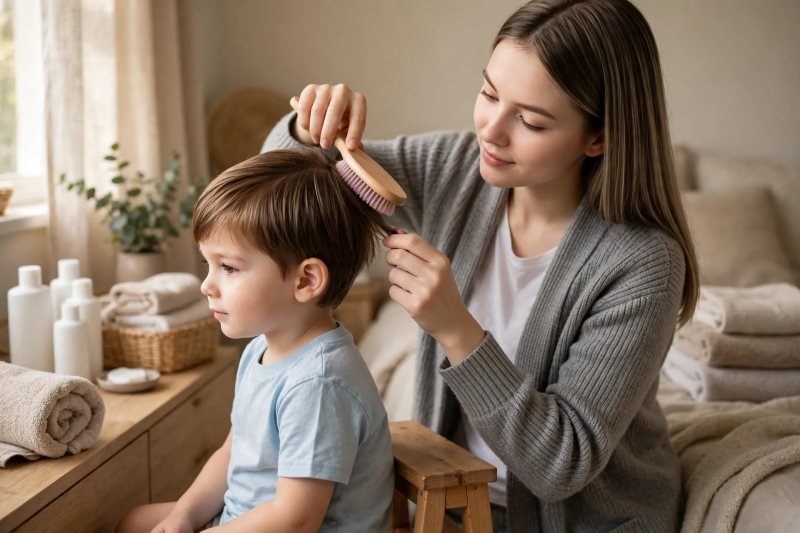
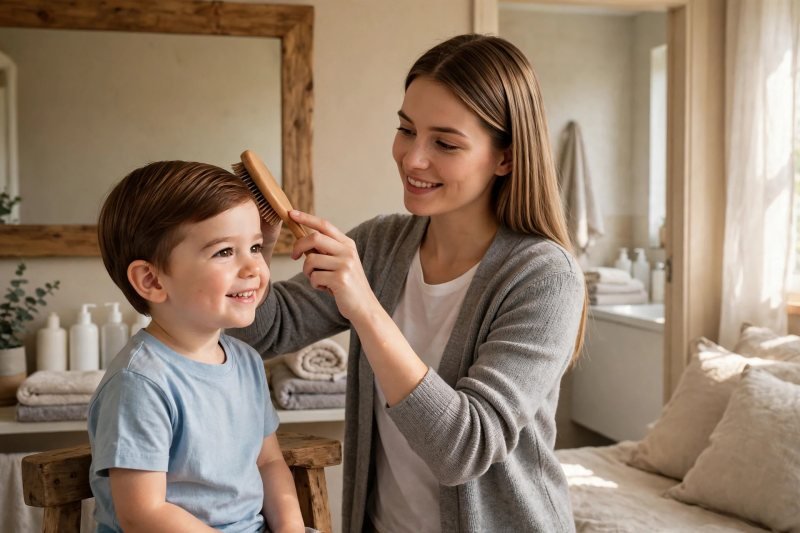
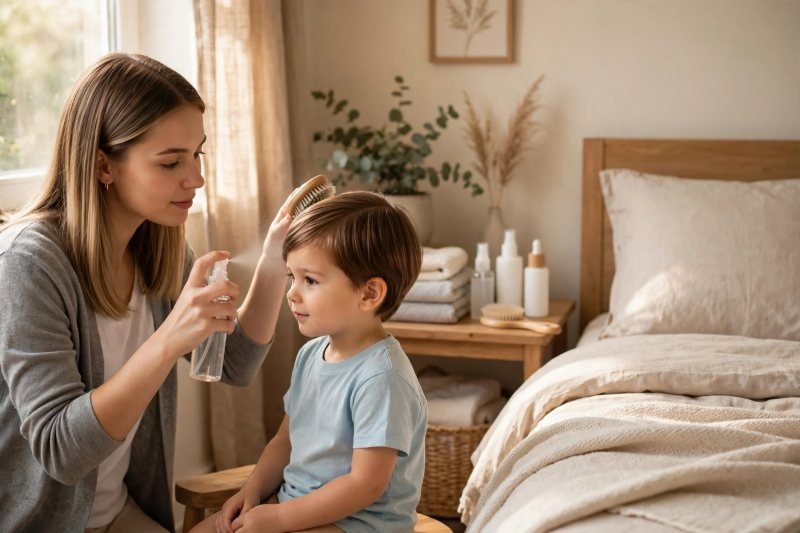
Brush the right way. Brushing is for dry hair only — once straight hair has air dried, take the soft paddle brush — the best hair brush for toddlers guide helps if you are still choosing one — and work in small sections, brushing down in short, light strokes and finishing by brushing gently under at the ends so they curve in neatly instead of flicking out. Start near the ends again if there is any resistance, keep one hand resting lightly on his head so he feels steady rather than pulled, and let him do the last proud stroke himself on the front section. For the static and flyaways that straight hair is famous for, the fix is water, not product: smooth slightly damp hands over the surface of the hair, or give it one light spritz from the spray bottle and brush once more — the fuzz settles instantly. A hat taken off, a sweater pulled over the head, and dry indoor air will all bring the flyaways back; that is physics, not a routine failure, and another damp-hand smooth fixes it in five seconds. Say, "Small sections, soft strokes, and we brush under at the ends — see how neat that looks?" Two calm minutes of brushing is the daily heartbeat of this whole routine.
-
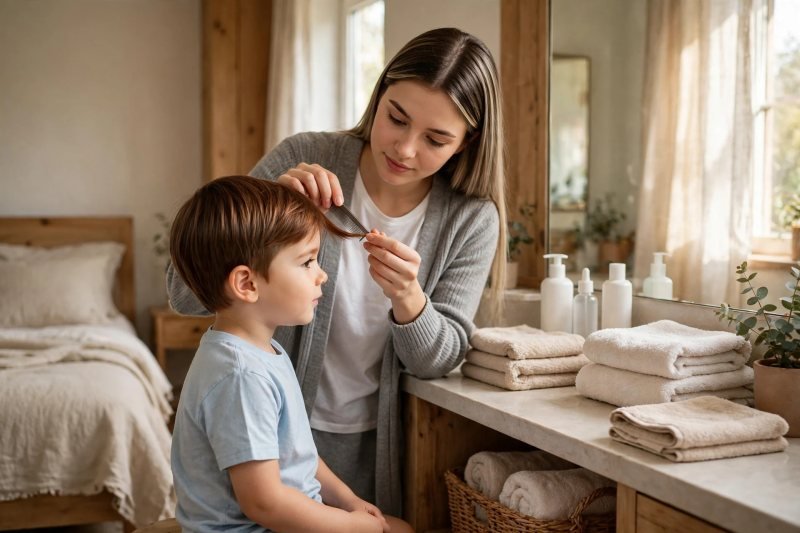
Trim on schedule. Straight hair shows everything — every uneven end and split tip sits in plain sight — so small, regular trims keep it looking neat far better than rare, drastic cuts. For most toddlers that means a tiny trim every six to eight weeks, taking off just the wispy, see-through ends; the hair looks neater and fuller right away and tangles less, because frayed ends are where knots start. A fringe needs attention more often, usually every three to four weeks, and should be trimmed dry, a few hairs at a time, sitting well above the eyebrows — straight fringes shrink up less than curly ones but a cautious snip still beats a bold one. If a first proper haircut is still ahead of you, the calm, step-by-step approach in this toddler first haircut guide turns it into a milestone instead of a battle, and many families hand all trims to a patient professional while keeping the daily care at home. Families who trim at home can follow the cut toddler hair at home steps for the same calm, small-snips approach. Say, "Just the tiny wispy ends come off today — your hair will look neat and feel smooth." Regular small trims are maintenance, never a makeover.
-
Style it simply. Everyday styling for straight toddler hair should take under a minute and come out the moment it is no longer needed: a neat side sweep or a soft natural part brushed into place for boys, and for longer hair a tiny low ponytail or a simple clip holding the front section back for girls — always loose, always with soft bands that have no metal parts. Use the two-finger slack test every time: if you cannot easily slip two fingers between the band and the head, it is too tight, so redo it looser or leave the hair down; tight styles pull at young hairlines and hurt, and pain is never the price of neatness. Never send a toddler to nap or to bed still wearing bands or clips — styles come out as part of the evening routine, every time, without exception. If your child fiddles a style out within ten minutes, that is information, not defiance: leave the hair loose and brushed, which on straight hair already looks tidy. Say, "Loose and comfy is the rule — if it pulls, out it comes." Simple, soft, and short-lived is the whole styling philosophy at this age.
-
Nights, mornings and red flags. End the day by protecting the work: a smooth pillowcase — satin-feel or smooth cotton — lets straight hair glide instead of gripping overnight, so your toddler wakes with far fewer tangles, and for longer hair, take any daytime braid or ponytail out before bed and brush gently instead of sleeping in a style. Mornings then need only a 30-second refresh: one spritz of plain water, a finger-comb through any sleep tangles, a few strokes of the paddle brush, damp hands over flyaways, done — the same calm sequence that builds the independence celebrated in toddler learning activities at home, because a two- or three-year-old who knows what comes next soon starts reaching for the brush himself. Say, "Thirty seconds and we are done — you know every step now." Finally, know when hair care stops being a home routine: see a pediatrician if you notice scalp redness, flaking, or sores that do not settle, patchy hair loss or bald spots, or persistent itching that keeps your child scratching — those are health questions, not styling ones, and they deserve a proper check.


Make it easier
Wash in the evening bath routine you already have instead of adding a separate sink session — hair air dries during stories and pajamas, and mornings stay brush-only. Keep a second, identical brush and spray bottle where mornings actually happen, so the 30-second refresh never depends on finding things. On a truly wild morning, skip styling entirely: spritz, finger-comb, brush smooth, and go — loose straight hair that is clean and detangled already looks neat.
Make it harder
Teach the sequence as a job your toddler owns: he carries the towel, holds the spray bottle, counts the fingertip circles on wash days, and does the final front brush stroke himself with you guiding. Add a weekly daylight check together at the mirror — roots, lengths, ends — and let him spot flyaways for you to smooth, building observation and vocabulary while you assess what the hair needs. Practice the salon visit at home: stool as the chair, towel as the cape, pretend trims with fingers, and the two-finger slack test as a game, so real trims and first haircuts feel familiar.
Other ways to play it
- For girls' longer straight hair: give the lengths a fraction more conditioner and an extra minute before rinsing, detangle in four sections instead of three, and favor a tiny low, loose ponytail or a front clip over anything high or tight; take all styles out before bed and brush through before the pillowcase does its overnight work.
- For a fringe or bangs: brush the fringe forward while it dries so it learns to lie flat, trim it dry and cautiously — a few hairs at a time, well above the eyebrows — every three to four weeks, and smooth morning fringe flyaways with damp fingertips rather than re-wetting the whole head.
- For fine-and-straight flyaway hair: lean hardest on the static fixes — slightly damp hands, one light spritz, the smooth pillowcase — brush a little less rather than more, since over-brushing fine hair builds static, and keep conditioner strictly on the last inch of ends so the fine roots stay light.
How it changes by age
- Age 2: At two, your job is the whole routine and your toddler's job is to tolerate and enjoy it in short bursts: expect wash days to last minutes, detangling to happen with him on your lap or right beside you, and plenty of sessions to end at "good enough" rather than perfect. Keep every step in the same order, narrate it the same way, and stop before fussing escalates — a happy two-minute brush daily builds far better hair habits than one heroic weekly session. Loose hair only at this age; bands and clips are brief, supervised, and out well before sleep.
- Age 3: At three, your toddler becomes a genuine partner: he can hold the spray bottle and spray with help, choose the towel, count massage circles, attempt the first comb strokes on the ends, and tell you clearly if something pulls. Hand over those small jobs one at a time, keep the order and the words identical, and let him do the final mirror check — three-year-olds who feel competent at the routine stop resisting it. Trims, bands, and clips still belong to adults, and the red-flag watch still belongs to you.
What they're learning
Routine and independence: a fixed sequence — wash, detangle, dry, brush — that he can predict, narrate, and gradually perform himself, building the self-care confidence every daily routine teaches. Gentle touch and body awareness: fingertip massage, ends-first combing, and saying when something pulls — learning that his comfort matters and his words stop the action. Early science in plain sight: oil traveling down a straight strand, water calming static, friction from a rough towel versus a smooth pillowcase — cause and effect he can see in the mirror. Patience and turn-taking: waiting for conditioner, holding still for a trim, and taking turns with the brush — small, safe practice in waiting while someone cares for him.
Clearing up
Rinse the comb and brush free of loose hairs after each session — pull hairs from the brush by hand and drop them in the trash, never the sink — then wash brush and comb with a little shampoo once a week and let them air dry bristle-side down. Cap the shampoo and conditioner, stand them back in their one spot, empty and refill the spray bottle with fresh plain water every few days so it never smells stale, and hang the towel or t-shirt to dry flat over the rail. Check the stool is dry and stable, return clips and bands to their adult-stored container and count them, and give the sink or bath edge a quick wipe — the whole reset takes a minute and means tomorrow's routine starts calm.
Questions parents ask
How often should you wash a toddler's straight hair?
Why does my toddler's straight hair look greasy so quickly?
How do you detangle straight toddler hair without tears?
What brush is best for a toddler with straight hair?
When should you see a pediatrician about a toddler's hair or scalp?

save it for later
Pin this for the next rainy afternoon
Keep it on a board so it is there when you need it, rather than when you happened to find it.
Save to Pinterest


