


Shape Hunt Game: Find Circles, Squares and Triangles at Home
This shape hunt game turns your home into a geometry playground for ages 4–5: three rounds (circles, squares, triangles), real household finds like plates and window panes, counting, scoring and a Shape Hunter ceremony at the end.
A shape hunt game is an indoor shape scavenger hunt: give your 4- or 5-year-old a circle, square and triangle card, then hunt one shape per round — three circles (plate, clock, lid), three squares (window pane, cushion, tile), three triangles (folded napkin, doorstop, sandwich cut diagonally). Tally the finds, run a speed round, and award a Shape Hunter medal.

The short version
- Teaches circles, squares and triangles through active rounds, not worksheets — one shape per round, three real household finds each.
- Teach the shape facts first (square: 4 equal sides; triangle: 3 sides; circle: no corners), then let the hunt do the repetition.
- Count and tally every find — scoring turns shape play into early math.
- Hold finds against the square card to fix the classic square-vs-rectangle mix-up.
- End with ceremony: a photo parade and a Shape Hunter medal make the learning stick.
- Age
- Ages 4–5
- Prep
- 5 min
- Play time
- 20 min
- Mess
- None
- Difficulty
- Easy
- Where
- Indoor
Why kids love this
Four- and five-year-olds love a mission. Hand your child a circle card, whisper "three circles are hiding in this kitchen — go find them," and the living room turns into treasure territory. Plates, clocks, cushions and window panes become clues. A shape hunt game gives shape names a job to do, which is how preschoolers learn best: running, touching, shouting "found one!" and lining up trophies on the rug.
What you'll need
- Three index cards (or half-sheets of paper), a marker, child-safe scissors, a timer or phone, paper and a crayon for the tally sheet, and a sticker or paper medal for the Shape Hunter ceremony. Optional: your phone camera for the photo parade.
Before you start
1. Walk the hunt route yourself: move breakables, check cords and sharp corners, and note the best finds. 2. Draw one big shape per card — a circle, a square and a triangle — and cut them out. 3. Pre-pick the finds: three circles (a dinner plate, the wall clock, a pot lid), three squares (a window pane, a square cushion, a floor tile), three triangles (a folded napkin, a doorstop, a sandwich you will cut diagonally later). Knowing they exist means you can give hints.
How to do it
-
Make the three shape cards. Draw one big circle, one big square and one big triangle — one shape per card — and cut them out together. Let your child do the cutting if she can. These cards are her treasure map: every round starts with the card in her hand.

-
Learn the three shape facts. Hold up each card, trace it slowly with one fingertip, and chant together: "Square — four equal sides, four corners. Triangle — three sides, three corners. Circle — no sides, no corners, one round line." Two minutes of this is the whole lesson; everything after is play. If the facts feel brand new, warm up first with our 2D shapes activities and come back to the cards.

-
Hunt circles first. Hand over the circle card: "Three circles are hiding in this room — go!" Easy finds: a dinner plate, the wall clock, a pot lid. If she stalls, play warm-and-cold ("getting warmer…"). Circles are everywhere, so this round builds confidence fast — one shape per round, three finds per round, circles first, then squares, then triangles, with triangles as the finale because they hide best.

-
Hunt squares next. Swap to the square card: "Now three squares!" Good finds: a window pane, a square cushion, a floor tile. Hold each find against the card — the two should match corner to corner. This is when the square's four equal sides click: the card is the judge.

-
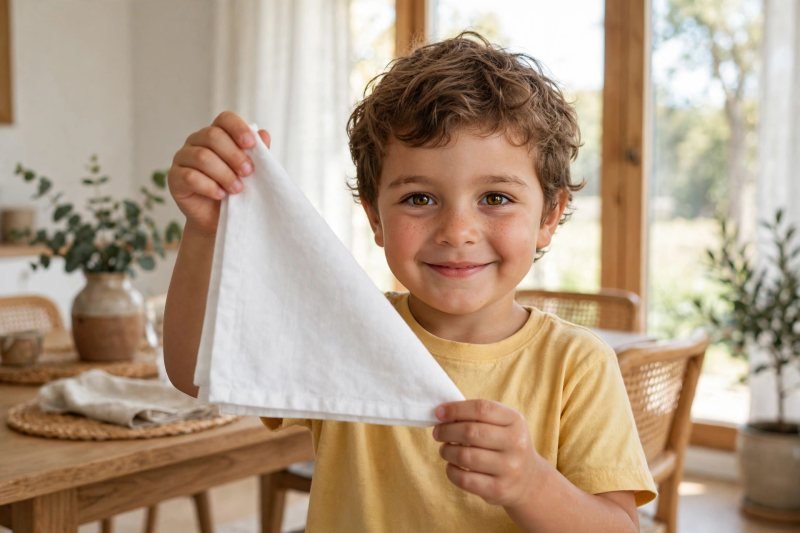
Hunt triangles last. The championship round, because triangles hide. Pre-place your three before you start: a napkin folded into a triangle, a wooden doorstop, and a sandwich cut diagonally just before the round. Nothing motivates like a triangle you get to eat. She traces each triangle's three sides with a finger before the find counts.
-
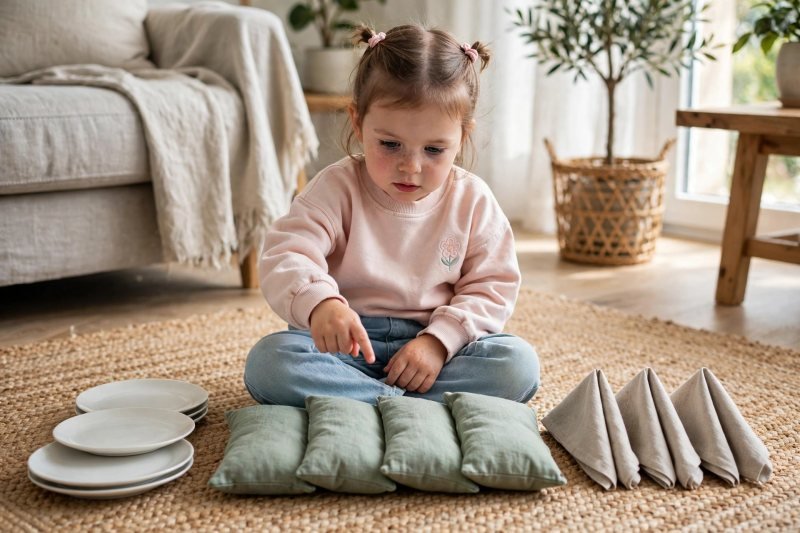
Count and tally the finds. Lay everything on the rug in three shape groups. Count each group slowly, touching one object per number, then make a tally mark per find. Add them up: "Three circles plus three squares plus three triangles — nine shapes!" Counting turns a fun run into a math game — and four-year-olds take scoring seriously — so if tallying is new, our counting games for preschoolers and counting to 10 activities give the same one-to-one counting practice as a game.
-
Play the speed round. You call shapes, she runs to touch one: "Triangle — GO!" Skip the timer at first; add it when she asks ("beat your own time!"). Then swap roles — watching you check a square's four corners models the whole skill. This is where naming becomes automatic.

-
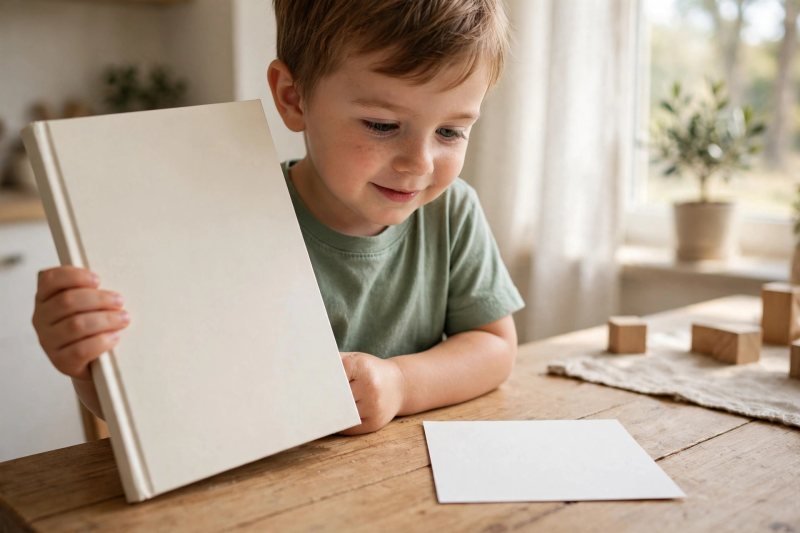
Play the bonus rectangle round. Hold up a book: "This is a rectangle — four sides, but two long and two short." Hunt three rectangles: a book, a door, the TV screen. Then hold the square card against the book — "See? Not the same." One comparison helps fix the most common shape mix-up there is.
-
Hold the photo parade. Photograph your child with her favorite finds, then line the objects from biggest to smallest for a "museum walk," naming each shape and its sides as you pass. The photos become a bedtime slideshow: "Remember the clock circle?"

-
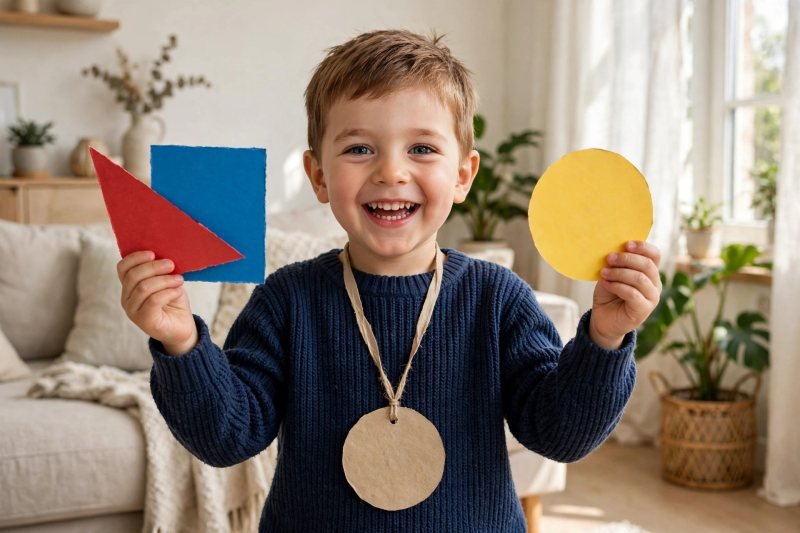
Award the Shape Hunter medal. A sticker on the shirt or a paper medal on a ribbon — then the ceremony words: "Name your three shapes!" She holds up each card, says its sides and corners, and takes a bow. Hang the cards on the fridge; tomorrow's breakfast conversation is planned. End with ceremony, not just cleanup: a little ritual tells your child the learning mattered — and it costs one sticker.


Make it easier
Hunt circles only the first time — one successful round beats three frustrating ones. Hunt side by side, narrating ("I see something round over there…") instead of sending her off solo.
Make it harder
Add rectangle and oval rounds once the first three shapes are solid. Time each round at one minute and let her beat her own best. Every find counts only after she names its sides and corners — the card is the judge, not you.
Other ways to play it
- Backyard hunt: same three rounds outside — a manhole cover (circle), a brick (rectangle), a triangle on a toy road sign. For the full outdoor version, see our shape hunt around the house.
- Flashlight hunt: dim the lights and hunt by flashlight. Shapes look different in shadow, which teaches that a shape keeps its name in any light.
- Team hunt: two kids, one shape card each, hunting at once — then they trade cards and check each other's finds.
- Photo scavenger hunt: photograph finds instead of collecting them, then review the "evidence gallery" at dinner, naming every shape.
- Hunt fans: once the shape hunt is a hit, try our alphabet hunt around the house — the same game with letter cards instead of shape cards.
How it changes by age
- Age 4: most fours run the rounds with a parent hunting alongside and giving hints. If the rounds feel like a big first step, start gentler with our shapes activities for preschoolers and come back to the hunt. Keep shape facts to one sentence each, accept pointing instead of naming at first, and expect the speed round to be pure silliness — the repetition still lands.
- Age 5: most fives hunt solo, keep their own tally, and handle the bonus rectangle round the same day. Many can spot that a square tipped onto its corner is still a square — rotate the card and watch the gears turn.
What they're learning
Shape names and properties: circle, square and triangle — sides, corners, and the circle's "no corners" surprise. Square vs. rectangle: four equal sides versus two long and two short — the classic mix-up, fixed by comparing. Counting and tallying: one-to-one counting of real objects, plus early data skills on the tally sheet. Sorting and classifying: grouping finds by shape is the foundation of all later math sorting. Observation skills: scanning a room for a target shape trains visual attention. Math vocabulary: sides, corners, equal, round — words that make kindergarten geometry easy. Gross motor play: running, reaching, bending and carrying between rooms.
Clearing up
Two mix-ups show up in almost every hunt. First: children call every four-sided object a square. The bonus rectangle round (step 8) helps fix it — hold the square card against a book and the difference is visible: four equal sides versus two long and two short. Second: many kids believe a square stops being a square when tipped onto its corner. Rotate the card slowly and ask, "Did any sides change? Did any corners disappear?" Nothing changed — so it is still a square. A shape's name comes from its sides and corners, not from which way it sits. That idea, truly understood, is worth the whole game.
Questions parents ask
What is a shape hunt game?
How do you teach shapes to a 4-year-old through play?
What if my child can't find triangles?
How is a shape hunt different from shape worksheets?

save it for later
Pin this for the next rainy afternoon
Keep it on a board so it is there when you need it, rather than when you happened to find it.
Save to Pinterest

