


Alphabet Hunt Around the House
Hide letters around one room and send your child to find them. No preparation beyond writing on some paper, and it teaches letter recognition better than a worksheet.
Write letters on scraps of paper, hide them around one room, and ask your child to find them and say the sound each one makes. Needs no materials beyond paper and a pen, suits ages 3 to 6, and takes about 15 minutes.
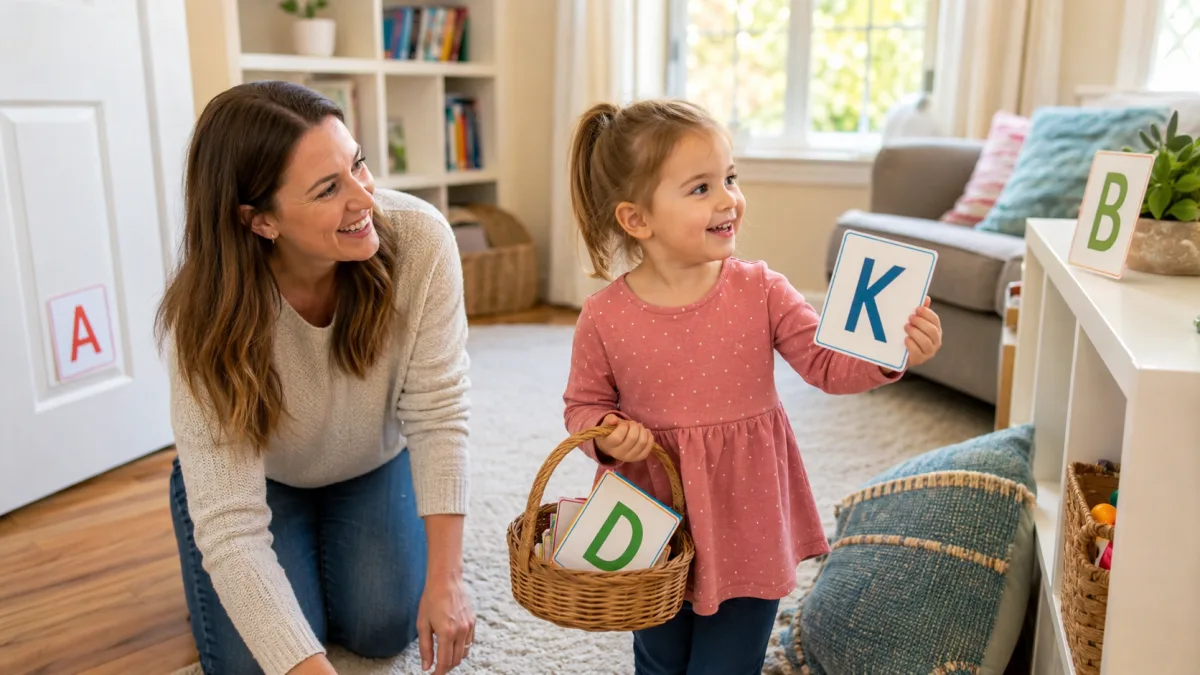
The short version
- No materials beyond paper and a pen.
- Start with the letters in your child's name — they already care about those.
- Ask for the sound, not the letter name; it is what actually helps with reading.
- Age
- Ages 3–6
- Prep
- 5 min
- Play time
- 15 min
- Mess
- Low
- Difficulty
- Easy
- Where
- Indoor
Why kids love this
It is a treasure hunt, and the letters are almost incidental. Children who will not sit down for an alphabet book will tear around a room looking for a hidden J. Moving while learning also helps it stick. A letter they crawled under the table to find is a letter they remember.
What you'll need
- Paper — scrap paper, the back of an envelope, anything
- A marker or thick pen
- A basket, bag or bowl to collect them in
- Optional: sticky notes, which hide well on walls and doors
Before you start
Write the letters out large and clearly, one per piece of paper. Start with the letters in your child's name plus three or four others — the whole alphabet at once is too many. Hide them while your child is out of the room. Keep them all in one room, and keep them findable: on the edge of a shelf, under a cushion, taped to a door at their height.
How to do it
-
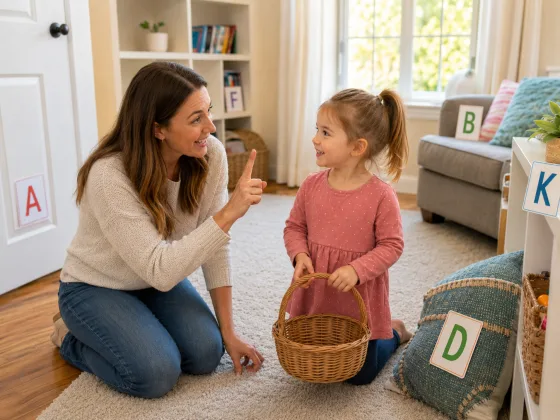
Tell your child how many letters are hidden. Knowing there are eight makes it a game with an end.
-
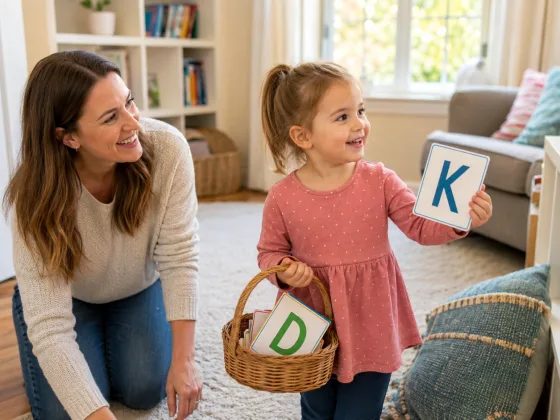
Send them off to find the first one.
-
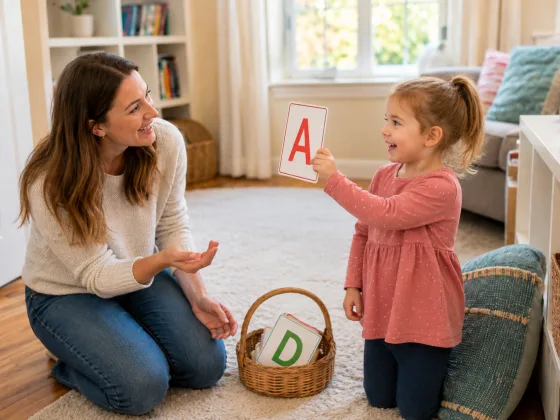
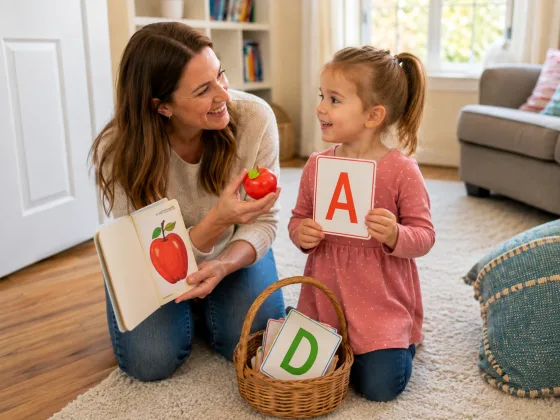
When they bring one back, ask what letter it is. If they do not know, tell them without making a thing of it.
-
Ask what sound it makes, and think of a word that starts with it together.
-
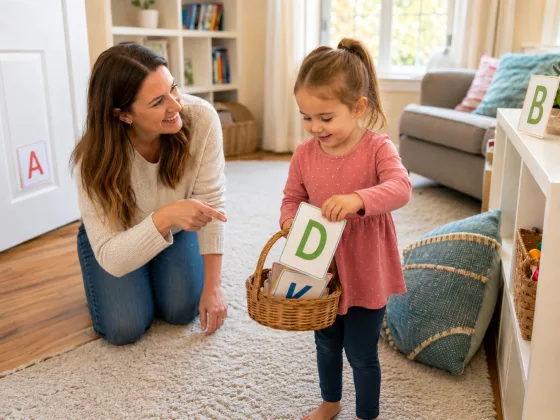
Drop it in the basket and send them for the next one.
-
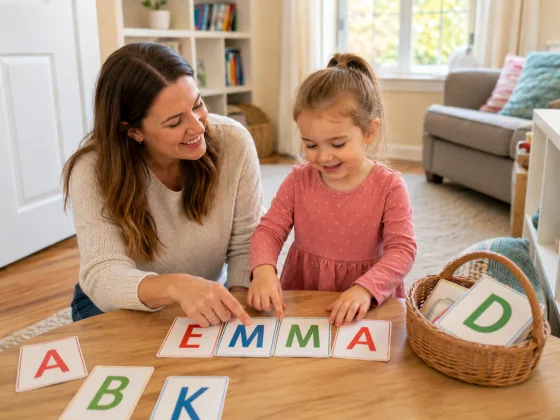
When they are all found, lay them out and see if they can put their name together from them.
-
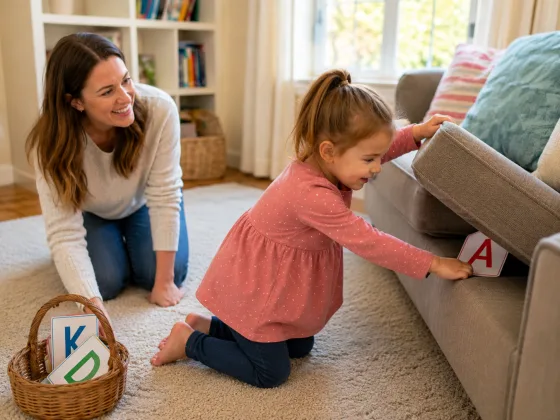
Hide them again — they will ask you to. Let them hide them for you the second time.
Make it easier
Use four letters, all from their name, and hide them in plain sight. Point at the right area if they are stuck — the aim is finding letters, not learning to be frustrated.
Make it harder
Ask for a word beginning with each letter before it can go in the basket. Or hide whole words and ask them to read each one.
Other ways to play it
- Call out the sound instead of the letter and let them find the matching one.
- Hide lower-case letters and ask them to match each one to a capital you have laid out.
- Use magnetic letters on the fridge instead of paper.
- Make it a race between siblings — one hunts for vowels, the other for consonants.
- Hide numbers instead and count them into the basket.
How it changes by age
- Three: three or four letters, hidden very obviously, and name the letter for them each time.
- Four to five: six to eight letters, and start asking for the sound rather than the name.
- Six and up: hide the letters of a word and ask them to unscramble it at the end.
What they're learning
This practises letter recognition and letter–sound correspondence, which is the foundation everything else in reading sits on. Saying the sound rather than the letter name matters more than it seems: 'ssss' is what helps a child read the word snake, where 'ess' does not.
Clearing up
Put the letters in an envelope and keep them. This is a ten-second setup every time after the first one.