


Pattern Games for Kindergarten: What Comes Next?
Ten playful pattern games for kindergarten kids — prediction, detective, relay, and echo games that turn "what comes next?" into real early-math thinking for ages 5–6.
Pattern games for kindergarten teach 5- and 6-year-olds to spot, copy, and extend repeating patterns through play. The best ones ask "what comes next?" (prediction), hide a mistake to find (detective work), race to copy a sequence (relay), or echo clap-and-stomp rhythms. Three 10-minute games a few times a week build the pattern reasoning behind early math — no worksheets needed.

The short version
- Pattern games for kindergarten build three skills: spotting the rule, copying it, and extending it.
- "What comes next?" prediction games are the simplest and most powerful starting point.
- Naming the rule aloud ("two circles, one square") proves real understanding, not just copying.
- Sound and movement patterns teach the same thinking as visual ones — pattern logic transfers.
- Three short games per session beats one long session; rotate all ten across a week.
- Invented patterns (your child's own rules) show deeper understanding than copied ones.
- Age
- Ages 5–6
- Prep
- 10 min
- Play time
- 45 min
- Mess
- Low
- Difficulty
- Easy
- Where
- Both
Why kids love this
Pattern games for kindergarten feel like mysteries, not math lessons. A five-year-old who would yawn through a worksheet will sprint across the yard to rebuild a sequence before their sibling does, and shout "I knew it!" when the last card lands exactly where they predicted. These ten games turn the three core pattern skills — spotting the rule, copying it, and extending it — into things to race at, hunt for, and clap along to.
What you'll need
- - Set of colored shape cards or wooden tiles (circles, squares, triangles in 3 colors) — homemade paper shapes work fine
- - A toy magnifying glass (for Pattern Detective)
- - 2 baskets or trays
- - Kitchen timer or phone timer (for relays)
- - Open floor space indoors, or a flat backyard patch for the relay and parade
- - Optional: scarves, rhythm sticks, or shakers for the sound games
Before you start
1. Cut or gather 24–30 colored shape cards: 3 shapes (circle, square, triangle) × 3 colors (red, blue, yellow) with a few extras of each. 2. Sort them into two baskets so each game setup is a quick grab. 3. Clear a "pattern runway" — a straight line of floor or table about 3 feet long where sequences get built. 4. For the relay, mark a start line and a build station 10–15 feet apart with tape or cones. 5. Print or draw nothing with words: keep all cards picture-only so the pattern stays visual, not reading-based.
How to do it
-
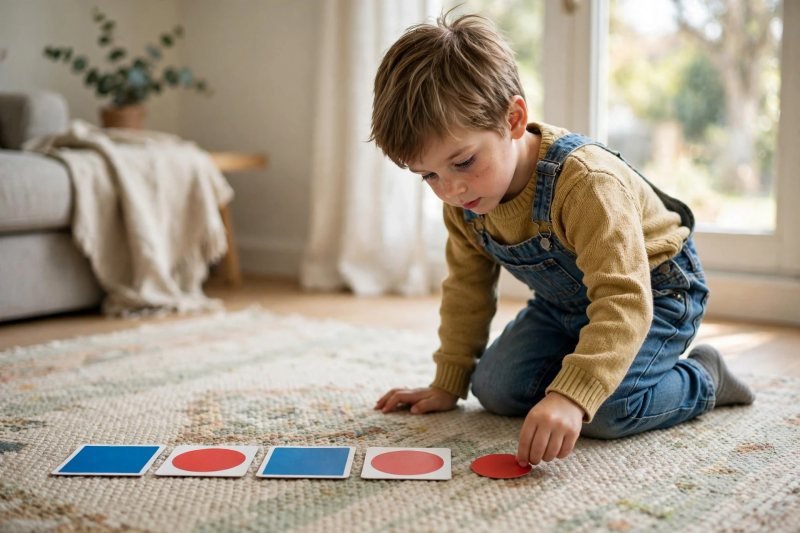
Play the "what comes next?" game. Lay out a short pattern row on the runway — circle, square, circle, square — and leave an empty space at the end. Hand your child the basket and ask, "What comes next?" Let them choose the card and place it. When they're right, celebrate the prediction: "You read the pattern's mind!" Start with AB patterns (two repeating), then try ABC (three repeating) once AB feels easy. Play five rounds, letting your child lay the row for YOU to finish on round five — reversing roles cements the skill.
-
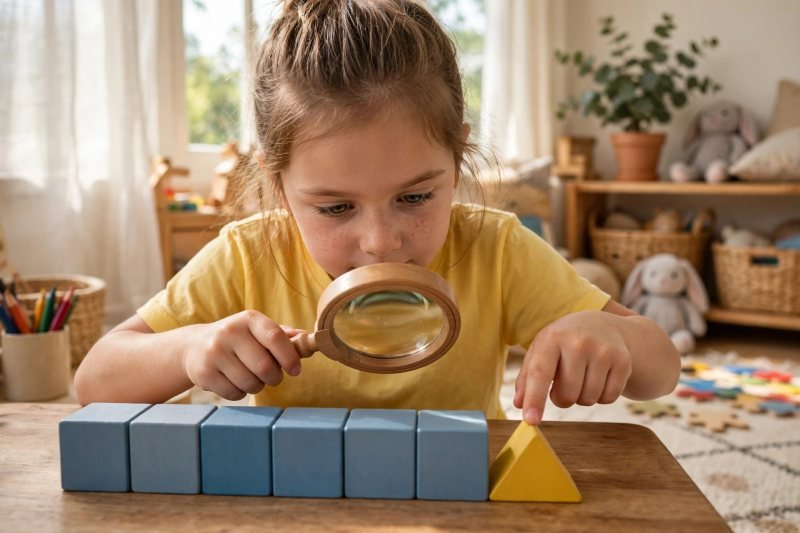
Play Pattern Detective and find the mistake. Secretly build a correct pattern, then swap ONE card to break it — red circle, red circle, BLUE square, red circle, red circle. Hand your child the magnifying glass and say, "The pattern has a sneaky intruder. Find it." They study the row, point to the wrong card, and replace it with the right one. After three rounds, let them plant the mistake for you to find (and ham up your wrong guesses). This game teaches the deepest pattern skill: checking a sequence against its own rule.
-
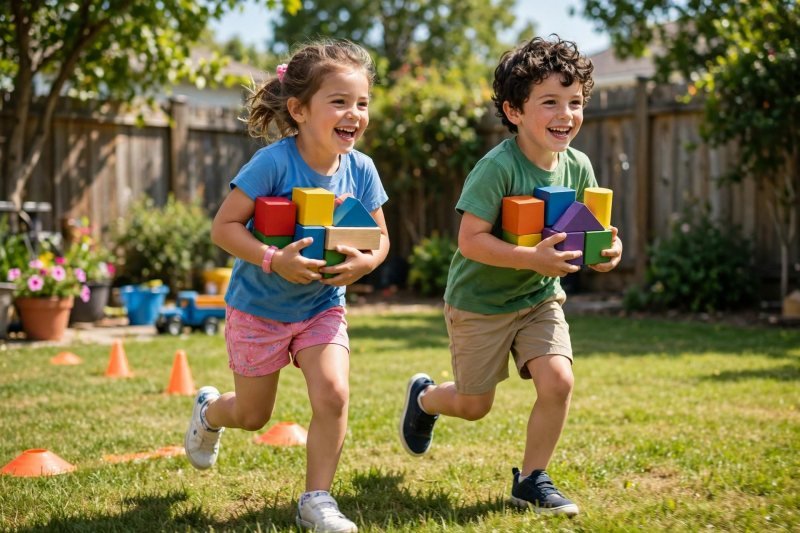
Run a copy-the-pattern relay race. Split into two teams (or race against the clock solo). Place a model pattern — 6 cards — at the build station; each team's basket sits at the start line. The first runner dashes to the model, studies it for 5 seconds, runs back, and rebuilds it from memory at their station. Teammates may shout advice but may not touch the cards until their turn. First team to rebuild the pattern exactly wins the round. Start with 4-card AB patterns; work up to 8-card ABC and AABB patterns. Memory + movement + teamwork in one game.
-
Play finish-my-pattern with a partner. Sit face to face. You lay the first half of a pattern — triangle, triangle, square, triangle, triangle… — then slide the basket over and say, "Finish my pattern." Your partner adds three more repeats, then names the rule aloud: "Two triangles, one square." Naming the rule is the whole point: a child who can say the rule understands it, not just copies it. Swap roles every round. After four rounds, try starting a pattern with a deliberate gap in the middle instead of at the end.

-
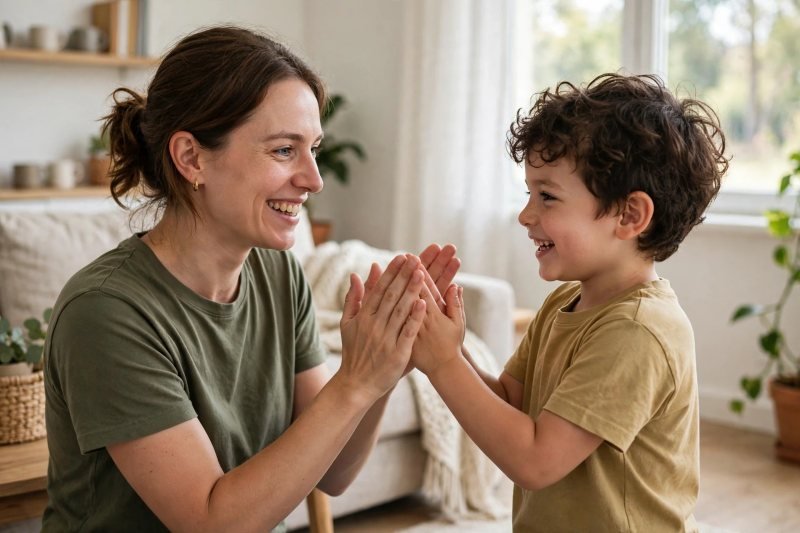
Play echo-the-beat sound patterns. Sit in a circle (or face to face) and build patterns from sounds instead of cards: clap-clap-stomp, clap-clap-stomp. Your child echoes it back exactly. Then they invent a pattern for you to echo. Build a ladder: 2-sound patterns (clap-stomp), 3-sound patterns (clap-clap-snap), then 4-sound patterns with a rest beat (clap, stomp, snap, pause). Sound patterns prove the same rules work without anything to see — pattern thinking transfers across senses, and the pause teaches that silence can be part of a pattern too.
-
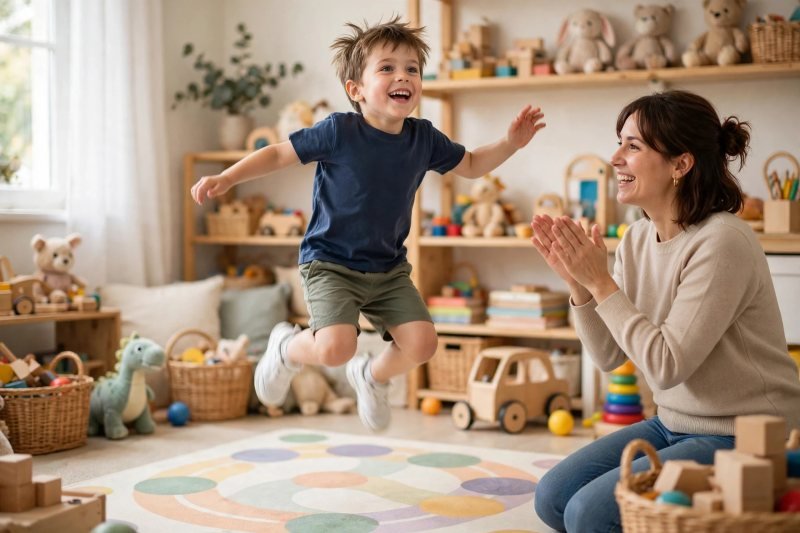
Play a movement-pattern game like Pattern Statues. Call out a 3-move pattern and perform it in a loop: jump, spin, clap — jump, spin, clap. Your child joins in and keeps the loop going while you watch for the moment someone "breaks" the pattern. Add a twist: when the music (or your clapping) stops, everyone FREEZES on the move they were doing — then the group names which move of the pattern each frozen player was on. "I'm on the spin!" This is the noisiest game on the list and the best one for wiggly kids who learn with their whole bodies.
-
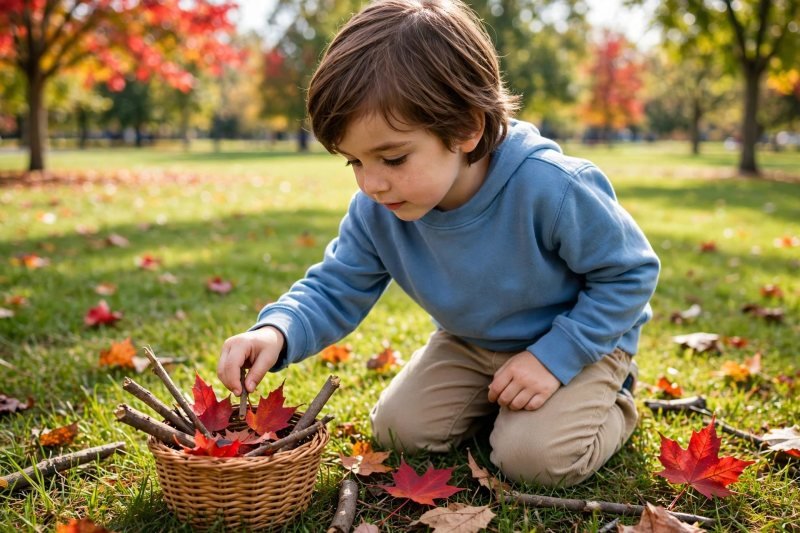
Play a pattern scavenger hunt. Give your child a pattern card drawn from shapes (drawn, not written): leaf, stick, leaf, stick. Their mission: collect natural objects following that exact pattern — a red leaf, a brown stick, a red leaf, a brown stick — and lay them in order on the porch. Level up with a 3-item pattern: smooth stone, leaf, stick, repeat. The hunt adds a translation step other games skip: the child must match real-world objects to abstract pattern slots, which is exactly how patterns appear in nature and math later. End by photographing the finished nature pattern.
-
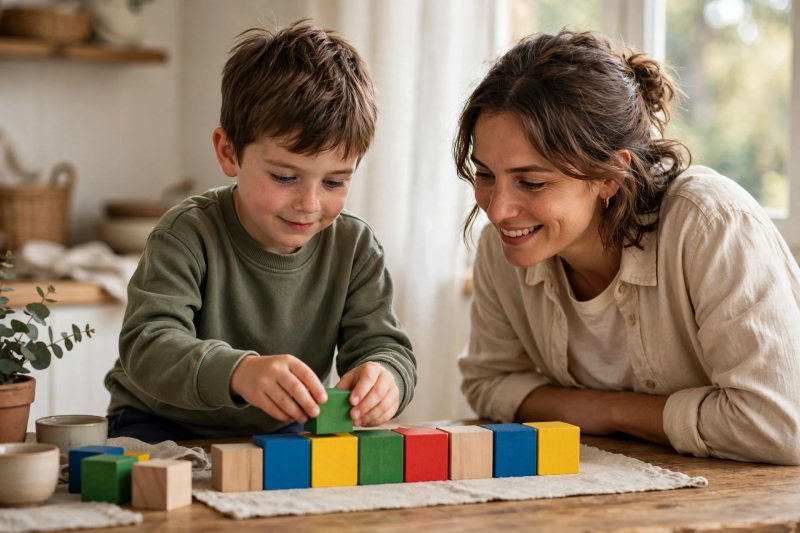
Play the build-and-guess secret-rule game. One player is the Builder, the other the Guesser. The Builder creates a pattern with a SECRET rule — say, "colors alternate but shapes stay the same" — and lays out six cards. The Guesser studies the row and announces the rule: "Red, blue, red, blue — all circles!" If they're right, they become the Builder. If they're wrong, the Builder adds two more cards as a clue and they guess again. This is the hardest game on the list and the most grown-up feeling: it moves kids from following patterns to analyzing them, which is the first taste of real mathematical reasoning.
-
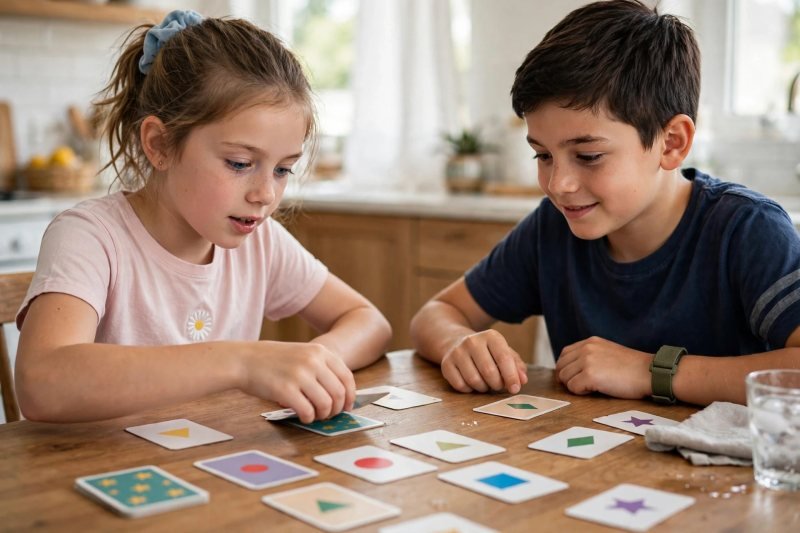
Play pattern memory match. Lay 12 cards face down in a grid — 6 matching pairs, where each pair shows the same 3-card mini-pattern (e.g., red circle-blue square-yellow triangle). Players take turns flipping two cards; a match is kept only if the two mini-patterns are identical AND the player reads the pattern aloud ("circle, square, triangle!"). Reading it aloud is the rule that makes it a pattern game instead of a memory game. For 5-year-olds, play with 8 cards (4 pairs) face up for the first round, then flip them down.
-
Finish with a Pattern Parade. Line everyone up and assign each person the NEXT move in a shared movement pattern: child 1 jumps, child 2 spins, child 3 claps, child 4 jumps again — and so on down the line, looping the pattern. On your signal, the pattern "travels" down the line like a wave, each person performing their move in turn. Speed it up over three rounds until the wave dissolves into giggles. The parade ends the session on a group high and shows the biggest idea of the day: patterns can be made of people, not just things.


Make it easier
- Keep every game at AB level (two repeating items) until your child predicts confidently three rounds in a row.
- In Step 3, let runners carry the model in their head for as long as they need — remove the 5-second limit.
- Play Steps 5 and 6 with just two moves (clap-stomp, jump-clap) before attempting three.
- In Step 9, leave the cards face up so it's a matching game, not a memory game.
- New to AB? Start with AB patterns for preschoolers before the games here.
Make it harder
- Upgrade any game to AABB (circle, circle, square, square) or growing patterns (1, then 2, then 3 of the same shape).
- In Step 2, plant TWO mistakes instead of one — or make the intruder differ only in color, not shape.
- In Step 8, allow rules with two features at once ("alternating colors AND alternating shapes").
- Time the Step 3 relay and challenge the team to beat their own record rather than racing each other.
Other ways to play it
- 1. Sidewalk chalk patterns: Draw the pattern row in chalk on the driveway; kids hop to the next spot and name what belongs there.
- 2. Snack patterns: Line up crackers, berries, and cheese cubes in a pattern — then eat the pattern in order. (Eat the evidence!)
- 3. Pattern telephone: Whisper a movement pattern down a line of kids; the last child performs what they received.
- 4. Bedtime patterns: End the day with a 2-minute echo-the-beat round (Step 5) — calm, screen-free, and it reviews the day's learning.
- - Shape hunt: take the pattern cards outside and play a shape hunt game with leaves and sticks.
How it changes by age
- 5-year-olds shine at Steps 1, 4, 5, and 9: predicting, finishing, echoing, and matching are all within reach, especially with AB patterns and face-up cards. Keep rounds short (5 minutes per game) and celebrate predictions loudly. 6-year-olds can handle the full set, including the detective's double mistakes, the secret-rule analysis in Step 8, and naming rules aloud — which is the bridge to the pattern work they'll meet in first-grade math. For more number play at this age, try our counting games for preschoolers.
What they're learning
- Spotting, copying, and extending repeating patterns (AB, ABC, AABB) - Predicting what comes next from an established rule - Checking a sequence for errors against its own rule - Naming a pattern's rule aloud — the first step toward mathematical explanation - Transferring pattern thinking across sights, sounds, and movements - Turn-taking, teamwork, and handling the relay's friendly competition - Shape names: 2D shapes activities name every shape used in these games. - Number naming: number recognition games build the same say-it-aloud skill with digits.
Clearing up
A common mix-up: thinking a pattern has to repeat forever to count. In these games, three full repeats are plenty to establish the rule — a child who extends "circle, square" three times and names the rule has genuinely learned the pattern, even if the row stops there. Another misconception: that copying a pattern is "just copying." Copying is actually the middle rung of a real ladder — spot the rule, copy it exactly, then extend or create it. The relay (Step 3) practices copying; the secret-rule game (Step 8) practices creating. Both rungs matter.
Questions parents ask
What are pattern games for kindergarten?
How do you teach patterns to a 5-year-old?
Should kindergarteners learn AB or ABC patterns first?
How long should a pattern game session last for kindergarteners?
What is a good first pattern activity for a kindergartener?
Do pattern games really help with math?
You don't need all ten games in one day. Three games per session is the sweet spot; rotate through the list across a week.
Ask "what comes next?" everywhere for a month — in songs, floor tiles, fence posts. Pattern eyes stay sharp with daily 30-second practice.
If your child invents a rule you didn't plan (like "big, small, big, small"), follow it. Invented patterns show deeper understanding than copied ones. For the ordering skill behind patterns, see sequencing activities for preschoolers.

save it for later
Pin this for the next rainy afternoon
Keep it on a board so it is there when you need it, rather than when you happened to find it.
Save to Pinterest


