


Mineral vs. Chemical Sunscreen for Kids: What's the Difference?
Mineral sunscreen for kids uses zinc oxide or titanium dioxide to shield skin from the top layer; chemical sunscreen uses absorb-in filters. This guide compares how each works, what labels say, and how to choose by the day — neutrally, with no brands.
Mineral sunscreen for kids uses zinc oxide or titanium dioxide and sits on top of the skin as a shield, working right away but sometimes leaving a white cast. Chemical sunscreen uses absorb-in filters, rubs in clear, and typically needs applying about 15 minutes before sun. Both protect well when applied generously and reapplied every two hours.

The short version
- The one-sentence difference: mineral sits on top and shields; chemical soaks in and absorbs UV.
- Read the ingredient panel, not the front: zinc oxide/titanium dioxide means mineral; avobenzone/octocrylene-style filters mean chemical.
- Non-negotiables for either type: broad spectrum, SPF 30+, water-resistant for swim days.
- Chemical labels direct a roughly 15-minute head start; mineral works as soon as it's spread.
- Amount and reapplying every two hours (and after water) matter more than the type you choose.
- Age
- Ages 3–4
- Prep
- 5 min
- Play time
- 20 min
- Mess
- Some
- Difficulty
- Easy
- Where
- Both
Why kids love this
This is the rare sunscreen session where the child is the scientist: two creams to compare, one white smear to inspect, a choice to make about their own skin. Kids who have tested both types and picked the day's winner put up far less fight at application time — and the application itself is over in minutes, outside, where the fun already is.
What you'll need
- One mineral sunscreen (active ingredients: zinc oxide and/or titanium dioxide — check the label)
- One chemical sunscreen (active ingredients: filters such as avobenzone or octocrylene — check the label)
- Whichever type you pick, choose: broad spectrum on the label, SPF 30 or higher, and water-resistant if it's a swim day (labels state 40 or 80 minutes)
- A wide-brim hat and a shady spot for the rest of the sun system
- A timer or phone alarm for reapply reminders
- A washcloth and bath for the end-of-day wash-off
- A notebook habit: which type your child tolerated, written once, saves re-deciding all summer
Before you start
Buy one of each type if you're deciding (small tubes are fine for the test) and read both labels' active-ingredient panels before the session. Check expiry dates — sunscreen past its date or left baking in a hot car all summer is a replace-it item. Pick a low-stakes sunny morning for the test so nobody is learning under time pressure. Agree the house rule ahead: whichever type is chosen, the dose and the reapply rhythm don't change. Type is preference; amount and timing are the protection.
How to do it
-
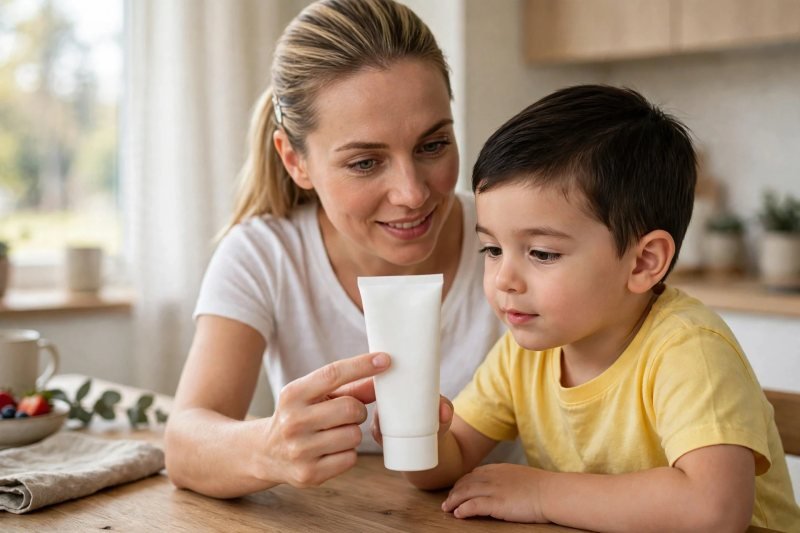
Put both tubes on the table and say the one-sentence difference. Start the comparison where your child can see it — two plain tubes side by side — and say the only sentence that really separates them: "Mineral sunscreen sits on top of the skin like a shield; chemical sunscreen soaks in a little and works from inside the top layer." Everything else in this guide is detail hanging off that sentence. Neither type is the villain or the hero of this story: both are regulated, both protect when used properly, and the best sunscreen for a child is the one that gets applied generously and reapplied on time. Say that part out loud too, because it defuses the decision: "We're not picking the perfect one. We're picking our one." Tubes down: now read what each tube actually says, because the label — not the marketing on the front — is where the difference lives.

-
Read the mineral label: zinc oxide, titanium dioxide, broad spectrum, SPF. Turn the mineral tube to its active-ingredients panel and read the two names that define the category: zinc oxide and titanium dioxide. These are mineral filters — the same white powders, in refined form, that make the cream look white. Then find the other three things every sunscreen decision needs: the words "broad spectrum" (meaning it covers both UVA and UVB rays), the SPF number (SPF 30 is the widely recommended floor for kids' everyday sun — higher numbers add a little, not a lot), and whether it claims water resistance and for how many minutes. Note what mineral labels usually don't ask for: a waiting period. Because mineral filters sit on the surface, they start shielding as soon as they're spread. Write nothing down yet; just let your scientist hear the ingredient names — zinc is the word they'll remember. One label read: now the other.
-
Read the chemical label: filter names, directions, and the fifteen-minute note. The chemical tube's active-ingredients panel reads differently: instead of the two mineral names, you'll see organic filter names such as avobenzone, octocrylene, or homosalate — the ingredients that absorb UV. Same supporting cast to check: "broad spectrum," the SPF number, and water resistance in minutes. The difference that matters is in the directions: chemical sunscreen labels typically tell you to apply it about 15 minutes before sun exposure, because the filters need a short window to settle into the top layer of skin and start working. That's not a flaw; it's a scheduling fact — a chemical day just starts a quarter of an hour earlier. Read the directions line with your child like a treasure clue: "This one needs fifteen minutes to wake up." Both labels read: time to touch the stuff.

-
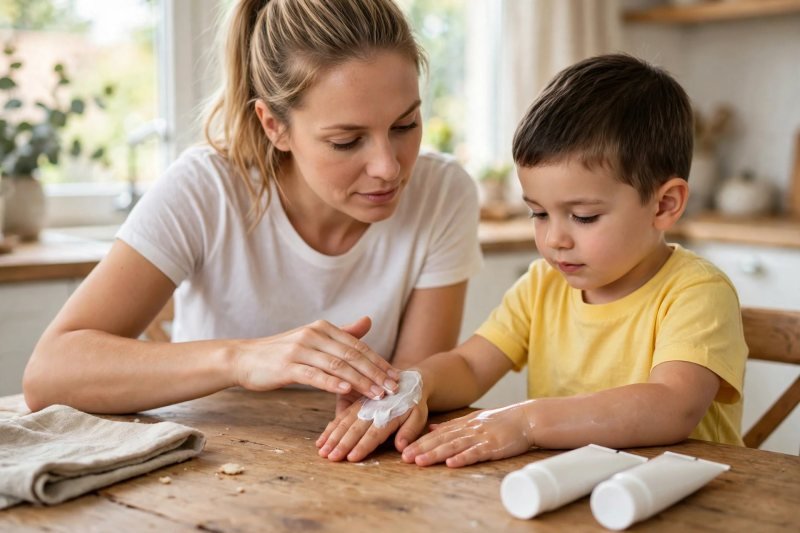
Run the hand-feel test: one white smear, one clear rub-in. Science you can see: put a pea of mineral sunscreen on the back of one of your child's hands and a pea of chemical on the other, then rub both in together and compare. The mineral side usually stays visibly whiter — the "white cast" — because the shield sits on the surface; the chemical side usually disappears clear and feels lighter. Neither result is a score; they're the practical trade-offs families actually choose on. White cast is easy to see (you can tell where you missed) but shows on skin and clothes; clear rub-in is invisible but easier to under-apply. On darker skin the mineral cast is more noticeable, which matters to some families. Let your child deliver the verdict in scientist language: "This one is the shield. This one is the invisible one." Test done: before either goes on a whole child, do the small check first.
-
Patch test both types on a small area, then watch and wait. New product on young skin gets a trial run: dab a small patch of each sunscreen on separate small areas — the inside of the elbow or behind the knee are classic spots — and give it time (a few hours at minimum; a day is better before a big outing). You're watching for anything beyond the usual: redness, itching, bumps, or a child who keeps scratching the spot. If one type clearly bothers your child's skin and the other doesn't, your decision just made itself — tolerance beats theory every time. If both are fine, you own two working options. If both bother them, that's a conversation for your pediatrician or a dermatologist, not a third tube bought on hope. And for babies under 6 months, the standing pediatric guidance is shade and clothing first, with sunscreen only on small exposed areas when shade and clothing aren't enough — the patch-test mindset applies to the whole first year. Patches clear: now decide the way real days actually ask you to.

-
Choose by the day, not by the debate: a simple decision frame. With both types tested, choosing becomes a three-question habit your child can join in on: "Are we swimming?" — if yes, either type in its water-resistant version, and the reapply-after-water rule does the real work. "Is my skin feeling sensitive today?" — many families reach for mineral on sensitive or eczema-prone days because it sits on top rather than soaking in, though tolerated is always the true test. "How much time do we have?" — mineral works the moment it's on; chemical wants its fifteen minutes. Notice what's not in the frame: fear. Both types are legitimate tools; the frame just matches tool to day. If you want a second shortlist before you shop, the best sunscreen for toddlers guide runs the same label checks in one place. Let your scientist announce the pick: "Swim day — shield day!" Decision made: now the part that actually determines protection — how much goes on.

-
Apply the chosen sunscreen properly: coverage is the whole game. Whichever type won, the rules are identical and non-negotiable: apply generously — most people, children included, get far less protection than the label's SPF because they spread far less than the tested amount, so think in whole stripes, not dots. Work in a calm order — face (carefully, avoiding eyes), ears, neck front and back, arms, legs, tops of feet — and let your child count the stripes as you go; counting is how a wiggly 4-year-old holds still, the same trick that powers counting activities for toddlers everywhere else in the day. For the face, spread cream on your own palms first and paint it on, which beats a tube aimed at a blinking child. Chemical day? This step happens fifteen minutes before the door. Mineral day? You're protected as soon as it's spread — but spread it completely, because the shield only shields where it is. Applied: now cover the gaps sunscreen can't reach.

-
Dress the rest of the sun system: hat, shade, sleeves. Sunscreen is one layer of a system, and the other layers never need reapplying: a wide-brim hat shades the ears and neck that sunscreen misses; a rash guard or longer sleeves cover shoulders without a single smear; shade — tree, umbrella, pavilion — is where outdoor time should mostly live, especially in the middle of the day when the sun is strongest. Build the habit as a door routine your child can recite: "Cream, hat, shade." It takes thirty seconds and it means a missed patch of cream is a small gap in a strong system, not a naked child in the sun. This layering also settles the mineral-versus-chemical stakes for good: when sunscreen is one layer among several, the family stops needing the tube to be perfect. System on: now protect the protection — with a clock.

-
Set the reapply rhythm: every two hours, and after water, sweat, or towels. Here is the step that outweighs the entire mineral-versus-chemical question: all sunscreen, of every type, needs reapplying at least every two hours outdoors — and sooner after swimming, heavy sweating, or towel-drying, because water resistance is measured in minutes (that 40 or 80 on the label), not in afternoons. Set an alarm and let your child be its keeper: when it sounds, the scientist reports for reapply duty, same stripes, same counting game. If cooperation is the hard part, the how to get your toddler to wear sunscreen tricks help at reapply time too. Reapply with the same generous hand as the first coat; a thin top-up on a faded base is the most common protection failure of the whole summer. Keep the tube where the rhythm happens — by the door, in the pool bag, not in a bathroom drawer across the house. Rhythm set: the day ends the way all good skin days end.

-
Wash it all off at bath time and write the one-line verdict. End the day by washing the sunscreen off — warm water, a washcloth, gentle cleansing as part of the normal bath, the same unhurried wind-down as a simple kids' skincare routine. While the tub fills, write your one-line verdict somewhere you'll see it at the next purchase: which type your child tolerated, whether the white cast bothered anyone, whether the fifteen-minute wait worked with your mornings. That single sentence converts this whole comparison into a settled family fact: next time you shop, you're not re-running the debate — you're refilling the winner. And if the verdict is "both fine," congratulations: your family can buy whichever is on hand, water-resistant for swim days, and never think about this article again. Comparison complete.



Make it easier
Only buying one tube? Buy mineral in a water-resistant version — a common starting pick for young and sensitive skin, works immediately, and the visible cast helps you see missed spots. Skip the two-tube test for babies: under 6 months, shade and clothing are the system; sunscreen is the backup on small areas only. Decision exhausted? Re-read step 6: swimming, sensitive skin, time available. Three questions, ten seconds, done.
Make it harder
Let older kids read the labels themselves and sort a mixed drawer of tubes into mineral and chemical by the ingredient panel — a genuine science sort. Track a wear test across a week: same outing, different type each day, note cast, feel, and how the reapply went — a real family data table. Teach the two-finger rule for older kids applying their own: sunscreen along the index and middle fingers is roughly one body part's worth — a self-application skill for camp age.
Other ways to play it
- Sensitive-skin version: mineral-first testing, one product at a time across different days, and any recurring reaction goes to the pediatrician rather than to a third product.
- Swim-team version: water-resistant everything, the 80-minute label where available, reapply between events, and a hat that lives in the swim bag.
- School-day version: apply before the door (chemical's fifteen minutes fits breakfast; mineral fits the walk out), and send the hat — schools rarely reapply for you.
How it changes by age
- Under 6 months: shade, clothing, and hats are the system; sunscreen only on small areas of exposed skin when those aren't enough, per standard pediatric guidance.
- Ages 2–3: adult applies everything; mineral's see-where-you-missed cast is genuinely helpful at this wiggly age.
- Ages 3–4: the guide as written — the child joins the testing, choosing, and counting, while the adult owns amount and timing.
- Ages 6–8: kids can learn the label read and the two-finger amount, with adults checking ears, neck, and backs.
What they're learning
Comparison science: same test, two samples, honest verdict — the scientific method at kitchen-table scale. Label literacy: "active ingredients" is a life skill that starts here — what a thing is made of beats what its front claims. Trade-off thinking: white cast versus clear feel, now versus fifteen minutes — real decisions have pros on both sides. Body care habits: cream, hat, shade, reapply — a rhythm a child can own long after the debate is forgotten.
Clearing up
The comparison leaves almost nothing behind: tubes go back by the door or in the pool bag (not the bathroom drawer), the timer gets reset for next time, bath toys rinse, and the one-line verdict gets added wherever your family keeps such facts. The scientist's fee is a sticker on the winning tube — a small label that, for once, you're allowed to read.
Questions parents ask
What is the difference between mineral and chemical sunscreen?
Is mineral sunscreen better for kids?
What SPF should kids use?
Does chemical sunscreen need to be applied before going outside?
Can you use sunscreen on babies under 6 months?

save it for later
Pin this for the next rainy afternoon
Keep it on a board so it is there when you need it, rather than when you happened to find it.
Save to Pinterest


