


Measuring Length Activities: 10 Ideas Ages 5–6
Ten measuring length activities for ages 5–6 — compare, order, and estimate with crayons and sticks, then meet the inch and the foot with paper strips kids make themselves.
Measuring length activities teach 5–6-year-olds to compare objects side by side, order them shortest to longest, estimate before measuring, and then measure with real standard units: the inch and the foot. Kids make paper inch strips, measure a crayon (about 4 inches) and a sofa (about 6 feet), and discover why standard units matter — inches agree no matter who measures.

The short version
- Compare directly first: align the ends and see which object sticks out farther.
- Order five or more sticks shortest to longest before numbers enter.
- Always guess first — estimation is a real skill, and guesses sharpen fast; counting games for preschoolers use the same guess-then-check loop.
- The inch is the same for everyone: crayon about 4 inches, spoon about 6, book about 10.
- 12 inches make 1 foot: feet for the sofa and doorway, inches for the crayon and spoon.
- Age
- Ages 5–6
- Prep
- 10 min
- Play time
- 35 min
- Mess
- None
- Difficulty
- Easy
- Where
- Indoor
Why kids love this
At five, "big" stops being enough. Your child lines up two crayons and frowns: they LOOK the same, but are they? These measuring length activities begin with comparison, ordering, and guessing, and end with the big leap: an inch — the same in every house, for every person.
What you'll need
- 8–10 craft sticks or pencils in clearly different lengths
- Crayons (one for measuring, one for recording)
- Sticky notes or plain paper cut into small squares
- Scissors (grown-up job), tape
- A book, a spoon, a pencil, a picture book
- Big paper or a notebook for the results chart
Before you start
1. Cut 12 paper squares about 1 inch wide — your "paper inches." 2. Tape 12 end to end into one strip — your "paper foot." 3. Gather the sticks, crayon, spoon, pencil, and book. 4. Clear a table edge and a stretch of floor for the games.
How to do it
-
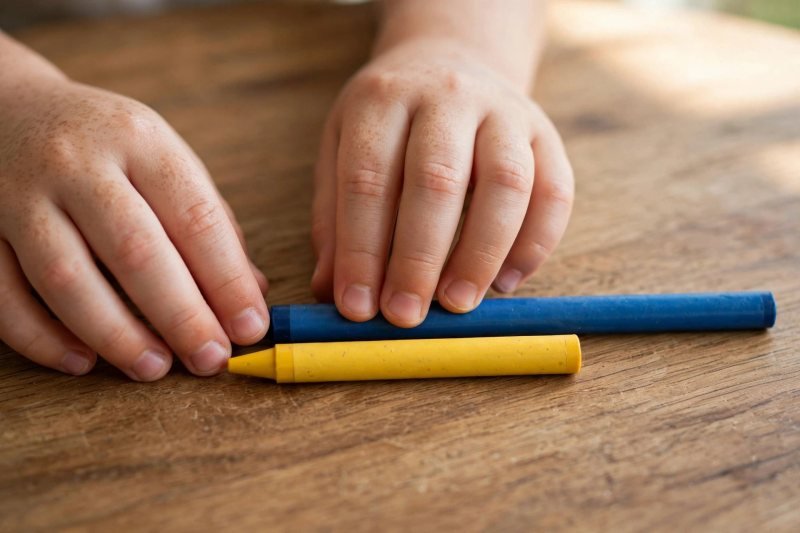
Line two crayons up — which is longer? Lay two different-length crayons on the table, ends aligned. "Which is longer?" The longer one sticks out past the other. Try crayon against pencil, spoon against crayon.
-
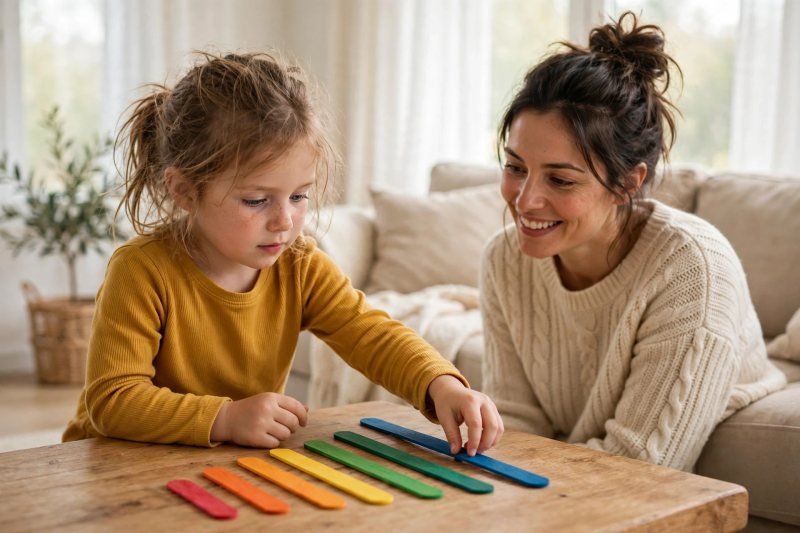
Order the sticks shortest to longest. Scatter the craft sticks and build a staircase: shortest first, longest last. "It climbs like stairs!" Ordering five lengths is the skill behind every ruler reading to come.
-
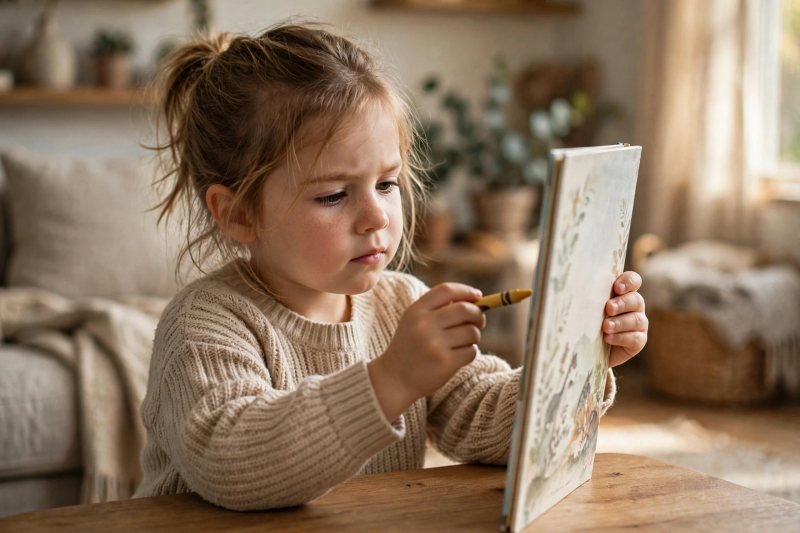
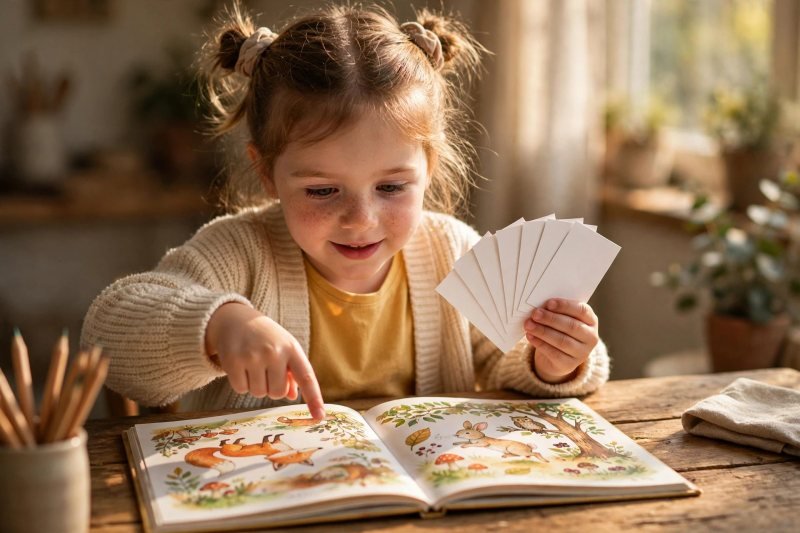
Guess first! Hold up the picture book: "How many crayons long do you THINK this is?" Your child studies it, glances at the crayon, and commits — write the guess on a sticky note. No wrong answers; every good measurer predicts first.
-
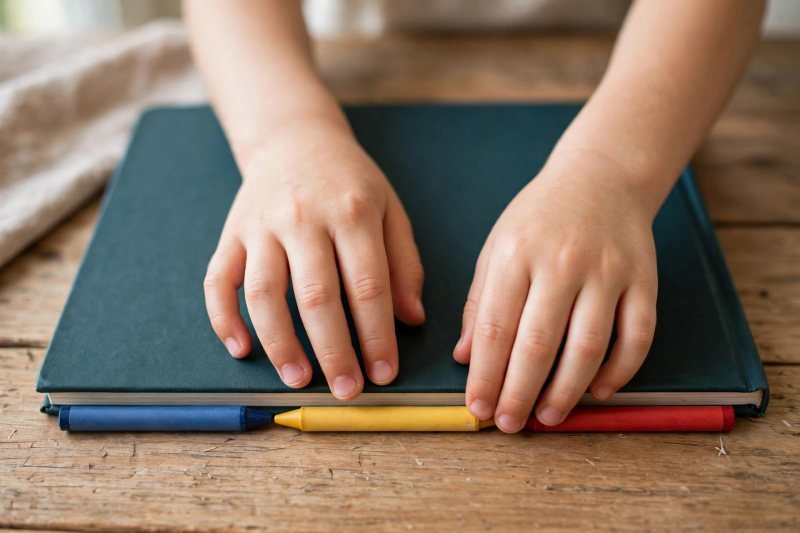
Check the guess — lay crayons end to end. Lay crayons along the book's edge, each touching the next: "About two and a half crayons!" Compare with the sticky note — close? Wildly off? Both are fine.
-
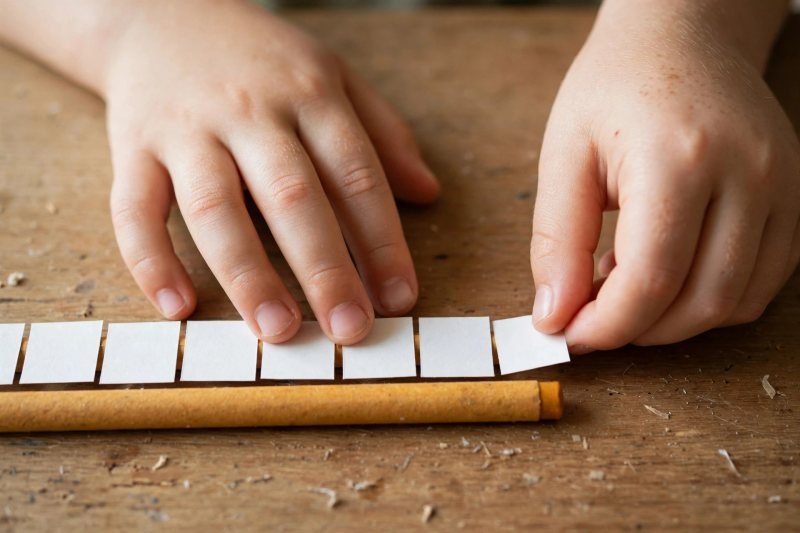
Meet the inch. "'Two crayons long' means something different at grandma's house. But an inch is an inch everywhere." Lay paper squares along the crayon, end to end: "One, two, three, four — about 4 inches!" A thumb is roughly an inch wide — a built-in ruler they always carry.
-
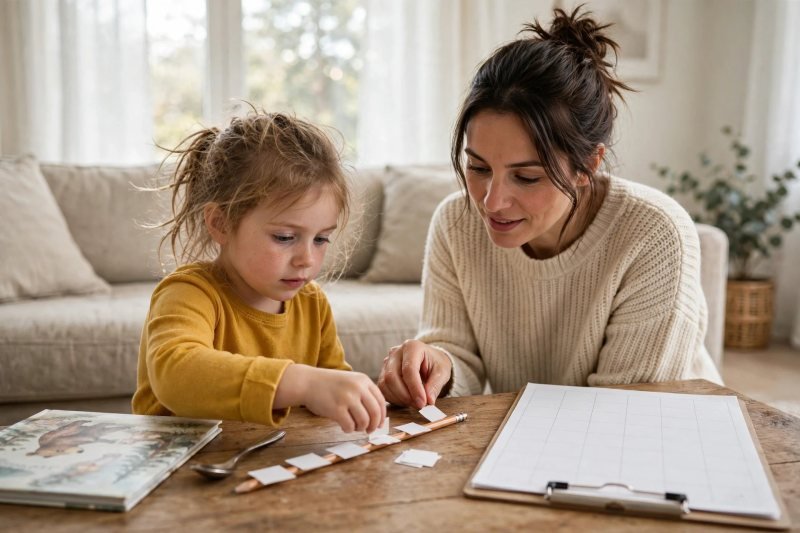
Build the inch club. The pencil: "About 7 inches!" The spoon: "About 6 inches!" The picture book: "About 10 inches!" Sketch each on the chart. Nobody argued — inches agree for everyone. That agreement is the whole point of standard units.
-
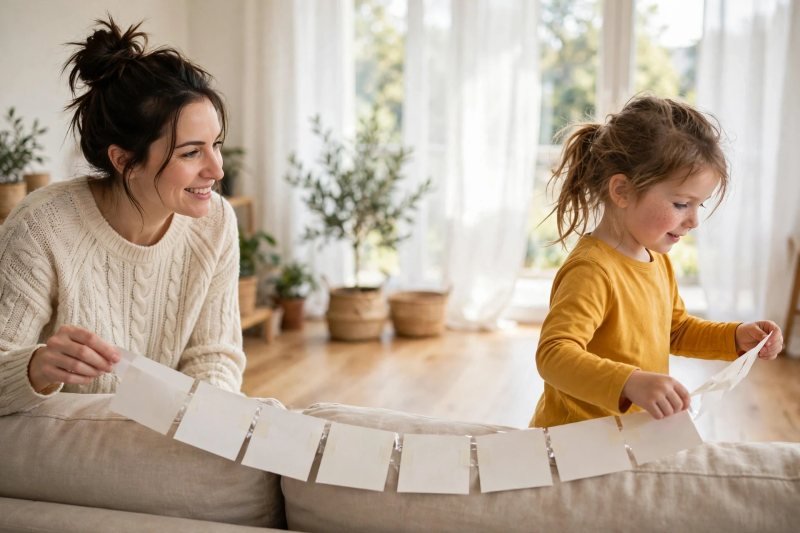
Twelve inches make a foot. Lay the taped strip down: "This is a foot — 12 inches." March it along the sofa: "About 6 feet long!" Table width: about 3 feet. Doorway: about 7 feet.
-
The fairness test. Measure the shelf edge with your child's hand spans, then yours: different numbers, same shelf. "Whose answer is right?" Now with paper inches: "About 24 inches." A friend measures with their inches: "About 24 inches." Same answer, different people — that is why the country uses inches and feet.
-
Guess in inches, then measure. Point at the book: "How many inches — before we measure?" Write the guess, lay the paper inches, count. A point for every guess within 2 inches.
-
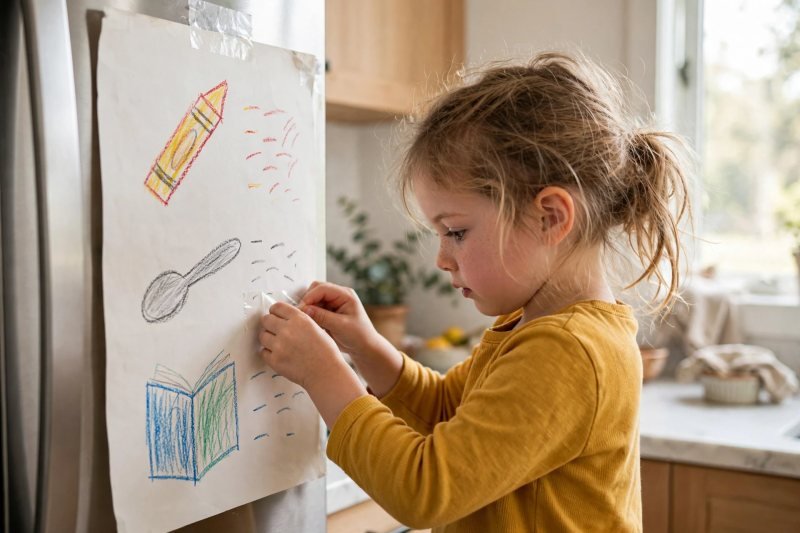
Start the length diary. Tape the chart to the fridge for a week. New rule: every object gets a guess first, then a measurement. Sort finds into "shorter than a foot" and "longer than a foot" — a personal reference library.


Make it easier
Do steps 1–4 on day one — comparing, ordering, and guessing deserve their own session. Order three sticks first, not five; count the paper inches aloud together — the same count-aloud play as counting activities for toddlers.
Make it harder
Order eight sticks, two very close in length; track guesses within 1 inch. Convert: "3 feet wide — how many inches?" (36 — count the paper foot three times.)
Other ways to play it
- Outdoor: Estimate the fence in feet, then walk the paper foot along it.
- Sibling: Each child guesses, then both measure — the fairness test, doubled.
- Younger siblings: Start with measurement activities for preschoolers — the same compare-and-order play with blocks and hand spans, no inches yet.
How it changes by age
- Five-year-olds are building the bridge: comparison is solid, ordering five sticks is the challenge, and the inch is a thrilling novelty. Six-year-olds run it independently: they estimate unprompted, pick feet versus inches sensibly, and explain the fairness test themselves.
What they're learning
The length-concept ladder: direct comparison, ordering shortest to longest, estimating before measuring, and why standard units exist — an inch is the same for everyone. Plus counting past 12 — early number patterns for kids — length vocabulary, and the habit of guess-then-check. Laying paper squares end to end, with no gaps, is careful fine-motor work too — fine motor activities for preschoolers.
Clearing up
Envelope the paper inches and foot — the kit keeps for months. Tape the chart to the fridge or file it in the diary. Return sticks, crayons, and books to their shelves.
Questions parents ask
What are measuring length activities for kids?
How do you teach longer, shorter, and longest?
When should kids learn about inches and feet?
Why do we use inches instead of hand spans?
How do you teach estimating versus measuring?
What can kids measure in inches at home?
For younger siblings, sorting activities for toddlers offers single-rule sorting play before inches and feet enter the picture.

save it for later
Pin this for the next rainy afternoon
Keep it on a board so it is there when you need it, rather than when you happened to find it.
Save to Pinterest


