


Lava Lamp Experiment: Oil and Water Science for Kids
This lava lamp experiment for kids turns oil, water, and a fizzing tablet into a glowing, bubbling light show. A simple 20-minute kitchen activity that teaches density to ages 4–5.
Fill a clear bottle one-third with water, add food coloring, then fill nearly full with vegetable oil — the oil floats because it is less dense. Drop in an effervescent tablet piece: it fizzes, releasing gas bubbles that carry colored water droplets upward. At the top the gas escapes and the droplets sink back down, repeating the cycle.

The short version
- Oil and water do not mix because water molecules cling to each other more tightly than to oil.
- Oil is less dense than water, so it floats in a separate layer on top.
- The fizzing tablet releases carbon dioxide bubbles that lift colored water droplets up.
- When the bubbles pop at the surface, the heavier droplets fall back down.
- Add tablet pieces one at a time; each powers the show for a few minutes.
- Age
- Ages 4–5
- Prep
- 5 min
- Mess
- Low
- Difficulty
- Easy
- Where
- Indoor
Why kids love this
This lava lamp experiment for kids delivers one of the biggest payoffs in kitchen science. The moment the first blob of colored water rises through the oil, most four- and five-year-olds gasp and call everyone over. It feels like magic, yet they added every ingredient themselves. They pick the color, drop the tablet in, and narrate the show — "It's going up! Now it's falling!" — which is early science talk: observing, describing, and wondering out loud.
What you'll need
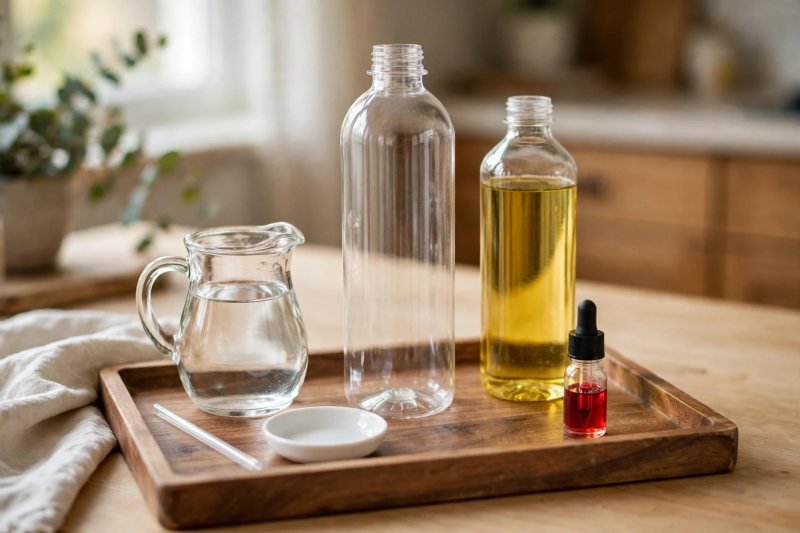
- 1 tall, clear plastic bottle or jar (16–20 oz), lid off
- 1 cup of water
- About 1½ cups of vegetable or canola oil
- Food coloring, 4–6 drops (red, blue, or purple)
- 1 effervescent tablet (Alka-Seltzer or generic), in quarters
- 1 straw or craft stick for stirring
- 1 small dish for the tablet pieces
- 1 tray or tablecloth for the table
- Paper towels
- Optional: 1 flashlight
Before you start
Clear a spot at the kitchen table and lay down the tray. Set the bottle in the center with everything within reach. Keep the tablet sealed and dry until you need it.
How to do it
-
Set up the tray. Lay the tray on the kitchen table, stand the empty bottle in the center, and set the water, oil, food coloring, tablet dish, and straw within easy reach.
-
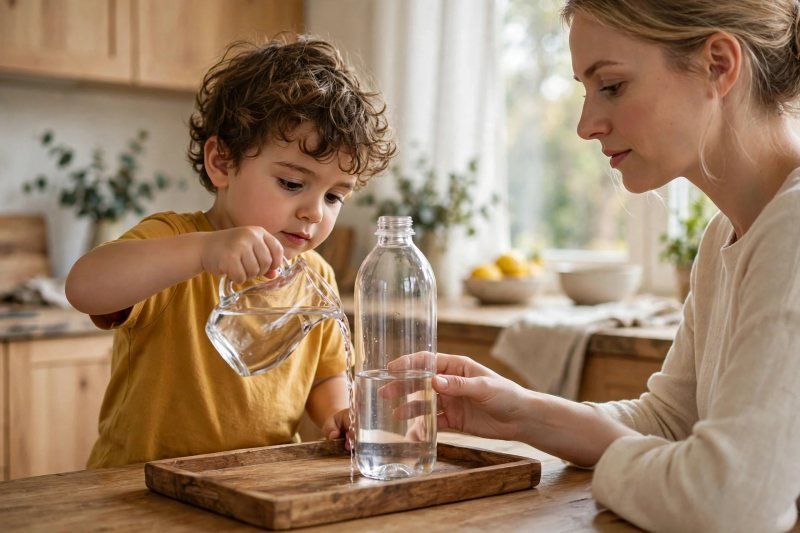
Pour in the water. Pour water into the bottle until it is about one-third full.
-
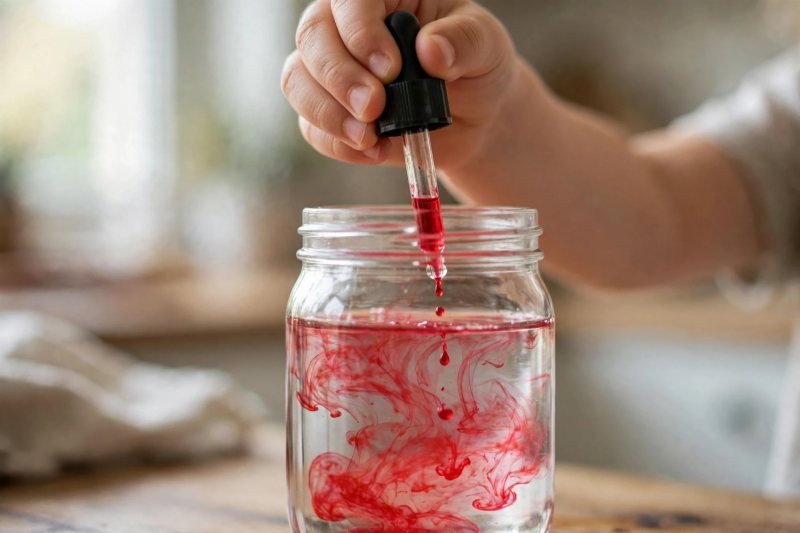
Add the color. Add 4–6 drops of food coloring and stir with the straw until the color is deep and even.
-
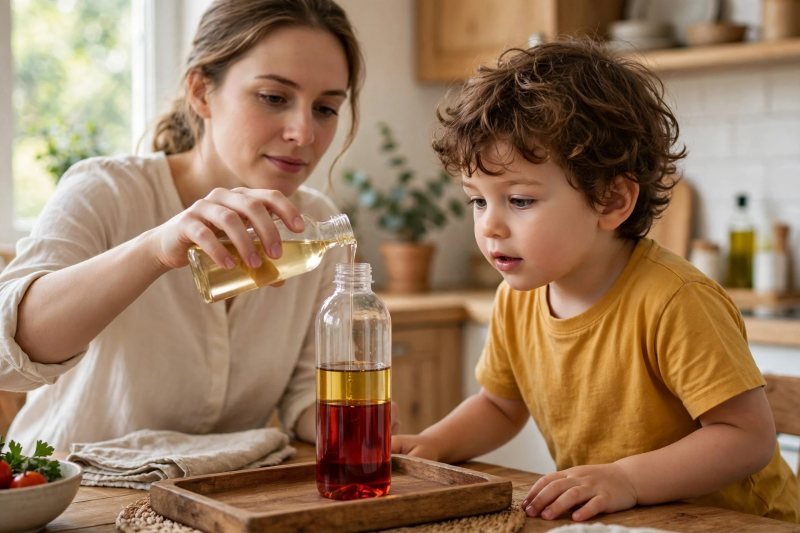
Pour in the oil. Slowly pour in the oil until the bottle is nearly full, leaving about an inch of space at the top.
-
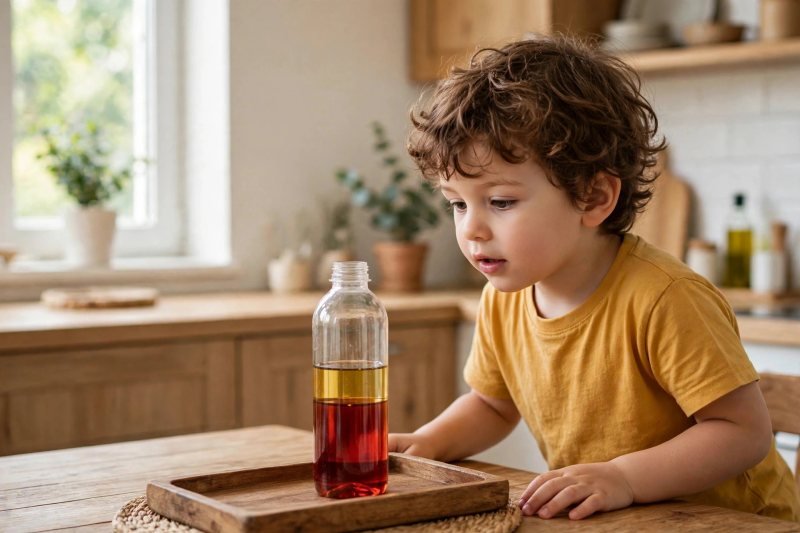
Spot the layers. Look together at the sharp line between the liquids — the oil floats in its own layer on top instead of mixing in.
-
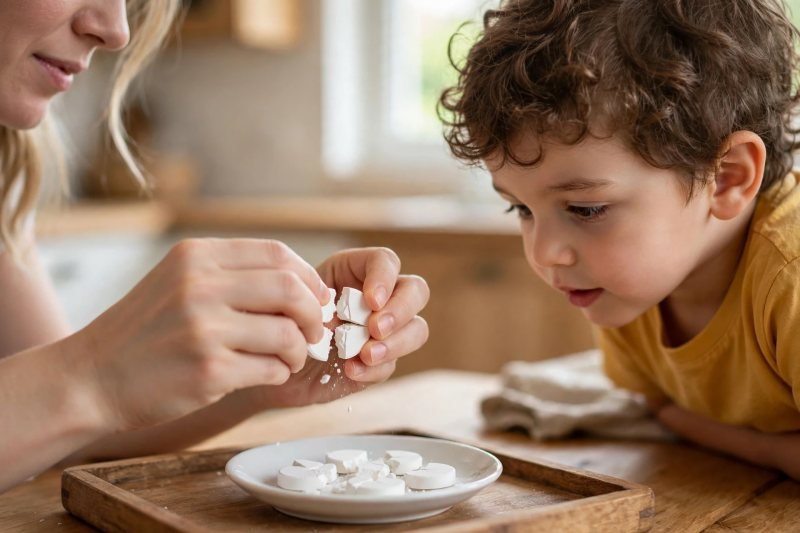
Break the tablet. The adult breaks the tablet into quarters and sets the pieces in the small dish.
-
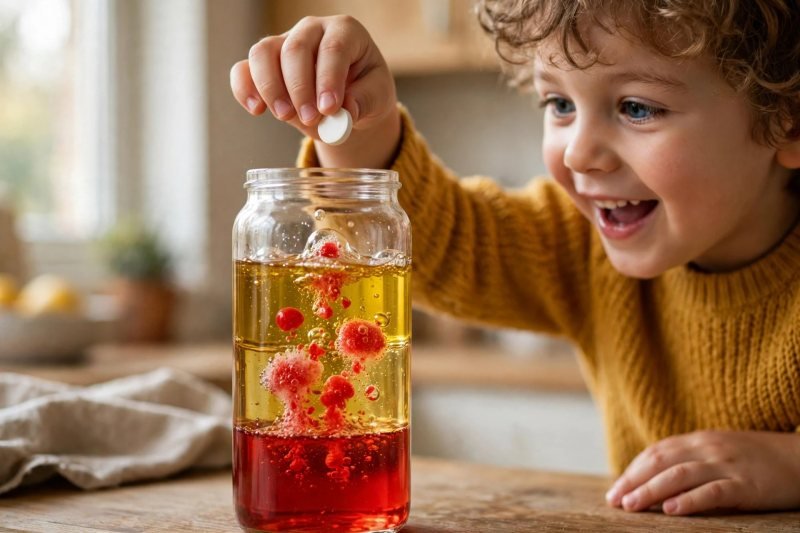
Drop in one piece. Your child drops in one quarter and watches blobs of colored water rise, then sink back down.
-
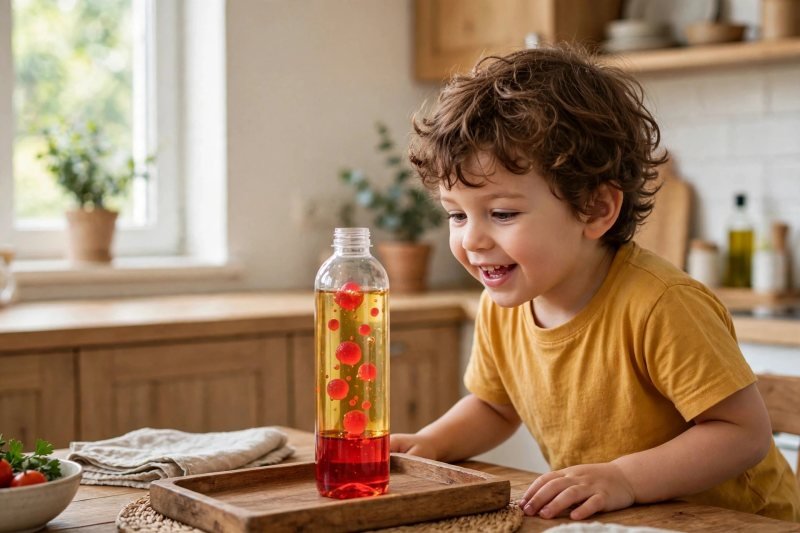
Keep the show going. Add another piece — one at a time — and keep watching until the fizz runs out.
-
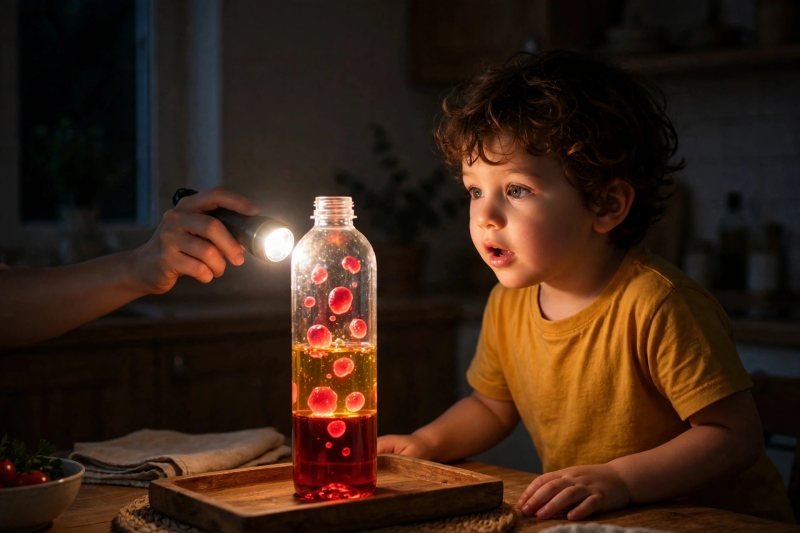
Light it up. Dim the room lights and hold the flashlight behind the bottle so the rising blobs glow.
-
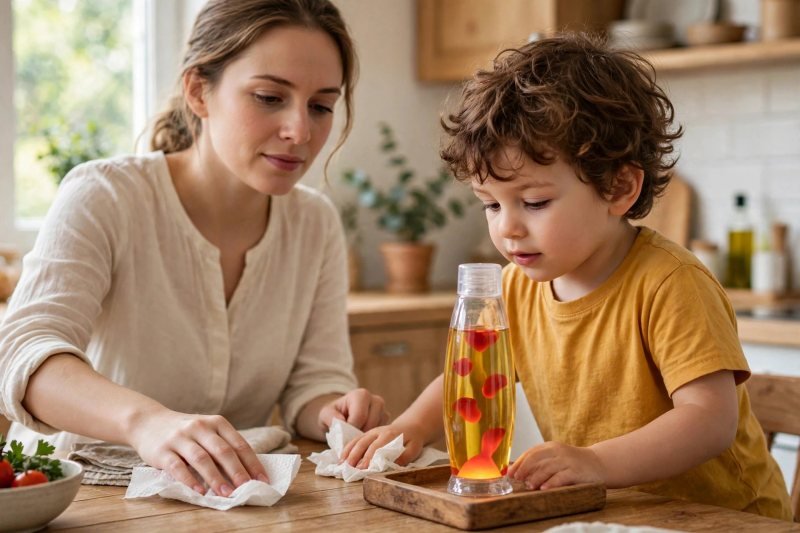
Clean up together. Pour the mixture into an old bag for the trash — never down the drain — then wipe the table and tray dry.


Make it easier
Use a shorter, wider jar so the layers and blobs are easier to see. Let the adult do all the pouring while the child picks the color and drops in the tablet piece.
Make it harder
Before the tablet goes in, ask your child to predict: sink, float, or fizz? Afterward, have them explain in their own words why the blobs went up and why they fell. Older preschoolers can count blobs reaching the top or time one piece.
Other ways to play it
- Try a new color combo each round — purple water under golden oil looks stunning, and our color mixing activities for preschoolers will give you more color ideas to try. For a gentler version, sprinkle in a pinch of table salt instead of a tablet piece; the grains drag tiny oil blobs down in a slow rain, then release them. A bigger bottle makes a dramatic centerpiece for a science playdate. If the fizz hooked your child, keep the bubbles going: our dancing raisins experiment shows bubbles lifting raisins the same way they lift water here, the baking soda and vinegar volcano is the next fizzing favorite, and the magic milk experiment swirls color in a whole new way.
How it changes by age
- Written for ages 4–5, when children can follow a short sequence and describe what they see. Younger siblings (2–3) make a happy audience, but an adult should handle every ingredient. Six- to eight-year-olds can run it with an adult nearby.
What they're learning
Why don't oil and water mix? Water molecules are clingy — they stick to each other more strongly than they stick to oil, so oil cannot squeeze in between them. The sharp line between the layers is that invisible stickiness made visible. Why does the oil float on top of the water? Density — how tightly packed something is. Oil is less dense than water, so the same amount of oil weighs less, and the lighter liquid floats. Same reason a beach ball floats while a pebble sinks. If your child loved guessing what would float, try our sink or float game for toddlers next — it turns the same idea into a hands-on guessing game. Where do the rising blobs come from? The tablet fizzes, releasing tiny carbon dioxide bubbles that grab droplets of heavy colored water and carry them up through the oil like little elevators. At the surface the bubbles pop and escape — and without their elevator, the droplets sink back down. The cycle repeats while the fizz lasts, just like a real lava lamp.
Clearing up
Do not pour used oil down the drain — it clogs pipes. Pour the mixture into an old bag or the original oil bottle and throw it in the trash. Wash the bottle with warm soapy water and recycle it if your program accepts it. Wipe the tray and table.
Questions parents ask
How do you make a lava lamp experiment for kids?
Why does oil float on water in a lava lamp?
Can you make a lava lamp without Alka-Seltzer?
Is a homemade lava lamp safe for preschoolers?
One tablet piece powers the show for a few minutes; add pieces until the fizz runs out. The oil can be reused — just pour in fresh colored water. Save the dim-room flashlight finale for last. If the blobs barely rise, the tablet may be damp or stale — open a fresh one and keep it sealed until the moment you need it. Room-temperature water fizzes best; very cold water slows the show down. For more kitchen-table science, browse our easy science experiments for toddlers.


