


Itchy Skin in Kids: Common Causes and Relief
Itchy skin in kids is common and usually tied to dryness, heat, fabrics, or everyday irritants. This guide walks through gentle relief steps — lukewarm baths, moisturizer on damp skin, soft fabrics — plus clear signs to call your pediatrician.
Itchy skin in kids most often follows everyday triggers like dryness, heat and sweat, rough fabrics, and scented soaps or detergents. Gentle relief means short lukewarm baths, patting dry, moisturizing generously on damp skin, loose cotton clothing, and cool compresses. See your pediatrician if it spreads, oozes, comes with fever, disturbs sleep, or does not improve.

The short version
- Common contributors include dry air, heat and sweat, wool and synthetics, scented products, long hot baths, and chlorine.
- Core relief routine: short lukewarm bath, pat dry, generous fragrance-free cream within three minutes, soft cotton clothes.
- Cool compresses calm flare moments; short, smooth nails and busy hands limit scratch damage.
- A simple diary of triggers and helpers builds clues for you and your pediatrician — not a home diagnosis.
- Call your pediatrician for spreading, oozing, crusting, fever, disturbed sleep, or no improvement in a week or two.
- Never use adult itch products or leftover prescription creams on your child.
- Age
- Ages 4–5
- Prep
- 5 min
- Play time
- 10 min
- Mess
- Low
- Difficulty
- Easy
- Where
- Indoor
Why kids love this
Kids do not love the itch — they love the routine that calms it: a splashy lukewarm bath, a silly moisturizer song, a cool washcloth they get to hold themselves, and pajamas that feel soft instead of scratchy. A predictable comfort routine turns a miserable, scratchy evening into a calm one they can help run.
What you'll need
- A gentle, fragrance-free cleanser, or plain lukewarm water alone on calm days
- A fragrance-free moisturizer — a thicker cream in a tub suits dry, itchy-prone skin
- A soft towel and a clean, soft washcloth for cool compresses
- Loose, soft cotton clothing and pajamas, washed in a gentle, fragrance-free detergent
- Child-safe nail clippers or a soft nail file
- A simple notebook or phone note for tracking patterns
- Your pediatrician's number, kept where you can find it fast
Before you start
1. Set expectations honestly: this routine eases discomfort and supports the skin — it does not diagnose a cause or promise a cure. 2. Gather the comfort kit by the tub: cleanser, cream, towel, washcloth, and soft pajamas, so you never leave an itchy child waiting. 3. Check the water rule before you start: lukewarm, never hot, and baths kept short. 4. Decide your tracking spot now — one notebook page per flare — so patterns get written while you still remember them.
How to do it
-
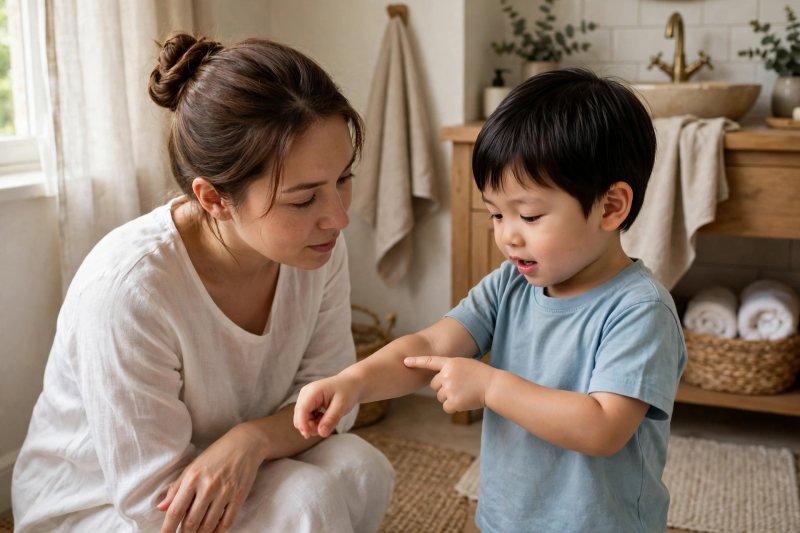
Notice, listen, and look together. Start by slowing down and hearing your child out before you touch a single product. Say: "Show me where it itches most — your job is to tell me, my job is to help it feel better." Look at the skin together in good light and note what you see in plain words: dry and flaky; red; bumpy; warm. Resist naming a condition — parents describe, pediatricians diagnose. Note when it started and what changed recently: new soap; new pajamas; a hot day; a pool swim. Written down, those observations make any doctor visit far more useful.
-
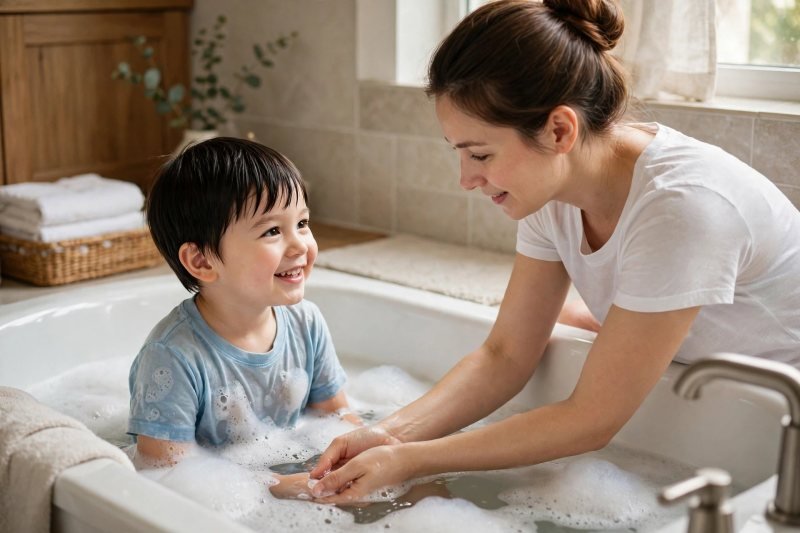
Run a short lukewarm bath. Fill the tub with lukewarm water — it should feel comfortably warm on your inner wrist, never hot — and keep the bath short, around ten minutes of play and washing. Say: "Short and warm, not long and hot — hot water makes itchy skin itchier." Wash gently with a fragrance-free cleanser only where your child is actually dirty, and skip bubble baths and scrubbing while skin is unhappy. Long soaks strip natural moisture, so the clock is part of the comfort routine. When the timer dings, lift your child out and move straight to drying.
-
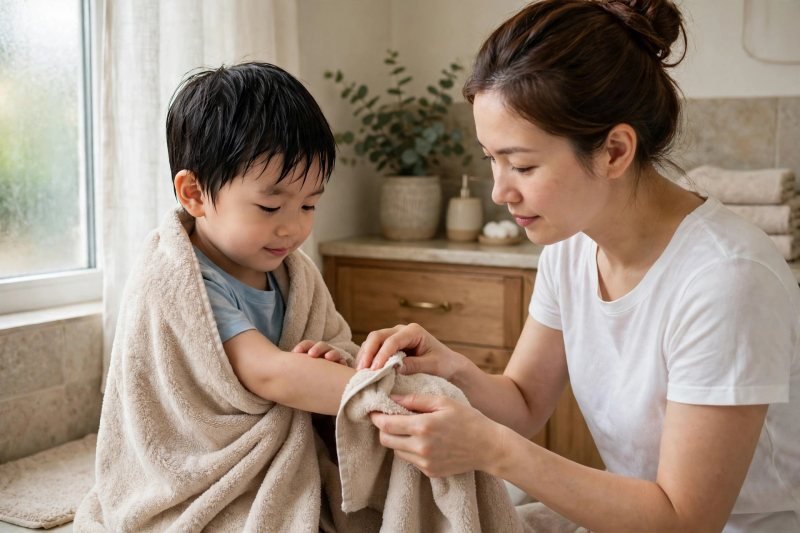
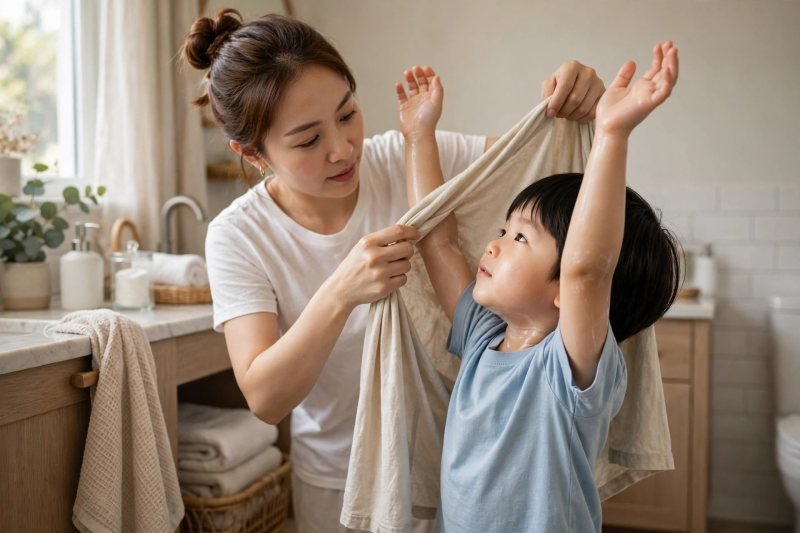
Pat dry, never rub. Use the soft towel the gentle way: press, lift, press, lift — the same tucking-in motion you would use on a sunburn. Say: "We pat like the towel is giving tiny hugs — rubbing would wake the itch back up." Leave the skin slightly damp on purpose, especially in the creases where itching loves to live — elbows, knees, neck, waistband lines. Rubbing with a towel is a hidden itch trigger all by itself, and damp skin is not a problem to fix: it is the setup for the most useful step in this whole routine, which happens in the next three minutes.
-
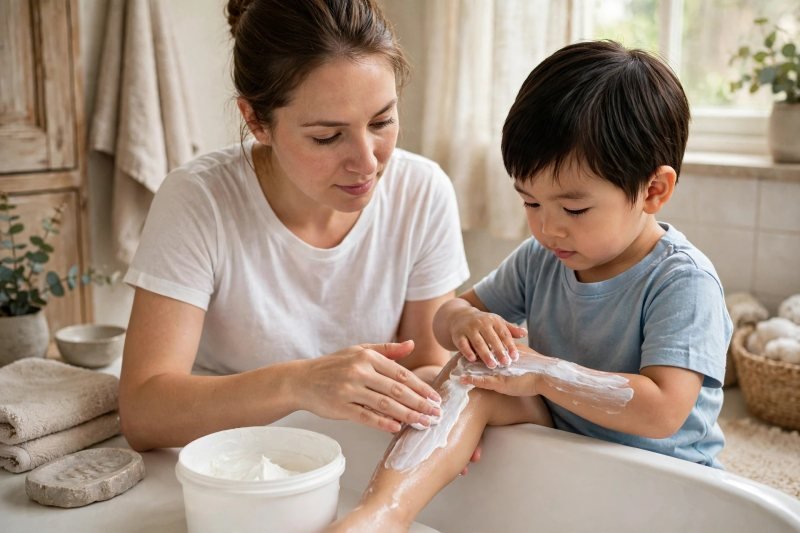
Moisturize generously on damp skin. Within about three minutes of the bath, smooth a generous layer of fragrance-free cream over the damp skin — this helps hold moisture in the skin instead of letting it dry out again. Say: "The cream is the lid that keeps the good water in." Use enough to leave a light sheen, and let your child cream the easy spots — shins, forearms — while you handle backs and creases. For very dry areas, a thicker cream suits better than a thin lotion. With the skin moisturized, the next job is dressing your child in fabrics that will not undo your work.
-
Dress in loose, soft cotton. Choose loose cotton clothing and pajamas with soft, flat seams, and remove scratchy tags before they go on. Say: "Soft clothes are part of the comfort plan — scratchy clothes are part of the problem." Heat and sweat are everyday itch amplifiers, so dress your child for the cool side of comfortable, especially at night when itching so often peaks. Wash new clothes before first wear and use a gentle, fragrance-free detergent; scented detergents are a common, fixable culprit. Dressed softly, your child is set up for the hardest part: keeping hands from scratching.
-
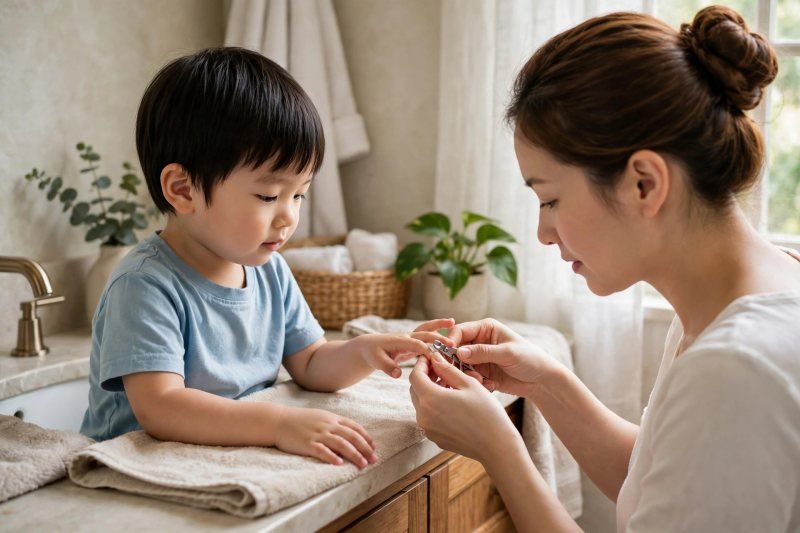
Shorten nails and give hands a job. Keep fingernails trimmed short and filed smooth, because even gentle scratching with long nails can break skin and invite infection. Say: "Short nails are scratch-proofing — now let's give your hands a better job." During itchy moments, hand over a job instead of a lecture: holding the cool washcloth from the next step; squeezing a soft ball; helping cream the easy spots. At night, soft cotton mittens or long pajama sleeves can blunt sleepy scratching for some kids. You are not punishing the scratch — scratching is a reflex — you are making it harder to do harm while the comfort steps do their work.
-
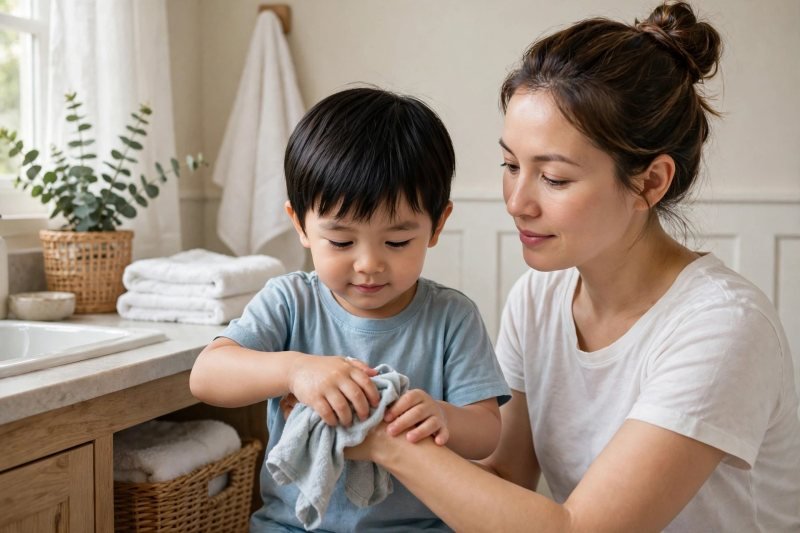
Soothe flare moments with a cool compress. When an itch wave hits, run a clean soft washcloth under cool water, wring it out, and lay it on the itchiest spot for a few minutes. Say: "Cool tells the itch to quiet down — hold it here and breathe with me." Let your child hold the cloth in place themselves; control is calming. Never apply adult itch creams, leftover prescription creams, or strong-scented home remedies to a young child's skin. Calmed for now, the smartest long game begins: noticing patterns.
-
Track patterns in a simple diary. After each itchy spell, jot four quick lines: what your child ate and did that day; what touched the skin (soaps, fabrics, pool, grass); the weather and heat; what seemed to help. Say to yourself, honestly: "I am collecting clues, not conclusions." Common contributors include dry air, heat and sweat, wool and rough synthetics, scented soaps and detergents, long hot baths, and chlorine — but only a clinician can sort out your child's specific cause. Two weeks of notes can reveal a pattern, and they are gold at a pediatrician visit. Patterns logged, the last step protects the night.

-
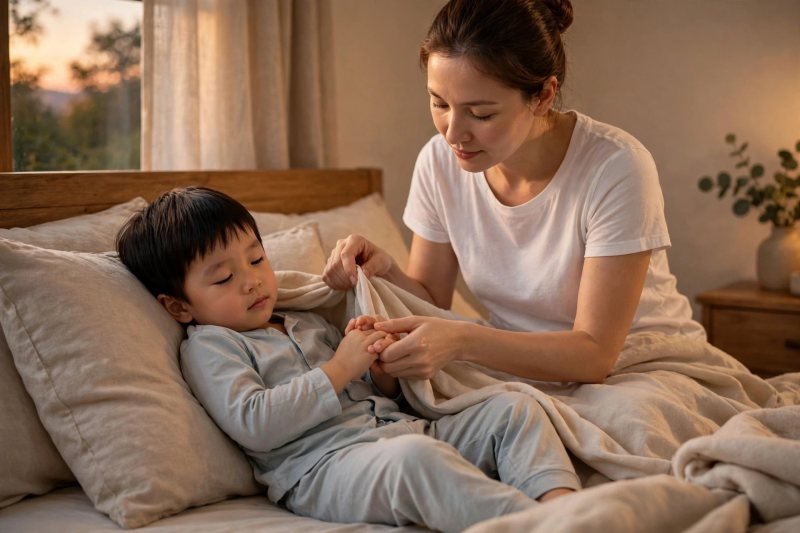
Protect the night and know when to call. Itching often feels worst at night, so run the full comfort sequence before bed: short lukewarm bath; pat dry; generous cream; soft cotton pajamas; a cool bedroom. Say: "We did every job — now your skin can rest while you sleep." Then hold the honest line this whole guide stands on: home comfort care has limits. Call your pediatrician promptly if the itching spreads, the skin oozes, crusts, or looks infected; if there is fever; if your child is not improving after a week or two of gentle care; if sleep is regularly disturbed; or if anything simply worries you. A pediatrician can examine the skin, identify the cause, and prescribe treatment when comfort measures are not enough — that visit is a success step, not a failure.


Make it easier
On mild days, run the short version: cream on damp skin after a quick rinse, soft pajamas, cool room. Keep the comfort kit in one caddy so a tired parent at 9 p.m. never has to hunt for the cream. Pair the routine with the same calm sequence as your regular wash — the gentle steps in this kids' skincare routine are the everyday baseline this guide builds on. If most products seem to bother your child's skin, strip the routine back to the gentlest basics with our sensitive-skin care guide for children.
Make it harder
Let your child run the diary: they dictate the four lines each evening while you write, building observation skills and honesty about what helps. Teach the body-map game: your child points to itch spots on a plain paper outline of a body, helping you track whether areas spread or shrink. Practice salon-calm hair and skin care together — gentle handling lessons from a first haircut guide transfer well to itchy-scalp days.
Other ways to play it
- Winter dry-air version: cream twice daily — our guide to the best moisturizer for kids' dry skin helps you pick a thicker cream — plus a bedroom humidifier if your pediatrician agrees, and extra attention to cheeks, hands, and shins, including dry skin on your child's face.
- Summer heat version: cool compresses after outdoor play, loose cotton all day, prompt rinses after pool time, and light breathable sleepwear.
- Travel version: pack the same fragrance-free cream and detergent routine you use at home — hotel soaps and sheets are a classic change-that-itches.
How it changes by age
- Ages 4–5: the focus of this guide. Fours and fives can report where it itches, hold compresses, help cream easy spots, and dictate diary lines — real help, not just patience. Expect honesty from them and give it back: "This helps it feel better; the doctor helps if it stays."
- Ages 2–3: you do everything, and comfort is mostly physical: lukewarm baths, cream, soft clothes, short nails, and a cool, calm sleep space. Toddlers cannot explain an itch well, so watch behavior — rubbing, fussiness at dressing, broken sleep — and lower your threshold for calling the pediatrician.
- Ages 6–8: most can manage cream and clothing choices with supervision and keep their own simple diary. Teach them the red-flag list in kid words: spreading, oozing, fever, or "it keeps me awake" means telling a grown-up right away.
- When to get help: see Safety notes and the final instruction step — spreading, oozing, crusting, fever, no improvement in a week or two, disturbed sleep, or any worry at all means your pediatrician, promptly. Never diagnose a skin condition yourself and never use prescription creams prescribed for someone else.
What they're learning
Body awareness: naming where it itches and how it feels builds the vocabulary kids need to get help early. Self-care habits: bath, pat, cream, soft clothes — a comfort sequence they progressively own. Observation skills: the diary teaches cause-and-effect thinking honestly, with a grown-up modeling "clues, not conclusions." Emotional regulation: compress, breathe, hands busy — a toolkit for coping with an uncomfortable feeling without panic.
Clearing up
"A longer, hotter bath will clean the itch away." The opposite — short and lukewarm wins. "Scratching means my child is being difficult." No — scratching is a reflex; shorten nails, soothe, and busy the hands. "Natural remedies are always gentler." Some irritate young skin; a simple fragrance-free cream is the reliable default. "If cream helps, we never need a doctor." Cream is comfort care, not a cure — persistent or spreading itch belongs with your pediatrician.
Questions parents ask
What are the most common causes of itchy skin in kids?
How can I relieve my child's itchy skin at home?
When should I take my child to the doctor for itchy skin?
Does scratching make itchy skin worse?
What should I avoid putting on my child's itchy skin?
Keep the diary going even on good weeks — a calm week with no flare is useful information too, and it shows your pediatrician what is working. If itchy nights keep stealing sleep, run the same bath, cream, and pajamas sequence as part of a slow wind-down rather than a rushed last job before bed. As your child grows, the routine grows with them — see when kids should start a skincare routine for the age-by-age picture.

save it for later
Pin this for the next rainy afternoon
Keep it on a board so it is there when you need it, rather than when you happened to find it.
Save to Pinterest


