


Sensitive Skin in Children: A Gentle Care Guide
Sensitive skin in children calms down when life around it gets simpler: fragrance-free products, short lukewarm baths, moisturizer within three minutes, and soft cotton clothes. This gentle care guide walks through the daily routine step by step, plus the signs that mean a pediatrician should weigh in.
Care for sensitive skin in children by simplifying everything: fragrance-free cleanser and cream, short lukewarm baths, moisturizer patted on within three minutes, soft cotton clothes, and fragrance-free laundry. Track flare-ups to find your child's personal triggers, and see a pediatrician for skin that cracks, oozes, or won't improve.

The short version
- Fragrance is the most common irritant — go fragrance-free for products, detergent, and wipes.
- Short (5–10 minute) lukewarm baths protect the skin barrier; hot, long soaks flare it.
- Moisturize within about three minutes of patting dry, while skin is still damp.
- Dress skin in soft cotton, remove tags, and wash new clothes before wearing.
- Keep a flare-up notebook — patterns reveal your child's real triggers within weeks.
- See a pediatrician for cracked, oozing, infected-looking, or stubborn skin.
- Age
- Ages 3–4
- Prep
- 10 min
- Play time
- 10 min
- Mess
- Low
- Difficulty
- Easy
- Where
- Indoor
Why kids love this
Children with sensitive skin love this routine because it stops the itch-scratch-distraction cycle that interrupts their play. The steps give them jobs — choosing the soft shirt, dotting the cream, starting the bath timer — and skin that feels comfortable lets them get back to the serious business of being four.
What you'll need
- One fragrance-free, gentle cleanser made for kids (or use water alone most days)
- A fragrance-free moisturizing cream or ointment (thicker than a lotion)
- Soft cotton towels — patting, never rubbing
- Soft, breathable cotton clothes with tags removed or covered
- Fragrance-free laundry detergent (look for "free and clear" styles)
- A bath timer or a favorite short song for bath length
- A simple notebook or phone note for tracking flare-ups
- Mineral sunscreen (zinc oxide based) for patch-testing before sunny days
Before you start
1. Do a shelf audit: set aside anything fragranced — scented lotions, bubble baths, glittery soaps. Fewer products, fewer reactions. 2. Patch-test every new product on the inner forearm and wait 24 hours before full use. 3. Set the water-heater mindset: baths will be lukewarm, never hot, and timed. 4. Start the flare-up notebook today with one line: what the skin looks like this morning. Future-you needs the baseline.
How to do it
-
Learn your child's personal triggers. Sensitive skin reacts to patterns, not random bad luck, so spend the first days as a detective: note when redness or itching shows up — after a hot bath; in a wool sweater; on playground-grass days; after a scented bubble bath. Say: "We're learning what your skin loves and what it doesn't." Common triggers are heat, fragrance, rough fabrics, long hot baths, and harsh soaps, but your child's list is the one that matters. Write each discovery in the notebook. This map drives every choice that follows, starting with the bathroom shelf.

-
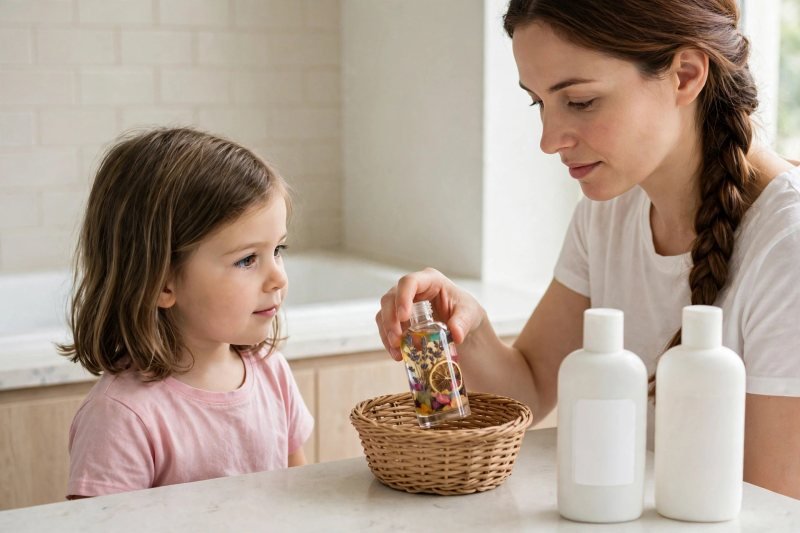
Simplify the product shelf to two basics. Sensitive skin needs a cleanser and a moisturizer — that's the whole team. Choose both fragrance-free and made for children, because fragrance is the most common irritant hiding in "gentle" products. Say: "Two helpers, that's all your skin wants." Park everything else — bubble bath, scented lotion, bath bombs — out of the routine for a full two weeks and watch what changes. If the skin calms, you've found a culprit without a single test. Fewer products also means fewer mystery reactions later. Shelf simplified — now the bath itself gets gentler.
-
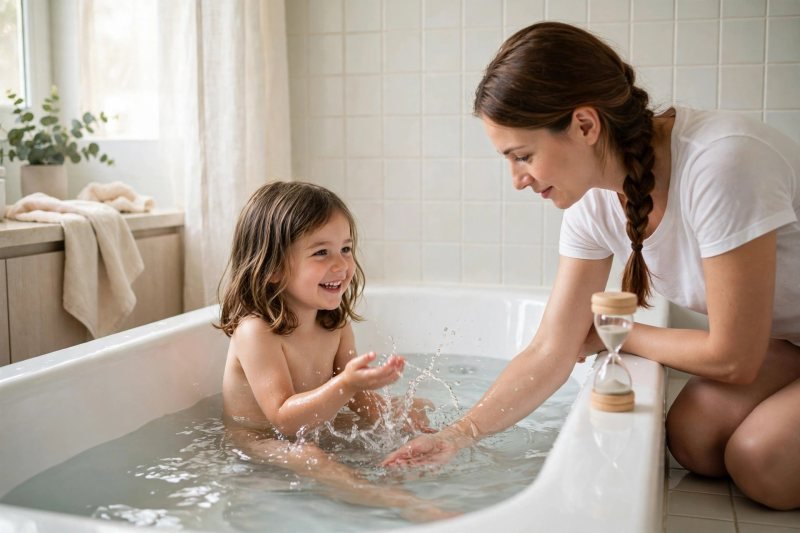
Keep baths short and lukewarm. Fill the tub with lukewarm water — comfortable on your inner wrist, never hot — and set the timer for five to ten minutes. Say: "Warm like a swimming pool, and the timer tells us when." Long, hot soaks feel cozy but strip the skin's natural oils and reliably flare sensitive skin by bedtime. Let your child play, splash, and wash in that window; baths are still fun, just edited. When the timer sings, out they come. This single habit — short and lukewarm — is the highest-value change most families make. Out of the tub, the clock starts on the most important step.
-
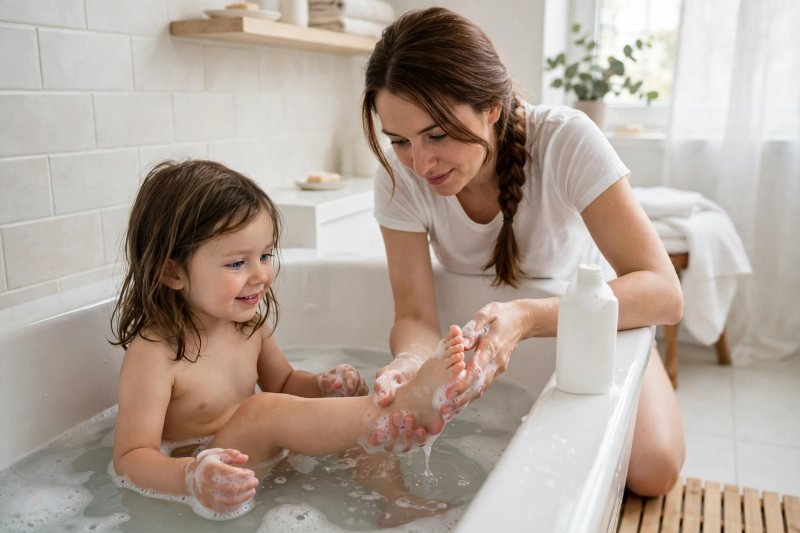
Wash gently, and only where it's needed. Young children don't need a full-body scrub daily. Use the fragrance-free cleanser on the genuinely dirty zones — hands, feet, diaper area or underwear zone, neck folds, and any visible grime — and let plain water handle the rest. Say: "Soap visits the dirty spots; water visits everywhere else." Use your hands, not rough washcloths or puffs, and keep the touch light: friction is an irritant too. On non-bath days, a quick targeted wash at the sink covers it. Gentle washing done, the moisturizer window is already ticking — move straight to drying.
-
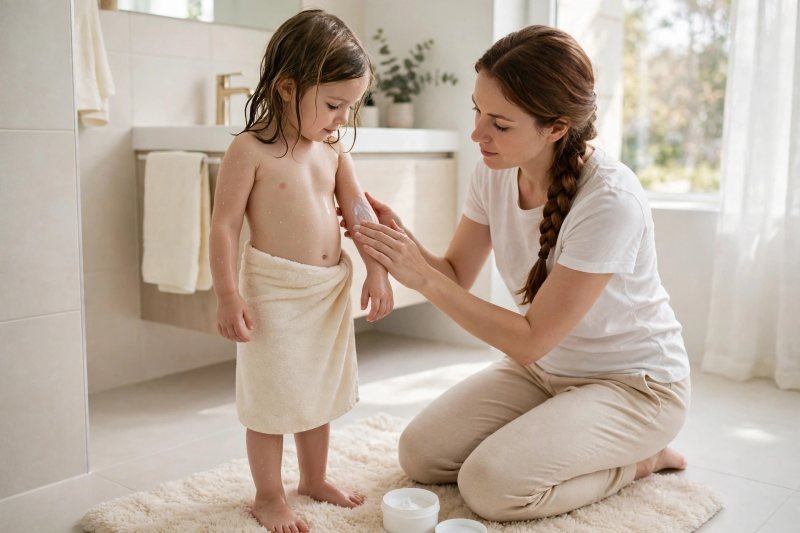
Pat dry and moisturize within three minutes. Lift your child out and pat the skin dry with a soft towel — press and lift, never rub. Then, while the skin is still slightly damp, smooth the fragrance-free cream or ointment over the whole body; this is the "three-minute rule" dermatologists teach, because cream on damp skin seals the bath's water in. Say: "The cream is the lid that keeps the water in your skin." Let your child dot the cream on their arms while you cover the rest — a pea-sized dab goes further than you'd think. Skin sealed and comfortable, it's time to dress it kindly.
-
Dress in soft, breathable fabrics. Choose cotton or other soft, smooth fabrics against the skin, and treat wool and scratchy synthetics as outer layers only, never the base. Say: "Soft shirt first — your skin's favorite." Cut out tags or cover them with a stitch of soft tape, wash new clothes before the first wear, and loosen anything that rubs at the neck, waist, or cuffs. In winter, a thin cotton layer under a warm sweater gives warmth without the itch. Dressed comfortably, your child forgets their skin — which is the entire goal. Clothing sorted — the laundry basket is the next quiet culprit.

-
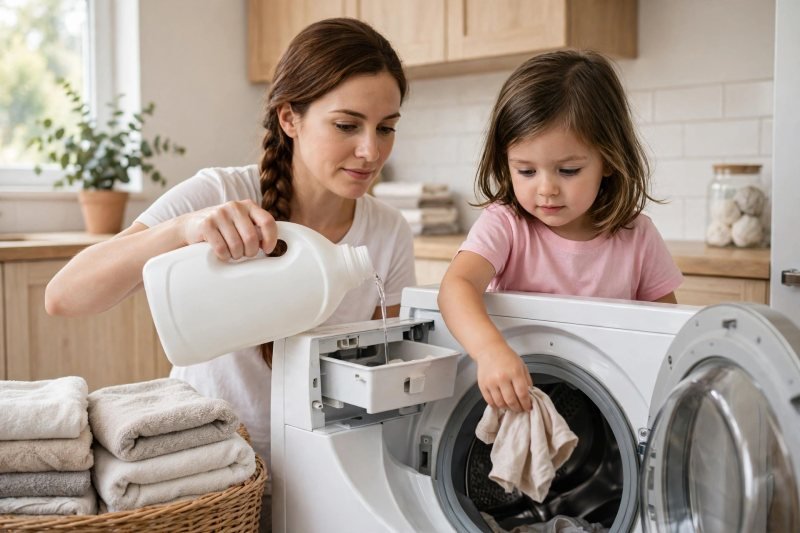
Wash clothes the fragrance-free way. Switch the household laundry to a fragrance-free, dye-free detergent and skip fabric softeners and scented dryer sheets on your child's clothes, bedding, and towels — residues sit against skin all day and all night. Say: "Your clothes get the gentle soap too." Run an extra rinse cycle for their loads; it costs nothing and removes leftover detergent. If grandparents or daycare wash their things, share the rule kindly once, in writing if needed. Clean, residue-free fabric is invisible care that works around the clock. With laundry handled, sunlight is the last daily factor to tame.
-
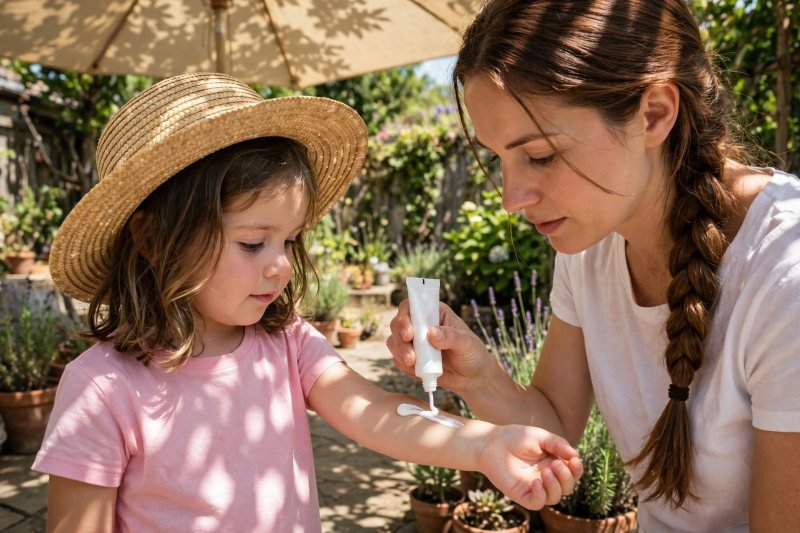
Protect from the sun the gentle way. Sensitive skin often dislikes chemical sunscreens, so patch-test a mineral (zinc oxide) sunscreen on the inner forearm a day before a sunny outing. Say: "This white cream is your sunshine shield — we test it first." Apply it before outdoor play, lean on shade and a hat at midday, and dress your child in light, covering cotton on high-sun days. After swimming or heavy sweating, reapply. If every sunscreen you try causes a reaction, ask your pediatrician for guidance rather than skipping sun protection altogether. Sun handled — now you learn whether all of this is working.
-
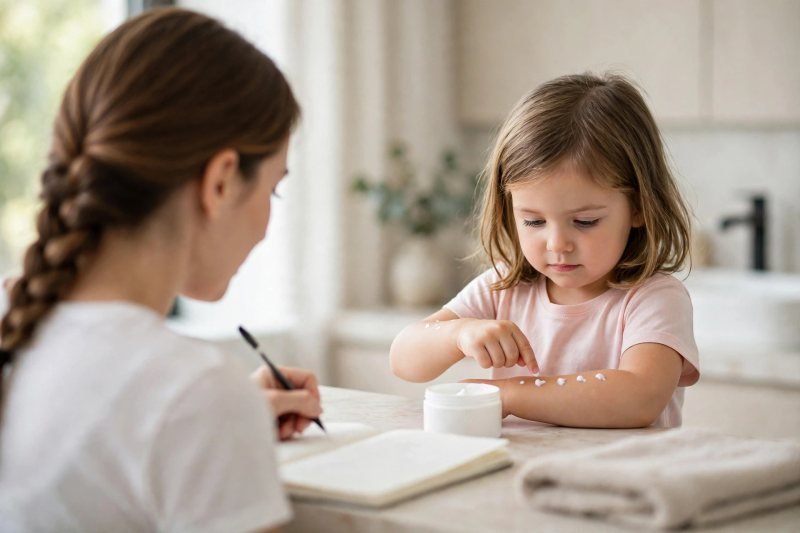
Track flare-ups like a scientist. Keep the notebook by the bathroom shelf and jot one line on flare days: what the skin did, what was different — new food, hot day, wool sweater, pool swim, new soap at grandma's. Say: "We're collecting clues about your skin." Patterns usually surface within a few weeks, and the notebook turns guesswork ("everything irritates her!") into a short, manageable trigger list. Bring it to pediatrician visits; a month of honest notes is more useful than any single appointment-day snapshot. Tracking underway, the final step is knowing the line between home care and medical care.
-
Know when to bring in the pediatrician. Book a visit if the skin cracks, oozes, or looks infected; if itching wrecks sleep night after night; if the rash spreads, blisters, or doesn't improve after two weeks of consistent gentle care; or if you suspect eczema or an allergy needs proper diagnosis. Say: "When our gentle steps aren't enough, the doctor adds stronger ones." A pediatrician can confirm what's going on and prescribe treatment when it's needed — never use another child's prescription cream or adult products to fill the gap. Most sensitive skin thrives on the home routine alone, but knowing this line keeps small problems small.



Make it easier
Change one thing at a time each week — baths first, then products, then laundry — so you can see which change actually helps. Keep the cream tub by the tub so the three-minute rule never depends on memory. For a very itchy day, a lukewarm oatmeal-style soak (products made for children's sensitive skin) and loose cotton pajamas can get everyone through the night.
Make it harder
Hand your child the notebook job: a sticker on calm-skin days turns tracking into a game and builds body awareness. Let them read labels with you — hunting for "fragrance-free" is early reading practice with a purpose, and part of the independence in our kindergarten readiness checklist. Once the routine is automatic, graduate to the full three-step kids' skincare routine — same gentle logic, more independence.
Other ways to play it
- Winter version: heated indoor air dries skin out — cream twice daily, keep baths at the short end, and consider a bedroom humidifier if your pediatrician agrees.
- Summer/pool version: rinse chlorine off with plain water straight after swimming, pat dry, and re-cream; keep the mineral sunscreen reapplying rhythm.
- Travel version: pack the two basics in travel sizes — hotel soaps and grandma's scented detergent are the top holiday flare triggers, and your notebook will prove it.
- Gentle hair washing: use the same fragrance-free rule for shampoo, and see our toddler first haircut guide for calm scalp-and-hair care.
How it changes by age
- Ages 2–3: you run everything; toddlers contribute towel pats and shirt choices. Reactions can look dramatic fast at this age — when in doubt, call the pediatrician sooner rather than later.
- Ages 3–4: this guide's sweet spot. Preschoolers can dot cream, start the bath timer, and report itches in words — teach them "tell me when it itches" as a household rule, the same way sensory play in these preschool learning activities at home teaches them to notice and name what their body feels.
- Ages 5–8: hand over the routine gradually — they wash, they cream, they pick the soft shirt — while you keep ownership of product choices and the notebook. Persistent or worsening skin at this age deserves a proper diagnosis if you don't already have one.
What they're learning
Body awareness: naming itches, heat, and comfort builds the self-knowledge that underpins all self-care. Habit sequencing: bath, pat, cream, dress — a four-beat routine they can run and recite. These routines are core life skills. Early science thinking: the flare-up notebook is genuine data collection — observe, record, spot the pattern. Emotional regulation: a child whose skin is calm sleeps better, plays longer, and melts down less — comfort is a learning tool.
Clearing up
Bath toys get a rinse and an air-dry (mold loves a damp duck), towels go straight to the laundry basket, and the cream tub lives on the tub's edge, lid on. Wipe the tub ring before it sets — fragrance-free cleanser leaves less residue, so this takes seconds. Notebook back on the shelf, timer reset, soft pajamas waiting: tomorrow's routine is already staged.
Questions parents ask
What causes sensitive skin in children?
How often should a child with sensitive skin bathe?
What moisturizer is best for a child's sensitive skin?
Can sensitive skin in children be cured?
When should I take my child to a doctor for sensitive skin?

save it for later
Pin this for the next rainy afternoon
Keep it on a board so it is there when you need it, rather than when you happened to find it.
Save to Pinterest

