


When Should Kids Start a Skincare Routine?
Most kids don't need a skincare routine until around age 6–8, and even then it stays simple: gentle cleanser, moisturizer, and sunscreen before outdoor play. Here's the age-by-age guide to starting — and the products to skip.
Most children do not need a skincare routine until around age 6–8, and even then it stays simple: a gentle cleanser at night, moisturizer after the bath, and sunscreen before outdoor play. Skip serums, acids, and fragranced products — children's thinner skin absorbs more, and most routines marketed to kids are unnecessary. Start with a shelf audit, patch-test each product, and keep the routine to three steps a child can own.

The short version
- Most kids don't need skincare before age 6–8
- The routine is three steps: cleanse, moisturize, protect from the sun
- Children's skin is thinner and absorbs products more easily
- Fragrance-free, gentle products only — no acids, retinol, or serums
- Patch-test every new product and stop if irritation appears
- Sunscreen matters for outdoor play, not for indoor days
- Age
- Ages 6–8
- Prep
- 5 min
- Play time
- 3 min
- Mess
- Low
- Where
- Indoor
Why kids love this
Kids love having their own little routine — a special wash, a dab of cream, a moment that feels grown-up. When the routine stays short and the products are theirs, children take ownership and actually want to do it. It becomes a calm part of the day rather than a battle.
Most children's skin needs far less than the internet suggests. Children's skin is thinner than adult skin, so it absorbs products more easily — which is why gentle, minimal products matter. The American Academy of Dermatology notes that children's skin can be more sensitive to fragranced products. If your child has eczema or very dry skin, see our guide to eczema signs in kids for when to ask a pediatrician, and our sensitive skin care guide for children for product choices.
What you'll need
- A gentle, fragrance-free cleanser made for children (look for "fragrance-free" on the label, not just "unscented")
- A plain moisturizer for kids or sensitive skin (fragrance-free, no active ingredients)
- A broad-spectrum SPF 30+ sunscreen for children (mineral or chemical — whichever your child tolerates)
- A plain lip balm (petroleum jelly or beeswax-based, no flavor or color)
- A soft washcloth and a small towel
- A small shelf, tray, or basket to hold the child's own products
- A doll or stuffed animal for practice runs (optional but helpful)
Before you start
1. Clear a low shelf or tray in the bathroom so your child can reach their own products. 2. Read the labels together and put away anything with fragrance, acids, or "anti-aging" claims — those stay for adults. 3. Patch-test each new product on a small area of the inner forearm and wait 24 hours. 4. Set the routine time — right after the evening bath works best for most families. 5. Keep sunscreen by the door or in the school bag so it gets used before outdoor play. 6. Explain the rule simply: "We wash, we moisturize, we protect from the sun. That's the whole routine."
How to do it
-
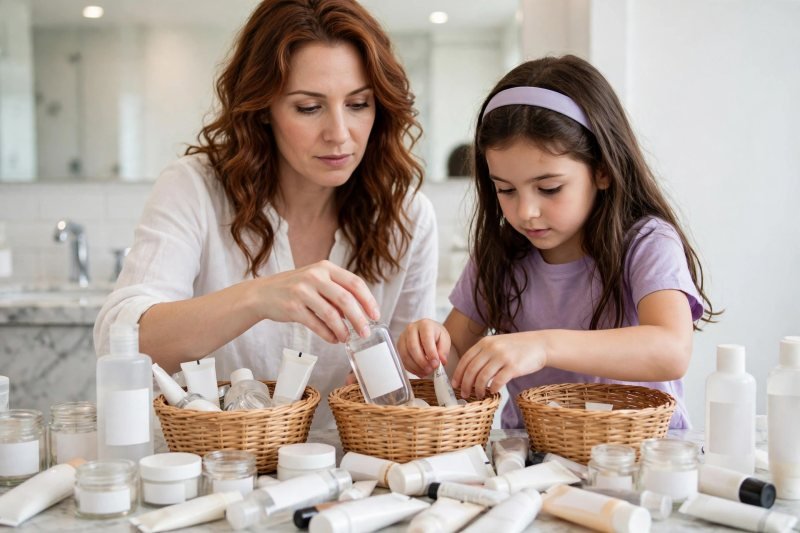
Start with a shelf audit. Go through the bathroom together and pull out anything that does not belong in a child's routine — your serums, acid toners, retinol, and strongly scented products. Explain that grown-up products are made for grown-up skin, and put them somewhere your child cannot reach. What is left should be three things: a gentle cleanser, a moisturizer, and sunscreen.

-
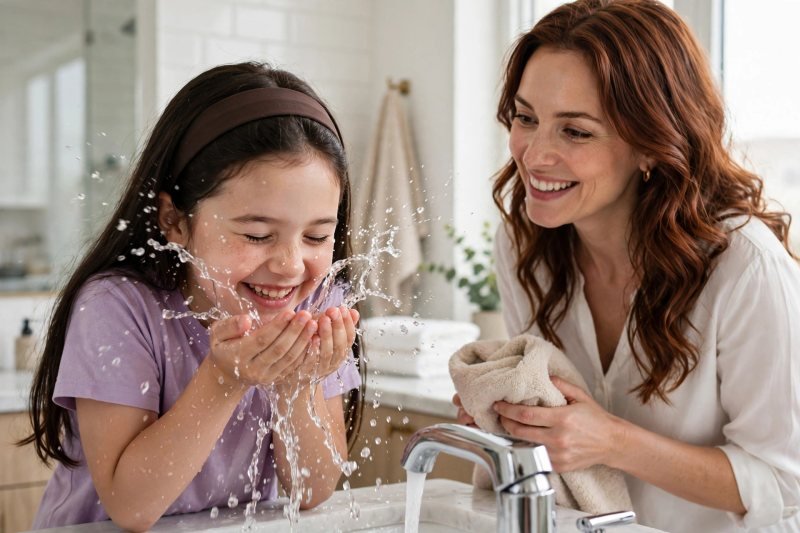
Cleanse once a day, at night. After the bath or shower, your child wets their face with lukewarm water, squeezes a pea-sized amount of gentle cleanser onto their fingertips, and massages it over their forehead, cheeks, nose, and chin for about 20 seconds. They rinse with lukewarm water and pat dry with a soft towel — no scrubbing, no washcloth friction. Morning washing is just a splash of plain water unless the face is visibly dirty.
-
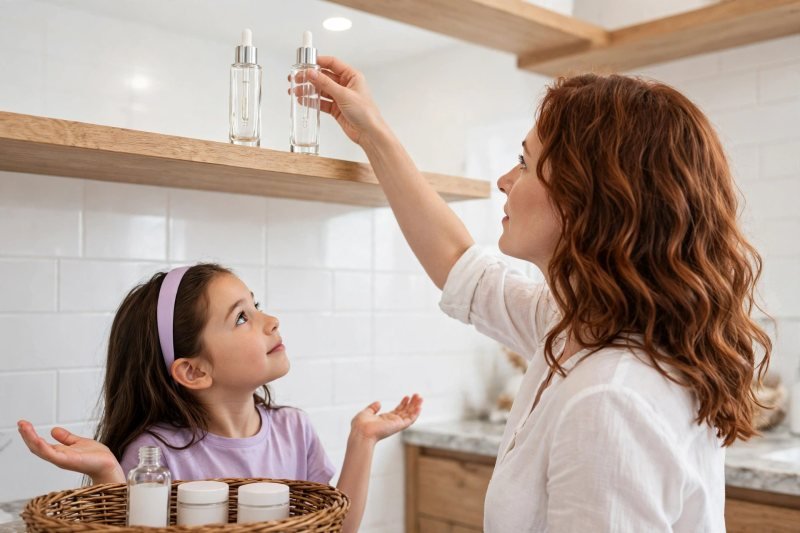
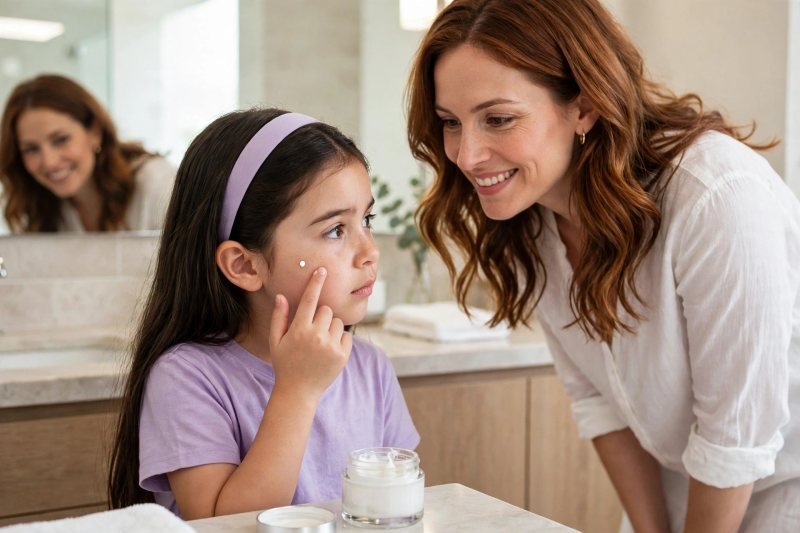
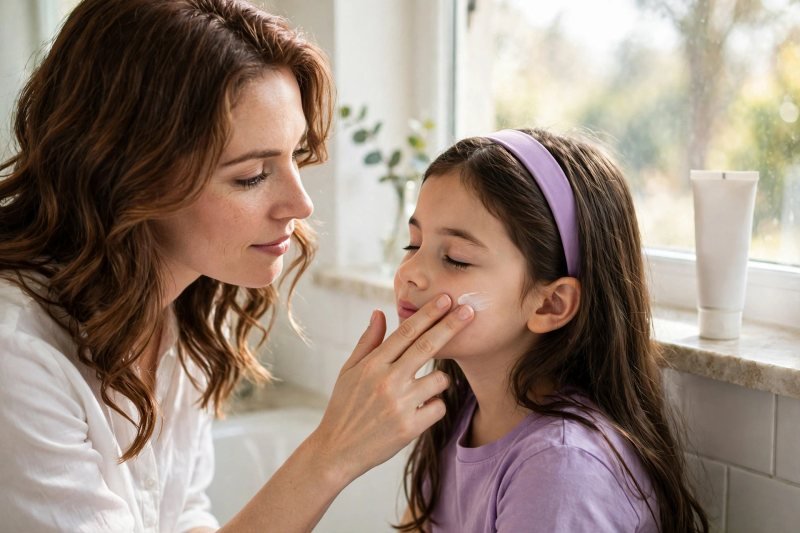
Moisturize right after the bath. While the skin is still slightly damp, your child smooths a pea-sized amount of plain moisturizer over their face and hands. Damp skin holds the moisture in, and the cream goes on more easily. This one step prevents most of the dry, tight feeling children complain about in winter, and it matters most after swimming or long baths.
-
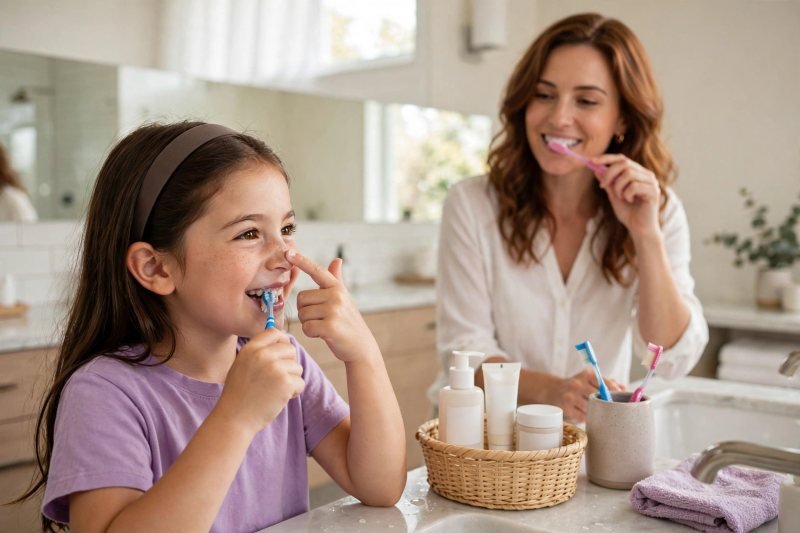
Add lip balm after brushing teeth. A thin layer of plain lip balm, applied right after evening tooth-brushing, stops the chapped-lip cycle before it starts. Keep the balm next to the toothbrush so the two habits link together, and choose one without flavor or color so your child is not tempted to lick it off.
-
Wash hands and face after messy play. After painting, playdough, sand, or snacks, a quick wash with lukewarm water and the gentle cleanser removes the residue that causes most childhood breakouts and irritation. No special products are needed — the same cleanser from the evening routine does the job, and the habit of washing after play protects the skin barrier better than any cream.
-
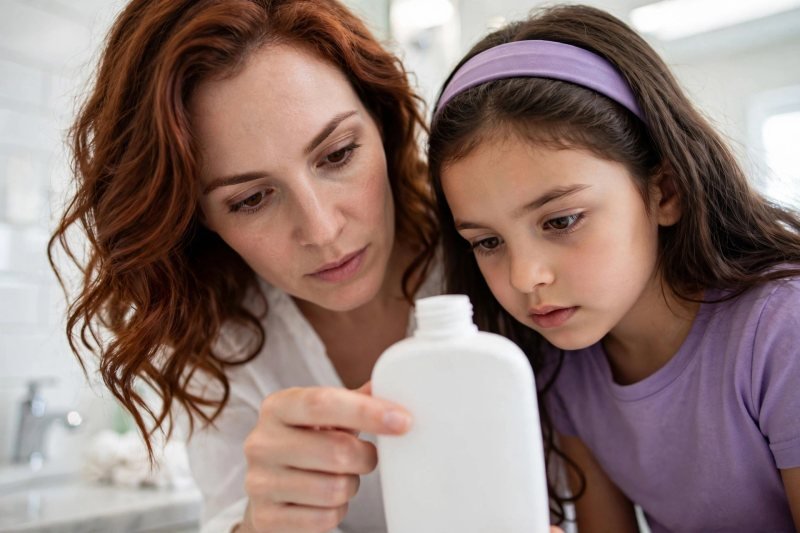
Choose products together, once. Take your child to the shelf and read two or three labels together, pointing out the words "fragrance-free" and "for sensitive skin." Let them pick between two parent-approved options so they feel ownership without being overwhelmed. Agree that no new product joins the shelf without a patch test and a parent's say-so, and that social-media recommendations do not count as evidence.
-
Apply sunscreen before outdoor play. On days with outdoor time, sunscreen goes on 15 minutes before going outside, covering the face, ears, neck, and the backs of hands. Use a generous amount — most children get far less protection than the label promises because too little is applied. Reapply after swimming or heavy sweating, and keep a spare bottle where you keep the shoes so it is part of getting ready, not an afterthought.

-
Practice the routine on a doll first. Before the first real session, let your child run the whole routine on a doll or stuffed animal: wet the doll's face with a damp cloth, dab on a dot of moisturizer, and pretend to apply sunscreen. The rehearsal turns an abstract set of instructions into a game they can lead, and it reveals which steps they have not understood yet while the stakes are zero.
-
Teach the "one pump" rule. Children love to squeeze, so agree on the portion before the first session: one pump or one pea-sized dot per product, no more. Show them the amount on the back of their own hand first so they can see what "enough" looks like, and praise the restraint as much as the routine itself — using less is the skill, not a restriction.
-
Review the shelf every couple of months. Sit down together and check what is running low, what has expired, and whether anything new has crept onto the shelf. Ask your child what they like and what feels annoying, and adjust the routine to their answers — a routine a child helps design is a routine a child will actually keep.



Make it easier
Start with moisturizer only for the first week, then add the cleanser. Use a visual chart with three pictures (wash, cream, sun) on the bathroom mirror. Do the routine together — children copy what they see far more than what they are told.
Make it harder
Let your child read the ingredient list and spot the word "fragrance" on their own. Add a weekly "skin check" where your child tells you how their skin feels and what might have caused it.
Other ways to play it
- The travel version: Decant the three products into small labeled bottles for holidays so the routine survives the trip.
- The sports version: Add a second sunscreen application before afternoon practice — sweat and water wash protection away faster than parents expect.
- The winter version: Swap to a richer moisturizer in cold months and add a humidifier in the bedroom if the air is dry.
- The sibling version: Give each child their own labeled tray so products are not shared and the routine feels personal.
- For dry patches that need extra care, see our guide to the best moisturizer for kids' dry skin.
How it changes by age
- Ages 3–5: No routine is needed. A splash of water, a dab of moisturizer on dry cheeks in winter, and sunscreen for outdoor play are the whole story. Anything more is marketing, not care.
- Ages 6–8: Start the simple three-step routine — cleanse at night, moisturize after the bath, sunscreen before outdoor play. This is the right window: children are old enough to follow steps and young enough to build the habit before peer pressure arrives.
- Ages 9–12: The same three steps continue, with the addition of deodorant when body odor starts and a conversation about puberty-related skin changes. Acne products should wait until breakouts actually appear, not before.
- Before you start, check readiness in a practical way: can your child follow a three-step sequence without reminders, reach the bathroom shelf safely, and tell you when a product stings? If all three are yes, they are ready for their own routine.
- If red, flaky patches appear on the cheeks or behind the knees, our guide to dry skin on kids' faces helps you decide whether it is simple dryness or something worth a pediatrician visit.
What they're learning
Body awareness: Noticing how their own skin feels and what it needs builds the habit of listening to their body. Sequencing: A three-step routine practiced daily is early executive function — remembering order, completing steps, and checking the result. Health literacy: Reading a label and asking "is this made for me?" is the beginning of critical thinking about products. Independence: Owning a small daily routine gives children a sense of competence that carries into other self-care tasks.
Clearing up
Put products back on the child's tray or shelf — the routine only works if everything is findable tomorrow. Wipe the sink and mirror; sunscreen and moisturizer leave a film that hardens overnight. Hang the washcloth to dry and replace it every few days. Check the sunscreen expiry date monthly — expired sunscreen loses protection silently.
Questions parents ask
At what age should a child start using skincare products?
Should kids use sunscreen every day?
Is CeraVe safe for kids?
What skincare products should kids avoid?
How do I know if my child's skin is sensitive?
A note on health framing: This article is general information, not medical advice. If your child has a diagnosed skin condition, follow your pediatrician's or dermatologist's plan — this routine is a starting point for typically developing skin, not a treatment.
Suggested follow-ups: A puberty skincare starter guide (ages 9–12) and a guide to choosing sunscreen for sensitive skin would extend this article naturally once those topics are drafted.

save it for later
Pin this for the next rainy afternoon
Keep it on a board so it is there when you need it, rather than when you happened to find it.
Save to Pinterest


