


How to Teach Sight Words to a 4-Year-Old: 7 Methods That Actually Work
How to teach sight words to a 4-year-old without tears? Seven playful methods that work — hunts, salt tracing, chants — in ten-minute sessions.
The best way to teach sight words to a 4-year-old is through short, playful methods: flash-and-find hunts, salt tracing, word-wall building, silly-sentence dictation, memory match, magnetic-letter building, and chant-and-clap games. Rotate two or three methods a week in 5–10-minute sessions, start with just two or three words, and add more only when each is recognized instantly.

The short version
- Start with just two or three sight words — small sets and early wins keep a 4-year-old asking for more.
- Teach through seven distinct playful methods: flash-and-find hunts, salt tracing, word-wall building, silly-sentence dictation, memory match, magnetic-letter building, and chant-and-clap games.
- Rotate two or three methods per week so repetition never turns into boredom.
- Review words in real picture books rather than timed quizzes — forgetting is normal and needs warmth, not pressure.
- Add new words only when the current ones are recognized instantly; a story-soaked four-year-old learns fastest.
- Age
- Ages 4–5
- Prep
- 10 min
- Play time
- 10 min
- Mess
- Low
- Difficulty
- Easy
- Where
- Indoor
Why kids love this
If you've ever wondered how to teach sight words to a 4-year-old without turning the kitchen table into a battleground, the answer is surprisingly simple: don't teach them like school. Four-year-olds learn with their whole bodies — their legs, their fingers, their giggles. The seven methods below treat sight words as the raw material for hunts, chants, silly sentences, and fridge-door engineering projects. Your child won't think they're practicing reading. They'll think they're playing the best game you've ever brought home — and the words will stick anyway.
What you'll need
- 10–12 blank index cards or sturdy paper, and one thick dark marker
- A shallow tray of table salt or fine sand
- Colorful magnetic letters (full alphabet, lowercase)
- Painter's tape and a low stretch of wall for the word wall
- A small pouch or envelope for the cards
- A notebook for silly sentences
- Your child's favorite picture books
Before you start
What makes sight words tricky for a 4-year-old? Sight words are the small, hardworking words that show up on nearly every page of early books — the, I, like, see, can. Some can't be sounded out with the letter knowledge a four-year-old has yet, which is why drilling them like spelling words backfires. At this age, words stick through seeing, saying, moving, and laughing — not through repetition alone.
How many words should I start with? Two or three. That's not a typo — two or three. A tiny set means every session ends in success, and success is what brings a four-year-old back tomorrow. "I," "like," and "see" make a perfect starter trio because they build real sentences immediately: "I see," "I like." Add more only when these are instant.
How to do it
-
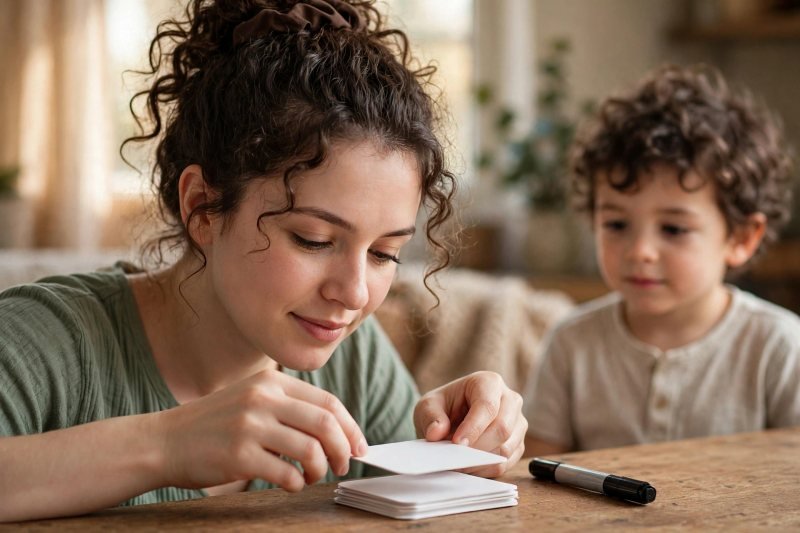
Make a starter set of three cards. Pick three short, friendly words that appear in your child's books — "I," "like," and "see" are a great first trio. Write each one in big, clear lowercase (capital "I" always), one word per card. Keep the rest of your cards blank for later. Small sets are the whole secret.
-
Run a flash-and-find hunt. Hide the three cards around one room — on the couch cushion, under the toy bin lid, on the fridge at eye level. Send your child to find one: when they spot it, they read it aloud before they get to grab it. Movement plus a tiny thrill beats sitting still every time.

-
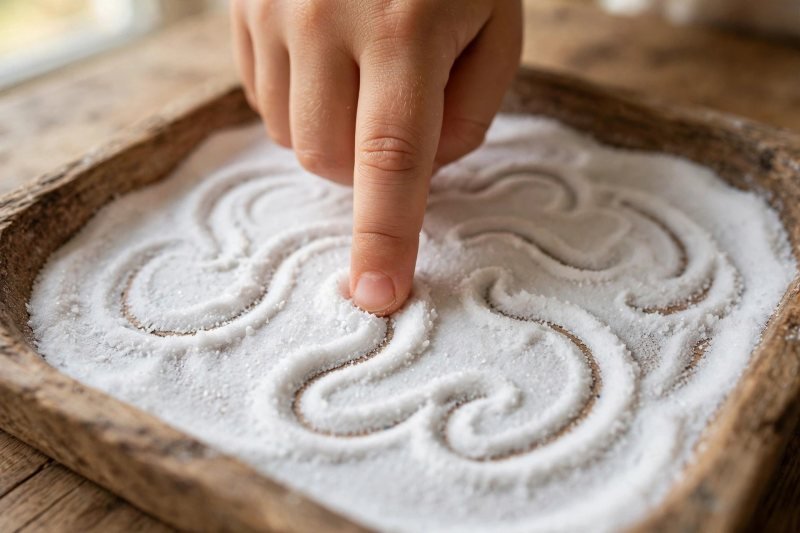
Trace the word in salt. Pour a thin layer of salt into the tray, say the word slowly, and have your child trace each letter with a fingertip while saying it. Big, whole-hand movements lay the word's shape into memory far better than staring at a card. Try it with eyes closed for a giggle.
-
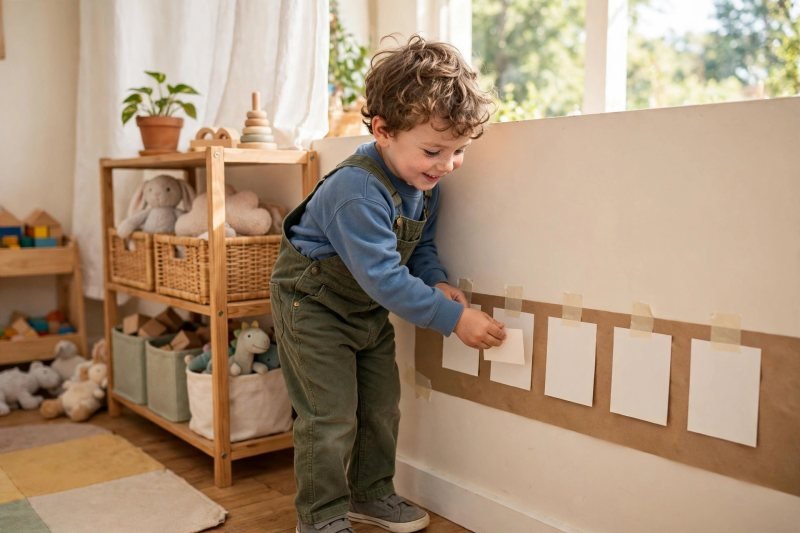
Build a word wall. Tape a low strip of paper on the wall at your child's height. When a word is recognized instantly for three days running, your child sticks that card to the wall themselves. The wall becomes their trophy shelf — and they will "read" it every time they walk past.
-
Dictate silly sentences. Hand your child the power of the pen without handing them a pen: they dictate a silly sentence using a known word ("I like purple spaghetti!") and you write it down fast. Read it back together, pointing at the known word as you say it. Words become jokes, and jokes become reading.

-
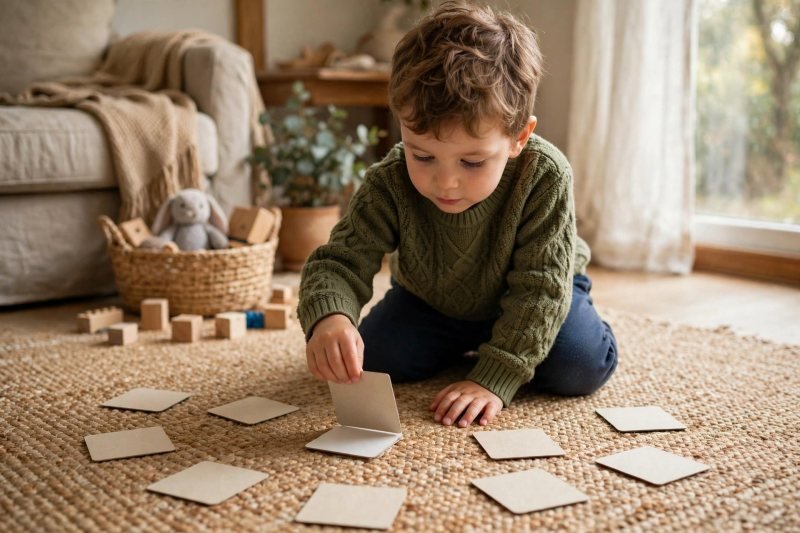
Play memory match pairs. Make a second set of your current words. Lay all the cards face-down on the rug; players flip two, reading each aloud, and keep the pairs they match. Every flip forces a read, and the game's suspense hides a dozen repetitions inside five minutes.
-
Read it, then build it. Show a card and read it together, then flip it face-down. Your child builds the word from scratch with magnetic letters on the fridge. If the order goes wobbly, flip the card back for one peek. Building after reading wires the word through the hands, not just the eyes.
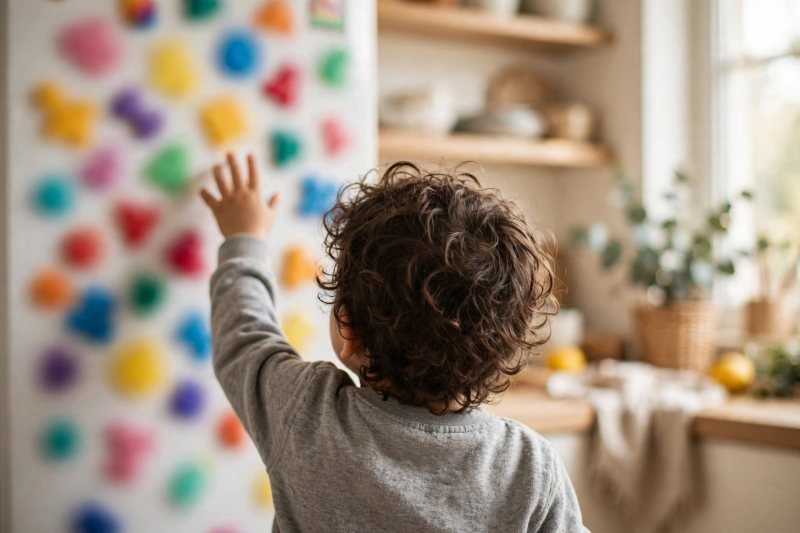
-
Chant and clap it. Give each word a silly chant: clap once per letter while shouting the letters, then stomp once while shouting the whole word. A four-year-old who marches around the kitchen chanting a word will remember it in their legs, not just their head.

-
Rotate the methods, review in books. Cycle through two or three methods per week — a hunt on Monday, salt tracing on Wednesday, a chant on Friday. Between games, review the old-fashioned best way: pause in a picture book whenever a known word appears and let your child "read" it. Real books are where practice turns into pride.

-
Add the next word only when the first three are instant. The signs are unmistakable: your child reads them without pausing, spots them on street signs, or asks for "more words." Then add two or three new ones — and our pre-K 40-word list is the natural next step.
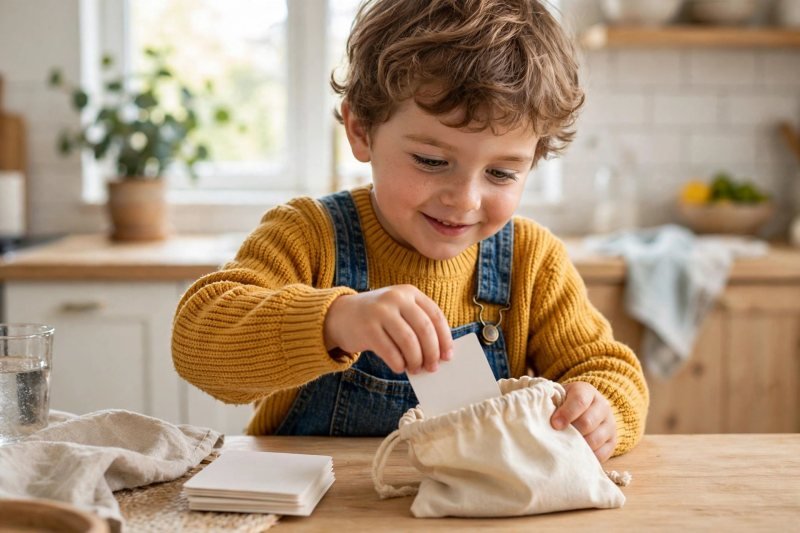


Make it easier
Start with just "I" and "like" — two words, one game a day. If you want the very first words picked for you, our first 10 sight words for preschoolers guide starts with exactly that trio. You read the card; your child just points, fetches, or slaps it. Shorten the chant to claps only; skip the salt tray for now.
Make it harder
Build the word from memory with magnetic letters before peeking at the card. Your child hunts for the week's words in library books without prompting. Dictate longer silly sentences that use two known words at once.
Other ways to play it
- Play flash-and-find outdoors with chalk on the driveway.
- Turn the chant into freeze-dance: shout the word, freeze, read it.
- Make the word wall a "word train" — tape cards in a row that grows down the hallway.
How it changes by age
- Young fours: three words maximum per week, five-minute sessions, follow their lead.
- Older fours (nearly five): up to four or five words, ten-minute sessions, silly sentences with two words.
- Not interested yet? Keep reading aloud every day — a story-soaked four-year-old builds more reading skill than any card game.
What they're learning
Instant recognition of high-frequency words — the foundation of reading fluency Print awareness: words are read left to right and look the same every time Confidence that reading is something they can already do Sentence sense: known words power their own silly sentences Letter awareness through magnetic-letter building
Clearing up
Store cards face-down in the pouch; out of sight between sessions keeps them fresh. Always stop while it's still fun — that's when children ask to play again tomorrow. Three words a week beats fifteen forgotten ones.
Questions parents ask
What is the best way to teach sight words to a 4-year-old?
How many sight words should a 4-year-old learn at once?
How long should a sight word session last for a 4-year-old?
Should I teach sight words or phonics first?
What should I do if my 4-year-old keeps forgetting sight words?
When should I add more sight words?
If your child already reads the starter trio instantly, skip steps 1–2 and jump to the build-it and dictation games. Sight words pair beautifully with sounding-out practice — our phonics activities are the natural companion. Our CVC words for kids guide is the gentle next step once the first words are instant, and our sight word games turn the same methods into races and relays.

save it for later
Pin this for the next rainy afternoon
Keep it on a board so it is there when you need it, rather than when you happened to find it.
Save to Pinterest


