


Free Printable Sight Word Flashcards: Pre-K and Kindergarten Sets
Two free printable sight word flashcard sets — a pre-K starter and kindergarten deck, sorted into color difficulty bands, plus five fun games for ages 4–5.
Grab the free printable sight word flashcards in the "Print it out" block on this page: a 40-card pre-K starter deck and a 50-card kindergarten deck, each sorted into color-coded difficulty bands. Print on cardstock, cut along the guides, and play one short daily game like Flash-and-Slap or Memory Match. Five to ten playful minutes a day builds the instant word recognition children need for early reading.

The short version
- Two free decks: a 40-card pre-K starter set and a 50-card kindergarten set, each organized into ten-card color bands from easiest to hardest.
- Only one band out at a time — ten cards is a small, winnable pile; clip the rest away until earned.
- Print on cardstock at "Actual size," cut along the guides, and laminate or tape the cards if they need to survive siblings.
- Five games keep practice playful: Flash-and-Slap, Hide-and-Seek Words, Build-a-Sentence Relay, Memory Match, and Word-Jar Pick.
- Five to ten minutes a day beats one long session — quit while it's still fun.
- Flashcards build recognition of high-frequency words; they work alongside phonics and read-alouds, not instead of them.
- Age
- Ages 4–5
- Prep
- 10 min
- Play time
- 15 min
- Mess
- None
- Difficulty
- Easy
- Where
- Indoor
Why kids love this
Children love these flashcards because they never feel like studying. The cards are bright, chunky, and satisfying to hold, and every "game" ends with your child having read something — which is the real reward. Flash-and-Slap turns reading into a race, Hide-and-Seek Words turns it into a treasure hunt, and the Word Jar gives them a tiny daily ritual they look forward to. There is no worksheet dread here; there is a deck of cards and a parent who wants to play.
What you'll need
- The two printable sets from the "Print it out" block on this page (pre-K starter set + kindergarten set)
- White cardstock if you have it (ordinary printer paper works too — the cards just bend sooner)
- Safety scissors for cutting
- Binder clips or rubber bands for sorting the cards by band
- Crayons or markers (optional — for decorating the backs)
- A zip-top bag, small box, or jar for storage
- Clear packing tape or laminating pouches (optional, for making the cards last)
Before you start
1. Grab the printable: download both PDF sets from the "Print it out" block on this page. 2. Print at "Actual size" (100%) so the cards come out evenly. Use color ink for the color bands if you can — grayscale works too, and the band names are printed on each card. 3. Decide where you'll keep the finished decks: a jar, a bag, or a small box all work. Storage ready means the cards survive past week one.
How to do it
-
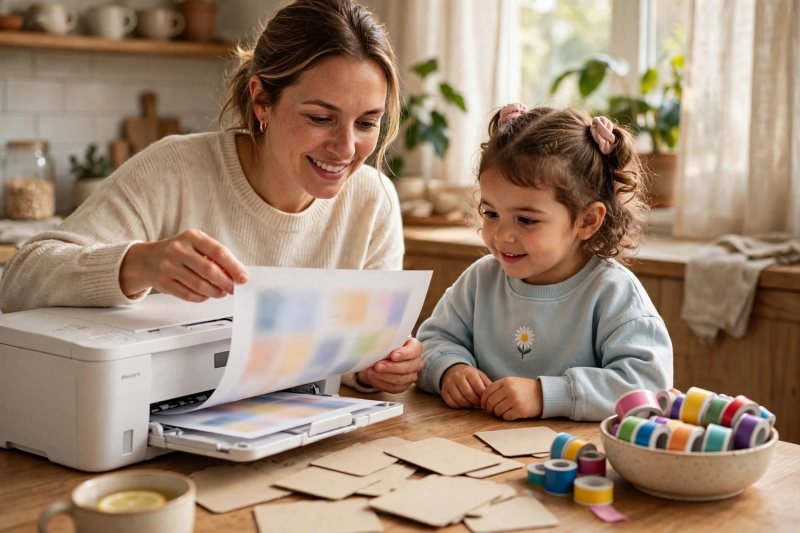
Print the pre-K starter set. This is the 40-card deck for beginners: four color bands of ten cards, starting with the gentlest little words. Print the whole set on cardstock if you can — heavier paper is easier for small hands to grip and survives enthusiastic slapping.
-
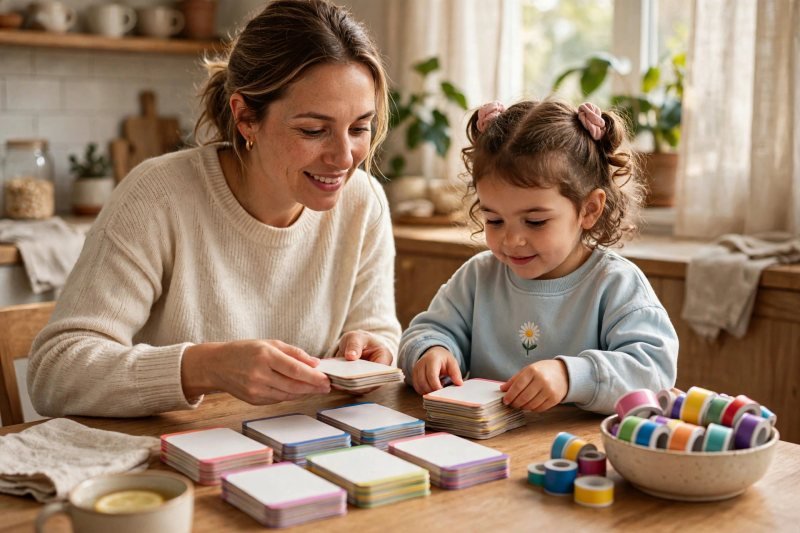
Print the kindergarten set. This is the 50-card builder deck: five color bands of ten cards, with slightly longer and trickier words for children who have outgrown the starter set. Print it now even if your child isn't ready for it yet — it's nice to have the next level waiting.
-
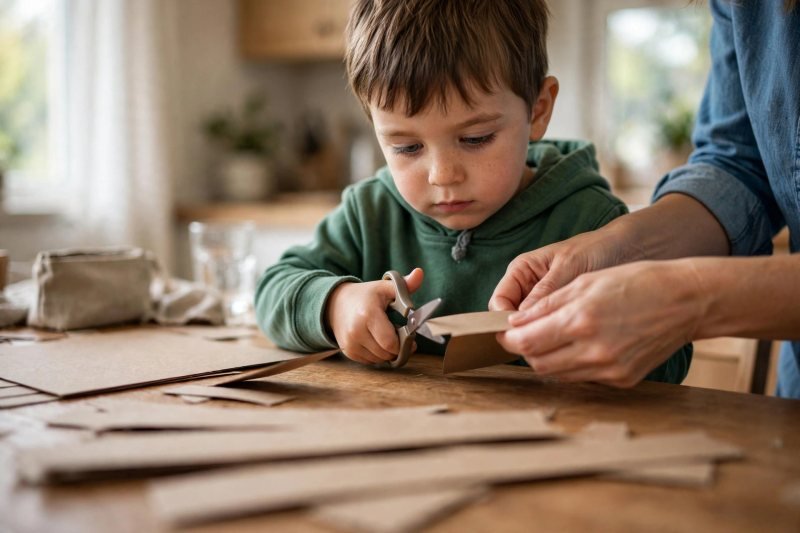
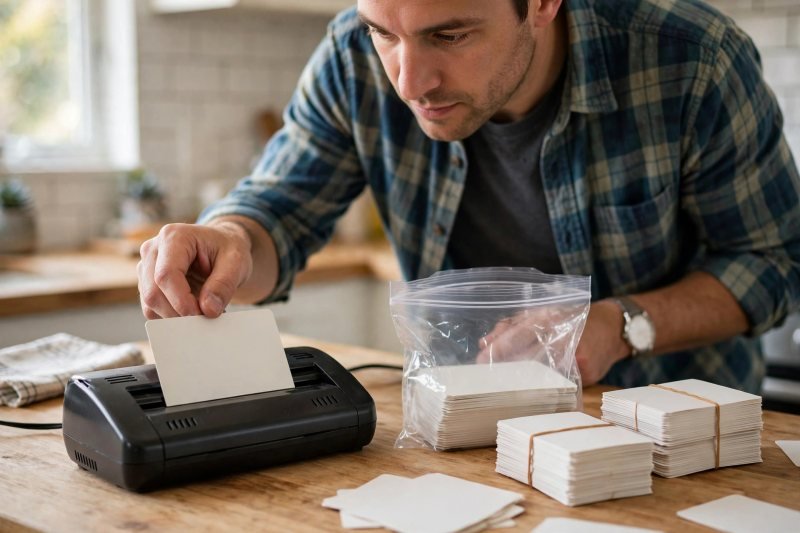
Cut the cards. Cut along the light guide lines on each page. If your child is cutting with you, use safety scissors and let them handle the straight cuts while you do the fiddly corners. Slightly rounded corners (a quick snip) keep the cards from curling at the edges.
-
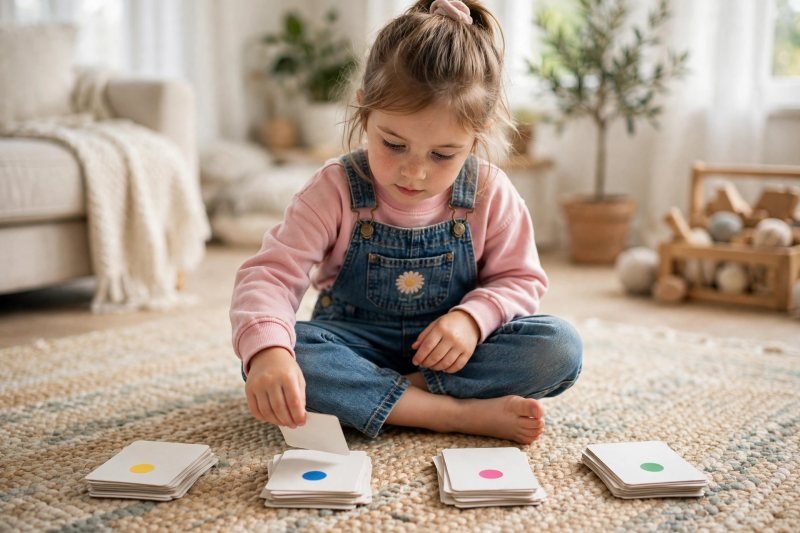
Sort each deck into its color bands. Each card has a colored corner dot and a printed band name. Make ten-card piles by band, then clip each band together with a binder clip or rubber band. You now have two starter piles (pre-K Bands 1–2) and two "later" piles — only the starter piles need to be in reach.
-
Laminate (optional) and store. If you want the decks to last through siblings, run them through a laminator — or simply lay a strip of clear packing tape over each card. Tuck the current band's cards into a zip-top bag or jar, and store the future bands somewhere you won't lose them. The "one band at a time" system is the whole secret to not overwhelming your child.
-
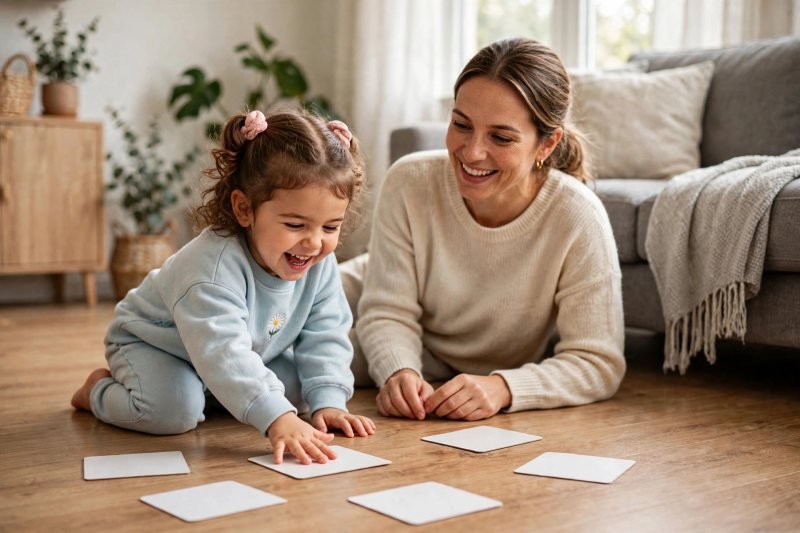
Play Game 1 — Flash-and-Slap. Lay five cards from the current band face up on the floor. Call out a word; your child slaps the right card and reads it aloud to claim it. First to collect the most cards wins — and yes, you should play too, and lose sometimes. Fast, physical, and brilliant for instant recognition.
-
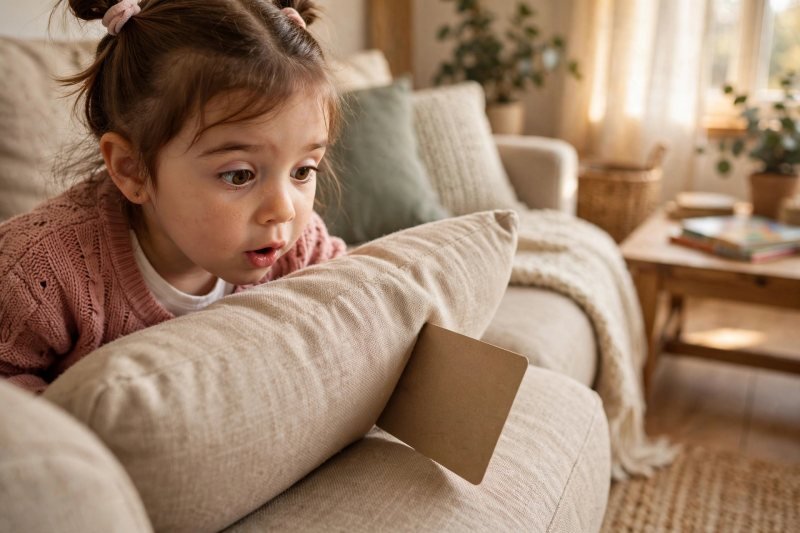
Play Game 2 — Hide-and-Seek Words. Hide five cards around one room (behind a cushion, under the table, tucked in a bookshelf). Your child finds them one by one and reads each word aloud to keep it. End with a recount of the haul: "Show me which word was hiding behind the plant." It feels like a treasure hunt, but every find is a reading rep.
-
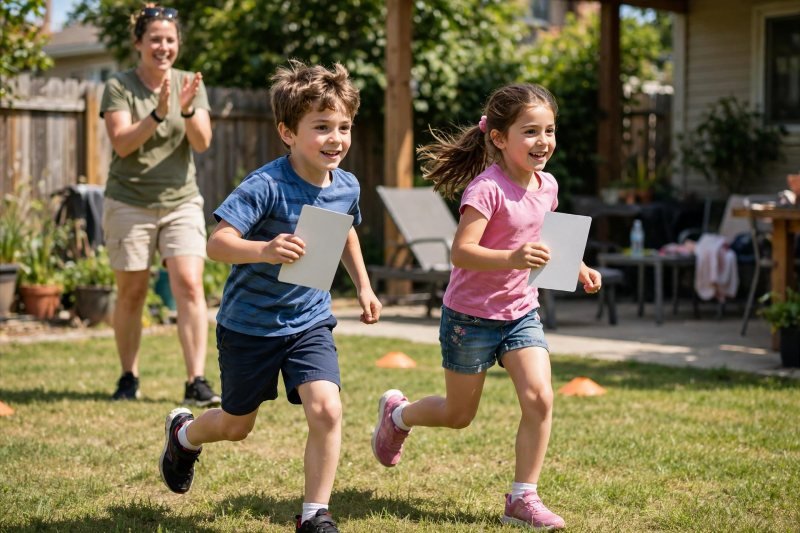
Play Game 3 — Build-a-Sentence Relay. Place the current band's cards at one end of the room and sit at the other with your child (a sibling or grandparent makes a fine second runner). Runners dash to grab one card at a time and bring it back, then the whole team arranges the cards into the silliest sentence they can — "I see the big dog" beats "the and a" every time. Read the final sentence together, dramatically.
-
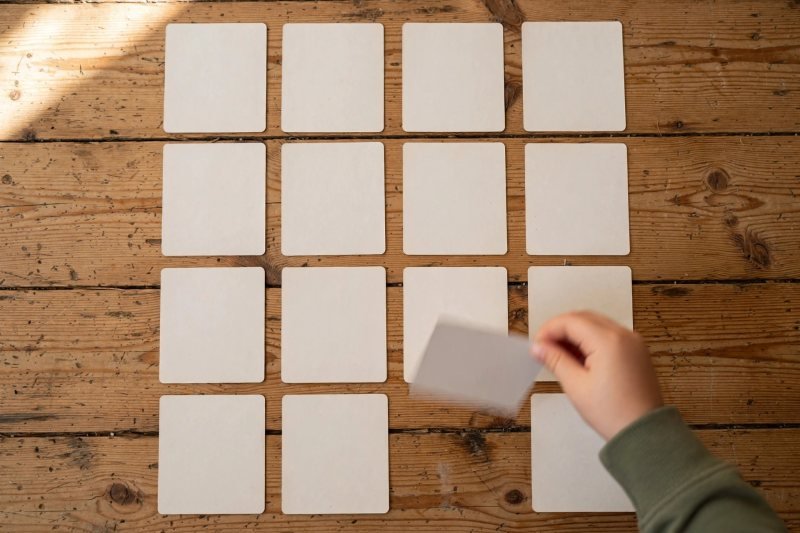
Play Game 4 — Memory Match. Take six pairs from the current band (twelve cards), mix them up, and lay them face down in a grid. Players flip two cards per turn, reading both aloud; matching pairs are kept. Saying the words out loud on every flip is the rule that makes this game teach reading instead of just memory.
-
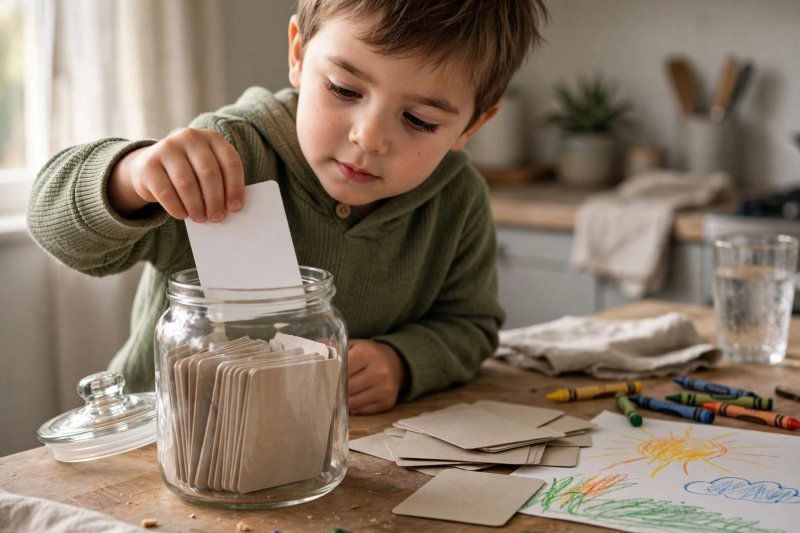
Play Game 5 — Word-Jar Pick. Put the current band's cards in a jar or bag. Each day, your child draws one word of the day, reads it, and finds it somewhere in real life — in a book, on a box, on a sign. Write it on the fridge if you like. When a band feels easy (your child reads 8 of the 10 instantly), retire it to the "known" pile and bring out the next band.


Print it out
Make it easier
Start with just five cards from Band 1 instead of the full band of ten. Read the words TO your child and have them simply point at the card you name — no pressure to read aloud yet. Tape three or four cards to walls and furniture at your child's height, so the words are just part of the scenery. Play only the Hide-and-Seek Words game for the first week; the thrill of finding carries the whole session.
Make it harder
Mix all four pre-K bands into one deck and race your child's own best time for reading ten cards (they compete against themselves, not anyone else). Your child must use each word in a spoken sentence before keeping the card. Graduate to the kindergarten deck's Bands 1–2 as soon as the pre-K set feels easy. Play Build-a-Sentence Relay with the rule that every sentence must make you laugh.
Other ways to play it
- Fridge word of the day: stick the jar's daily word on the fridge so everyone says it at dinner.
- Decorate the backs: let your child draw a tiny picture on the back of each card — their art becomes the memory cue.
- Bedtime spotting: keep five cards on the nightstand; read each one before the lights go out.
- Word walk: take the cards outside, lay them on the pavement, and hop from word to word reading each one.
How it changes by age
- This article is written for ages 4–5 (pre-K and kindergarten). A confident three-and-a-half-year-old can join in with Hide-and-Seek Words using just five cards — our first 10 sight words for preschoolers guide picks the gentlest five to start with; a six-year-old who has seen these words before can use the kindergarten deck for quick review games. Always follow the child — if it's a struggle, drop back to fewer cards, not more pressure.
What they're learning
Instant word recognition: the foundation of reading fluency — recognizing common words on sight frees up energy for sounding out new ones. Print awareness: words are read left to right, one word per card, and the same word looks the same every time. Memory and recall speed: games reward fast, confident retrieval — exactly the skill fluent reading requires. Turn-taking and fair play: every game has rules, winners, and gracious losers-in-training. Confidence: reading a word aloud and being right is a small triumph, and five minutes of play delivers several of them.
Clearing up
Flashcards alone don't teach reading. They build instant recognition of high-frequency words, which is one piece of the puzzle. Pair them with phonics practice and plenty of read-alouds. Don't drill or quiz under pressure. The games above are the whole point; if the cards start feeling like a test, put them away and come back tomorrow. Forgetting is normal. A word read perfectly on Monday may vanish by Friday — that's how memory works at this age. A quick re-visit beats a lecture every time. You don't need the whole deck out. One band of ten cards at a time is plenty. A small, winnable pile keeps confidence high — and if you want more game ideas, our sight word games use the same cards.
Questions parents ask
What's the best way to practice with sight word flashcards?
How many sight word flashcards should a 4-year-old start with?
Should I laminate sight word flashcards?
Can sight word flashcards teach my child to read on their own?
What age are sight word flashcards best for?
My child gets frustrated with flashcards — should we stop?
This is the hands-on companion to the word-list articles Sight Words for Pre-K: The Complete 40-Word Starter List and Sight Words for Kindergarten: The First 40 Words to Master — those tell you which words to teach; this tells you what to DO with them. For the teaching methods behind the games (why five minutes daily beats one long session, when to add new words), see How to Teach Sight Words to a 4-Year-Old.

save it for later
Pin this for the next rainy afternoon
Keep it on a board so it is there when you need it, rather than when you happened to find it.
Save to Pinterest


