


How to Teach CVC Words: A 6-Week Plan for Kindergarten Parents
How to teach CVC words to your kindergartener: a 6-week sequence — letter-sound warm-ups, one vowel family per week, then mixed practice and sentences — so your child reads cat, pig, and sun in about six weeks.
Teach CVC words in sequence: firm up letter sounds first, then teach one short-vowel family per week — short a, i, o, e, u — then mix the families and read short CVC sentences. Ten minutes a day takes most kindergarteners from letter sounds to reading words like cat, pig, and sun in about six weeks.

The short version
- Order is everything: letter sounds first, one vowel family at a time, then mixed practice, then sentences.
- Use the order short a, i, o, e, u — short e waits until short i is firm, since the two sounds get confused.
- Move on only when most of the week's words are read without help.
- Age
- Ages 5–6
- Prep
- 10 min
- Play time
- 10 min
- Mess
- None
- Difficulty
- Easy
- Where
- Indoor
Why kids love this
Random flashcards push children toward guessing. A sequence is a ladder: each week hands them one new tool, so they hear the sounds, blend them, then read real words. Ten minutes a day feels like a game, and five real words in week one make them ask to play again.
What you'll need
- 25 index cards and a thick black marker (5 words × 5 vowel families, lowercase)
- Wooden letter tiles or magnetic letters; a small sand tray (optional)
- 5 envelopes or baskets, one per vowel family; 6 paper sentence strips
- A favorite stuffed animal to "read to" each Friday
Before you start
Get the cards ready before day one. 1. Make your word cards, one per card in clear lowercase: short a — cat, hat, mat, bat, sat; short i — pig, big, sit, win; short o — dog, log, hot, pot; short e — bed, red, pen, ten; short u — cup, sun, bus, run. 2. Keep each family in its own envelope, and never show a family before its week. 3. Pick a daily ten-minute slot when your child is rested — and just say: "Want to play a sound game?"
How to do it
-
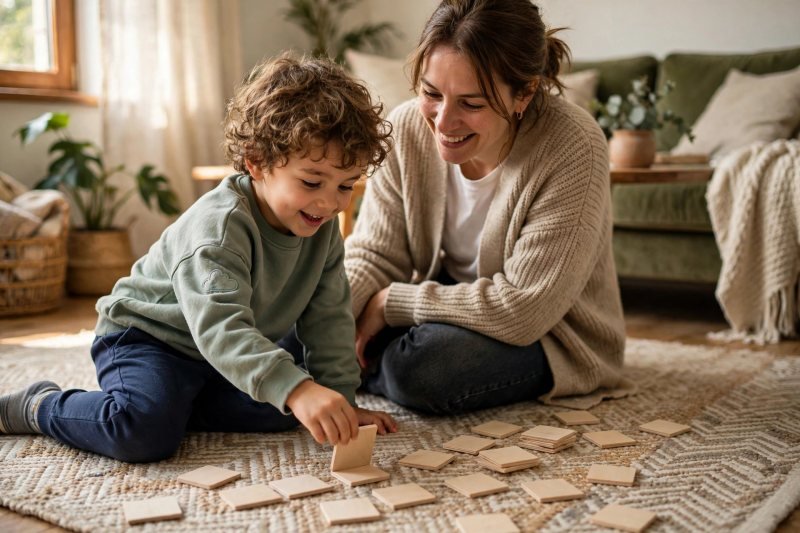
Warm up with Sound flip. Week 1: flip tiles and ask your child to say the sound, not the name — /m/, not "em." No reading this week — just firm, fast letter sounds, since wobbly sounds are why CVC practice stalls.
-
Play Robot Talk. Week 1: you say "c-a-t," and your child blends it into "cat." For more warm-up ideas, try our blending sounds activities.

-
Run a sound check. Week 1: your child should say 20 or more letter sounds instantly. If they cannot, repeat this week before moving on.

-
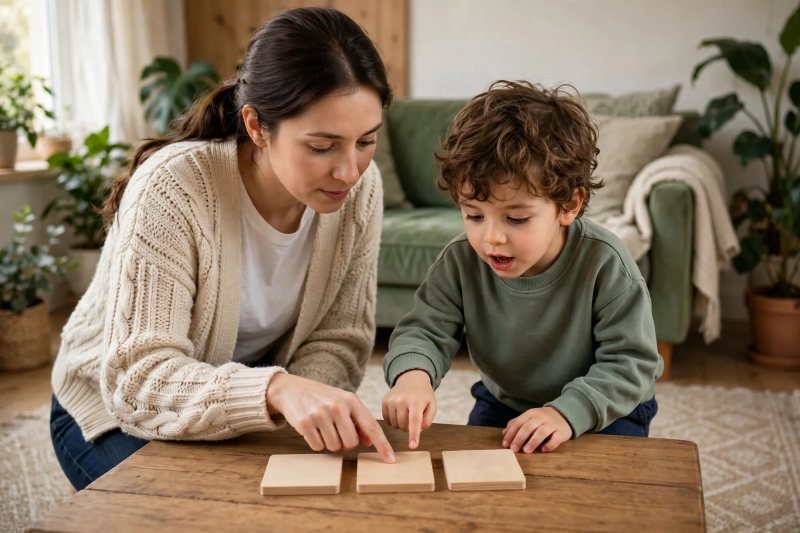
Model the blend. Weeks 2–5: point under each letter of "cat" — /k/…/a/…/t/ — slowly, then faster until it melts into "cat."
-
Read short a. Weeks 2–5: teach one new word a day — cat, hat, mat, bat, sat. Stretch the sounds together, then let your child try alone; if they rush, say "Make those sounds loooong." Friday's finale: your child reads all five to the stuffed animal, and the week is done when all five are read without help. For extra short-a practice, use our short-a CVC words list.

-
Add short i and short o. Weeks 2–5: short i — pig, big, sit, win; short o — dog, log, hot, pot. Ask, "Hear how the middle sound changed from /a/ to /i/?" Then play Vowel Switch: build "hot," swap the middle vowel, build "hat." Short e waits its turn on purpose — /e/ and /i/ are the sounds kindergarteners mix up most. Move on when your child reads all three families and can name the middle vowel in each word.

-
Add short e and short u. Weeks 2–5: short e — bed, red, pen, ten; short u — cup, sun, bus, run. If they mix e and i, exaggerate the contrast: "Piiiig. Peh-en." Move on when all 25 cards are read and the e/i confusion is mostly gone.

-
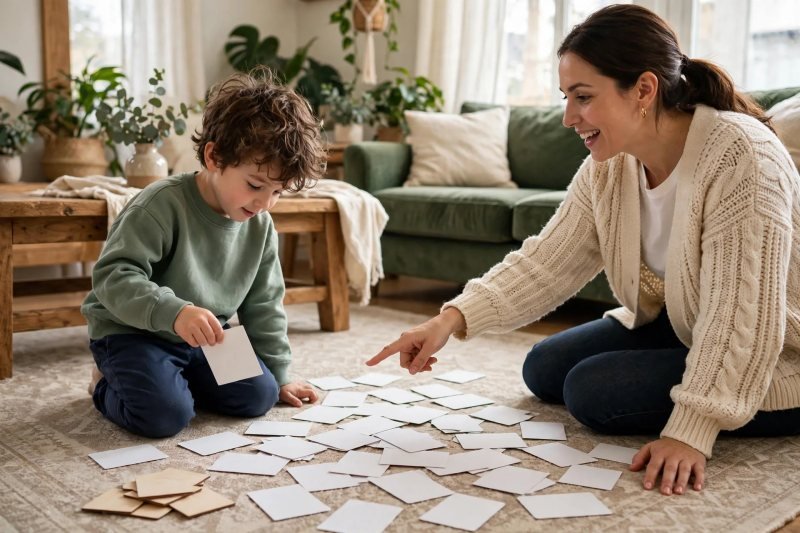
Shuffle and play. Weeks 5–6: shuffle all 25 cards and read them one by one. Play Read and Fetch: spread the cards face-down — "Find 'sun'!" — then flip and read. Play Build-It Relay: call a word, and your child builds it from tiles and reads it. Mixed practice is where reading becomes real, because words arrive in no order, like books. Move on when any 20 of the 25 are read on first try at a natural pace.
-
Write the sentence strips. Weeks 5–6: write six strips — "The cat sat on the mat." / "The pig is big." / "The dog got hot." / "I see a red pen." / "The sun is up." / "A bus can run." Read one strip a day, pointing word by word. Every word except "the" is a taught CVC word.

-
Hold a reading celebration. Week 6: read all six strips aloud — to the stuffed animal, of course — with fewer than one stumble per sentence. When sentences start flowing, our how to teach your child to read guide shows what comes next.



Make it easier
Two weeks per step is fine — order matters more than pace. Trace new words in the sand tray before reading them, and drop back one step at the first sign of frustration.
Make it harder
After Step 8, try still-decodable longer words like "frog" or "step," or have your child spell a word aloud from memory before checking with the tiles. For extra play, try our CVC word games.
Other ways to play it
- Sidewalk Sound Path: write the week's five words in big chalk; your child hops from word to word, reading each.
- Word Basket Sort: mix two families in a basket; your child sorts them back by middle sound.
- For more sound play, try our phonics activities for preschoolers.
How it changes by age
- Most five- and six-year-olds are ready when they know most letter sounds and can clap a word's syllables. If they only know letter names, spend two extra weeks on Step 1 with sounds only.
- If you miss days or a whole week, resume where you left off. Re-read the previous week's cards as warm-up for two days, then continue. Never skip ahead to "catch up."
What they're learning
Blending (merging sounds into words), letter-sound fluency, left-to-right tracking, and — at Step 6 — vowel discrimination, which separates readers from memorizers. By Step 9 they decode sentences. For the full first-words collection, see our CVC words for kids.
Clearing up
If your child reads "sun" instantly but cannot stretch s-u-n on request, they memorized the shape — and yes, that is a problem. Have them stretch every word before saying it, and add words they have never seen. Use letter sounds only. "Cee-ay-tee" never blends into "cat," but /k/…/a/…/t/ does. Keep letter names for the alphabet song, and write cards in lowercase like real books.
Questions parents ask
What is the best order to teach CVC words in?
How long does it take to teach CVC words to a kindergartener?
What should my child know before starting CVC words?
How do I stop my child from memorizing CVC words instead of sounding them out?
Keep the five family envelopes in a shoebox so setup takes ten seconds. Date each card's back when your child first reads it — a lovely keepsake.

save it for later
Pin this for the next rainy afternoon
Keep it on a board so it is there when you need it, rather than when you happened to find it.
Save to PinterestTry this next
-

The Silent E Rule Explained for Parents: When E Makes the Vowel Say Its Name
Ages 5–6
-

Short U CVC Words: 30 Words (Sun, Cup, Bus) for New Decoders
Ages 5–6
-

Short O CVC Words: 35 Words (Dog, Box, Frog) + Printable List
Ages 5–6
-

Short I CVC Words: 40 Words (Pig, Pin, Sit) for Kindergarten Readers
Ages 5–6


