


The Silent E Rule Explained for Parents: When E Makes the Vowel Say Its Name
A parent-friendly guide to the silent e rule: how a final e makes the vowel say its name, the honest exceptions, and fixes for over-applying.
The silent e rule says that in a word ending with vowel-consonant-silent e, the e makes no sound and the vowel says its name — cap becomes cape, kit becomes kite, hop becomes hope, cub becomes cube. Teach it as "the e reaches back and taps the vowel." Words like have, love, and one break the rule and must be memorized whole.

The short version
- The silent e rule (VCe): a final silent e makes the vowel say its name — cap → cape, kit → kite, hop → hope, cub → cube.
- One consistent story: the e reaches back and taps the vowel on the shoulder.
- Teach it only once short-vowel reading is solid.
- Memorize seven rule-breakers whole: have, come, love, done, one, give, some.
- The e has other jobs: -le endings (apple), marking sounds (house), softening c and g (dance, large).
- Praise over-application before correcting it.
- Age
- Ages 5–6
- Prep
- 5 min
- Play time
- 10 min
- Mess
- None
- Difficulty
- Easy
- Where
- Indoor
Why kids love this
The silent e rule gives your child a code-cracking moment: cap changes to cape in front of their eyes. Once the "reaches back" story clicks, they'll spot silent e's everywhere.
What you'll need
- Index cards or paper cut into cards, and a marker pen
- A small jar, cup, or envelope — the "rule-breaker jar"
- One picture book for the spotting step
Before you start
1. Write six short-vowel words your child reads easily, one per card: cap, kit, hop, cub, pin, not. 2. Write the seven rule-breakers — have, love, come, done, one, give, some — and keep them in the jar, out of sight for now. 3. Rehearse your one story: "The silent e never makes a sound. It reaches back and taps the vowel on the shoulder — and the tapped vowel sits up and says its own name."
How to do it
-
Start with a word your child already owns. Hold up cap and read it together. If it is still effortful, stop — the rule only lands when the short word is easy. Build the base with our CVC words list first.

-
Introduce the silent e with your one story. Place the e at the end: "This e never makes a sound. It reaches one hand back and taps the vowel on the shoulder — and the tapped vowel sits up and says its own name."

-
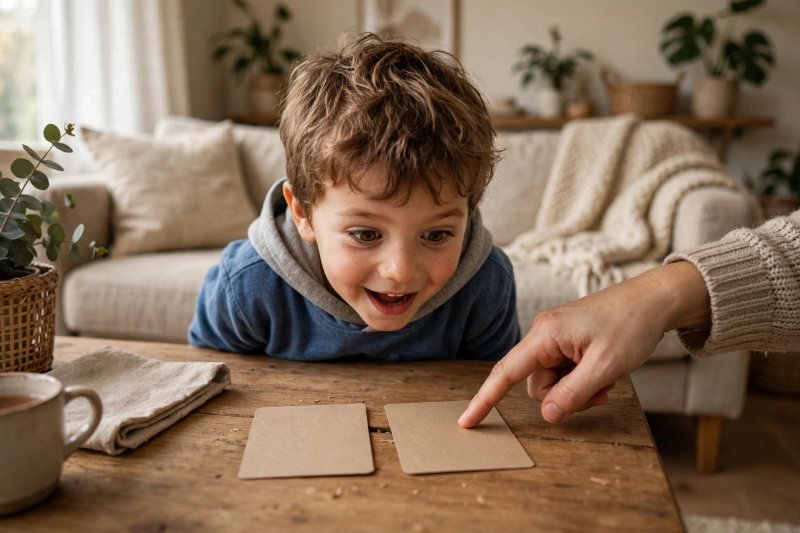
Show the change. Read "cap," slide the e in, and stretch the new vowel: "caaape." Exaggerate it. "Did you hear the e tap the a?"
-
Hand the reading to your child. Let them read cap, then cape, alone. Praise the long vowel: "That long a — you heard the tap."

-
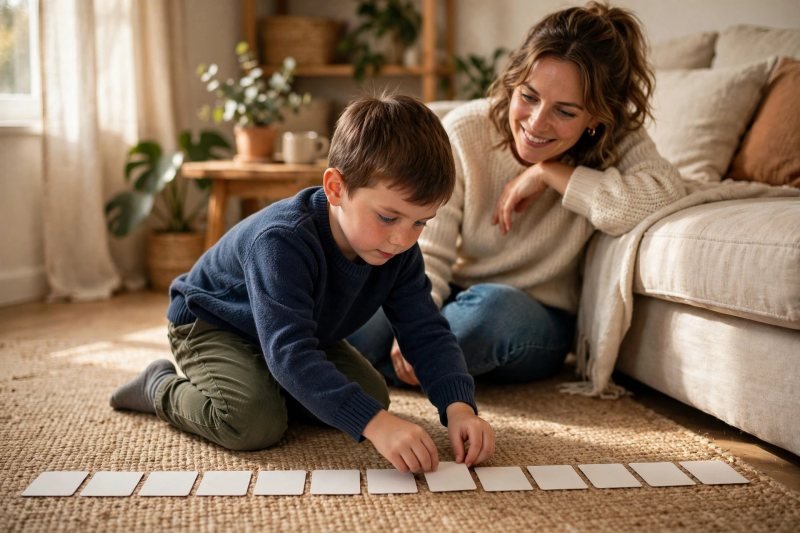
Try a second pair, then let them predict. Do kit → kite together; on hop → hope, pause first: "What will happen to the o?" Prediction makes the rule theirs.
-
Know the pattern yourself; keep the story for them. VCe means vowel, consonant, silent e — exactly one consonant between. With no consonant (toe), a different pattern applies.

-
Introduce the rule-breakers honestly. Open the jar — have, love, come, done, one, give, some: "These won't listen to the e. English kept them as they are, so we memorize them whole."

-
Show the e's other jobs. In apple and table, the e finishes the -le ending; in house and horse, it marks how the s sounds. It taps no vowel in either.

-
Mention the softening job — briefly. In dance and large, the e keeps the c soft and the g gentle. One sentence is enough; if their eyes glaze, drop it for a month.

-
Correct over-application with praise first. When your child reads love as "loave," celebrate the logic, then redirect: "Great thinking! But love is a rule-breaker — it lives in the jar."



Make it easier
Teach one pair — cap/cape — for a whole week before adding kit/kite. You read every new word first; your child echoes you until confident. Hide the rule-breaker jar until the main pattern feels solid. Skip the softening explanation for now. Drill the seven jar words with our kindergarten sight words list.
Make it harder
Dictate: you say "hope"; your child writes it, spelling the silent e. Flip it: you say a short word ("pin"); your child writes the long version ("pine"). For the full practice collection, try our magic e words list.
Other ways to play it
- Sidewalk chalk: you write the short word, your child adds the e and reads the new word.
- Fridge letter tiles for a "word of the day" your child transforms each morning.
- Play "rule detective": your child finds final e's in a picture book and names each e's job — tapping, finishing -le, softening, or rule-breaker.
- For more sound play, try our phonics activities for preschoolers.
How it changes by age
- Ages 5–6 is the sweet spot, once short-vowel reading feels comfortable.
- Younger children still building CVC blending should wait — the rule adds nothing until the base is firm.
- If a seven-year-old struggles, check the rule-breakers first — unmemorized exceptions are the usual bottleneck. Drill the seven jar words with our sight words for kindergarten.
What they're learning
The VCe pattern — one of English's most frequent spelling structures. Vowel flexibility — the same letter can say two sounds depending on its neighbors. Pattern transfer — applying a known rule to new words, the bridge toward fluent reading. Comfort with exceptions — some words we simply memorize.
Clearing up
Wipe grubby cards with a damp cloth and store them flat. Keep the rule-breaker jar cards in their own envelope so the two sets never mix.
Questions parents ask
What is the silent e rule, in simple terms?
Why doesn't the silent e rule work on words like "have" and "love"?
Is "magic e" the same as "silent e"?
What should I do when my child reads "love" as "loave"?
Does the silent e rule work on words like "apple" and "dance"?
How do I know my child is ready for the silent e rule?
Stretch the long vowel crisply — "caaape" — so your child hears what changed. Stick to your one story; a second metaphor will only blur the pattern. End on a word your child reads easily. Revisit the rule-breaker jar weekly; those seven words appear constantly in early books. Once the rule clicks, our how to teach your child to read guide shows the natural next steps.

save it for later
Pin this for the next rainy afternoon
Keep it on a board so it is there when you need it, rather than when you happened to find it.
Save to Pinterest


