


Short U CVC Words: 30 Words (Sun, Cup, Bus) for New Decoders
30 real short u CVC words (sun, cup, bus) grouped by word family, with a vowel-swap game and a silly-sentence builder for children just starting to sound out words.
Short u CVC words are three-letter words with the steady "uh" vowel in the middle — sun, cup, bus, bug, run. Teach them in word families (-ug, -un, -ut, -ub, -up), six words at a time, ten minutes a day. Then play the vowel-swap game: keep the consonants, change the vowel (bug/big/bag/bog), and watch your child discover that one swapped sound makes a whole new word.

The short version
- Short u is the grunt-like "uh" vowel — subtlest of the five short vowels.
- All 30 are genuine three-letter CVC words verified against a pronunciation dictionary: five families (-ug, -un, -ut, -ub, -up) plus three bonus cards (bus, gum, mud).
- The signature move is the vowel-swap game: same consonants, new vowel.
- Age
- Ages 5–6
- Prep
- 5 min
- Play time
- 10 min
- Mess
- None
- Difficulty
- Easy
- Where
- Indoor
Why kids love this
Short u sounds like a grunt — "uh!" — and saying it while pretending to lift something heavy dissolves the room into giggles. Thirty real words to conquer, plus the vowel-swap game, where changing one sound makes a brand-new word.
What you'll need
- Index cards or small slips of paper (about 35)
- A marker, plus a second colored marker for the vowel-swap game
- A small sticker for the celebration step
Before you start
1. Write one word per card in block letters: -ug (bug, hug, rug, mug, tug, jug), -un (sun, run, fun, bun, nun, gun), -ut (cut, hut, nut, jut, rut, but), -ub (cub, tub, rub, sub, hub, dub), -up (cup, pup, sup), plus bonus cards (bus, gum, mud). 2. Trace the u on every card with the colored marker, then sort into six family piles, bonus cards separate.
How to do it
-
Wake up the "uh" sound with the heavy-lift game. Lift something mildly heavy together — a couch cushion, a laundry basket — grunting "uh!" Then ask: "Did you hear the 'uh' hiding in s–uh–n?"

-
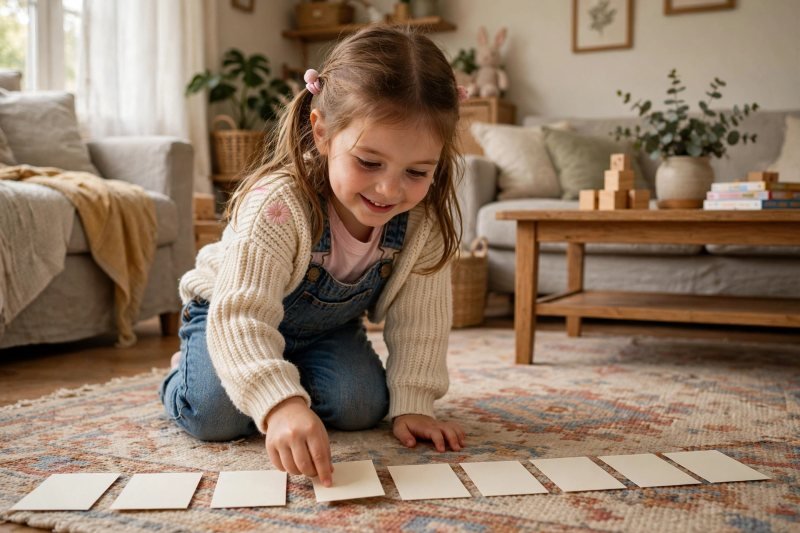
Meet the -ug family. Lay the six cards face up: bug, hug, rug, mug, tug, jug. You read the first one slowly — "b–uh–g… bug!" — then hand the next to your child. Only the first sound is new each time. Finish with a hug.
-
Move to the -un family. Point at the window for "sun," march in place for "run": sun, run, fun, bun, nun, gun. Act each word: pretend to eat the bun, jazz hands for "fun."

-
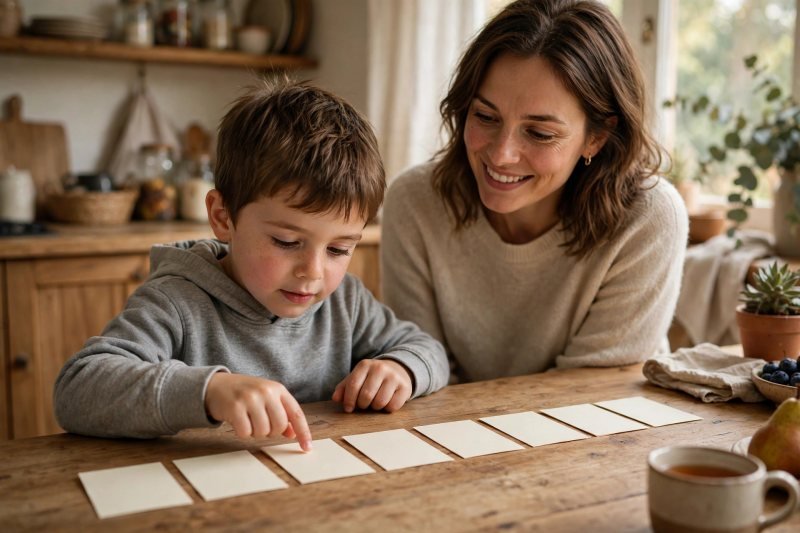
Take on the -ut family. Mime cutting for "cut," build a pillow hut for "hut": cut, hut, nut, jut, rut, but. For "but," say it slowly — "b–uh–t" — and the short u pops right back out.
-
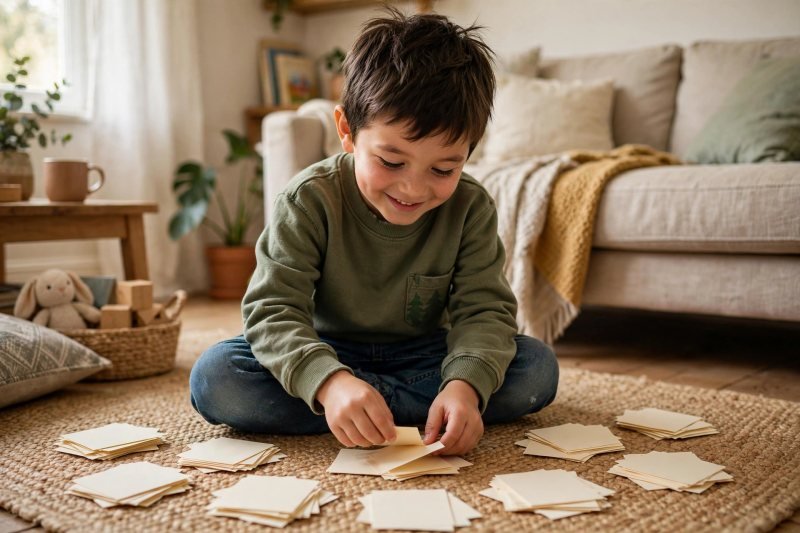
Continue with the -ub family. Rub your hands for "rub," shape a fist like a sub sandwich: cub, tub, rub, sub, hub, dub. A cub is a baby bear.
-
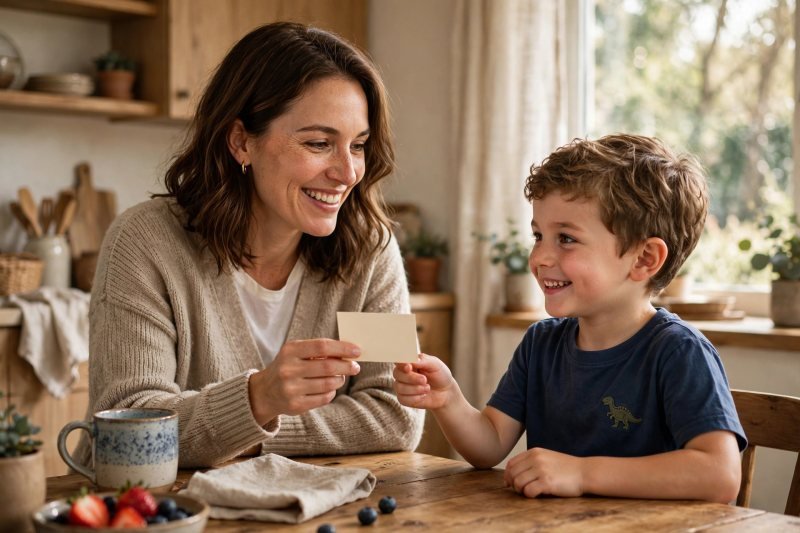
Meet the -up trio and the bonus cards. Read the three -up words quickly — cup, pup, sup — then the bonus cards: bus, gum, and mud have a true short u sound but no big family.
-
Play the vowel-swap game. Line up cards that share their consonants but change the vowel — bug, big, bag, bog (borrow the others from your other word piles). Swap the middle vowel out and the next one in, reading each word. Then try bud/bid/bed/bad and hat/hot/hit/hut.

-
Build silly sentences. Your child picks any two or three cards and uses them in one sentence: "The bug sat on the rug!" "The pup ran to the bus!" The sillier the sentence, the better it sticks.

-
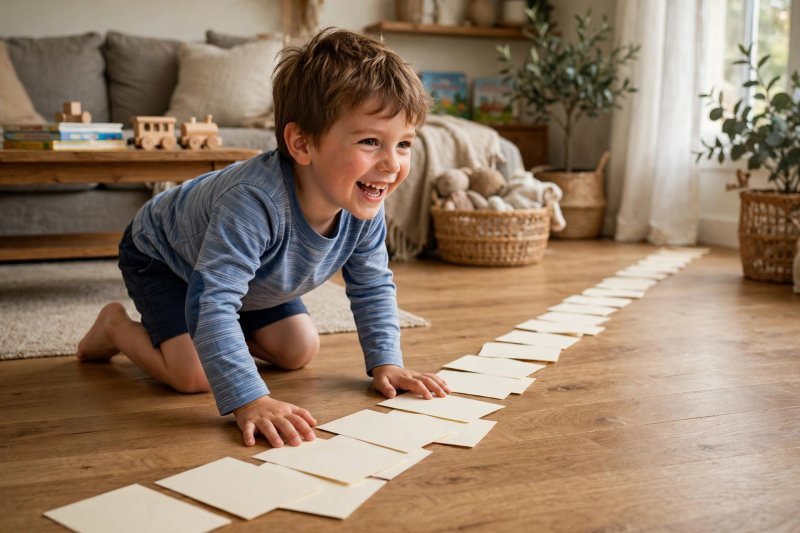
Run the word train. Lay ten favorite cards in a line on the floor like train cars. Your child is the train: chug along ("ch-ch-ch…") and read each card as they pass it. Shuffle and run the route again.
-
Speed read and celebrate. Stack all 30 cards and count how many your child reads in one minute, cheering for every word. End on a word they know cold — sun is perfect — then a high-five and a sticker on the -ug pile.



Make it easier
Do just the -ug family on day one — six words is a complete first session. Read the first card of each family yourself; hearing it done is half the teaching. If your child stalls, return to the heavy-lift game and stretch words aloud together for a few days. If stretching words aloud stalls, try our Elkonin boxes for CVC words to make each sound visible.
Make it harder
Shuffle two families together (bug, sun, cut) so your child reads the whole word instead of riding the pattern. Cover the middle letter u with your thumb and ask: "Which vowel could this be?" Let them swap vowels on their own: hold up "cup" and ask what it becomes with an a in the middle (cap!). When all 30 cards read smoothly, move to the full CVC words list.
Other ways to play it
- Vowel-swap race: you each take a consonant frame and see who can swap in the most real words in a minute.
- Grocery-list sentences: build sentences about things in your kitchen — "The mug is on the rug!"
- Turn the cards into a game night with our CVC word games.
How it changes by age
- Built for ages 5–6 who know their letter sounds and have started sounding out simple words. If your five-year-old already reads short-a words, the vowel-swap game bridges the old vowel to the new one. Curious fours can echo-read just the -ug family. If hearing sounds inside spoken words is still hard, start with our beginning sounds activities for preschool first.
What they're learning
Short-vowel decoding with the subtlest of the five vowels, onset-rime blending (hearing how bug and hug share an ending), and phoneme substitution: swapping one sound makes a new word.
Clearing up
Restack the cards into their six family piles and clip the -ug pile together for tomorrow. The sticker goes on the back of the -ug pile, not on the furniture.
Questions parents ask
How do I teach short u words to a child who is just starting to read?
Which short u CVC words should my kindergartner learn first?
What is the vowel-swap game for short u words?
My child reads "but" without the "uh" sound — is that wrong?
Should I teach short u before the other short vowels?
How many short u words does a 5-year-old need to know?
Short u CVC words are three-letter words with the steady "uh" vowel in the middle — sun, cup, bus. Sounding out one word unlocks its whole family. Work one family at a time, ten minutes a day. Short u is usually taught last because "uh" is the hardest to hear. Our short a CVC words list is the natural warm-up; the blending sounds activities collection helps if sounding out stalls.

save it for later
Pin this for the next rainy afternoon
Keep it on a board so it is there when you need it, rather than when you happened to find it.
Save to PinterestTry this next
-

The Silent E Rule Explained for Parents: When E Makes the Vowel Say Its Name
Ages 5–6
-

Short O CVC Words: 35 Words (Dog, Box, Frog) + Printable List
Ages 5–6
-

Short I CVC Words: 40 Words (Pig, Pin, Sit) for Kindergarten Readers
Ages 5–6
-
Short E CVC Words: 35 Words (Bed, Pen, Hen) + Word Family Charts
Ages 5–6


