


Halloween Outfits for School: 12 Rule-Safe Costume Ideas
Twelve school-safe Halloween outfits for ages 5-6, all built from ordinary clothes: no masks, no toy weapons, no gore, nothing tied at the neck — just color, one simple accessory, and a dress rehearsal that passes the rules.
School-safe Halloween outfits for ages 5-6 are ordinary clothes plus one simple idea: color-block looks, an ear headband, shoulder-harness wings, a waist sash, or a little washable face paint. No masks, no toy weapons, no gore, and nothing tied at the neck — then rehearse sitting, stairs, bathroom, and jacket the night before.

The short version
- Read your school's actual rules letter first — lists differ, and the typical bans are masks, toy weapons, gore, and neck ties.
- Build from the wardrobe: Halloween colors head to toe already read as a costume, with nothing to carry or break.
- One accessory is enough — shoulder-strap wings, a waist sash, a headband — and it must pass the sit, run, and bathroom test.
- Face paint stays small, washable, and patch-tested, with full faces visible and wipes packed for touch-ups.
- Rehearse the whole day the night before and pack labeled spare clothes, so Halloween morning is calm.
- Age
- Ages 5–6
- Play time
- 40 min
- Mess
- Low
- Difficulty
- Easy
- Where
- Both
Why kids love this
Halloween outfits for school work best when a child still feels like the star of the day inside rules that were written to keep everyone safe and included. For five- and six-year-olds, the magic was never really the mask or the plastic prop — it is the transformation they can feel: an orange shirt that makes them a pumpkin patch kid, whiskers they helped draw on, wings that flutter when they run at recess. Because every outfit here is built over normal clothes, your child can sit on the carpet, climb the playground steps, manage the bathroom alone, and hug their teacher without anything slipping, snagging, or covering their face. Friends can see their smile all day, which matters more at this age than any costume contest. And when a child helps choose the colors, test the outfit, and pack the spare-clothes bag, Halloween morning stops being a battle over a store-bought costume and becomes a plan they made themselves — one they are proud to walk through the school door wearing.
What you'll need
- Ordinary clothes in Halloween colors — orange, black, purple, and green tops; black leggings, jeans, and comfortable pants
- Plain bright t-shirts in a few different colors — for the buddy group look; completely blank, with no words or logos
- A plain dress your child already loves, plus soft fairy wings that fasten with shoulder harness straps
- A wide fabric waist sash and a plain bandana worn on the head — for a pirate look with nothing tied at the neck
- Washable, child-safe face paint in a few colors, soft sponges, and a small mirror — plus baby wipes for touch-ups
- A plain sun hat or cap, a simple apron, and a few large soft flower props — for the gardener look
- A white top and white pants, plus plain cardboard and tape — for blank badge shapes with no logos or words
- A plaid shirt, jeans, and a plain hat with a little straw-look trim fixed onto the hat itself
- Cozy pajama-style top and bottoms in a soft animal color, with a simple ear headband
- Sturdy, playground-proof shoes your child wears every day — no costume shoes, ever
- A spare set of normal clothes in a labeled bag, a resealable pouch for wipes, and name labels for every piece
Before you start
1. The week before, find your school's actual Halloween letter or newsletter and read the dress-code list together — then lay out the base clothes and one accessory for your child's favorite idea from the steps below. 2. The night before, hold a five-minute patch test with a dot of face paint on the inside of the elbow if paint is part of the plan, and pack the spare-clothes bag with labels on everything. 3. On Halloween morning, dress in the rehearsed order — base clothes first, accessory last — and take one photo of the finished outfit against the rules list before you leave.
How to do it
-
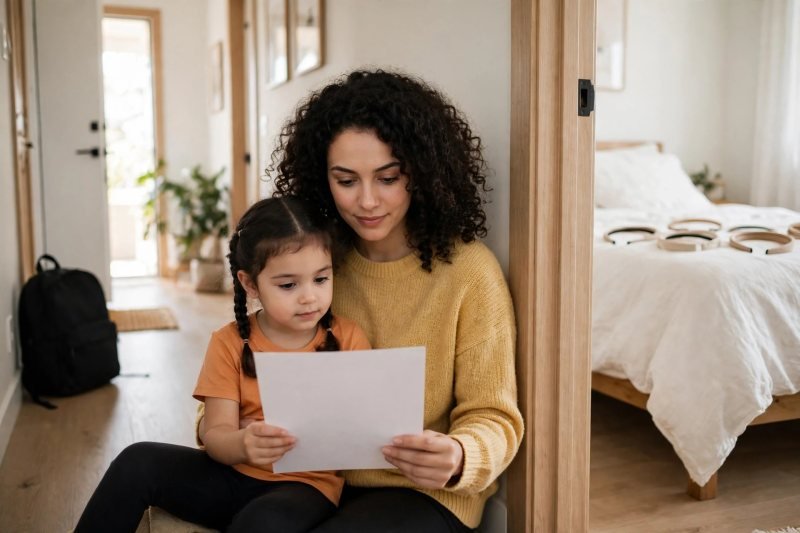
Read your school's rules first. Before anyone falls in love with an outfit, find the actual letter, email, or newsletter your school sent and read it aloud together, because every school's list is a little different. The typical rules look like this: no masks or anything covering the face; no toy weapons and no props that look like weapons; no gore, fake blood, or scary-violent themes; normal, sturdy shoes; nothing tied around the neck; outfits a child can manage in the bathroom completely alone; and hems short enough for stairs and playground steps. Tick each rule against your child's idea as you go, and if a favorite piece fails a rule, change the piece — not the child's enthusiasm. Say, "The rules are our treasure map — they show us how to build a costume that lasts all day." Knowing the rules first turns every later step into a yes instead of a morning-of argument. The same readiness thinking behind a kindergarten readiness checklist applies here: rules, routines, and independence practiced before the day, not discovered on it.
-
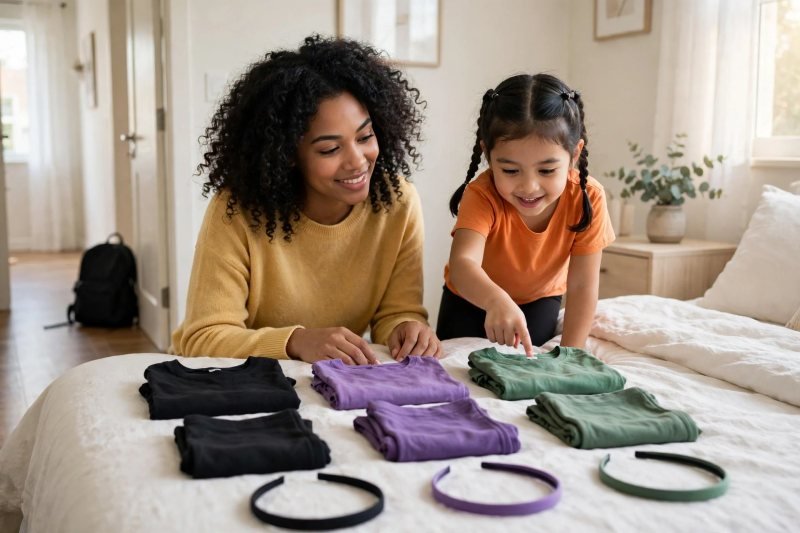
Build from the wardrobe, not a costume shop. Open the drawers before you open a shopping app: base layers in Halloween colors are already most of an outfit. An orange top is a pumpkin waiting for black leggings; a black outfit is a cat waiting for ears; a white outfit is an astronaut waiting for a badge. Lay two or three base combinations on the bed and let your child choose, because a five- or six-year-old who picked the outfit will wear it happily all day, while an imposed costume sheds pieces by first recess. Everything in this guide is worn over — or simply is — normal clothes, so there are no itchy seams, no plastic shells, and nothing that needs carrying once the novelty fades. Say, "We are costume builders, and our shop is your own drawer." If you enjoy making one small piece together, the simple builds in these Halloween crafts for toddlers adapt easily into badges, ears, and hat trims for this age too.
-
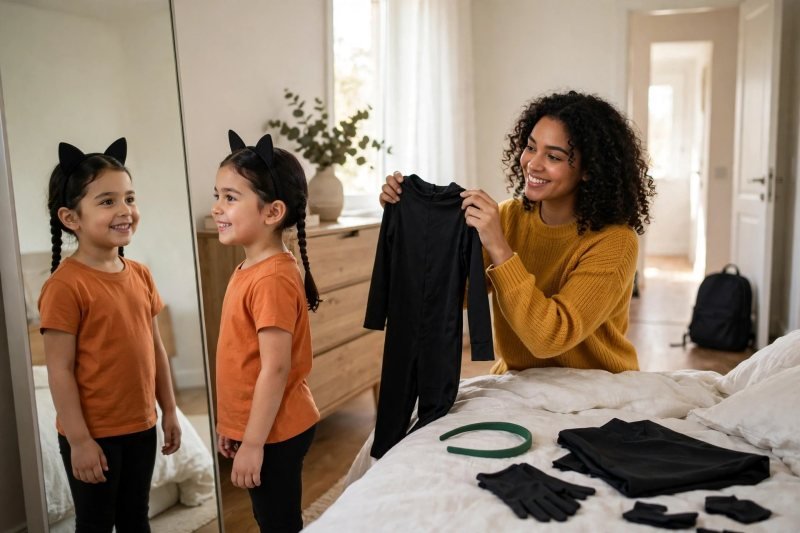
Dress in Halloween colors. Color alone, worn head to toe, reads as a costume the moment your child walks into a classroom full of it. Idea (1) is the pumpkin patch kid: an orange top with black leggings, finished with a green headband as the pumpkin's stalk — cheerful, unmistakable, and nothing to carry. Idea (2) is the midnight cat: an all-black outfit of a black top and black leggings or pants, with a simple ear headband doing all the storytelling. Both pass every common rule — faces fully visible, necks completely free, normal shoes underneath — and both survive a full day because there is nothing to break, drop, or grow tired of holding. Say, "Orange and black, head to toe — everyone will know exactly what you are." Let your child stand in front of a mirror for the full effect; color-block outfits photograph beautifully at the classroom door.
-
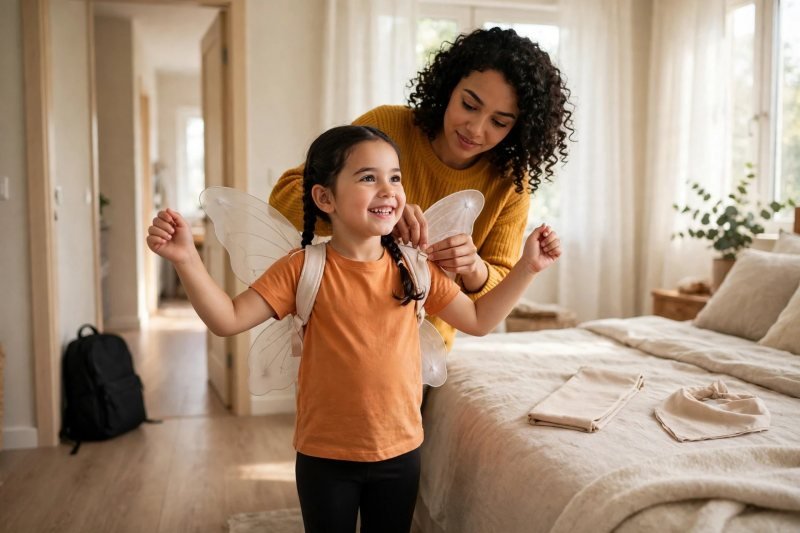
Add one storybook accessory. One well-chosen accessory over plain clothes can carry a whole character, and one is exactly the right number for a school day. Idea (3) is the fairy: soft wings over a normal dress, fastened with harness straps at the shoulders — never a loop or tie at the neck — so they flutter at recess and slide off in seconds for carpet time. Idea (4) is the pirate: a wide fabric sash tied at the waist over plain clothes, plus a bandana worn on the head, with no toy sword, no eye patch covering an eye, and nothing at the neck at all. The accessory test is simple — can your child put it on, take it off, sit down, and run, all without an adult's help? Say, "One magic piece is all a story needs." Making that one piece together, gluing a badge or trimming a hat, is exactly the hand-strengthening work in these fine motor activities, disguised as costume excitement.
-
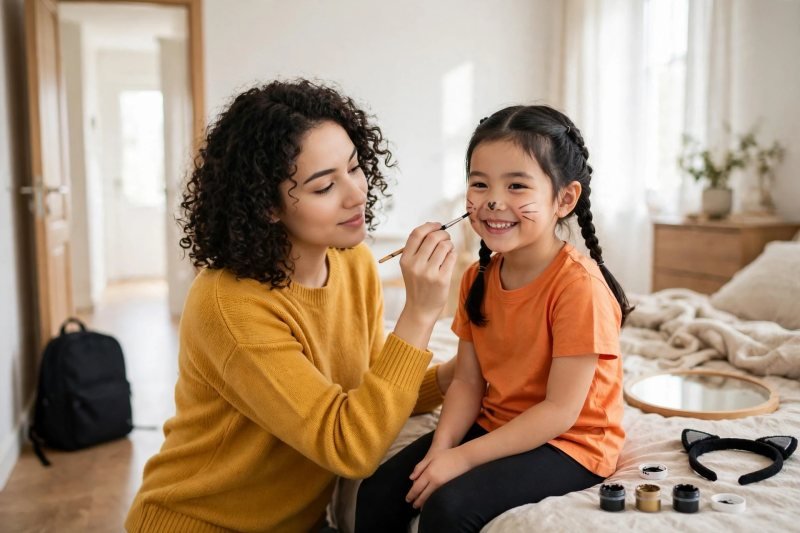
Use face paint the school-friendly way. A little washable face paint transforms ordinary clothes into a costume while keeping your child's whole face visible — which is precisely why so many schools allow paint when they ban masks. Idea (5) is the cat face: a few whiskers on each cheek and a small painted nose, drawn in under two minutes and checked in the mirror together. Idea (6) is the friendly skeleton smile: a gentle painted smile and round cheek details in white and black — paint only, small, smiling, and with nothing remotely gory about it. Keep designs small enough to stay clear of the eyes, use only washable child-safe paint you patch-tested the night before, and remember that some schools ban paint too — your rules list from step one decides. Say, "Paint, not a mask — so everyone can still see your real smile." Send wipes in the school bag so a smudge is a ten-second fix, not a catastrophe.
-
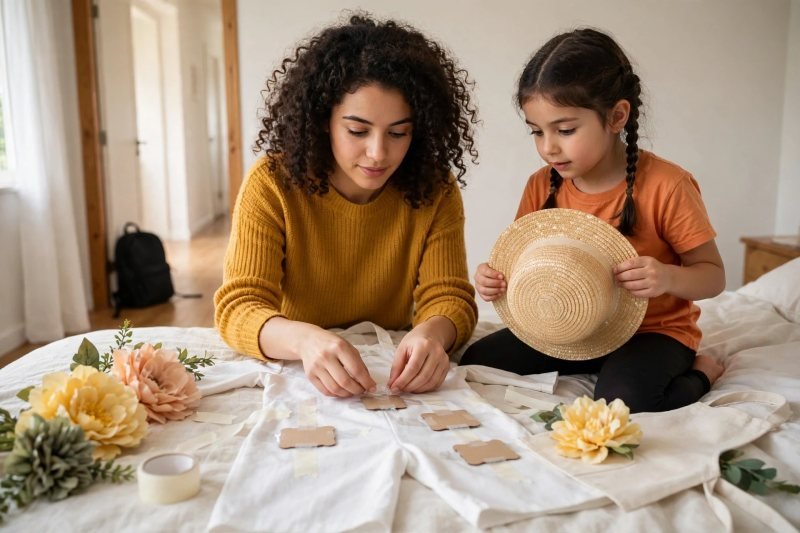
Turn favorite topics into outfits. The interests your child talks about all year make the most convincing school costumes, because the enthusiasm does the acting. Idea (7) is the astronaut: a white top and pants with plain cardboard badge shapes taped or pinned by an adult to the chest — blank shapes only, no logos, no words — plus sturdy shoes ready for moon walking at recess. Idea (8) is the gardener: a plain sun hat, a simple apron over everyday clothes, and a few large soft flower props carried in the apron pocket. Both outfits are just real clothes plus one idea, both leave hands free and faces clear, and both give teachers an easy conversation starter your child will love answering. Say, "You already love space and growing things — today you get to wear what you love." A topic costume also survives the day gracefully: remove the badges or apron and it is simply an outfit again.
-
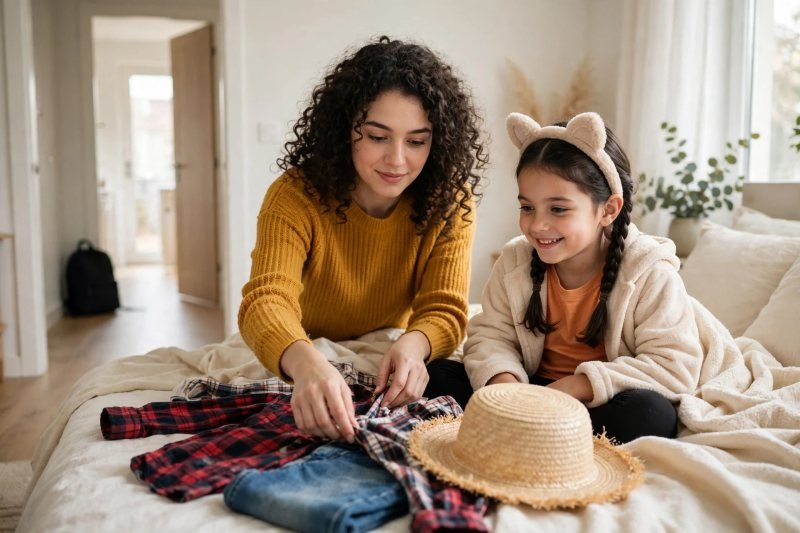
Make it cozy and weather-proof. Halloween at school is a long, ordinary day wearing a costume, so comfort is a feature, not a compromise. Idea (9) is the pajama-style animal outfit for younger fives: cozy pajama-style top and bottoms in a soft animal color, with a simple ear headband — warm, familiar, and the easiest bathroom trip of any outfit here. Idea (10) is the layered scarecrow: a plaid shirt over a warm layer, jeans, and a plain hat with a little straw-look trim fixed onto the hat itself, keeping every strand on the hat and nothing loose anywhere near the neck. Layers matter because classrooms run warm and playgrounds run cold; a costume built in layers adjusts without coming apart. Say, "A cozy costume is a costume you can play in all day long." Check that cuffs and hems stay clear of the ground so nothing trips small feet on the stairs.
-
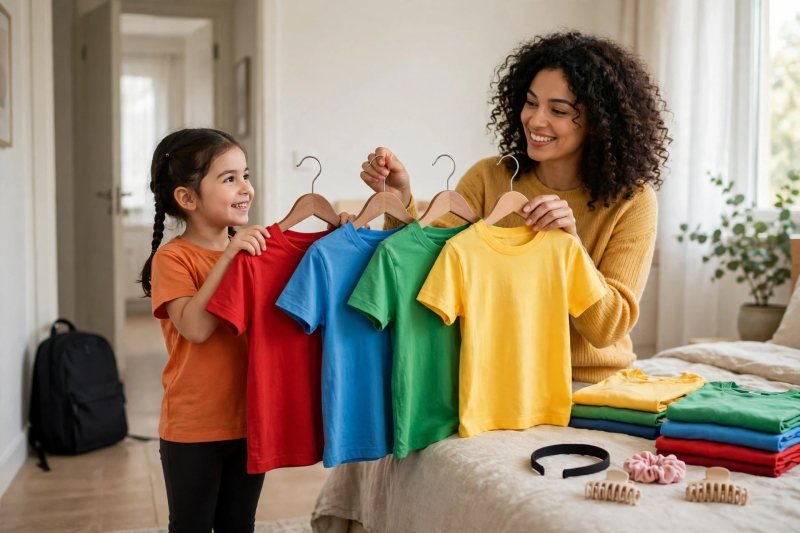
Go for group and buddy looks. Matching friends multiplies the fun and, happily, the simplest group ideas are also the most rule-proof. Idea (11) is the crayon box group: two, three, or four friends each wear a plain bright t-shirt in a different color — red, blue, green, yellow — with their own everyday pants, so together they are a box of crayons and apart each child is simply dressed; keep the tees completely plain, with no logos and no words. Idea (12) is the teacher-friendly book-character look: plain clothes arranged to match a favorite storybook friend — a checked shirt, a yellow rain hat, overalls and boots — built from the wardrobe and recognizable without a single licensed product or printed character. Planning a group look together is real sequencing and checklist practice, the same skills celebrated in these preschool learning activities. Say, "Together you make the picture — and each of you is a color in it." Confirm the plan with the other parents the night before so nobody arrives unmatched.
-
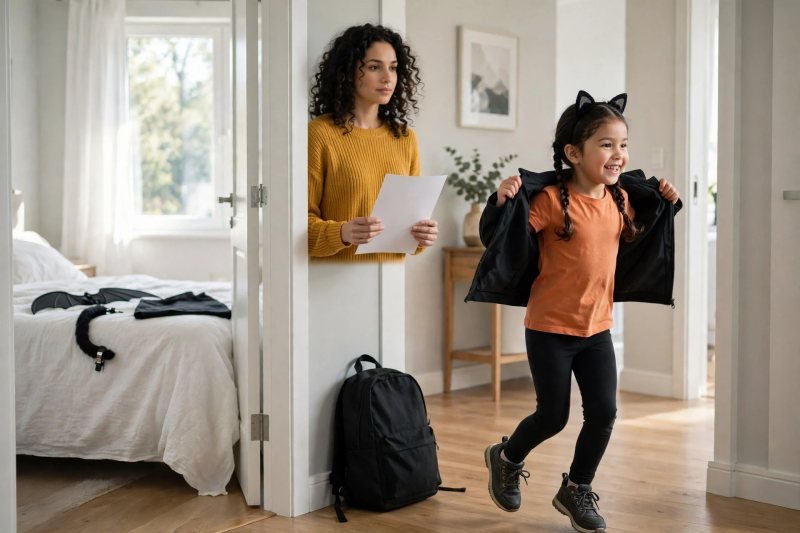
Do a full dress rehearsal. The night before, put the whole outfit on and run the school-day test, because a costume that only works standing in a bedroom will not survive until lunch. Your child should sit cross-legged on the floor, stand up unaided, walk up and down stairs, jog a few steps, visit the bathroom completely alone, and put a jacket on over the top — every test in the real shoes. Watch for anything that slips over the eyes, catches at the neck, drags near the ground, or needs an adult's hands to fix, and swap that piece now while the shops of the wardrobe are still open. Take a photo of the finished outfit next to your rules list and check them off one by one together. Say, "If it passes the rehearsal, it passes Halloween." A child who has rehearsed walks in calm, already knowing the outfit works. Treat the rehearsal like a back-to-school practice run — same route, same bag, same jacket — so Halloween morning feels like an ordinary school morning with better colors.
-
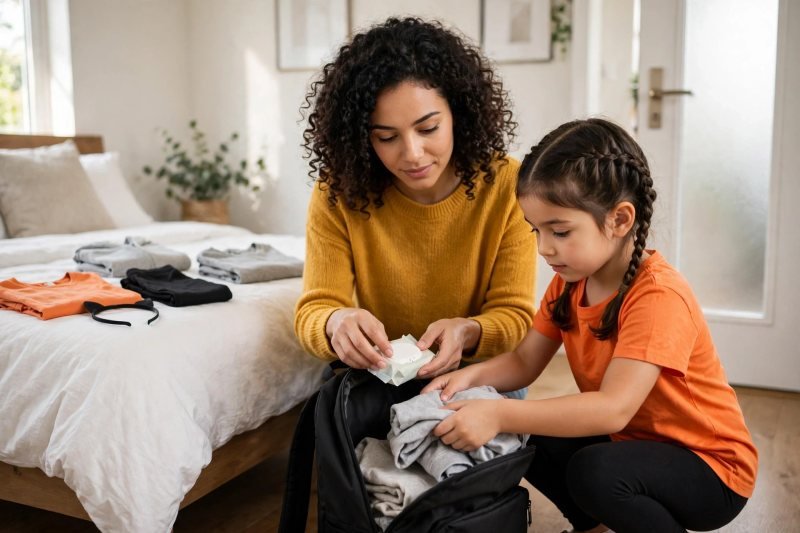
Pack the school-day kit. Finish the night before with a small kit that makes your child independent all day: a full spare set of normal clothes in a labeled bag, because paint, paint-water, and playground mud are all undefeated; a small pouch of wipes for face-paint touch-ups; and a name label on every single piece, including the headband, hat, and sash, because identical accessories multiply in a classroom of twenty-five. Add a short note for the teacher if your child is wearing face paint — what it is, that it is washable, and that the wipes are in the bag — so nobody has to guess. Keep the kit light enough for your child to carry in their own school bag, and rehearse where each thing lives. Say, "Your kit is your costume's toolbox — you know where everything is." Then lay out the outfit in dressing order, shoes by the door, and let Halloween morning be nothing but dressing and smiling. The kit habit — spare clothes, labels, and a teacher note — is one of the school routines gathered in the Bright Play Days learning hub.


Make it easier
Pick the color-only outfits: the pumpkin patch kid and the midnight cat need no making, no paint, and no shopping — just clothes, a headband, and a mirror check. Skip face paint entirely if mornings are rushed or your child dislikes face touching; an ear headband over everyday clothes passes the same rules with zero cleanup. Choose one idea together this year and write it on the calendar; a decided plan weeks ahead removes every Halloween-morning negotiation.
Make it harder
Let your child co-design: sketch three rule-safe ideas on paper, check each against the school's list together, and let them pitch their favorite to the family before you build it. Make the one accessory from scratch — cut and decorate the astronaut's cardboard badges or trim the scarecrow's hat together, with your child doing the gluing, placing, and choosing. Add a kindness mission: your child plans one rule-safe compliment or helping job for the day — holding the door in costume counts double — and reports back at dinner.
Other ways to play it
- Uniform schools: where a uniform is required, keep the uniform untouched and add only what the school allows — many permit a headband with ears, a colored sock swap, or a small badge; if accessories are banned too, save the full outfit for the walk home and a family photo at the gate.
- Cold-weather schools: build the costume over thermal layers and let the jacket become part of the look — an orange jacket over black layers is still the pumpkin patch kid, and gloves, hats, and scarves worn properly outdoors come off indoors as usual, with the outfit complete underneath.
- Book-character day crossover: every idea here doubles for book week — the gardener, astronaut, pirate, and fairy are all storybook staples; pair the outfit with the book carried in the bag and your child is ready for two school events with one wardrobe build.
- No letter yet: if no Halloween letter has arrived a few days before, dress to the strictest common list in step 1 and send a short note asking the teacher to confirm — a plain color-block outfit with one headband passes almost every list, so it is the safe default while you wait.
How it changes by age
- Age 5: Five-year-olds do best with the simplest builds — color-only outfits, the pajama-style animal, and one accessory they can remove themselves. Keep face paint tiny or skip it, because younger fives rub their faces and a smudged design can upset more than no design at all. Rehearse the bathroom trip in the actual outfit, choose shoes they can fasten alone, and expect the headband to live in the school bag by afternoon — plan for that happily rather than fighting it.
- Age 6: Six-year-olds can carry a little more story: the scarecrow's layers, the astronaut's badges, and a buddy crayon-box plan coordinated with friends. They enjoy checking the rules list themselves, helping draw whiskers in the mirror, and being in charge of their own touch-up wipes. Give sixes the rehearsal checklist to run — sitting, stairs, jacket, bathroom — because a six-year-old who has tested their own costume problem-solves on the day instead of melting down.
What they're learning
Rule-following as creativity: checking ideas against the school's list and redesigning what does not fit — constraints treated as a design brief, not a disappointment. Planning: choosing an outfit days ahead, rehearsing it, packing a kit, and laying clothes out in order — a child's first real project plan, start to finish. Fine motor control: fastening sashes, placing badges, dabbing face paint, and labeling pieces — small hand work with a deadline they actually care about. Confidence: walking into school in an outfit they chose, tested, and can manage entirely alone — self-reliance you can see from the classroom door.
Clearing up
Halloween cleanup is mercifully small: face paint comes off with warm water and a soft cloth (an adult's job), the kit bag is unpacked the same evening so damp wipes never linger, and every accessory goes into one labeled costume box while the base clothes return to their drawers. Check headbands, sashes, and hat trims for loose stitching before storing, spot-clean the apron and sash if they carried playground souvenirs, and photograph the tidied box — next year's planning starts with knowing exactly what you already own. Keep the rules list in the box too; it is the first thing you will want next October.
Questions parents ask
What Halloween outfits are allowed at school for 5- and 6-year-olds?
Why do schools ban masks and toy weapons at Halloween?
How do you make a school Halloween costume from clothes you already own?
Is face paint allowed for school Halloween costumes?
What should you pack in case a school Halloween costume goes wrong?

save it for later
Pin this for the next rainy afternoon
Keep it on a board so it is there when you need it, rather than when you happened to find it.
Save to Pinterest


