


Practising the Bits That Actually Worry Them
Not the alphabet — the lunchbox, the buttons, the shoes and finding the toilet. The things that decide whether a first week goes well.
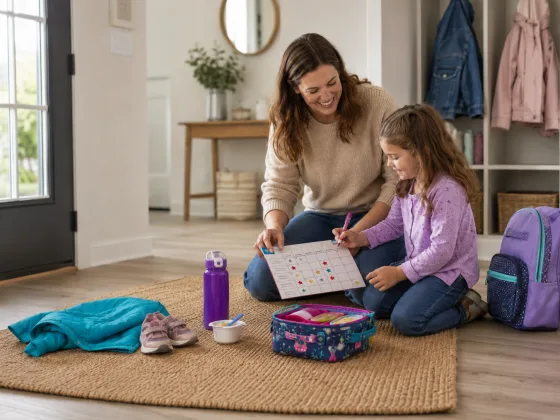
Practise the practical skills that make starting school easier: opening a lunchbox, doing up a coat, changing shoes and asking for help. Suits ages 4 to 6 and takes 20 minutes a day for a week.
The short version
- Use the real lunchbox and the real coat.
- Ten minutes a day for a week, not an hour once.
- Practise the sentences, not just the skills.
- Age
- Ages 4–6
- Prep
- 5 min
- Play time
- 20 min
- Mess
- Low
- Difficulty
- Easy
- Where
- Indoor
Why kids love this
Children are far more worried about the practical things than the academic ones, and being able to actually do them is a visible relief. It is also all done as a game with a timer, rather than as a lesson, which is what stops it feeling like more pressure.
What you'll need
- Their actual lunchbox, with the actual lid
- Their actual coat and shoes
- A water bottle with the lid they will have
- A timer, or a phone
- Optional: their school bag
Before you start
Use the real things. A different lunchbox does not help — the whole point is the specific catch on the specific box. Do it in short goes across a week rather than one long session.
How to do it
-
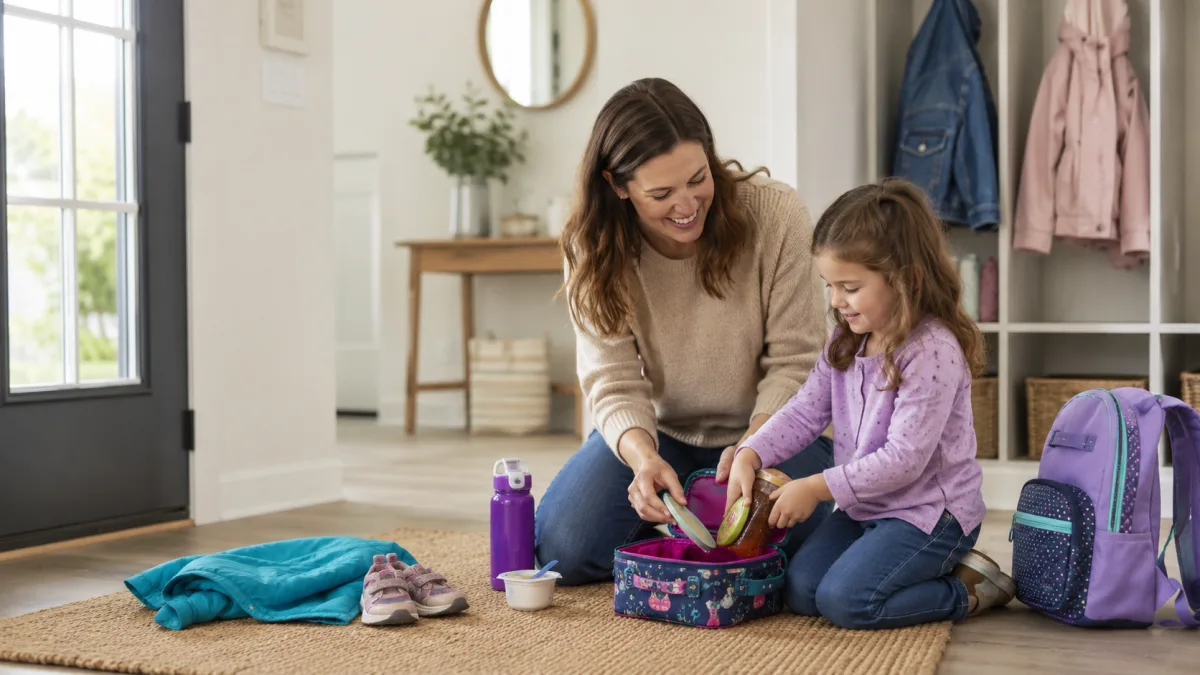
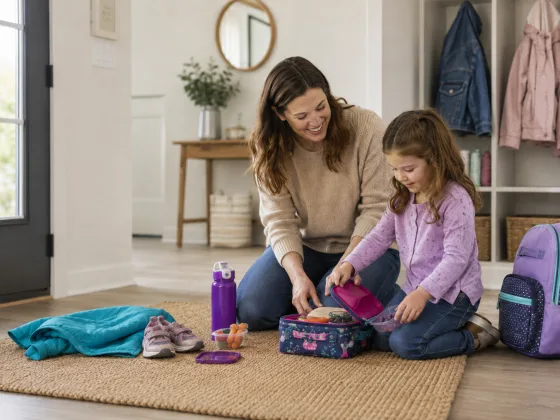
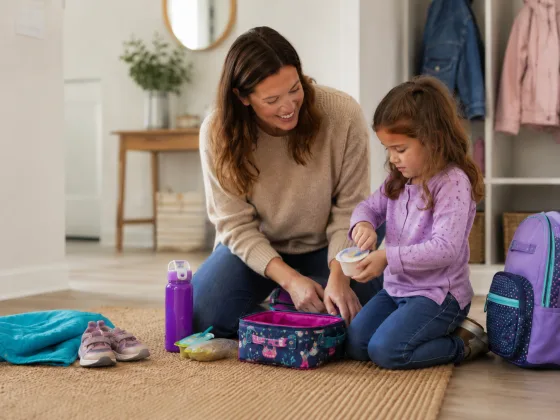
Start with the lunchbox. Fill it as it will be filled, and let them open everything, eat something, and close it again.
-
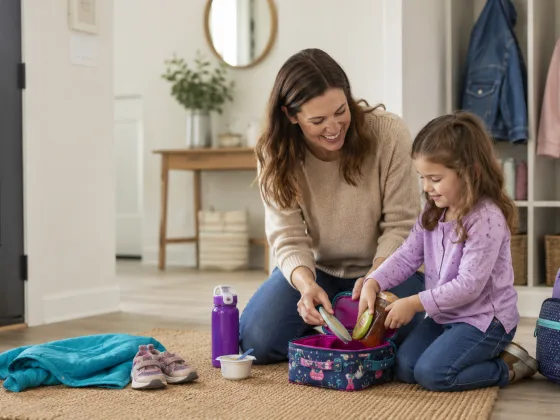
Do any packets and wrappers separately. The yoghurt lid is usually the hard one.
-
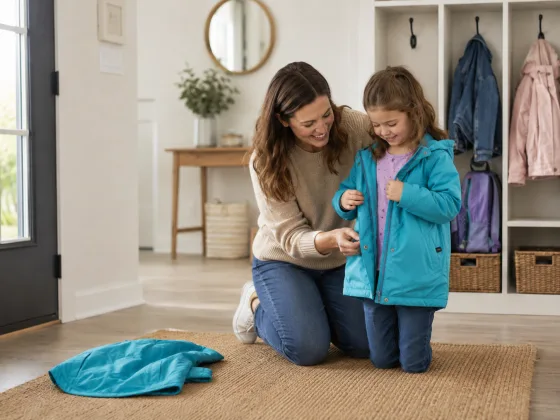
Move to the coat: zip, buttons, hood, and hanging it on a peg.
-
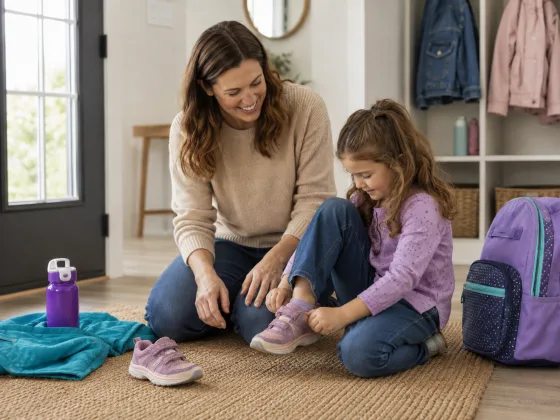
Practise shoes on and off, including the tricky one.
-
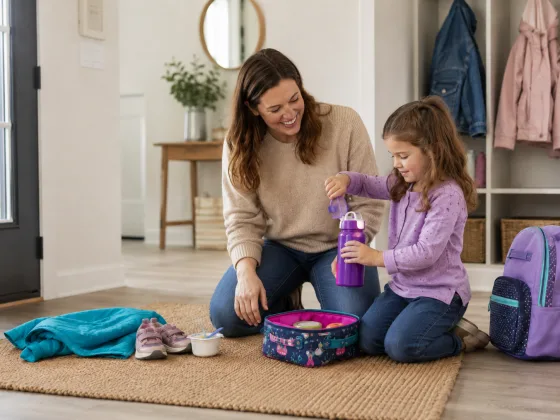
Practise the water bottle lid, especially if it is a sports cap.
-
Make it a game: set a timer and see if they can beat yesterday.
-
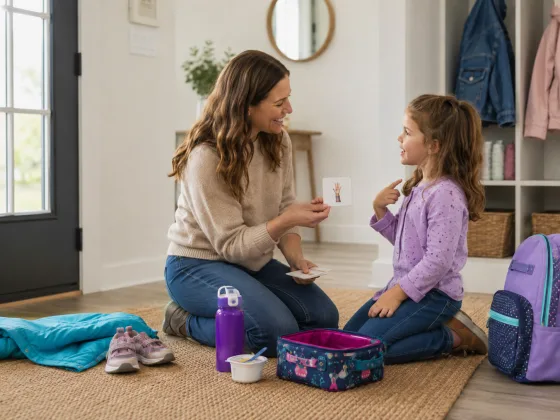
Practise the words for asking — "can you help me open this", "where is the toilet", "I do not feel well". Say them out loud a few times.
-
Do ten minutes a day for a week rather than an hour once.
Make it easier
One skill a day, not five. And swap anything genuinely too hard — a lunchbox they cannot open is a lunchbox to replace, not a skill to drill.
Make it harder
Add a time limit, or have them do the whole sequence — coat off, bag on peg, shoes changed, lunchbox out — in order without prompting.
Other ways to play it
- Do it as a race between siblings.
- Let them teach a soft toy how to do it, which shows you what they have understood.
- Pack the bag together each evening for the first week.
- Walk the route to school and count the crossings.
- Draw the day as a comic strip so they know what happens when.
How it changes by age
- Four: lunchbox and coat, with plenty of help, over a fortnight.
- Five: the whole list, ten minutes a day.
- Six and up: the full sequence in order, plus practising what to say if something goes wrong.
What they're learning
This is fine motor work with an immediate purpose — zips, catches, buttons and lids are exactly the fiddly two-handed jobs that build hand strength. Rehearsing the sentences matters as much as the skills. A child who has said "can you help me please" out loud a few times is much more likely to say it in a hall full of people.
Clearing up
Everything goes back where it belongs, which is itself part of the practice.