


Preschool Learning Activities at Home: 40 Play-Based Ideas for 3–4-Year-Olds
Forty play-based preschool learning activities at home for 3–4-year-olds — phonics, early maths, science, art, fine motor and pretend play, all using things you already own.
Forty play-based preschool learning activities at home for 3–4-year-olds — phonics, early maths, science, art, fine motor and pretend play using everyday household items.

The short version
- 40 different activities across six learning domains, using things families already own.
- Age flags (younger 3s vs older 4s) on the activities that need them.
- Zero worksheets; most need 0–5 minutes of prep and 10–30 minutes of play.
- Built-in easier/harder tweaks so each activity grows with your child.
- Age
- Ages 3–4
- Prep
- 5 min
- Play time
- 30 min
- Mess
- Low
- Difficulty
- Easy
- Where
- Indoor
Why kids love this
Forty joyful, play-based ideas for early literacy, maths, science and creativity — using things already in your kitchen drawers. No worksheets, no expensive kits. At three and four, children learn fastest through play. Every idea below turns an ordinary household moment into a small discovery — no right answers, no pressure.
What you'll need
- Dried pasta
- Rice
- Flour
- Trays
- Muffin tins
- Water
- Food colouring
- Cardboard boxes
- Pegs
- String
- Cups
- Spoons
- Cushions
- A torch
- Crayons
- Paper
- Playdough
- Sponges
- Ice cubes
Before you start
Almost none. Pour dry ingredients into a tray (five minutes), freeze coloured ice cubes the night before — that's the most prep any single activity needs.
How to do it
-
EARLY LITERACY — how can I build phonics skills through play?
-
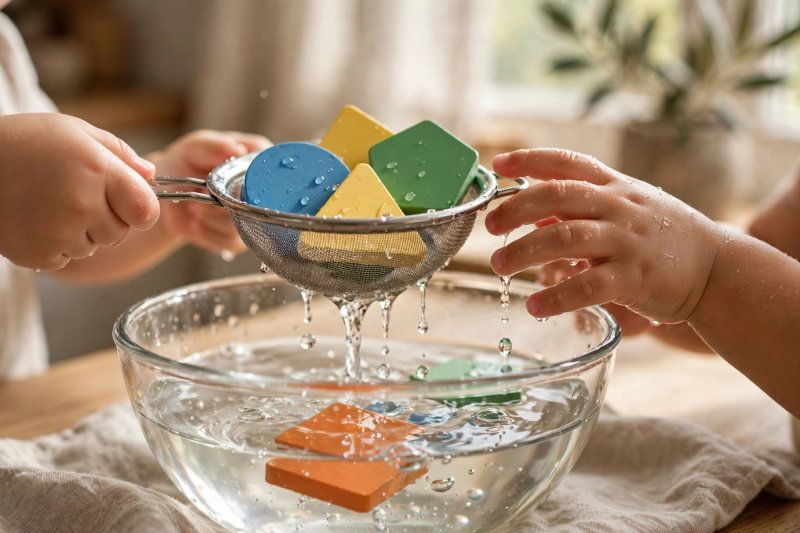
1. Alphabet soup scooping. Float magnetic letters in a bowl of water; your child fishes them out with a sieve while you say each sound.
-
2. Name-train letters. Cut your child's name into one square per letter; they stick the squares back in order along a masking-tape floor track.
-
3. Rhyme basket. Hide rhyming pairs (sock/clock, cup/toy pup) in a basket; your child hunts the pairs while you stretch out the sounds.
-
4. Story stones. Draw simple pictures on smooth stones; your child pulls three from a pillowcase and invents a story joining them.
-
5. Letter stomp. Tape big letter shapes to the floor and call out sounds — "stomp on sss!"
-
6. Washing-line words. Peg picture cards to a string across two chairs; call out a word and your child pegs up the matching picture.
-
7. Whisper-and-write. Whisper a letter sound; your child draws the letter in a flour tray with one finger, then smooths it flat.
-
EARLY MATHS — what counting games work for preschoolers?
-
8. Pasta threading patterns. Thread penne onto a shoelace in a pattern (red, red, blue).
-
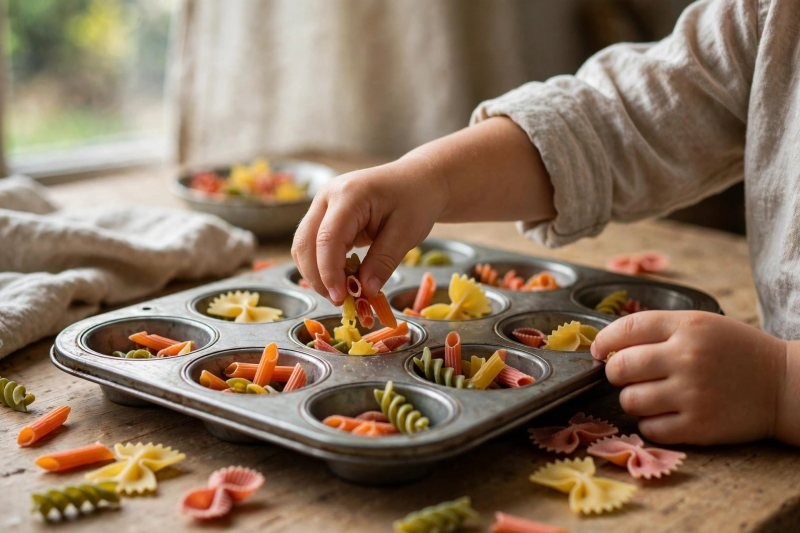
9. Muffin-tin sorting. Scatter buttons, pasta and beans on a tray; your child sorts one type per muffin cup, then counts each cup.
-
10. Stair counting. Count steps up and down, forwards and backwards, in whispers then in a roar.
-
11. Laundry-basket toss. Toss scrunched sock-balls into a basket from a taped line; count the hits.
-
12. Snack maths. Line up apple slices and eat them one at a time, counting down.
-
13. Shape hunt. Hunt the house for circles, squares and triangles.
-
14. Measuring with feet. Walk heel-to-toe across the rug, counting "feet," then measure in hand-spans and compare.
-
SCIENCE — which kitchen experiments suit 3–4-year-olds?
-
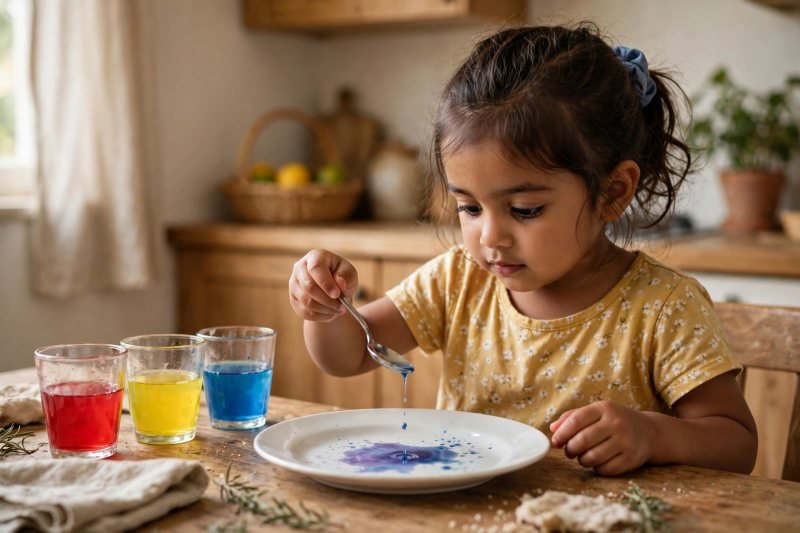
15. Colour-mixing potions. Three cups of tinted water plus droppers; your child mixes drops on a white plate.
-
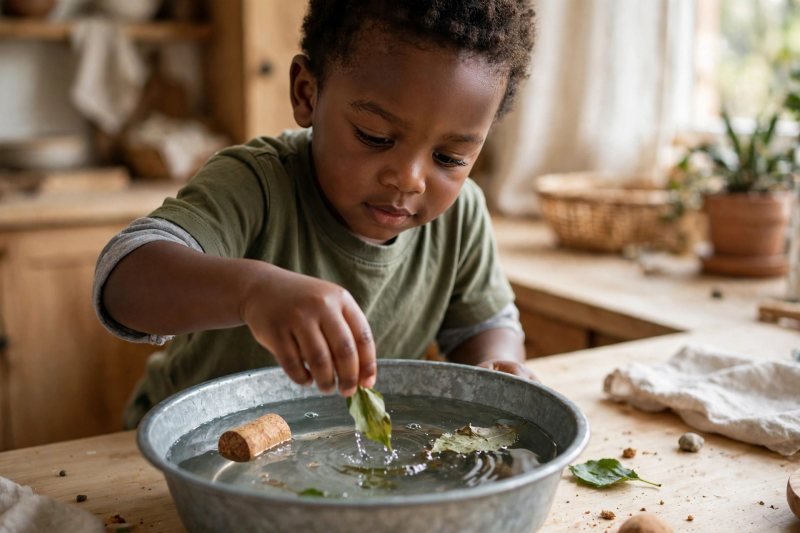
16. Sink-or-float race. Your child predicts then tests whether a grape, cork, coin, leaf and lid sink or float.
-
17. Melting race. One ice cube in the sun, one in the shade — which melts first?
-
18. Fizzy tray. Sprinkle bicarbonate of soda in a tray and drip vinegar on it; add food colouring for rainbow fizz.
-
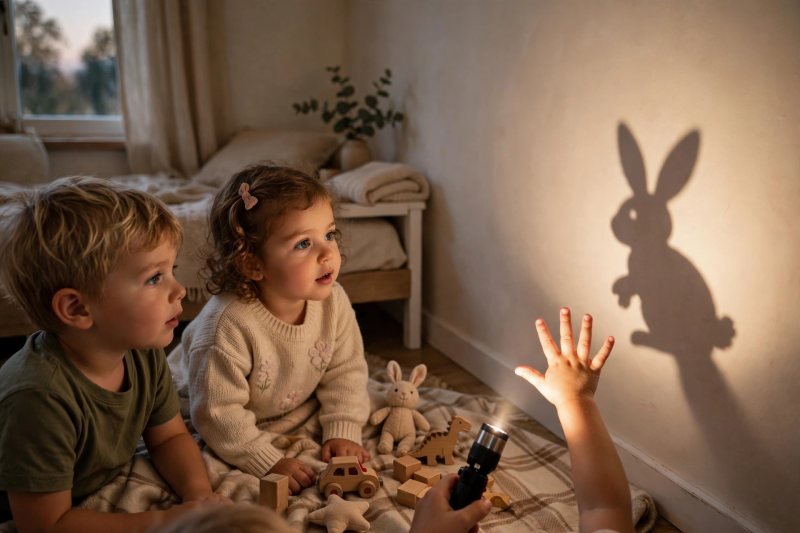
19. Shadow puppets. Torch plus dark corner: make hand shadows, then hold toys in the beam and guess them.
-
20. Magnet fishing. Tie a magnet to string and "fish" for paperclips and coins from a bowl.
-
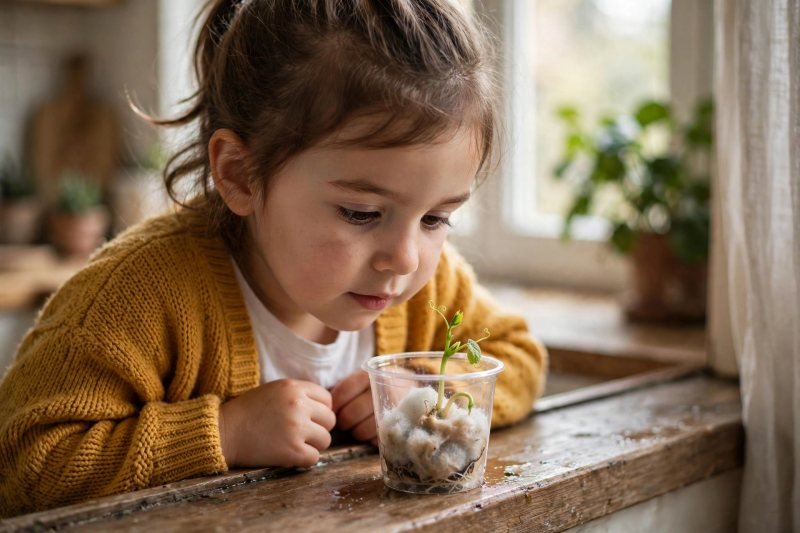
21. Plant a bean. Push a dried bean into damp cotton wool in a clear cup; keep it damp and watch the shoot appear over several days.
-
ART — how do I do process art with a preschooler?
-
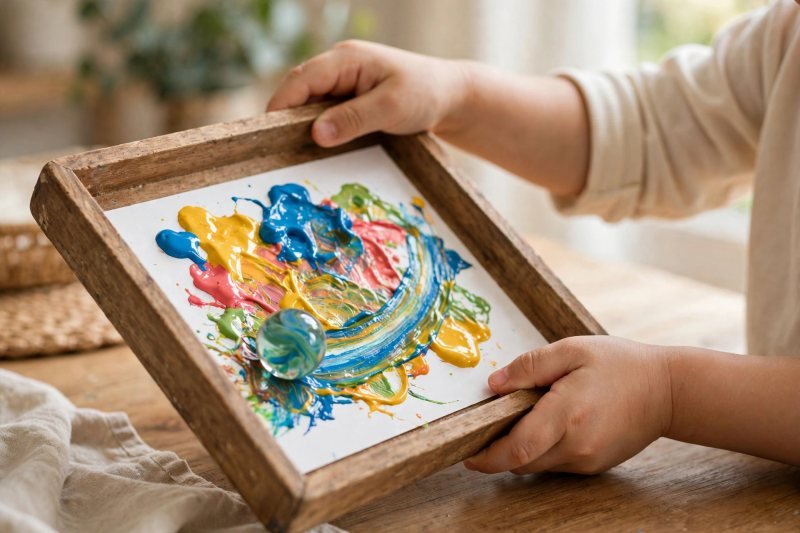
22. Marble rolling. Drop paint blobs on paper in a tray, add a marble, tilt so it rolls through the paint.
-
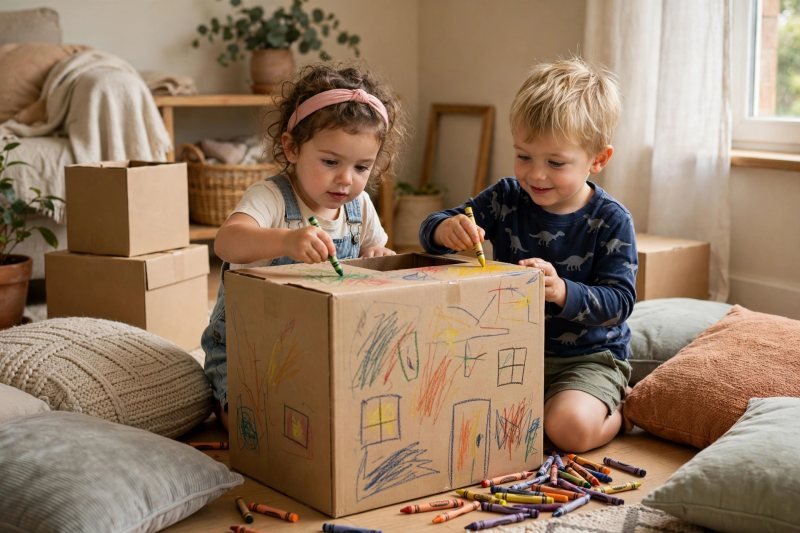
23. Cardboard-box city. A delivery box becomes a house, shop or rocket, decorated with crayons and stickers.
-
24. Nature collage. Stick leaves, petals and torn paper onto contact paper (sticky side up).
-
25. Sponge printing. Cut kitchen sponges into shapes, dip in shallow paint and print rows.
-
26. Salt-dough ornaments. Mix flour, salt and water, roll flat, press in handprints or leaves, bake low until hard.
-
27. Bubble-wrap stomp painting. Tape bubble wrap to the floor, dab with washable paint, lay paper on top and stomp.
-
28. Colour-mixing handprints. One hand in yellow paint, one in blue — press them together and it's green!
-
FINE MOTOR — what builds hand strength before writing?
-
29. Peg clip race. Clip pegs around a bowl rim — how many in a minute?
-
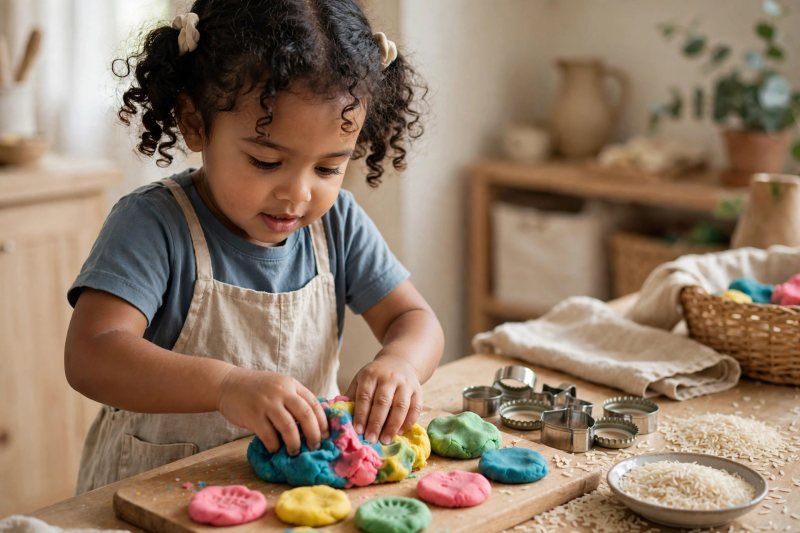
30. Playdough bakery. Roll, squish, poke and cut playdough; make "biscuits" with bottle-lid cutters.
-
31. Sticker lines. Draw wavy and zigzag lines on paper; your child places dot stickers along them.
-
32. Tweezer transfer. Use kitchen tongs to move cotton-wool balls between bowls.
-
33. Lacing cards. Punch holes around a cardboard shape and lace with a shoelace.
-
34. Spray-bottle art. Fill a spray bottle with tinted water and spritz paper pinned to a fence.
-
PRETEND PLAY — how does imaginative play help preschoolers learn?
-
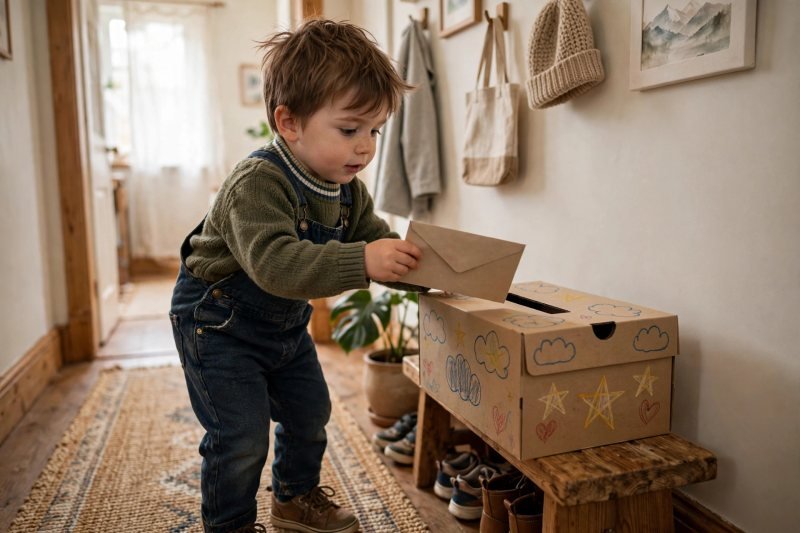
35. Post office. A shoebox postbox and paper "letters"; your child delivers post around the house.
-
36. Vet clinic. Soft toys queue as patients; a spoon becomes a thermometer, a scarf a bandage.
-
37. Grocery shop. Empty food packets on a low shelf, a basket, paper money from scrap.
-
38. Weather station. Each morning your child picks a symbol (sun, cloud, rain) and pegs it to the "forecast board".
-
39. Builders' yard. Cushions, boxes and blankets become a construction site.
-
40. Restaurant. Your child scribbles a menu, takes your order on a notepad and "cooks" in a play kitchen.


Make it easier
Do it together the first time, narrating what your hands do. Offer two choices instead of six, and keep sessions short — ten brilliant minutes beats thirty restless ones.
Make it harder
Add counting, comparing or predicting ("which holds more?", "what happens if…?"). Ask them to explain their thinking aloud, or chain two activities together.
Other ways to play it
- Rainy-day rotation: five activities, ten minutes each, rotating like stations.
- One-tray challenge: everything on a single baking tray — two-minute tidy-up.
- Outdoor swaps: take the shape hunt, spray-bottle art and melting race outside.
- Sibling mode: older 4s "teach" younger 3s the peg race or post office.
How it changes by age
- At 3: start with sensory play, simple sorting and short pretend bursts (activities 2, 9, 12, 22, 24, 29, 35).
- At 4: try patterns, predictions and storytelling (1, 4, 8, 14, 16, 20, 39).
- Follow your child's lead.
What they're learning
Phonics and letter recognition (1–7); counting, sorting, patterning, early measurement (8–14); predicting and reasoning (15–21); creative expression (22–28); hand strength for writing (29–34); language and social scripts (35–40) — plus perseverance and pride.
Clearing up
Keep a damp cloth handy — most mess sweeps up in two minutes. Do sensory trays on a wipeable mat so leftovers funnel back into a jar. An old adult T-shirt worn backwards makes a perfect art smock. Build tidy-up into the game.
Questions parents ask
What are the best preschool learning activities at home for 3-year-olds?
How can I teach my 4-year-old phonics at home without worksheets?
What maths activities can preschoolers do at home?
How do I keep a 3-year-old focused during learning activities?
How much time should preschool learning activities take each day?

save it for later
Pin this for the next rainy afternoon
Keep it on a board so it is there when you need it, rather than when you happened to find it.
Save to PinterestTry this next
-
Letter Tracing Worksheets for Pre-K: Uppercase and Lowercase A–Z
Ages 4–5
-
Homeschool Preschool Curriculum: The 10 Best Options for 2026 (Reviewed by a Parent)
Ages 3–4
-
Phonics Activities for Preschoolers: 25 Playful Ways to Learn Sounds
Ages 4–5
-
25 Easy Christmas Crafts for Kids (With Free Templates)
Ages 2–8


