


Best Body Wash for Toddlers: Gentle Picks for Sensitive Skin
Finding the best body wash for toddlers is really about criteria, not brands: fragrance-free, gentle cleansers, short ingredient lists — plus a lukewarm, short bath and moisturizer after. Here is how to choose and how to use it.
The best body wash for a toddler is a gentle, fragrance-free cleanser with a short ingredient list, matched to her skin: a simple wash for calm skin, a creamier, blander one for dry or eczema-prone skin. Use a pea-sized amount in a short, lukewarm bath, rinse well, and moisturize right after.

The short version
- "Fragrance-free" is the label that matters — "unscented" can hide masking fragrances.
- Short ingredient lists and no dyes beat front-of-bottle marketing claims like "hypoallergenic."
- The National Eczema Association's directory and Seal of Acceptance are a real extra check for sensitive skin.
- Bath routine is half the product: lukewarm water, 5–10 minutes, pea-sized amount, thorough rinse.
- Patch-test new washes on one elbow, trial for two weeks, and route persistent problems to the pediatrician.
- Age
- Ages 2–3
- Prep
- 5 min
- Play time
- 10 min
- Mess
- Low
- Difficulty
- Easy
- Where
- Indoor
Why kids love this
Toddlers don't care about ingredient lists — they care that bath time doesn't sting, itch, or end with tight, cranky skin. The best body wash for toddlers, from a toddler's point of view, is simply the one that keeps the bath fun: no eye-stinging drips running down, no scratchy dry patches afterward, no battle over the scratchy washcloth smell of strong perfumes. When the wash is gentle and the bath is short and warm rather than long and hot, skin stays comfortable — and comfortable kids play longer, splash happier, and come out ready for pajamas instead of a moisturizer wrestling match. Choosing well once means every bath after it is easier.
What you'll need
- One gentle, fragrance-free toddler body wash chosen by the criteria in steps 2–4 (plain criteria, explained below — this guide deliberately recommends types, not brands)
- A soft washcloth or just your hands
- A cup for rinsing
- A fragrance-free moisturizer for the after-bath seal
- Lukewarm water and a bath kept short — about 5–10 minutes for sensitive skin
- A note on your phone for the two-week product trial (step 10)
Before you start
1. Read steps 1–4 before you shop: they teach you to assess your child's skin, decode the label words, and match a wash type to a skin type — the entire skill this guide exists to teach. 2. At bath time, run the water lukewarm and set the wash, cloth, cup, towel, and moisturizer within reach before your toddler gets in. 3. Read the Safety notes: the supervision rule for baths is absolute, and patch-testing new products (step 9) is part of the routine, not an extra.
How to do it
-
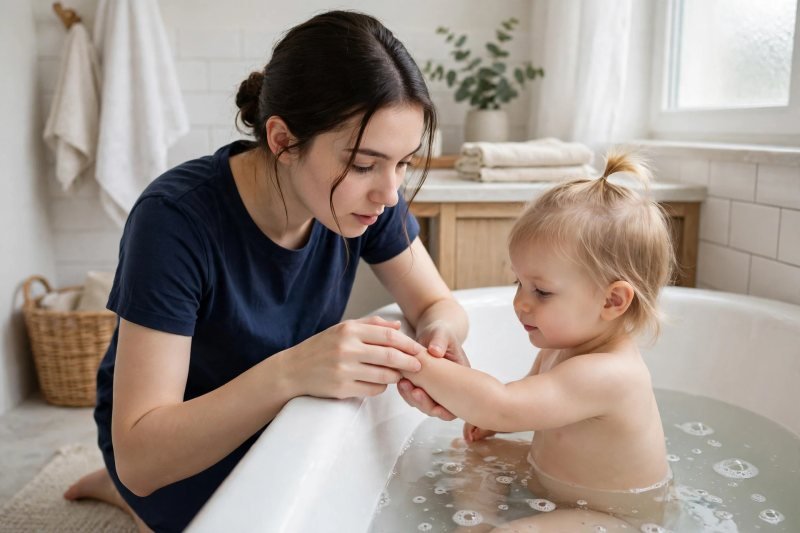
Start with your toddler's skin, not the store shelf. Before choosing anything, look at the skin you're washing: is it generally calm and clear, dry and flaky in patches, bumpy on the arms, or quick to redden when scented products touch it? Say to yourself, "I'm shopping for THIS skin," because the best body wash for toddlers is always a match, not a trophy. A calm-skinned toddler thrives on almost any gentle wash; a dry, eczema-prone toddler needs a gentler, creamier cleanser and a different bath routine entirely. Two minutes of honest observation now prevents the classic mistake — buying the cutest bottle for a skin type it was never made for.
-
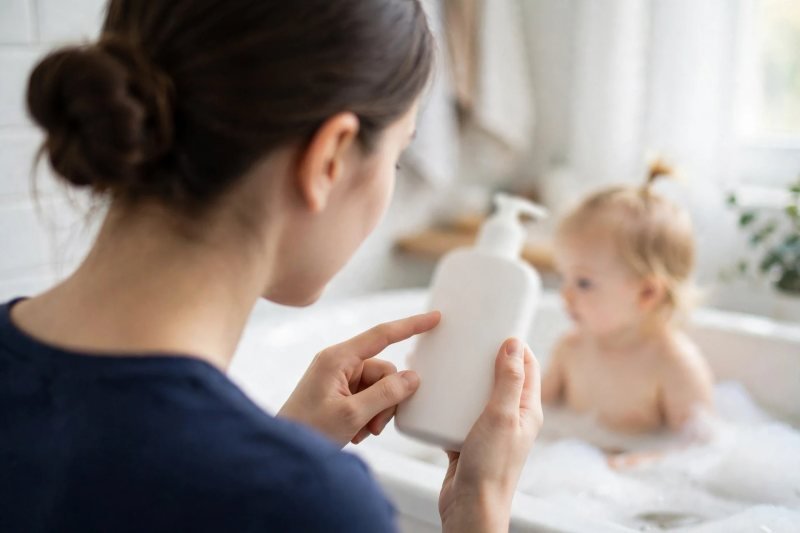
Learn the label words before you spend anything. Three checks do most of the work at the shelf: the front should say fragrance-free — which is not the same as "unscented," a word that can hide masking fragrances added to cover chemical smells; the ingredient list should be reasonably short and free of strong dyes; and claims like "hypoallergenic" should be treated as marketing, since the term has no strict legal standard behind it. Say the rule once: "Fragrance-free, short list, no dye show." If you want an extra check, the National Eczema Association maintains a product directory and a Seal of Acceptance for products reviewed for sensitive, eczema-prone skin — a genuinely useful shortcut for parents of reactive toddlers.
-
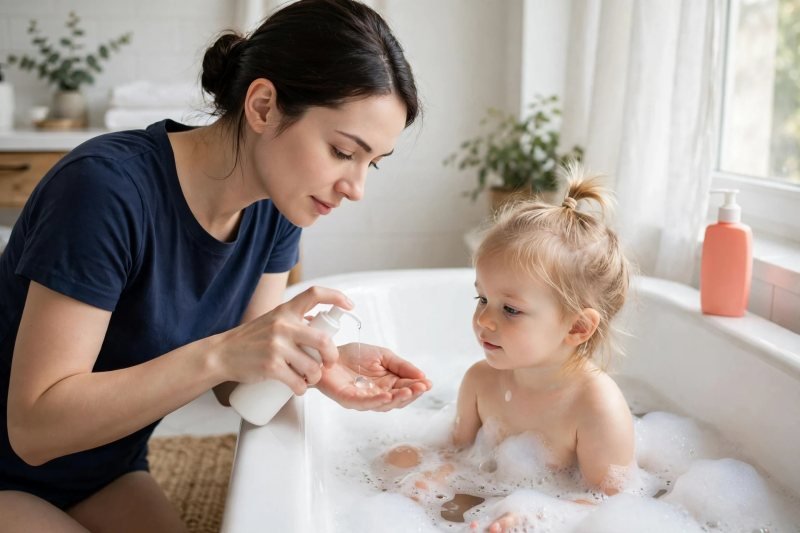
Choose a gentle cleanser, and let bubble bath be an occasional guest. For sensitive skin, the daily driver should be a mild liquid cleanser or cleansing wash — the kind that cleans with a small amount of lather rather than mountains of foam. Bubble baths, bath bombs, and strongly scented soaks are fun, but their fragrances and foaming agents sit on young skin for the whole soak and are frequent culprits when a toddler's skin turns dry or itchy after baths. Say, "Bubbles are a sometimes treat; the gentle wash is the everyday one." If your toddler adores bubbles, keep them rare, keep the soak short, and rinse well afterward — or make the foam from a small squirt of the gentle wash itself.
-
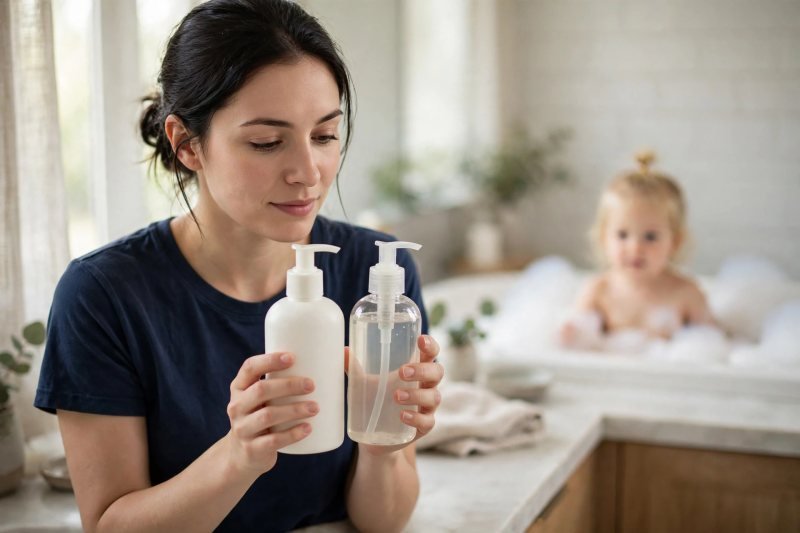
Match the wash type to your child's skin type. For normal, unbothered skin, any fragrance-free gentle wash that passes step 2 works — buy the size and pump style you like. For dry or rough skin, choose a creamier, richer cleanser (often labeled for dry or sensitive skin) and pair it with the shorter, lukewarm routine in step 5. For eczema-prone skin, choose the blandest option you can find — fragrance-free, dye-free, short ingredient list, ideally carrying the eczema-association seal from step 2 — and treat persistent, spreading, or weepy eczema as a pediatrician conversation, not a shopping problem. Say, "Calm skin, simple wash; cranky skin, blandest wash and a doctor in the loop."
-
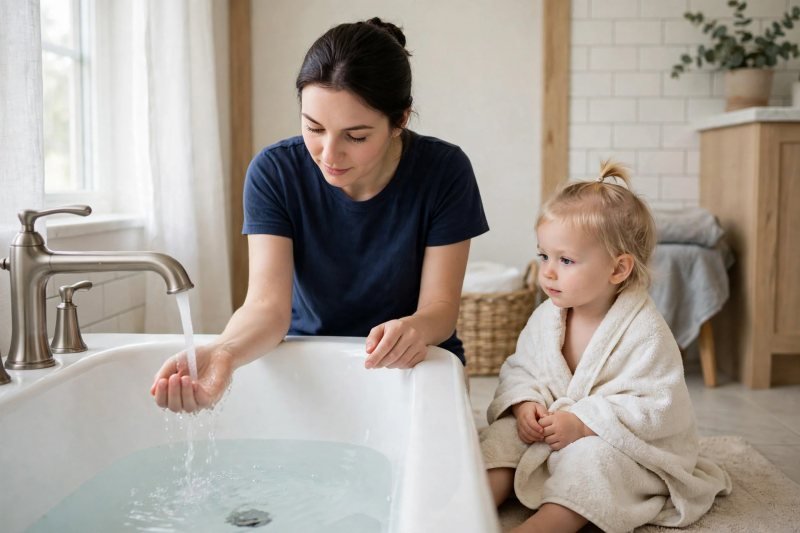
Run the bath lukewarm and keep it short. Fill the tub with lukewarm water — comfortably warm to the inside of your wrist, never hot — because hot water strips the oils a toddler's skin barrier needs, and long soaks do the same damage slowly. Aim for about five to ten minutes for sensitive skin: long enough to play and wash, short enough to protect the barrier. Say, "Warm like soup, quick like a story." Test the water with your wrist or elbow every time, stir it to even out hot spots, and remember that the bath itself is half the skincare routine — the fanciest wash cannot undo a daily twenty-minute hot soak.
-
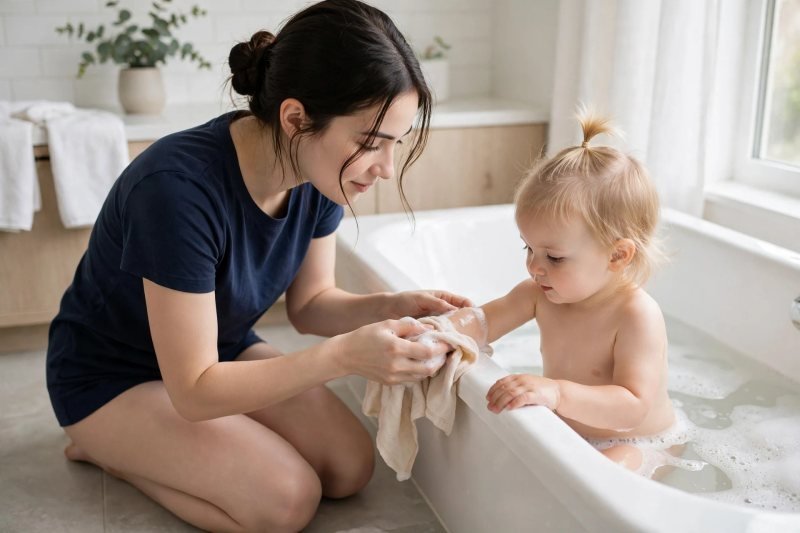
Use a pea-to-dime amount, on hands or a soft cloth. More wash does not mean cleaner — it means more residue to rinse and more chances to dry the skin. A pea-to-dime-sized squeeze worked between your palms or onto a soft, well-rinsed cloth is enough for a whole toddler, because most of a 2-year-old's body needs mostly warm water: the genuinely dirty zones are hands, face, feet, and the diaper area. Say, "A little puddle in my palm does the whole job." Skip rough scrubbing and puff overloads of product; if the cloth smells strongly of old soap between baths, it is holding too much product — rinse cloths thoroughly and let them dry.
-
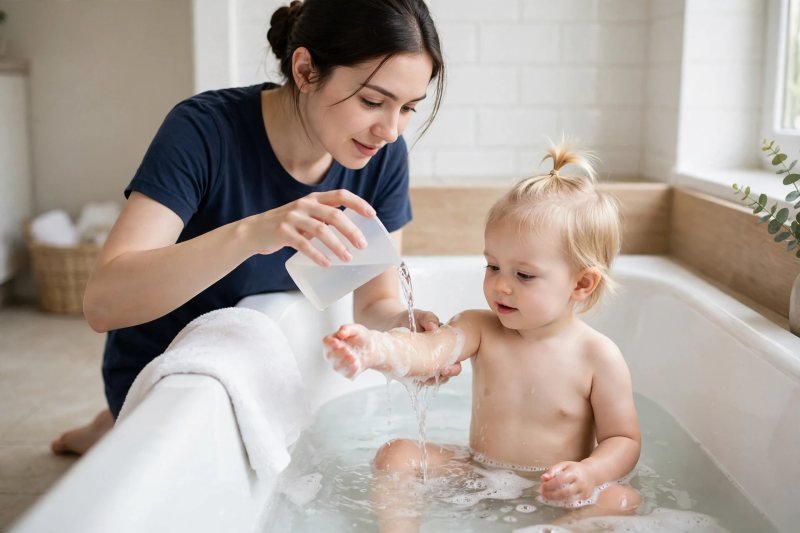
Wash gently in order, then rinse like you mean it. Work top to bottom — face with plain water only, then neck, arms, trunk, legs, and the diaper area last — with soft strokes instead of scrubbing. Then rinse thoroughly with the cup or a gentle shower stream: dried cleanser left sitting on skin is a quiet irritant, and the folds (neck, elbows, behind knees, diaper area) are where residue hides. Say, "Wash, then rinse until the water runs clear and the skin feels clean, not squeaky." Squeaky is not a goal for toddler skin — a slight softness after rinsing is exactly right.
-
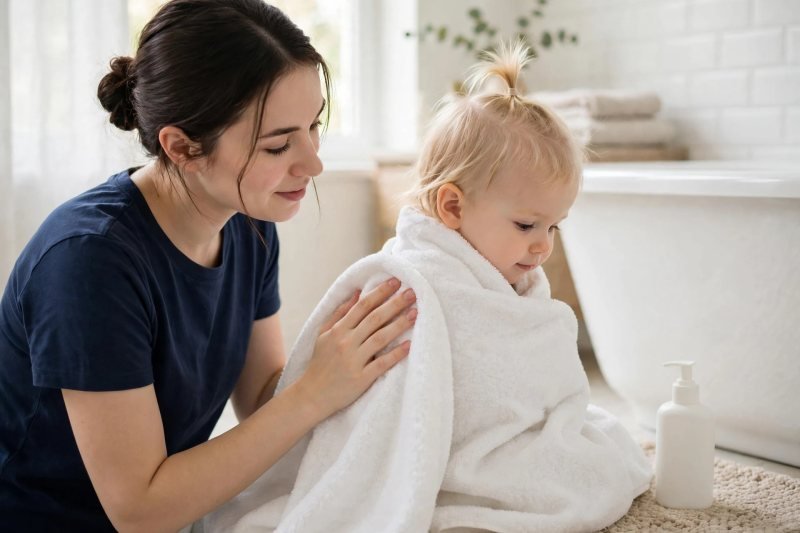
Pat dry and moisturize within a few minutes. Lift her out, pat — never rub — with a soft towel, leaving the skin slightly damp, and smooth on a fragrance-free moisturizer right away while that dampness is still there to seal in. This pat-and-seal finish matters as much as the wash choice for dry and eczema-prone skin, and it is the same simple logic that anchors a simple skincare routine for kids: cleanse gently, moisturize promptly, change nothing that is working. Say, "Pat, pat, cream — that's the bath-time rhyme." Work it into the routine until your toddler chants it back and starts patting her own legs.
-
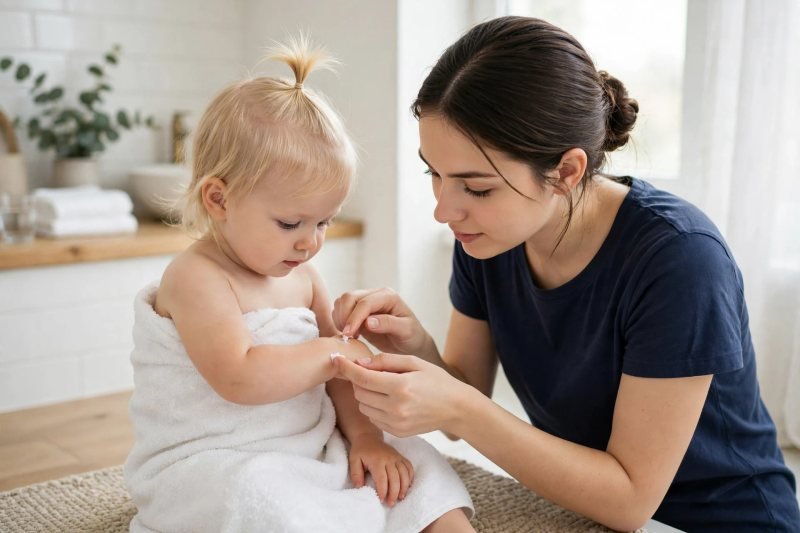
Patch-test every new wash before the first full bath. Skin that hates a product will usually tell you on a small stage first: smooth a dab of the new wash on the inside of her elbow (or use it on just one arm's wash for two or three baths), rinse as usual, and watch that patch over the next day or two for redness, bumps, or itching. Say, "One elbow gets the preview; then the whole body gets the show." No reaction means proceed with the full routine — and a reaction means you have learned something valuable for the price of one elbow instead of one miserable, itchy toddler at bedtime.
-
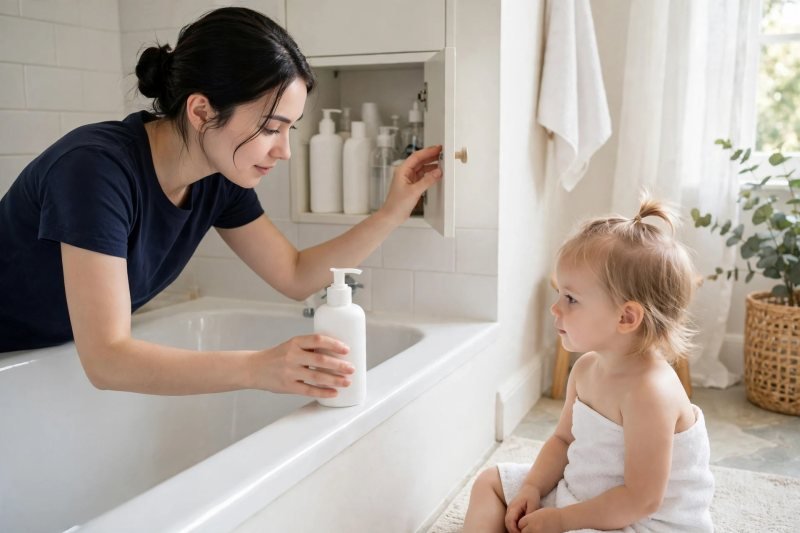
Give the new wash two honest weeks, then judge and simplify. One bath tells you almost nothing; skin needs a fair trial. Use the new wash as the only new product for about two weeks, note redness, dryness, or itching in your phone note after baths, and judge by the trend, not one cranky evening. Say, "Two weeks, one change at a time." If skin stays calm, you have found your wash — buy it again and stop shopping, because the quiet secret of sensitive-skin care (and of every step in that simple kids' skincare routine) is boring consistency. If problems persist or worsen despite a bland routine, that is pediatrician territory — bring the note.


Make it easier
Buy one wash that meets the criteria and use it for hair and body at this age — fewer products, fewer variables. Keep a pump bottle at the tub so the pea-sized amount is one-handed while your other hand stays on your toddler. Write your label rule (fragrance-free, short list, no dyes) on a phone note so every future purchase takes thirty seconds. After the bath, seal in moisture the same way every time — the approach in our moisturizer for kids with dry skin guide pairs with the pat-and-seal finish in step 8.
Make it harder
Graduate to label comparison: line up two candidate washes and read both ingredient lists aloud, choosing by the criteria rather than the front of the bottle. Add a simple skin diary for a month — bath length, water warmth, product, next-day skin — and spot your toddler's personal triggers. Teach your toddler the wash order (face water-only, diaper area last) with her own soft cloth for the easy zones. If your toddler's skin reacts to many products, read our sensitive skin in children guide before adding any second product to the routine.
Other ways to play it
- Eczema-prone focus: run the blandest version of everything — shortest baths, creamiest cleanser, moisturizer twice daily on pediatrician-friendly advice, and trigger notes kept religiously. Persistent eczema always routes to the doctor, not to a stronger product. For the full home-care pattern, see our eczema care for toddlers guide.
- Bubble-lover compromise: bubbles once a week from a squirt of the gentle wash or a fragrance-free bubble product, soak cut to a few minutes, full rinse after.
- Travel and daycare: decant the same home wash into a small plain travel bottle — a familiar product on trips is one less variable for reactive skin. Cheeks that chap on cold trips are covered in our dry skin on kids' faces guide.
How it changes by age
- Age 2: At two, "body wash" mostly means a gentle clean of hands, face, feet, and diaper area; the rest is warm water and play. Hair and body can share one gentle product, baths can be play-led, and the patch-test step matters most because two-year-old skin is still quick to react to fragrance.
- Age 3: Threes get genuinely dirty — playgrounds, paint, mud — so the full-body gentle wash earns its place, and your toddler can start helping: holding the cloth, washing her own arms and legs in the taught order. Keep the same criteria; her independence grows, the label rules don't change.
What they're learning
Body care vocabulary: naming body parts in wash order and words like "rinse," "pat," and "moisturizer" builds the language of self-care. Routine and sequence: the same steps in the same order every bath is early sequencing — and the reason bath time gets calmer. Sensory comfort: learning the difference between skin that feels good and skin that itches is body awareness a toddler uses everywhere. Independence: age-appropriate jobs (holding the cup, washing her own arms) are the first bricks of doing it herself.
Clearing up
Bath toys get squeezed out and stood to dry, the cloth is rinsed thoroughly and hung where it can actually dry (a damp, soapy cloth is a mildew farm), and the wash bottle goes back in its out-of-reach spot with the pump locked if it locks. Drain and quickly rinse the tub so the next bath doesn't start in yesterday's residue ring. The moisturizer lives where the towels are, because a moisturizer you have to hunt for after the bath is a moisturizer that gets skipped. Note the bath in your product-trial note if you are inside the two-week window (step 10). Hair gets washed on bath nights too — our washing toddler hair without tears guide keeps that part calm as well.
Questions parents ask
What is the best body wash for toddlers with sensitive skin?
Is baby wash still OK to use on a toddler?
How much body wash should I use on my toddler?
Can body wash make my toddler's eczema worse?
Should toddler body wash be fragrance-free or unscented?
How often should a toddler have a bath with body wash?

save it for later
Pin this for the next rainy afternoon
Keep it on a board so it is there when you need it, rather than when you happened to find it.
Save to Pinterest

