


Color Mixing for Toddlers: Easy Water Play Science
Splash, pour, and squirt colored water to discover orange, green, and purple! Easy sensory color mixing for toddlers ages 2-3, run outdoors or in the bathtub with non-toxic washable materials.
Color mixing for toddlers is water play: fill clear cups with red, yellow, and blue water, then let your 2- or 3-year-old pour, squirt, and splash them together outdoors or in the bathtub. Red and yellow make orange, blue and yellow make green, red and blue make purple. Setup takes five minutes with non-toxic washable food coloring — an adult always handles the coloring bottles and stays within arm's reach of the water.

The short version
- The 3 honest mixes: red + yellow = orange, blue + yellow = green, red + blue = purple.
- Two colors at a time — fresh cups keep each discovery bright; brown means dump and restart.
- Run it where splashing is fine: outdoors on grass or in the bathtub.
- Adult handles food coloring; smocks on; never leave a toddler alone with water.
- At ages 2-3 the sensory play IS the learning — splashing, pouring, and squishing matter most.
- Age
- Ages 2–3
- Prep
- 5 min
- Play time
- 30 min
- Mess
- High
- Difficulty
- Easy
- Where
- Both
Why kids love this
Color mixing for toddlers doesn't have to be a sit-at-the-table art project — for a 2-year-old, it's water play. Hand a toddler a few cups of brightly colored water and watch what happens: they pour, splash, squirt, and suddenly red water and yellow water have become orange water right before their eyes. Mixing colors in water this way is messy on purpose, sensory first, and built for the way 2- and 3-year-olds actually learn — by dumping things in and gasping at the result. Two-year-olds are scientists with a favorite method: dump it in and see what happens. Color play turns that impulse into an experiment. The reveal is instant — red water meets yellow water and it's orange, just like magic, except they did it themselves. Splashing is allowed, pouring is the point, and the “mess” is water, which toddlers find irresistible anyway.
What you'll need
- Red, yellow, and blue food coloring (non-toxic, washable)
- Clear plastic cups, bowls, or a shallow plastic bin
- Small jugs or watering cans for pouring
- Squirt bottles or water spray bottles
- Bath toys or waterproof toys to rinse
- Smock or old clothes (colored water can stain fabric)
- Towels for the cleanup splash
- A splash mat, old blanket, or the bathtub as your play surface
Before you start
Set up where water can splash freely: a patio, grass, or the empty bathtub with a little water. Fill clear cups halfway — one cup of red water, one yellow, one blue — adding the food coloring yourself (a few drops per cup is plenty). Put the coloring bottles away. Smocks on, sleeves up, towels nearby. Five minutes, done.
How to do it
-
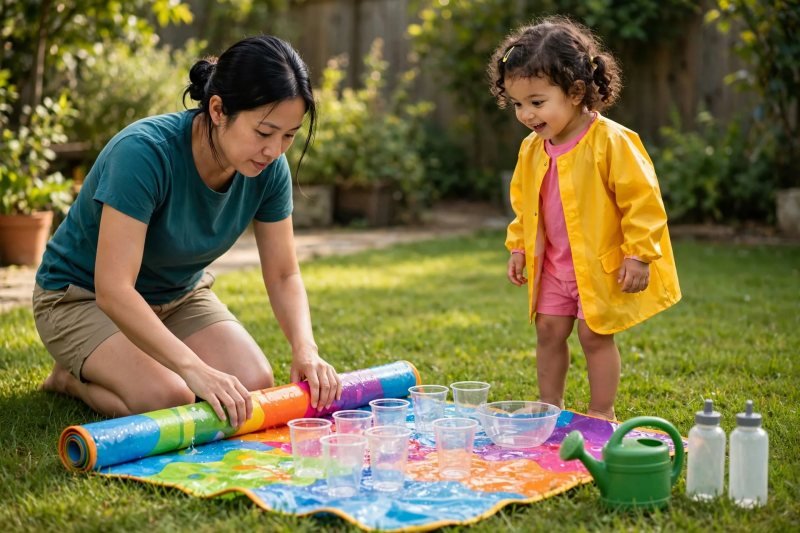
1. **Set up the splash zone.** Outdoors on grass or a splash mat, or in the bathtub. This is a wet activity on purpose — pick the spot where splashing doesn't matter.
-
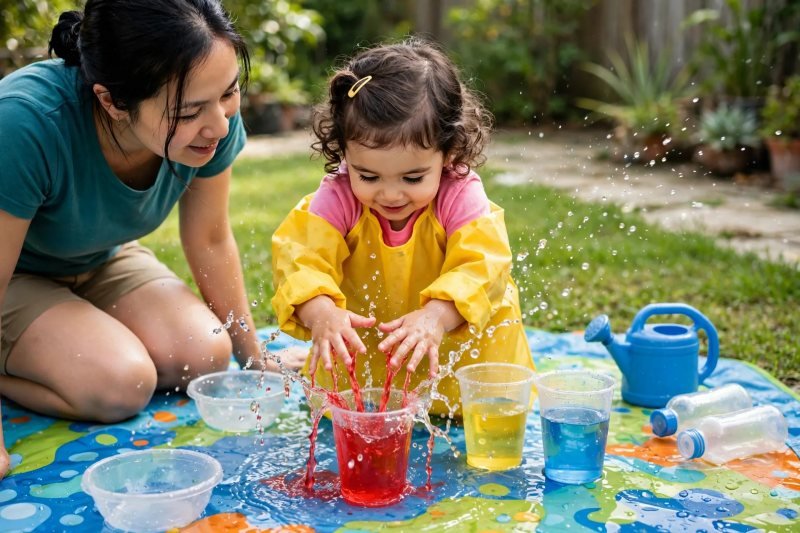
2. **Let your toddler play with the plain colors first.** Hands in the red water, splash, swirl, dribble it between fingers. Sensory play IS the learning at this age — don't rush past it.
-
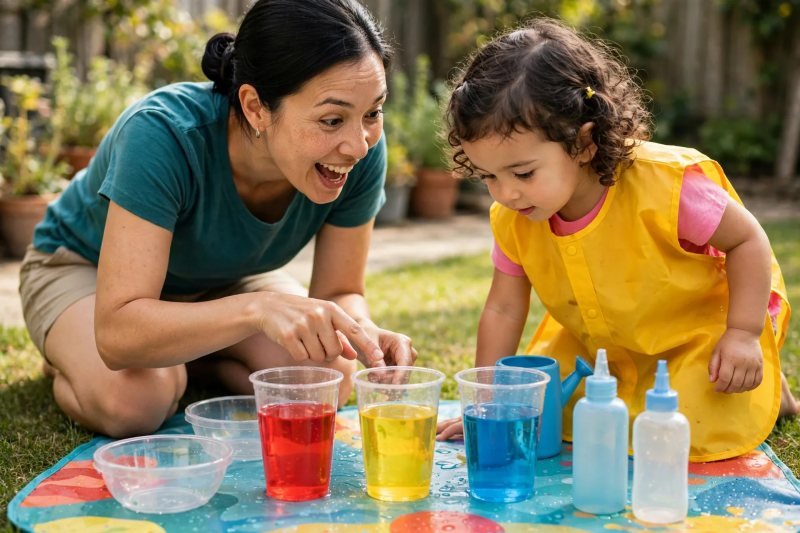
3. **Name what they see.** "You have RED water! And YELLOW water!" Simple color words now build the vocabulary that makes the color mixing reveal exciting later.
-
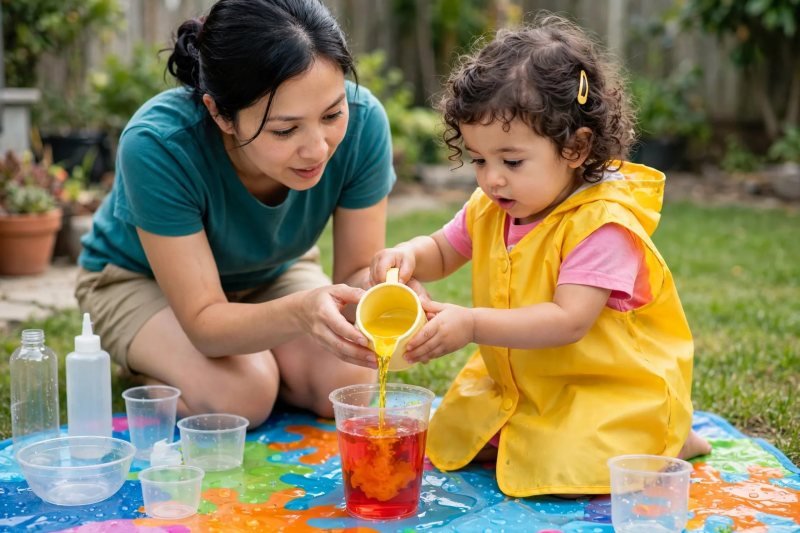
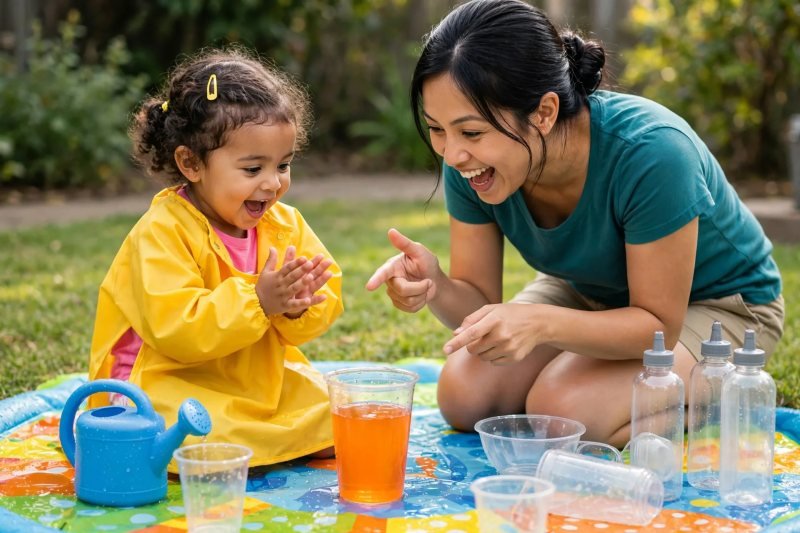
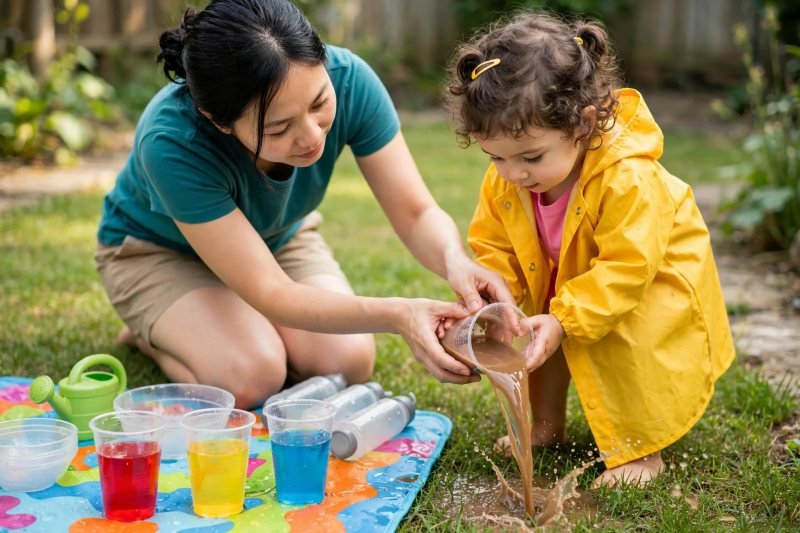
4. **Pour yellow water into red water.** Hand your toddler the small jug of yellow water and guide it toward the red cup. Pour slowly — let them see the streams meet. Orange blooms in the cup.
-
5. **Name the new color with delight.** "Orange! Red water and yellow water made ORANGE water!" Name it like it's breaking news — at this age, your reaction teaches them that discoveries are worth announcing.
-
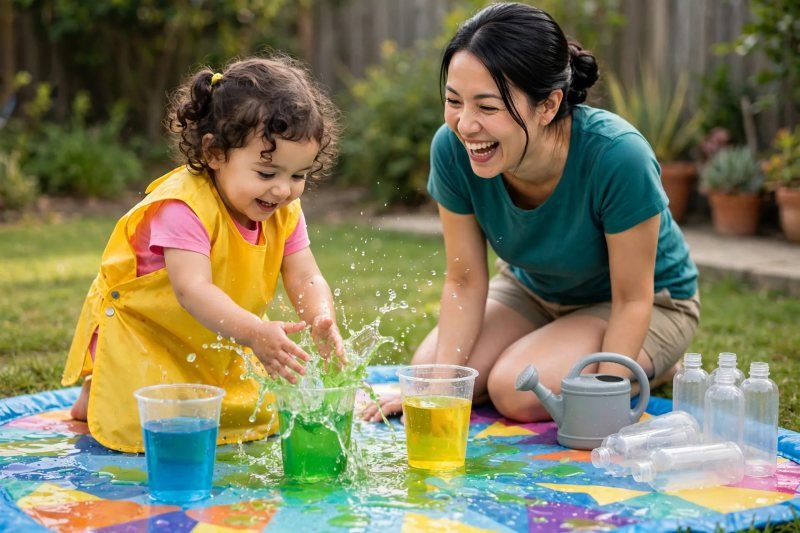
6. **Try blue and yellow next.** Fresh cup, blue water plus yellow water, same pouring routine. "GREEN! Blue and yellow made GREEN!" Let them splash it — green puddles are part of the joy.
-
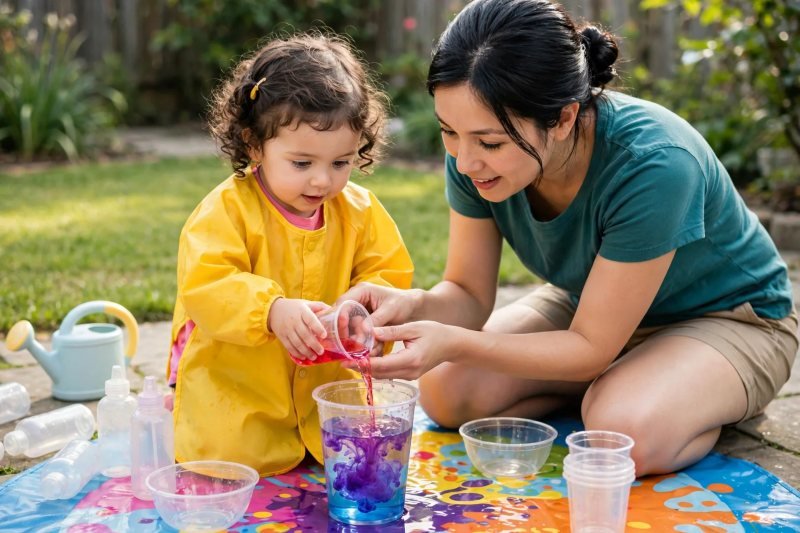
7. **Mix red and blue for purple.** Fresh cup again, red water and blue water poured together. "PURPLE! Red and blue made PURPLE!" Three discoveries, each one their own cup so the colors stay bright.
-
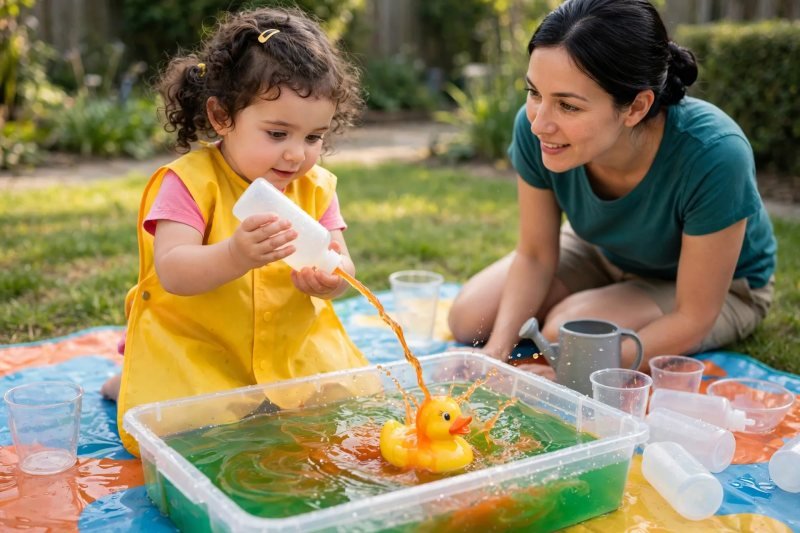
8. **Squirt and rinse colorful toys.** Fill the squirt bottles with the new colors and let your toddler squirt colored water over bath toys or into the bin. Watching orange run off a duck into green water is color mixing in motion.
-
9. **Keep it two colors at a time.** When a cup turns brown (and it will), that's your cue: "All gone! Dump it!" Tip it out together, refill with fresh colored water, and start the next mix. Fresh cups keep the bright reveals coming.
-
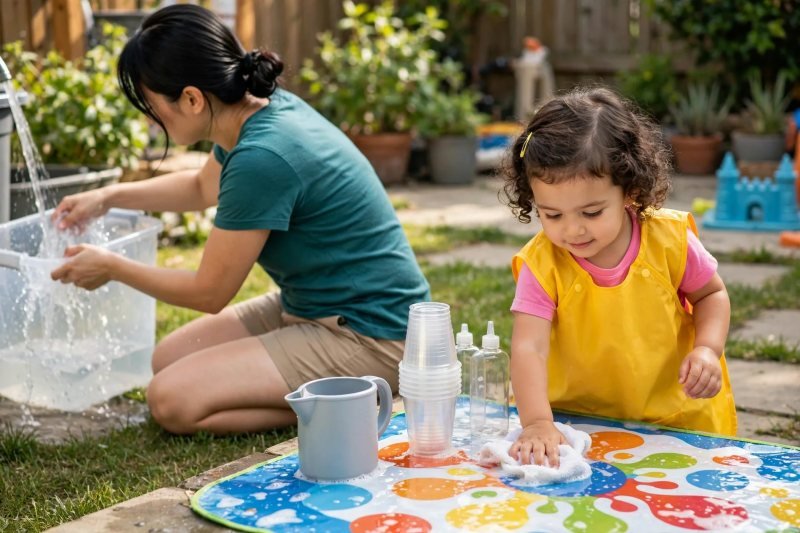
10. **Clean up together.** Dump the cups, rinse everything in plain water, and let your toddler "help" wipe the splash mat or tub. Toddlers love being the cleanup crew — it's the satisfying final step of their experiment.


Make it easier
For young twos, skip the pouring entirely — fill the bin with plain water, add the food coloring drops yourself, and let them splash and swirl as each color blooms. One color pair per session is plenty; red and yellow is the brightest first discovery.
Make it harder
For older threes, make it a prediction game: hold up two cups and ask, "What will red and blue make?" before pouring. If they remember purple from before, celebrate the theory. Our [water painting on an outdoor wall](https://brightplaydays.com/activities/water-painting-outdoor-wall/) is a natural next step. Next week, add a fourth discovery most toddler pages skip: tinting. Stir a little white into the red water and watch it turn pink — red plus white makes pink, and the same trick softens blue and green into pale pastels.
Other ways to play it
- **Bathtub version:** Run this in the bath with a few drops of food coloring in the water — blue water plus a squirt of yellow makes the whole tub turn green around them.
- **Toy car wash:** Line up waterproof toys and let your toddler "wash" them with colored water, mixing the rinse water as they go.
- **Ice cube reveal:** Freeze tinted water into cubes and drop them in a bin of plain water — the color bleeds out as they melt.
- **Color hunt:** After discovering green, hunt the yard for five green things — it locks in the new color word.
How it changes by age
- For ages 2-3. Twos are in it for the sensory experience — the splashing, pouring, and squishing matters more than the color words, and that's exactly how they learn. Narrate everything ("Red water! Splash!") and let them repeat what they can. Threes start predicting ("Will it be green?") and can manage pouring with steadier hands. Our [baking soda and vinegar volcano](https://brightplaydays.com/activities/baking-soda-vinegar-volcano-preschool/) pairs perfectly for the next messy science session.
What they're learning
Early color theory at the simplest honest level — red and yellow make orange, blue and yellow make green, red and blue make purple; cause and effect (I poured, it changed); sensory exploration through water, temperature, and movement; pouring and squirting build pouring control and hand strength; and new vocabulary: mix, pour, splash, squirt, colors' names. Underneath it all: my actions can change the world around me.
Clearing up
Tip colored cups into the grass or down the tub drain, rinse cups and bins in plain water. A quick rinse washes food coloring off skin; a dab of cooking oil lifts stubborn stains before washing. Towels go straight in the wash. Outdoor setups: just hose the area down. About five minutes, and your toddler can help.
Questions parents ask
What colors do you mix to make orange, green, and purple?
Is color mixing safe for a 2-year-old?
How do you do color mixing with toddlers who put everything in their mouths?
Can you do color mixing for toddlers in the bathtub?
What do toddlers learn from color mixing?
How do you clean up after toddler color mixing?
If your purple comes out muddy instead of bright, blame the dye, not your toddler — food-coloring purple often skews dull, so add one extra drop of red and swirl again for a livelier shade. And if little hands stay faintly tinted afterwards, don’t scrub at them: the color fades on its own within a day or two of ordinary washing and baths.

save it for later
Pin this for the next rainy afternoon
Keep it on a board so it is there when you need it, rather than when you happened to find it.
Save to Pinterest