


Baby's First Beach Trip: Packing List for Toddlers
A baby first beach trip packing list for toddlers is really a setup order: shade first, sunscreen next, swim outfit and hat, sealed dry change, food and water, and a wet bag for home. Pack in that order and a short first trip stays calm, shaded, and fun.
A baby first beach trip packing list for toddlers needs shade first, then sunscreen, a swim outfit plus hat, a sealed dry change with diapers, towels, water and simple food, a few sand toys, and a wet bag for the trip home. Set up in that order, supervise constantly, and pack up in reverse so nothing gets left in the sand.

The short version
- Pack and set up in order: shade, base towel, sunscreen, swim outfit and hat, food station, toys.
- Seal the full dry change — outfit, diaper, wipes — and stage it on top of the bag before tired signs appear.
- Keep the first trip short: an hour or two of good fun beats a full day that ends overtired.
- Reapply sunscreen after swimming or heavy sweating; shade and hats work with it, not instead of it.
- Three sand toys are plenty for a first trip — and they make pack-up fast.
- Supervision is constant and within arm's reach at the water; outfits and lists never replace watching.
- Age
- Ages 2–3
- Prep
- 25 min
- Play time
- 120 min
- Mess
- High
- Difficulty
- Easy
- Where
- Outdoor
Why kids love this
A first beach trip is pure sensation for a 2- or 3-year-old: warm sand, cold water, wind, and a bucket that fills and empties forever. What toddlers do not love is waiting in full sun while a parent digs through a chaotic bag. A baby first beach trip packing list, packed in setup order, means shade appears in the first minute and snacks arrive before hunger does — the beach just feels easy and fun.
What you'll need
- Shade — a pop-up beach tent or umbrella you have practiced opening at home
- Broad-spectrum sunscreen, SPF 30 or higher, and a wide-brim hat with a strap
- A swim outfit — swimsuit or swim shorts with a rash guard — plus swim diapers and regular diapers
- A full dry change for your toddler, sealed in a zip-top bag, plus a light layer
- Two towels — one for sitting and shade play, one for drying
- A small cooler or insulated bag with water for everyone and simple, sand-friendly food
- A few sand toys — one bucket, one shovel, one cup is plenty for a first trip
- A wet bag for soggy clothes, a trash bag, wipes, and a change of clothes for you too
Before you start
1. Practice the shade tent at home once — first-trip day is the wrong day to learn a pop-up mechanism with a toddler on your hip. 2. Pack the bag in reverse setup order: what you need last goes in first, so shade and sunscreen sit right on top. 3. Put sunscreen on at home or in the car if you can, so the first coat is on before the first sprint toward the water; reapply at the beach. 4. Keep the first trip short on purpose — arriving mid-morning and leaving after an hour or two of good fun beats staying until everyone is overtired.
How to do it
-
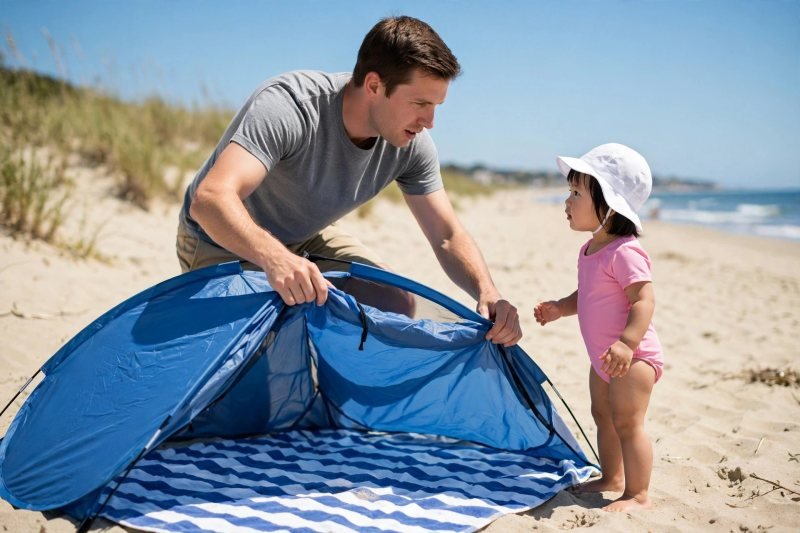
Set up shade before anything else. Carry your toddler and the shade gear to your spot first, before the tote and cooler make the trip. Pop the tent or umbrella up, angle it against the sun, and anchor it exactly as directed so it cannot tip or blow. Say: "Home base first — this shady spot is ours." Every other item on the baby first beach trip packing list serves this base: sunscreen, snacks, and rest all happen here. Shade standing — lay the floor of your camp next.
-
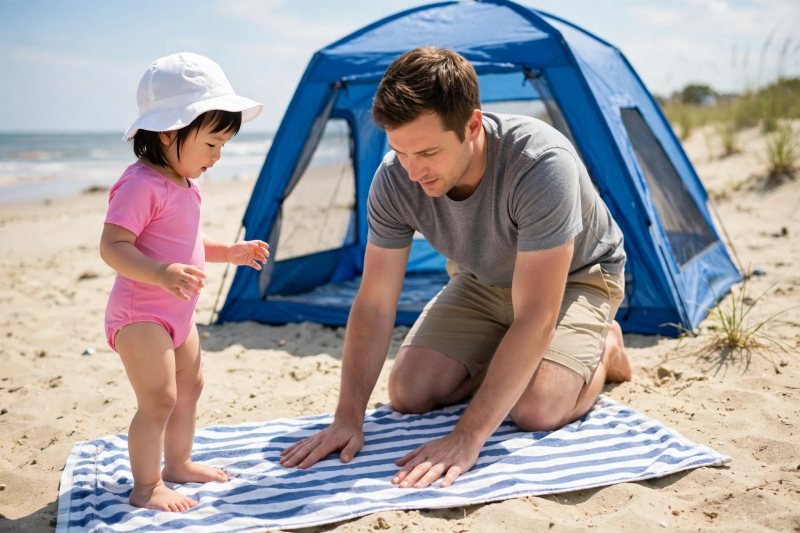
Lay the base with towels and blanket. Shake one towel or a light beach blanket out fully inside and in front of the shade, smoothing the corners so your toddler has a sand-free zone for snacks and rest. Keep the second towel folded at the edge, reserved purely for drying — a drying towel that starts sandy stays sandy. Say: "This towel is our floor — snacks and sitting here, swimming out there." Set the tote behind the base, out of the play path, with the sealed dry bag untouched at its center. Base laid and bag parked — sunscreen comes before any water play, every time.
-
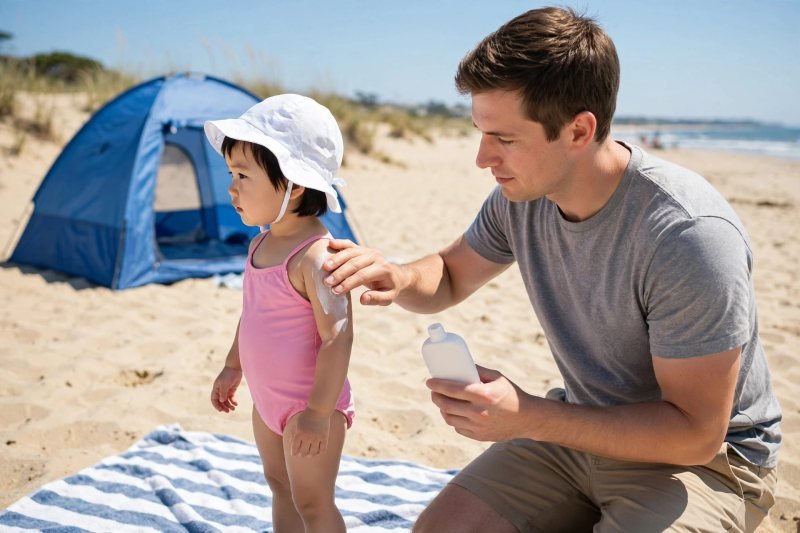
Apply sunscreen before the first play. With your toddler standing on the towel, cover every exposed area — face carefully, ears, neck, shoulders, arms, legs, and the tops of feet, which burn fast and get forgotten. Say: "Shield on first, then the beach is ours — hold still like a statue for ten counts." If you applied a first coat at home, this is the fresh coat before play; plan to reapply after swimming or heavy sweating and as the label directs. Sunscreen is one layer of a system your family may already know from a kids skincare routine with simple steps — shade and hats complete it. Shield on — dress the swimmer properly before heading to the waterline.
-
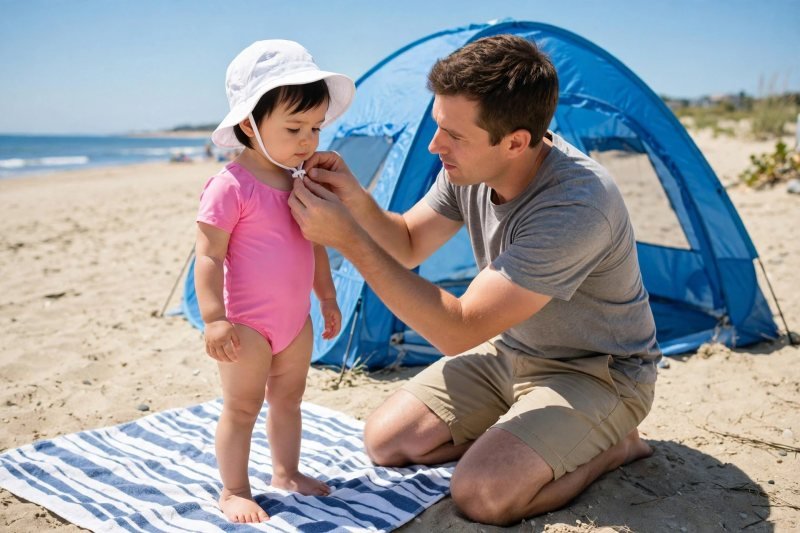
Dress the swim outfit and hat. Change your toddler into the swim outfit on the towel — swim diaper under swim bottoms if your child is not toilet trained — then add the rash guard and fasten the hat under the chin; the same light, loose layers in our toddler summer outfits guide work well over the swimsuit for the walk to and from the car. Say: "Swim shirt, hat on tight — now you look like a beach pro." Test the strap with a gentle tug; a hat that floats off in the first wave becomes a rescue mission. Dressed and hatted — stage the cooler so snack breaks never require a search.
-
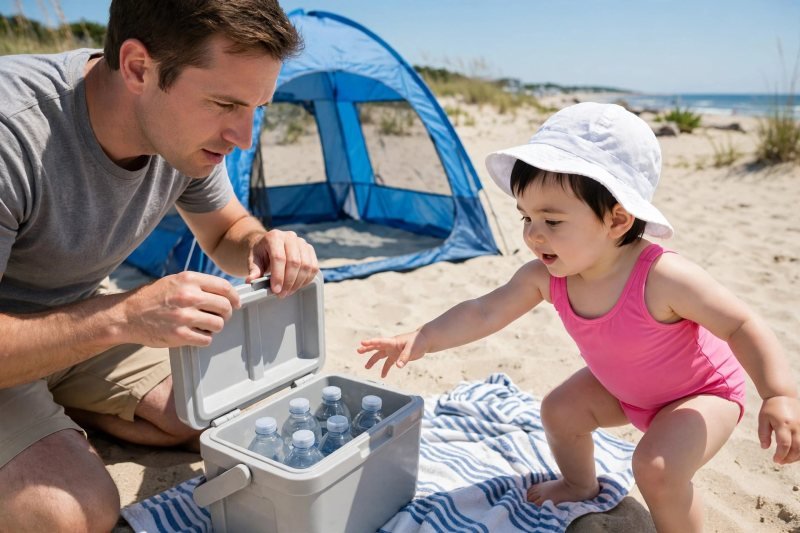
Open the food and water station. Set the small cooler at the back of the shade, open it once to show your toddler where drinks live, and offer water right away — the first sip should happen before thirst, not after. Say: "Water lives here — we drink every time we visit the shade." Keep food simple and sand-tolerant, serve it only on the towel with wiped hands, and close the cooler between breaks so sand and heat stay out. Offer water often and keep portions small — a fed, watered toddler stays happier for longer at the beach. Station ready — now, finally, the toys that make the shoreline irresistible.
-
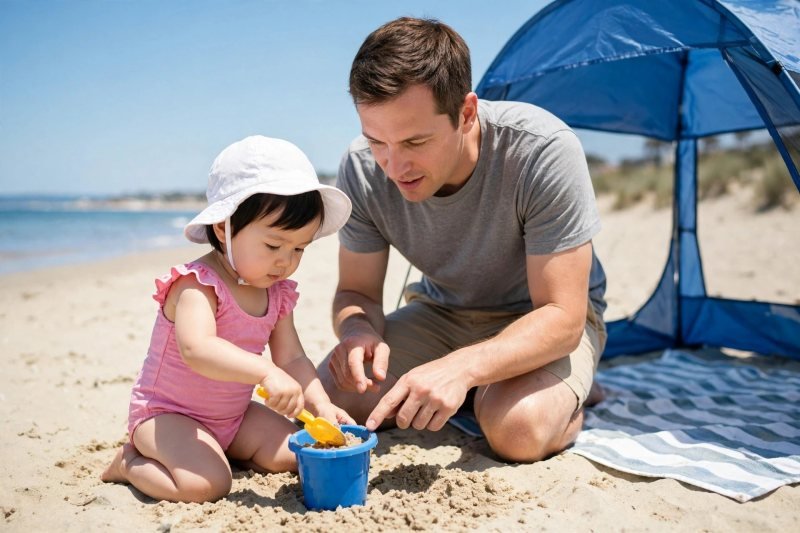
Set out just a few sand toys. Tip the bucket, shovel, and cup out at the edge of the shade and show your toddler the loop: dig, carry to the waterline together, pour, repeat. Say: "Three toys is plenty — we fill, we pour, we do it again." Stay within arm's reach at or in the water, and treat shade toy play as rest between paddles, not a break from watching. If the three toys run out, sand play turns sensory on its own — digging, pouring, and feeling wet and dry sand is the same kind of five senses activities for preschoolers that keeps toddlers busy at home. Toys in play — quietly stage the exit kit while energy is still high.
-
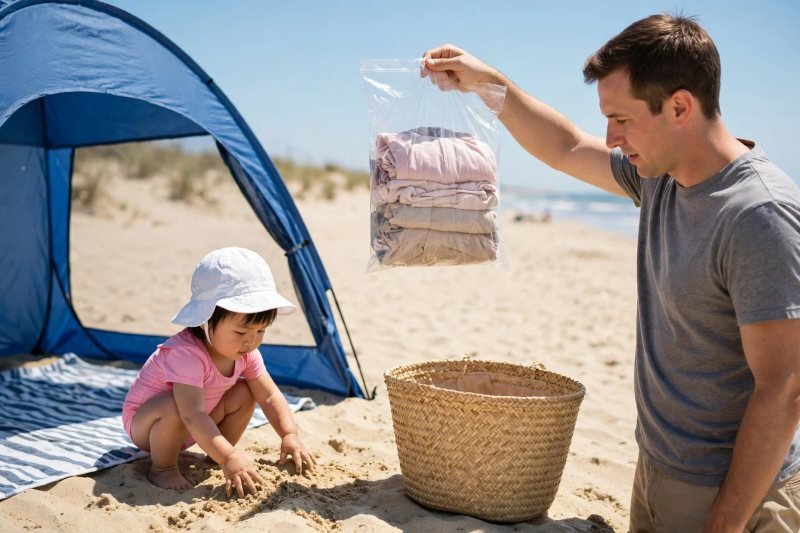
Stage the dry change and diaper kit. While your toddler plays, move the sealed dry bag and diaper supplies to the top of the tote so the end-of-trip change is grab-and-go: dry outfit, regular diaper, wipes, and your own spare shirt. Quietly check the wet bag is open and ready to receive the swim outfit. When the first tired signs appear, you will change your toddler on the towel, seal wet and sandy things into the wet bag, and dress them fully dry for the trip home. Short, happy trips build the same steady independence as these toddler learning activities at home — small successes, repeated. Exit staged — finish with a pack-up that leaves nothing behind.
-
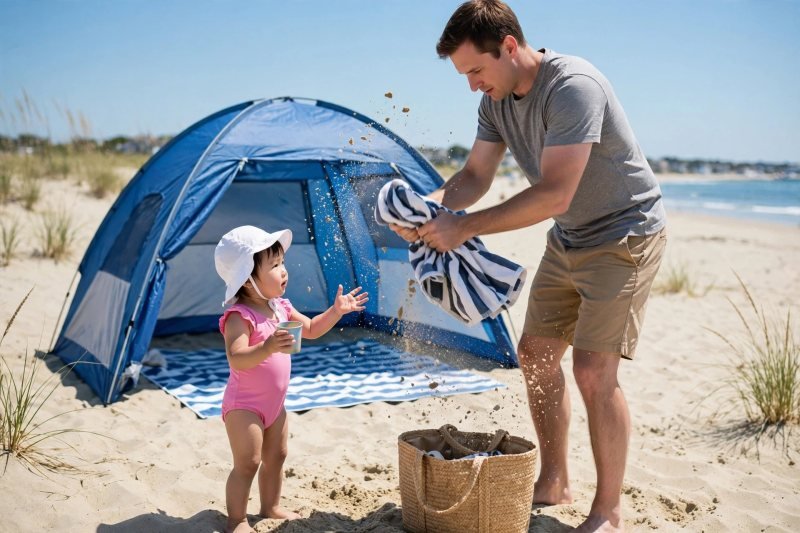
Pack up in reverse and check the sand. Work backward through the list: toys rinsed and counted in; cooler closed; towels shaken hard downwind; shade folded last. Change your toddler first if you have not already, then scan your whole spot slowly for the small things sand swallows: a cup, a strap, a lid. Say: "We check the sand like detectives before we go." At home, rinse sand from hair gently — these wash toddler hair without tears tips help if your toddler hates the rinse. Bag closed, toddler dry, spot clean — first trip complete, and the list is ready to reuse next time.


Make it easier
Go for one hour the first time, close to home, at a calm time of day — a short win teaches everyone the system. Wear your own swimsuit under your clothes and pack your dry change too; parents who can paddle without logistics worries supervise better. Choose a beach with restrooms and a rinse shower nearby for the first trips; the final change is far easier with water access.
Make it harder
Let your toddler carry one list item — the cup or their hat — and be its official keeper from car to base and back. Add a simple nature hunt at the shade edge: find a smooth shell, a feather, a piece of driftwood — look, admire, and leave them at the beach. Invite your toddler to help with the final sand check by giving them one zone to scan slowly with you.
Other ways to play it
- Pool-first version: rehearse the whole list at a pool — same shade, sunscreen, swim, dry-change order — before graduating to waves and sand.
- Lake version: add water shoes for rocky or muddy bottoms and a light layer for breezy shade, and keep the same setup order.
- Sibling version: duplicate only the personal layers — swim outfit, hat, dry change per child — while shade, cooler, and toys stay shared.
How it changes by age
- Ages 2–3: the target band. Expect short attention and big reactions to cold water. You do every job; your toddler plays, sips, and gets changed. Constant supervision is non-negotiable — within arm's reach in or near water, always.
- Ages 4–5: first-trip logic still works, with longer stays and more independence — carrying toys, holding the hat, helping shake towels. Sunscreen coverage and water supervision remain parent jobs.
- When to adjust: follow your pediatrician's guidance for babies under 6 months — shade and clothing are the main tools at that age, and any sunscreen use should follow professional advice. For toddlers with eczema or very sensitive skin, ask your pediatrician about products and sun timing.
What they're learning
Sensory exploration: sand, water, wind, and temperature changes are rich, real-world sensory input in short, manageable bursts. Routines and order: shade, sunscreen, swim, snack, change is a sequence toddlers can learn to predict and even chant. Early independence: carrying one item, drinking from their own bottle at the station, and helping scan the sand build real responsibility. Nature care: admiring shells and leaving them behind teaches gentle respect for shared outdoor places.
Clearing up
Myth one: a first beach trip needs a car full of gear. It needs the right categories in the right order — shade, sunscreen, swim, dry, food, a few toys — and many families already own most of it. Myth two: toddlers should stay a full day to make the trip worth it. Short trips are the strategy, not a compromise; leaving while it is still fun is how second trips get requested. Myth three: sunscreen alone makes midday sun safe for a toddler. Sunscreen is one part of a system that includes shade, hats, timing, and watching how your child is actually doing.
Questions parents ask
What should I pack for my baby's first beach trip?
How long should a toddler's first beach trip be?
Does my toddler need a swim diaper at the beach?
How do I protect my toddler from the sun at the beach?
What is the best order to set up at the beach with a toddler?
Once the first trip goes well, reuse the same setup order for longer beach days — just add a second dry change and extra water. If your toddler loved digging and pouring, the same sand play works at home in a tray or sandbox, and a calm rinse and dry change at home ends the day the same way it started: dry, fed, and ready for a nap.

save it for later
Pin this for the next rainy afternoon
Keep it on a board so it is there when you need it, rather than when you happened to find it.
Save to Pinterest


