


Handprint Turkey Craft: A Keepsake Thanksgiving Project for Toddlers
The handprint turkey craft is the Thanksgiving keepsake every family deserves: one brown handprint for the body, rainbow fingers for feathers, plus a cut-paper version, a footprint turkey, and a set to mail to grandparents. Toddler-tested steps inside.
To make a handprint turkey: tape cardstock down, brush washable brown paint over your toddler's palm and fingers, press flat with fingers spread, and lift straight up — the palm is the body, fingers are feathers, thumb is the head. Add a crayon beak, eye, and legs when dry. Rainbow-painted fingers make a second, brighter turkey, and a painted footprint makes a third.

The short version
- Setup decides success: paper taped down, palettes ready, damp cloth in reach — then one flat press and one straight lift, never sideways.
- The classic print is palm-brown; the showpiece version paints each finger a different feather color before pressing.
- Fingertip dots arced over the print add a second feather fan; crayons add beak, eye, wattle, and legs — drawn, not glued, at this age.
- Two more versions in the same session: a cut-paper hand turkey (adult cuts, toddler glues) and a footprint turkey (heel is the body, toes are feathers).
- Make extras as a gift set — handprint turkeys are the rare toddler craft that grandparents genuinely frame.
- Age
- Ages 2–3
- Play time
- 30 min
- Mess
- High
- Difficulty
- Easy
- Where
- Indoor
Why kids love this
Toddlers love anything that begins with permission to be painted, and a handprint turkey starts exactly there: cool paint brushed across the palm (it tickles; there will be giggles), the suspense of the press, and then the reveal — his hand, but a turkey. Children this age are also connoisseurs of repetition with a twist, which is the whole architecture of this project: the same beloved press, again in rainbow fingers, again as tiny fingertip feathers, again with a foot, again on paper he can cut and glue. By the end he has not made one craft but a flock, and a flock means giving — and a 2-year-old who has just learned that his own hand makes gifts for grandparents walks about an inch taller all week.
What you'll need
- Washable, non-toxic tempera paint: brown, plus red, orange, and yellow for feathers
- Heavy paper or cardstock (white or cream shows prints best) — several sheets, prints multiply
- A wide paintbrush for painting palms (faster and less tickly than dipping)
- Crayons or markers for beaks, eyes, and legs
- Brown construction paper, a pencil, child-safe scissors for him and real scissors for you, and a glue stick for the cut-paper version
- An apron or smock, painter's tape, and a table cover
- A damp cloth and a bowl of warm water within arm's reach (the real MVP)
- Optional: a small frame or a length of string and clips for the step-10 display
Before you start
1. Cover the table and tape one sheet of cardstock down at toddler-hand height; a sheet that cannot skate away is half the battle for a clean print. 2. Squeeze paint onto paper plates as palettes — brown on one, the three feather colors side by side on another, ready for step 4's rainbow fingers. 3. Stage the wash station before the apron goes on: damp cloth, water bowl, towel. Prints happen in seconds; cleanup speed is decided now. 4. Make one demo print with your own hand on scrap paper first — toddlers copy a seen action far more readily than a described one.
How to do it
-
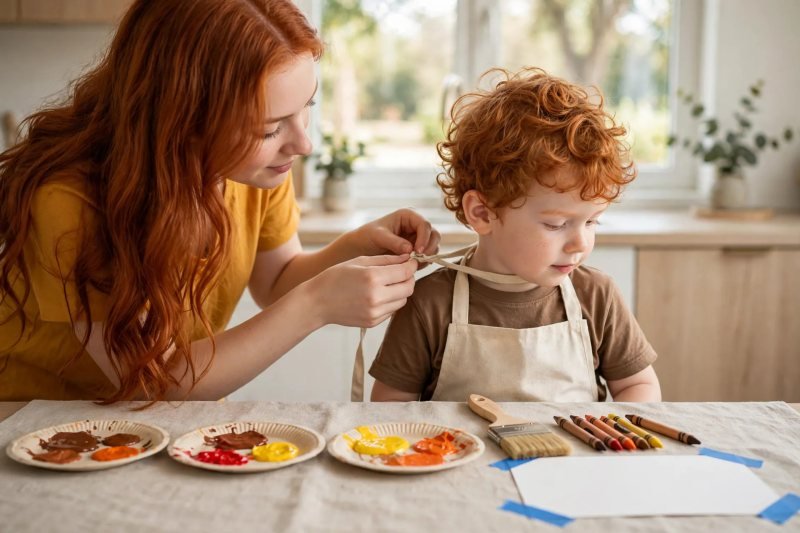
Gear up and spread everything within reach. Apron on, sleeves pushed up, and the whole kit laid out like a runway: taped-down cardstock in front of him, paint plates to the side, crayons parked until step 6, damp cloth in your lap. Say: "Painters get paint on their hands ON PURPOSE today. Yours is the most important hand here." Walk him through the shape of the session in toddler terms — paint, press, lift, WOW — and let him pat the taped paper to feel that it stays. This unglamorous minute is the entire difference between a keepsake and a smear: everything the next steps need is reachable without anyone leaving the table with painted hands, and he knows the story before the first brush lands.
-
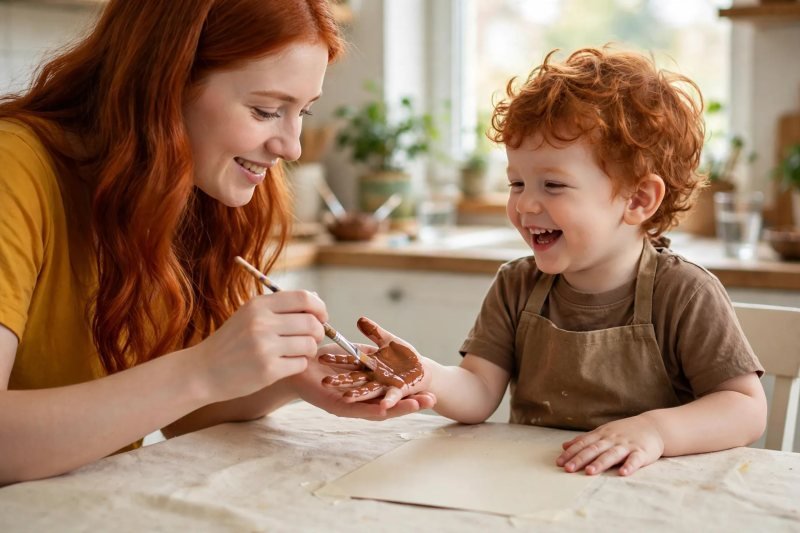
Paint his whole palm and fingers brown. With the wide brush, paint a generous, even coat over the entire palm and all five fingers — the palm becomes the turkey's body and the fingers will read as the tail feathers fanned behind it, with the thumb doubling as the head's side. Say: "Tickle paint! Hold your star hand — fingers spread wide." Keep his hand flat and open like a star while you paint; a fist mid-paint is the classic toddler protest and it just means a second coat. Work at a cheerful pace: tempera dries fast, and a half-dry hand prints patchy. If he wants to paint his own hand, hand over the brush for the last strokes — ownership now buys cooperation at the press.
-
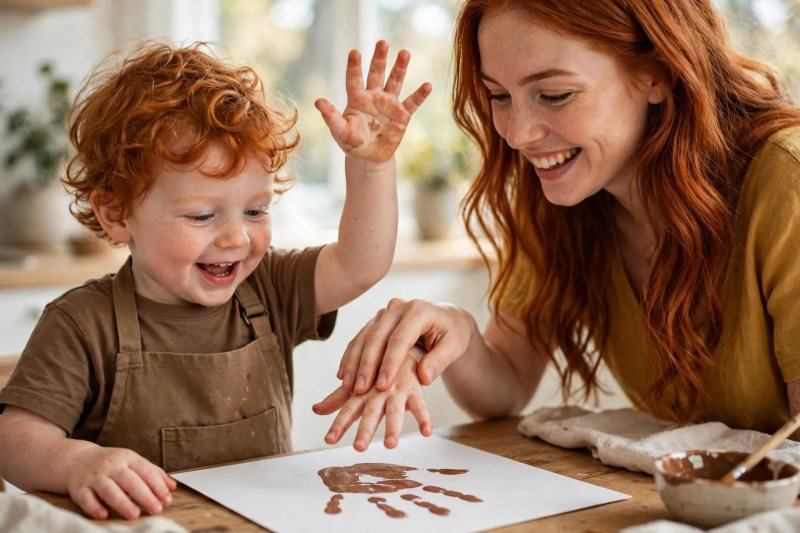
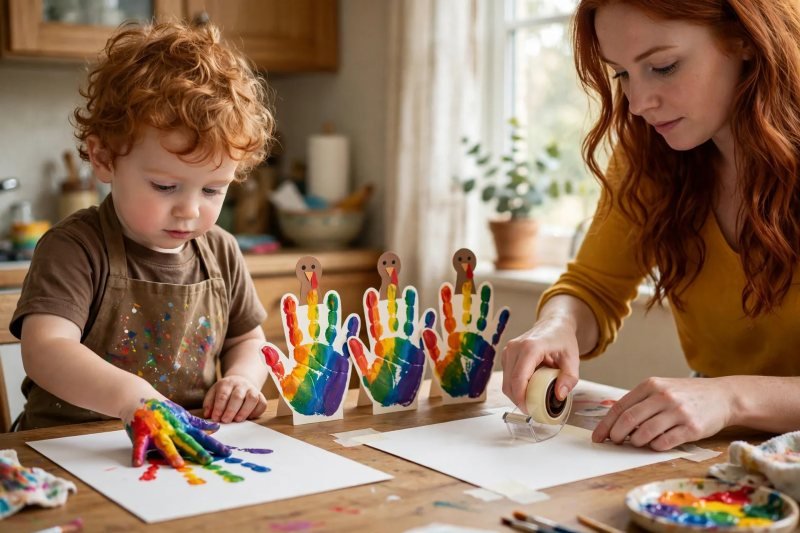
Press the handprint — one flat press, one straight lift. Guide his painted hand down onto the taped cardstock, fingers spread wide, and press the back of his hand and each finger firmly with your own hand so every edge makes contact — this firm, even pressing is also secretly excellent work for little hands, the same family of skills exercised in this site's fine motor activities for preschoolers. Say: "Press… press… and LIFT!" Then lift straight up in one motion — never sideways, never a wiggle — and there it is: a plump brown turkey body with a thumb-head and four feather fingers. Straight to the wash cloth for his hand (keep the craft hand and the touching-everything hand separate only in theory — the cloth is the truth), and set the print where small feet cannot find it while it dries.
-
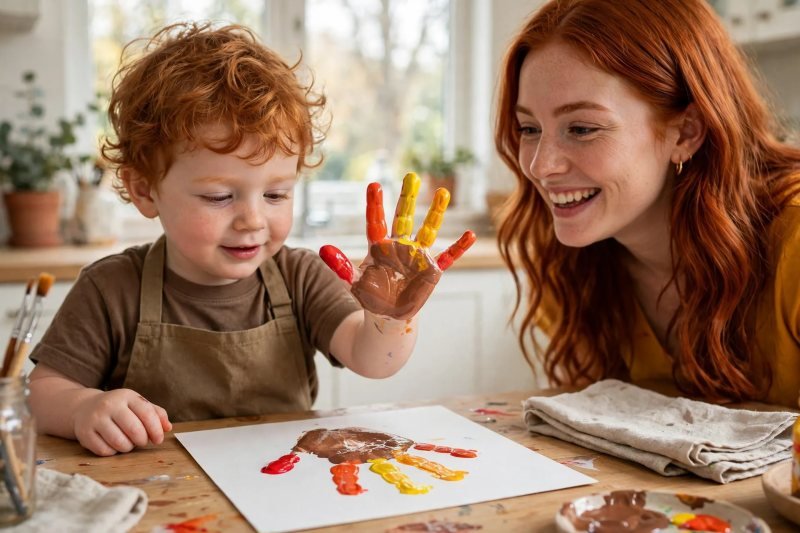
Print a second turkey with rainbow feather fingers. While the first dries, reload: palm brown again, but this time each finger gets its own feather color — red, orange, yellow, and one more red — brushed on quickly, finger by finger. Say: "This turkey dressed up: its feathers are having a party." Press and lift on a fresh sheet with exactly the step-3 technique, and the difference is instant theater: the same hand, but now the feathers blaze. Choosing which finger wears which color is genuine early art direction, and if he wants to experiment with mixing his feather colors between prints, he is doing exactly the exploring this site's color mixing activities celebrate — orange is a discovery every single time.
-
Add a fingerprint feather halo around the brown turkey. Bring back the first, now-dry print and the feather-color plate: he dips one fingertip in a color and presses a row of dots arcing over the handprint's finger-feathers — a second, grander feather fan made of his smallest print. Try saying: "Tiny feathers for the big turkey — press, lift, rainbow!" Fingertip printing is the toddler-scaled version of the whole craft: the press is short, the success is instant, and the spacing (dots marching in an arc) is real early patterning. Reload colors freely; a dot that smears slightly is a feather with personality. When the halo arcs from one side of the hand to the other, the plain brown turkey has become the session's showpiece — set it with the rainbow print to dry.
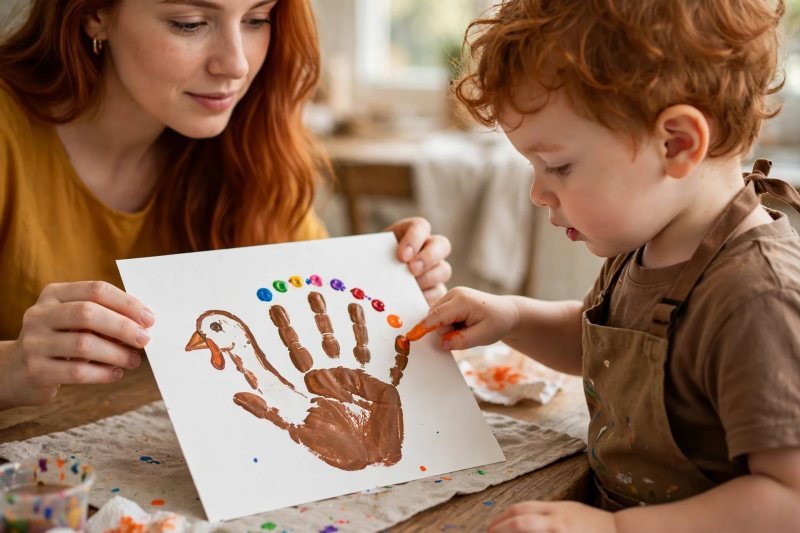
-
Draw the face and legs once the paint is dry. Crayons out — first touch a bare corner of the paper to check it is fully dry; if the paint still feels cool or tacky, wait, because crayon dragged across damp tempera smears both — and the prints become turkeys in fact as well as name: an orange triangle beak on the thumb-head, a dot eye (drawn, never a glued plastic eye at this age — see Safety notes), a small red wattle scribble beside the beak, and two stick legs with three-toed feet under the palm-body. Say: "Every turkey needs a face to say gobble with." Draw the first beak yourself if he wants a model, then hand him the orange crayon — a toddler-drawn beak at a heroic angle is not a flaw in the keepsake, it IS the keepsake. His name and the year go on the back in your handwriting, because future-you will absolutely want to know it was this November, this small.
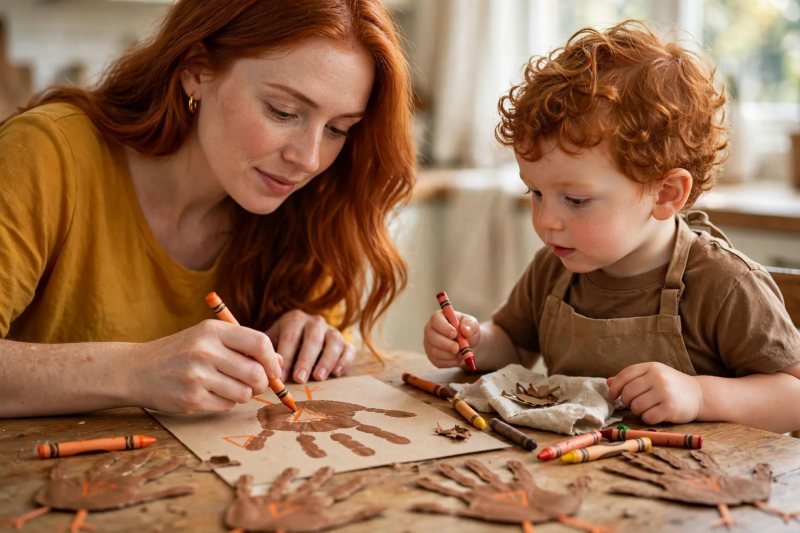
-
Make the cut-paper version for a no-paint encore. Trace his hand — fingers spread — onto brown construction paper with a pencil, and cut the outline with your real scissors while he watches the hand "become paper." Say: "Same hand, no paint — this turkey is made of cutting and gluing." He glues pre-cut feather shapes (feather-colored paper ovals you cut in step-4 colors) behind the palm, adds a crayon beak and eye, and the dry version joins the flock. His own scissors and a strip of scrap paper to snip give him parallel work while you cut the real outline — cutting is the headline skill at this age, the same snipping practice behind this site's scissor skills activities for preschoolers, and scrap-paper confetti is a legitimate second craft. The paper turkey is also the mailable one: flat, light, and un-smearable by any postal system.
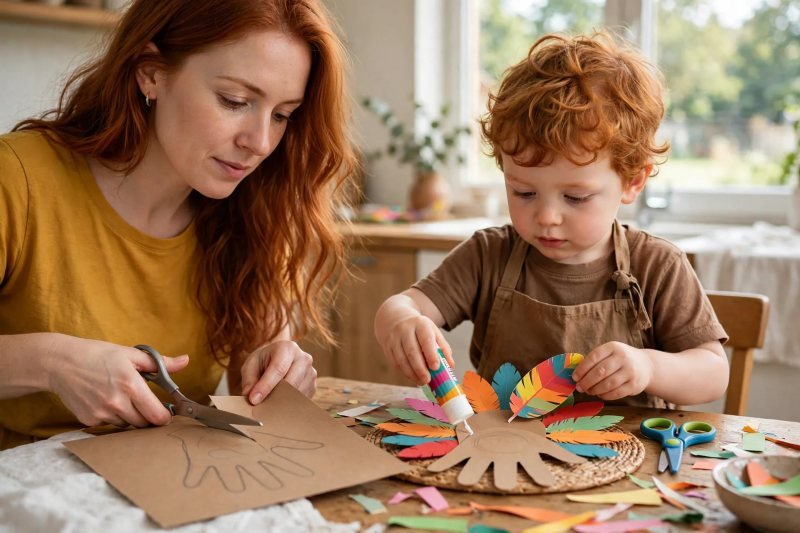
-
Try the footprint turkey — the surprise favorite. Paint the sole of one foot brown with the brush (prepare for maximum giggling; feet are professionally ticklish), press it heel-down onto fresh cardstock, and lift straight: the heel becomes the body and the toes become a row of little feathers along the top. Announce it: "Your FOOT is a turkey now. Feet can be anything." Once dry, crayon the beak and eye near the heel-body, add legs below, and fingertip-print a few colored dots beside the toe-feathers if he wants the deluxe model. A footprint at two is even more time-capsule than a hand — nobody believes feet were ever that small — and grandparents receiving the pair, hand and foot, receive the complete toddler, November edition.
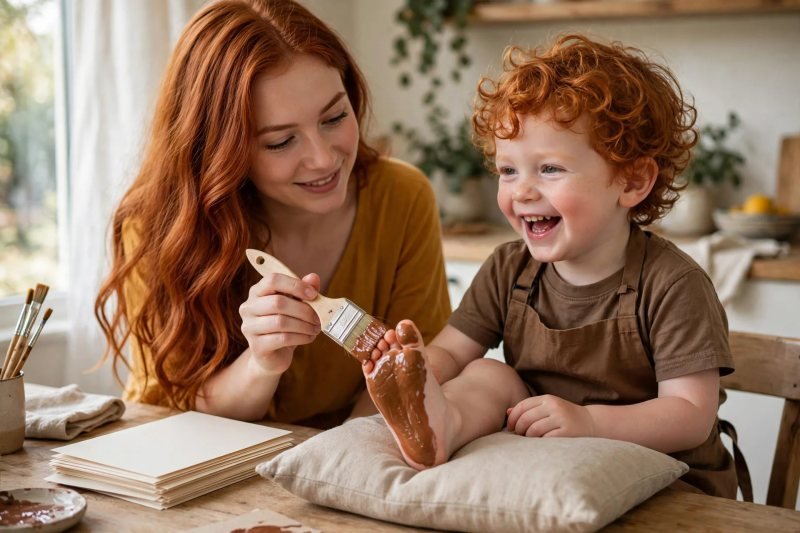
-
Run the mini production line and make a set to give. By now the technique lives in his hands, so line up three or four fresh sheets, re-tape, and produce the gift set: a rainbow-finger turkey per sheet is fastest, with names called out as each one lands — this one's for Grandma, this one's for the fridge. Say: "Factory time! Who is this turkey FOR?" Assembly-line repetition is where a craft becomes a skill, and his second and third prints will be visibly better than his first — compare them together and let him pick the champion for step 10's frame. Giving is the step's real curriculum: choosing recipients, remembering who got which colors, and the enormous pride of handing over something that came from his own actual hand. For more ways to use the same press, this site's children's turkey crafts collection keeps the flock growing.
-
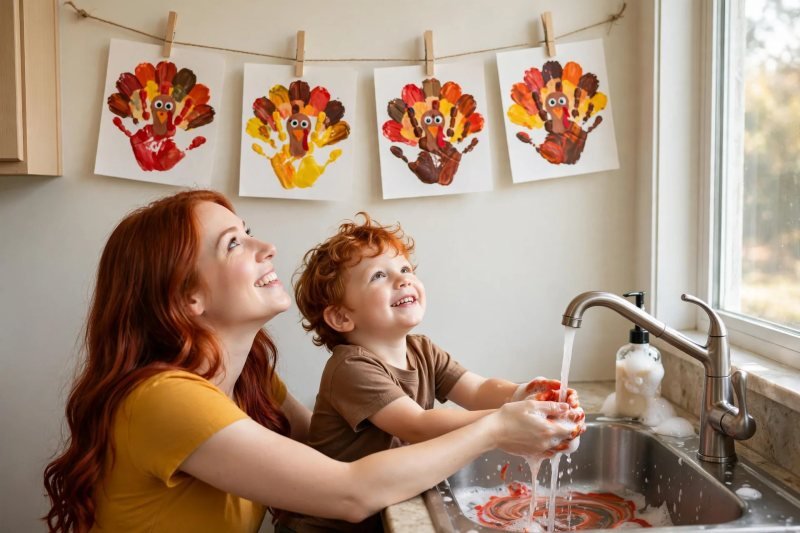
Display the flock, then wash up like professionals. Choose the champion print for the frame or the string-and-clips garland across the kitchen, park the gift set in a folder ready to mail, and let him point the tour out to the next person who enters — display is not decoration, it is authorship announced. Say: "Gallery first, then we wash the artist." Then the closing ritual, done together: lids on paint (a dried-out pot is a sad pot), brush rinsed, and his hands washed with soap at the sink — scrubbing the feather colors off his fingers while naming them is the session's last color lesson. Paint on the smock stays (a painted smock is a resume), the table cover folds away, and the flock on the wall does the remembering.


Make it easier
Print one perfect-enough turkey and stop: steps 1–3 plus the face from step 6 are a complete, frameable session for a short attention span. Paint his hand with a sponge brush dabber instead of a brush — less tickle, faster coat, prints just as crisply. Pre-draw nothing, but keep expectations portrait-sized: at two, a handprint plus two fingerprint dots and a crayon scribble is a finished masterpiece.
Make it harder
Let a 3-year-old sequence the whole production line himself — tape, palette order, which turkey comes next — with you as the hired hand-painter's assistant. Add a gratitude leaf to each gift print: you scribe his dictated "thank you for…" under the turkey, turning the keepsake into a Thanksgiving card with a message. Count and chart the flock: how many turkeys, how many feathers per turkey, which color appears most — real counting on art he owns.
Other ways to play it
- The family flock: every household member prints — adult hands, sibling hands, descending sizes on one long sheet — and the toddler's print, smallest and most feathered, steals the show it was always going to steal.
- The place-card flock: the step-9 production line prints onto folded cards — see this site's handprint turkey place cards for the table-ready version — one per Thanksgiving guest, with names scribed by you — toddlers as the authors of the holiday table.
- The every-year print: repeat the classic brown print each November on the same long sheet, years marching right — the growth chart nobody has to measure against a doorframe — and borrow a fresh idea each year from this site's Thanksgiving crafts for kids.
How it changes by age
- Age 2: At two, everything is about the press and the reveal: you paint, you guide, he lifts and gasps. Choose one version (painted print or footprint), keep the session under fifteen minutes of paint time, and let drying happen during lunch. His crooked beak drawing is not a stage on the way to the craft — it is the craft.
- Age 3: Threes can brush their own palm (accept the abstract coverage), place the press solo, name their feather colors in order, and run the fingerprint halo with real aim. Give them the production line and the recipient list; a 3-year-old art director with a grandmother deadline is a formidable and happy creature.
What they're learning
Printmaking fundamentals: paint, press, lift — a positive image made by contact — is real art technique, and the mirror-image reveal (his left hand prints "backwards") is pure early physics-of-making. Fine motor control: the firm even press, fingertip dots placed in an arc, glue-stick feathers, and scrap snipping all exercise the small muscles school will ask about. Color and pattern: feather sequences, fingerprint arcs, and mixing discoveries are color theory at toddler scale — ordered, repeated, and his. Generosity and gratitude: the set is made to be given, with recipients named — thankfulness with a mailing address.
Clearing up
The wash station you staged in Preparation earns its keep: his hands and foot get the damp cloth immediately, then a proper soapy wash at the sink together. Prints move — carefully, by their taped corners — to a drying shelf or the top of the fridge where they cannot be "helped." Paint pots lid up before anything else (tempera skins over fast), the brush rinses clean, and the table cover folds paint-side-in for its next tour. The cut-paper scraps and confetti go in one sweep to the bin — or into an envelope as bonus grandma-mail, which is also a legitimate filing system. Everything about this craft's cleanup takes five minutes when the station was staged; the flock on the wall will be up far longer.
Questions parents ask
How do you make a handprint turkey with a toddler?
What paint is safe for toddler handprint crafts?
How do I keep handprints from smearing or looking patchy?
Can a 2-year-old really do a handprint turkey?
What can we do with handprint turkeys afterward?

save it for later
Pin this for the next rainy afternoon
Keep it on a board so it is there when you need it, rather than when you happened to find it.
Save to Pinterest

