


Toddler Girl Fall Outfits: Cute and Cozy Ideas
Toddler girl fall outfits work best as formulas, not one-off looks: a soft base layer under everything, then sweater-and-leggings, twirl dresses with warm tights, overalls, flannel, and a vest for playground days. Nine cozy formulas plus a five-stack system that helps weekday mornings run more smoothly.
Toddler girl fall outfits work best as nine simple formulas built on one soft base layer: sweater with leggings and boots, a sweater dress with leggings, a cardigan layer, overalls, flannel two ways, a vest for playground days, rain-ready layers, a sweatshirt comfort set, and a polished special-day look — all stored as five grab-and-go Sunday stacks.

The short version
- Every outfit starts with the same soft long-sleeve base layer — the hug layer that stays on all day.
- Nine formulas cover the season: classic sweater set, sweater dress, cardigan layer, overalls, flannel, vest, rain-ready, comfort day, and special day.
- Dresses stay in rotation with leggings or footed tights — plus a twirl-and-climb test before any dress earns play status.
- Bathroom speed is a hard rule: waistbands and overall clips must beat a toddler's urgency, every time.
- Build five full stacks on Sunday and let your toddler pick between two — choice without chaos.
- Age
- Ages 2–3
- Prep
- 15 min
- Play time
- 5 min
- Mess
- None
- Difficulty
- Easy
- Where
- Indoor
Why kids love this
Toddlers love twirl-tested dresses, pockets for treasures, and choosing between two good options ("Pink sweater or rust sweater?"). Parents love that every formula here survives the real toddler day — climbing, snack spills, diaper changes or potty races, and one surprise puddle — while still looking put-together in the photos Grandma requests.
What you'll need
- 4–5 soft long-sleeve base tops (tees or thin thermal-style tops) in mixable colors
- 2 pullover sweaters or sweatshirts and 1–2 cardigans with big buttons or snaps
- 3–4 pairs of leggings, including one fleece-lined pair; thick or footed tights for dress days
- 1–2 fall dresses (sweater dresses or sturdy cotton) and one twirl-approved skirt if your toddler is in a skirt phase
- One pair of soft overalls and one flannel shirt or flannel dress
- A light puffer or fleece vest and a soft denim jacket
- A hooded rain jacket and rain boots, plus closed-toe shoes for school
- A knit hat and thin mittens for late-fall mornings
- A low basket or drawer your toddler can reach, plus a spare-outfit bag for the car or cubby
Before you start
1. Do the Sunday basket reset: wash, fold, and build five stacks (one full outfit each) in the low basket, so weekday dressing is grabbing, not hunting. 2. Run the twirl and climb test on dresses and skirts at home — if it rides up, snags, or slows her down, it's a photo outfit, not a play outfit. 3. Check every waistband for the potty test: your toddler (or you, fast) must be able to get it down in five seconds; overalls with tricky clips get practiced or parked. 4. Put the spare-outfit bag in the car or cubby: full change including socks, because fall's puddles and spills are a when, not an if.
How to do it
-
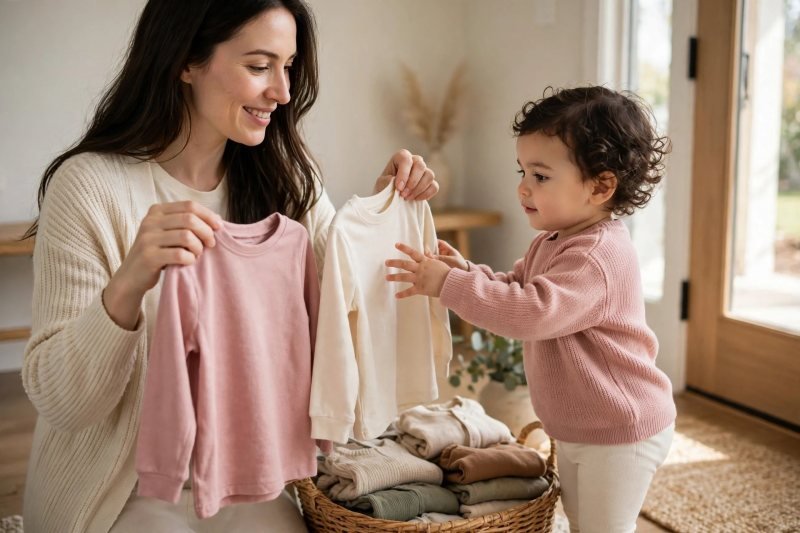
Start with the base layer, the hug layer under every fall outfit. Every toddler girl fall outfit in this guide starts the same way: a soft long-sleeve top against the skin. Fall mornings are cold, indoor rooms run warm, and the base layer is what stays on when the sweater comes off at playtime — so it must be soft at the neck, long enough to stay tucked over a diaper or underwear waistband, and free of scratchy tags. Lay out the base tops and say the dressing line you will use all season: "Hug layer first — it stays on all day." Let your toddler pick the color from two choices you hold up; both match everything, so either pick works. A snug-but-not-tight base layers cleanly under sweaters and dresses without bunching sleeves, which is the complaint toddlers express by pulling at their arms all morning. Base on: the first full formula stacks straight over it.
-
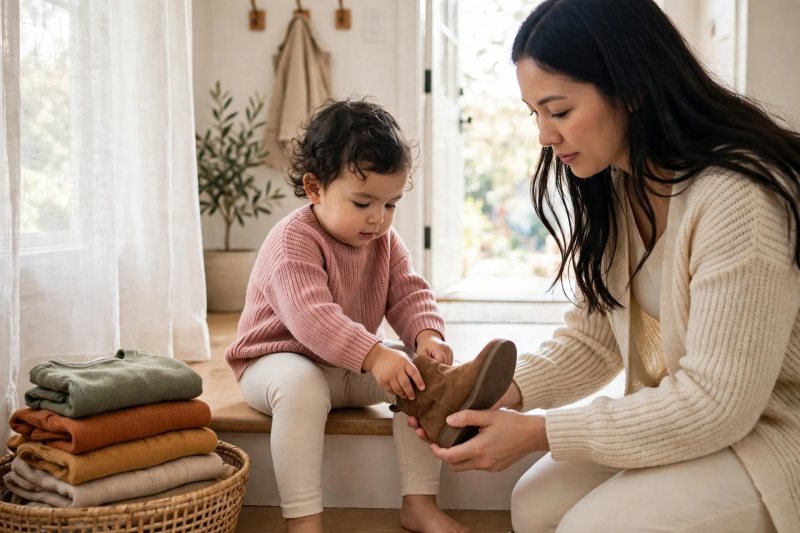
Build formula one: sweater, leggings, and boots — the everyday classic. This is the outfit that will carry many of your fall photos: a pullover sweater over the base, leggings underneath, and ankle boots or sturdy closed-toe shoes. Say it as a three-beat chant while you dress: "Hug, cozy, stompers." Your toddler's job is pushing her arms through the sweater sleeves after you set the neck opening — a real skill at two and three, worth the extra ten seconds. Fleece-lined leggings turn this formula cold-proof; regular leggings keep it right for mild days. Dress from the floor up (leggings, then sweater) so a wiggly toddler is half-dressed even during an escape attempt. Classic built: formula two gives dress lovers their day without cold legs.
-
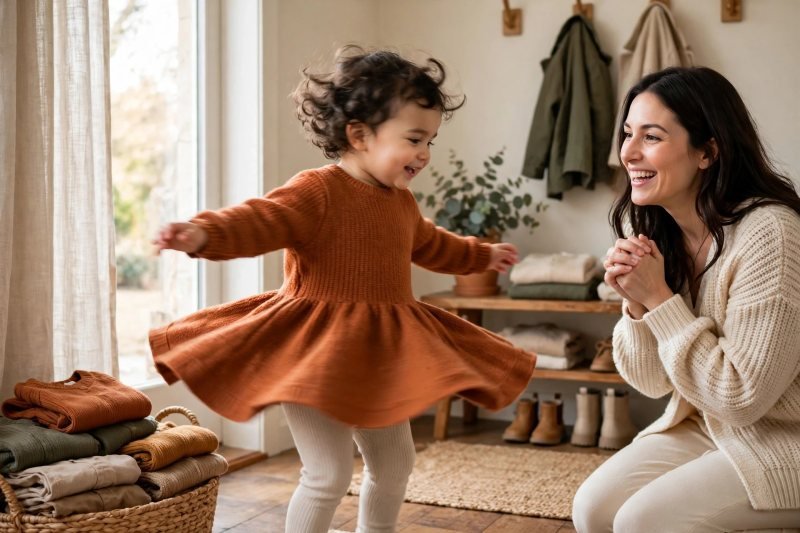
Build formula two: sweater dress with leggings for twirl-approved dress days. A sweater dress is the toddler dress cheat code — one piece, no waistband battles, warm by construction. Pair it with leggings (more playground-proof than tights) or footed tights on colder days, and finish with boots. Run the twirl test in the living room and narrate the rule — "If it twirls and you can climb, it's a play dress." Skip dresses with back zippers you can't reach quickly, sashes that untie into trip hazards, or anything that needs a slip and a prayer. Your toddler's job is the final twirl inspection — which she will take extremely seriously. If the favorite dress is a summer one, leggings plus a cardigan (formula three) is the bridge that keeps it in rotation into fall. Dress day done: formula three is the layer she can almost work herself.
-
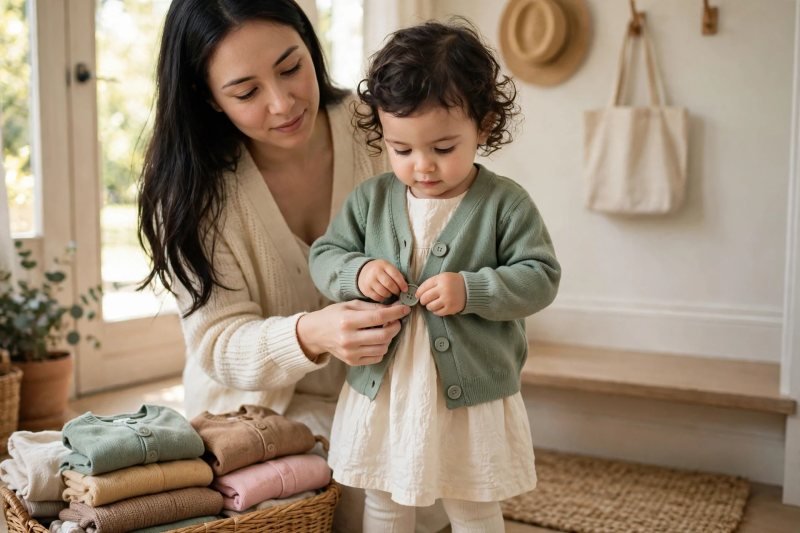
Build formula three: cardigan over a dress or top — the peel-and-play layer. A cardigan is the hardest-working piece in a toddler girl's fall wardrobe because it solves the day's temperature swings without a full outfit change: on for the chilly walk, off for the warm playroom, on again for pickup. Choose cardigans with big buttons or snaps — at two and three, she can start the bottom button while you finish, and that partial skill is exactly how independence grows. Pair it over the base top with a skirt and leggings, or over a simple dress. Say the cardigan script: "Buttons are my job to start, your job to try." Roll sleeves once if they slide over her hands. The same layering carries into colder months — the toddler girl winter outfits guide builds on the same cardigan logic with heavier layers. Layer mastered: formula four is the one-piece wonder for active days.
-
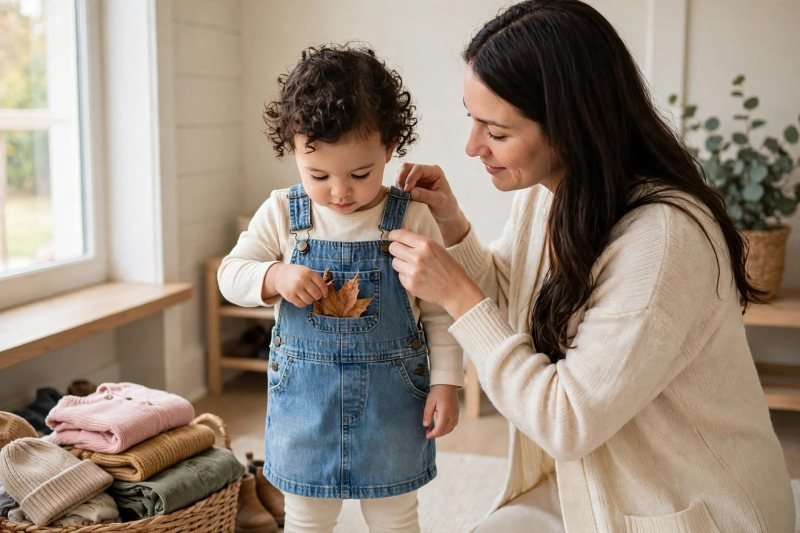
Build formula four: overalls with a long-sleeve tee for the unstoppable look. Overalls are toddler engineering at its best: no shirt escaping, no waistband slipping, pockets at exactly treasure height. Choose soft denim or corduroy with adjustable straps and — this is the whole game — practice the clips or choose snap-leg styles if you're mid-potty-training, because overalls that take forty seconds to open will usually lose to a three-year-old's urgency. The base tee underneath counts as the hug layer; on cold days a thin sweater replaces it. Say: "Buckles up, pockets ready." Your toddler's job is filling the pockets before you leave — one leaf, one acorn, maximum two treasures, negotiated like a treaty. Overalls set: formula five brings fall's signature fabric.
-
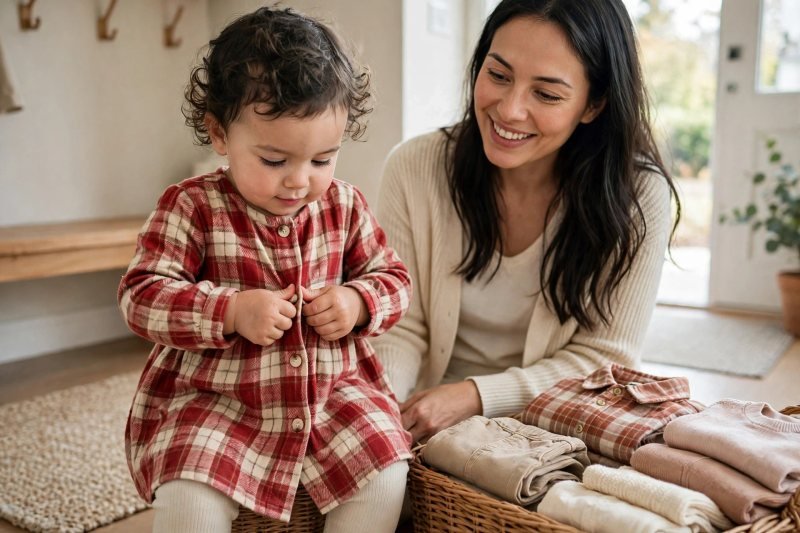
Build formula five: flannel, worn as a shirt dress or an open layer. Flannel is fall's postcard fabric, and toddlers wear it two ways: a flannel dress with leggings and boots for instant autumn photos, or a flannel shirt open over the base tee with soft pants or leggings — a light jacket substitute with pockets. Choose brushed, soft flannel (stiff flannel reads "lumberjack costume" and gets refused by lunch), with snaps instead of small buttons wherever you can find them. Your toddler's job is the snap practice — flannel snaps are the training wheels of fasteners. Say the two-ways line: "Closed is a dress-up, open is a jacket — same flannel, two jobs." As the season deepens toward winter, this is the piece that hands off first to the warmer layers in the toddler winter outfits for ages 2–3 guide. Flannel done: formula six keeps her core warm and her arms free.
-
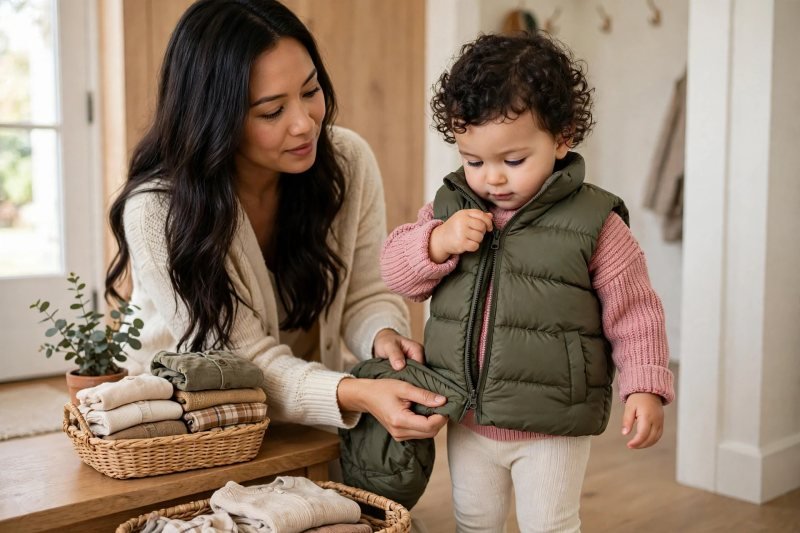
Build formula six: puffer vest over long sleeves for playground-heavy days. Vest days are climbing days: a light puffer or fleece vest over the base top (or over a thin sweater) keeps the chest warm while arms pump, climb, and carry things without restriction. Pair with leggings or soft pants and sneakers. The vest zipper is a perfect toddler teaching tool because she can see it while wearing it; script it together: "You hold the bottom, I start the zip, you pull it up." She will not finish the zip alone this year — the ritual is the point, and by the last cold mornings she may manage the final pull herself. Add the knit hat as the vest's partner on windy days — the toddler sun hats guide covers the styles that stay put on small heads — and keep it in the same basket slot so the pairing becomes automatic. Active day solved: formula seven is built for wet grass and gray skies.
-
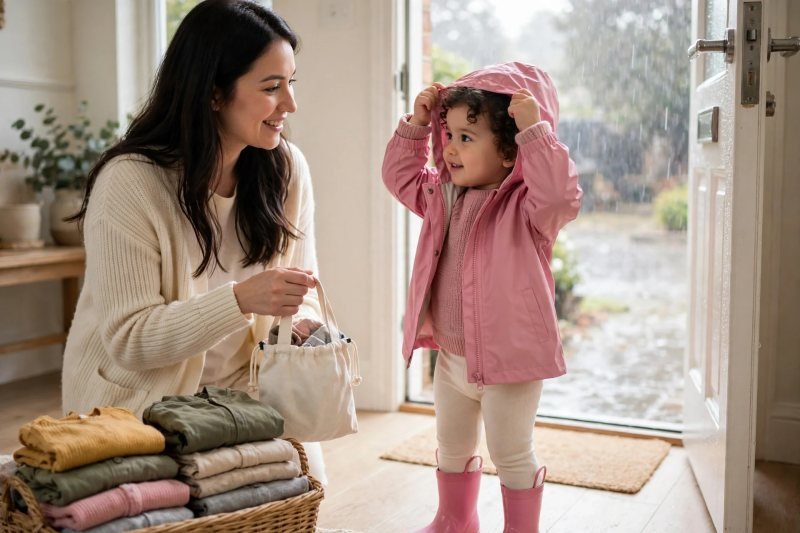
Build formula seven: rain-ready layers for wet fall mornings. Rain days go smoothly when they have their own formula instead of a panic: base layer, thin sweater, hooded rain jacket; leggings or quick-dry pants (denim stays cold and heavy when wet); rain boots worn for the journey. Send closed-toe shoes in the spare bag for indoors. The same pack-a-spare, plan-for-wet thinking behind our toddler swimwear guide applies here — dry clothes waiting makes wet play worry-free. Your toddler's job is hood up and hood down on command — practice it at the door like a game: "Rain hat ON… rain hat OFF." Say the puddle rule with total consistency: "Puddles are for the way home." Check the spare-outfit bag lives in the car on rain weeks; a wet-sock morning is easy to prevent when the spare bag is already packed. Rain handled: formula eight is the comfort uniform for the longest days.
-
Build formula eight: sweatshirt and joggers (or leggings) for all-comfort days. Some days are pure logistics — errands, travel, a long park session, a daycare day with a substitute teacher — and the outfit should make the morning easier for everyone: a soft sweatshirt over the base, joggers or leggings with a truly easy waistband, and her fastest shoes. No buttons, no snaps, nothing between a potty-urgent toddler and success. Say the day out loud at breakfast: "Today is a cozy day — cozy clothes." Naming the formula teaches her that clothes match plans, a tiny life skill in a sweatshirt. This is also the outfit to duplicate in the spare bag, because it is the one she'll never refuse as a mid-day change. Comfort set: formula nine is the dressed-up version, for pictures and parties.
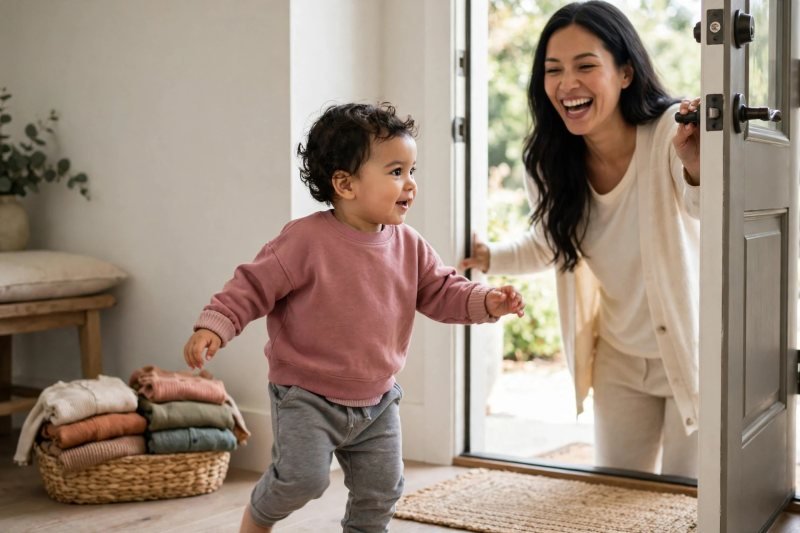
-
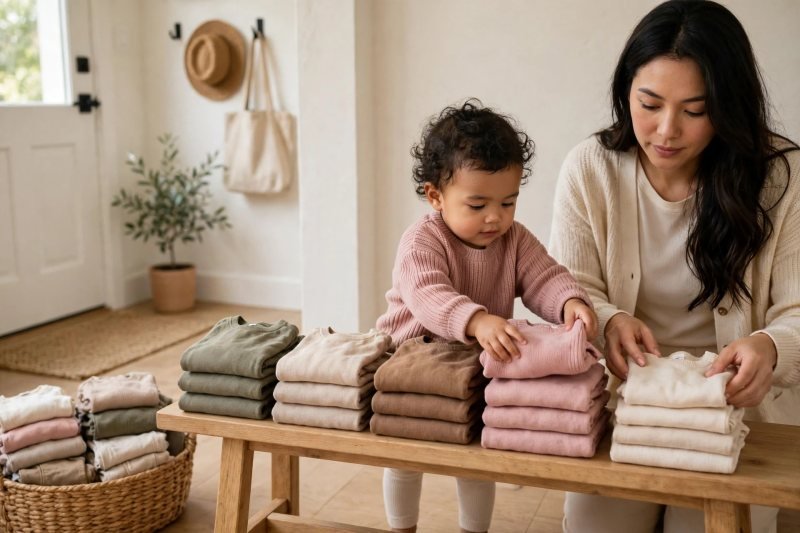
Build formula nine, then close the loop: the special-day look and the five-stack system. For picture day, family photos, and fall parties, polish what already works: her best dress with footed tights and the cardigan, or the sweater-and-leggings classic in its cleanest colors, finished with the least-scuffed shoes and a two-minute "photo check" (smooth the front, check the collar, one twirl). No new purchases, no scratchy special-occasion outfit she'll fight — polish is a state, not a costume. Then close the whole guide where it started: at the Sunday basket, building five stacks with your toddler, one full formula per stack, letting her make one swap per stack ("deal-maker's choice") so Monday's outfit already has her fingerprints on it. Say the basket rule: "If it's in the basket, it goes together." Families scaling this system up for an older sibling will find the same stack logic in the preschool winter outfits guide when cold weather arrives. After a week or two of the routine, many toddlers start heading to the basket on their own, pointing at a stack and announcing "This one!" — and fall dressing is simply handled.


Make it easier
Two choices only: always offer exactly two parent-approved options — more choice at age two means more meltdown, not more autonomy. Dress on the floor: sit her on a low step or the floor for leggings and boots; gravity is your assistant with a wiggly toddler. One-piece days: on the hardest mornings, reach for the sweater dress or overalls — one decision, fully dressed.
Make it harder
Button starter: she starts every cardigan button or flannel snap, you finish — the partial skill that becomes whole by spring. Stack builder: she builds one Sunday stack fully herself from the basket rule ("base, cozy, bottom, shoes") and defends her choice at breakfast. Weather reporter: she checks the window each morning and announces "vest day" or "rain day" before you open the basket.
Other ways to play it
- Skirt phase version: swap leggings-plus-dress for a soft twirl skirt over leggings in every formula — the skirt is a layer, not an outfit problem.
- Warm-fall version: in early fall, run the same formulas with short sleeves under cardigans and skip the fleece lining until the first frosty morning.
- Sibling-match version: coordinate colors (not identical outfits) with an older sibling's stack — rust, mustard, cream, and dusty blue mix across both baskets.
How it changes by age
- Ages 2–3: the guide as written — adult dresses, toddler chooses between two options and holds the small jobs (arms through sleeves, pocket treasures, hood game).
- Ages 3–4: add real fastener practice (she finishes cardigan buttons), let her build Sunday stacks with one swap each, and graduate rain boots to independent on-and-off.
- Under 2: use formulas one, two, and eight only, with snap-leg everything, no small-button cardigans, and adult-managed layers throughout the day.
- All ages: bathroom speed outranks cuteness — any outfit that can't come down fast is a photo outfit, never a school outfit.
What they're learning
Choice within boundaries: picking between two good options is a toddler's first decision-making rep — and it prevents more battles than it starts. Fine motor skills: snaps, big buttons, zipper pulls, and boot tugs are dressing-sized motor practice, repeated daily. Sequencing: hug layer, cozy layer, shoes — a three-step order she can recite is early logic wearing a sweater. Weather awareness: matching formulas to rain, wind, and cold mornings builds observation and cause-and-effect.
Clearing up
The system clears itself at the Sunday reset: laundry sorted, stacks rebuilt, boots by the door, spare bag re-packed. Nightly, tomorrow's stack moves to the top of the basket and the hat and mittens return to their slot — thirty seconds that buys a calm morning.
Questions parents ask
What does a toddler girl need for fall outfits?
Can toddler girls wear dresses in the fall?
How do I stop fall outfit battles with my toddler?
What should a toddler wear on a rainy fall day?
Are overalls practical for a potty-training toddler?

save it for later
Pin this for the next rainy afternoon
Keep it on a board so it is there when you need it, rather than when you happened to find it.
Save to Pinterest

