


Toddler Boy Fall Outfits: Plaid, Denim, and Boots
Toddler boy fall outfits, built as one small capsule: plaid shirts, denim everything, cozy layers, and sturdy boots combine into 8 named looks — from the Little Lumberjack to Picture Day — plus the layering rules for weather that changes by the hour.
Toddler boy fall outfits work best as a small capsule: two plaid flannels, a sweater, a sweatshirt, and a tee; jeans, corduroys, and joggers; a vest plus two jackets; and ankle boots with rain boots for puddle days. Those pieces style 8 named looks and mix into 20+ outfits for ages 2–3.

The short version
- Build a capsule, not a collection: 5 tops, 3 bottoms, 3 layers, 1 dressy set, 3 pairs of shoes.
- One palette (navy, rust, forest, gray, denim) makes every top match every bottom.
- Boots are the anchor: ankle boots for daily stomping, rain boots for puddle days, sneakers for speed.
- Layers are extra outfits: a vest over Look 1's flannel is a different look, free.
- Every look must pass the toddler test: reach up, squat down, spin once.
- Age
- Ages 2–3
- Prep
- 20 min
- Play time
- 45 min
- Mess
- Some
- Difficulty
- Easy
- Where
- Both
Why kids love this
Toddlers love fall clothes for toddler reasons: boots that stomp, pockets that hide treasures, zippers they can almost work, and a plaid shirt just like the grown-ups'. This session turns getting dressed into a game of named looks ("Today you're the Little Lumberjack!"), which does something magical to a 2-year-old's willingness to put on pants. He gets choices, you get a child who is dressed, and the leaves get stomped in proper footwear.
What you'll need
- 4–5 tops: 2 plaid flannel shirts, 1–2 knit sweaters or sweatshirts, 1 plain long-sleeve tee
- 3 bottoms: jeans, corduroy pants, and soft joggers
- Layers: a puffer vest, a denim jacket or barn-style jacket, and a rain jacket
- 1 dressier set: a button-down shirt and chinos for photos and family dinners
- Footwear: sturdy ankle boots for everyday stomping, rain boots, and everyday sneakers
- A knit hat and light gloves for the first cold snap
- A growth-check pile: last year's fall clothes for the try-on verdict
- A laundry basket for the too-small clothes leaving the drawer
Before you start
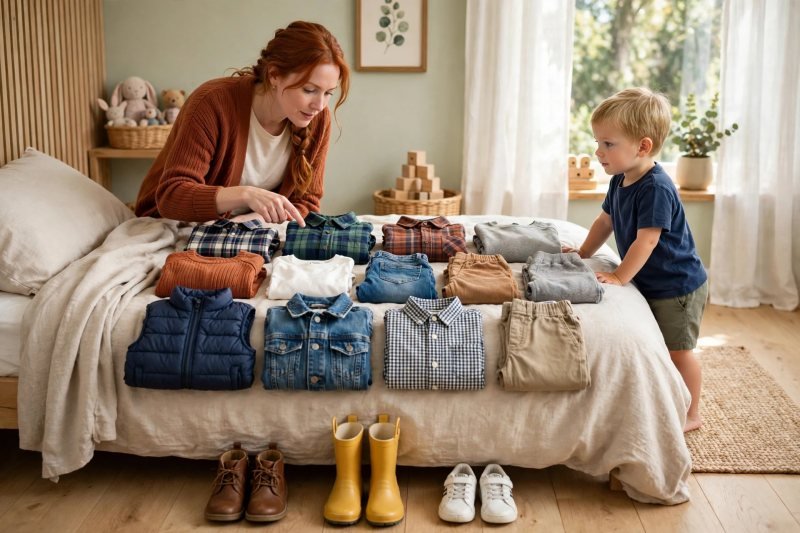
Pull every fall piece out and lay it on the bed in daylight — colors coordinate better when you can actually see them. Do the growth check first: anything that fails the reach-up test (belly shows when arms go up) or the squat test goes straight in the basket. Group what's left into tops, bottoms, layers, and the dressy set; count before you style (step 1 uses the real counts). Put the boots by the mirror — every look in this session gets boot-tested, and your toddler has opinions.
How to do it
-
Lay out the capsule and count the pieces honestly. Great toddler boy fall outfits don't come from a bigger drawer; they come from a drawer where everything matches everything else. Count what survived the growth check and build the session around real numbers: 5 tops (two plaid flannels, a knit sweater, a sweatshirt, a long-sleeve tee), 3 bottoms (jeans, corduroys, joggers), 3 layers (puffer vest, denim jacket, rain jacket), 1 dressy set (button-down, chinos), and 3 pairs of shoes (ankle boots, rain boots, sneakers). The capsule works because of the palette: navy, rust, forest green, gray, and denim blue all shake hands with each other, so no top can clash with any bottom. The same capsule pieces appear in the toddler fall outfits guide, useful for a visual check before you shop or pull from the drawer. Say the rule that makes mornings fast: "If everything matches, anything you grab is an outfit." Counted and color-checked: style look one, the one on the title.
-
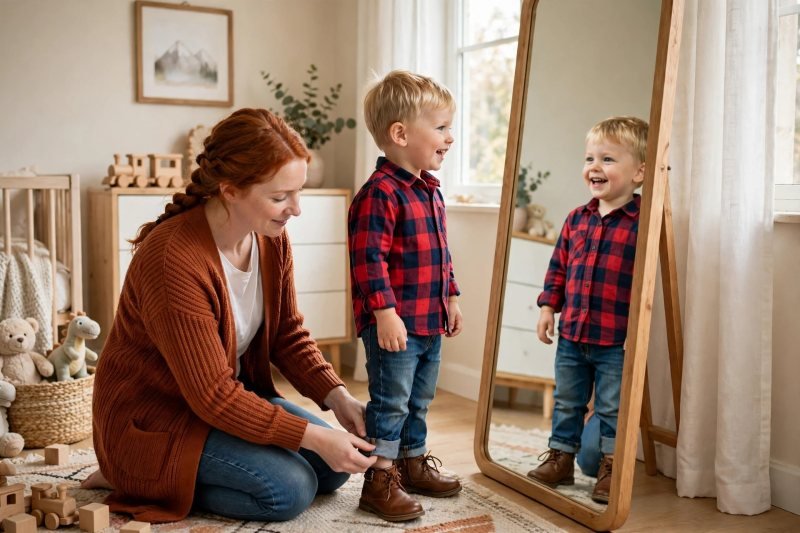
Style Look 1, the Little Lumberjack: plaid flannel, jeans, ankle boots. The signature fall look, and the easiest: a red-and-navy plaid flannel shirt, sleeves ready to roll; classic blue jeans with a little cuff at the ankle; sturdy brown ankle boots. This is the outfit that photographs like a postcard at the pumpkin patch and survives the playground on the way home. Dress him by the mirror and name it out loud — "Little Lumberjack, reporting for leaf duty" — because a named look gets worn proudly and a nameless outfit gets negotiated. Button check: flannel snaps or big buttons are a gift at this age, and the top button stays open for comfort. Look one, standing by the mirror in his boots: he has never been prouder of pants. On to denim doing double duty.
-
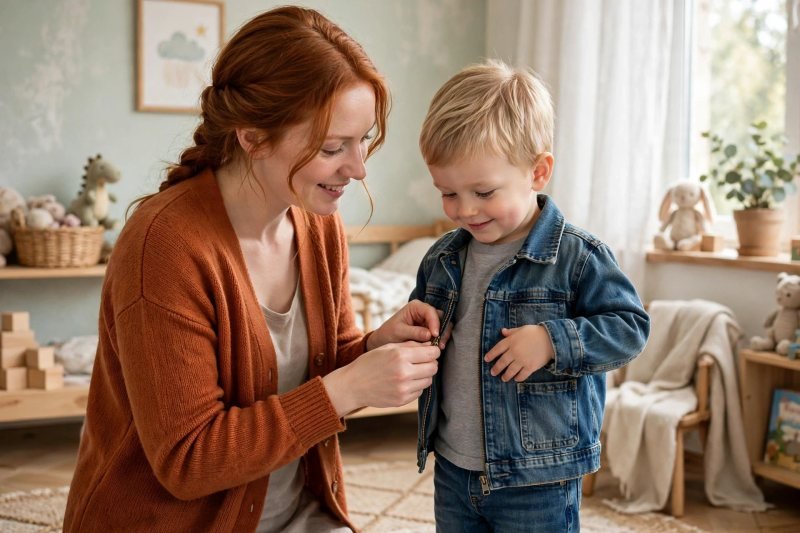
Style Look 2, Double Denim: jean jacket over a tee, different-wash jeans. Denim on denim works for toddlers when the washes differ: a medium-wash denim jacket over a plain gray or white long-sleeve tee, with darker jeans below — or flip it, light jeans and the jacket as the dark piece. The tee keeps the two denims from arguing, and the whole thing has a tiny-workwear charm that adults will comment on all day. The jacket earns its place three ways: it's a layer for chilly mornings, it comes off when the day warms up, and its pockets are, to a 2-year-old, a treasure-storage system of the highest order. Test the jacket's zipper or snaps together — fall dressing is fine-motor practice in disguise, the same pinch-and-pull skills built by fine motor activities for preschoolers at the table, now happening at the front door. Look two done: bring on the cozy one.
-
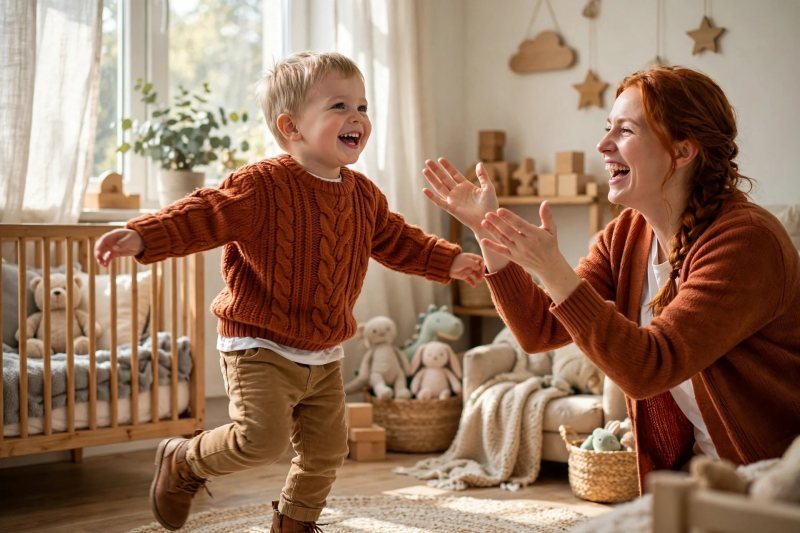
Style Look 3, Sweater Weather: knit sweater, corduroys, boots again. The first properly cold morning gets the knit sweater — a chunky crewneck in rust or forest green — over a tee, with tan or brown corduroy pants and the ankle boots. Cords are the unsung heroes of toddler fall: warmer than jeans, softer at the waist, and they dress up or down without changing. Teach the sweater rule now, while it's a game: sweater goes on over the tee, never on bare skin (itch is the number one sweater-killer at this age), and sleeves get pushed to the forearm for hand-washing and snacks. Have him do the comfort circuit — reach up, squat down, spin once. A look that survives the spin test gets worn without a fight. For more sweater-first combinations, see the preschool fall outfits guide. Look three approved by the chief tester: add the vest and watch the capsule multiply.
-
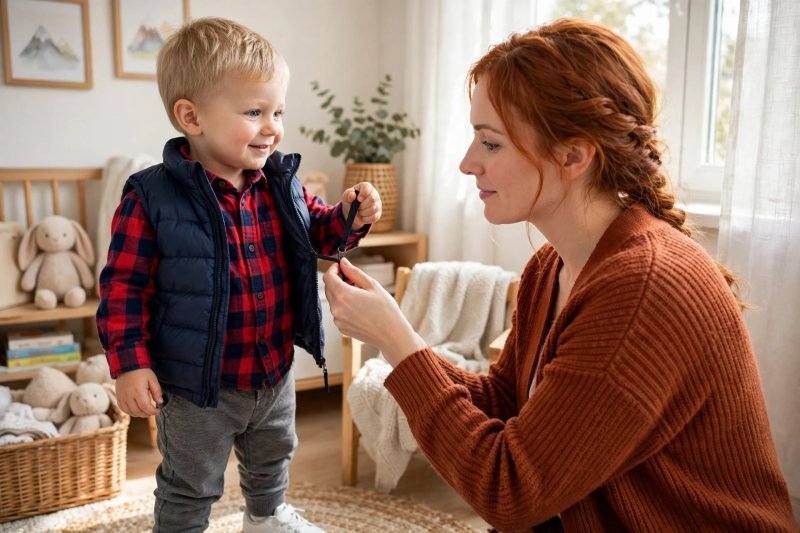
Style Look 4, Vest Day: puffer vest over the flannel, joggers underneath. The puffer vest over a plaid flannel is fall's smartest layer for toddlers, because it warms the core while leaving arms completely free — no bunching sleeves, no restricted climbing. Pair it with the soft joggers and sneakers for a full playground spec, and notice what just happened: Look 1's shirt became a different outfit by adding one layer and swapping the bottoms. That's the capsule doing its job, and it's worth saying to yourself on busy mornings: the vest is a new outfit button. Vest etiquette for age 2: the zipper pull is his to practice (up is a triumph; down is a party trick), and the vest comes off indoors so it doesn't become a sauna. Look four, zipped with pride: time for the no-effort look every parent actually lives in.
-
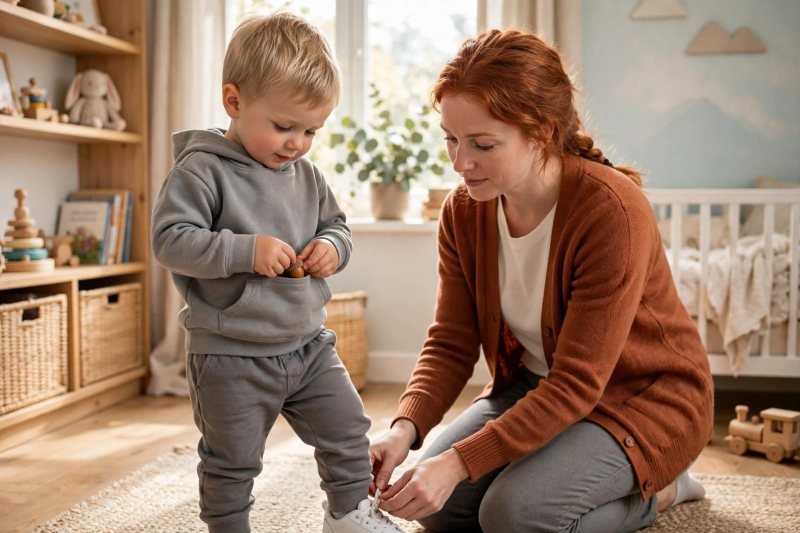
Style Look 5, Playground Uniform: hoodie, joggers, sneakers. Every capsule needs the look that requires zero thought at 7 a.m.: a soft hoodie (or the sweatshirt from the count) with the joggers and sneakers. Hood down indoors and on equipment — hoods and slides are a bad mix — and this look's real job is durability: knees reinforced, fabric forgiving, everything machine-washable without ceremony. Choose hoodies with a kangaroo pocket if you can; a toddler with a pocket for a found acorn is a toddler whose walk home takes four extra, excellent minutes. Leaf-stomping walks pair naturally with autumn leaf collecting and sorting on the way home. This is also the look that handles the wildest fall temperature swings — tee underneath, hoodie by nine, tee by noon. Honest about what it is: the uniform. Look five on and out the door in ninety seconds — but fall also has occasions, and the capsule is ready for those too.
-
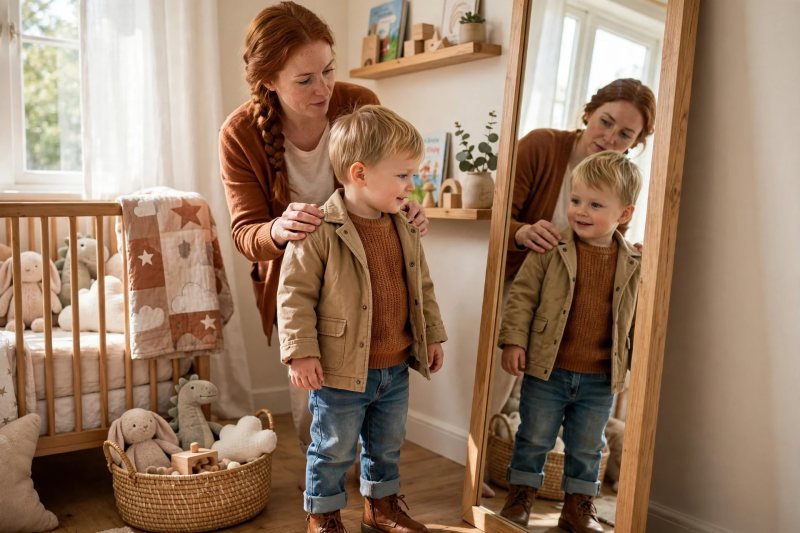
Style Look 6, Jacket Day: barn jacket over the sweater, jeans, polished boots. When the day has a plan — farmers' market, family lunch, the good park — layer the barn-style jacket (or the denim jacket) over the knit sweater, with the jeans cuffed once and the ankle boots given a quick wipe. This is the capsule's most grown-up combination, and the trick is that every piece already appeared in other looks: nothing new was bought for "nice." Teach him the jacket handoff: when it warms up, the jacket comes off and gets carried, tied, or stowed under the stroller — layers you can remove are how fall outfits survive fall weather, which changes its mind hourly. Mirror check together: sweater, jacket, boots. He looks like he owns a very small orchard. Look six approved: now the one the grandparents are waiting for.
-
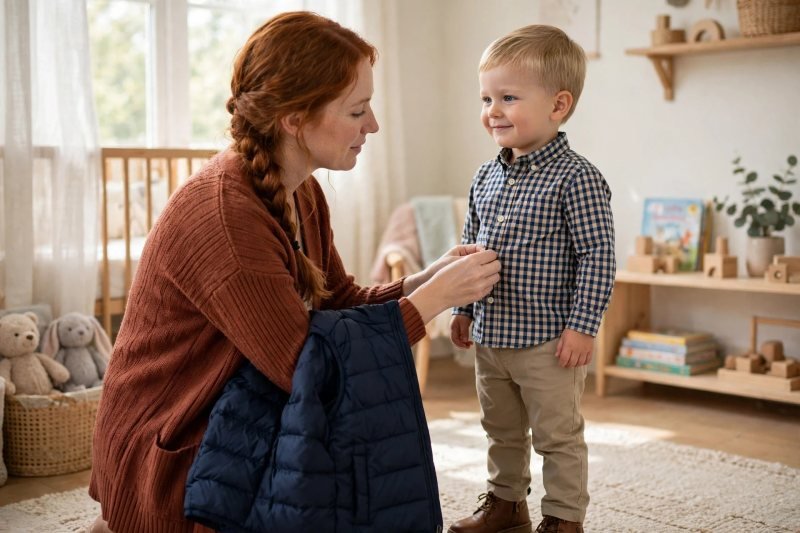
Style Look 7, Picture Day: button-down shirt, chinos, boots, optional vest. For photos and family dinners, the dressy set comes out: a soft button-down (a small check or chambray reads fall without reading costume), khaki or navy chinos with an elastic-back waist (the forgiving fit this age needs), and the ankle boots. Add the puffer vest over the shirt if the photos are outdoors; it keeps the look relaxed instead of formal, which is exactly right for a 2-year-old's portrait. The Picture Day secrets from every parent who's done it: dress him last, after his snack and your own outfit; choose fabrics that forgive a pre-photo spill; and take the photos in the first ten minutes, before the chinos meet the world. He'll look wonderful. He'll also be back in joggers by dessert, and that's the system working. Look seven captured: one look left, and it's the one with puddles.
-
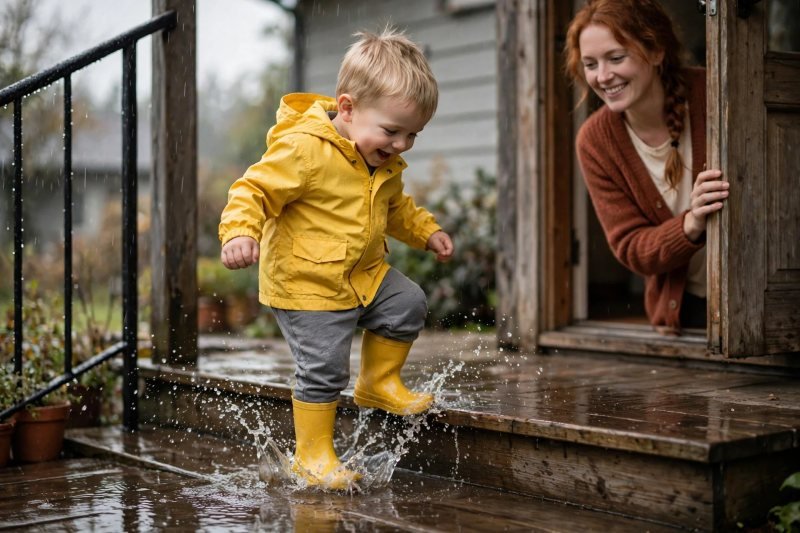
Style Look 8, Rainy Day Explorer: rain jacket, tee, joggers, rain boots. Fall rain is not a canceled day; it's a different sport. The rain jacket goes over the tee and a light sweatshirt if it's cold, joggers (they dry faster than jeans and don't drag in puddles) tucked near — not in — rain boots worn with socks long enough to protect the ankle from boot rub. Then the porch test: stomp approval, puddle inspection, hood up and down on command. Rain boots need their own fit check — a thumb's width at the toe, heel staying put when he walks — because sloppy rain boots trip more toddlers than puddles do. This look is also your mud insurance for every outdoor plan in the season: when in doubt, dress him as the Explorer and let the weather do its worst. For boot sizing that holds up past the first puddle, the kids winter boots sizing guide covers the same thumb's-width check in detail. Eight looks styled: now count what the capsule actually gives you.
-
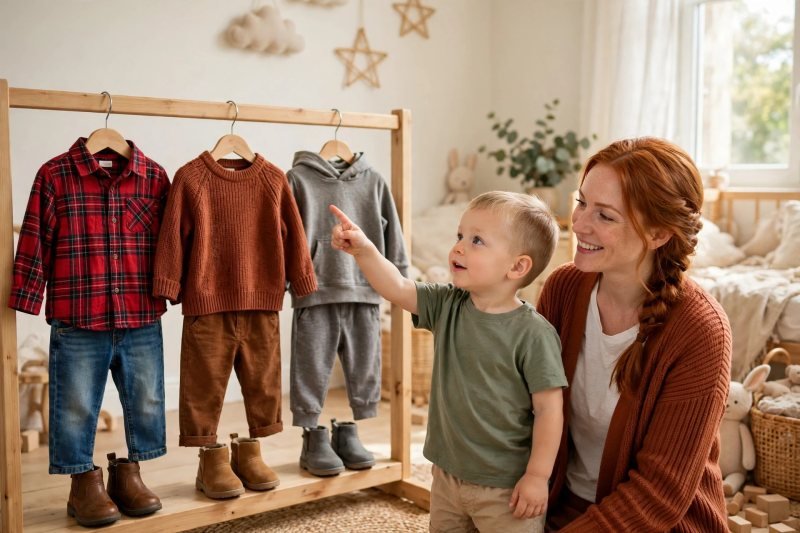
Count the capsule's true total, then set the weekly rotation. Do the mix-and-match math out loud, because this is the number that ends morning stress: 5 tops × 3 bottoms = 15 base outfits; add the vest, two jackets, and the rain jacket as toppers and the realistic count passes 20 distinct looks before the dressy set even enters the chat — from 12 core pieces. Set the rotation on one rule: favorites get worn hard and laundered fast, so put laundry on a twice-weekly rhythm and let the capsule rotate. When the weather turns properly cold, this capsule hands off piece by piece — flannels become layers under heavier sweaters, the rain jacket yields to a winter coat — which is exactly how the toddler winter outfits drawer gets built next. Finish the session by hanging the week's first three looks where he can point at his choice in the morning. A toddler who chose the Lumberjack has no one to argue with. Session complete: dressed for the whole season.


Make it easier
Shrinking the capsule further? Three tops, two bottoms, one vest, boots and sneakers still give a week of real outfits for daycare simplicity. Skip the try-on marathon: style the looks on the bed, photograph each flat-lay, and dress him once — the photos become the morning menu. Boots battle? Start with Look 5's sneakers for the session and introduce boots as puddle-only gear (Look 8) — most toddlers convert the first time it rains. Boots refused outright? Believe the complaint first: check seams, tags, and ankle rub before re-trying, and let sneakers carry the week while boots become puddle-only gear.
Make it harder
Add choice architecture: lay out two complete looks each evening and let him pick — autonomy within guardrails, and dressing time halves. Teach the dressing sequence as a skill ladder: boots on/off alone, then the vest zipper, then flannel snaps — fall outfits as a self-dressing curriculum. Extend the palette game: let him sort the capsule by color on the bed and name the matches — early visual discrimination, zero screens.
Other ways to play it
- Daycare version: Playground Uniform ×5 in different colors, boots swapped for sneakers, Picture Day pieces banned from the premises.
- Cold-climate version: add thermal base layers under Looks 1 and 3, fleece-lined jeans in the bottoms count, and the hat and gloves live in the jacket pockets.
- Photo-heavy version: build the palette around one family color for the season's pictures — the capsule coordinates with the rest of the family's fall photos automatically.
- Warm-fall version: where autumn stays mild, the vest and rain jacket do most of the work and the heavy sweater waits — build the capsule for the weather you actually get, not the calendar's idea of fall.
How it changes by age
- Ages 2–3: the guide as written — elastic waists everywhere, snaps over small buttons, boots he can almost manage, and every look passing the reach-squat-spin test.
- Ages 4–5: same capsule logic with more independence — real buttons enter, belts become a novelty he'll request, and he can own the evening two-look choice.
- All ages: fit beats fashion, always — a gorgeous look that fails the comfort circuit is a look that ends up on the floor by 9 a.m. Capsule counts are a starting point, not a shopping list to re-buy whole: if he grows mid-season, retire pieces by the fit tests, not the calendar.
What they're learning
Early math: the mix-and-match count (5 tops × 3 bottoms) is real multiplication hiding in a drawer. Self-dressing skills: zippers, snaps, and boots build the exact fine-motor strength school readiness runs on. Decision-making: named looks and bounded choices teach him to pick, commit, and wear it proudly. Weather sense: layers on, layers off, rain gear for rain — matching clothing to conditions is practical science.
Clearing up
The session leaves the drawer better than it found it: too-small clothes go in the basket (donate or hand down), summer leftovers move to a labeled bin, the capsule hangs and folds back in its groups, and boots line up by the door on a mat that catches the leaf-season dirt. Photograph the capsule groups once and you'll never rebuild from scratch — next season starts from the photo.
Questions parents ask
What should a toddler boy wear in fall?
How many fall outfits does a toddler boy need?
What shoes are best for toddler boys in fall?
How do you layer toddler clothes for fall weather?
What colors work best for toddler boy fall outfits?

save it for later
Pin this for the next rainy afternoon
Keep it on a board so it is there when you need it, rather than when you happened to find it.
Save to Pinterest


