


Collect the Leaves, Then Sort Them
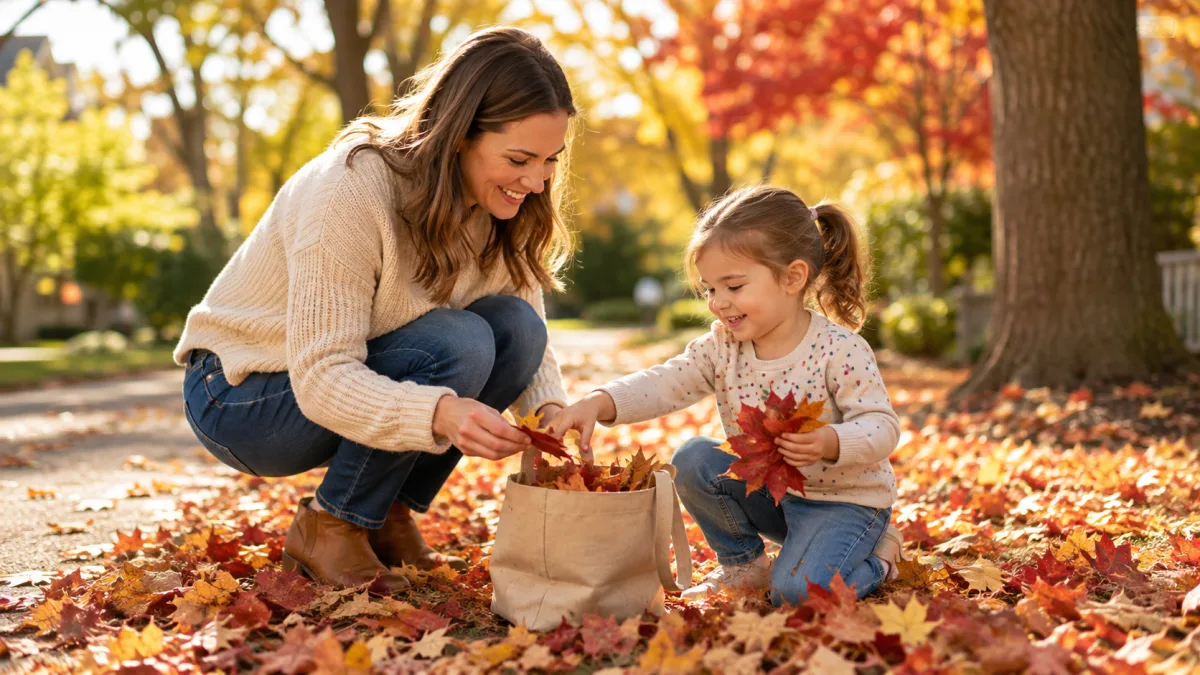
A bag, a walk, and a kitchen table. The collecting is half of it and the sorting is the other half.
Collect fallen leaves on a walk, then sort them at home by colour, size and shape. Needs only a bag, suits ages 2 to 8, and gives a free craft supply for the rest of the week.
The short version
- The bag is what turns a walk into a collection.
- Let them pick the sorting rule, then ask for a second one.
- Wash hands afterwards — every time.
- Age
- Ages 2–8
- Play time
- 45 min
- Mess
- Low
- Difficulty
- Easy
- Where
- Either
Why kids love this
Collecting is one of the strongest urges small children have, and autumn hands them a floor covered in things worth picking up. A bag makes it official. The sorting afterwards is quietly absorbing in a different way — laying things out, arranging them, changing your mind about the order.
What you'll need
- A paper or fabric bag per child
- A walk with trees on it
- A tray or table to sort on at home
- Optional: a magnifying glass
- Optional: paper and glue to stick the best ones down
Before you start
None to go out. Give them a bag and mention that you are looking for leaves. At home, clear a table and put a tray or a sheet of paper down.
How to do it
-
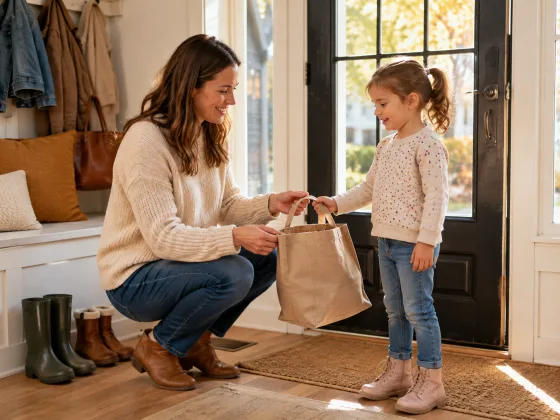
Give each child a bag before you leave the house.
-
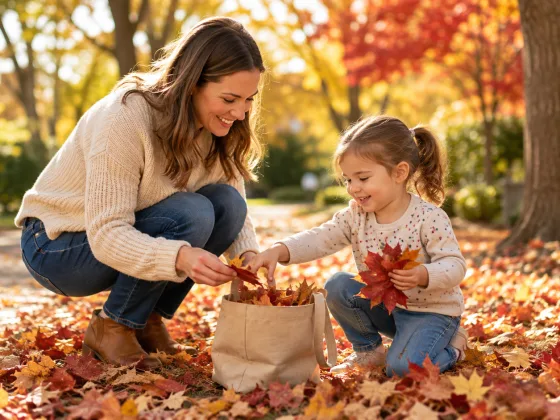
Walk somewhere with trees and let them pick up whatever they like. Do not curate it.
-
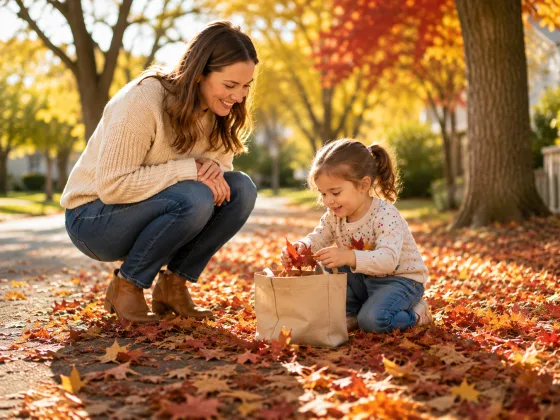
Point out one or two you find interesting, then say nothing else.
-
When the bag is full or the walk is over, go home.

-
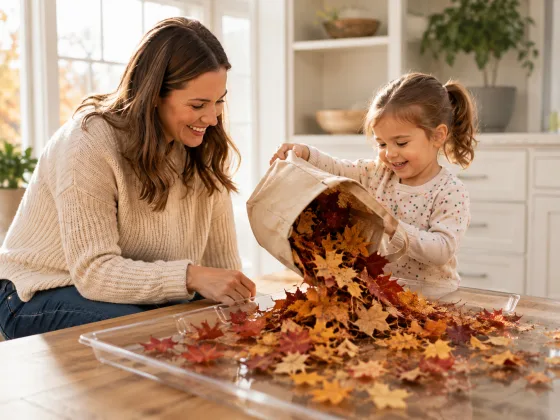
Tip everything out onto the table.
-
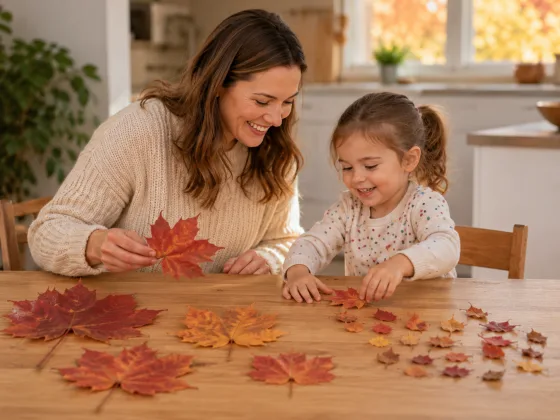
Start sorting: all the red ones here, all the yellow ones there. Let them decide the rule.
-
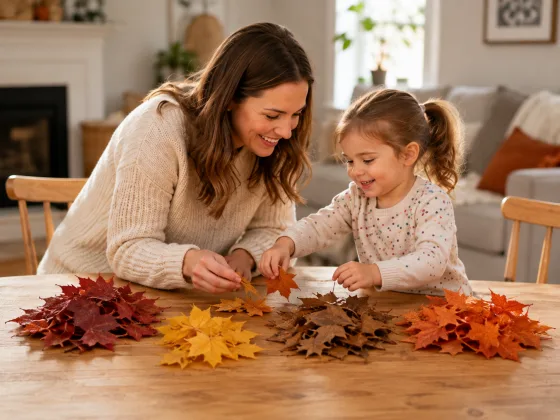
Once sorted by colour, ask if there is another way to sort them — biggest to smallest, spiky and smooth, whole and broken.
-
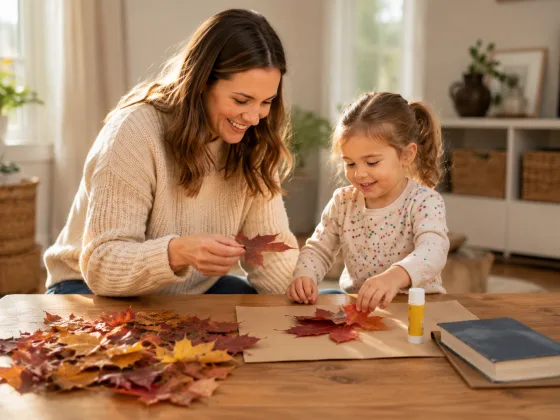
Keep the best ones for gluing down or pressing.
Make it easier
Sort by one thing only, into two piles. For a toddler, red pile and not-red pile is plenty.
Make it harder
Ask them to sort them a way you have not thought of, and to explain the rule. Or ask them to find two that are exactly the same and say why they are not.
Other ways to play it
- Press the best leaves under a heavy book for a week and stick them into a book.
- Make a leaf rubbing by putting paper on top and rubbing with a crayon on its side.
- Arrange them into a picture — a hedgehog, a lion's mane, a tree.
- Thread them onto string with a blunt needle for a garland.
- Sort by tree if you have a book to check against.
How it changes by age
- Two to three: collecting, carrying and tipping out. The sorting will be brief.
- Four to five: sorting by colour and size, with strong opinions.
- Six and up: sorting by tree type, leaf shape or edge, and making something with the results.
What they're learning
Sorting by a rule, then re-sorting by a different rule, is early maths — it is the same thinking that later underpins grouping and classifying. There is a lot of describing language too: pointed, jagged, curled, brittle, veined.
Clearing up
Keep a handful for crafts and put the rest on the compost or back outside. Leaves left in a bag indoors go mouldy within a few days.