


Sorting Games for Preschoolers: 15 Ways to Classify and Compare
These 15 sorting games for preschoolers turn classifying into an adventure: color treasure hunts, shape-stomp dances, sink-or-float water bins, animal habitat baskets, and more — all with things you already own.
Sorting games for preschoolers turn classifying into play: your child hunts for red toys to fill a red bag, sorts sinkers from floaters in water, dances onto named shapes, parks toy cars by size, and sorts buttons by their holes. Play 3–4 games per sitting; model each first.

The short version
- 15 games across color, size, shape, texture, and habitat.
- Play 3–4 per sitting; each takes 5–10 minutes.
- Model the rule first, then hand over the sorting.
- Tidy-up is the final game: everything home, sorted by type.
- Age
- Ages 3–4
- Prep
- 10 min
- Play time
- 30 min
- Mess
- Low
- Difficulty
- Easy
- Where
- Indoor
Why kids love this
These sorting games for preschoolers hide sorting inside a quest: a treasure hunt, a dance party, a trip to the "garage." Three- and four-year-olds are wired to spot sameness and difference — these games let them follow that instinct.
What you'll need
- - 3–4 cloth bags in different colors + 12–15 small toys in those colors
- - A clear tub of water, a towel, 8 small objects (sponge, rock, apple, cork, spoon, leaf, ball, key)
- - 8–10 long and short ribbon strips; 2 baskets
- - Large paper shapes (circle, square, triangle) taped to the floor
- - 6–8 wooden sticks, biggest to smallest; 20–30 chunky buttons and a muffin tin
- - 3 dry pasta shapes and 3 small jars
- - 9–12 toy animals, 3 baskets, a shallow blue tray; 8–10 toy foods and 2 shopping bags
- - A cloth bag with 4 textured objects; 2 bowls; 8 soft and hard household objects
- - 3 cardboard boxes (big, medium, small) and 9–12 toy cars
- - A basket of clean family laundry; a paper plate divided into 6 wedges
Before you start
1. Clear a play patch on the floor or low table. 2. Gather materials for the 3–4 games you will play today. 3. Keep the rest nearby so switching games takes seconds.
How to do it
-
Set up the sorting corner.

-
Line up baskets, bags, and bins. Let your child carry things over — helper hands make every game feel like theirs.

-
Game 1: Color treasure hunt.
-
Hide 12–15 small toys and hand over the colored bags. "Every red toy goes in the red bag — find them all!" Name each find as it lands.
-
Games 2–3: Sink-or-float and the ribbon run.

-
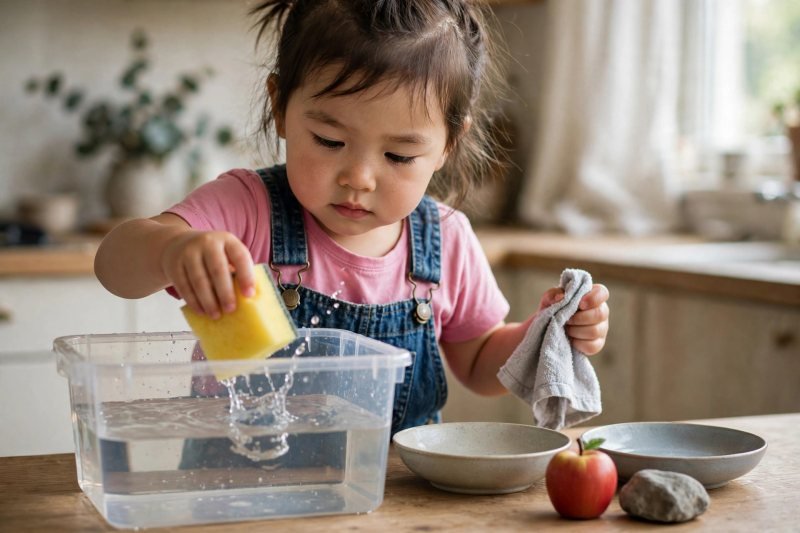
Game 2 — Sink-or-float. "Sink or float — what do YOU think?" Drop each object in and sort it into the sinkers or floaters pile — wrong guesses are the best part.
-
Game 3 — Long-short ribbon run. Mark one basket with a long strip, one with a short. "Run! Grab one! Long basket or short basket?"

-
Games 4–5: Shape stomp and the size line-up.
-
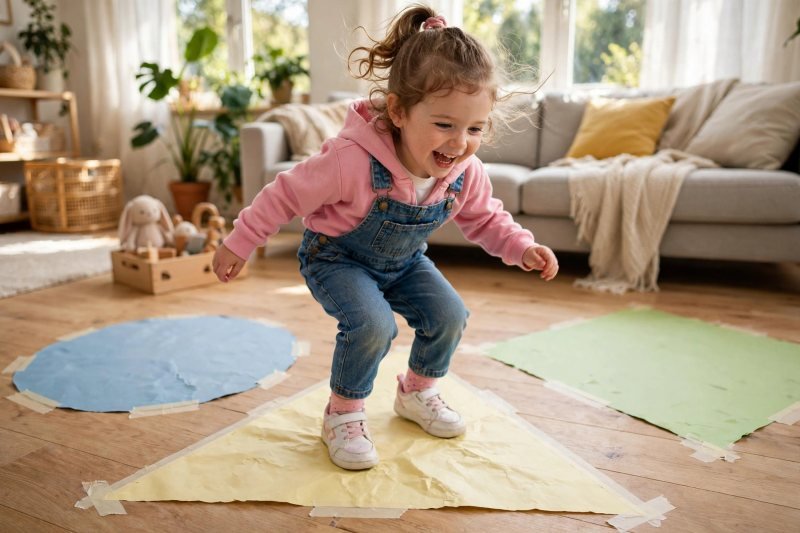
Game 4 — Shape stomp. Dance around taped paper shapes; freeze on "TRIANGLE!" — everyone dives on. Misses get giggles.
-
Game 5 — Size line-up. "Build a staircase — biggest first, down to the tiniest."

-
Games 6–7: Button treasure sort and the pasta shape parade.
-
Game 6 — Button sort. Sort into muffin cups by hole count: two-hole, four-hole, shank.
-
Game 7 — Pasta shape parade. Three jars, three pasta shapes: twirly vs. bow-tie keeps eyes working.
-
Games 8–9: Animal habitat baskets and the grocery bag sort.
-
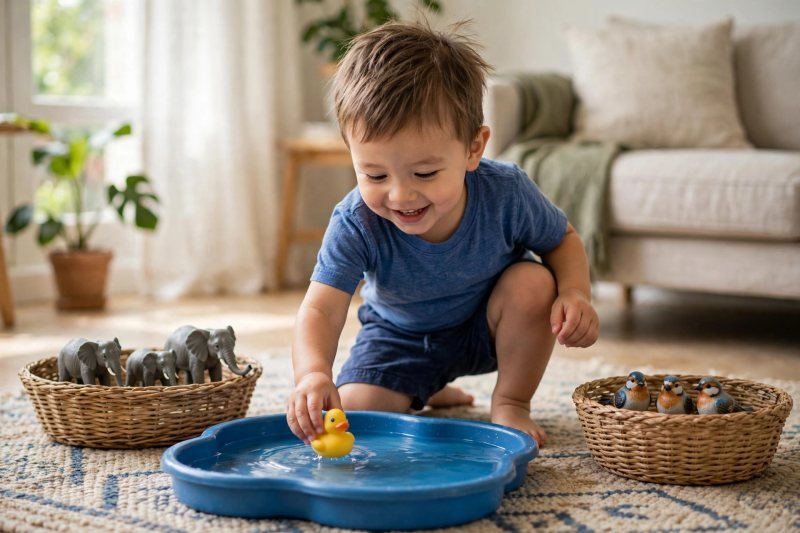
Game 8 — Animal habitats. Land, pond, sky. "The duck swims in the pond! Where does the elephant live?"
-
Game 9 — Grocery bag sort. "Fruits in THIS bag, vegetables in THAT bag. Is a tomato a fruit or a vegetable?"
-
Games 10–11: Mystery feel bag and the soft-hard picnic.
-
Game 10 — Mystery feel bag. Eyes closed, hand in the bag: rough or smooth? Touch-first sorting uses a whole new sense.
-
Game 11 — Soft-hard picnic. Two plates on a blanket: "Teddy is soft — soft plate! The rock is hard — hard plate!"
-
Games 12–13: Parking garage and laundry.
-
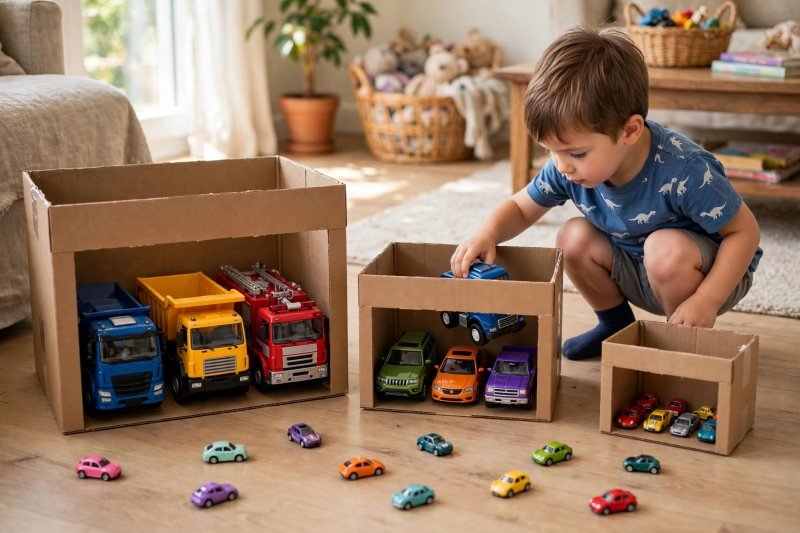
Game 12 — Parking garage. Three boxes: big, medium, small. A "medium" car is big next to a tiny one — size is relative.
-
Game 13 — Laundry helpers. "Your socks here, Dad's socks there." Chores disguised as games.
-
Games 14–15: Nature color wheel and odd one out.
-
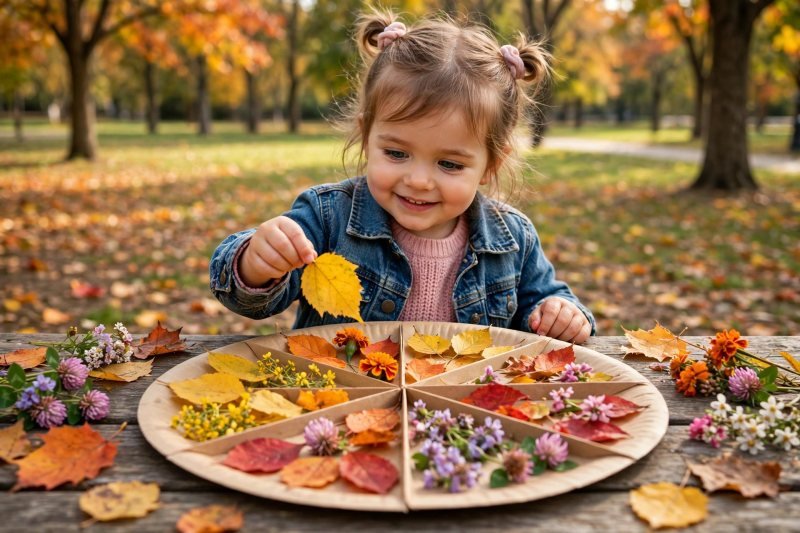
Game 14 — Nature color wheel. Fill each wedge of a divided plate with a park color. Nature never repeats a color exactly.
-
Game 15 — Odd one out. Five buttons, all round except one square: "Which one is different?" Then let them challenge you.
-
Tidy-up victory lap.
-
"Everything home — SORTED!" Every toy back in its basket by type. High-five when the floor is clear.


Make it easier
- Play one game at a time — color treasure hunt today, sink-or-float tomorrow.
- Start with just TWO groups (red/blue, sink/float) before adding a third.
Make it harder
Make it harder: - Add a second rule: after sorting by color, count each pile — and the count-and-sort hybrid in (counting games for preschoolers) shows the same counting beat with numbers front and center. - Two attributes at once: big red buttons vs. small red buttons.
Other ways to play it
- 1. Snack-time sort. Round crackers vs. square crackers into two bowls — then eaten.
- 2. Shoe line-up. Pair the family's shoes by owner, then line each pair big to small.
- 3. Shape sort. Same baskets, new rule — sort by shape first, then by color: shape sorting activities shows the shape-first version.
How it changes by age
- At 3: One obvious attribute — color, size, shape. Two or three groups max; model every game first.
- At 4: Two attributes at once, trickier ideas (sink/float, odd one out), and invented rules. Let them lead. When two-attribute sorting clicks, shapes activities for preschoolers builds the naming vocabulary further.
What they're learning
- Classification: deciding what makes things "the same" — the foundation of early math - Comparing: big vs. small, long vs. short, rough vs. smooth, sink vs. float - Ordering by degree (Game 5's staircase) and naming attributes in real contexts - Predicting and testing: sink-or-float, then checking (more math ideas) - Fine motor control: buttons, pasta, parking cars (fine motor activities)
Clearing up
The tidy-up victory lap (Step 10) does most of the work. Shake the towel outside, empty the tub, and stash the button tin on a high shelf.
Questions parents ask
What are the best sorting games for preschoolers?
How do sorting games help preschoolers learn math?
My preschooler sorts everything wrong. Should I correct them?
What can preschoolers sort by besides color and size?
How long should a sorting game last for a 3-year-old?
- Keep the treasure-hunt bags by the door — an instant game on rainy afternoons.
- Rotate games weekly so favorites stay fresh.
- If your child sorts "wrong," celebrate the rule they used — "You sorted by COLOR instead of size!" That's real math.
- For more sorting play at home, toddler learning activities at home uses the same name-it-and-sort-it rhythm.

save it for later
Pin this for the next rainy afternoon
Keep it on a board so it is there when you need it, rather than when you happened to find it.
Save to Pinterest


