


Sorting by Shape
Sorting by shape is the game that comes after color sorting: your 3-year-old learns circle, square, and triangle, traces them with a finger, posts them into matching bowls, and hunts real-world shapes around the house.
Sorting by shape is the game that follows color sorting: your 3-year-old learns circle, square, and triangle by tracing each one with a finger, posts the pieces into labeled bowls, then sorts a mixed pile and hunts matching shapes around the house. It teaches shape recognition, corner counting, and the same-vs-different thinking behind early math. Model each shape first, then hand over the pieces.

The short version
- Start where colors left off: one new question — "what shape is this?" — not "what color?"
- Meet each shape one at a time: trace it, name it, count its corners.
- Model the sort, then hand pieces over one by one.
- Circles and squares first; triangles join when the first two are easy.
- The house shape hunt turns the whole home into a sorting tray.
- Age
- Ages 3–4
- Prep
- 5 min
- Play time
- 25 min
- Mess
- None
- Difficulty
- Easy
- Where
- Indoor
Why kids love this
Once color sorting feels easy — red lands with red, and it is old news — sorting by shape is a fresh puzzle for the same hands. Circles roll off the tray. Squares have four corners to count. Triangles feel pointy and exciting. Your child traces each one, names it, and turns a messy pile into three tidy groups — proof they figured something out.
What you'll need
- 15–18 chunky shape pieces (5–6 each of circle, square, triangle), at least 2 inches across — wooden or foam
- 3 shallow bowls or trays
- White paper, a marker, and painter's tape (for drawing shape labels)
- 1 shoebox with a lid (optional posting lid)
- 1 small basket for the shape pile
Before you start
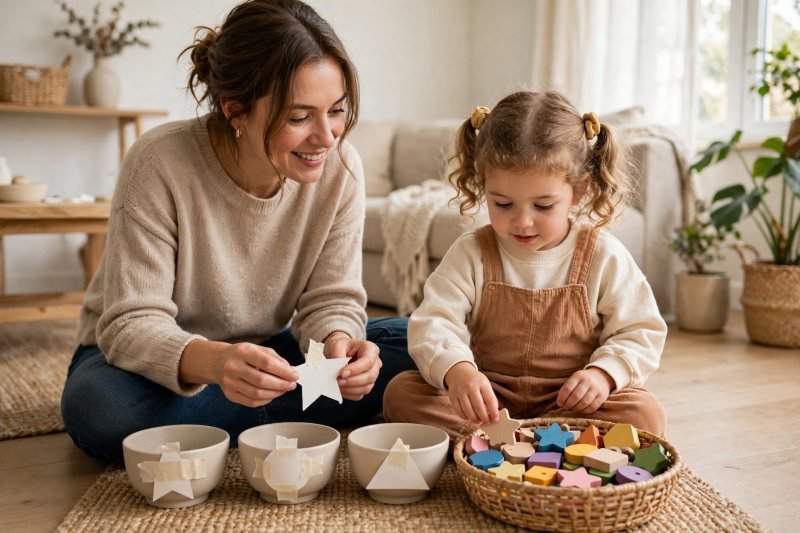
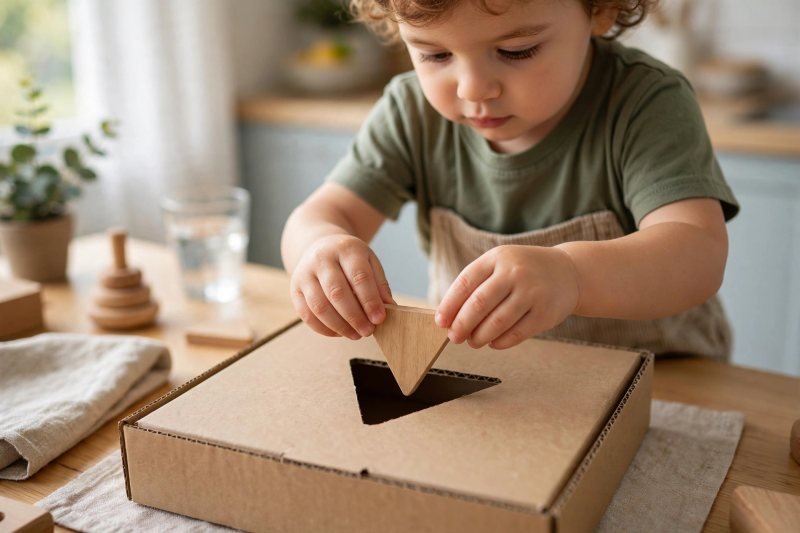
Draw a big circle, square, and triangle on paper; cut them out and tape one to each bowl. Optional: cut one circle, square, and triangle hole in the shoebox lid as a posting lid. Jumble all the shape pieces in the basket — the messier the pile, the more fun the fix.
How to do it
-
Set up the shape station. Sit on the floor or at a low table. Line up the three labeled bowls and set the basket of mixed shapes within reach.
-
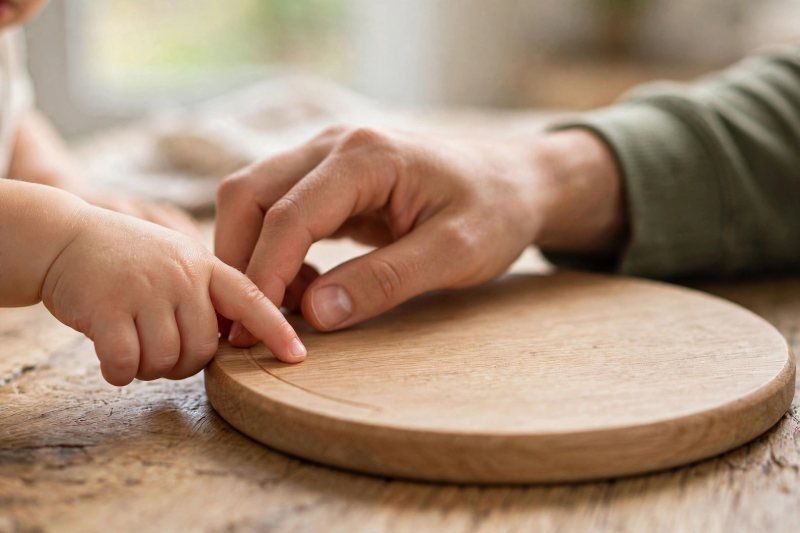
Meet the circle. Hold up a circle disc. Let your child trace it with a finger, round and round. "Circle — no corners, it just goes round." Pass it back and forth a few times.
-
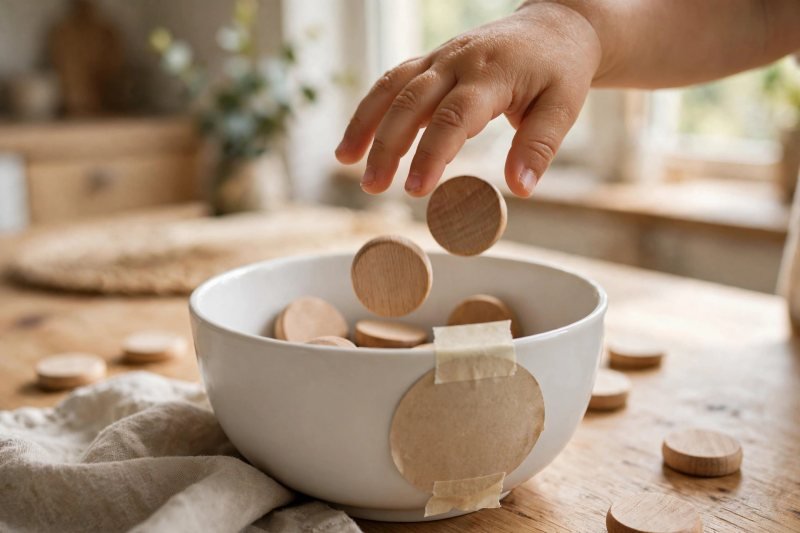
Sort the circles first. Hand over only the circles, one at a time. "Find the bowl with the round shape." Name it as each one lands: "Circle! Another circle!"
-
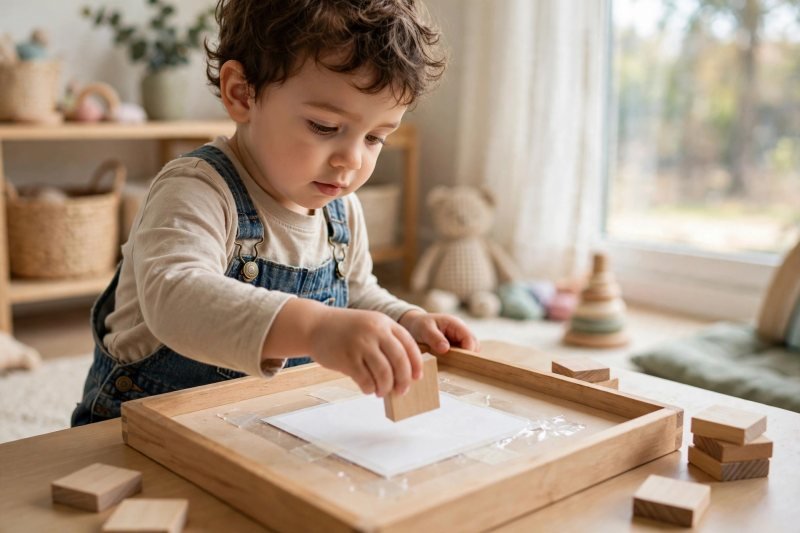
Meet the square. Hold up a square. Trace its edges together and count the corners out loud: "One, two, three, four corners — square!" Let them feel each corner with a fingertip.
-
Sort the squares. Gather the squares and post them into the square bowl. Ask "How many corners?" every few pieces — counting corners is what makes the shape stick.
-
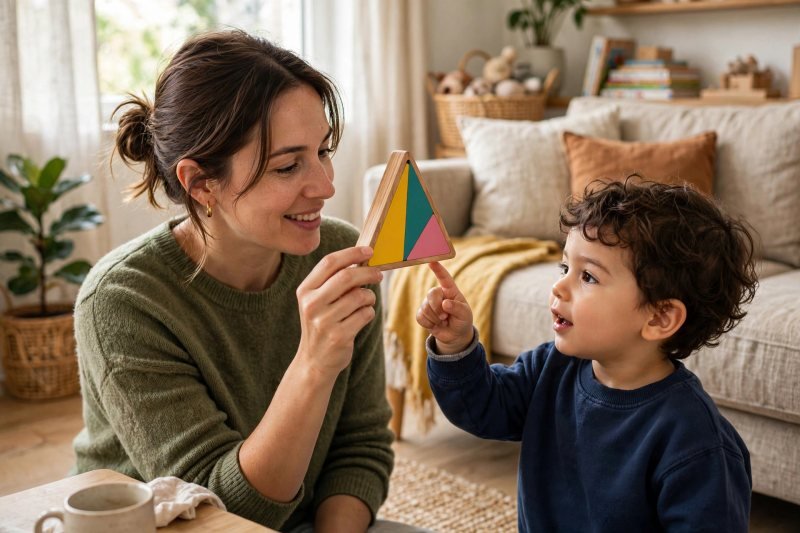
Meet the triangle. Hold up a triangle. "Three corners, three sides — pointy triangle!" Compare it with the square: "This one has three corners, that one has four."
-
Sort the triangles. If you made the posting lid, this is its moment: post each triangle through the triangle hole. If not, drop them in the triangle bowl.
-
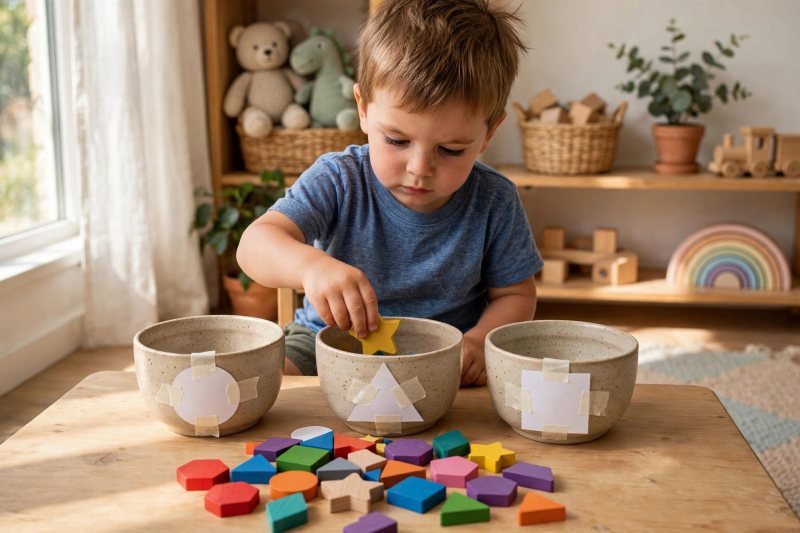
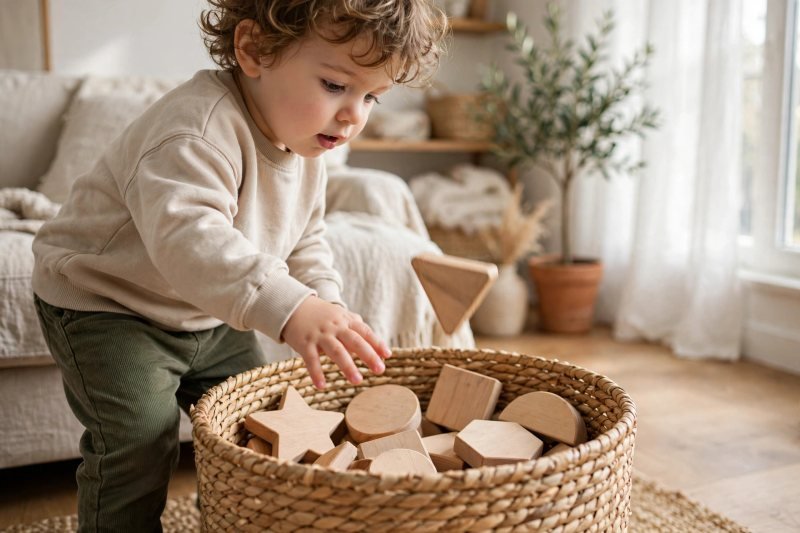
The big mixed sort. Tip all three groups back into the basket, jumble it up, and let them sort the whole pile. Ask "What shape is this one?" before each piece lands.
-
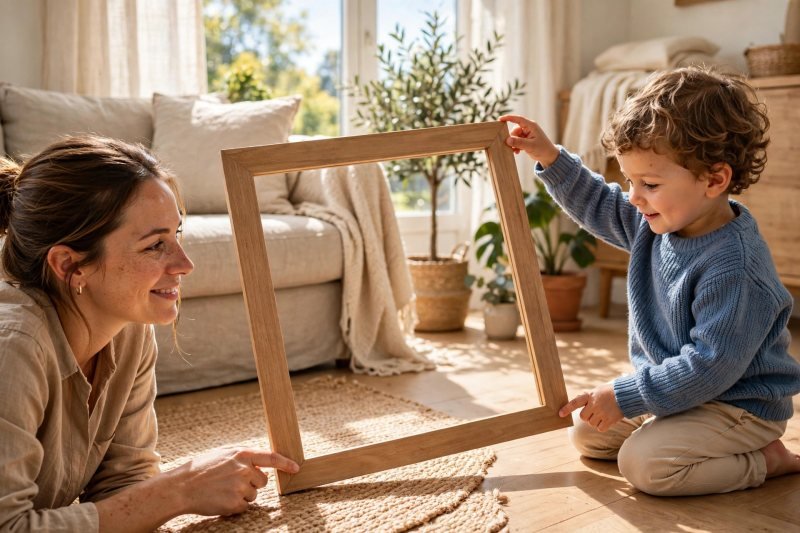
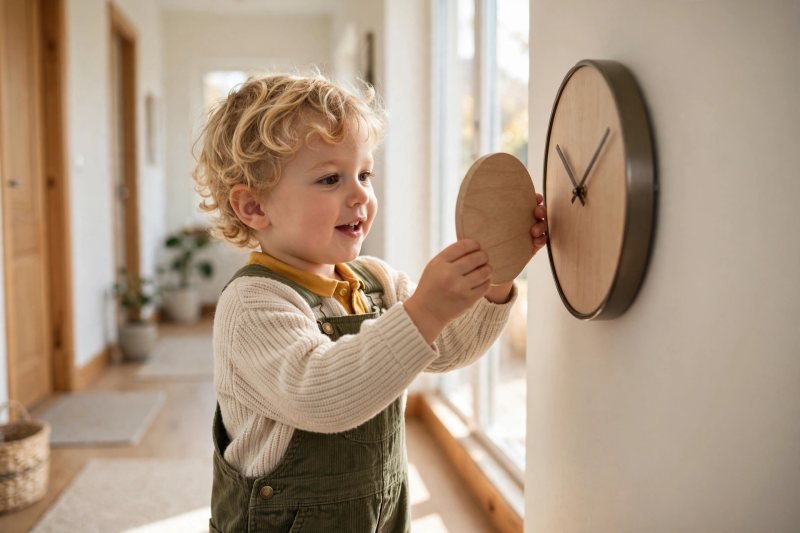
Hunt shapes around the house. Take one circle disc on a walk around the room: find things that match it — the clock, a plate, a coaster. Swap in the square (window, picture frame) and the triangle (folded napkin, roof line out the window).
-
Finish with the tidy-up sort. "Everything home!" Every shape back in the basket, named as it lands. Tidy-up is the last sorting game.


Make it easier
Start with just circles and squares — add triangles in a few days once those two are easy. Use shapes that are all one color, so shape is the only question on the table. Sort side by side: you take half the pieces, your child takes the other half.
Make it harder
Add a rectangle and a heart or star once circle, square, and triangle are solid. Sort by two things at once: "All the blue circles go here, all the red squares go there." Close the box: hand them pieces without looking and let them feel the corners to guess the shape. Count the pieces in each bowl when you finish — counting activities for toddlers turns the tidy-up into a counting game.
Other ways to play it
- Posting-box race. One piece at a time through the shape holes — time it with a song and cheer the finish.
- Shape stamp prints. Dip foam shapes in washable paint, print one color per shape, then sort the dried prints.
- Kitchen shape hunt. Open one low cupboard: round lids in one pile, square containers in another.
- Sidewalk shape walk. Chalk big circles, squares, and triangles on the path; your child jumps to the shape you call.
- Shape snack plate. Arrange crackers and fruit by shape — circles together, squares together — then eat each group.
- Shape and size. Sort the same blocks by shape first, then by size — shape sorting activities shows the shape-first version.
How it changes by age
- At 2: Sorting beats naming — match shapes to the picture labels without saying the words yet. Keep it under 15 minutes.
- At 3: The sweet spot. Naming catches up with sorting — "three corners, triangle!" Expect 20 happy minutes, and let them invent their own rules.
- At 4–5: Add rectangles and hexagons, sort by two attributes at once, and let them draw their own bowl labels.
What they're learning
Shape recognition: circle, square, and triangle by their real properties — corners and sides Classification: deciding what is "the same" by form instead of color, a step up in early math Counting corners: one-to-one counting with a real purpose (counting games for preschoolers) Same vs. different: noticing what makes shapes alike and what makes them not Fine motor control: posting, tracing, placing (fine motor activities for preschoolers)
Clearing up
Almost nothing to clear. The tidy-up sort (Step 10) folds cleanup into the activity: shapes live in one basket, bowls stack, labels peel off for the recycling bin.
Questions parents ask
When can my child start sorting by shape?
How do I teach a 3-year-old the difference between a square and a triangle?
My child sorted by color for months. Will shapes confuse them?
What shapes should a 3-year-old know?
How long should shape sorting play last at age 3?
If the shape names are wobbly, warm up with learning shapes: circle, square, triangle first — everything clicks faster after that. The first sorting game every toddler plays was color sorting — this is its next level, not a replacement. Stuck on triangles? Come back in a week. Three corners is genuinely harder than zero or four.

save it for later
Pin this for the next rainy afternoon
Keep it on a board so it is there when you need it, rather than when you happened to find it.
Save to Pinterest


